
The best peer-reviewed estimate puts annual U.S. bird deaths from wind turbines at roughly 234,000 per year, with a 95% confidence interval running from about 140,000 to 328,000. A later 2014 synthesis of small-passerine fatalities re-estimated all-bird annual totals that are consistent with Loss et al. (2013)’s mean of about 234,000 (range about 140,000 to 328,000) in the contiguous U.S small-passerine fatalities (2014) reports its re-estimated all-bird annual totals in a range that is consistent with Loss et al. (2013)’s mean of ~234,000 (range ~140,000–328,000). That number comes from a widely cited 2013 study by Loss et al. published in Biological Conservation, and it covers collisions with monopole turbines across the contiguous United States. So if you've seen headlines claiming millions of birds die from turbines every year, or alternatively that turbines pose virtually no threat, both claims miss the mark. The real number sits in the low-to-mid hundreds of thousands, and it comes with meaningful uncertainty that's worth understanding.
How Many Birds Die From Wind Turbines A Numbers-First Guide

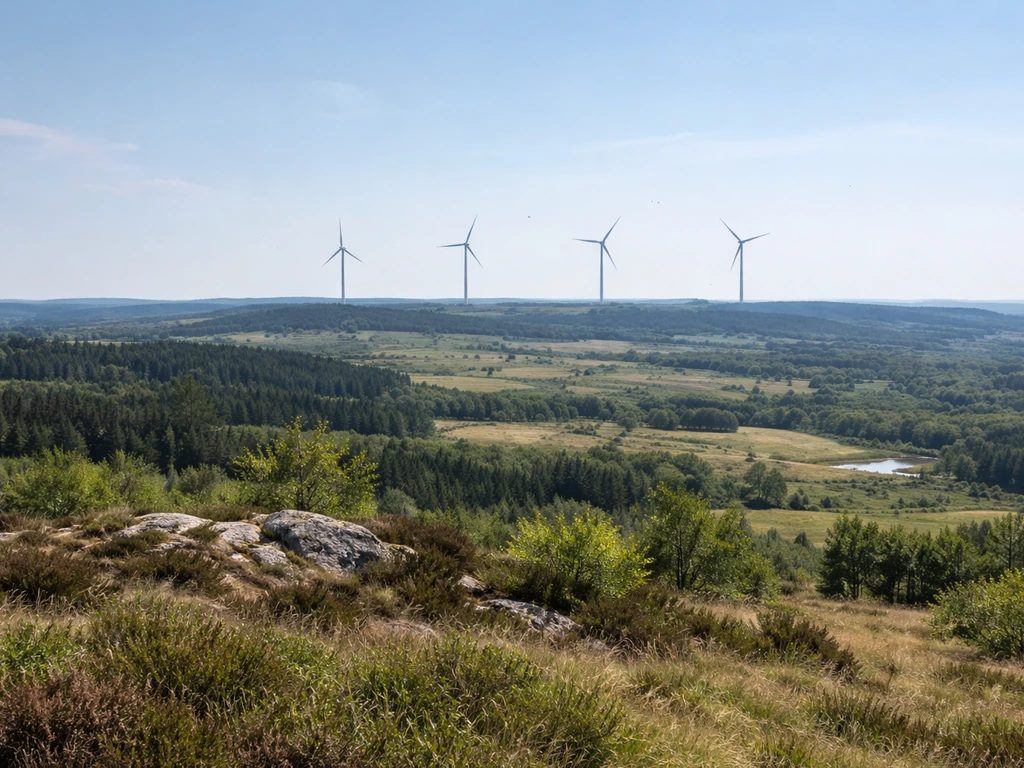
What the best estimates say

The Loss et al. (2013) estimate of ~234,000 birds per year (95% CI: ~140,000 to 328,000) remains the most widely referenced figure for the contiguous U.S. Earlier studies, working with smaller turbine fleets and older projection methods, came up with much lower totals, around 10,000 to 40,000 per year. Those figures weren't wrong for their time; the installed capacity of U.S. wind energy has grown enormously since then, and the estimates grew with it.
A useful metric that monitoring programs now use is fatalities per megawatt of installed capacity. The American Wind Wildlife Information Center (AWWIC) dataset shows a median of roughly 1.94 birds per MW per year, with 75% of studies reporting 3.44 or fewer birds per MW per year. Translated to a per-turbine number, that works out to approximately 3.9 birds per turbine per year on average. These per-MW and per-turbine rates are helpful because they let you scale estimates up or down as the fleet changes over time, rather than anchoring to a single headline number.
The honest answer to "how many birds die from wind turbines" is: somewhere in the range of 140,000 to 328,000 in the U.S. annually under current capacity, with a best-guess mean near 234,000. That range isn't a dodge; it reflects genuine scientific uncertainty in how carcasses are detected and counted, which the next section explains.
How researchers actually count turbine bird deaths
You can't just walk a wind farm and count dead birds on the ground. Several real-world factors systematically push raw carcass counts below true mortality numbers, and researchers have to correct for all of them to get valid estimates.
- Scavenger removal: Coyotes, ravens, and other scavengers find and remove carcasses quickly, sometimes within hours of a collision. If a surveyor arrives the next morning, the bird is gone.
- Searcher efficiency: Even in areas that are searched, surveyors don't find every carcass. Vegetation cover, terrain, and body size all affect detection rates. Studies run trial carcass placements to estimate what fraction of real carcasses surveyors actually find.
- Search area coverage: Surveys typically cover only a defined plot around each turbine, not the entire possible impact zone. Small birds that die close to the base may fall inside the plot; larger birds flung further out may fall outside it.
- Survey frequency: Carcasses are missed more often when surveys happen weekly versus daily, because scavengers have more time to work between visits.
- Correction factors: Final fatality estimates apply statistical correction multipliers that account for all of the above. Different studies use different correction methods, which is a major reason estimates vary.
This layered correction process is why you'll see studies from the same wind farm produce different totals, and why national-level synthesis studies (like Loss et al.) have to aggregate and model across dozens of site-specific reports. It's also why raw carcass counts reported in news stories almost always understate actual mortality. Misunderstanding this point leads to a lot of the confusion you see in viral posts, which I'll come back to in the myths section.
Putting turbines in context: how they compare to other bird killers

This is where the scale question really matters. Wind turbines kill hundreds of thousands of birds annually in the U.S., but so do many other human-related sources, and several of those sources dwarf turbine mortality by orders of magnitude. A direct comparison of bird deaths from wind turbines versus fossil fuels makes clear that the energy sector's full footprint on birds goes well beyond the turbine collision question.
| Mortality Source | Estimated U.S. Bird Deaths Per Year | Order of Magnitude vs. Turbines |
|---|---|---|
| Cats (domestic and feral) | 1.3 to 4 billion | ~5,000 to 17,000x more |
| Building/glass collisions | 300 million to 1 billion | ~1,000 to 4,000x more |
| Vehicles | 200 million to 340 million | ~600 to 1,400x more |
| Power lines | 25 million to 175 million | ~100 to 750x more |
| Pesticides | 72 million | ~300x more |
| Wind turbines | 140,000 to 328,000 | Baseline |
| Airplanes | ~25,000 | ~7x fewer |
Cats alone kill somewhere between 1.3 and 4 billion birds annually in the U.S., making them by far the largest human-associated source of bird mortality. Buildings and glass kill hundreds of millions more. Wind turbines, at roughly 140,000 to 328,000 per year, sit near the bottom of the list by volume. That doesn't make turbine deaths irrelevant, especially for rare or sensitive species, but it does mean that someone who is genuinely concerned about bird populations should weigh all of these pressures together rather than fixating on any one source. Understanding which factors most likely lead to reduced bird populations requires looking at cumulative and interacting pressures, not single causes in isolation.
Which birds and which locations carry the most risk
Not all bird deaths from turbines are equal. The species composition and geographic context matter enormously, and this is where the conservation stakes shift considerably.
High-risk species groups
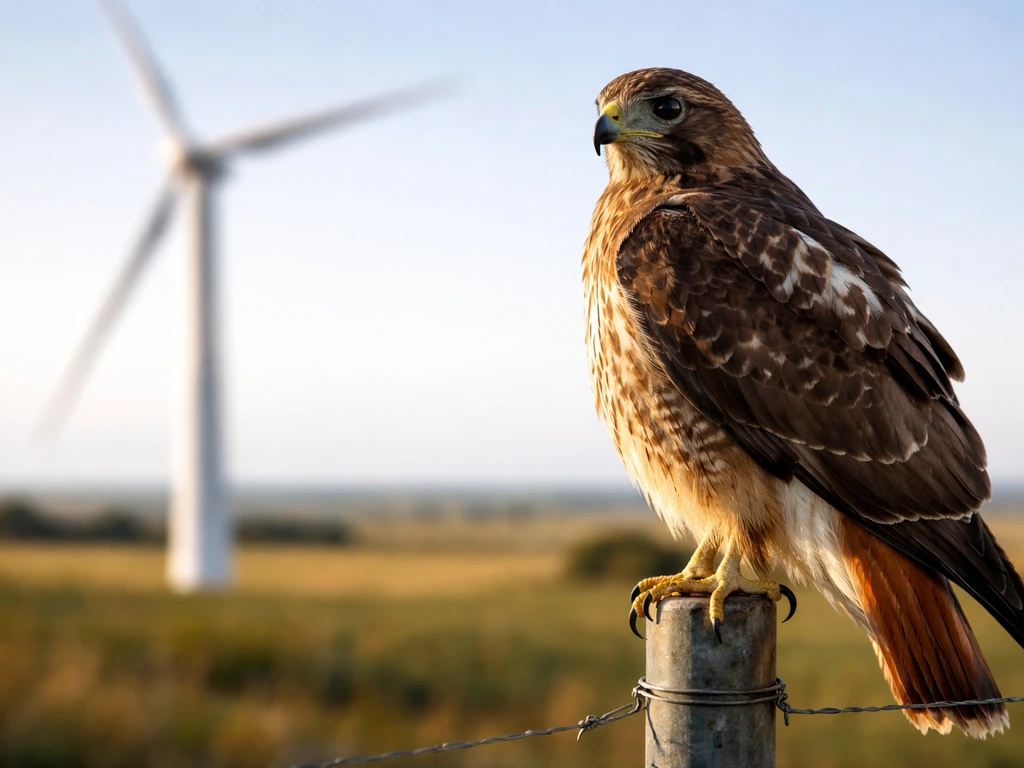
- Raptors: Golden eagles, red-tailed hawks, and other soaring birds spend more time at rotor height and are attracted to turbines by prey activity below. Eagle deaths at wind facilities draw particular regulatory scrutiny under the Bald and Golden Eagle Protection Act.
- Nocturnal migrants: Songbirds that migrate at night are especially vulnerable during peak migration periods, when large numbers pass through at rotor height. Warblers, thrushes, and sparrows make up a large portion of passerine casualties.
- Prairie obligates: Species like the lesser prairie-chicken that live in the same open landscapes where wind development often occurs face habitat disruption on top of direct collision risk.
- Bats: While not birds, bat mortality at turbines is separately documented and often higher per turbine than bird mortality, which affects the broader ecological picture at wind sites.
Geography and siting matter more than most people realize
Wind facilities sited along major migration corridors, on ridgelines used by migrating raptors, or in proximity to roost sites and breeding habitat for sensitive species carry far higher risk than those in lower-sensitivity areas. The Altamont Pass wind resource area in California became notorious for high raptor mortality, particularly golden eagles, because the site sits in prime foraging habitat with older lattice-tower turbines that raptors perch on. Offshore facilities introduce different risk profiles, with seabirds and shorebirds facing increased exposure. Sites in the Great Plains hit songbird migration directly. This geographic variability is one reason that national-level averages like "1.94 birds per MW per year" can mask very high or very low local mortality rates.
How wind farms can and should reduce bird deaths

The good news is that the industry has developed a toolkit of mitigation strategies that actually work, and regulators are increasingly requiring them. Here's what responsible wind energy operation looks like today.
- Pre-construction siting studies: Before a turbine goes up, thorough bird and bat surveys should identify sensitive species, migration routes, and high-use habitat within the project area. Avoiding the worst locations at the planning stage is far more effective than trying to mitigate problems after construction.
- Curtailment on demand: Turbines can be stopped or slowed during high-risk periods, such as active raptor hunting hours at dawn and dusk, or during peak nocturnal migration events detected by radar. Demand curtailment at Altamont Pass-era facilities has been shown to meaningfully reduce eagle mortality.
- Seasonal and migratory shutdowns: At facilities near major migration corridors, operators can cut operation during the narrowest windows of peak songbird movement, typically a few nights per season, at relatively low energy cost.
- Eagle detection systems: Technologies like IdentiFlight use optical sensors and AI to detect approaching eagles and trigger automatic turbine shutdown before a collision occurs. These systems are now in use at multiple U.S. facilities.
- Lighting and marking: Appropriate lighting choices (low-intensity, motion-activated where required) and blade marking experiments are ongoing to evaluate whether visual contrast affects collision rates.
- Post-construction monitoring: Ongoing carcass surveys and adaptive management let operators identify when mortality exceeds predictions and trigger additional mitigation. This is not optional at responsible facilities; it's the feedback mechanism that makes the whole system work.
- Habitat management around turbines: Removing or reducing prey habitat immediately beneath rotors can make turbine sites less attractive to raptors, reducing their exposure time.
The question of whether the wind energy industry is doing enough is a live regulatory and scientific debate. The concern that windmills are destroying the bird population is worth examining honestly, because it's not entirely without basis, even if the most alarmist versions of that claim are unsupported. The answer depends heavily on whether projects follow best-practice siting and mitigation, which is why transparency in monitoring data matters so much.
Myths, viral claims, and the numbers that won't die
A few specific misconceptions circulate persistently online, and they distort the public's ability to evaluate this issue clearly.
"Wind turbines kill millions of birds every year"
The reality is that the best-supported U.S. estimate is in the low hundreds of thousands, not millions. Some viral posts conflate global estimates, extrapolate from single-site studies without scaling properly, or confuse bird deaths with bat deaths. The million-plus figures sometimes cited have no peer-reviewed basis and appear to originate from policy advocacy documents, not monitoring data.
"Carcass counts prove turbines are safe"
The opposite problem: raw carcass counts from field surveys dramatically undercount true mortality because of scavenger removal and imperfect detection. A report on searcher efficiency and scavenging removal biases explains that carcass detection inefficiency and scavenger removal can bias wind-energy mortality estimates downward, especially missing small birds at high scavenging rates blank" rel="noopener noreferrer">raw carcass counts from field surveys dramatically undercount true mortality because of scavenger removal and imperfect detection. A site that reports 20 carcasses in a season may have actually had 100 or more collisions after applying correction factors. Anyone citing raw counts as the actual death toll is misunderstanding the methodology. This is a classic case where mixing up correlation with causation in bird research leads to completely wrong conclusions about what the data actually shows.
"All turbine bird deaths are the same"
A sparrow and a golden eagle are not equivalent losses from a conservation standpoint. Raptor and eagle deaths at wind facilities carry legal consequences under federal law and potentially severe population-level effects for long-lived, slow-reproducing species. Deaths of common migratory songbirds, while significant in volume, have different population implications. Treating all fatalities as interchangeable misses the species-level nuance that conservation biologists track carefully.
"Wind energy is clean, so bird deaths don't count"
This is the flip side of the alarmism problem. Wind energy's carbon benefits are real and significant, but that doesn't make turbine bird mortality a non-issue. The responsible position is to acknowledge both, pursue genuine mitigation, and be honest about the data. Some advocates have pushed back hard on turbine mortality studies in ways that look more like motivated reasoning than science. Asking whether science has gone too far in the service of particular agendas is a legitimate question when evaluating how bird mortality research gets framed and reported in energy debates.
Ignoring the chemical dimension of bird population decline
Turbines get enormous attention, but collision mortality is only one piece of the bird decline picture. Contaminants in the food chain are a quieter but potentially more pervasive problem. How PCBs affect bird populations through biomagnification is a concrete example of how toxic compounds accumulate up the food chain, hitting top predators, including many raptors, at concentrations far above what any single turbine collision could produce. Focusing only on turbines while ignoring chemical and habitat stressors gives an incomplete picture of what's actually threatening bird populations.
Where to find credible local data and what to do with it
If you're a researcher, conservation professional, or just someone who wants to evaluate claims about a specific wind facility or region, here's a practical path forward.
- Start with the AWWIC database (americanwindfauna.org): The American Wind Wildlife Information Center maintains the most comprehensive searchable database of peer-reviewed and industry monitoring reports for wind facilities across the U.S. You can search by state, species group, and facility to find site-specific fatality estimates.
- Check Tethys Knowledge Base (tethys.pnnl.gov): The Pacific Northwest National Laboratory's Tethys platform aggregates offshore and onshore wind-wildlife interaction studies globally. It's a good first stop for understanding the literature on any specific geographic region or species.
- Request NEPA documentation: Wind facilities in the U.S. that went through federal environmental review have publicly accessible Environmental Impact Statements (EIS) or Environmental Assessments (EA) with pre-construction bird surveys and proposed mitigation plans. These are searchable through the relevant federal agency (BLM, USFWS, or BOEM for offshore).
- Contact your state wildlife agency: Most state fish and wildlife agencies track bird mortality issues at wind facilities within their jurisdiction and can point you to monitoring requirements and compliance reports.
- Review U.S. Fish and Wildlife Service Eagle Take Permits: If a wind facility operates under an Eagle Incidental Take Permit, the permit conditions and monitoring requirements are public documents. USFWS publishes these.
- Look for the facility's annual monitoring reports: Many operators publish these voluntarily or are required to by permit. If you can't find them online, you can submit a Freedom of Information Act (FOIA) request to the relevant federal agency.
- Use eBird and migration data: The Cornell Lab of Ornithology's eBird database and BirdCast migration forecasting tools can help you understand what species are using a region and when peak migration events occur near a specific facility.
The bottom line is that wind turbines are a real but comparatively modest source of bird mortality in absolute numbers, sitting far below cats, buildings, and vehicles. They become more significant when you focus on vulnerable species like eagles and when facilities are poorly sited. The numbers are uncertain because mortality estimation is genuinely hard, not because researchers are hiding something. If you want to make an honest assessment of the risk or advocate for better mitigation, the data is available, and the methodology for interpreting it is well-documented. Use the resources above to go beyond the viral claims and look at what monitoring programs are actually finding.
FAQ
If the U.S. estimate is about 234,000 birds per year, why do some reports say much higher or lower numbers for the same time period?
Most differences come from methodology, especially how carcasses are detected and corrected. Studies vary in searcher efficiency assumptions, scavenger removal rates, time-between-survey intervals, and whether turbines are treated as monopoles or mixed turbine types. A national synthesis then adds another layer, because it scales site results using turbine counts, operational years, and geographic coverage rather than treating every project as identical.
Can you estimate how many birds die from wind turbines in my state using the per-MW or per-turbine rates?
You can do a rough back-of-the-envelope using installed capacity and the reported birds-per-MW-per-year range, but it will be inaccurate if your state has unusual species, migration routes, or turbine siting. The key adjustment is to account for exposure, for example whether projects overlap raptor corridors, coastal shorebird habitat, or known breeding areas, because local mortality can be far above or below the national median.
How many of the deaths are actually “collision” deaths, versus other turbine-related causes?
For most estimates, the focus is collision mortality, but some studies and monitoring programs can incorporate other injury pathways indirectly, such as carcasses found near turbines that may have been caused by the facility or the broader site context. The safest interpretation is to treat published figures as mortality associated with turbine operations under the study’s assumptions, not as a perfectly isolated measure of every cause.
Do wind turbines kill more birds than offshore wind projects or vice versa?
It depends on what species are exposed. Offshore sites often show different risk profiles, with seabirds and shorebirds potentially facing higher exposure in certain areas, while onshore sites can be more relevant for raptors and landbird migration depending on siting. You cannot rank “offshore vs onshore” in general without looking at the specific migration and species composition around the project.
Why do carcass counts on the ground almost never match the final estimate?
Because surveys miss a portion of fatalities. Carcasses may be removed by scavengers, drift out of search plots, decompose quickly, or fall outside the effective search area. Correction factors attempt to model these losses, so the adjusted estimate can be several times higher than the number found during field searches.
How should I interpret “birds per turbine per year” when comparing projects?
That metric is useful, but it assumes turbines are roughly comparable in operational and monitoring conditions, and it still reflects corrected mortality rather than simple counts. Also, the underlying study may have specific survey durations and species mix, so two wind farms with similar turbine counts can produce different real-world outcomes if one is in a high-risk corridor.
Are the “millions of birds” claims always wrong?
They are very often unsupported in the way they are presented. In many viral claims, the millions figure comes from extrapolating global statements, mixing bird and bat totals, or scaling a small-area study to a national total without applying the correction logic used in monitoring. Even if a location has high local mortality, that does not automatically scale to millions nationwide without proper modeling.
If I’m concerned about population impacts, does it matter whether deaths are of raptors versus small songbirds?
Yes, because conservation impact is not proportional to numbers alone. Long-lived raptors and eagles have different demographic constraints, and additional legal protections can apply to certain species. Many frameworks look at both volume and species vulnerability, so a lower total with higher-risk species can be more consequential than a higher total dominated by common species.
What mitigation actions are most likely to reduce bird deaths in practice?
The most effective approaches usually combine better siting and operational changes. Examples include avoiding high-risk locations like major migration corridors and roost sites, installing deterrents when appropriate, and using smart curtailment that temporarily reduces blade movement during peak risk windows (for example, specific seasons, weather, and observed activity). The exact mix depends on local species and monitoring results.
If I want to evaluate a specific wind farm claim, what should I ask for in the monitoring or reporting?
Look for whether the report includes adjusted mortality estimates with transparent correction assumptions (search efficiency, scavenger removal, and detection probability), what survey protocol was used, how many turbines were covered, and how results were scaled over time. If the report provides only raw carcass counts without explaining correction methods, treat it as an incomplete view of likely mortality.