
Yes, grackles are genuinely considered a nuisance bird by wildlife managers, farmers, and backyard birders alike, but the level of actual harm they cause depends heavily on context. A single grackle at your feeder is just a bird. A roost of 10,000 grackles in the trees behind your house is a documented public health and property concern. Most people fall somewhere in between, and the good news is that practical, humane solutions exist for nearly every scenario.
Are Grackles a Nuisance Bird? Fix It Today With Humane Tips

Marcus Whitmore
16 May 2026
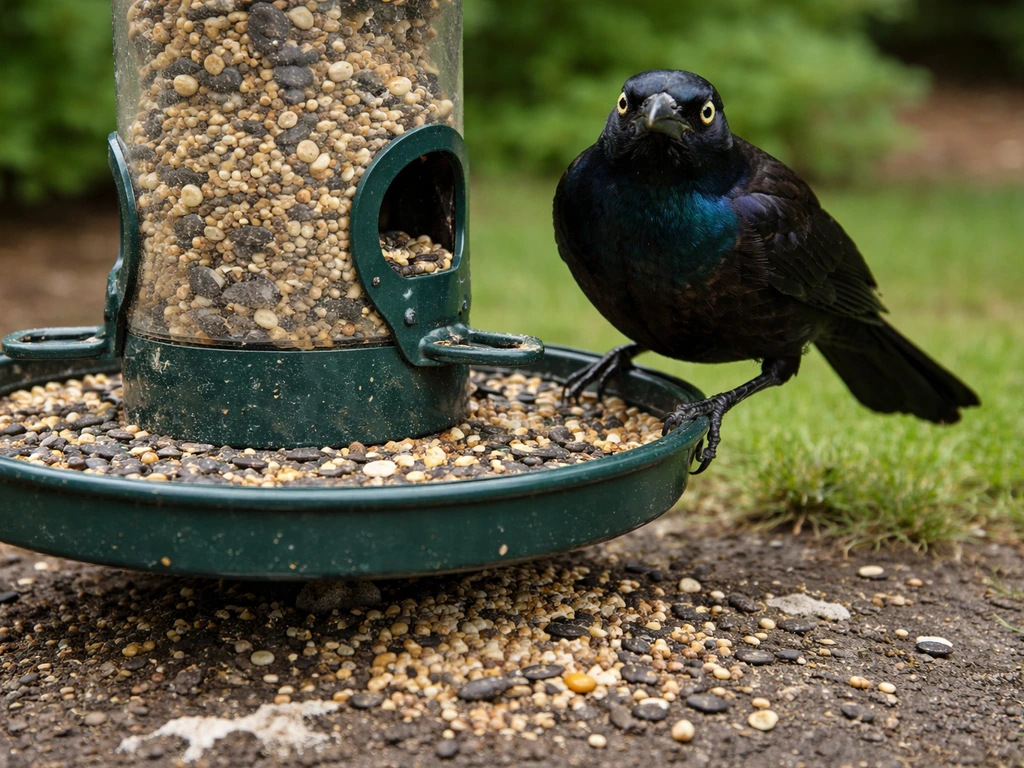
What grackles do that feels like a problem
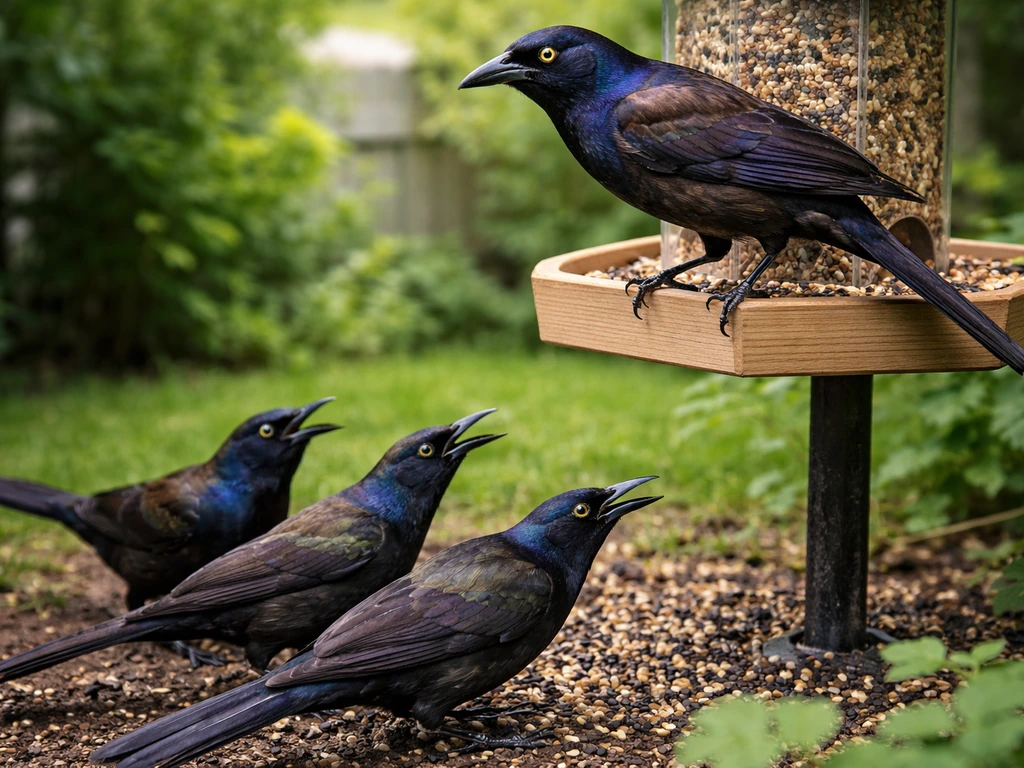
Grackles have a few specific behaviors that tend to drive people to search for solutions. First, they dominate feeders. Audubon describes common grackles as birds that 'tower over other birds and push them aside to get at food,' which is an accurate description of what you'll see in your yard. They're not subtle about it. Second, they flock. A grackle rarely travels alone during fall and winter, and a flock of 50 to several hundred birds can strip a feeder in minutes and leave a mess on everything underneath. Third, they're loud. The Illinois DNR characterizes them as noisy and aggressive, with sharp 'chuck' or 'chack' calls that carry well beyond your fence line. Fourth, at large communal roosts, their droppings accumulate fast, fouling the ground, changing soil chemistry, and creating cleanup headaches.
The scavenging behavior is also worth mentioning. Common grackles forage primarily on the ground, according to Cornell Lab's All About Birds, which means they're working your lawn, picking up spilled seed, insects, and anything else available. That ground-feeding habit is one of the most important levers you have for managing them, which I'll get into below.
Where nuisance grackles show up most often
Cornell Lab lists the typical grackle habitat as suburbs, city parks, cemeteries, agricultural fields, and feedlots. That's a wide range of human-dominated environments, which is exactly the point: grackles have adapted exceptionally well to living alongside us. In backyards, the main complaint is feeder crowding. Near farms and feedlots, it's crop and grain loss. In urban areas, it's large communal roosts in trees, on power lines, and on structures. The USDA APHIS Wildlife Damage Management Technical Series on grackles specifically highlights roost trees, structures, and ground fouling from droppings as the core issues at established roost sites.
- Backyard feeders: where grackles displace smaller songbirds and consume disproportionate amounts of seed
- Lawns and gardens: ground-foraging flocks that dig up seed, insects, and even shallow-planted bulbs
- Agricultural fields and feedlots: grain consumption and crop damage in larger-scale operations
- Urban and suburban roosting sites: tall trees, power lines, and building ledges used by large communal roosts
- Parking lots and dumpster areas: opportunistic scavenging wherever food waste is accessible
When and why grackle problems peak
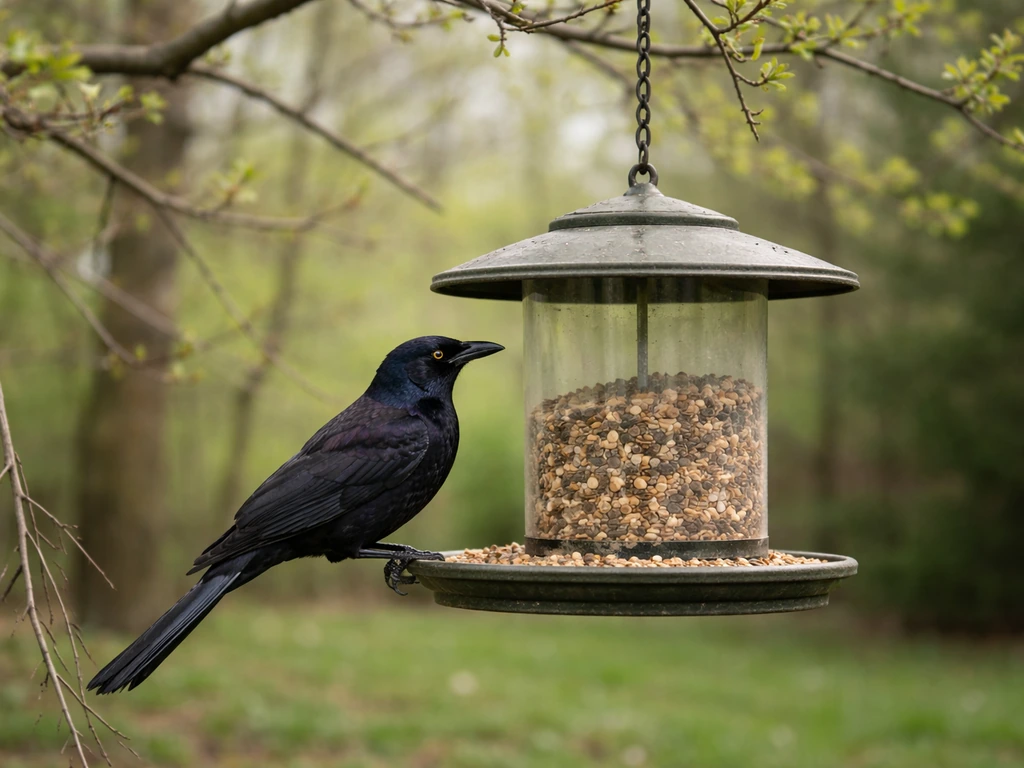
Timing matters a lot here. Grackle nuisance behavior follows a predictable seasonal pattern. The breeding season runs roughly April through June, per the Illinois DNR, when grackles are nesting in conifers and other trees. Nestlings fledge in 10 to 17 days, so nesting conflicts are relatively short-lived. The bigger driver of nuisance complaints is the fall and winter flocking behavior. Audubon notes that large flocks fly to communal roosts especially from late summer through winter, and the Illinois DNR explicitly states that grackles form their largest flocks in fall and winter. That's when you're most likely to see hundreds or thousands of birds descending on a neighborhood at dusk and settling in for the night.
From an aviation safety perspective, the FAA flags migration periods, specifically March through April and August through November, as times of elevated bird strike risk. Grackles and other blackbirds are among the species of concern due to their flocking behavior and abundance during those windows. If you work in airfield operations or agricultural safety, that seasonal calendar is worth keeping in mind.
Are grackles actually dangerous? What's real vs. myth
Let's be direct about this. Grackles are not dangerous to healthy adult humans in any meaningful way. They are not going to attack your pets with intent to harm, and they don't carry venom or claws capable of injuring you. Grackles can exhibit aggressive behavior during nesting season, occasionally dive-bombing humans who get too close to a nest, but this is brief, predictable, and easily avoided by giving the nest a wide berth for a few weeks. The reality is that most 'grackle attack' stories are exaggerated reactions to startling encounters with a protective parent bird.
The genuine health concern with grackles is their droppings at large roost sites. USDA APHIS links large blackbird roost accumulations, including common grackles, to Histoplasmosis, a fungal respiratory disease caused by a fungus that grows in nitrogen-rich bird droppings. blank" rel="noopener noreferrer">The CDC advises safe cleaning practices around wild bird areas, including not cleaning feeders near food-preparation surfaces. This isn't scaremongering: a single bird's droppings pose negligible risk, but if you're cleaning up under a roost where thousands of birds have been depositing droppings for months, wear a respirator and gloves. Beyond droppings, grackles can contribute to property fouling and, in agricultural settings, measurable crop loss. These are real, documented impacts, but they're not in the same category as physical danger to people. If you're weighing options for nuisance birds, it can also help to understand how bird bangers vs bird bombs are compared in other bird-control discussions.
Humane deterrence methods that work today
The most important thing to understand about deterrence is that no single method works indefinitely on its own. OSU Extension's guidance on nonlethal bird deterrents is clear that visual deterrents work best when combined with other tactics and rotated regularly to prevent habituation. ScienceDirect's bird netting research confirms that birds habituate to reflective materials and predator-feature decoys quickly, reducing their effectiveness over time. Rotation and combination are the operative words.
One thing worth addressing upfront: ultrasonic devices marketed for bird control are almost certainly a waste of money. The National Academies Press bird-control guidance for aviation contexts notes that ultrasonic devices are likely not viable for bird deterrence, and that finding extends to backyard and agricultural settings.
- Switch feeder types: Use tube feeders with short perches or weight-activated feeders that close under heavier birds. Grackles are larger and heavier than most songbirds, so weight-triggered feeders are one of the most effective feeder-specific solutions available right now.
- Change what you're offering: Grackles prefer corn, millet, and mixed seed. Switching to safflower seed or nyjer (thistle) dramatically reduces grackle interest while still attracting finches, chickadees, and other songbirds.
- Use visual deterrents in rotation: Reflective tape, predator decoys (owls, hawks), and visual scare balloons work short-term. Move them every few days and alternate between types to slow habituation.
- Deploy noise-based harassment at roosts: Distress calls and pyrotechnic devices (where legal and appropriate) can move birds from established roosts. These work better early in the roosting season before birds are firmly established.
- Clean up ground spill daily: Since grackles forage heavily on the ground, eliminating spilled seed from beneath feeders removes one of their primary attractions immediately.
- Cover or remove standing water: Grackles use birdbaths and standing water for bathing and drinking. Removing or covering these during peak flock periods makes the area less hospitable.
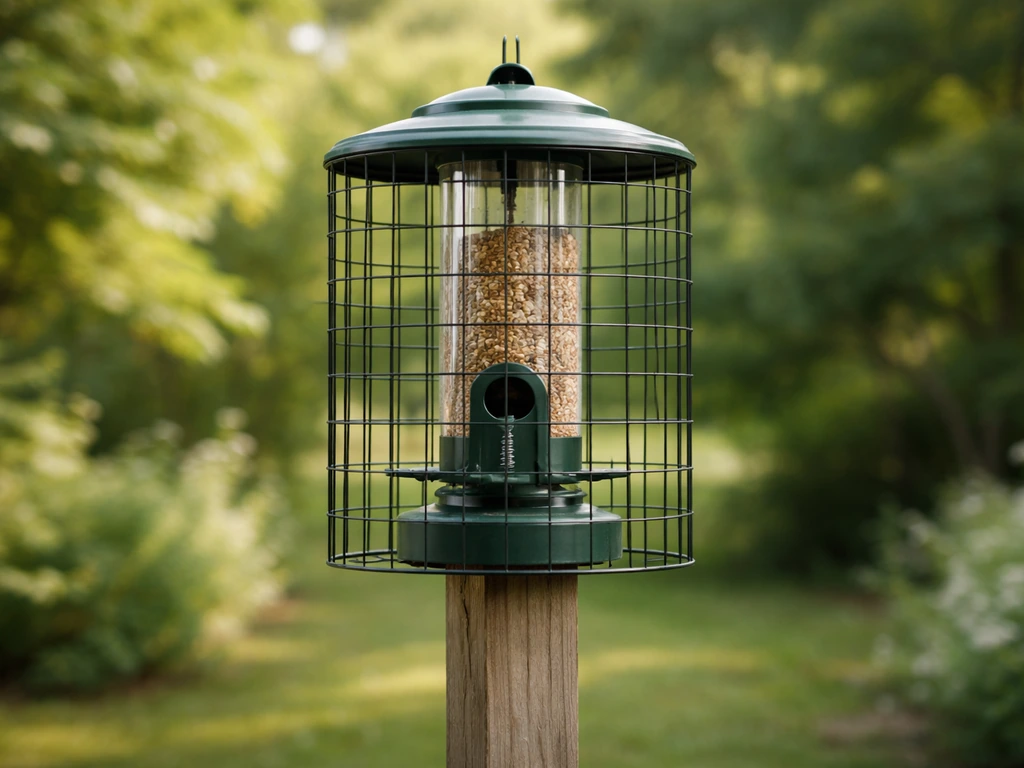
- Physical exclusion at feeders: Caged feeders with openings sized for small birds physically block grackles while allowing access for species like sparrows and finches.
Long-term prevention: make your space less attractive
Deterrents buy you time, but habitat and attractant management is what produces lasting results. USDA APHIS's grackle management guidance repeatedly returns to the same theme: reduce access to food sources and modify the environment around roost trees and structures. Cornell Lab's behavioral data supports this practically, since grackles are ground foragers, so reducing accessible food at ground level is one of the most powerful levers you have.
- Use feeders with trays or eliminate them entirely for a season if grackle pressure is severe: no feeder means no feeder conflict
- Trim or thin roost trees to make them less sheltered and attractive for overnight roosting (consult a licensed arborist before major work)
- Avoid planting dense conifers or large communal trees near structures if you're landscaping fresh ground
- Manage pet food outdoors: do not leave food dishes outside, as they are a direct attractant for grackles and other scavengers
- Keep compost and food waste in sealed containers
- Reduce lawn watering during peak flock periods: moist lawns make it easier for grackles to find soil invertebrates, one of their preferred food sources
- Apply bird netting over fruit trees, berry bushes, or garden rows to physically exclude foraging birds during harvest periods
If/then: how to respond to specific grackle problems
Different grackle problems call for different responses. Here's how to match your situation to the right action.
If grackles are taking over your feeders
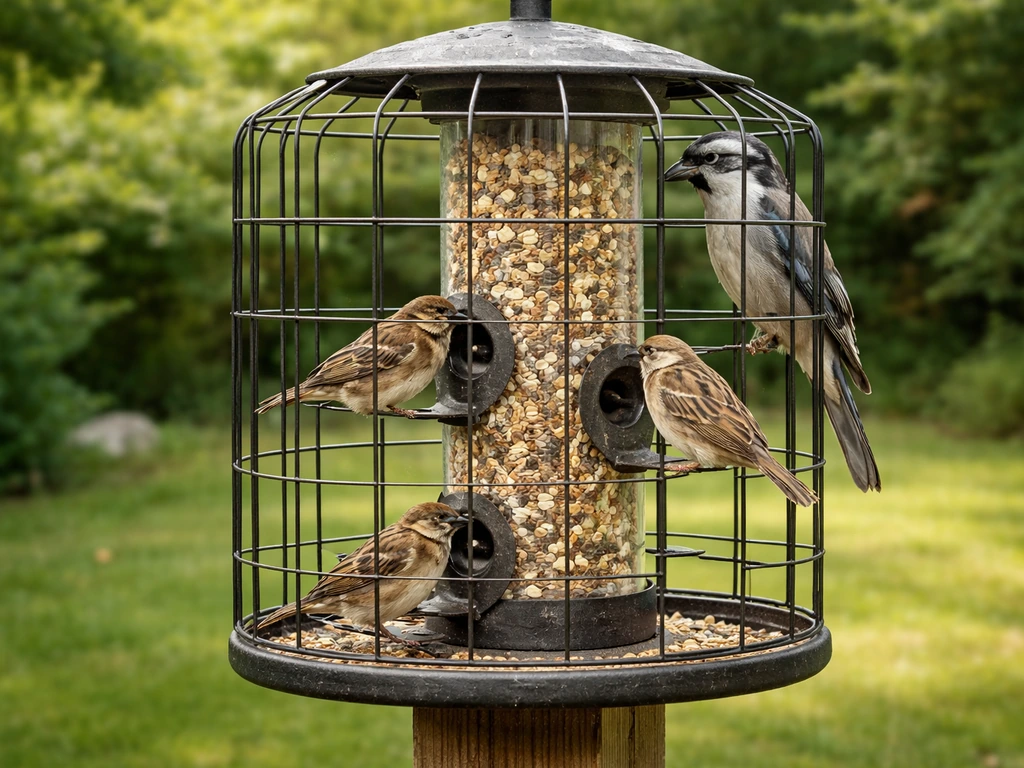
Start with feeder mechanics before anything else. Install a weight-sensitive feeder or a caged feeder designed to exclude larger birds. Then switch your seed mix to safflower or nyjer. If you're using a platform or tray feeder, take it down entirely for two to three weeks. Grackles will move on to easier food sources. Once you reintroduce feeders, stay consistent with seed selection and daily cleanup of ground spill.
If a roost is causing noise and mess
Act early in the season, before the roost becomes established. Once thousands of birds have used a site for several weeks, moving them becomes significantly harder. In the first two to three weeks, consistent harassment at dusk, when birds are settling, using distress calls, predator decoys, and reflective deterrents in combination can be enough to redirect the flock to a different site. For large established roosts with documented health or structural concerns, professional wildlife damage management contractors are the practical next step. They have access to tools and permits that most homeowners don't.
If grackles are damaging crops or feedlots
Agricultural settings are where lethal control sometimes enters the picture. Under 50 CFR § 21.43, a federal Depredation Order, blackbirds including common grackles can be taken without an individual permit when they are depredating crops or creating health hazards at feedlots, subject to specific conditions. The USFWS clarifies that this order governs authorization without specifying methods, meaning compliance with state and local laws still applies. If you're dealing with crop damage at scale, consult your state wildlife agency and USDA APHIS Wildlife Services to understand what's authorized in your area and what methods are most effective. For smaller garden situations, bird netting over vulnerable crops is the most reliable non-lethal option.
If grackles are nesting near your home
Nesting season is April through June. Once a grackle is actively nesting, the nest and eggs are generally protected under the Migratory Bird Treaty Act, and removal requires authorization. The practical approach is to wait it out: nestlings fledge in 10 to 17 days, and the whole breeding cycle wraps up by late June. After the nest is abandoned, remove it and take steps to make that location less hospitable for next spring, like trimming dense vegetation or installing physical exclusion on ledges and structures where they nested.
What doesn't work, and what actually matters
Skip the ultrasonic repellers. Skip the shiny pinwheels as a standalone solution. Both provide at best a few days of marginal deterrence before birds habituate completely. The approaches that consistently produce results are: changing what food is available, changing how it's physically accessible, removing ground-level attractants, and applying harassment early at roost sites before flocks establish. None of these are dramatic, but they're backed by wildlife management evidence rather than marketing copy. Grackles are smart, adaptable birds. Outsmarting them requires removing the reasons they showed up in the first place, not just startling them temporarily. If you are also dealing with the superkitties bird bop / pickle problem style of chaos, the same idea applies: use targeted, practical deterrence instead of hoping for one magic trick. This is why the train bird problem is best handled with behavior-based, humane prevention strategies rather than one-off tactics. Those same principles can help with common train and bird problem scenarios near rail corridors, too.
If you're managing birds in a broader operational context, such as near warehouses, agricultural facilities, or aviation environments, the same evidence-based principles apply: combine deterrent types, rotate them, and focus on attractant reduction. In a bird problem in warehouse settings, the key is to combine deterrent types, rotate them, and reduce what draws birds to the site. The underlying biology is the same whether you're dealing with a backyard feeder or a feedlot. On macOS, a common cause of high CPU use is the Bird process, which can spike when mail or notification services are interacting with network connections.
FAQ
If I’m getting “grackles everywhere” at my feeder, does that mean they’re dangerous or targeting my home?
Not usually. If you see grackles frequently in a backyard, the safest assumption is that they are using that area as a food and roost convenience, not because they are actively hunting anything. Focus on reducing ground-level food (spilled seed, open trash, pet food) and on feeder design, since their ground-foraging habit is what keeps them coming back.
What’s the safest way to clean up after grackles, especially near a roost?
Cleaner is better, but timing matters. If you’re dealing with heavy droppings under or near a roost, avoid routine cleanups during peak bird presence, and treat it like a respirator-and-gloves job (especially when material is dry and dusty). A single day of careful cleanup is better than frequent low-level exposure attempts.
Can I use deterrents or remove nests during grackle nesting season?
Yes, you can still deter them during nesting season, but you should not interfere with active nests. The humane approach is to use exclusion and habitat changes only where birds are not actively nesting, then wait until after fledging to remove nests and modify the site so it is less attractive next spring.
If I buy a “large-bird proof” feeder, will grackles automatically stop using it?
Unreliably. Many feeders still allow grackles access even when “large-bird resistant” is claimed, because perching and spacing can still let them reach seed. Check that the mechanism truly blocks their weight and reach, and test with a temporary short window while you also remove ground spill.
Why do grackles come back after I try deterrents for a week or two?
You may see a short-term decline, but they often return once the birds have learned the area is still rewarding. The key difference is whether you also change attractants and access, such as removing platform feeding, switching seed to less preferred types, and cleaning daily so ground-level food disappears.
Do grackles mostly eat from feeders, or do they feed on the ground too?
Yes, in many yards the issue is not only the feeder, it is the ground. If you have trays, platforms, or nearby lawn seed, grackles will do most of their feeding on the ground. Remove those attractants, reduce bare-spill conditions, and manage what falls by shifting to feeders that do not shed seed.
When is lethal control actually considered for grackles?
You are unlikely to need lethal control for a typical backyard problem. Lethal options are more relevant for large-scale agricultural depredation or documented health hazards at established sites, and they also require you to follow specific authorization and local rules. For small gardens, netting over vulnerable crops is usually the most dependable nonlethal route.
How do I decide whether my grackle problem is a feeder issue or a roost issue?
Try to solve it by separating the problem parts. If the nuisance is crowding at a feeder, fix feeder mechanics and remove ground spill first. If it is neighborhood-scale roost droppings and noise, focus on discouraging use of roost trees and structures early, typically around when birds start forming the largest flocks in fall and winter.
When should I start deterring grackles for best results?
Think in windows, not random tactics. The most intense nuisance patterns tend to show up in fall and winter when flocks settle at communal roosts, so your deterrent effort should start early in the season and be consistent at dusk. For nesting behavior, protect nests by staying away from the area until fledging, and do the real site modification after the breeding cycle ends.
Do I really need a respirator to handle grackle droppings?
Wear one when you are cleaning accumulated droppings after a roost has been in use for weeks, particularly if material is dry and dusty. For light, fresh cleanup under a feeder, risk is much lower, but gloves and basic hygiene are still smart. If you are unsure about roost severity, err on the side of respiratory protection.
Are ultrasonic or “high-tech” repellers a reliable fix for grackles?
Usually not, and they can also distract you from what actually works. Ultrasonic devices are broadly considered ineffective for bird deterrence, because grackles habituate to many non-physical cues. If you use deterrents, prioritize methods that change access to food or modify the environment, then rotate visual and harassment tools.
How long should I remove a feeder before I expect grackles to move on?
If you can keep them from getting food easily, they often relocate. Make changes within a 2 to 3 week window, such as taking down an easy platform feeder, switching seed type, and removing spilled seed daily. Once they stop finding value, you can reintroduce feeders more carefully to prevent a rapid restart of the feeding pattern.
Do shiny pinwheels or reflective tape work long term on grackles?
Yes, reflective deterrents like pinwheels can be quickly ignored if they are used alone or not rotated. Pair them with other approaches and change the setup regularly, and do it while roost use is still forming. Birds that have already established a routine are much harder to shift without stronger habitat or access changes.