If a horse just stepped on a bird in front of you, here is what to do right now: don't panic, don't try to pick the bird up immediately with bare hands, and don't give it food or water. Those three things alone will keep you from making the situation worse in the next 60 seconds. The rest of this guide walks you through the full process, from immediate triage to prevention, grounded in actual wildlife rehab and bird-hazard science rather than guesswork.
Horse Steps on Bird: What to Do Now and How to Prevent

Marcus Whitmore
2 Apr 2026
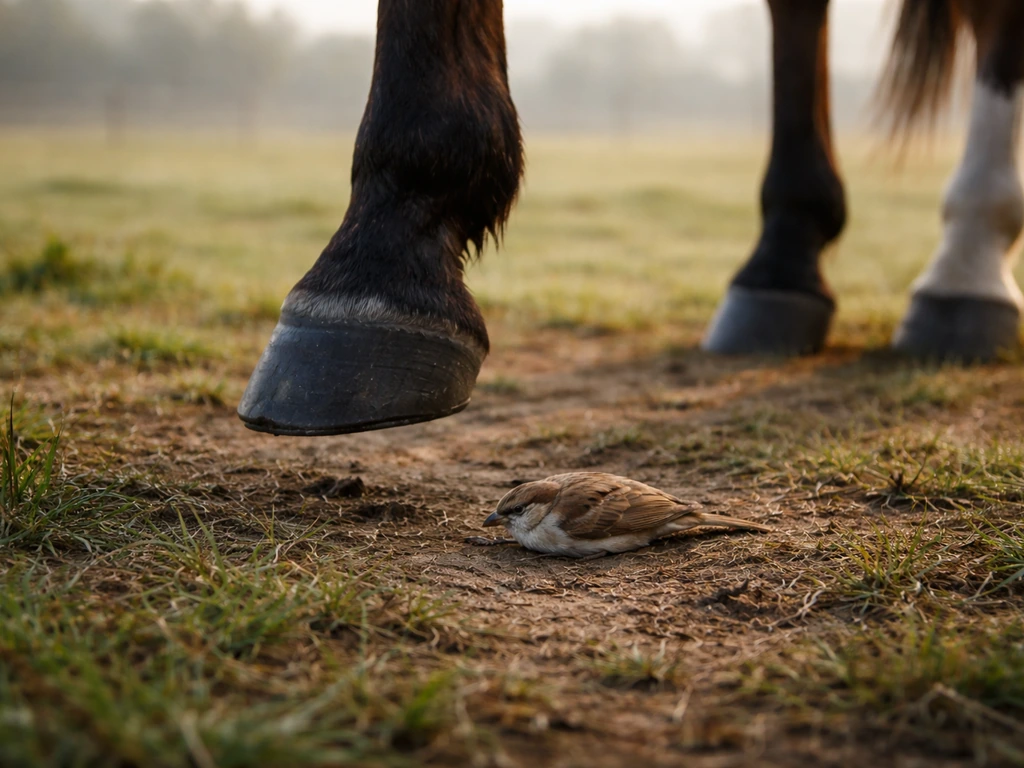
What to do immediately if a horse stepped on a bird
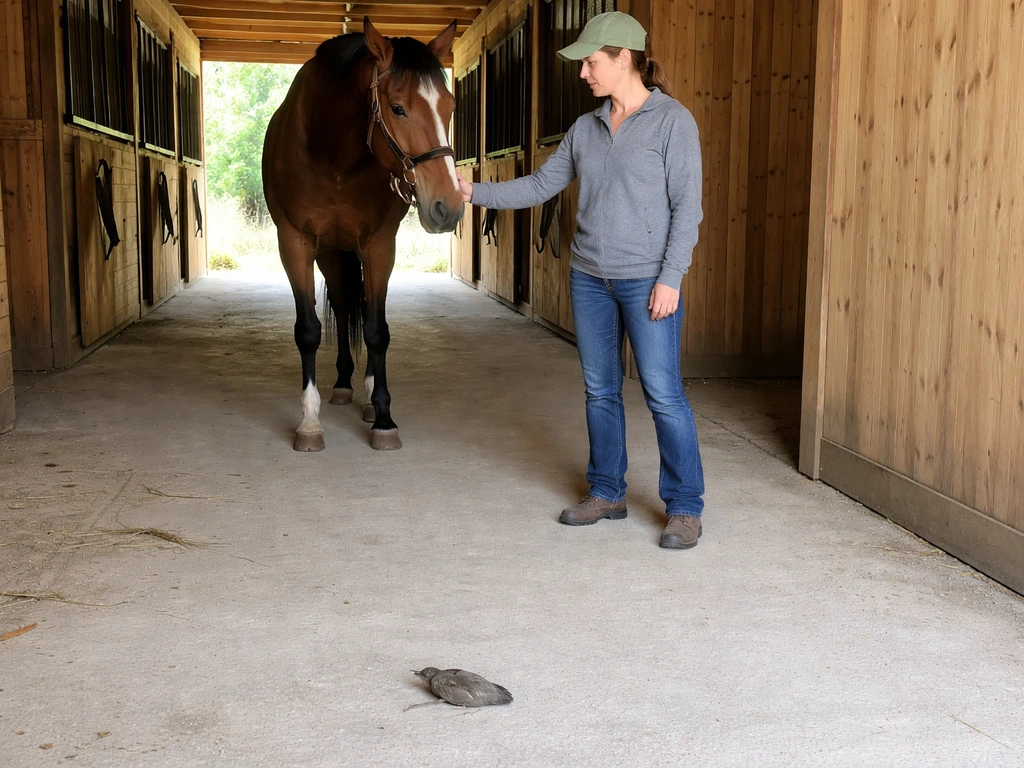
Your first job is containment, not treatment. If the bird is still alive and visible, approach it slowly and quietly. Horses can re-injure a bird if they startle, so move the horse away from the area first if it is safe to do so. Then cover the bird loosely with a light cloth or towel, which reduces visual stimulation and helps calm it.
Gently scoop it into a cardboard box or shoebox that has a few small air holes. A dark, warm, quiet environment is the single most effective thing you can do for a traumatized bird before professional help arrives. Tufts University's veterinary guidance specifically recommends this approach: cover the bird with a light cloth, place it in a box, and keep it in a warm, dark, quiet spot away from pets and people.
Do not give it food or water. This is the most common well-meaning mistake people make. An injured bird may have internal injuries, a damaged airway, or be in shock. Forcing food or liquid into it can cause aspiration and make things significantly worse. Wildlife rehab programs are unanimous on this point: no food, no water until a licensed rehabilitator or vet tells you otherwise. Keep the box away from direct sunlight and away from air conditioning vents. If it is cold outside and you have a heating pad, you can place it under half the box (not the whole bottom) so the bird can move away from the heat source if it gets too warm.
One safety note: even small birds can scratch or peck when panicked and in pain, and the shock of handling can worsen their condition. If the bird is very large (a raptor, goose, or heron, for example), do not attempt to pick it up without a thick towel or gloves. Call a wildlife rehabilitator first and follow their specific handling instructions.
How to assess injury risk and decide who to contact
Once the bird is secured, your next task is making the right call, literally. Contact a licensed wildlife rehabilitator as soon as possible. In the United States, you can find one through the National Wildlife Rehabilitators Association directory, your state wildlife agency's website, or by calling your local humane society and asking for a referral. When you call and reach voicemail, leave a detailed message: the species if you know it, the approximate size, where the incident happened, what you observed (is it moving, breathing, bleeding?), and your callback number. Wildlife rehab organizations field a lot of calls and triage by urgency, so specificity helps.
It is worth knowing that in most U.S. states, keeping a wild bird beyond the time required for emergency transport to a licensed facility is a violation of federal and state law. Florida Fish and Wildlife Conservation Commission guidelines, for example, are explicit that holding wildlife past that point is unlawful. So the goal is always to hand the bird off to a professional, not manage it yourself at home. Your state wildlife agency is also a valid contact if you cannot locate a rehabilitator quickly; they can route you to the right resource and sometimes dispatch assistance directly.
How do you assess severity on the spot? Look for visible bleeding, a wing held at an abnormal angle, inability to hold the head upright, or legs that are not functioning. Any of these indicate a serious injury requiring prompt professional care. But here is the critical point: the absence of visible injury does not mean the bird is fine. The American Bird Conservancy makes this clear: a bird that looks like it could fly away may still have internal injuries that will kill it within hours or days. When in doubt, treat every bird that has been stepped on by a horse as an injured bird and get it to a rehabilitator.
Why these incidents happen: bird behavior and horse movement
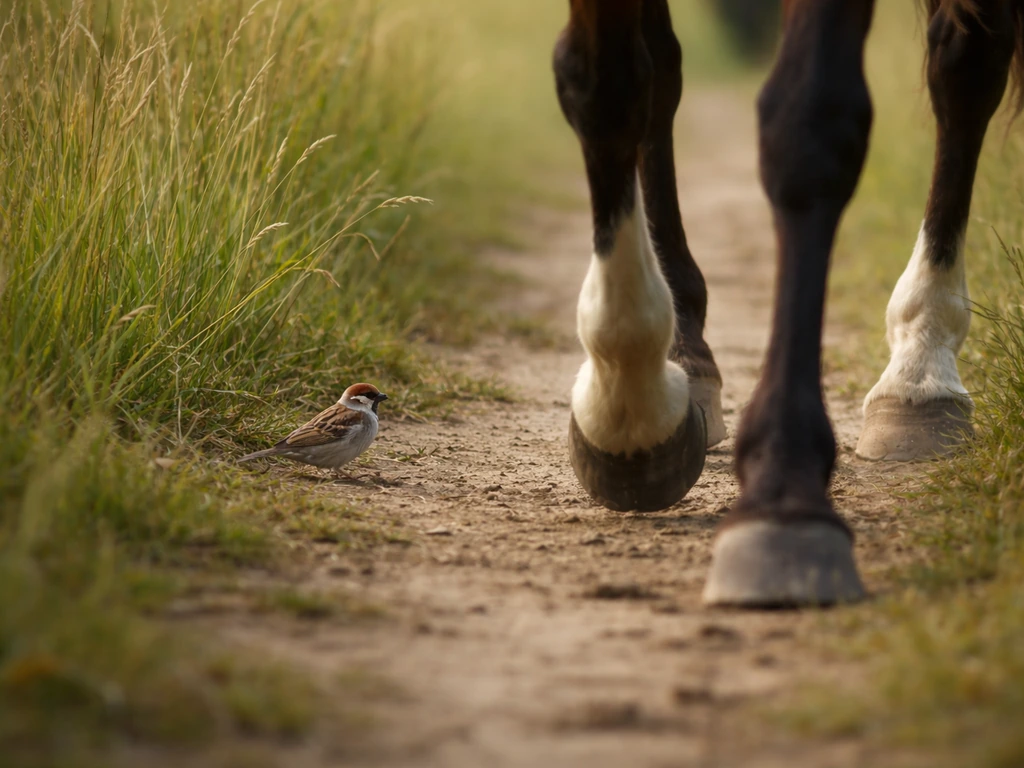
Understanding why this happens is not just interesting, it is genuinely useful for prevention. The core problem is a mismatch between how horses move and how birds respond to large approaching animals. Many bird species, especially ground-nesting ones like killdeer, quail, larks, and meadowlarks, rely on camouflage and stillness as their first line of defense. They do not flush immediately when a large animal approaches; they sit tight and hope to go undetected. This works well against most predators, but it is a fatal strategy when a 1,200-pound horse is walking directly toward them.
Published ecological research is direct on this point: livestock trampling is one of the primary mechanisms by which grazing animals destroy ground-nesting bird nests, with studies in European pastures specifically documenting nest loss through trampling as a significant and repeatable hazard. The birds are not being careless. They are following instinct. The problem is that equine hooves cover ground quickly and unpredictably from the bird's perspective, especially during turns, lateral movement, or when a horse is startled. Horses are not looking at the ground for birds; they are responding to their riders, their herd, or their own footing.
Timing matters too. Spring and early summer are peak ground-nesting season in most of North America, which means risk is highest from roughly March through July. Dawn and dusk see increased bird ground activity overall. If you have ever wondered about specific scenarios people encounter, discussions like those found on horse steps on bird reddit threads often reflect exactly this seasonal pattern, with incidents clustering in late spring when pastures are most actively used by both nesting birds and horses simultaneously.
Myths vs. facts about bird injuries and survival
There are a handful of persistent myths around bird injury that lead people to either do too little or the wrong things. Let's address the most common ones directly.
| Myth | The Reality |
|---|---|
| If the bird flies away, it's fine. | Not necessarily. A bird can fly a short distance after serious trauma and die hours or days later from internal injuries or shock. If a horse stepped on it, get it assessed even if it seems mobile. |
| You should give it water to help it recover. | Do not. Giving food or water to a traumatized bird risks aspiration and can worsen shock. This is consistent across all major wildlife rehab protocols. |
| If there's no blood, there's no serious injury. | Internal injuries leave no external mark. Organ damage, internal bleeding, and skeletal fractures can all occur with no visible wound. Hoof pressure is enormous. |
| You can nurse it back to health at home. | In most U.S. states, keeping a wild bird without a wildlife rehabilitation license is illegal. Beyond legality, the specialized care these birds need is beyond what most people can provide. |
| Birds are fragile and will die no matter what you do. | Prompt, correct triage genuinely improves survival odds. Getting the bird to a licensed rehabilitator quickly is not futile; it can make the difference between survival and death. |
The most important myth to debunk is the "looks fine, probably fine" assumption. Research on bird window collisions, which share the same trauma profile (blunt force impact, shock, potential internal injury), has demonstrated that birds can die from injuries that leave zero external evidence. The parallel to a hoof strike is direct. A horse hoof exerts pressure measured in hundreds of pounds per square inch depending on gait and footing. Even a glancing blow can cause serious internal damage. The evidence is consistent: when in doubt, treat the bird as injured and contact a professional.
Prevention today: stable, field, and trail management
Prevention is where you have the most control, and several practical changes can meaningfully reduce risk starting today. The core strategy is reducing overlap between horse movement and ground-nesting bird habitat during high-risk periods.
Adjust your routes and timing
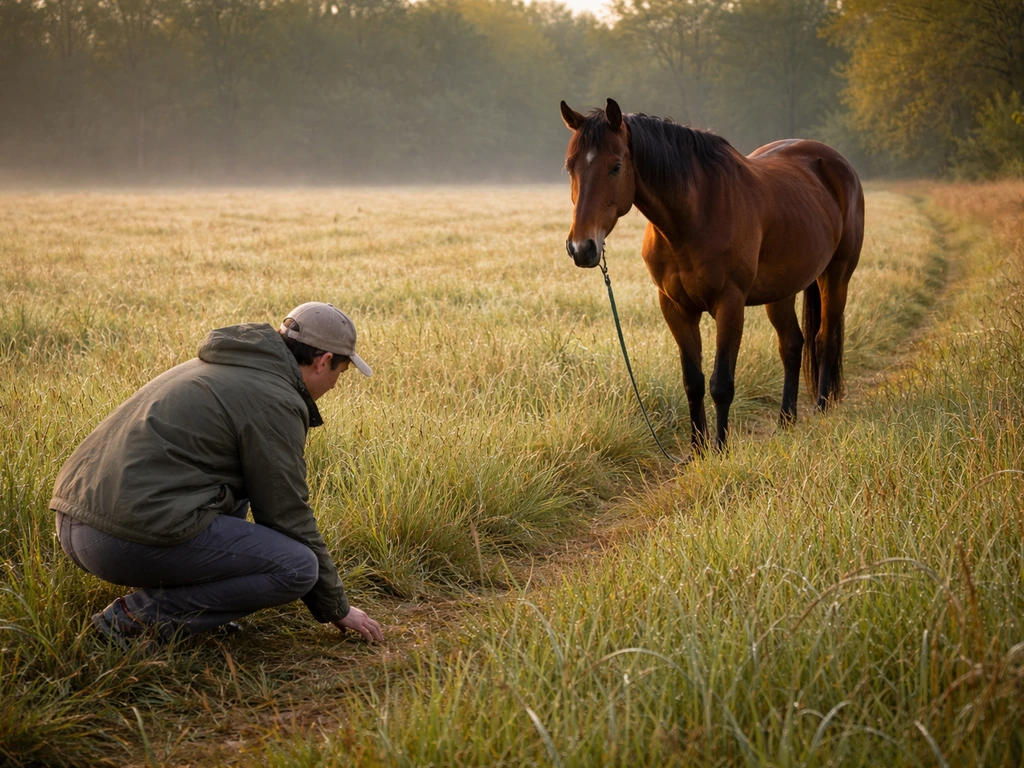
During spring and early summer, scan the ground ahead of your horse before moving through tall grass, field margins, or areas with dense low vegetation. This takes about 10 seconds and can prevent an incident. Slow your horse to a walk in these areas and give it a moment to read the ground. On trails, avoid cutting through unmowed grass margins where birds tend to nest. If you ride at dawn or dusk, be especially deliberate in scanning, as bird ground activity peaks at these times.
Manage paddock and arena access seasonally
Audubon Vermont's guidance on bird-friendly grazing explicitly recommends rotational grazing strategies where livestock are moved between paddocks rather than concentrated in the same space continuously. This approach reduces sustained pressure on any one area and gives ground-nesting birds the opportunity to complete nesting cycles in parts of a property that are temporarily rested. If you have sections of your property that are known or suspected nesting areas (you have seen killdeer or other ground-nesters there before), consider fencing those areas off from March through July or at minimum reducing horse access during that window. Simple electric fencing or temporary barrier tape is often sufficient.
Stable and arena-specific steps
Inside stables and arenas, the risk is lower but not zero. Barn swallows, sparrows, and pigeons commonly nest in stable rafters and will land or feed on arena floors. Horses moving quickly in an arena can clip or step on a bird that lands at the wrong moment. If you have active bird nesting inside your stable, be aware that fledglings will spend time on the ground before they can fly reliably, typically for several days. During that window, limit horse access to areas near active nests if possible or supervise closely. This is a short-term inconvenience that prevents a much worse outcome.
If you have encountered an incident and want to share or document it (which is genuinely useful for understanding how common these events are and under what conditions they occur), footage can be valuable. People who have captured incidents on a phone often search for guidance on handling horse steps on bird shot on iPhone footage for reporting purposes, which connects directly to documentation steps covered in the next section.
Aftercare and reporting: wildlife rehab, vet help, and documentation
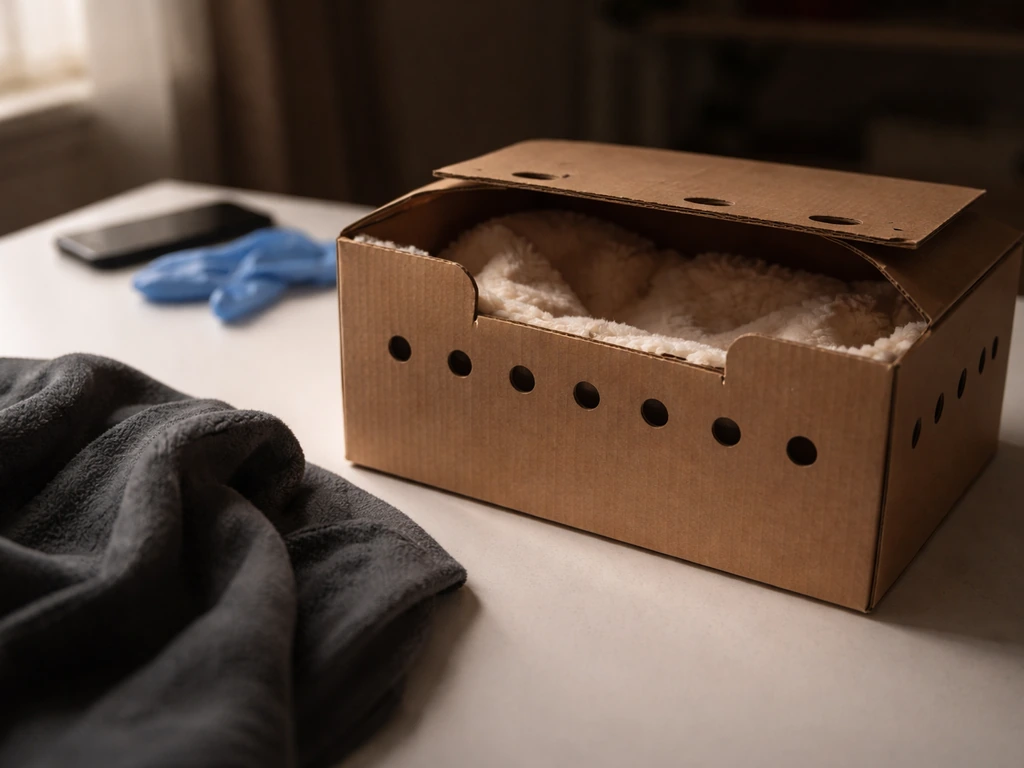
Once you have the bird stabilized in a dark, warm, quiet box and have contacted a rehabilitator or are en route, your role shifts to documentation and handoff. Document what happened as specifically as you can while the details are fresh. Useful information includes the date, time, and exact location of the incident; the apparent species and size of the bird; what you observed (was it moving, vocalized, appeared stunned, showed visible injury?); what the horse was doing when the incident occurred (walking, trotting, turning); and any steps you took, including when you first found the bird and when you secured it.
Wildlife rehabilitators and state wildlife agencies use this information to triage and treat the bird more effectively. Some agencies also track injury data by cause, which informs conservation management. U.S. Fish and Wildlife Service guidance directs finders to keep the bird safe and use official reporting channels rather than attempting independent care, and documentation supports that process. Hawaii's DLNR and similar state agencies provide specific forms or guides asking for exactly this kind of finder information. Even if your state does not have a formal reporting system, writing down the details and sharing them with the rehab facility when you arrive is good practice.
When you arrive at a wildlife rehab facility or vet clinic, let them know the bird was trampled by a horse. This is an important detail because blunt force trauma from a hoof has a different injury profile than a window strike or cat attack, and it helps the clinician know what to look for internally. Do not open the box yourself in the waiting room. Let staff handle the bird from that point. Your job is done once it is in their hands.
One thing worth noting: the sound a bird makes after being stepped on can help you assess consciousness and whether it is in active distress. A bird that is vocalizing, even weakly, is at minimum alive and somewhat alert, which is useful information. Some people who search for what to expect after these incidents describe a distinctive horse steps on bird squeak sound, which typically indicates the bird is alive and responsive, not necessarily that it is in severe distress. That said, silence does not mean death: a bird in shock often goes very quiet. Both outcomes warrant the same immediate response.
Finally, if you are reading this because a dog rather than a horse was involved, the triage steps are largely the same. The injury mechanisms differ slightly because dog attacks often involve puncture wounds and compression injuries from jaws rather than hoof strike, but the containment, warmth, dark, quiet, no food or water, and call a rehabilitator protocol is identical. A guide on what to do when a dog steps on bird covers those specific nuances if that is your situation.
The bottom line: a horse stepping on a bird is a genuine hazard, not a rare freak event, especially during spring nesting season in mixed-use equestrian and natural areas. The birds most at risk are following survival instincts that make perfect sense against predators but fail completely against large domestic animals. Your response in the first few minutes, stabilize and secure the bird without adding stress, call a rehabilitator, document what happened, matters. The science is clear that prompt, correct handling improves outcomes. Do that part right and you have done everything you reasonably can.
FAQ
If the bird is bleeding a lot, should I try to stop the bleeding before calling a rehabilitator?
Do not spend time trying to treat wounds. Stabilize by covering loosely, place it in a ventilated box, keep it warm and dark, and call a rehabilitator immediately. Excess handling increases shock and can worsen internal injury, and bleeding often reflects trauma that needs professional care.
What if the bird runs or flies away after the horse steps on it?
Treat it as potentially injured even if it looks fine. Birds that escape can still have internal injuries or wing fractures, and they may collapse later. If possible, observe from a safe distance, reduce disturbance, and contact a rehabilitator with the last-known location.
Can I use my hands to pick up the bird if I’m wearing gloves?
Gloves help for larger birds, but the safest approach is still to minimize direct contact. Use a light towel or cloth to gently scoop, then transfer to a box. If the bird is a raptor, heron, or goose-size bird, do not attempt without thick towel, proper protection, and rehabilitator guidance.
Is a plastic container okay instead of a cardboard box?
Cardboard is preferred because it provides a calmer, less reflective environment and is easier to manage without trapping heat. If you only have plastic, ensure it has air holes, keep it out of direct sun, and maintain the same warm, dark, quiet conditions until help arrives.
How warm should the bird be, and can I use a heat lamp?
Aim for warmth without overheating, use a heating pad under half the box only when it is cold, and let the bird move away from the heat source. Avoid heat lamps because they can create hotspots and excessive dryness, which can worsen shock or dehydration.
Should I keep the horse tied while I work on the bird?
Yes, if you can do so safely. A startled horse can re-injure the bird during handling. Move the horse away first when possible, then keep it restrained or supervised while you manage the box and call for help.
What if I’m not sure whether it was actually stepped on, or it might have been hit differently?
Still treat the bird as injured. Hoof strikes can cause internal damage even with minimal visible injury, and you can’t confirm what happened without an exam. Tell the rehabilitator exactly what you observed, including uncertainty, so they can choose the right trauma assessment.
How quickly should I call the rehabilitator, and what if I can’t reach anyone right away?
Call as soon as the bird is secured in the dark, warm, quiet box. If you hit voicemail, leave details (species if known, location, timing, behavior, bleeding) and keep the bird stable. If no one responds quickly, call your state wildlife agency or local humane society for routing and next steps.
Do I need to wash my hands or change clothing after handling the bird?
Yes. Wash hands thoroughly after handling, and avoid touching your face while caring for the bird. Consider changing clothes if you were splashed with bodily fluids, since injured wildlife can carry pathogens and handling can spread contaminants.
How should I document the incident for the rehab facility without losing track of the bird?
Document while staying hands-off with the bird. Use photos or a short video from a safe distance before you cover and box it, note the time and exact location, then write down observations (breathing, bleeding, posture) and what the horse was doing (walking, turning, trot). Do not delay boxing to get elaborate footage.
If the bird is still alive but appears to be dying, should I wait for the rehabilitator before moving it?
Do not wait if it requires protection from further disturbance. Secure it in a ventilated box in a warm, dark, quiet area and keep it away from people and pets. Continue trying to reach the rehabilitator, but avoid repeated attempts to re-handle or “check” the bird frequently.
Does the same guidance apply if the incident involved a dog instead of a horse?
The core priorities are the same: keep the bird in a dark, warm, quiet container, avoid food or water, and contact a rehabilitator or vet. The injury mechanism differs, so when you call, specify that a dog was involved and whether there were puncture wounds or bite-related damage.