
"When does old bird activate" is an ambiguous phrase that lands in very different places depending on who is asking. For most people searching with a biological intent, the honest answer is: it depends on the species, the context, and what you mean by 'activate.' In wild and captive birds, ageing triggers a cascade of changes, behavioural shifts, declining locomotor performance, immune senescence, and potential reactivation of latent infections, that rarely flip on at a single point. These changes tend to emerge gradually across a species-specific window, though some birds show abrupt declines shortly before death. If you are a pet owner worried about an older parrot, a researcher tracking field populations, or an aviation safety professional managing bird strike risk near airports, the relevant biology looks quite different, and so does what you should do about it.
When Does Old Bird Activate: Aging, Immunity, and Collision Risk

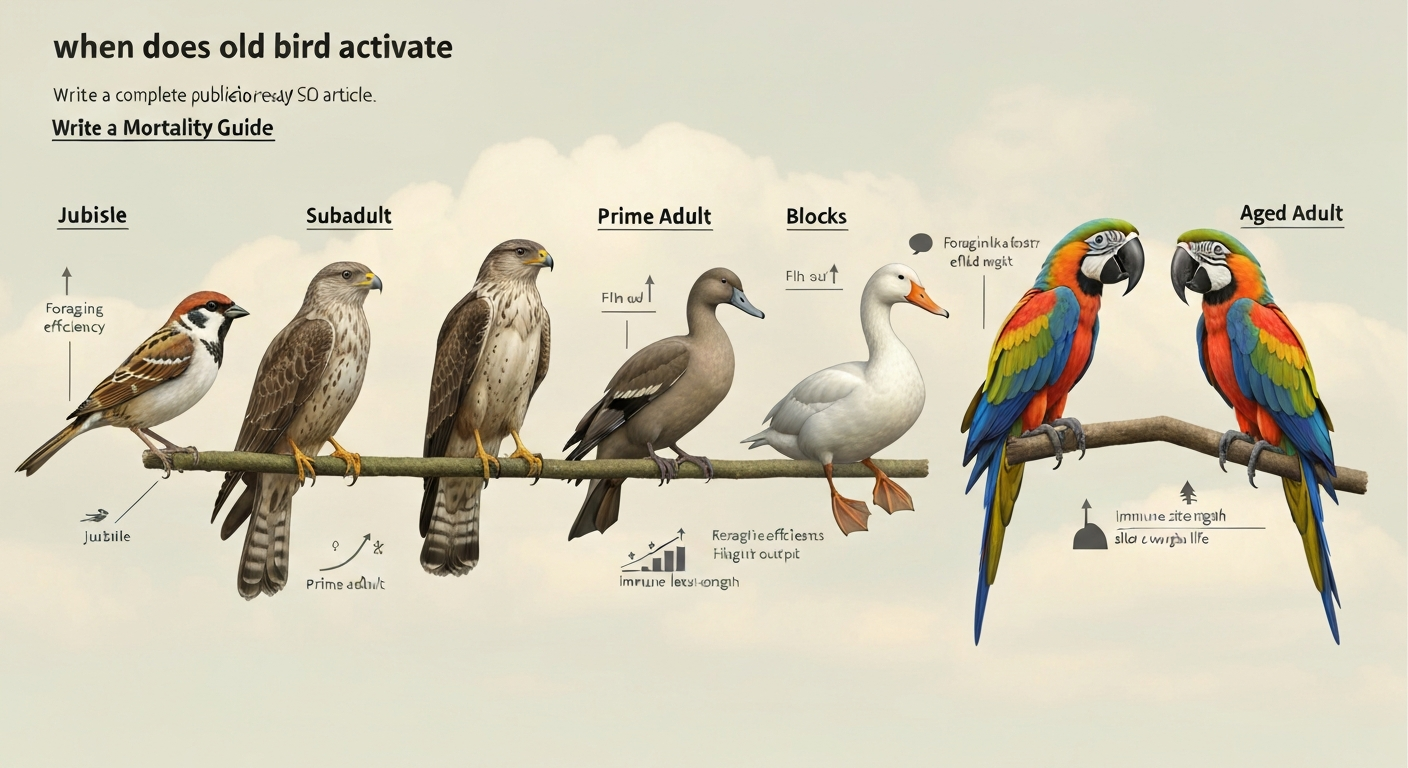
What people actually mean when they search this phrase
The query 'when does old bird activate' is genuinely ambiguous, and it is worth pausing to sort out the likely intents before diving into biology. I see it falling into four distinct categories, and the answer is meaningfully different for each. If you meant a fandom or character question, for example, why is bird Kazami so weak, see the dedicated discussion of character mechanics and lore for that topic. For users with a gaming intent, queries like 'should I use my Master Ball on a Galarian bird' are about Pokemon mechanics rather than avian biology and deserve a separate, game-focused answer.
- Behavioural activation or decline: Searchers wanting to know when age-related changes in activity, foraging, or reproduction become apparent in birds — the most biologically rich interpretation and the one this article addresses in depth.
- Immune reactivation of latent infections: Owners or clinicians asking when an older bird's compromised immune system might allow a dormant pathogen (such as psittacid herpesvirus or beak and feather disease virus) to reactivate and cause clinical disease.
- Collision and mortality risk: Aviation professionals or researchers asking whether older birds have a different risk profile for building strikes, window collisions, or other mortality hazards compared with juveniles.
- Non-biological uses: The phrase appears in trading card games, mobile games, and toy product instructions (notably certain mechanical 'drinking bird' novelties). If you are looking for game mechanics or toy activation steps, this is not your article — but the related piece on the drinking bird's perpetual motion illusion on this site covers that novelty toy in full biological and physical context.
How birds age: the core biology
Senescence, the age-related decline in survival and reproductive performance, is genuinely widespread in wild birds. A systematic review drawing on 149 longitudinal studies across 75 bird species confirmed evidence of senescence across a broad range of taxa. That is not a trivial finding: for a long time, the prevailing view was that wild animals rarely lived long enough to senesce under natural conditions. The reality is that many do, and the rate and onset of that decline varies enormously by species.
The rate at which a bird ages is tightly linked to its position on what biologists call the fast-slow life-history continuum. Species with small bodies, early sexual maturity, and short development periods age faster and die younger. Species with large bodies, delayed maturity, and extended developmental periods age more slowly and live longer. Comparative analyses of ageing in birds and mammals confirm this interspecific variation is predictable from life-history traits. A house sparrow and an albatross are both birds, but comparing their 'geriatric' timelines is almost meaningless without that context.
At the organ and cellular level, avian ageing involves the same broad mechanisms seen in other vertebrates: telomere shortening, oxidative stress accumulation, declining tissue repair efficiency, and shifts in immune cell populations. What makes birds interesting from a gerontological standpoint is that many species live disproportionately long relative to their body mass compared with mammals, a gap that makes them useful models for studying the biology of ageing.
Behavioural activation and decline across a bird's lifespan
Here is where the phrase 'when does old bird activate' gets most interesting biologically. The arc of a bird's behavioural capability is not a straight decline from birth. Young birds, particularly juveniles in their first months after fledging, are actually less capable than adults at several tasks. Foraging proficiency is a well-documented example: juvenile birds forage less efficiently than experienced adults, and second-year individuals tend to be intermediate. Studies of silvereyes, gulls, and various passerines all document meaningful improvement in foraging efficiency after the first year. In this sense, a bird's behavioural 'activation', reaching peak functional performance, happens in early adulthood, not at hatching. If you meant the novelty 'drinking bird' toy (does the drinking bird ever stop), see the separate explanation on its thermodynamic cycling and why it can appear to operate indefinitely under steady conditions.
Once birds reach adulthood, the picture shifts. Locomotor performance provides a concrete example: a controlled study of zebra finches found that older birds showed roughly a 10% decline in take-off flight speed and lower flight motivation compared with younger birds, reflecting measurable senescence of locomotor performance. This matters for predator escape, collision avoidance, and foraging range, all of which have survival consequences. Cognitive performance follows a similar trajectory: a field study reported age-related cognitive decline in female birds that correlated negatively with fledging success, meaning older females with declining cognitive performance raised fewer fledglings.
The pattern of decline is not uniform across species. Some long-lived birds show gradual, smooth reproductive senescence over many years. Others display what researchers describe as 'catastrophic' declines, abrupt deterioration in performance shortly before death with relatively little warning. Which pattern applies depends on the species' life-history strategy and the ecological pressures it faces. This is why a blanket answer to 'when does old bird activate' is genuinely impossible without knowing the species.
Observable behavioural signs of senescence
- Reduced activity and shorter foraging bouts than adults of the same species
- Slower take-off response and reduced flight distance when flushed (documented in passerines)
- Decline in territory defense intensity or song rate in territorial species
- Reduced reproductive output: smaller clutches, lower hatching success, fewer fledglings per year
- Delayed seasonal activities: later arrival on breeding grounds, later nest initiation
- In captive birds: reduced vocalisation, lower interest in enrichment, longer rest periods, changed posture
Immune senescence and reactivation of latent infections
Avian immunosenescence, the age-related decline of immune function, is real but still relatively under-studied compared with the mammalian literature. Reviews of the available evidence document age-related changes in both innate and adaptive immune markers in birds, including altered leukocyte profiles, shifts in innate responses, and reductions in some antibody responses. The practical upshot is that an older bird's immune system is less able to hold latent pathogens in check and less responsive to novel infections. This is where the concept of 'activation' becomes clinically meaningful for pet owners and avian veterinarians.
Several important avian pathogens establish persistent or latent infections and can reactivate when the host is immunosuppressed or stressed. Psittacid herpesviruses, which cause Pacheco's disease in parrots, are a well-documented example. These viruses can persist in oral and cloacal mucosa and other tissues, shedding intermittently. Outbreaks and individual mortalities commonly follow stressors such as transport, introduction of new birds, or the breeding season, events that temporarily suppress immune surveillance. Ageing compounds this vulnerability because baseline immune competence is already declining.
Beak and feather disease virus (BFDV) presents a similar picture. The virus is frequently detectable in asymptomatic adult parrots, it persists in multiple tissues without causing obvious disease, but stress and co-morbidities can precipitate clinical disease or increased viral shedding. Chlamydia psittaci, the agent of psittacosis (a genuine zoonotic concern), can also enter persistent states under adverse conditions and may reactivate intermittently, with disease severity modulated by host age, pathogen strain, and stressors. An older bird harboring any of these agents is not necessarily sick, but the threshold for reactivation is lower than in a young, immunocompetent individual.
Key latent pathogens and their reactivation triggers
| Pathogen | Primary hosts | Latency site | Common reactivation triggers | Zoonotic risk |
|---|---|---|---|---|
| Psittacid herpesvirus (Pacheco's disease) | Parrots, parakeets | Oral/cloacal mucosa, nerve ganglia | Transport, new bird introductions, breeding season, ageing | Low (not known to infect humans) |
| Beak and feather disease virus (BFDV) | Parrots (especially cockatoos, rosellas) | Feather follicles, multiple tissues | Stress, co-infection, ageing, immunosuppression | None |
| Chlamydia psittaci | Parrots, pigeons, many species | Intracellular in macrophages | Stress, overcrowding, ageing, dietary deficiency | Yes — causes psittacosis in humans |
| Avian herpesviruses (Marek's disease, duck plague) | Chickens, waterfowl | Nerve ganglia, lymphoid tissue | Immunosuppression, co-infection, ageing | None |
Age, collision risk, and mortality hazards
The relationship between age and collision mortality is more nuanced than many aviation professionals and bird-safety advocates assume. The data from building and window collision studies across multiple regions consistently show that juvenile (hatch-year) birds are overrepresented in collision mortality datasets, particularly during the post-fledging dispersal period, post-breeding season movements, and migration stopovers. Inexperienced birds appear to be more vulnerable to collisions, not older ones. This is an important distinction: the naive assumption that 'old bird' means 'high-risk bird' in the collision context is not well supported by the evidence.
That said, the locomotor and cognitive declines documented in older birds do have indirect implications for collision risk. A bird with a roughly 10% slower take-off speed and reduced flight motivation has a narrower margin for predator evasion and obstacle avoidance. In low-traffic environments this may not matter much, but near airports, along heavily glazed building facades, or in urban corridors with high vehicle density, reduced escape performance in older individuals could increase their vulnerability to secondary hazards even if they are not overrepresented in raw collision counts.
For aviation professionals specifically, the most productive risk-reduction strategy remains species and timing based rather than age based. Managing bird attractants near airfields, monitoring seasonal movement peaks, and tracking local resident population demographics (using tools like MAPS mark-recapture data from the Institute for Bird Populations or EURING ring-recovery data) gives more actionable intelligence than trying to assess the age structure of individual birds on approach paths. For specific product effectiveness and feeder-deterrent interactions, see guidance on whether Droll & Lock Bird Stop Maxx C does Droll & Lock Bird Stop Maxx C.
Species-specific signs and rough timelines
Because ageing rate scales with life-history traits, 'geriatric' means something very different for a zebra finch versus a macaw. The following table compiles rough onset timelines for age-related signs across the major groups, drawing on longevity records from AnAge and EURING and on the published literature on senescence and geriatric avian medicine. The blank" rel="noopener noreferrer">EURING longevity list (EURING) compiles validated maximum‑lifespan records derived from European ring‑recovery data and is a primary resource for comparative ageing and life‑history studies. These are indicative ranges, not hard cutoffs, individual variation is real and significant.
| Bird group | Typical lifespan range | Signs of ageing often begin | Key geriatric signs to monitor | Notes |
|---|---|---|---|---|
| Passerines (small songbirds, e.g. finches, sparrows) | 2–10 years wild; up to ~15 years captive | Year 3–5 in captivity | Reduced song rate, slower take-off, weight changes, feather wear | Rapid decliners; abrupt late-life deterioration common |
| Raptors (hawks, eagles, owls) | 10–30+ years depending on species | Year 8–15 depending on species | Reduced hunting success, eye changes (cataracts), talon/beak overgrowth | Gradual decline typical; golden eagles documented senescent at 20+ years |
| Waterfowl (ducks, geese, swans) | 5–25 years wild; longer captive | Year 5–10 | Reduced clutch size, joint stiffness, waterproofing decline, weight loss | Captive birds may show bumblefoot and other geriatric orthopedic issues |
| Parrots and psittacines (budgies to macaws) | Budgies 5–10 years; large macaws 50–80+ years | Budgies year 4–6; large parrots decade 3–5 | Cataracts, beak overgrowth, feather abnormalities, reduced activity, lipomas | BFDV and herpesvirus reactivation risk increases; regular geriatric bloodwork recommended |
| Poultry (chickens, turkeys) | 2–7 years productive life; 10–15 years maximum | Year 2–4 in laying hens | Reduced egg production, reproductive tumors, fatty liver, reduced mobility | Laying hens face earlier reproductive senescence due to selective breeding pressure |
A few caveats worth flagging: captive birds regularly outlive their wild counterparts because they are not subject to predation, starvation, or the full burden of parasitism. This means geriatric signs in a captive bird often appear at ages that would be post-mortem in the wild. Equally, the absence of environmental challenge in captivity can mask early senescence, a slower take-off speed may never become apparent to an owner if the bird spends most of its time on a perch.
When to seek veterinary care for an older bird
For pet owners, the challenge is distinguishing normal ageing from a treatable condition or an emergency. The geriatric signs described above, reduced activity, gradual weight loss, feather changes, can be normal in a very old bird, or they can signal an active infection, organ failure, or a latent pathogen reactivating. Without a veterinary exam, you cannot reliably tell the difference, and many conditions that look like 'just old age' are actually treatable.
Veterinary geriatric guidance for psittacines recommends routine geriatric examinations including complete blood count, biochemistry panel, imaging (radiographs or ultrasound), and targeted infectious disease testing (including BFDV PCR and Chlamydia psittaci testing) when clinically indicated. The Geriatric Psittacine (IVIS veterinary resource) summarizes common geriatric signs in pet psittacines and recommends geriatric exams including CBC/biochemistry, imaging, and targeted infectious‑disease testing when indicated. Establishing a baseline while the bird is still healthy is genuinely useful, abnormal values are far easier to interpret when you know what 'normal' looks like for that individual.
Pet owner decision checklist: when to act
- Schedule a routine geriatric wellness exam once your bird reaches the 'ageing begins' threshold for its species (see table above) — do not wait for obvious symptoms.
- Monitor weight weekly with a gram scale; a loss of more than 5–10% of baseline body weight is a red flag requiring prompt veterinary contact.
- Note changes in droppings: changes in urate color, volume of liquid, or fecal consistency that persist more than 24 hours warrant a call to an avian vet.
- Watch for tail-bobbing at rest, labored breathing, or open-mouth breathing — these are respiratory emergency signs requiring same-day veterinary attention regardless of the bird's age.
- Assess grip strength and posture daily; a bird sitting fluffed on the cage floor rather than on a perch is signaling distress, not simply resting.
- If the bird has been through a recent stressor (transport, new household member, diet change, illness of a cage-mate), increase monitoring frequency for at least two weeks — this is the window when latent infections are most likely to reactivate.
- Discuss euthanasia criteria openly with your avian vet before a crisis — knowing in advance at what point palliative care transitions to a quality-of-life discussion reduces the chance of prolonged suffering.
Red flags requiring urgent (same-day) veterinary contact
- Sudden collapse or inability to perch
- Seizures or loss of coordination
- Visible blood loss from any body site
- Open-mouth breathing or audible respiratory noise at rest
- Complete anorexia for more than 24 hours in a small bird (finch, budgerigar) or more than 48 hours in a larger species
- Sudden severe feather loss across multiple body regions
- Distended abdomen (possible egg binding, ascites, or tumor in older females)
- Neurological signs: head tilt, circling, inability to track objects visually
One final note for researchers and bird banders: the MAPS (Monitoring Avian Productivity and Survivorship) program and EURING ring-recovery data remain the most robust publicly available resources for tracking age-specific survival and productivity at population scale. If you are trying to document senescence patterns in a field population, essentially asking 'when does old bird activate' at the population level, standardized mark-recapture protocols and the demographic tools built around MAPS data give you the most statistically defensible framework currently available for North American landbirds.
FAQ
What might people mean by the query “when does old bird activate”?
Searchers usually mean one of three biological ideas: (1) age‑related changes in activity or behaviour (activation vs decline); (2) immune senescence leading to reactivation or increased shedding of latent infections; or (3) age‑related increases in collision or mortality risk. A minority may mean non‑biological devices or game cards labeled “old bird”; those queries need product or game documentation rather than biological evidence.
Do birds suddenly “activate” when they become old (start doing something new at a certain age)?
No. Aging in birds is typically gradual and species‑specific. Most measurable changes are declines in physiological performance, cognition or reproductive output (senescence) rather than sudden activation of new behaviours. Some late‑life abrupt declines can occur close to death in certain species, but there is no universal age at which an “old bird” becomes active in a new way. (See Nussey et al. review of senescence across many species: PMC)
How does ageing affect activity, flight and foraging in birds?
Ageing often reduces locomotor performance and motivation (for example older zebra finches showed ~10% slower take‑off speeds in a controlled study) and can reduce cognitive function relevant to foraging. However, foraging proficiency typically improves from juvenile to adult as individuals learn; decline due to senescence usually appears later and varies by species and life history. (Animal Behaviour 2015; studies on foraging skill acquisition)
What is avian immunosenescence and can latent infections reactivate in old birds?
Immunosenescence refers to age‑related changes in innate and adaptive immunity documented in birds (altered leukocyte profiles, changes in antibody responses). These changes can increase susceptibility to infection and may permit reactivation or increased shedding of pathogens that establish persistent infections (example: psittacid herpesviruses, beak & feather disease virus, Chlamydia psittaci). Reactivation is often triggered by stressors (transport, breeding, co‑morbidities) rather than by age alone. (Avian immunosenescence review: PMC; Pacheco herpesvirus and BFDV literature)
Which pathogens are known to persist and potentially reactivate in older captive/pet birds?
Important examples in parrots and other captive species include psittacid herpesviruses (Pacheco’s disease viruses), beak & feather disease virus (BFDV), and Chlamydia psittaci. These agents can persist in tissues and be intermittently shed; stress, immunosuppression or co‑infection raises the risk of clinical disease or transmission. (Tomaszewski et al.; BFDV persistence studies; Chlamydia psittaci review: PMC)
Are older wild birds at higher risk of collisions or mortality?
Patterns vary. Many collision datasets show juveniles disproportionately represented (post‑fledging and migration periods). However, senescent declines in flight performance, vision or cognition can raise mortality risk in older individuals for some species. The onset and magnitude of increased adult mortality depend on species life‑history, local hazards and seasonal contexts. Use species‑specific survival data where possible (MAPS, EURING).