
When people search for 'big bird causes accidents,' they are almost always asking about large bird species and the real aviation or ground-level hazards they create, not the beloved Sesame Street character. The actual danger is well-documented: large birds, especially species like Canada geese, turkey vultures, white pelicans, and sandhill cranes, are responsible for the most damaging and deadly bird-strike incidents on record. The FAA's Wildlife Strike Database, which covers data from 1990 through 2022, consistently shows that heavier birds cause disproportionately severe damage to aircraft because the kinetic energy involved in a strike scales with mass. Understanding where the risk actually comes from, and what you can do about it right now, is the entire point of this guide.
Big Bird Causes Accidents: Identify Risk and Mitigate Now

What 'Big Bird' Actually Refers To (and the Common Mix-Ups)
Let's clear the air on the terminology, because search results for this phrase pull in a few completely different things. The most common mix-up is with the Sesame Street character, Big Bird, who is a fictional 8-foot-2-inch yellow bird with no aerodynamic relevance whatsoever. If your search is really about Sesame Street Big Bird causing accidents, the safest takeaway is that it is a character from a TV show, not an aviation or ground hazard.
If you landed here from a pop-culture or humor angle, the sibling topic on Sesame Street's Big Bird covers that territory. The second mix-up involves informal nicknames: pilots, ground crews, and even air traffic controllers sometimes use 'big bird' as shorthand for large commercial aircraft, which is a completely different context. And occasionally the phrase shows up in discussions about large exotic pets, like macaws or emus, causing property or personal injury incidents.
In an aviation and wildlife-hazard context, though, 'big bird' almost always means a large wild bird species, and that is the interpretation this site takes seriously. The species that actually drive the statistics are not glamorous: Canada geese average around 9 to 14 pounds and fly in flocks. Turkey vultures soar at altitude along thermals, often precisely where aircraft climb out or approach. Sandhill cranes migrate in enormous numbers along predictable corridors. White pelicans routinely reach 30 pounds. Any of these can catastrophically damage jet engines, crack windscreens, or compromise airframe structures on impact.
How Bird-Aircraft Accidents Actually Happen
The mythology around bird strikes tends to blame individual animals, as if one unlucky goose chose to fly into an engine. The reality is that bird-strike risk is a systems problem driven by predictable ecological and operational factors, not random bad luck.
The physics of a strike
Kinetic energy equals one-half times mass times velocity squared. That formula is the core of why large birds are so dangerous. A 12-pound Canada goose striking an aircraft at 150 knots delivers roughly the same energy as a bowling ball dropped from a tall building. At jet speeds, even a 2-pound bird can shatter a windscreen.
Scale up to a pelican or a vulture and you are talking about forces that can destroy turbine fan blades, collapse a nose cone, or in extreme cases take down an aircraft entirely. The 2009 US Airways Flight 1549 ditching in the Hudson River was caused by a flock of Canada geese at roughly 2,800 feet altitude during a climb-out phase, which is exactly the kind of scenario the data predicts over and over.
Where birds meet aircraft: the hazard zones
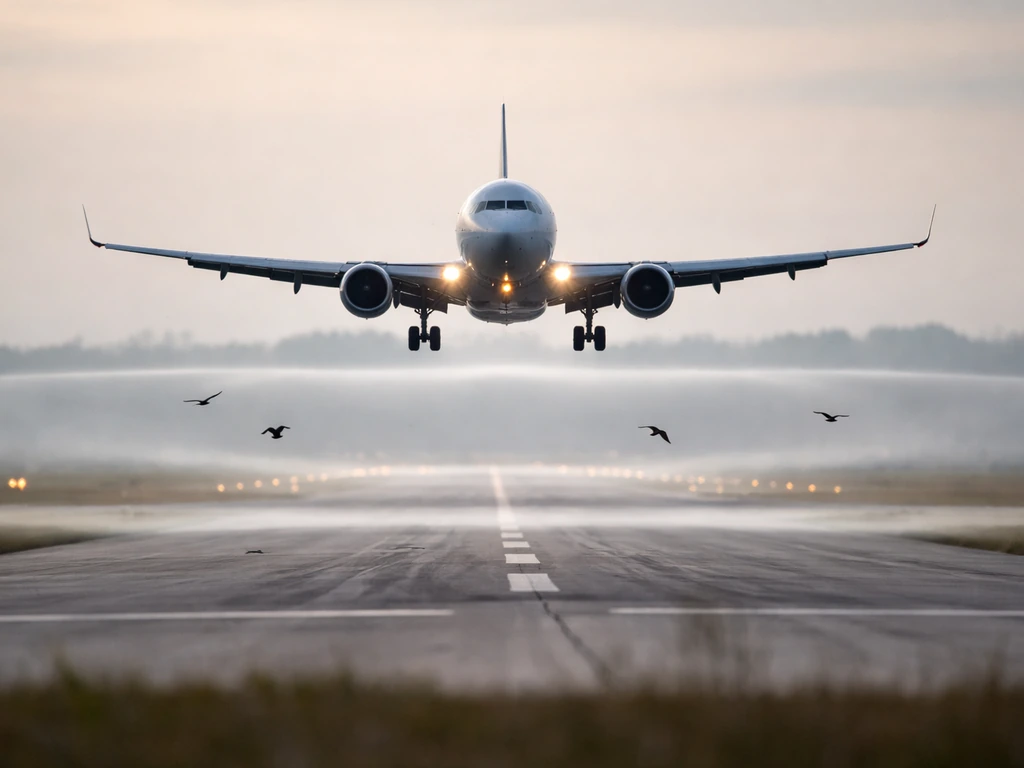
Most strikes happen below 500 feet altitude, during takeoff and landing phases, because that is where aircraft and birds share the same airspace most frequently. But large soaring birds, especially vultures and eagles, exploit thermals that can carry them to several thousand feet, overlapping with climb and descent corridors. Seasonal migration dramatically increases flock density along established flyways, and many major airports sit directly beneath these corridors. Runway incursions, where birds physically occupy a runway surface during aircraft operations, are another underappreciated hazard. Waterfowl and gulls in particular treat paved surfaces as convenient loafing areas.
Habitat attraction: why airports are magnets
Airport environments are, from a bird's perspective, extremely attractive. Large areas of maintained grass provide ideal foraging habitat for geese and starlings. Retention ponds and drainage ditches attract waterfowl. Aircraft lighting at night draws insects, which draws insect-eating birds. Nearby landfills, which were historically located adjacent to airports for convenience, concentrate gulls, crows, and raptors. The FAA's wildlife hazard program specifically addresses airport habitat management because removing attractants is one of the most effective long-term mitigation strategies available.
Flock behavior multiplies the risk
Solitary large birds are dangerous. Flocks of large birds are categorically worse. A single Canada goose strike may damage an engine; a flock ingestion can destroy both engines simultaneously. Flock behavior is also less predictable in the short term, because a startled flock erupts in multiple directions. Pilots and controllers cannot reliably predict where individual birds will go once a flock is disturbed, which is why the operational response to a reported flock on or near a runway is typically a hold or go-around, not a 'probably fine' judgment.
How to Assess Your Risk Right Now
Whether you are a pilot planning a route, an airport safety officer reviewing a specific incident, or a curious researcher trying to understand a local pattern, the process for narrowing down real risk follows a consistent logic.
- Check the FAA Wildlife Strike Database. It is publicly accessible and searchable by airport, species, aircraft type, and phase of flight. Before anything else, run a query for your specific airport or region to see what species are actually being reported and at what times of year.
- Cross-reference with seasonal migration data. The U.S. Geological Survey and Cornell Lab's eBird platform both provide real-time and historical bird movement data. If a wave of Canada geese is moving through your area in late October, that risk is predictable, not surprising.
- Look at the time of day. Many large bird species, including vultures and raptors, have peak activity windows that correlate with thermal development, typically mid-morning through mid-afternoon. Waterfowl tend to move at dawn and dusk. Matching your operational windows to lower-activity periods is a practical first risk-reduction step.
- Identify local attractants within 5 miles of your airport or airfield. Landfills, wetlands, agricultural fields, and golf courses all concentrate specific bird species. Knowing what is nearby tells you what species to expect.
- Review any NOTAM (Notice to Airmen) or wildlife hazard ATIS advisories for your airport. Airports that have documented wildlife hazard management programs will often issue advisories during high-risk periods or after a strike incident.
- If you are responding to a specific incident, preserve physical evidence. Feathers, tissue, or carcass remains found at a strike site can be submitted to the Smithsonian Feather Identification Lab through the FAA's program for species identification, which directly informs future risk modeling.
For pet owners or property managers dealing with large birds causing incidents on the ground, the risk assessment is more localized but uses similar logic: identify the species, understand its behavior and attraction to the site, and match interventions to what actually drives that species away. In many areas, animal control may handle nuisance wildlife reports, but whether they remove bird nests depends on local rules and the nest is usually protected during nesting season does animal control remove bird nests. A macaw loose in a neighborhood and a great blue heron raiding a koi pond require entirely different responses.
What to Do Right Now to Reduce Bird-Strike Risk
Mitigation is not one-size-fits-all. What works for a major commercial airport is not necessarily what a private pilot or a small airfield operator needs to do today. Here is a practical breakdown by context.
For pilots and flight crews
- File and review NOTAM advisories before every flight, specifically looking for wildlife hazard notices at departure, destination, and alternate airports.
- During climbout and approach, increase visual scanning for bird activity, particularly in the 200 to 3,000 foot altitude band where most strikes occur.
- If you observe a flock on or near the runway, call it out to the tower immediately and do not assume they will clear. Request a delay or go-around without hesitation.
- Avoid flying near landfills, wetlands, and large bodies of water during dawn and dusk periods when waterfowl movements peak.
- During migration season (March through May and August through November in most of North America), treat large bird sightings near airports as a hazard worth reporting, not just a curiosity.
For airport and airfield operators
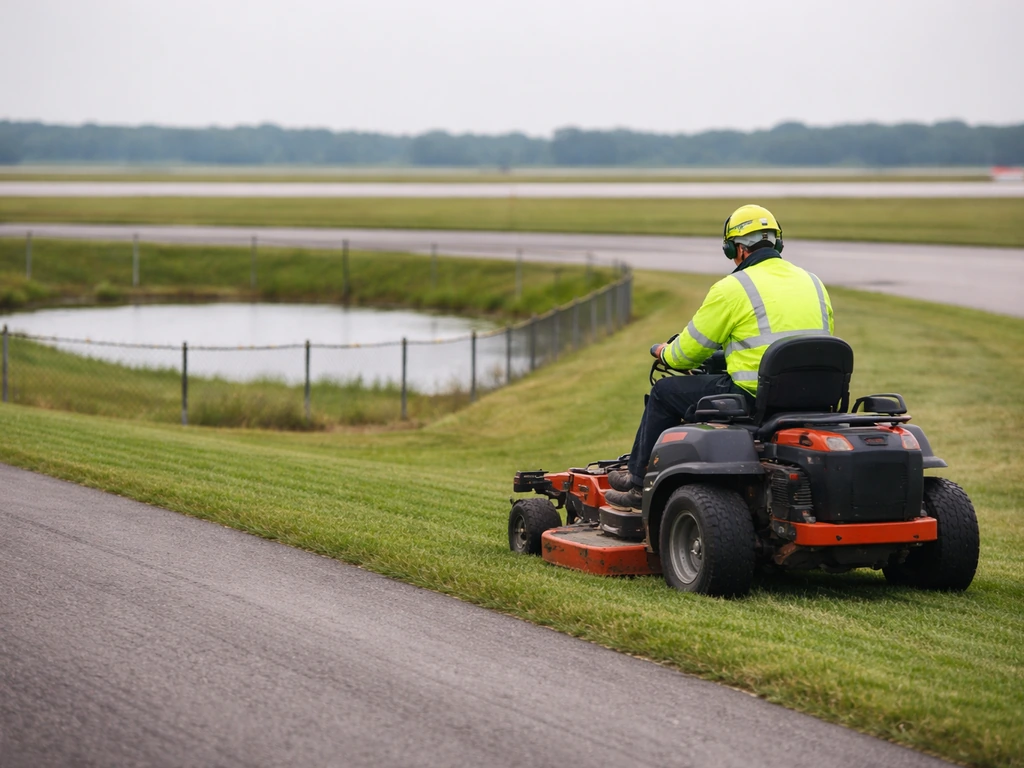
- Implement FAA-recommended habitat management: keep grass cut to 6 to 12 inches (which makes it less attractive to geese and starlings) and drain or fence retention ponds where feasible.
- Deploy FAA-approved dispersal tools: pyrotechnics, predator effigies, and trained falconry programs have documented effectiveness when applied consistently rather than occasionally.
- Conduct regular wildlife surveillance at dawn and dusk, documenting species, flock size, and locations so you can build a site-specific hazard picture over time.
- Coordinate with local USDA Wildlife Services representatives, who can advise on species-specific dispersal and, where legally authorized, population management options.
- Ensure all staff are trained to report wildlife activity through your internal system and understand when to escalate a runway incursion to halt operations.
For curious researchers and the general public
If you are researching this topic without a direct operational role, the most useful thing you can do is understand the difference between bird abatement and bird removal, which are distinct disciplines with different tools and legal frameworks. Bird abatement focuses on deterrence and habitat management; bird removal involves physically relocating or culling birds under wildlife management permits. A bird removal technician specializes in legally relocating or culling birds for the specific hazard situation and local regulations. Both are real professional fields, and understanding which one applies to a given situation matters a lot when you are evaluating a news story or advising someone dealing with a local bird problem.
Reporting Incidents and When to Escalate

Documentation is not optional in aviation bird-strike management. It is the foundation of everything, because the FAA Wildlife Strike Database only improves when people actually report incidents. Under-reporting is a known and serious problem: FAA analyses suggest that only a fraction of actual strikes get formally reported, which skews the data and makes risk modeling less accurate for everyone.
What to document at the scene
- Date, time, and location (airport name and ICAO/FAA identifier, or GPS coordinates for non-airport incidents).
- Aircraft type and registration, phase of flight, and altitude at time of strike.
- Number of birds seen, estimated species or size, and direction of travel if observed.
- Damage description: which component was struck, visible damage, and any effect on aircraft operation.
- Any feathers, tissue, or carcass remains at the scene: collect them in a paper bag (not plastic) and label with the date and location.
How to file a report
The primary reporting tool is FAA Form 5200-7, the Bird/Other Wildlife Strike Report. You can submit it online through the FAA Wildlife Strike Database portal, which is the preferred method because it feeds directly into the national database. Pilots, flight crews, air traffic controllers, and airport wildlife personnel all have the ability to submit reports, and all of them should. There is no minimum damage threshold required to file. Even a strike with no apparent damage is worth reporting, because it adds a data point to species activity patterns at that location and time of year.
Getting bird remains identified
If you collected feathers or remains from a strike, the FAA blank" rel="noopener noreferrer">coordinates with the Smithsonian Institution's Feather Identification Lab for species identification. The FAA's advisory circular guidance covers how to package and send remains for analysis. Species identification matters because it directly informs whether a site has a Canada goose problem (which calls for one set of responses) versus a vulture problem (which calls for an entirely different set). Generic 'bird hit' reports are less actionable than species-confirmed ones.
When to escalate beyond standard reporting
Standard reporting covers most situations. Escalation is warranted when a strike causes significant aircraft damage or injury, when a runway incursion forces a rejected takeoff or emergency, or when a site is experiencing a sudden spike in wildlife activity that suggests a new attractant (a nearby pond filling seasonally, a landfill opening, a crop harvest concentrating birds). In those cases, contact the FAA regional office directly and request a formal wildlife hazard assessment.
Airports above a certain size are required to have these assessments under 14 CFR Part 139, but smaller airfields can and should request them when patterns change significantly. USDA Wildlife Services also has regional offices that can respond to acute hazard situations with trained personnel and legal tools that private operators cannot use on their own.
The bottom line is that bird-strike accidents involving large birds are not random or unpreventable. They are predictable based on species behavior, site characteristics, seasonal timing, and operational habits. The more accurately you can characterize what is actually happening at your location, the more precisely you can match a mitigation strategy to the real problem. That starts with checking the data, reporting what you see, and treating bird hazard management as an ongoing process rather than a one-time fix.
FAQ
If I only see a single large bird near the runway, should I treat it the same as a flock event?
No. Solitary birds can cause serious engine or windscreen damage, but a flock is categorically riskier because engine ingestion can occur simultaneously and the birds’ short-term movement becomes hard to predict. Operationally, that is why “bird on/near runway” reports often lead to a hold or go-around rather than a simple delay, even when no strike has happened yet.
What should I document immediately after a bird strike to make the report more useful?
Capture basic timing and location (phase of flight or ground operation), aircraft type, approximate airspeed or configuration if known, runway or taxiway used, weather conditions, and any visible species indicators. If you can, preserve feathers or fragments for identification. These details help distinguish, for example, a low-altitude runway loafing issue from an altitude climb-out overlap during warm seasons.
Is it worth reporting a strike that causes no visible damage?
Yes. The article notes there is no minimum damage threshold, and the practical reason is that “no-damage” events still confirm that a species is active at that place and time. They also help validate whether a mitigation plan is actually reducing contact rates, not just preventing visible damage.
How do I tell whether “big bird” in a news story is a wild species, a nickname for an aircraft, or a pet situation?
Check context clues: aviation articles usually mention altitude, runway, takeoff or approach phases, wildlife strike reporting, or engine and windscreen damage. Sesame Street references will be about entertainment or character imagery. Pet-related incidents will mention cages, property boundaries, or species like macaws or emus. When in doubt, look for whether the story mentions bird-strike reporting or airport operations.
Can airport lighting and nearby insects really increase bird strikes, and what can be changed?
Yes. Bright lighting can attract insects, which then attracts insect-eating birds, including birds that may later disperse into runway areas. Mitigation often involves reviewing lighting type, placement, shielding, and operating hours to reduce insect attraction near movement areas rather than only reacting after strikes occur.
If bird hazards spike suddenly, what are the most common attractant changes to investigate first?
Seasonal water availability changes (pond filling or new drainage patterns), landfill or waste operations resuming, crop harvest concentrating birds nearby, and growth or mowing patterns that alter grass foraging habitat. Sudden changes like these often create an unfamiliar “new baseline,” which is why escalation for a formal hazard assessment is recommended when patterns shift.
What’s the practical difference between bird abatement and bird removal when talking to a contractor?
Ask what they do to reduce bird presence day to day. Abatement focuses on deterrence and habitat management (for example, changing habitat features that attract birds). Removal involves legally relocating or culling specific birds under wildlife management permissions. The distinction matters because the right approach depends on species behavior, nesting status, and local rules.
If nests are involved, can animal control always remove them right away?
Not always. Nest protection rules during nesting season can restrict removal, and local regulations vary. If you are dealing with a site-specific “problem bird” that is nesting, you may need to time interventions, use non-destructive deterrence in the short term, or coordinate with the correct wildlife authority so you do not create a compliance or safety problem.
For property owners dealing with large birds, how should I choose interventions without making things worse?
Start by identifying the species and why it’s attracted to your property (water source, food, shelter, or loafing surface). Interventions should target that attractant. For example, waterfowl drawn by drainage ditches need habitat and water management solutions, while a predatory bird raiding a pond may require different fencing or deterrence focused on the prey and perching opportunities.
When is it appropriate to request a formal wildlife hazard assessment or involve additional agencies?
Request escalation when there is significant aircraft damage or injury, when wildlife activity disrupts operations enough to trigger rejected takeoffs or emergency situations, or when you observe a rapid and unexplained increase in birds at the airfield. Also escalate when the pattern suggests a new attractant (like seasonal pond changes or an opening in nearby waste handling). For smaller operators, it can still be appropriate to request help when changes become significant.