If you searched "how is big bird control" and landed here, there are two very different things you might be asking. The first is whether you're dealing with a real nuisance bird problem involving large birds, and you want practical, legal ways to solve it. The second is whether you're curious about the Sesame Street character Big Bird and how some kind of "control" relates to him. Let's settle both quickly, then spend the rest of this article on what you actually came here for: solving a real bird problem.
How Is Big Bird Control Done A Practical Guide

Marcus Whitmore
10 Apr 2026
Big Bird the character vs. big bird the wildlife problem
Big Bird on Sesame Street is a puppet character, not a wildlife management subject. He's a beloved cultural fixture, and if you're researching trivia or character background, you're looking at the wrong guide. Interestingly, the phrase "big bird causes accidents" occasionally gets used humorously in pop-culture contexts, and we've covered the Sesame Street Big Bird causes accidents angle separately for anyone genuinely curious about that cultural meme. For everything else in this article, "big bird" means what it means in wildlife and safety circles: large bird species creating a nuisance or hazard, whether that's geese on a golf course, herons near a fish pond, vultures on a rooftop, or flocks of cormorants at a marina.
The reality is that "bird control" as a professional discipline is serious, regulated, and highly context-dependent. The methods that work for a small starling problem in a barn are not the same ones used for managing bird strikes at a commercial airport. Knowing which situation you're in changes everything about what you should do next.
Why large birds become a problem in the first place
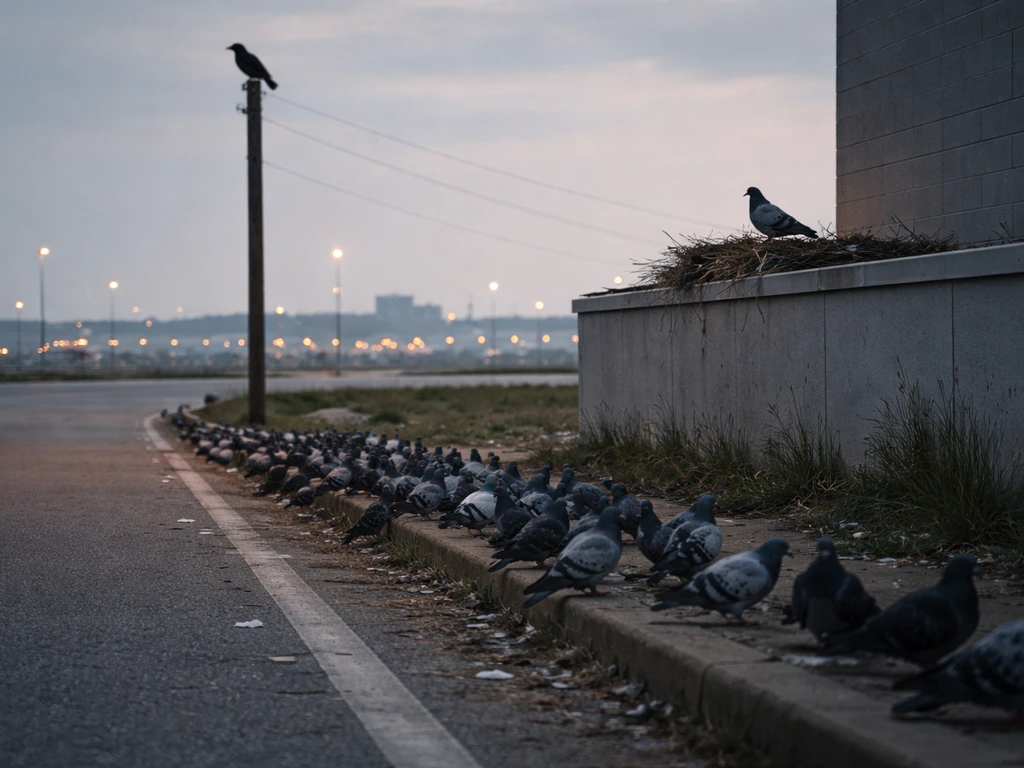
Large nuisance birds typically create problems in one of four ways: roosting, nesting, flocking, or direct property damage. Roosting birds, like vultures or cormorants, congregate in large numbers at a single site and foul the area with droppings. Nesting birds, especially herons or large gulls, claim structures or trees and become aggressively territorial. Flocking species, particularly Canada geese, degrade open spaces with their grazing and waste output. And some large birds, raptors included, cause direct property damage or livestock losses.
In aviation contexts, the stakes escalate sharply. Large birds near runways are a well-documented safety hazard, and the FAA takes wildlife strike data seriously enough to maintain a dedicated Wildlife Strike Database. Understanding big bird causes accidents at airports isn't folklore, it's backed by decades of strike reporting and formal hazard management planning. The problem is real and the response needs to match the risk level.
One underappreciated driver of bird problems is human-created attractants. Improper landscaping, open food sources, standing water, and accessible roosting structures all invite large birds in. Removing what's drawing them in is almost always more effective than trying to scare them away after they've already settled.
Assess the situation before you do anything else
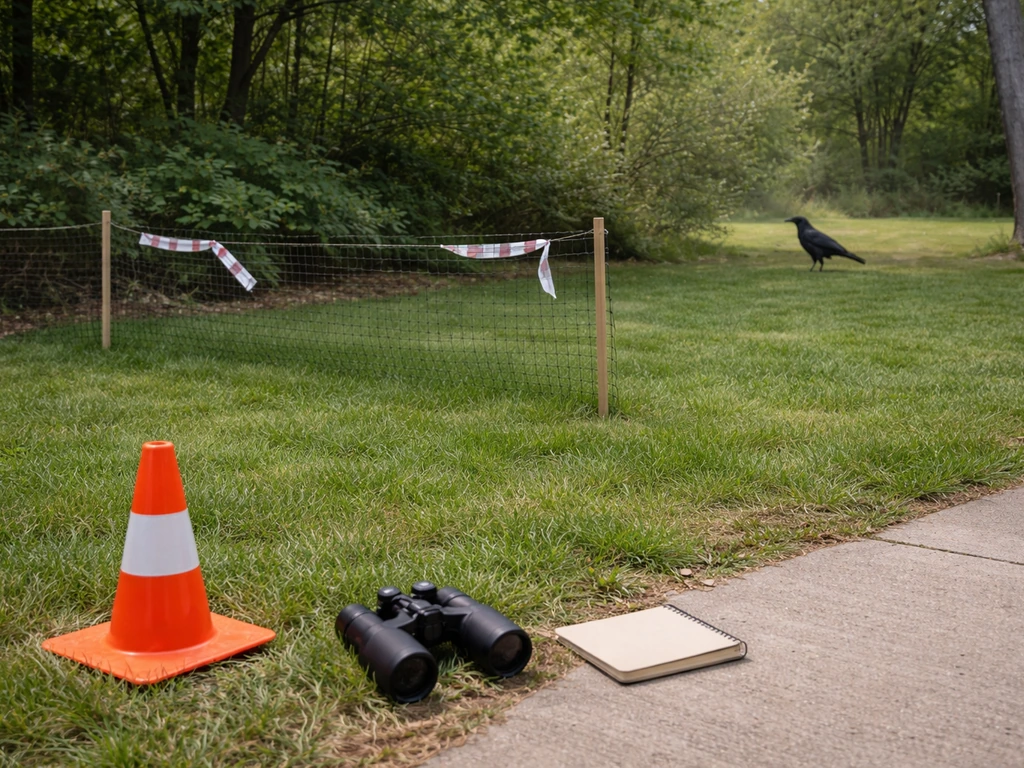
Before you spend money on deterrents or start removing anything, spend a few days simply observing. You need to know: what species are present, how many, what time of day they're active, whether they're nesting or just roosting, and what's attracting them. This observation phase isn't optional. It determines whether your problem is legally sensitive (an active nest is treated very differently than a roost), whether you need a permit, and which control method has any chance of working.
One concrete thing to document is droppings. Accumulated droppings are both an indicator of chronic bird use and a health hazard in their own right. Illinois Department of Public Health guidance specifies that droppings accumulations of two or more years require respiratory PPE, specifically respirators with HEPA filters, and that droppings should be wetted before removal to suppress airborne particles. Don't treat an inspection as a casual walk-through if there's significant accumulation.
- Identify the species: size, color, behavior, and call can narrow it down quickly with a field guide or bird ID app
- Estimate flock size and peak activity times: morning and evening are common for many roosting species
- Check for active nests: look for eggs, chicks, or adult birds sitting and defending a fixed spot
- Document attractants: food sources, water features, open structures, and landscaping that provide shelter
- Note how long the problem has been occurring: a recent arrival is easier to deter than an established colony
- Wear appropriate PPE if inspecting areas with heavy droppings accumulation: N95 minimum, HEPA respirator for older or large accumulations
Nonlethal control methods that actually work
Here's where a lot of people go wrong: they reach for a scare device first. The research does not support leading with auditory or visual deterrents as a standalone solution. Virginia Tech's work on Canada geese found that visual frightening devices usually fail to produce lasting results because birds habituate within days. A 2024 paper in Scientific Reports was similarly blunt about acoustic devices and scare cannons, noting that ultrasonic frightening devices are not highly effective and that habituation undermines even the better-performing options over time. If someone is selling you an ultrasonic repeller as a long-term fix, the scientific evidence simply isn't there.
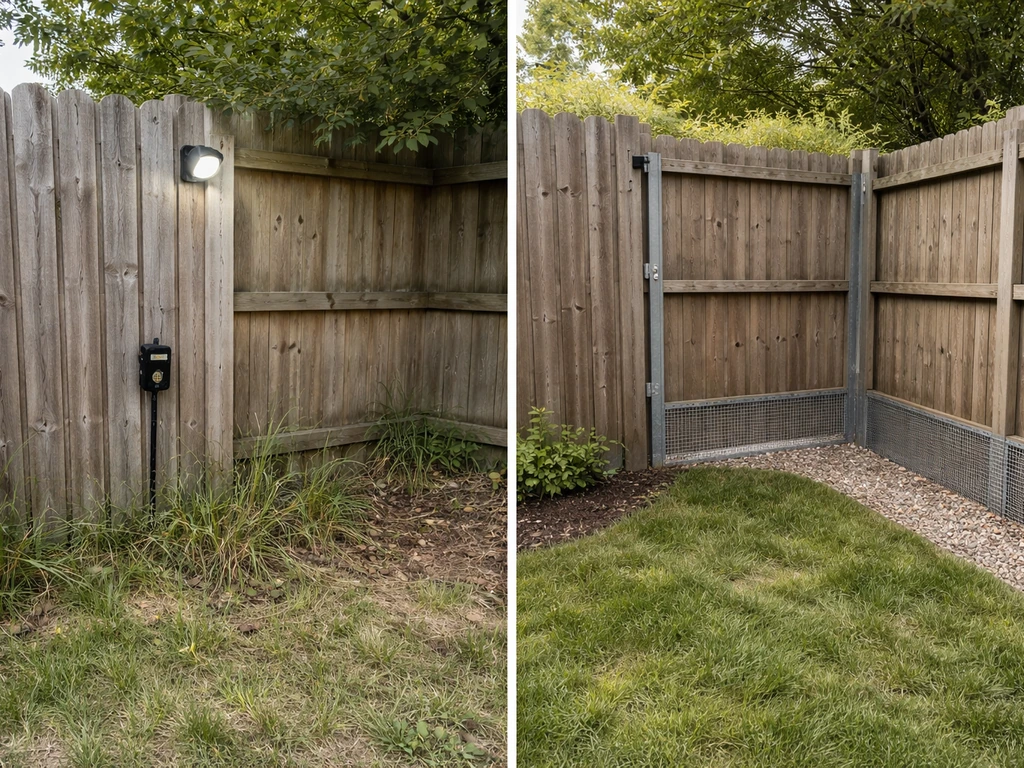
What does work, consistently, is a combination of habitat modification and physical exclusion. Remove or reduce what's attracting the birds, then physically block access to the spots they're using. This is the same integrated approach recommended by the FAA for airport wildlife management and by state public health agencies for structural bird problems.
Habitat modification
Modify the environment so it's less hospitable. For geese and large wading birds, this often means changing landscaping to reduce open, manicured grass near water. For roosting birds, it means eliminating or pruning trees and ledges that serve as gathering points. Importantly, remove any food sources: unsecured garbage, open compost, exposed pet food, or bird feeders. During periods of elevated avian influenza risk, the Illinois DNR went so far as to recommend removing seed feeders entirely to discourage large bird gatherings. Feeding birds when you have a nuisance problem is counterproductive regardless of avian disease risk.
Physical exclusion
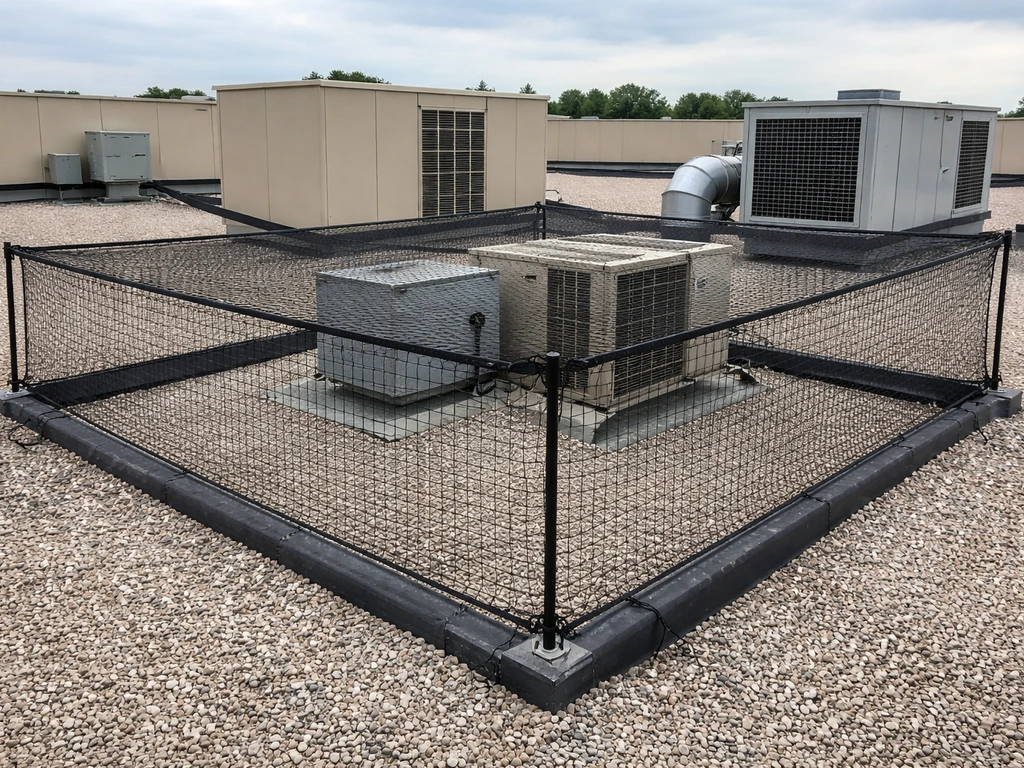
Physical exclusion is the gold standard for most structural bird problems. Netting can be installed over rooftop equipment, loading docks, and tree canopies where birds congregate. Illinois public health guidance specifically mentions wrapping trees with netting as an exclusion method for roosting and feeding birds. Openings in buildings should be sealed once birds are confirmed not to be present (especially during nesting season). The key rule with exclusion: never seal birds inside a structure, and never block a nest that's actively in use. Both create new problems, and the second one is potentially illegal.
Deterrents as a supplement, not a solution
Deterrents, including noise cannons, predator decoys, reflective tape, and laser systems, can buy you time or reinforce other measures, but they rarely solve a problem on their own. If you use them, rotate and vary them regularly to slow habituation. Lasers showed some promise in the 2024 Scientific Reports study when used as part of an automated system, but even those were positioned as components of a broader integrated strategy, not standalone fixes. Use deterrents to complement exclusion and habitat work, not replace them.
The legal side: what you can and can't do
This is the part most people skip, and it's the part that can get them in real trouble. In the United States, nearly all wild birds are protected under the Migratory Bird Treaty Act (MBTA), a federal law that broadly prohibits taking, capturing, killing, or disturbing migratory birds and their nests or eggs without proper authorization. A federal GAO review identified the MBTA as one of the major federal wildlife laws requiring permits for any authorized take. "Take" in this context covers a lot of activity beyond just killing, so even well-intentioned nest removal can be a federal violation.
Understanding what bird abatement legally involves is essential before you start any control program. The U.S. Fish and Wildlife Service (USFWS) issues depredation permits authorizing capture or lethal control to reduce damage from certain species, but getting one requires demonstrating that nonlethal methods have been tried or are impractical. The FWS has also published a specific Migratory Bird Permit Memorandum clarifying how the MBTA applies to nest destruction, which signals that nest removal is not a gray area they take lightly. USFWS maintains a Migratory Bird Permit Memorandum series page to clarify how migratory bird permit policy applies and to support consistent implementation blank" rel="noopener noreferrer">Migratory Bird Permit Memorandum clarifying how the MBTA applies to nest destruction.
State-level rules stack on top of federal ones. Florida, for example, no longer issues active nest removal permits for non-listed species at the state level, but a federal MBTA permit may still be required from USFWS. New York directs residents to contact a licensed Nuisance Wildlife Control Operator for removal and to contact the USFWS Migratory Bird Program for federal permit questions. The takeaway: check both your state wildlife agency and USFWS before doing anything beyond passive deterrence.
| Situation | Likely Legal Pathway | Who to Contact |
|---|---|---|
| Roosting birds (no active nest) | Nonlethal exclusion/deterrence typically requires no permit; check state rules | State wildlife agency |
| Active nest present (any migratory species) | Do not disturb; wait until nesting season ends if possible | USFWS Migratory Bird Program |
| Nest removal needed urgently | Federal depredation permit may be required | USFWS + state wildlife agency |
| Large-scale nuisance or lethal control needed | Federal depredation permit required; professional assistance recommended | USDA APHIS Wildlife Services |
| Airport or airfield wildlife hazard | FAA Wildlife Hazard Management Plan + USDA APHIS qualified wildlife biologist | FAA + USDA APHIS Wildlife Services |
One practical rule of thumb: if birds are not actively nesting, time any exclusion or major habitat work for outside the bird breeding season. That's typically fall through early winter in most of the U.S. Conducting work during that window dramatically reduces the legal risk and avoids the ethical problem of separating parent birds from dependent young.
When to call a professional
Not every bird problem needs a professional, but some clearly do. If you're at or near an airport or airfield, stop reading DIY guides: wildlife hazard management in aviation contexts is handled by Qualified Airport Wildlife Biologists under FAA standards, working through USDA APHIS Wildlife Services. This is a trained, regulated, and coordinated function, not something a facilities manager should handle with a scare cannon.
For non-aviation situations, knowing what a bird removal technician actually does can help you decide whether you need one. A licensed wildlife damage professional brings legal knowledge, proper PPE, access to permits, and experience with species-specific behavior that makes a real difference on stubborn problems. USDA APHIS Wildlife Services can provide wildlife damage management assistance directly, or point you to qualified contractors in your area.
You should also know the boundaries of what animal control agencies typically cover. Many people assume their local animal control office handles wild bird problems, but that's often not the case. Whether animal control removes bird nests depends entirely on your jurisdiction and the species involved. In most cases, wild bird nesting issues fall under wildlife agencies, not animal control.
Your step-by-step action plan
- Identify the species and behavior: observe for at least two to three days before acting. Note species, flock size, timing, and whether nesting is occurring.
- Check for active nests: if an active nest is present, stop and contact your state wildlife agency and USFWS before proceeding. Disturbing an active nest of a migratory species without authorization is a federal violation.
- Remove attractants immediately: food sources, standing water, accessible garbage, and open structures. This step costs nothing and often reduces the problem on its own.
- Plan exclusion work for outside nesting season when possible: fall through early winter is generally safest. Seal entry points, install netting, and modify roosting surfaces.
- Add deterrents as a supplement only: rotate types and locations to slow habituation. Don't rely on them as your primary method.
- Inspect safely: wear appropriate PPE around droppings, including an N95 for light accumulation and a HEPA respirator for heavy or old deposits. Wet droppings before sweeping or removing.
- Check permit requirements before any removal or lethal control: contact USFWS and your state wildlife agency. USDA APHIS Wildlife Services can advise on federal program access.
- Monitor and document results: track whether bird activity decreases after each intervention. If not, reassess what's still attracting them before trying more aggressive methods.
- If the problem persists or involves an airport/airfield, call a professional: contact USDA APHIS Wildlife Services or a licensed Nuisance Wildlife Control Operator in your area.
Troubleshooting when your first attempts don't work
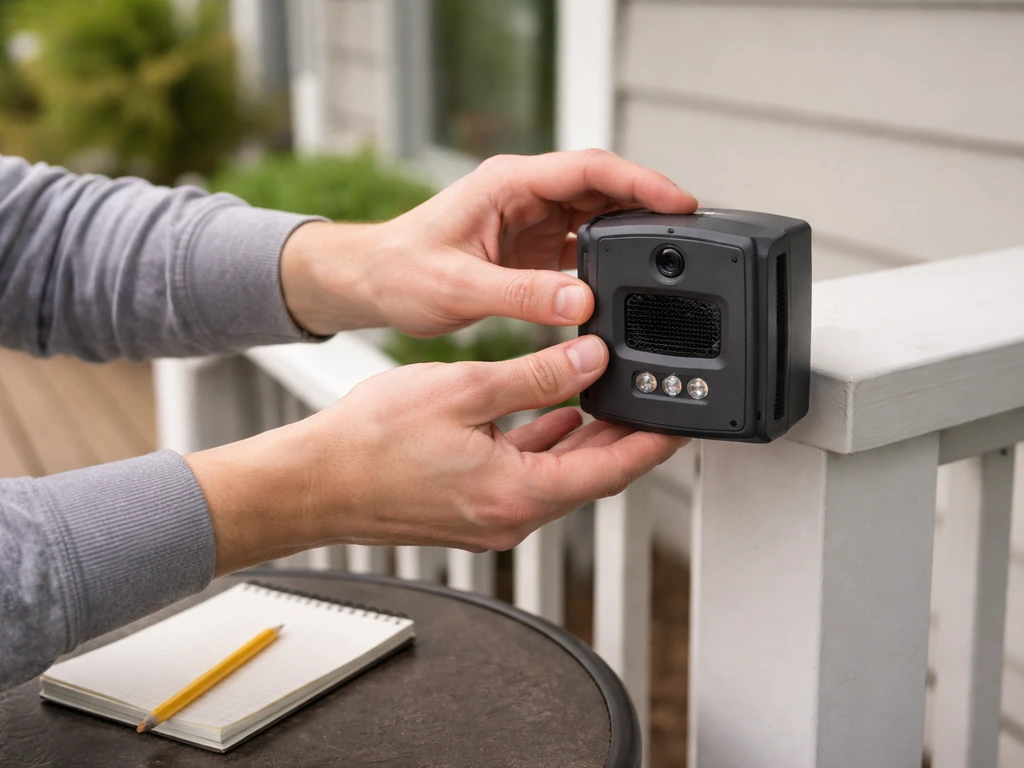
If you've installed deterrents and the birds are still there a week later, habituation is almost certainly the culprit. Rotate or remove the deterrents and reassess. If exclusion netting is in place but birds are still getting through, inspect it carefully: birds are remarkably good at finding gaps, and even small openings can be exploited by determined individuals. If you've removed food sources but the birds remain, consider whether the site offers something else: shelter, a water source, or a safe loafing area away from predators. Address each attractant systematically rather than layering on more deterrents.
It's worth being honest with yourself about timeline expectations too. A bird colony that's been using a site for several years will not disappear in a week. Integrated bird control, done correctly, often takes a full season to show lasting results. Document what you're doing and when, both to track progress and to demonstrate good-faith nonlethal effort if you later need to apply for a depredation permit.
FAQ
How do I tell whether my situation is roosting versus nesting before I try any control?
Start with documenting species, locations (roost, nest, feeding, paths), and the birds’ activity windows, then check whether there is any active nesting or roosting. If it is active nesting, pause and verify permits, then use only passive measures that do not disturb birds (like stopping attractants) until nesting is over.
If birds are causing damage, can I just remove the nest to stop the problem?
Do not remove nests or eggs on your own, even if the birds seem “unwanted.” In the U.S., most migratory birds and their nests are protected under the Migratory Bird Treaty Act, so “minor” nest removal can still count as prohibited take unless you have the right federal authorization.
Can I use scare devices immediately to get quick relief while I organize exclusion?
Yes, but only as part of a plan that reduces attractants and improves exclusion. For example, you can temporarily use deterrents while netting is being installed, and then remove the temporary deterrents later so birds do not keep learning the same pathways or timing.
What should I do if the birds are still around a week after I start deterrents?
If the birds return within about a week, treat it as a sign of habituation or a failure in access control. Rotate the deterrent you are using, inspect for gaps or bypass routes (especially along edges and penetrations), and confirm that attractants like open garbage, compost, and standing water are actually eliminated.
How can I vet a “bird control” contractor so I do not end up with an illegal or ineffective job?
Not always. Some providers may specialize in nuisance birds but still lack authority, permits, or species-specific experience. Ask what methods they will use (habitat modification, exclusion, deterrents), whether they will assess MBTA or state requirements, and whether they work with permits when lethal or nest removal is proposed.
Why do my birds keep coming back even after I removed bird feeders?
Begin by identifying the likely attractant type. For geese, reduce attractive mowing patterns near water and eliminate accessible food sources; for roosting birds, remove ledges and prune or block gathering points. Then confirm exclusion coverage from the birds’ likely entry angles, not just the obvious spots.
When is the safest time of year to do exclusion or habitat changes?
Coordinate timing around the breeding season, generally fall through early winter in much of the U.S., to reduce legal and ethical risk. If you find active nests during inspections, stop and shift to non-disturbing attractant removal until the birds are no longer nesting.
What’s the proper way to seal building openings without trapping birds inside?
Do not seal openings once birds are confirmed inside with eggs or dependent young. Exclusion must be staged correctly: establish that birds are not currently using the space, then exclude, leaving no way for them to become trapped.
Is droppings removal something I can do myself, and what safety steps matter?
Yes. Droppings can be more than an annoyance, they are a respiratory hazard and can indicate long-term usage. If droppings have accumulated for a long time, use appropriate PPE and wet down before removal to reduce airborne particles, and consider professional cleanup if levels are heavy.
Will my local animal control office remove wild bird nests?
Do not assume local animal control will handle wildlife nesting. In many areas, wildlife-specific agencies or licensed nuisance wildlife control professionals handle wild bird issues, and responsibilities vary by jurisdiction and bird species.
If deterrents are not working, should I just escalate to stronger lasers or louder devices?
A common mistake is adding more deterrents when the root cause is habitat. First remove attractants (food, water access, cover). Then use exclusion to eliminate access points. Deterrents are best treated as temporary support, not the main strategy.
I am near an airport, can I handle wildlife hazards myself?
For airports and airfields, use qualified airport wildlife professionals. If you are not operating under those FAA-aligned processes and coordination with USDA APHIS Wildlife Services, DIY or informal deterrent plans can create safety and compliance problems.
What if exclusion netting is installed, but birds still find a way in?
If birds are getting through netting, treat it like a “system failure” to troubleshoot. Look for small openings at edges, along attachment points, and around vents or branches, then adjust tension and overlap so there is no feasible landing or entry line.
How should I document control efforts if the problem lasts for months?
Build a simple timeline: baseline observations (species and peak times), what attractants were removed, when netting or sealing was done, and what changes you saw week to week. This helps you decide whether the strategy is working and supports “good-faith nonlethal effort” if you later need to discuss permits.
I cannot figure out what is attracting the birds to my property. How do I diagnose it?
If you cannot identify what is attracting the birds, the problem often persists even with exclusion attempts. Use multi-day observation to pinpoint the exact resource (open water, shelter, consistent food, roosting ledges). Then address that single attractant before layering additional measures.