Bird pest examples span a wide range of real situations: pigeons nesting on your roof and corroding gutters with acidic droppings, European starlings invading grain stores, Canada geese taking over airport runways, or gulls striking aircraft engines during takeoff. The species and setting vary enormously, but the core problems are consistent: property damage, contamination, health risk, or direct safety hazard. Knowing which bird you're dealing with, and what harm it actually causes, is what lets you respond effectively instead of reacting to myth.
Examples of Bird Pest: Real Cases and How to Fix Them Safely

Marcus Whitmore
10 Jul 2026
What 'bird pest' actually means in practice
A bird becomes a pest when its presence causes measurable, recurring harm to people, structures, crops, livestock, or aircraft. That definition matters because it separates genuine problems from nuisances you can ignore. A single crow on your fence is not a pest. A colony of feral pigeons roosting inside a food-processing warehouse ceiling is. The harm threshold is what counts, and it breaks into three broad categories: property damage and contamination, public health risk, and aviation or operational safety hazard.
The term also carries a legal dimension. Most wild birds in the US and UK are protected under law, which means 'pest' status does not give you a free pass to harm them. Effective management almost always works through deterrence, exclusion, and habitat modification rather than lethal control, and lethal control where permitted almost always requires permits and professional involvement. This is worth knowing upfront because a lot of folk remedies, including some sold commercially, either don't work or create legal exposure.
Real-world examples by setting
Homes and residential properties
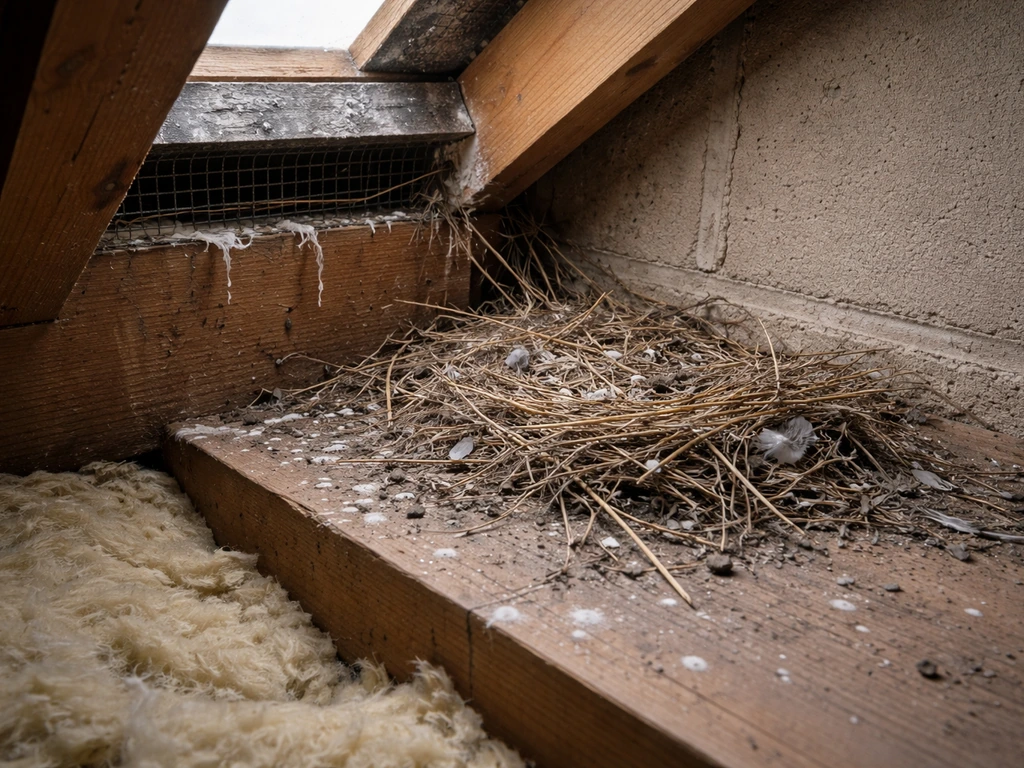
The most common residential bird pest problem is feral pigeons nesting in roof spaces, loft vents, or under solar panels. Their droppings are uric acid-heavy and genuinely corrosive to roofing materials, guttering, and stonework over time. A single roosting flock deposits enough material to block drainage systems and accelerate metal fatigue on fixings. Starlings are a close second: they exploit any gap larger than about 45mm to enter roof voids, build fire-hazard nests near electrical wiring, and generate significant noise during breeding season. This is especially true of starlings, which can create significant problems even when they seem ordinary at first. House sparrows create similar nesting problems at a smaller scale. Woodpeckers, particularly in wooded suburban areas, drill into timber cladding and fascia boards, causing structural damage that can let moisture in.
Farms and agricultural land
On farms, the scale of damage jumps considerably. Starling flocks numbering in the thousands descend on grain stores and livestock feed, consuming and contaminating feed with droppings. A murmuration of 10,000 starlings can eat through a meaningful percentage of stored grain in a single visit and contaminate the rest. Wood pigeons are chronic problems for oilseed rape and brassica crops, particularly in early spring when seedlings are vulnerable. Corvids, especially carrion crows and rooks, target newly sown seed and will attack weakened or newborn livestock. Canada geese cause crop damage by grazing fields, and their droppings create biosecurity risks near water sources used by livestock.
Urban environments
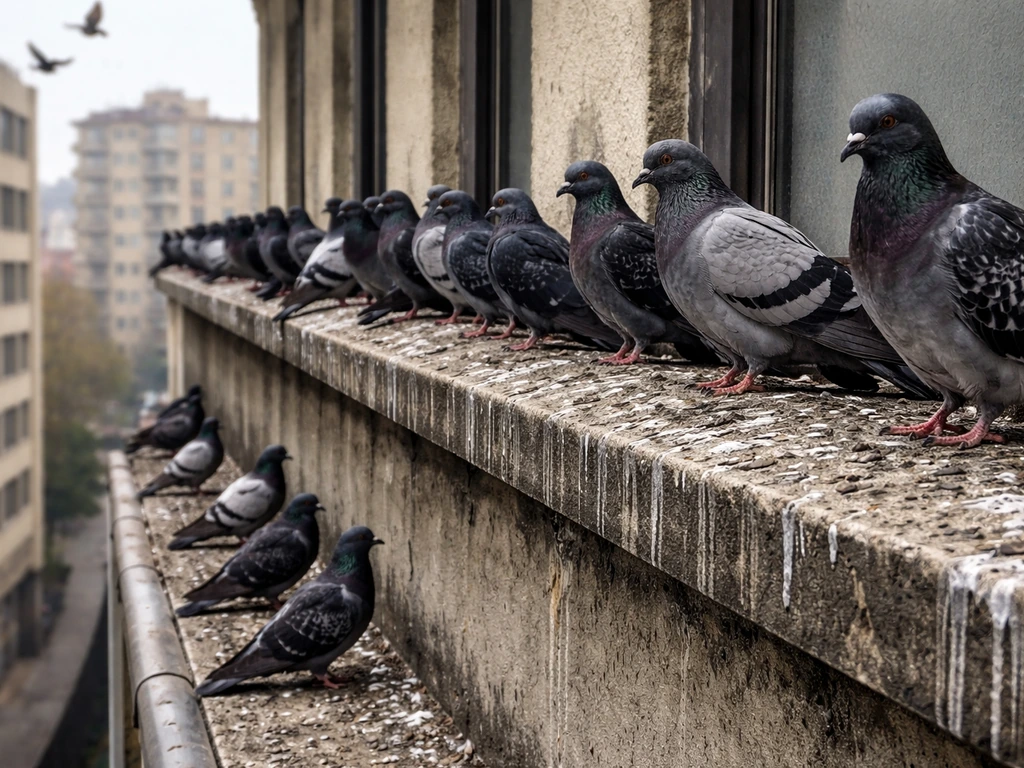
City-scale bird pest problems are dominated by feral pigeons and gulls. Feral pigeon populations in dense urban areas can number in the thousands per square kilometer, and the accumulation of droppings on historic buildings, bridges, and public infrastructure is a well-documented maintenance cost running into millions annually for large cities. Herring gulls and lesser black-backed gulls have increasingly colonized urban rooftops for nesting, and aggressive dive-bombing behavior near nest sites during breeding season (roughly April through July in the Northern Hemisphere) generates regular public complaints. Jackdaws and starlings create issues at waste sites and food markets by scavenging and dispersing refuse.
Airports and aviation infrastructure
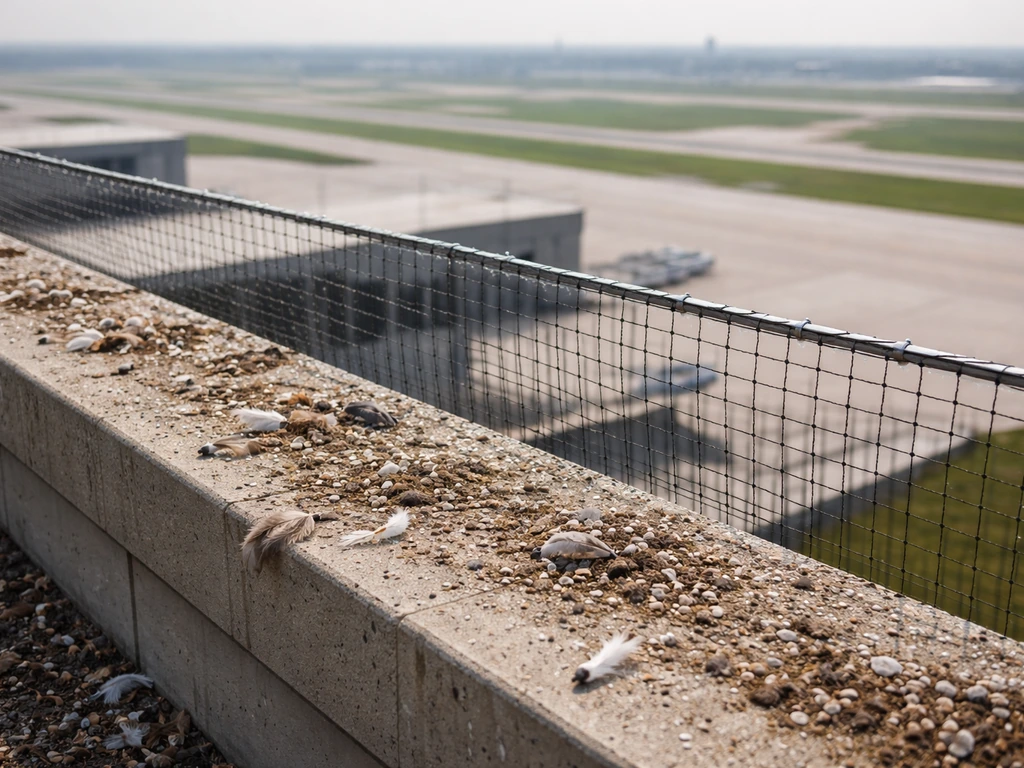
Aviation is where bird pest problems carry the highest safety stakes. A birdstrike, meaning a collision between a bird and an aircraft, can damage engines, windshields, and airframes. Engine ingestion of a large bird or a flock of smaller birds is a recognized cause of engine failure and has contributed to forced landings and accidents. The FAA maintains a Wildlife Strike Database and requires airports to implement Wildlife Hazard Management Plans (WHMPs) under blank" rel="noopener noreferrer">Advisory Circular AC 150/5200-36B, including wildlife hazard assessments and trained airport personnel. Birds and wildlife hazards are also the reason airports use Wildlife Hazard Management Plans (WHMPs) and ongoing bird-control planning. USDA APHIS Wildlife Services is actively involved in airport hazard management as a core program activity. At the international level, ICAO and the UK CAA (through CAP 772) provide aerodrome bird-control planning and risk assessment frameworks. The birds most frequently involved in aviation incidents are gulls, Canada geese, raptors like red-tailed hawks, European starlings (in flocks), and mourning doves.
Behavioral signs you actually have a bird pest problem
Identifying a bird pest situation early saves significant remediation cost. These are the behavioral and physical signs worth taking seriously.
- Recurring roosting or nesting at the same site across multiple days or seasons, not just a single visit
- Accumulation of droppings in concentrated areas under roosting spots, on ledges, or around vents
- Nesting material visible in roof voids, gutters, ventilation ducts, or under solar panels
- Noise consistent with a colony rather than individual birds, particularly in the early morning
- Crop damage patterns: stripped seed rows, bored fruit, or grazed seedlings with bird tracks nearby
- Aggressive or dive-bombing behavior from gulls near rooftop nesting areas
- At airports: birds observed loitering on runways, taxiways, or near runway ends during aircraft operations
Why these birds are actually harmful
Property damage and contamination
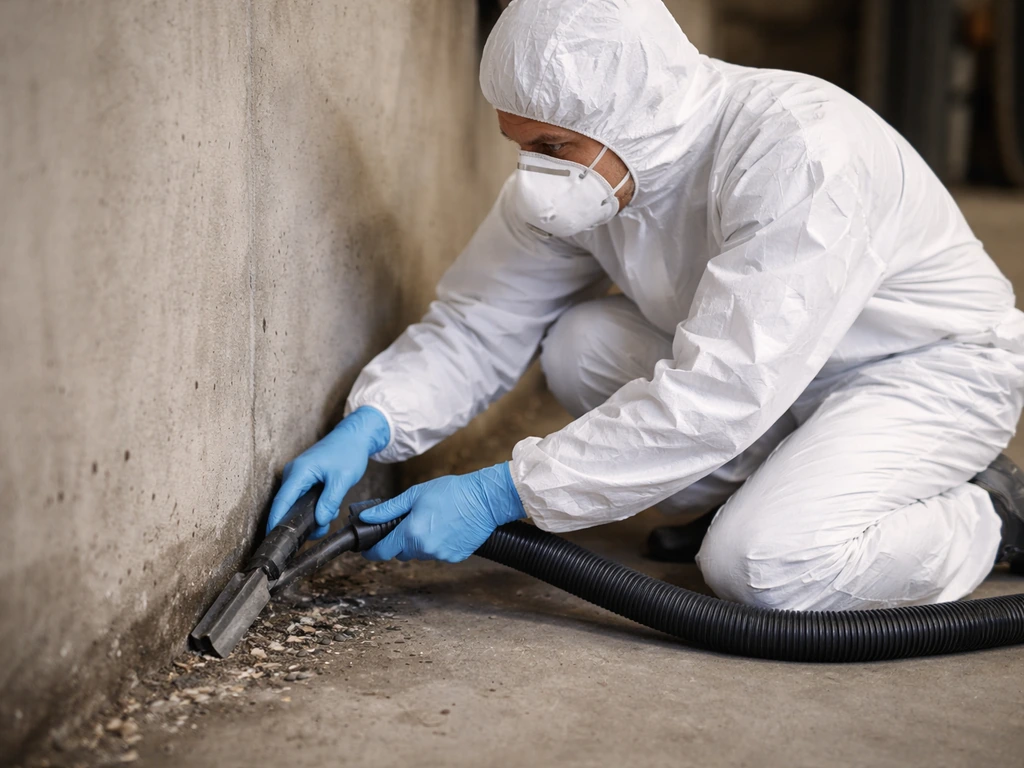
Pigeon and gull droppings are acidic enough to erode concrete, stone, and metal over years of accumulated exposure. Beyond structural damage, droppings in food storage or processing environments create serious contamination risks. Bird nesting material in ventilation systems reduces airflow efficiency and creates fire risk, particularly when nests are built near electrical components. The economic cost of bird pest damage to UK buildings alone has been estimated in the hundreds of millions of pounds annually.
Health risks
Bird droppings can carry pathogens including Histoplasma capsulatum (a fungal spore present in dried pigeon and starling droppings that causes histoplasmosis when inhaled during cleanup), Cryptococcus neoformans, and Salmonella. Ectoparasites like bird mites can infest buildings after birds enter roof spaces, causing skin irritation in occupants. The actual disease transmission risk from casual outdoor exposure to bird droppings is low, but occupational or enclosed-space exposure during cleanup or roost removal is a genuine risk that warrants respiratory protection. This is one area where the risk is real but often overstated in popular coverage.
Aviation hazards
Birdstrikes are a low-frequency but high-consequence hazard. The FAA Wildlife Strike Database records thousands of reported strikes annually across US airports, and the actual number is higher because reporting is voluntary and many minor strikes go unlogged. The majority of strikes occur during takeoff, landing, and low-altitude maneuvering, when aircraft speeds are moderate but impacts with large birds or dense flocks can still cause significant damage. This kind of risk is related to classic two-train and bird strike type timing problems in that probability can be unintuitive when events overlap two trains and bird problem. The 2009 US Airways Flight 1549 ditching in the Hudson River following a Canada goose ingestion event is the most publicly known example of a worst-case outcome. APHIS Wildlife Services, FAA, and ICAO-aligned aerodrome management frameworks all treat this as a programmatic risk requiring ongoing habitat management, not a one-time fix.
The bird species most commonly involved and why
| Species | Primary problem settings | Main nuisance behaviors | Why it's a repeat offender |
|---|---|---|---|
| Feral pigeon (Rock dove) | Urban, residential, airports | Roosting, nesting, droppings accumulation | Highly adaptable to human structures; breeds year-round in urban environments |
| European starling | Agricultural, residential, airports | Flock crop damage, nesting in roof voids, aviation strikes | Massive flocks (murmurations) amplify individual impact; nests in cavities opportunistically |
| Canada goose | Airports, farmland, urban parks | Runway loitering, crop grazing, aggressive territorial behavior near nests | Habituated to humans; large body size means high birdstrike severity at airports |
| Herring gull / Lesser black-backed gull | Urban, coastal, airports | Roof nesting, dive-bombing near nests, scavenging, birdstrikes | Increasingly inland nesting; strong site fidelity means they return to same rooftops every year |
| House sparrow | Residential, food industry | Nesting in roof voids and ventilation, food contamination in open premises | Small size allows entry through minor gaps; thrives wherever food is accessible |
| Carrion crow / Rook | Agricultural, residential | Seed predation, livestock harassment, roof/chimney nesting | High intelligence makes deterrents less effective over time; adapts quickly to changes |
| Wood pigeon | Agricultural, suburban | Crop stripping (rape, brassicas, legumes), large flock formation | Dramatically increased UK population over past 30 years; tolerant of human presence |
| Red-tailed hawk / Peregrine falcon | Airports, urban | Hunting on runways and taxiways, attracting other birds | Predators attract prey bird concentrations near runways; strikes with raptors cause severe damage |
What to actually do: identification, control, and when to get help
Step 1: Confirm the species and scope
Before doing anything else, identify the species clearly. This matters because legal protections vary by species, and the right control method depends on the bird's biology. If you are dealing specifically with a black bird problem, the same approach helps you confirm the species, understand the harm, and choose deterrence or exclusion that stays within legal limits. A field guide, a photograph cross-referenced against a regional bird database, or a brief consultation with a local wildlife officer will give you a confident ID. Then assess scale: is this one nest or an established roost of dozens? Are droppings concentrated in a food-risk area? Is the activity near aviation infrastructure? The scope determines the urgency and the appropriate response level.
Step 2: Try first-line deterrence
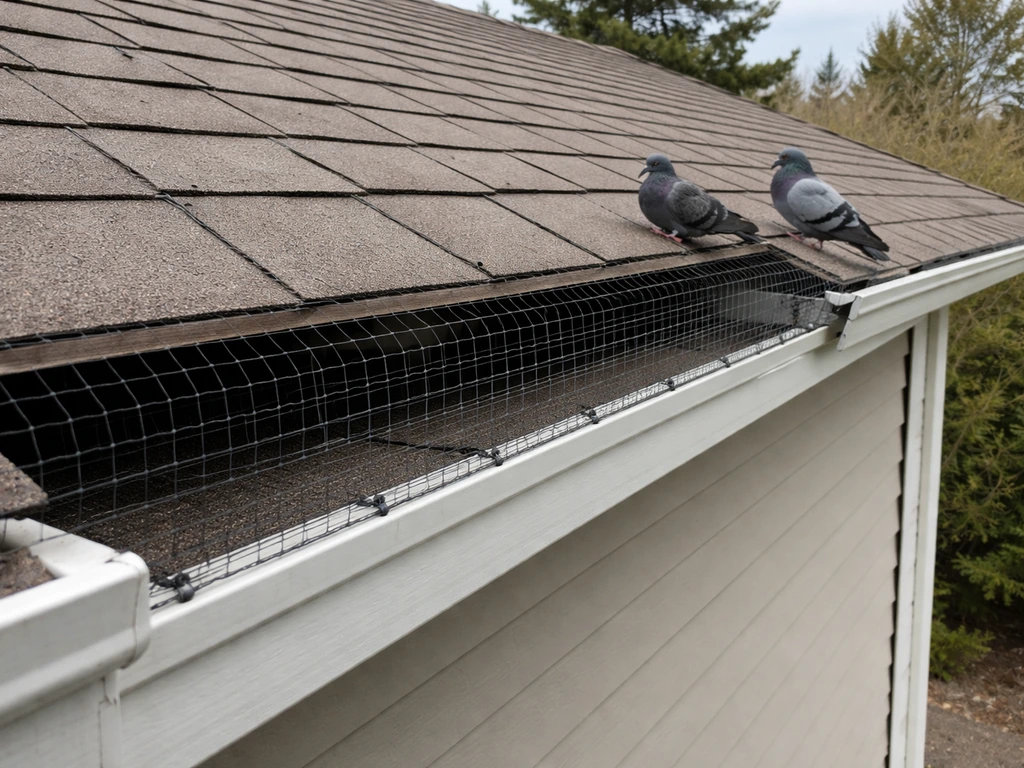
For most residential and urban situations, physical deterrence and habitat modification are the right starting point. Bird netting over roof gaps and ledges physically excludes pigeons and starlings without harming them. Anti-roosting spikes on ledges, pipes, and sills are effective for pigeons when correctly installed. Removing food attractants, securing waste, and not feeding birds in problem areas reduces the incentive to stay. For agricultural settings, scare devices (propane cannons, visual deterrents like reflective tape or predator decoys) provide short-term relief but require rotation to prevent habituation, especially with corvids.
Step 3: Escalate to professional management when needed
Call in professionals when the problem involves a large established colony, a protected species, a food-industry or health-regulated environment, or any aviation context. Pest control companies with specific bird management credentials can legally handle situations that DIY approaches cannot, including nest removal under license and population management where permitted. For airports, the framework is clearly defined: FAA AC 150/5200-36B requires qualified wildlife biologists to conduct hazard assessments, and USDA APHIS Wildlife Services provides direct airport hazard management support. If you manage an airport or aerodrome and don't already have a WHMP in place, that's the immediate next step, not a discretionary one.
Step 4: Health and safety during cleanup
Cleaning up a large roosting site is genuinely hazardous and should not be done casually. Dry droppings become airborne when disturbed. Use an N95 or FFP2 respirator minimum, disposable coveralls, and gloves. Wet the area before disturbing it to suppress dust. Bag waste securely. If the accumulation is large (a commercial roost site or an industrial space), professional biohazard remediation is the appropriate choice.
Myths versus what the evidence actually shows
Bird pest situations attract a surprising amount of folklore, some of it harmless and some of it actively misleading. Here are the most common ones worth setting straight. If you are coming at bird pest problems from a game like Plague Inc, it helps to separate what the game implies from what a real bird-pest actually looks like, because “is it a bird” is the wrong first question compared with identifying the species and the harm it causes plague inc is it a bird.
Myth: Birds regularly attack and seriously injure people. The reality is that unprovoked physical injury from a bird to an adult human is extremely rare. Gull and crow dive-bombing near active nests is a real nuisance and can cause minor scratches, but documented cases of serious injury are vanishingly rare. The behavior is defensive, not predatory, and stops once the perceived threat (you, walking past) moves away. It peaks during nest season and ends when chicks fledge.
Myth: Bird droppings cause widespread disease transmission to casual passersby. The reality is that the pathogen load in outdoor pigeon droppings poses very low risk to healthy individuals walking past. The risk is specifically associated with inhalation of dried, disturbed droppings in enclosed or high-concentration environments, particularly by immunocompromised individuals or people doing cleanup work without respiratory protection. Outdoor casual exposure does not warrant panic.
Myth: Ultrasonic repellers and plastic owls reliably solve bird pest problems. The reality is that evidence for ultrasonic devices is consistently poor; birds simply don't respond to them the way marketing suggests. Static plastic predator decoys work briefly at best and become ignored within days by most species. Corvids in particular will investigate and sometimes physically interact with them. Effective deterrence requires physical exclusion or active, varied hazing programs, not set-and-forget gadgets.
Myth: A birdstrike always causes a crash. The reality is that most birdstrikes are minor events causing no injury and manageable damage. The FAA Wildlife Strike Database makes clear that the majority of reported strikes result in no aircraft damage. The high-profile cases involving engine failures or emergency landings are genuine events, but they represent a small fraction of total strikes. The risk is real and worth systematic management at airports precisely because the consequences when things do go wrong can be severe, not because every strike is catastrophic.
Myth: Starlings and pigeons have no natural predators and nothing controls their numbers. The reality is that urban peregrine falcon populations have expanded significantly across European and North American cities over the past 30 years, partly in response to high pigeon densities. Peregrines are now established nesters on tall buildings in many major cities and do exert genuine predation pressure on feral pigeon populations. This doesn't eliminate pest problems, but it's a useful reminder that urban bird ecology is dynamic, not static.
How this connects to related bird hazard questions
Bird pest problems don't exist in isolation. Whether a specific species qualifies as a pest connects directly to questions about whether it's invasive, whether it's classified as a nuisance under local wildlife law, and what the actual documented harm record looks like for that species. Starlings, for example, are a particularly instructive case because they are non-native and invasive in North America, creating a different legal and management picture than native species. Blackbirds and corvids generate their own distinct set of property and agricultural complaints. Understanding the specific species, setting, and harm mechanism is always going to give you a more actionable answer than treating all 'problem birds' as the same category.
FAQ
How do I tell if the problem is actually a “bird pest” and not just a temporary nuisance?
Look for recurring, measurable harm, for example repeated droppings in a single hotspot, nesting activity across multiple days, ongoing feed contamination, or repeated bird presence near a defined hazard point (runway approach, food storage intake). If activity stops within a week after you remove attractants, it is usually a nuisance rather than a pest problem.
What’s the safest first step for identifying the bird if I cannot get a clear photo?
Use behavior and site to narrow it: entry points (roof gaps about the 45 mm scale are typical for starlings), nesting location (roof voids, vents, rafters), and timing (breeding-season noise from spring through summer). A quick consult with a local wildlife officer or pest management pro is often faster than waiting for a perfect photo.
Are there times of year when I should avoid removal or cleanup?
Yes. Nesting and chick-rearing periods increase the chance of illegal disturbance for protected birds and also increase aggression around nests. If you cannot confirm the species and whether active nests are present, pause and get guidance before blocking entry points or disturbing roost sites.
Can I seal gaps right away after I see droppings or a bird entering the roof?
Not usually. You should confirm there is no active nesting or roosting inside first, then exclude after the birds are out. For occupied roof spaces, exclusion typically means installing one-way measures so birds can leave, then sealing openings when inspections show the area is inactive.
What are common DIY mistakes that make bird problems worse?
One-way harm is delayed exclusion (sealing too early), relying on single static deterrents (birds habituate), and aggressive cleanup that creates airborne dust and spreading contamination. Another frequent mistake is ignoring food and waste sources, so the birds return after hardware is installed.
What personal protection should I use for droppings cleanup in a roof or loft space?
If droppings are dry, treat the cleanup as dust-producing work: use at least an FFP2 or N95 respirator, wear disposable coveralls and gloves, wet the surface before disturbing materials, and bag waste immediately. For large accumulations or enclosed spaces, professional biohazard remediation is safer than DIY.
Do bird mites or other pests spread indoors if birds entered roof voids?
Yes, ectoparasites can migrate into the living space once birds are removed, especially after roost removal. If occupants develop itchy bites after cleanup, treat it as a follow-on pest issue and consider professional inspection rather than repeating exclusion without follow-up.
What should I do if I find active woodpecker damage, exposed timber, or water intrusion?
Exclusion and repair should be staged. First, address access and attractants (insects in affected timber, suitable nesting areas), then repair structural damage and moisture pathways. If you only patch the facade without removing the underlying insect food source or entry opportunities, re-drilling can recur.
How do I choose between deterrence and exclusion for pigeons or starlings?
Use deterrence (spooking, habitat modification, removing attractants) when birds are present but not firmly established, and use exclusion (netting, properly installed barriers, blocking entry after confirming inactivity) when birds are using specific entry points repeatedly. For roof-void problems, exclusion after verification is usually more reliable than repeated temporary scares.
Will scare devices like propane cannons or reflective tape always work long-term?
No. Birds habituate, especially to predictable patterns. If you use active scare devices, rotate locations and change the timing and appearance regularly, and pair it with habitat modification like removing accessible feed and securing waste.
What’s the right approach for bird pest problems near food processing, grain, or livestock feed?
Prioritize contamination control and access reduction. Secure all feed and remove droppings promptly with appropriate containment, then implement physical exclusion and sanitation schedules. In regulated environments, professional handling is often required because inspection standards and documentation matter.
If I’m worried about a birdstrike, what should I do besides calling it “dangerous”?
At the airport level, the practical next step is to ensure the site has a wildlife hazard management plan with trained personnel and ongoing habitat assessment, then adjust operational controls based on the hazard evaluation. For non-airport sites, reduce attractants (standing water, unsecured waste, nearby nesting habitat) and document repeated bird activity at the specific risk location.
Are deterrents like ultrasonic devices and plastic owls ever worth trying?
They are usually not worth relying on as the main solution because birds often ignore them or adapt quickly. If used at all, treat them as supplemental tools alongside physical exclusion and active, varied measures, and plan for short test periods with performance monitoring rather than permanent installation.
What legal issues should homeowners and businesses watch for when the bird is protected?
Do not assume “pest” status makes it legal to remove nests or harm birds. Protections vary by species, location, and whether nests are active, so the safest workflow is species identification, confirmation of whether breeding or active nesting is occurring, then selection of exclusion methods that minimize harm and comply with local regulations.
When should I stop troubleshooting and hire a professional immediately?
Hire help when the site is large or enclosed (major roosts, industrial buildings), when you cannot confirm the species, when damage involves electrical areas or structural instability, or when the issue is near aviation operations. Professionals can also do licensed nest work where permitted and provide follow-up verification that exclusion succeeded.