
Yes, in most cases it is illegal to kill a bird, but the honest answer is: it depends on where you are, which bird is involved, and what the circumstances are. Whether bird hunting is legal in India depends on local wildlife protection rules, species, and the specific circumstances bird hunting legal in india. In the United States, the Migratory Bird Treaty Act (MBTA) makes it unlawful to kill, capture, pursue, or even possess most wild birds without federal authorization. Other countries have their own frameworks, some stricter, some narrower. The bottom line for anyone dealing with a nuisance bird, a property problem, or a genuine safety concern today: assume the bird is protected until you verify otherwise, and exhaust non-lethal options first. If you are trying to figure out what bird is illegal to kill, start by assuming protection applies unless you confirm the specific species and your local rules.
Is it Illegal to Kill a Bird? Laws, Exceptions, and Safe Steps


The quick answer by country and state
Bird protection laws vary enormously by jurisdiction, so the first thing you need to do is figure out which rules apply to you. Here is a practical country-by-country starting point.
| Country/Region | Primary Law | General Rule | Key Exceptions |
|---|---|---|---|
| United States | Migratory Bird Treaty Act (MBTA) + state wildlife laws | Killing most wild birds is illegal without a federal permit | Unprotected species (some pigeons, starlings, house sparrows); valid depredation permits; state-specific game bird seasons |
| Canada | Migratory Birds Convention Act (MBCA) | Similar to MBTA; most migratory birds fully protected | Licensed hunting seasons; depredation permits from Environment and Climate Change Canada |
| United Kingdom | Wildlife and Countryside Act 1981 | All wild birds protected; killing or taking any wild bird is an offence | Licensed pest species (e.g., some corvids, feral pigeons); general licences issued by Natural England/NatureScot |
| Australia | Environment Protection and Biodiversity Conservation Act (EPBC) + state laws | Native birds fully protected under federal and state law | Licensed culling; pest species (common myna, feral pigeon) handled under state regulations |
| India | Wildlife Protection Act 1972 | Almost all wild birds protected; hunting banned | Extremely limited exceptions; see related coverage on bird hunting legality in India |
| European Union | EU Birds Directive (2009/147/EC) | All wild birds protected; hunting only for listed species in season | Member states may grant derogations for public safety or agriculture under strict conditions |
Within the US, state laws add another layer. Many states extend protections beyond the MBTA, covering species not on the federal list, restricting the killing of state birds, or imposing tighter seasonal rules. Because state birds can be protected separately from federal rules, killing a state bird may still be illegal even if other birds seem easier to handle. If you are in California, for instance, the California Fish and Game Code covers virtually all resident birds, not just migratory ones. A quick call to your state wildlife agency (or a look at their website) will tell you exactly where you stand. Do not assume that a bird common in your yard is automatically unprotected, that assumption is one of the most common mistakes that leads to accidental violations.
When killing a bird is illegal: protected species, nests, and timing
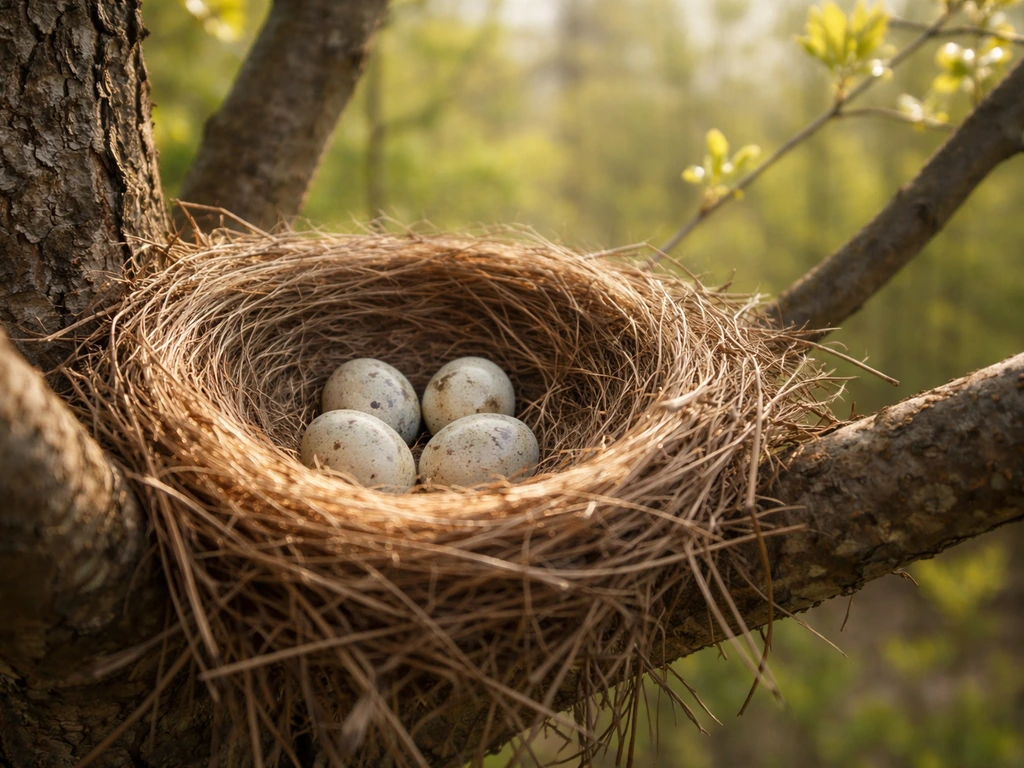
The MBTA is the foundational US law here, and it is broader than most people expect. Under 50 CFR § 10.12, the word 'take' covers pursuing, hunting, shooting, wounding, killing, trapping, capturing, or collecting a bird, plus any attempt to do those things. Under 50 CFR § 10.12, blank" rel="noopener noreferrer">“take” is defined broadly to include actions like pursuing, hunting, shooting, wounding, killing, trapping, capturing, or collecting (as well as attempts to do so). That means even an unsuccessful attempt to kill a protected bird can be a federal offense. The law also covers nests, eggs, and feathers, so destroying an active nest is treated the same way as killing the bird itself.
The list of birds covered by the MBTA runs to over 1,000 species. It includes virtually every songbird, raptor, shorebird, waterbird, and migratory species you are likely to encounter in a backyard or urban setting. Raptors such as hawks, owls, and eagles carry additional protection under the Bald and Golden Eagle Protection Act, which layers on top of the MBTA with separate and harsher penalties. The Bald and Golden Eagle Protection Act and related legal protections for these species are covered under U.S. Code Title 16, Chapter 5A, Subchapter II. State birds typically have their own legal protections as well, a topic worth looking into specifically if you are dealing with a state-listed species.
Timing matters a lot. Even for species that can legally be controlled under certain permits, nesting season creates a near-absolute restriction. Disturbing an active nest, one with eggs or chicks, is a separate offense in most jurisdictions even when the adult bird itself might otherwise be controlled. This catches a lot of homeowners off guard: you may have a permit to manage a species, but if the work happens while a nest is active, you can still be in violation. Always check for active nests before any exclusion or control work.
A small number of non-native species in the US are not covered by the MBTA. House sparrows (Passer domesticus), European starlings (Sturnus vulgaris), and feral rock pigeons (Columba livia) are the three most commonly cited unprotected species at the federal level. However, some states have filled that gap with their own laws, so 'not protected federally' does not always mean 'legal to kill in your state.' Verify locally before assuming anything.
Legal exceptions: when can you actually take action?
There are genuine legal exceptions, but they are narrower than most people assume. The reality is that 'it was attacking me' or 'it was damaging my property' does not automatically give you legal cover to kill a protected bird. Here is how the main exceptions actually work.
Immediate self-defense or defense of another person
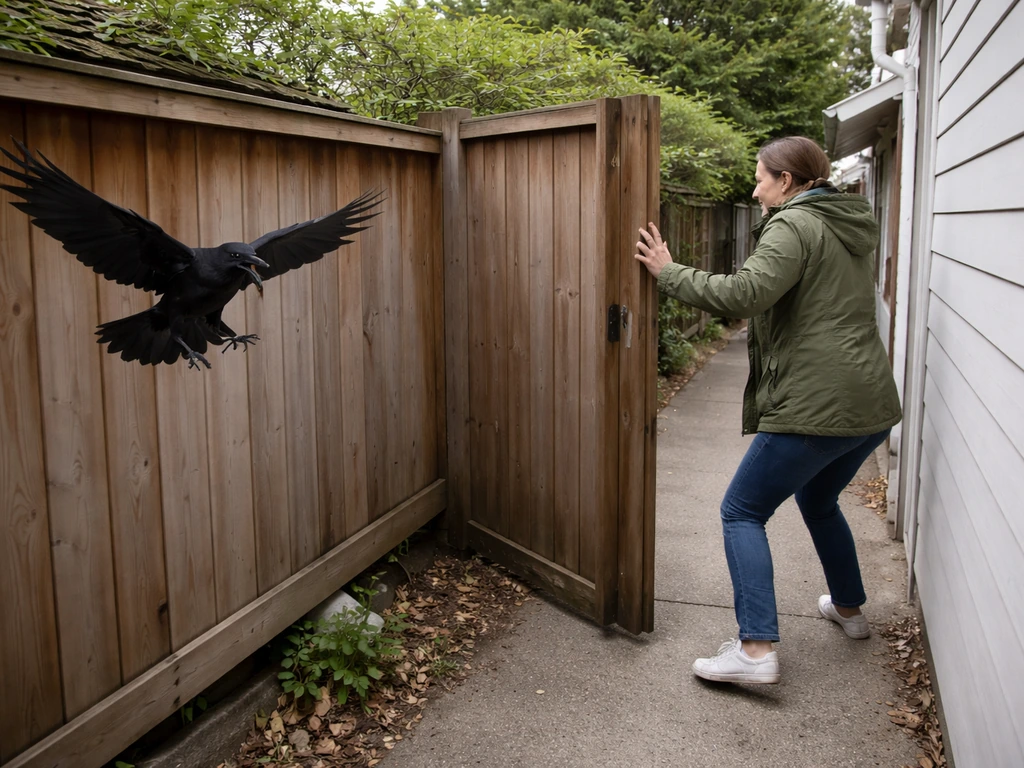
If a bird is actively attacking you or someone else and you have no reasonable means of escape, that may qualify as a self-defense situation. This is theoretically recognized, but it is an extremely narrow carve-out and rarely a realistic scenario. Most bird 'attacks', even aggressive dive-bombing by nesting red-winged blackbirds or mockingbirds, do not meet the legal threshold for lethal self-defense. Backing away, covering your head, or using a physical barrier is almost always available and should be your response. Killing a protected bird because it was dive-bombing you would almost certainly not hold up as a legal defense.
Depredation permits for property or agricultural damage
Under 50 CFR § 21.100, the US Fish and Wildlife Service (USFWS) can issue federal depredation permits that authorize taking migratory birds when they are causing serious damage to agricultural crops, aquaculture, wildlife resources, or property. These permits have conditions: they specify which species, how many, by what method, and over what time period. You cannot simply decide that a bird is causing damage and start killing it. You apply for the permit first, demonstrate the problem, and operate within the permit's terms. Permit applications go through your regional USFWS Migratory Bird Program office.
State game bird seasons and hunting licenses
Certain birds, upland game birds like pheasants, quail, and some doves, as well as waterfowl, can be legally hunted during designated seasons with the appropriate state and federal licenses and stamps. This is a well-regulated, legal pathway for specific species in specific contexts. It does not apply to songbirds, raptors, or most of the birds people encounter in urban or suburban settings.
Authorized wildlife control and agency actions
Federal and state wildlife agencies can authorize trained professionals to take birds for population management, disease control, or public safety. The USDA Wildlife Services program, for example, conducts authorized bird control at airports, landfills, and agricultural sites. These actions are conducted by licensed, permitted professionals, not by individuals acting on their own judgment. If a nuisance bird problem is serious enough to warrant lethal control, the correct move is to contact your state wildlife agency or USDA Wildlife Services and let them assess whether a permitted response is appropriate.
Permits, reporting, and how to proceed lawfully
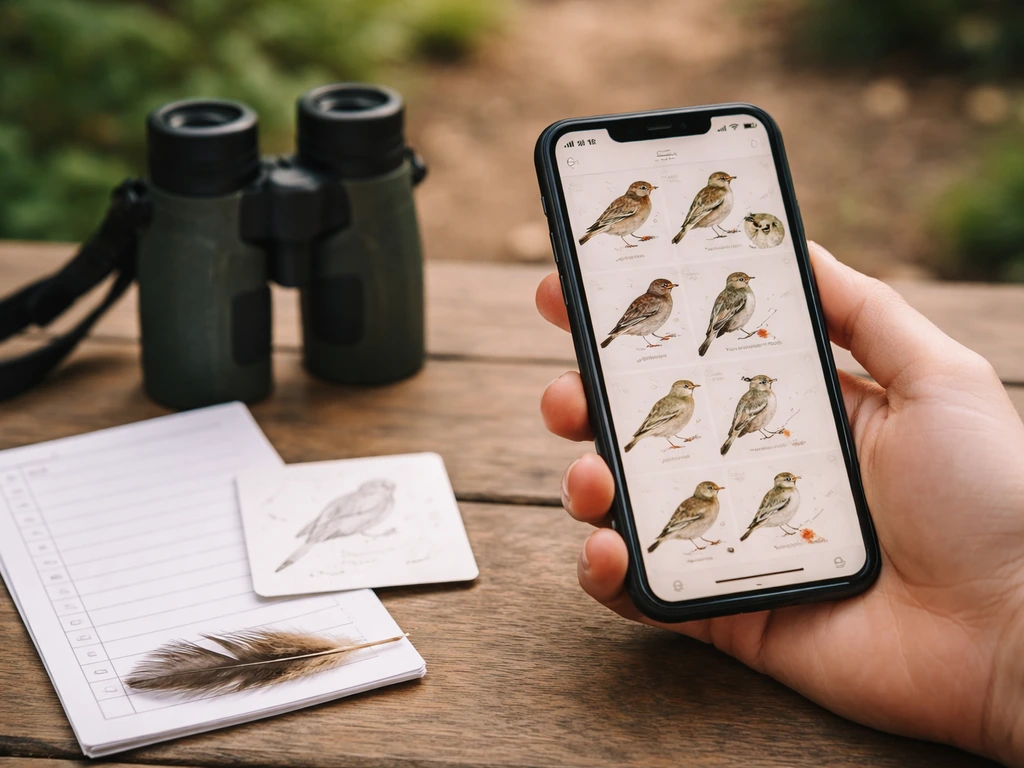
If you genuinely need to take action involving a protected bird, here is the practical sequence to follow to stay on the right side of the law. This same “protected bird” rule is also part of what people mean by bird nesting divorce disputes what is bird nesting divorce.
- Identify the species. Use a field guide app (Merlin Bird ID is free and accurate) or contact your local Audubon chapter. Knowing the species tells you exactly which laws apply.
- Contact your state wildlife agency. They can confirm protections, advise on legal options, and tell you whether a depredation or nuisance wildlife permit is available in your state.
- Contact the USFWS regional Migratory Bird Program office if the situation involves agricultural damage, serious property loss, or a public safety concern at scale. They handle federal depredation permit applications.
- For airport and aviation-related bird hazards, contact the FAA Wildlife Strike Database reporting system and USDA Wildlife Services. Airports are required to have wildlife hazard management plans under FAA Advisory Circular 150/5200-33.
- Document everything. If a bird has died on your property through no intentional action on your part (window strike, cat predation, etc.), document the date, species if known, and circumstances. In most jurisdictions, finding a dead protected bird does not require reporting, but possessing it — even picking it up — can violate the MBTA unless you are a permitted rehabilitator.
- Do not handle a live injured bird yourself. Contact a licensed wildlife rehabilitator. The USFWS National Wildlife Rehabilitators Association directory can connect you with someone local.
One thing worth knowing: bird nests often have their own legal protections separate from the birds themselves. An active nest, meaning one with eggs or chicks currently in it, cannot legally be removed or destroyed in most US jurisdictions without a permit. Even an inactive nest of certain species (like eagles) may be protected year-round. This is a significant area of confusion for homeowners doing building maintenance or landscaping work.
What to do instead: non-lethal options that actually work
This is where most people get the most practical value. The vast majority of bird-related problems, aggressive birds near a nest, birds damaging rooftop equipment, birds roosting under solar panels, birds eating garden produce, can be solved without any lethal action. Non-lethal methods are not just legally safer; they are often more effective because they address the root cause rather than creating a temporary vacancy another bird will fill.
Physical exclusion
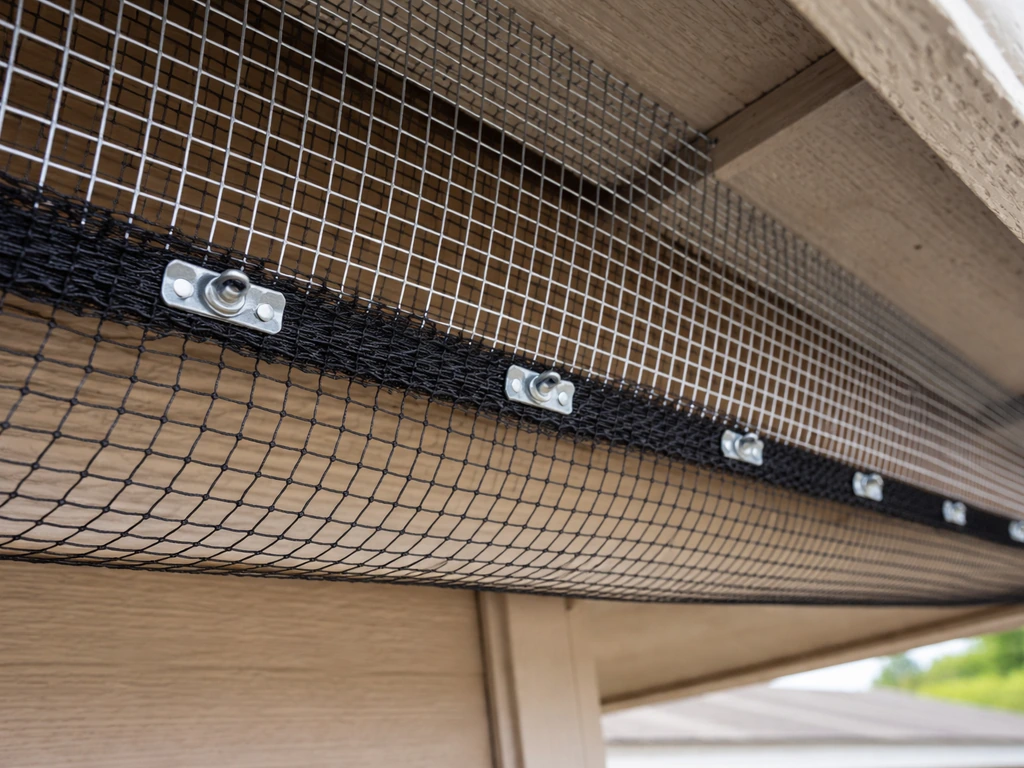
Bird netting, hardware cloth, and purpose-built exclusion products physically prevent birds from accessing a space. This is the gold standard for rooftops, under eaves, in barns, and around aquaculture ponds. When properly installed, exclusion works indefinitely and requires no ongoing management. For nesting birds already present, exclusion must wait until chicks have fledged and the nest is inactive, otherwise you are looking at a potential MBTA violation.
Deterrents and habitat modification
- Bird spikes and slope systems on ledges and beams prevent roosting without harming birds
- Visual deterrents (reflective tape, predator decoys, laser deterrent systems) disrupt comfort and habituation — rotate them regularly or birds will ignore them
- Sound deterrents including distress calls and predator calls can disperse flocks from large open areas like airfields and landfills when used consistently
- Habitat modification: removing food sources, covering trash, eliminating standing water, and trimming vegetation that provides roosting cover makes an area less attractive to problem species
- For garden and crop protection, bird-proof netting over plants is far more reliable than any scaring method
Hazing and professional dispersal
Hazing refers to non-lethal harassment to move birds away from an area. Pyrotechnics, trained raptors, and border collies are all used professionally for this purpose at airports, golf courses, and large commercial properties. USDA Wildlife Services and licensed bird control contractors use these methods under authorization. If you are dealing with a large roosting flock or persistent agricultural damage, this is the category of professional services worth exploring before any lethal option.
Wildlife rehabilitation for injured birds
If the issue is a sick or injured bird rather than a nuisance situation, the right call is a licensed wildlife rehabilitator. Rehabilitators hold state and federal permits that allow them to legally handle, transport, and treat protected birds. You can find one through your state wildlife agency, the National Wildlife Rehabilitators Association, or the Wildlife Center of Virginia's directory. Do not attempt to care for an injured wild bird yourself, beyond being illegal without a permit, improper handling often causes additional harm.
How enforcement works and the penalties you actually face
MBTA violations are federal offenses. Under the Act, criminal penalties break into two tiers. Misdemeanor violations (the baseline) carry fines up to $15,000 and up to 6 months in prison per violation. Felony violations, typically involving commercial activity, knowing and willful killing, or trafficking in protected birds, can result in fines up to $250,000 for individuals (higher for organizations) and up to 2 years in prison. State penalties stack on top of federal ones and vary widely.
In practice, federal wildlife officers and state conservation officers do investigate and prosecute bird-related violations, though enforcement tends to prioritize commercial trafficking, large-scale agricultural poisoning, and deliberate killing of high-profile species like eagles and owls. A homeowner who unknowingly disturbs a nest is more likely to receive a warning and guidance on how to comply than to face immediate criminal charges, but that is not a guarantee, and it is not a reason to take the risk.
The most common mistakes that lead to violations are worth spelling out directly. Assuming a bird is unprotected because it is common is the biggest one, house finches, mockingbirds, and robins are all MBTA-protected despite being abundant. Killing birds during nesting season without checking for active nests is the second. Handling or possessing a dead protected bird without authorization (even to 'show it to someone') is the third. And attempting DIY trapping without checking whether the species requires a permit is the fourth. Each of these is a genuine, prosecutable violation.
Aviation and high-risk contexts: what the rules mean in practice
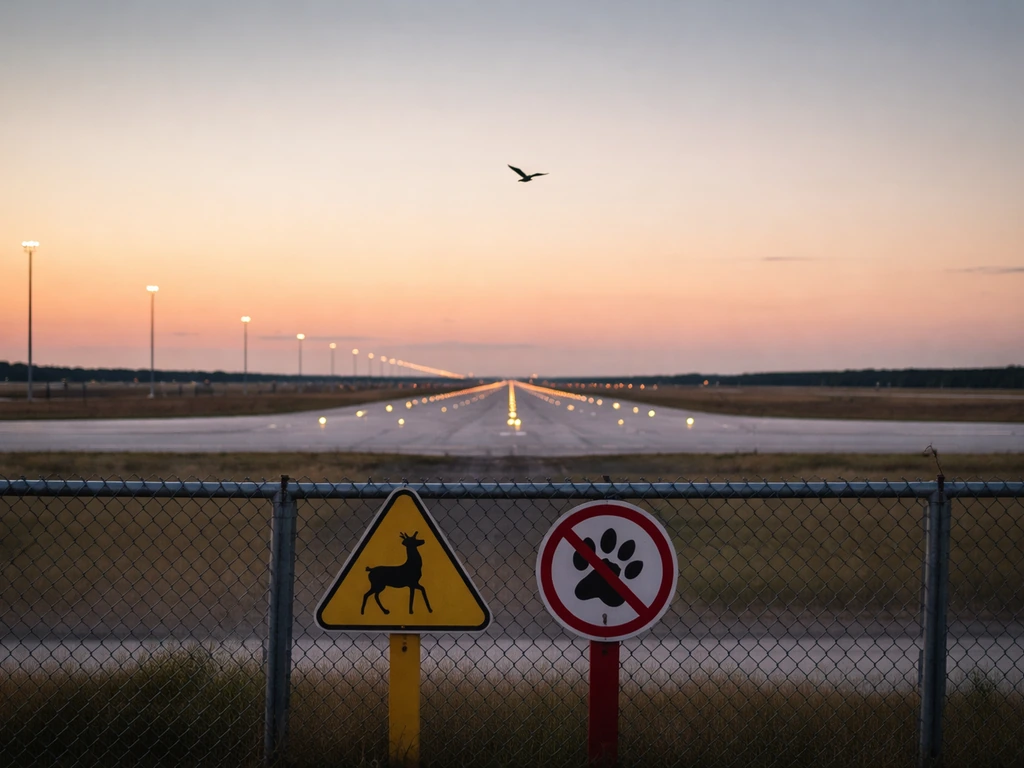
Aviation professionals occupy a unique position in the bird-law landscape. Bird-aircraft collisions (wildlife strikes) are a recognized safety hazard, the FAA Wildlife Strike Database has recorded over 250,000 strikes since 1990, and bird strikes cause hundreds of millions of dollars in damage annually. The 2009 US Airways Flight 1549 ditching on the Hudson River, caused by Canada goose ingestion, is the highest-profile example of what these events can mean at scale.
Airports operating under FAA certification are required to assess wildlife hazards and implement wildlife hazard management plans under FAA Advisory Circular 150/5200-33B. These plans typically involve habitat modification (eliminating grass heights and water features that attract birds), hazing programs, and, when authorized by USDA Wildlife Services and the relevant federal permits, lethal control of specific species in specific circumstances. Even in the aviation context, lethal bird control requires proper authorization; airport staff cannot simply shoot birds without permits.
For pilots and airline operations, the priority response to bird strike risk is reporting, not lethal action. The FAA Wildlife Strike Report (FAA Form 5200-7) should be completed after any strike or near-strike. These reports feed population and risk management decisions at the agency level, informing where authorized wildlife control efforts are deployed. If you are an aviation professional dealing with a persistent bird hazard at a facility, the path forward is coordination with the airport wildlife manager, USDA Wildlife Services, and your regional USFWS office, not independent action.
The broader principle here applies whether you are a homeowner dealing with an aggressive mockingbird or an airport manager dealing with a Canada goose flock: the legal and most effective framework always involves assessment, documentation, non-lethal methods first, and authorized professionals for anything beyond that. Lethal control is a tool that exists within the system, not outside it, and operating outside it creates legal exposure that the underlying problem rarely justifies.
FAQ
If a bird is on my property, can I legally kill it if it is damaging my yard or plants?
In most places, “damage” does not automatically make killing legal, because many birds are protected regardless of where they are. If the bird is causing serious damage, the legal path is typically to document the damage and check whether a state program or a federal depredation permit is needed, especially in the US. For many common backyard situations, exclusion or targeted hazing is the safer first step that avoids the nest and “take” issues.
Does “take” mean I can get in trouble even if I tried to scare a bird but it died accidentally?
Yes. Under the MBTA framework, “take” includes actions that pursue, injure, or kill birds, and the law can treat an attempt that results in harm as a violation. Accidents during DIY traps, stun devices, or uncontrolled handling can still count, so it is important to avoid DIY methods entirely unless you have clear, species-specific authorization.
What if the bird is just sitting there, not attacking or nesting, can I remove it or kill it?
You still need to verify protection status, because many species are protected year-round and nests can create separate prohibitions even when adults seem inactive. If a bird is occupying a nest site or roosting area, removal can still trigger a nest or harassment problem. The safe legal approach is to identify the species and check whether any active nest or protected-roost activity is present before acting.
Are injured or dead birds illegal to possess, keep, or bring to someone else?
Possession of protected birds or parts can be restricted, even if the bird was found dead. If you want to handle a found bird, contact a state wildlife agency or a licensed wildlife rehabilitator first, and ask what they allow (some will provide handling instructions, others will require delivery). Avoid keeping feathers, whole birds, or nests as “souvenirs” unless you confirm authorization.
Can I legally relocate a nest or eggs to stop the problem?
Relocating or removing eggs and active nests is generally not a legal DIY option for protected birds. In the US, active nest disruption is treated as a separate offense from handling adults, and many jurisdictions require permits that are not easily granted for routine nuisance control. If relocation is even possible, it is typically done by permitted professionals under a compliance plan.
What if the bird is a nuisance but it is also a species that is not protected federally, am I definitely in the clear?
Not necessarily. Some species are not covered under the federal MBTA list, but states can still protect them or impose their own restrictions and seasonal rules. If you are relying on “not protected federally” as your basis, confirm with your state wildlife agency before acting.
How can I tell if there is an “active nest,” especially if I do not see eggs or chicks?
Look for signs beyond visible eggs, such as fresh nesting material, adult birds repeatedly returning to the same spot at regular intervals, feeding behavior, or constant presence around a cavity or ledge. If you cannot confidently verify inactivity, treat it as active, because disturbing an active nest can create legal exposure even if you did not kill the bird.
Is it legal to use DIY trapping, glue boards, or poison to remove a bird problem?
Those methods are high-risk for multiple reasons: many traps or devices can injure or kill protected species, “take” can occur even without intent, and poisoning can also affect non-target wildlife and may trigger additional environmental or cruelty violations. The legally safer approach is to use exclusion, physical barriers, and professional hazing, or to request a permit-mediated solution if lethal control is truly warranted.
If I have a permit or license for hunting in my area, does that cover killing any bird I find?
Usually no. Hunting permissions are typically species-specific, seasonal, and method-specific, and they generally do not give blanket authorization for all protected birds or for killing during nesting periods. Permits and licenses also usually do not allow removing eggs or destroying active nests, so you still need to confirm the exact species and timing rules.
What should I do immediately if I am confronted with a real safety emergency involving a bird?
Prioritize safe egress and barrier-based responses first, then document what happened (time, location, species if known, and the nature of the threat). If lethal action seems the only option, pause and contact local authorities or a wildlife agency for guidance rather than acting on assumption, because “emergency” arguments are narrow and fact-dependent. Even when self-defense is considered, most bird incidents can be managed without killing.
Will I definitely be prosecuted if I accidentally disturb a nest or kill a bird?
Not always, but do not rely on that. Enforcement often prioritizes deliberate and large-scale conduct, trafficking, and high-profile species, and homeowners may receive warnings or guidance. However, it is still possible to face penalties, and ignorance or good intentions usually does not prevent a violation. The best move is to stop, seek compliance guidance, and avoid further disturbance.
Who is the right person to call for bird control that might involve protected species?
Start with your state wildlife agency for guidance and permitted options. If the situation is on a large site (airports, landfills, agricultural operations) or involves persistent roosting, ask about programs like USDA Wildlife Services or licensed bird control contractors who can operate under the needed authorizations. For sick or injured birds, contact a licensed wildlife rehabilitator rather than trying to handle the bird yourself.
If I am an airport or aviation operator, what is the first compliance step after a bird strike?
Report the strike using the required aviation reporting process so the event is entered into the risk management system. Then coordinate with the airport wildlife manager and authorized agencies for any hazard reduction measures, because independent lethal action is not the default path even in aviation contexts.