Caging a wild bird as a quick fix is almost never safe, humane, or legal. For the bird, confinement triggers acute stress that can kill within hours, and most people cannot provide the right diet, temperature, or ventilation to keep a wild species alive. For you, handling a wild bird without protection carries real disease and injury risk. The rare exception is short-term, minimal-contact containment while you arrange professional help, and even then a cardboard box with air holes beats a birdcage in most situations.
Is to Cage a Wild Bird Spicy? Safe Alternatives and Steps

Marcus Whitmore
28 Apr 2026
What 'cage a wild bird' really means, and when it becomes illegal
In most jurisdictions, possessing a wild bird without a permit is a criminal offence, not a grey area. In the UK, virtually all wild bird species, their eggs, and their nests are protected by law. The same baseline protection exists across the EU under the Birds Directive, which prohibits deliberate capture, killing, or disturbance of wild birds with only narrow derogations under Article 9. In the US, the Migratory Bird Treaty Act covers hundreds of species, and federal CFR regulations (50 CFR § 21.12) restrict possession and transport. Individual states layer additional rules on top: Washington State, for example, requires a dedicated wildlife rehabilitation permit before anyone can legally hold an injured or sick wild animal, even temporarily.
The practical upshot is that 'I'll keep it in a cage until it recovers' is not a legally protected good-faith act in most places. Licensed wildlife rehabilitators exist precisely because the law recognises that lay people, however well-intentioned, are not equipped to provide adequate care. If you are a licensed rehabilitator or working under one, you already know what the rules are. If you are not, the safest legal position is to minimise handling time and contact the right professionals as quickly as possible.
There is one fringe situation worth naming: some people ask about caging wild birds not to rescue them but to keep them as pets. That is a separate and more serious legal issue. Even if a bird appears tame or has been hand-raised, keeping it indefinitely without the correct schedule registration or licence is illegal in the UK and EU, and is a federal violation in the US for covered species.
Assess before you act: read the bird's condition first
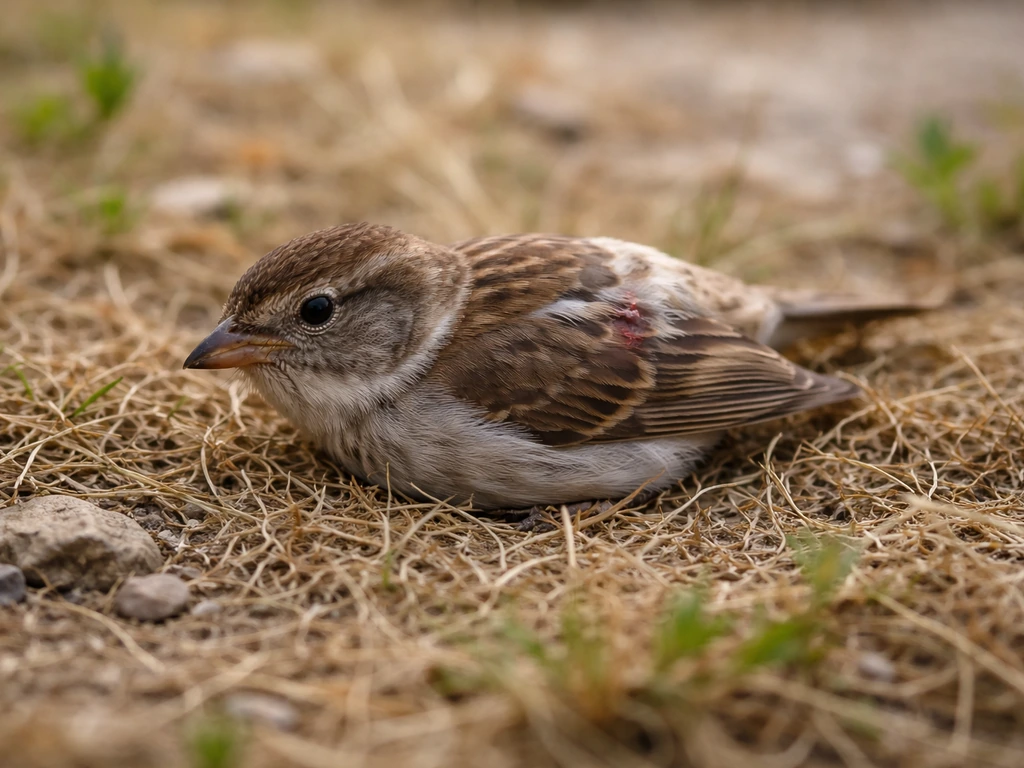
Before you do anything, spend 60 seconds watching from a distance. Your response should depend almost entirely on what the bird is actually doing. A bird sitting quietly on the ground is not automatically injured; it may be a fledgling (young birds learning to fly routinely spend days on the ground), it may be stunned from a window strike, or it may genuinely be in distress. How you tell the difference matters a great deal.
- Injured or unable to move: the bird is on its side, has a visible wound, a drooping wing, or cannot bear weight on its legs. It does not attempt to move away from you even when you approach slowly.
- Stunned but otherwise healthy: the bird struck a window recently, is upright, and blinks or moves its head. It may be able to fly within 15 to 60 minutes.
- Healthy fledgling: covered in fluffy juvenile feathers, hops or flutters short distances, and parent birds are visible or audible nearby.
- Healthy adult trapped indoors: fully alert, tries to fly, and reacts strongly to your presence.
- Attacking or repeatedly colliding: the bird dives at people, repeatedly strikes windows, or is caught in netting or wire.
Your response path branches from this assessment. Getting it wrong at this stage wastes time and can cause more harm than doing nothing. A healthy fledgling on the ground that gets 'rescued' and caged has almost certainly just been kidnapped from functional parental care.
Better alternatives to caging: rehab, shelter, and temporary containment
A birdcage is one of the worst containers for a wild bird. The bar spacing, perch height, and open sides create opportunities for a panicking bird to break feathers, injure a wing, or exhaust itself fatally. A cardboard box with ventilation holes punched in the sides is the standard professional recommendation for short-term containment. It is dark, which reduces stress, it limits movement so a fragile bird cannot re-injure itself, and it prevents escape without requiring you to keep handling the animal.
The goal of any temporary containment is to get the bird calm, stable, and into professional hands within a few hours, not to provide long-term housing. If a bird is sick or injured, feeding the wrong diet can cause injury or even death, so it is important to get the bird into professional wildlife care quickly feeding the wrong diet can cause injury or death. Licensed wildlife rehabilitators have species-appropriate enclosures, correct diets, and the veterinary relationships to do this properly. In the US, your state fish and wildlife agency maintains lists of permitted rehabilitators. In the UK, the RSPCA or SSPCA (in Scotland) coordinates wildlife care and can direct you to the nearest rehabilitator. In the EU, national wildlife authorities or local veterinary clinics can point you to licensed facilities.
- Cardboard box: punch dime-sized holes in the sides, line the bottom with a clean cloth (not fluffy material that can snag toes), and tape the top closed. Do not put food or water in with an injured bird.
- Ventilated pet carrier: acceptable for larger birds if you have nothing else, but cover it with a cloth to reduce light and stimulation.
- Outdoor release without handling: for a healthy bird trapped inside, open windows and doors and remove obstacles. Birds follow light; blocking internal light sources and opening exterior ones is usually enough.
- Nest replacement: for a fledgling that has clearly fallen from a nest, you can place it back in or near the original nest. Parent birds will not reject it because you touched it. That is a persistent myth.
- Professional wildlife rehabilitator: the correct long-term solution in all cases involving injury, illness, or extended captivity needs.
The 'spicy' angle: heat, deterrents, and what the research actually shows
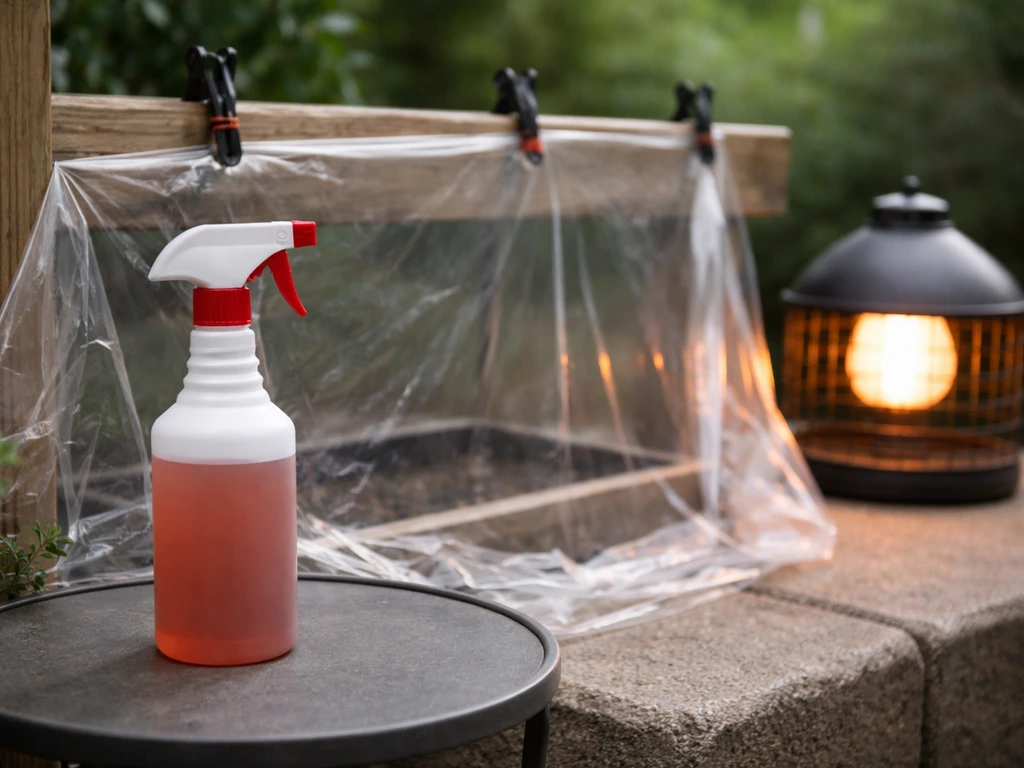
If you landed here wondering whether 'spicy' conditions, meaning heat, capsaicin-based repellents, or harsh deterrents, can be used to drive a wild bird away from a space or discourage it from returning, that is a legitimate question and the answer is nuanced. Capsaicin (the compound that makes chili peppers hot) is genuinely used in commercial bird deterrents applied to seeds and surfaces, and birds largely lack the mammalian TRPV1 receptor that makes capsaicin painful to us, so it is not cruel to birds in the way it would be to a mammal. However, it is not reliably effective as a standalone repellent for deterring birds from a space.
The idea that you can make conditions 'spicy' or unpleasant enough inside a cage or enclosure to encourage a bird to leave is not a sound strategy. A stressed wild bird in a confined space will not calmly decide to depart; it will panic, injure itself, and potentially die from capture myopathy, a condition where extreme stress causes muscle breakdown and organ failure. A SciELO systematic review on blank" rel="noopener noreferrer">capture myopathy in wild birds explains that handling and capturing stress can lead to severe outcomes and mortality, including acute patterns that can be fatal within a short time. This can happen within hours. If the bird has identifying markings like a band, the best next step is still to contact a licensed wildlife rehabilitator so they can assess what happens when you shoot a banded bird and advise you on safe handling within hours. Heat specifically is dangerous: wild birds are highly sensitive to temperature extremes, and an enclosed space that gets too warm can kill a bird very quickly. Do not place a box or cage in direct sunlight or near a heat source.
The reality is that effective, humane bird deterrence for outdoor spaces uses physical exclusion (netting, spikes, wire), optical deterrents (reflective tape, predator decoys), and habitat modification, not temperature or chemical irritants applied to a confined bird. If you are trying to stop birds nesting or roosting in a specific location, those are the evidence-based tools.
Protecting yourself: disease, bites, and basic safety
Wild birds carry pathogens that can infect humans. Avian influenza (H5N1 and related strains) is the most high-profile concern, and while human cases from casual contact remain rare, the risk is not zero, particularly with waterfowl and raptors. Salmonella is common in wild songbirds and can shed heavily from sick animals. Psittacosis (Chlamydia psittaci) is transmissible from parrots and some other species. Histoplasmosis can be contracted from environments heavily contaminated with bird droppings, though not from a single bird encounter.
For any handling, even brief containment, use disposable gloves. A thick cloth or small towel adds protection against bites and talons, and raptors in particular can cause serious puncture wounds. Wash hands thoroughly with soap after any contact, and avoid touching your face during handling. If you are immunocompromised, pregnant, or elderly, let someone else manage the containment and call for help instead of handling the bird yourself.
If you are scratched or bitten, wash the wound immediately with soap and water for at least five minutes, apply antiseptic, and consult a doctor about whether a tetanus booster or further assessment is warranted. Raptors and corvids (crows, ravens) can deliver surprisingly strong bites. Do not underestimate the injury potential of a bird that feels cornered.
Step-by-step: what to do based on what you are facing
If the bird appears injured
- Do not rush in. Observe from a few metres away for two to three minutes to confirm it is genuinely unable to move or is visibly wounded.
- Put on gloves. Use a thick cloth or folded towel to pick the bird up gently, supporting its body and keeping its wings folded against its sides.
- Place it in a cardboard box with ventilation holes, lined with a non-fluffy cloth. Close the box.
- Keep the box in a quiet, warm (but not hot) indoor location away from pets and noise. Room temperature (around 18 to 22 degrees Celsius) is appropriate. Do not use a heat lamp directly on the box.
- Do not give food or water. Injured birds can aspirate liquids and incorrect foods cause rapid harm.
- Contact a licensed wildlife rehabilitator or your local wildlife authority immediately. The goal is transfer within a few hours.
If the bird is healthy but inside your home or around people
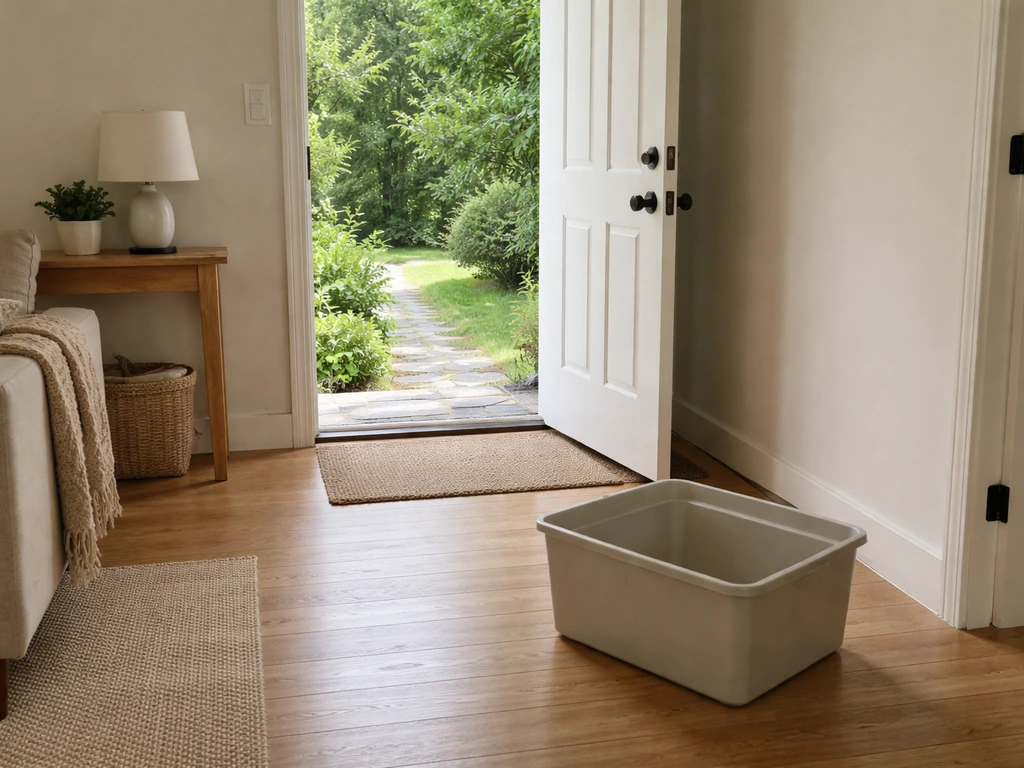
- Do not chase it. Chasing causes panic, injury from collisions, and exhaustion.
- Clear a path to the outside: open the nearest exterior window or door fully and remove screens.
- Darken the interior by closing blinds on windows that do not lead outside. Birds fly toward light.
- Leave the room if possible and give the bird time to find the exit on its own, often 10 to 20 minutes.
- If it is trapped behind furniture or in a corner, use a large, lightweight cloth to gently guide (not grab) it toward the opening.
- Once outside, close the entry point to prevent re-entry.
If the bird is attacking or repeatedly colliding with windows
- For repeated window strikes: apply window collision deterrents (external tape strips, CollidEscape film, or ABC BirdTape). The pattern needs to cover the outside of the glass with elements spaced no more than 5 cm apart horizontally and 10 cm apart vertically.
- For a bird defending territory and dive-bombing people (common with nesting robins, mockingbirds, and corvids): keep a distance of at least 10 metres from the nest area when possible. The behaviour stops when the young fledge, usually within two to three weeks.
- Wear a hat or carry an open umbrella if you must pass through the territory regularly.
- Do not attempt to cage, trap, or disturb the nest. In most jurisdictions, disturbing an active nest is a separate legal offence.
- If the bird is tangled in netting, wire, or fishing line: call a wildlife rehabilitator or animal control before attempting removal yourself. Entangled birds can injure themselves severely when panicked, and disentanglement without experience often makes injuries worse.
When to call a wildlife professional and exactly what to tell them
Call a licensed wildlife rehabilitator or your regional wildlife authority any time a wild bird cannot fly, has a visible injury, has been in your care for more than two hours without improvement, is a protected or Schedule 1 species (raptors, owls, certain migratory birds), or if you are unsure of what you are dealing with. Do not wait to see if it gets better on its own if the bird cannot stand or is breathing heavily.
When you call, have this information ready so the conversation is efficient and you get the right guidance fast:
- Your exact location (city, nearest cross-streets, or GPS coordinates if rural)
- The species or a physical description: size, colour, beak shape, leg colour, any distinctive markings
- How long you have had the bird or how long it has been on the ground
- What it is doing right now: upright or on its side, responsive or lethargic, breathing pattern
- Any visible injuries: bleeding, broken wing angle, drooping head
- Whether you have already contained it and in what
- Whether you have given it any food or water (important for their initial triage)
In the US, the Wildlife Center of Virginia's national directory and your state fish and wildlife agency website are reliable starting points. In the UK, the RSPCA helpline (0300 1234 999) or SSPCA in Scotland handles wild bird calls around the clock. In the EU, local veterinary clinics or national nature agencies can direct you to the nearest permitted rehabilitator. The goal after professional hand-off is always the same: assess, stabilise, rehabilitate, and release the bird back to its natural habitat. Caging, even with the best intentions, rarely gets you to that outcome.
Questions about bird handling and welfare connect to broader topics that come up in this space, including whether temporary physical interventions like wing clipping or feather handling cause distress, and what makes certain management practices genuinely harmful versus simply unfamiliar. Plucking feathers can also cause pain, stress, and skin trauma, so it should never be done by untrained people. Does clipping wings hurt birds? It can cause pain and stress and often prevents normal escape and flight, which is why wing clipping is best left to trained professionals under proper guidance. Clipping bird wings is cruel when it is done for convenience or without training, because it can cause pain and stress and reduce the bird’s ability to escape and fly clipping wings. The same evidence-based principles apply: minimise handling time, avoid confinement unless absolutely necessary for short-term stabilisation, and get qualified eyes on the animal as fast as you can. If you are wondering what it means to cull a bird, the safest approach is to leave any harm or killing decisions to qualified wildlife authorities and follow local laws.
FAQ
If a wild bird is just sitting still, is it okay to cage it briefly to “calm it down”?
Not as a default. Quiet doesn’t equal injury. Fledglings often stay on the ground for days, so caging can remove a bird from functioning parental care. Watch from a distance, and if it cannot fly, is breathing heavily, or you are unsure, contact a licensed rehabilitator rather than improvising.
Can I put the bird outside in a cage or box near where I found it instead of calling right away?
No, because confinement still causes stress and increases the chance of self injury, and moving it outdoors doesn’t make it legally or medically safe. If the bird is grounded or behaving abnormally, the priority is prompt professional assessment, especially within the first few hours.
What’s the safest temporary container if I have to contain a wild bird before help arrives?
Use a ventilated cardboard box, not a birdcage. Punch small ventilation holes in the sides, keep it dim, and minimize movement. Avoid putting the container in direct sun, near heaters, or in cars, since heat buildup can become fatal quickly.
How long can a wild bird be kept in a box before it becomes risky?
Think in hours, not as a “wait overnight” situation. If there is no improvement quickly, or if the bird was already in distress (or you found it with visible injury), call for help immediately. Prolonged holding increases stress, dehydration risk, and the chance of capture myopathy.
Is capsaicin spray or “hot” deterrent safe to use around birds if they keep returning to my yard?
Capsaicin-based products are not a reliable standalone solution, and using them near a confined bird can backfire by increasing stress and prompting panic. For outdoor deterrence, focus on physical exclusion (netting, spikes, wire), reflective or optical deterrents, and habitat modification rather than trying to make conditions unpleasant.
If the bird has a leg band or looks “tame,” can I just keep it until I find the owner?
Do not keep it in a cage long-term or handle it repeatedly. Banded birds may require special guidance, and many jurisdictions treat possession as illegal without permits. Contact a licensed rehabilitator so they can handle identification and advise on the safest next steps.
Do I need gloves even if I only do a quick move to a box?
Yes, gloves are recommended for any handling, because bites and scratches can happen even with calm-seeming birds. Add a towel for safer grip and keep the contact time short. Wash hands thoroughly afterward, and avoid touching your face during handling.
What should I do if I get scratched or bitten by a wild bird?
Wash the wound right away with soap and running water for at least several minutes, apply antiseptic, and seek medical advice about tetanus and any further evaluation. With raptors and corvids, bites can cause puncture wounds that deserve prompt assessment.
If the bird is outside my door or window, can I scare it away instead of catching it?
Often yes, for non-injured birds. If it appears alert and flying or able to move normally, give space and use light and gentle guidance rather than capture. If the bird cannot fly, is disoriented, or is breathing heavily, skip deterrence and contact a rehabilitator.
Are there times when handling should be avoided completely, even to move it to a box?
Yes. If you are immunocompromised, pregnant, elderly, or unable to handle safely, don’t attempt containment yourself. Instead, get another adult to manage it (with protection) and call for professional help.
What information should I gather before calling a wildlife rehabilitator?
Note the exact location you found the bird, when you found it, what you observed (ability to stand, breathing, bleeding, feather condition), whether it’s banded, and whether there were recent events like a window strike. These details speed triage and help the responder decide the right guidance.
Is wing clipping or other “quick fixes” ever appropriate for a rescued wild bird?
No, unless done by trained professionals under proper authorization. Improvised wing clipping can cause pain and stress and may prevent normal escape and flight. The humane path is containment only for short stabilisation, then professional care.