Droll and Lock bird netting and exclusion hardware is specifically designed to stop birds from entering, perching, nesting, or otherwise using a protected area. So yes, when installed correctly with the right mesh size and full coverage, it does stop birds from "drawing" to or through that space. The catch is that "correctly" is doing a lot of work in that sentence. A poorly tensioned net, the wrong mesh gauge, or even a single gap around a pipe or bracket will keep birds coming back just as reliably as if nothing were there at all.
Does Droll and Lock Bird Stop Drawing? What to Expect

Marcus Whitmore
27 Apr 2026
What "Droll and Lock" is and what "stop drawing" actually means here
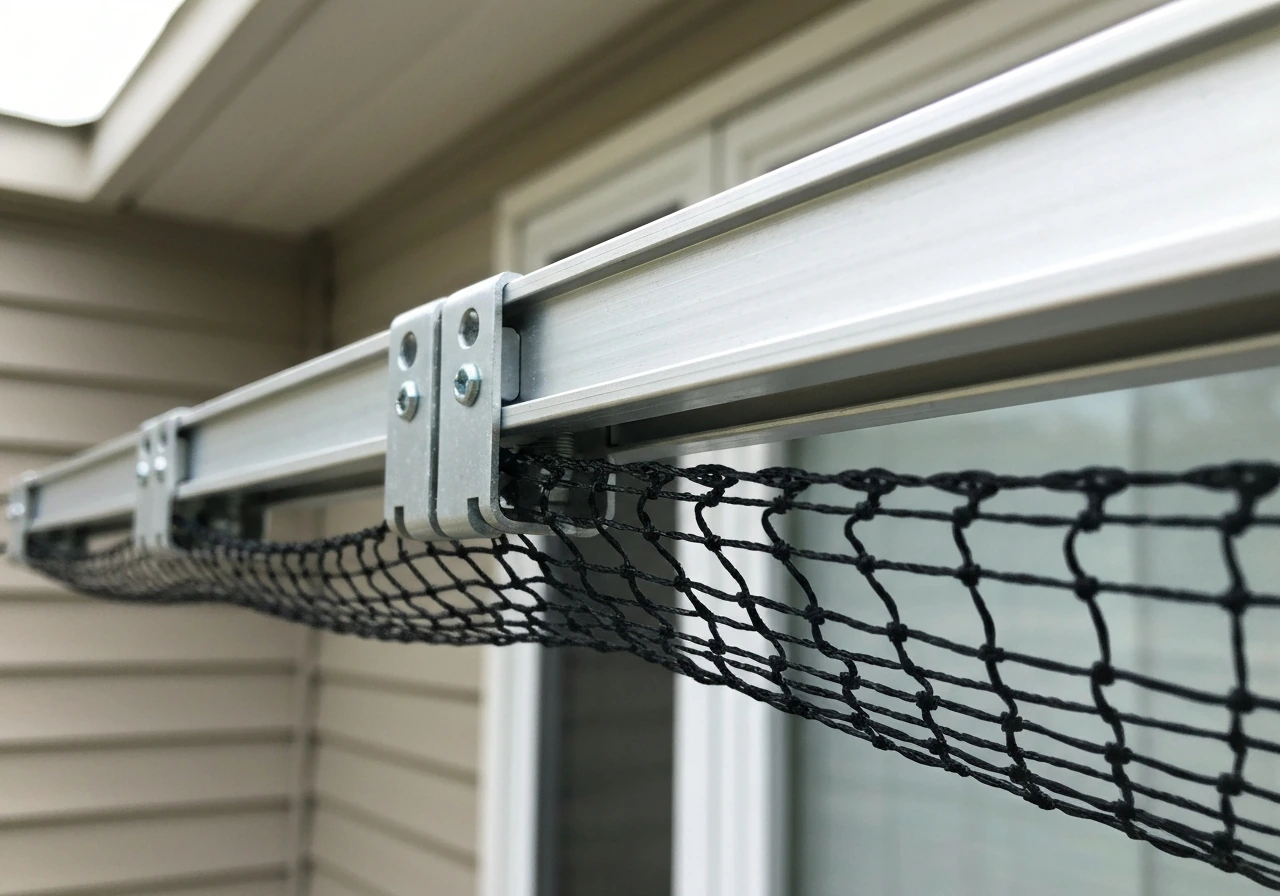
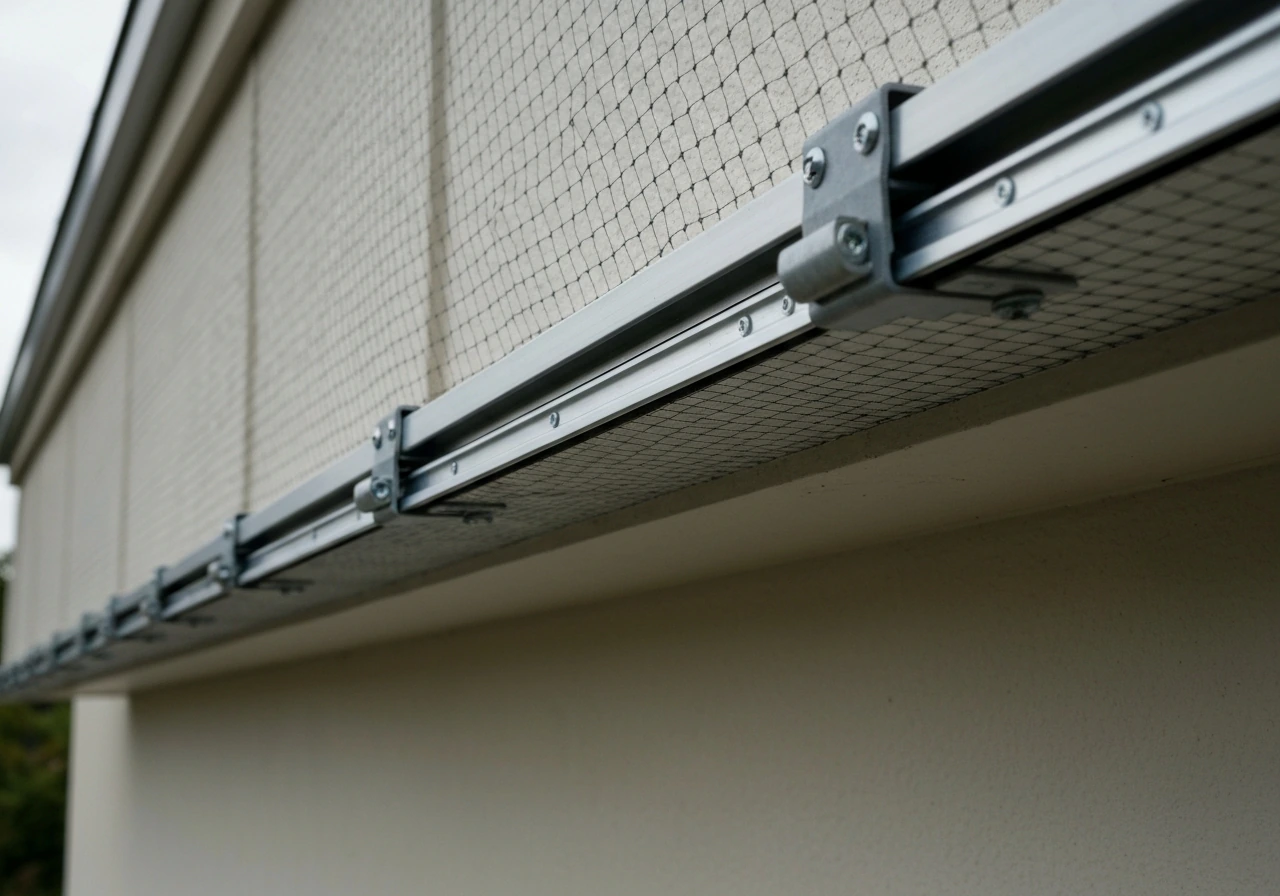
Droll and Lock refers to a category of interlocking or tensioned bird exclusion systems, typically combining physical barrier hardware (track, clips, or locking frames) with netting or mesh to seal off an area birds are accessing. You'll see this approach used on building facades, roof voids, vent openings, soffits, and commercial structures where birds have found a reliable entry point or loafing spot.
"Stop drawing" is a phrase that comes up in bird control contexts to mean stopping birds from being attracted to and using an area. In practice it covers several distinct behaviors: entering a void or cavity, perching or roosting on a ledge, and nesting inside a structure. These aren't the same problem, and that distinction matters. A device aimed at preventing perching (think spikes or angled wire) won't necessarily seal off a cavity entrance. A net that blocks an entry point won't discourage a bird that just wants to stand on your window ledge. Getting the terminology right is the first step toward choosing the fix that actually works.
Will it stop birds from entering, pecking, or perching? Expected results by scenario
The honest answer is: it depends on which behavior you're targeting and how well the system matches the situation. APHIS framing is useful here. Their Wildlife Damage Management guidance describes exclusion as preventing bird access to food, loafing, and nesting areas, but it explicitly notes that if any access remains, birds will continue those behaviors. Full exclusion outperforms partial deterrence every time.
| Scenario | Does Droll and Lock-style exclusion work? | Key condition for success |
|---|---|---|
| Birds entering a roof void or vent | Yes, highly effective | Mesh size must match the bird species; all gaps sealed |
| Birds perching/roosting on a ledge | Partial — netting works if anchored flush; spikes may be better | No gap between net edge and surface |
| Birds nesting inside a cavity | Yes, if installed before nesting season | Cannot be installed while active nest is present (legal issue) |
| Birds pecking at siding or fascia | Moderate — netting creates physical barrier but doesn't address attractant | Must also remove the underlying food or pest attractant |
| Birds loafing on flat rooftop | Yes, with full-coverage netting properly tensioned | Any unsecured perimeter edge will be exploited |
Aviation contexts add another layer. FAA Wildlife Hazard Management guidance treats netting as an effective method over small, defined areas, and Skybrary's aerodrome wildlife guidance goes further, calling a "netting exclosure" the most effective and reliable system for controlling birds in specific zones, like landfill areas near runways. Skybrary’s aerodrome wildlife guidance also describes netting as an effective method to prevent birds from roosting and nesting on airport buildings. That credibility carries over to building applications: when properly designed, full exclusion is the gold standard.
How to install or adjust it so it actually works
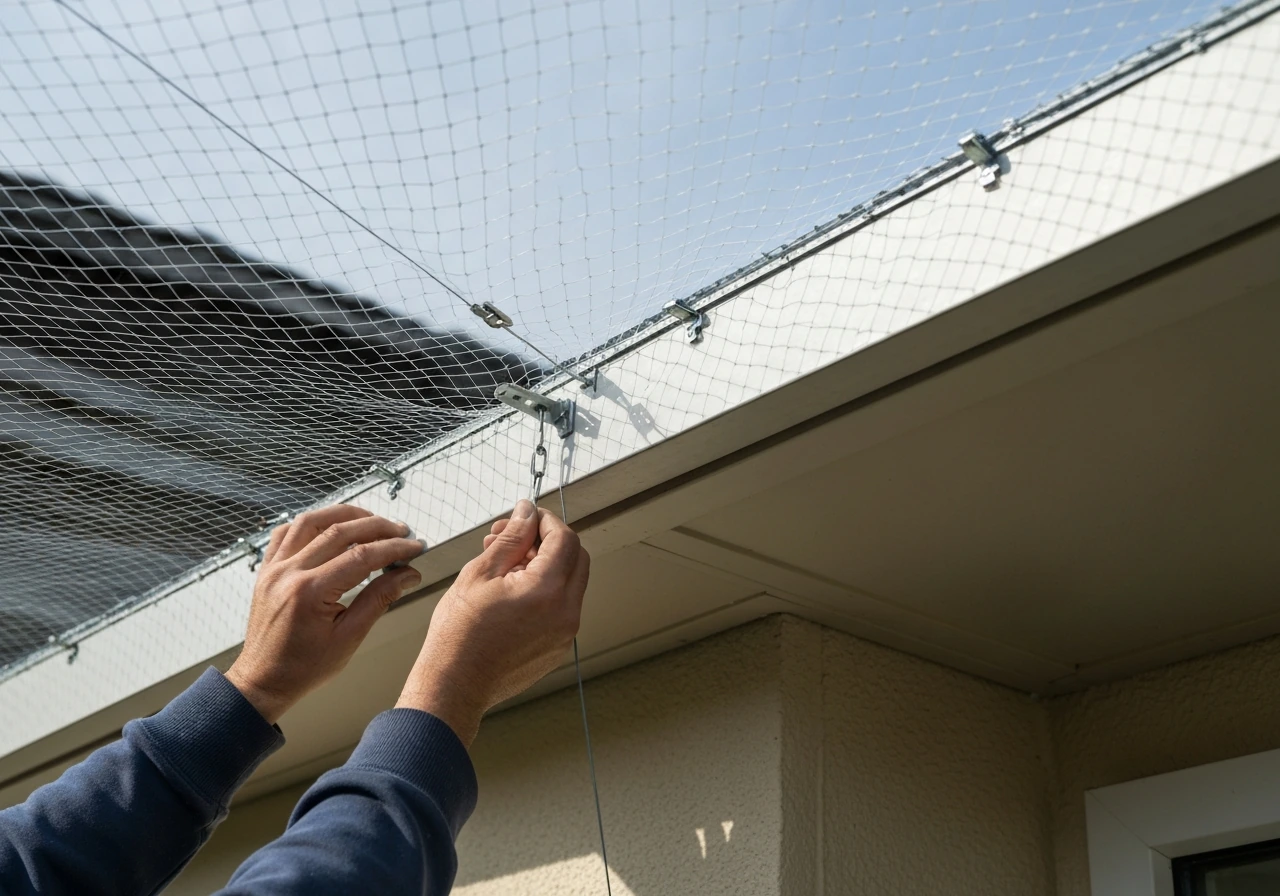
Installation is where most failures happen. Bird netting suppliers and trainers are candid about this: Birds Go Tago, for example, runs a two-day installer training course because getting this wrong is genuinely common. The same theme runs through Bird-X's installer materials, which dedicate detailed instructions specifically to tensioning and anchoring. This isn't a "hang it and forget it" product.
The mesh size you choose has to correspond to the bird species you're excluding. APHIS specifies that netting dimensions, including mesh size, directly determine which birds are kept out. Pigeons need a different mesh than starlings, and sparrows can squeeze through openings that would stop a pigeon cold. If the installer guessed on mesh size, that's worth checking first.
Common failure points to check right now
- Gaps at brackets, standoffs, or fixings where the net attaches to the structure — birds probe these relentlessly
- Sagging net sections that create enough space for a bird to land and work its way under
- Incorrect mesh size for the target species — measure the gap and compare to species-specific guidelines
- Unsealed pipe penetrations, cable runs, or conduit entries adjacent to the netted area
- Net edges not anchored flush to the surface, leaving a scoop-shaped pocket birds treat as an entry invitation
- Deteriorated UV-resistant coating on older netting, which causes mesh to stretch and widen over time
Troubleshooting when birds keep coming back
If birds are still accessing the area after installation, work through this in order. First, confirm where they're actually getting in. Watch the site at dawn and dusk, which are peak movement times, and trace the exact access route rather than assuming. It's almost never where you expect.
Second, address attractants. A net over a void does nothing if there's a food source nearby, a warm exhaust vent, or standing water drawing the birds in the first place. APHIS frames exclusion as cutting off access to food, loafing, and nesting areas simultaneously. If you've only dealt with one of those, birds will hang around looking for another way in.
Third, be honest about what your exclusion method is actually designed to do. Birdzoff's bird control guidance makes a clean distinction between perching deterrents (physical or visual elements that prevent landing) and nesting deterrents (shapes and deflectors that discourage nest building). A perching deterrent will not seal a cavity. If you installed one when you needed the other, that's the whole answer.
One thing that reliably doesn't work: audio deterrents, visual scare devices, and chemical repellents used alone. These are the folklore solutions. The reality is that birds habituate to them quickly, sometimes within days, and peer-reviewed evidence consistently shows they don't provide reliable long-term exclusion. Physical barrier exclusion, properly installed, is what the science and agency guidance consistently supports.
Step-by-step check when the net isn't working
- Watch the site at dawn or dusk and mark every entry point you actually observe, not just where you assumed birds were going
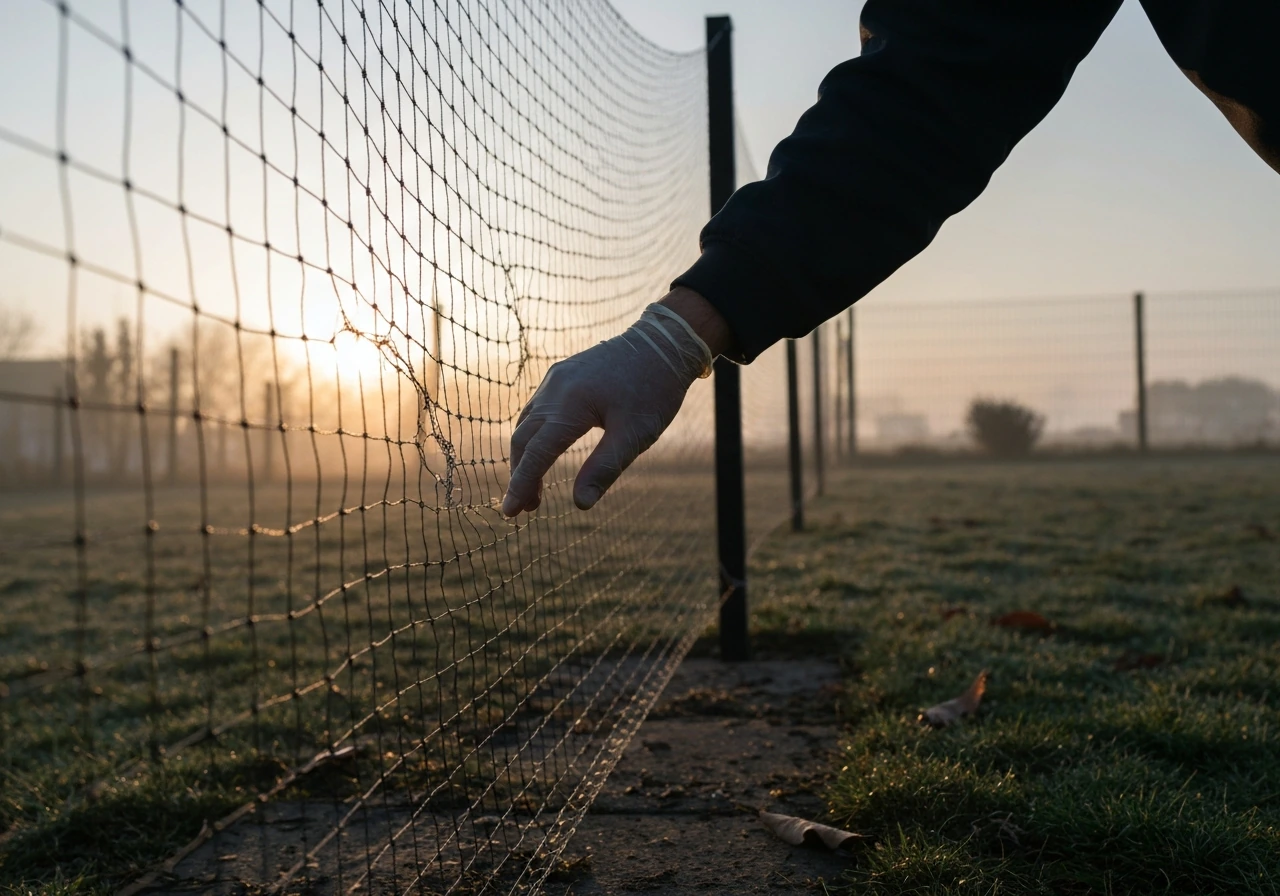
- Run your hand along every edge of the installed net and find any section that lifts, sags, or has a gap larger than the mesh size
- Identify and remove or relocate any food source, water source, or nesting material within the immediate area
- Check mesh size against the bird species present — for starlings use 28mm or smaller; for pigeons 50mm is the common standard
- Inspect fixings, standoffs, and penetrations within 30cm of the net perimeter and seal any gap you find
- If nesting material is already present, check local wildlife protection laws before removing it — many species are federally protected during active nesting
Safety considerations for birds, people, and aviation
Physical exclusion hardware is generally the safest category of bird deterrent, but installation gaps create real entanglement risk. A bird that gets partially into sagging or poorly tensioned netting can become trapped and die. Death rite birds are typically vulnerable to physical exclusion methods like properly sized netting, along with removing attractants that invite them to enter and roost what is death rite bird weak to. That's a welfare issue and, for protected species, a legal one under the Migratory Bird Treaty Act. Keeping net tension correct and doing periodic inspections isn't just a performance issue, it's a humane one.
APHIS emphasizes that risks must be assessed for the specific method and location, and that applies to people too. Installer falls are the most common human injury associated with bird exclusion work, particularly on high facades or roof edges. Working above one story really does warrant professional installation, not because the hardware is complicated, but because the access is dangerous.
For readers in aviation contexts, 14 CFR §139.337 governs wildlife hazard management at certificated airports, and any deterrence work near airside areas needs to be coordinated through the airport's Wildlife Hazard Management Plan. The FAA's approach supports integrating bird exclusion into structural design rather than treating it as an afterthought. Unauthorized deterrent hardware near runways or taxiways can itself become a foreign object debris (FOD) hazard if it fails.
If you're curious about how this fits into broader deterrence questions, related topics like whether these systems negate bird access entirely, why birds stop using deterred areas over time, and whether specific exclusion products face regulatory restrictions are all worth understanding alongside the installation question. This means that, in most cases, does Droll and Lock bird negate is better framed as whether your system truly provides full physical exclusion with no gaps. You may also be wondering whether Droll and Lock is banned in your area, since some bird control products face local or regulatory limits.
Immediate next steps and when to call a pro
Here's what you can do today, in order of priority.
- Observe the site at dawn or dusk and physically confirm where birds are entering or landing — don't skip this step even if you think you already know
- Inspect every fixing, edge, and penetration in the installed exclusion hardware and note any gap, sag, or lift
- Remove or relocate any attractant: food debris, standing water, accessible nesting material, or heat sources
- Confirm your mesh size matches the target species using published species-specific guidelines from APHIS or your product manufacturer
- If the net is old, check for UV degradation — stretch the mesh with your fingers and see whether it's widened beyond spec
- Document what you find with photos so any professional you consult can assess the situation without another site visit
When to call a professional
Call a licensed wildlife control operator or certified bird exclusion installer if: the site is above one story and requires lift or rope access; the birds involved are a protected species (raptors, swallows, most migratory species) where removal or nest disturbance triggers federal law; the infestation is large-scale with significant accumulated guano, which is a health hazard requiring PPE and specialist cleanup; or the location is on or adjacent to an airport, in which case your Wildlife Hazard Management coordinator needs to be in the loop before any work proceeds. For a straightforward vent or soffit situation on a residential property, a competent DIY installation following manufacturer specs is realistic. For anything more complex, the two-day installer training curve that professional suppliers reference exists for good reason.
FAQ
How long does it take for Droll and Lock netting to stop birds from using the area?
If the installation is fully sealed and properly tensioned, birds can stop entering quickly, often within the first few days. However, if they already roosted or nested earlier, you may see lingering activity until breeding or roosting cycles end, and any remaining attractant (food, water, warmth from a vent) can keep them testing gaps.
Can birds get trapped or entangled in Droll and Lock netting?
Yes, entanglement can happen if the netting sags, is poorly tensioned, or has loose edges that birds can partially enter. That is why periodic inspections matter, especially after wind, storms, or seasonal building movement that can loosen anchors and create openings.
What mesh size should I use if I do not know which bird species is visiting?
You need to identify the species or at least the likely set of visitors, because mesh gauge determines what can pass through. If you cannot confirm, treat it as a diagnostic problem first (photos, droppings, entry route), then choose mesh to block the smallest likely target, not the biggest one you see.
Do I need to seal every gap, or is it enough to net the main opening?
Every boundary matters, including edges around brackets, pipes, conduit, vents, and the seams where track meets surface. Birds commonly re-enter through small perimeter gaps, so you should plan the system to be continuous coverage, with no pathways that connect the outside to the protected cavity.
Will installing netting stop birds from perching on nearby ledges or window sills?
Not automatically. If the birds are only landing and loafing on a ledge, a net sized and positioned to block an entry void may still leave a suitable perch. You should match the hardware to the specific behavior, and expand coverage if the birds can bypass the barrier by standing on an adjacent surface.
What should I do if birds continue after installation, but I cannot find any obvious gap?
Re-check the access route at peak movement times (typically dawn and dusk) and look for non-obvious entry points like small cracks, cable penetrations, poorly sealed soffit corners, or gaps created by uneven surfaces. Also remove attractants, because birds may keep returning if food or warmth is still accessible.
Is Droll and Lock ever the wrong solution for a cavity or roof void?
It can be the wrong solution when the problem is not really access but something like condensation, structural openings that require repair, or perching on an external surface. If there is no practical way to achieve full physical exclusion, or if you cannot prevent access without disturbing protected nests, you may need a different approach or a specialist plan.
Will audio deterrents or visual scare devices work if the netting is not perfect?
They should not be treated as a substitute. Birds can habituate to noise and visual devices quickly, and those methods do not provide the physical barrier needed to prevent entry through gaps. Use them only as supplements if your exclusion is still being finalized, and prioritize fixing the physical coverage.
How often should I inspect Droll and Lock netting?
Do inspections soon after installation, then at regular intervals and after major weather events. Focus on tension, anchor points, seams, and any areas where movement could loosen hardware. If you see sagging or frayed mesh, correct it immediately to reduce entanglement risk.
Can I install Droll and Lock myself on a multi-story building?
Often it is not the safest choice. Work above one story typically involves serious fall risk, and professional installers are used because access is dangerous, even if the hardware itself is straightforward. If lift or rope access is needed, use a licensed installer or wildlife control operator.
What should I do about health and cleanup after exclusion if there is lots of guano?
Large accumulations create health risks, and cleanup often requires PPE and careful handling rather than simple removal. If the guano is extensive, specialist cleanup is typically the safer route, and you should coordinate timing so you are not disturbing active nests or triggering legal issues.
Is it legal to exclude birds if they are already nesting or roosting?
Often it is legally sensitive. For many protected species, disturbing nests or removing birds can trigger federal restrictions, so you may need to plan around active nesting periods or use a qualified operator to ensure compliance. If the birds are protected, do not proceed until you have the appropriate guidance.
Do airport rules or coordination apply if the netting is near an airfield?
Yes. Work near airside areas needs coordination through the airport’s Wildlife Hazard Management process, especially for certificated airports covered by applicable FAA requirements. Also consider that failing deterrent hardware can become foreign object debris if it detaches.
Does Droll and Lock provide a permanent stop, or do birds return over time?
When exclusion remains fully intact, birds usually stop using the area long term. If you lose tension, develop new gaps, or attractants remain, birds can return and test openings again. Long-term success depends on maintaining the barrier condition and controlling what draws them in.