
Bird feathers are generally safe to handle for most healthy adults, but the risk level depends heavily on where the feather came from, what condition it's in, and what you plan to do with it. A freshly molted feather from your own backyard chickens is a very different story from a soggy crow feather you found on a hiking trail. The real hazards are not fictional, but they are also not as dramatic as the internet sometimes makes them sound. Here is what the science actually says, and what you should do about it today.
Are Bird Feathers Safe? Risks, Checks, and Safe Handling

Marcus Whitmore
9 Apr 2026
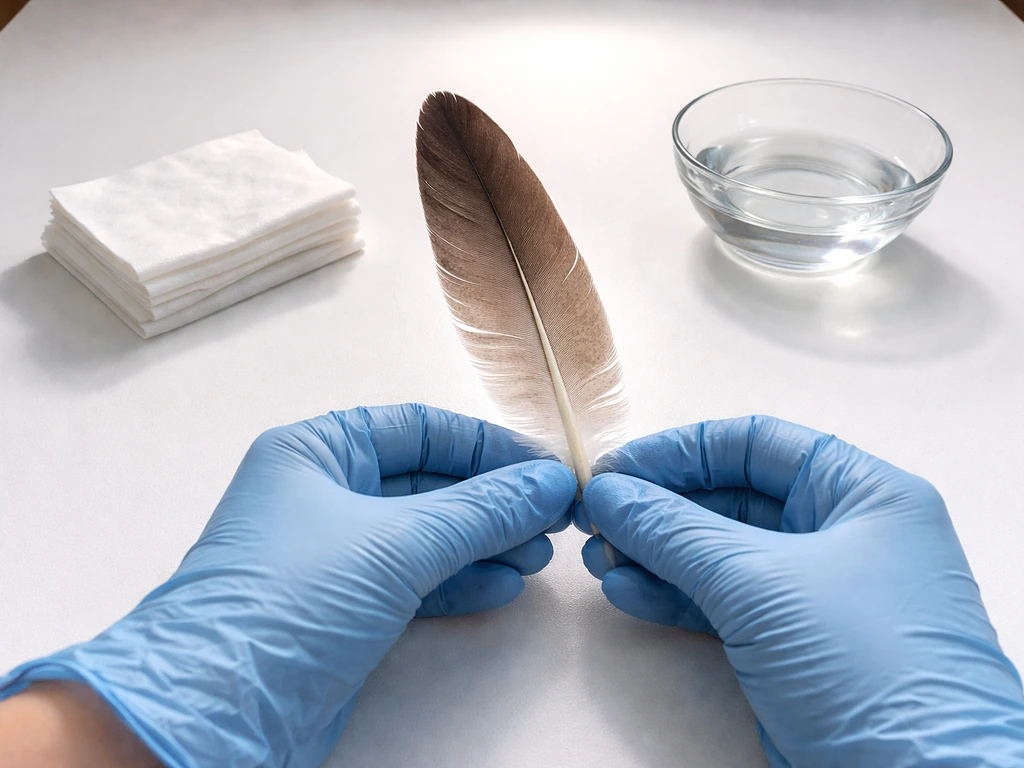
Are bird feathers safe to touch and wear
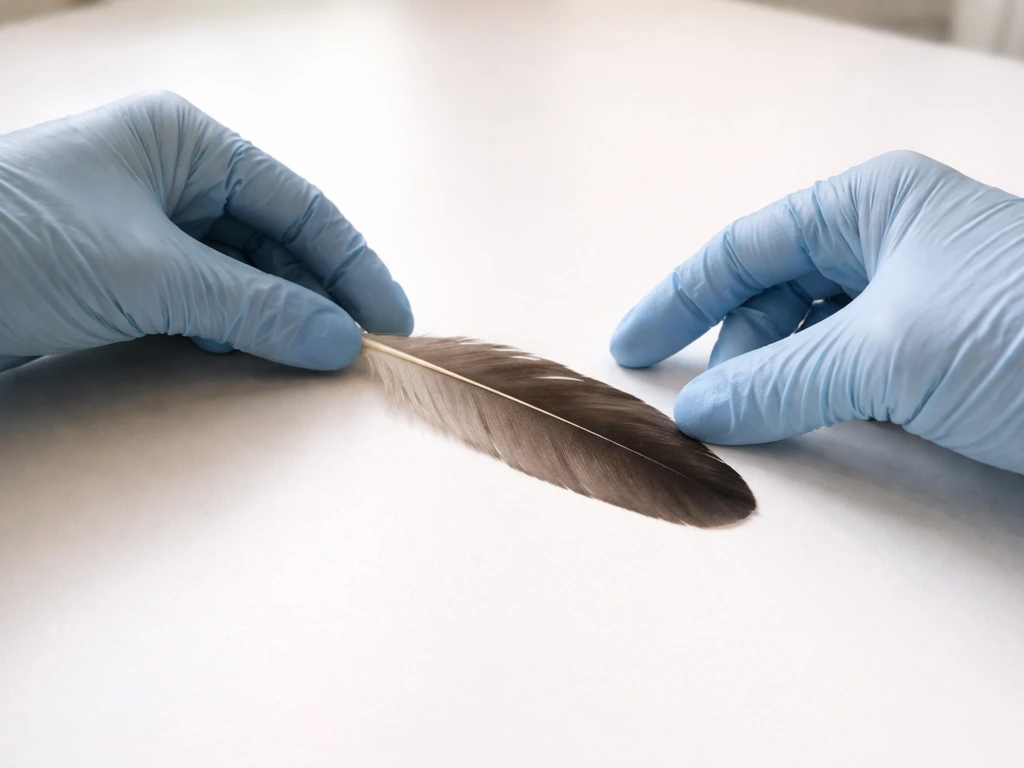
For most people in most situations, yes. Briefly touching a feather with intact skin and then washing your hands is a low-risk activity. The CDC already recommends washing your hands after touching birds, their droppings, or anything in their environment, which is sensible baseline hygiene rather than an alarm signal. That recommendation applies even to pet birds, so the bar is not set at "this is dangerous" but rather "use basic precautions, same as with any animal contact."
Wearing feathers in jewelry, hats, or costumes is also generally fine for healthy individuals, provided the feathers have been properly sourced and cleaned. The main concern when wearing feathers close to your face is allergen exposure. Feathers carry avian proteins and dander, and if you are prone to respiratory allergies or asthma, wearing a feather boa or a feathered hat for hours puts those proteins right next to your airways. For people without allergies, this is not a meaningful risk, but it is worth knowing.
If you want a direct, evidence-based take on whether bird feathers are safe to touch in more specific scenarios, the short answer is the same: touch, wash, move on. The problems arise with prolonged exposure, disturbing dry or dusty feathers indoors, or handling feathers from birds with unknown health status.
When bird feathers can be dangerous
Allergens and respiratory risks
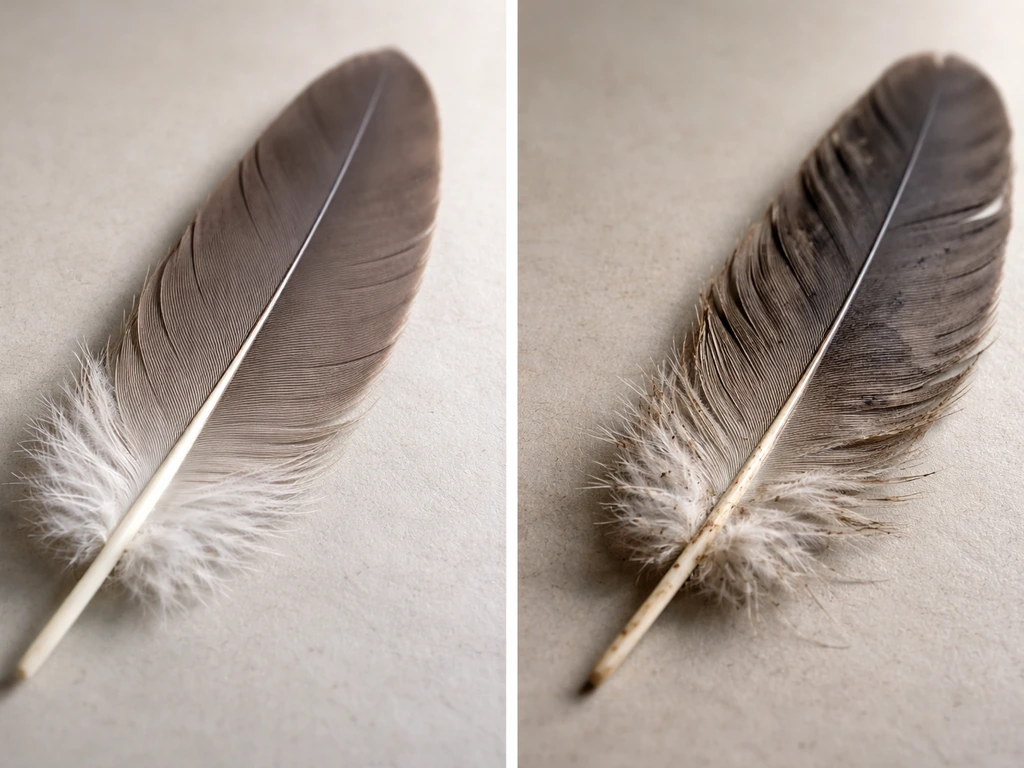
The most underappreciated hazard is not infection, it is allergen exposure. The NIH describes bird fancier's lung as a hypersensitivity granulomatous pneumonitis caused by inhaling avian antigens present in the dust of droppings and feathers. This is not a rare occupational oddity. It affects people who live with birds long-term, but it can also be triggered in sensitized individuals by repeated exposure to feather-filled pillows, down duvets, or craft supplies stored in enclosed spaces. If you are sneezing, wheezing, or developing a persistent cough that improves when you leave a feather-heavy environment, that is a signal worth taking seriously.
Parasites: mites, fleas, and lice
Wild bird feathers can carry mites. Bird mites are avian parasites that live on poultry and wild birds, and they can bite humans when they lose their host. The reassuring part, confirmed by University of Minnesota Extension research, is that bird mites cannot reproduce on human blood and therefore cannot establish an ongoing infestation in your home. So the risk is temporary irritation and itchy bites, not a long-term pest problem. Still, handling a feather that is visibly crawling with mites is not something you want to do bare-handed.
Microbial contamination: bacteria, fungi, and viruses
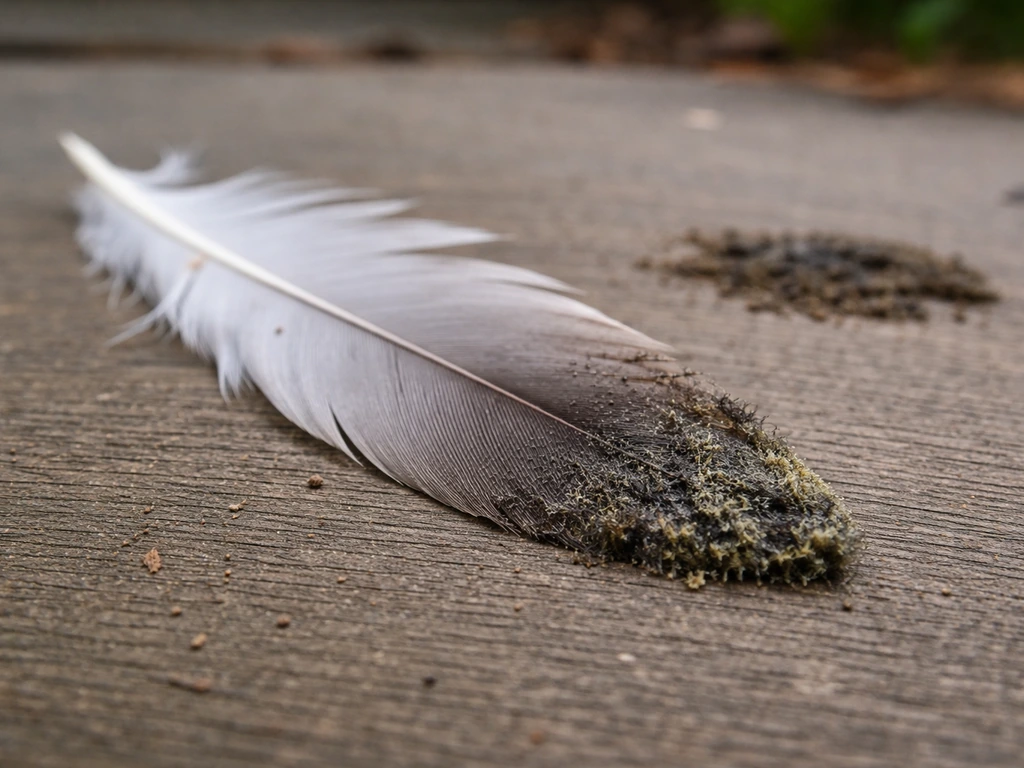
Feathers that are wet, decayed, or found near droppings carry a higher microbial load. The fungal risk most relevant here is histoplasmosis. CDC and NIOSH research links Histoplasma capsulatum to environments containing bird or bat droppings, and the spores, which fall in the 1 to 5 micrometer range, can be aerosolized during cleanup or disturbance. This matters more for feathers found in enclosed spaces (attics, barns, crawl spaces) than for a single feather on a walking path, but it is a real risk in occupational and hobby cleaning contexts.
Avian influenza is the other microbial concern worth naming directly. The CDC advises against touching surfaces or materials contaminated with saliva, mucus, or feces from wild or domestic birds with confirmed or suspected avian influenza A infection, and its backyard flock guidance specifically says to avoid stirring up dust, bird waste, and feathers during cleaning to prevent dispersing virus into the air.
CDC’s backyard flock guidance also emphasizes avoiding stirring up dust, bird waste, and feathers during cleaning to help prevent dispersing virus into the air when avian influenza is suspected or present in birds avoid stirring up dust, bird waste, and feathers during cleaning to prevent dispersing virus into the air.
This is most relevant if you keep chickens, work near waterfowl, or find feathers in areas with known H5N1 activity.
Wild feathers vs. feathers from known sources
This is where the biggest practical difference lies. A feather from your own healthy pet parrot or from a commercially sourced craft supplier carries a very different risk profile from something you picked up off a park bench or a beach. The uncertainty with wild feathers is the core problem: you do not know the bird's health status, whether it died from disease or predation, how long the feather has been sitting there, or what it has been in contact with.
| Factor | Wild/Unknown-Source Feather | Domestic/Known-Source Feather |
|---|---|---|
| Bird health status | Unknown | Known or monitored |
| Parasite risk | Higher (mites, lice possible) | Lower if bird is treated/healthy |
| Microbial contamination | Higher (environmental exposure) | Lower if stored cleanly |
| Avian influenza concern | Relevant near waterfowl/outbreak areas | Low for healthy domestic birds |
| Legal status (US) | Illegal to possess most wild bird feathers (MBTA) | Legal if properly sourced |
| Safe for crafting/display | Requires inspection and disinfection | Generally yes after basic cleaning |
It is also worth noting that in the United States, possessing feathers from most wild birds is illegal under the Migratory Bird Treaty Act, regardless of health risk. That legal layer aside, the risk management question for wild feathers is real: if you are going to handle one, treat it as a potentially contaminated object until you have inspected and cleaned it properly. If you have already picked one up and are now wondering what to do, read on.
On a related note, concerns about human contact affecting bird welfare come up often in these conversations. The idea that touching a bird or its surroundings causes permanent abandonment is largely a myth. Whether a mother bird will reject her young after human touch is actually well-studied, and the science says she typically will not, because most birds have a limited sense of smell. That is a separate question from feather safety, but it comes up together often enough to address.
Risk by situation: crafting, cleaning, pets, babies, storage
Crafting and decoration
Cutting, trimming, or shaping feathers indoors generates fine particles. Those particles carry whatever allergens, dander, or fungal spores the feather holds, and they stay airborne for a while in an unventilated room. If you are doing any significant feather crafting, open a window, use a damp cloth to catch trimmings, and consider a basic dust mask if you are working with large quantities or feathers of unknown origin. This is especially true for down feathers, which break apart easily and shed micro-filaments.
Cleaning up feathers in quantity
This is where the risk profile jumps significantly. Whether you are cleaning out a chicken coop, clearing an attic with bird nesting material, or dealing with a flock-related incident, disturbing large accumulations of feathers and droppings is a genuinely hazardous activity. Missouri State University guidance recommends wetting droppings before removal to prevent aerosolization and using a HEPA-capable respirator for larger cleanup jobs. NIOSH recommends the same approach for histoplasmosis prevention, specifically vacuum systems with HEPA filtration. An N95 respirator (NIOSH-approved, properly fitted) covers the spore size range of 1 to 5 micrometers that makes Histoplasma dangerous.
Households with pets and infants
Cats and dogs that come in contact with wild birds can pick up mites or other parasites and bring them indoors. If your pet has been playing with a dead bird or rolling in feathers, check them before they come back inside. For infants and toddlers, the concern is less about acute infection and more about allergen sensitization at an early age. Keeping feather-based craft supplies, decorations, or found feathers out of reach of young children is a sensible precaution, not because a single touch will cause harm, but because young children tend to put things near their mouths and faces.
Storage
Feathers stored in closed containers in damp environments can develop mold. Once mold takes hold on a feather, it is difficult to reverse, and disturbing moldy material indoors is exactly the kind of scenario where fungal spore inhalation becomes a real concern. Store feathers in breathable containers (not sealed plastic bags) in dry conditions, and check them periodically if they are being stored long-term.
How to make feathers safer: inspect, clean, disinfect, dry
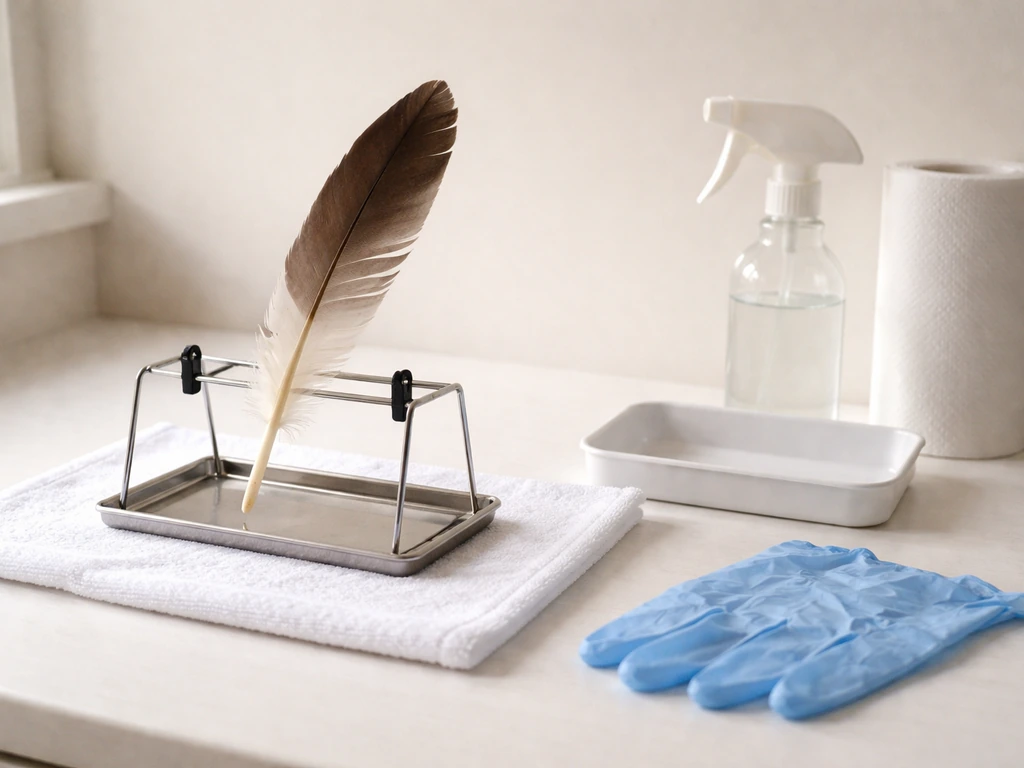
If you want to use a feather, especially one from an uncertain source, here is a practical process that addresses the main risk categories.
- Inspect first. Look at the feather in good light. Reject anything that is wet, visibly moldy, smells of decay, has visible insects moving on it, or came from a dead bird. If it looks and smells clean and dry, it is a reasonable candidate for cleaning.
- Wear gloves during initial handling. Nitrile disposable gloves are fine. This protects against mite bites and contact with any microbial contamination on the surface.
- Wash with soap and water. For sturdy feathers (not down), a gentle wash with mild dish soap removes surface contamination, debris, and oils. Rinse thoroughly.
- Disinfect if needed. The CDC's guidance for items in bird flu-affected environments is to clean with soap and water until visible dirt is removed, then disinfect with an EPA-approved disinfectant with label claims against influenza A viruses, following manufacturer instructions. For general-purpose disinfection (non-outbreak contexts), a diluted isopropyl alcohol solution or a diluted bleach solution (1 tablespoon bleach per gallon of water) is effective for surface disinfection.
- Dry completely before storage or use. Damp feathers are a mold risk. Air dry flat on a clean surface or use a low-heat setting on a hair dryer. Do not seal a feather in a container while it is still slightly damp.
- Wash your hands thoroughly after handling. OSHA guidance specifies at least 15 seconds of hand washing after contact with potentially contaminated bird materials, even after removing gloves.
If you are wondering whether it is safe to pick up bird feathers you find outdoors before going through this process, the honest answer is: a brief pick-up followed by hand washing is low risk for most healthy adults. The process above is for feathers you intend to keep, use, or handle repeatedly.
When to avoid feathers entirely and what to do instead
There are situations where the right call is to skip feather handling altogether. These include:
- You have a confirmed diagnosis of bird fancier's lung, hypersensitivity pneumonitis, or known avian protein allergy. Even cleaned feathers retain some allergen load, and repeated exposure in sensitized individuals can worsen the condition.
- You are immunocompromised (from chemotherapy, HIV/AIDS, organ transplant, or similar). The fungal and bacterial contamination risks that are negligible for healthy adults are genuinely more serious in this population.
- The feather came from a bird in an area with active H5N1 (avian influenza) detections in wild birds or poultry. Do not handle it without PPE, and consider whether handling it at all is necessary.
- You are cleaning a large accumulation of feathers and droppings in an enclosed space. This is a professional-grade cleanup scenario. Use an N95 or better respirator, wet the material before disturbing it, and use HEPA-capable vacuum equipment.
- The feather is from a protected species. In the US, possession of feathers from most migratory wild birds is a federal offense under the Migratory Bird Treaty Act, so the legal risk exists independently of any health concern.
For people who love the aesthetic of feathers but need to avoid the real-thing risks, high-quality synthetic feathers made from polyester or nylon are widely available for crafting and costume work. They carry none of the allergen, parasite, or microbial risks. If you are decorating, crafting, or costuming, synthetic alternatives are worth considering as a straightforward workaround.
For disposing of wild feathers you have decided not to keep: seal them in a bag before putting them in the trash to avoid wind-dispersal, and wash your hands afterward. There is no need for anything more elaborate unless the feather came from a bird in a disease-affected area, in which case your local animal control or wildlife management office can advise on proper disposal.
One area of related curiosity that comes up in these conversations: people sometimes find entire bird nests as well as loose feathers, and the safety questions overlap. What happens if you touch a bird nest follows similar logic: the main risks are parasites and allergens from the nesting material, not some dramatic biological hazard, and basic precautions handle most of it.
Similarly, if you are trying to figure out the broader question of whether you can touch a bird with bare hands, the answer follows the same framework: brief contact plus hand washing is the baseline safe practice, with escalated precautions for sick birds, unknown wild birds, or any situation involving feces or respiratory secretions.
The bottom line: bird feathers are not inherently dangerous objects, but they are not sterile either. Most healthy adults can handle the occasional feather without consequence if they wash their hands afterward. The risks are real and worth understanding for anyone dealing with feathers regularly, in large quantities, in enclosed spaces, or with a compromised immune system. Match your precautions to your actual exposure level, and you have a practical, proportionate approach that the science fully supports.
FAQ
Are bird feathers safe to touch if the feather is from a bird that died nearby (not my pet)?
Treat it as potentially contaminated, especially if the area had feces, nesting material, or signs of illness. Use gloves if you plan to handle it more than briefly, avoid shaking it, bag it, then wash hands thoroughly. If you notice heavy feather debris in an enclosed area (shed, attic), don’t disturb it without respiratory protection.
What’s the safest way to clean a found wild feather before using it in a craft?
Plan on a cleaning step that reduces dust and dander without aerosolizing particles. Avoid dry brushing and don’t blow off the feather. Use gentle washing or wiping when possible, let it fully dry in a well-ventilated area, and consider wearing a mask if the feather is very dusty or you are cleaning multiple feathers at once.
Can I wash a feather and then store it, or does storage risk still apply?
Storage still matters. Even after cleaning, store feathers in a dry location and in breathable containers (not sealed plastic), because trapped moisture can lead to mold. If you stored them damp or in a humid space and they smell musty, don’t try to “save” them by handling more, discard them carefully and clean the area afterward.
Is it risky for someone with asthma or dust allergies to wear a feather hat or accessory for a short time?
Short exposure is usually lower risk, but people with asthma can react to airborne dust, dander, or avian proteins even during brief wear if the feather is shedding or very dusty. If you are sensitized, choose feathers that are known-clean and not shedding, keep the accessory away from prolonged face contact, and consider a washable synthetic alternative.
How do I tell if a feather is too dirty or too moldy to handle safely?
Look for visible discoloration, crusty or wet-feeling spots, musty odors, and clumping that suggests moisture damage. If you suspect mold, avoid disturbing it by shaking or scraping. Bag it, seal it before removal from the room, and wash hands after handling the bag, not just the feather.
If I touch a feather and then touch my face, is hand washing still enough?
Hand washing remains the key step, but timing matters. Wash promptly, and avoid rubbing eyes or licking fingers while you still have residue on your hands. If you did touch mucus membranes (eyes, inside nose, mouth), rinse those areas with clean water and monitor for irritation, especially if you have respiratory allergies.
What protective gear should I use if I’m doing large-scale feather cleaning, like a coop, attic, or nest cleanup?
For larger quantities or enclosed spaces, use respiratory protection with HEPA-capable filtration (a properly fitted N95 can help for certain spore sizes, but the right choice depends on the task). Wear gloves to avoid direct skin contact, use dampening methods for droppings before removal, and avoid actions that create dust clouds like sweeping dry or using a standard vacuum without HEPA filtration.
Are bird feathers safe to store with other fabrics, like blankets or pillows?
Not ideal if the feathers are from an unknown or wild source. Dust and allergens can transfer to nearby textiles, and repeated exposure can contribute to sensitization in some people. Keep separated items in breathable containers, and wash or launder nearby textiles if feathers were stored in the same area and shed.
Can pets bring mites from feathers into the home, and what should I do if my cat or dog played with a dead bird?
Yes, pets can carry mites or other hitchhikers and bring them indoors. Check your pet’s fur carefully and avoid letting them re-enter close contact areas with infants until you’ve cleaned up. If you notice persistent itching or bites on the pet or household members, contact a veterinarian or pest professional for guidance.
Are synthetic feathers always the safe workaround if I want the look without the risks?
Generally yes, synthetic feathers avoid the allergen, parasite, and microbial risks associated with real bird material. Still, consider that some synthetic products can shed fibers or collect dust, so keep them clean and avoid using them if you are very sensitive to general textile dust.
Is it safe for immunocompromised people to handle bird feathers at all?
It can be higher risk because infections from contaminated environments, while not guaranteed, are more consequential. For any immunocompromised person, minimize exposure, use gloves, avoid stirring dust, prefer feathers from known clean sources, and consider having a caregiver handle found wild feathers. If there’s any sign of droppings or nesting material involvement, skip handling or use professional cleanup guidance.
What should I do if I get a persistent cough or symptoms after working around feathers or bird nesting material?
Don’t ignore it, especially if symptoms improve when you leave the exposure area and recur on return. Seek medical care and mention bird feather, droppings, or enclosed-area cleanup. If you had dust exposure in a barn, attic, or nest site, tell the clinician about the environment so hypersensitivity and fungal exposure concerns can be considered promptly.