
Picking up a loose bird feather you find on the ground is generally low risk for most healthy adults. The realistic danger is not zero, but it's nowhere near the alarming level some people assume. The actual concern comes down to a few specific scenarios: visible soiling, contact with droppings or blood, feathers from sick or dead birds, and what you do with your hands afterward. If you handle a clean-looking feather briefly and then wash your hands, the odds of getting sick are very slim. That said, "low risk" is not the same as "no risk," so it's worth knowing exactly what you're dealing with before you pick one up.
Is It Safe to Pick Up Bird Feathers? Risks and Tips

Marcus Whitmore
7 Apr 2026
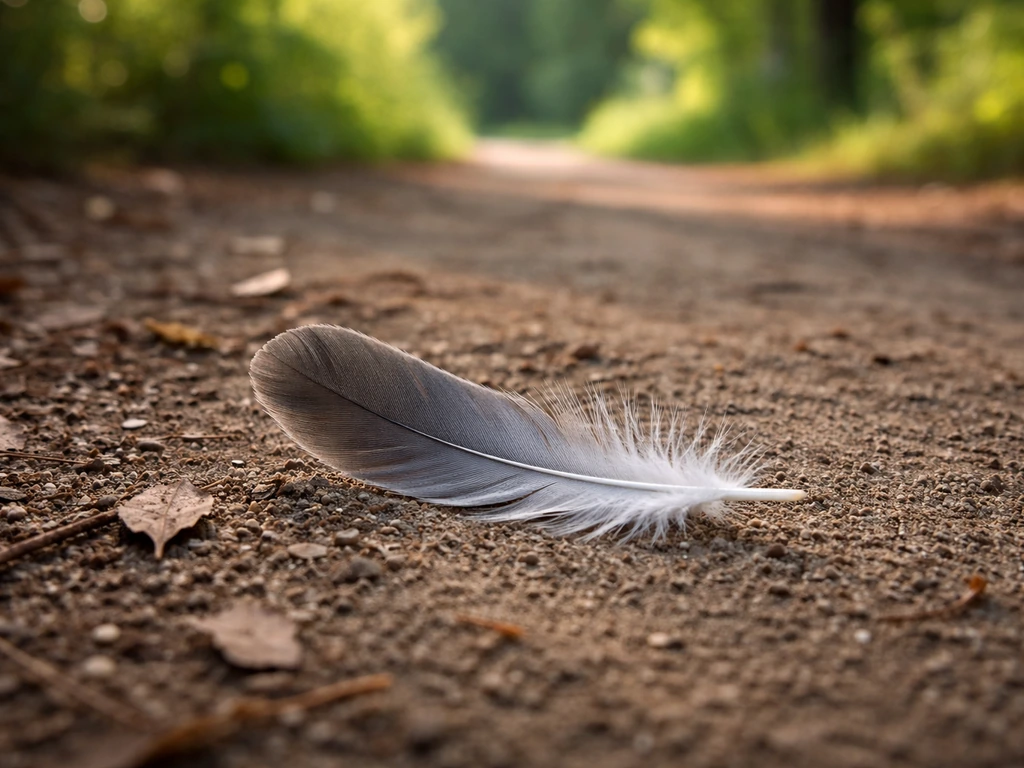
The short answer: safe in most cases, with conditions
For the vast majority of people who find a feather on a hiking trail or in a park, picking it up poses no serious health threat. The public health risk from casual feather contact is low. Where it gets more complicated is when a feather shows signs of contamination, comes from a bird that was visibly sick or dead, or when you then touch your face or prepare food without washing up first. Think of it the way you'd think about touching a public door handle: not inherently dangerous, but worth a hand wash afterward. The risks that do exist are real but manageable, and understanding them helps you make a sensible call on the spot.
What risks actually exist from feathers
Bird feathers can carry three categories of risk: pathogens (bacteria and viruses), parasites, and allergens. None of these are guaranteed to be present on any given feather, but they're the ones worth knowing about.
Pathogens: bacteria and viruses
The two disease names that come up most often in bird contact discussions are avian influenza (bird flu) and psittacosis. The CDC is clear that people who have contact with infected wild birds could become infected with avian influenza, though the overall public health risk for H5 bird flu is described as low. Most human infections have occurred after direct, close contact with infected animals, not from briefly touching a feather dropped in a park.
Psittacosis (caused by Chlamydia psittaci) is a bacterial infection associated with parrots and other birds. Importantly, the most common route of infection is breathing in dust containing dried bird secretions or droppings. A feather on its own is a much lower-risk vector than a cage full of dry dropping dust. West Nile virus is another pathogen associated with birds, particularly dead ones, though it spreads via mosquito bites rather than direct feather contact.
The reason dead bird handling protocols mention it is mostly about the chain of handling and disposal.
Parasites and allergens
Bird feathers can harbor mites, lice, and other external parasites. These are primarily bird parasites and don't typically establish themselves on humans, but they can cause temporary skin irritation. Feather allergens are a more consistent everyday concern, especially for people with asthma or known bird allergies. If you're already sensitive to bird dander, handling feathers can trigger reactions even without any pathogen exposure. If you're curious about the broader picture of what feathers can carry, the detail on are bird feathers safe goes deeper into the biological hazards across different species.
What makes feathers more dangerous
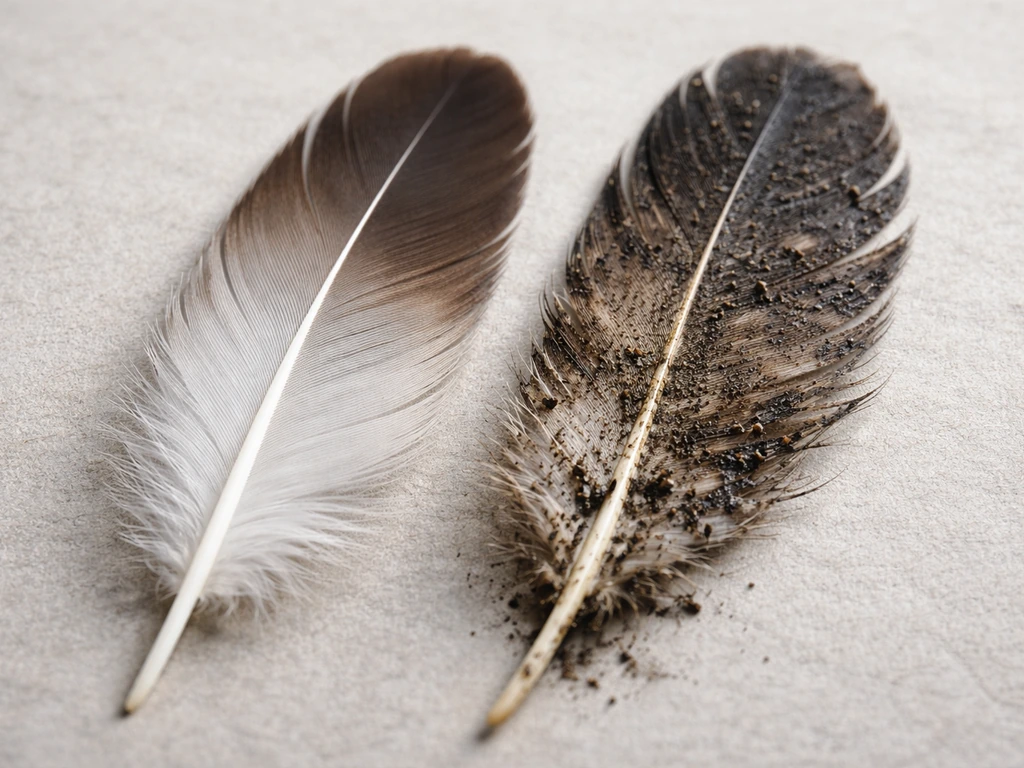
Not all feathers carry the same level of risk. These are the specific factors that push a feather from "fine to handle" into "proceed with caution" territory:
- Soiled feathers: Any feather visibly coated in droppings, blood, or wet debris is a higher-risk item. Dried bird droppings in particular can become airborne as dust when disturbed, which is exactly the route the CDC identifies for psittacosis transmission.
- Feathers near or from a dead bird: Dead birds, especially those that died from unknown causes, represent the highest-risk category. This is where avian influenza and West Nile virus guidance from the CDC and ECDC becomes most relevant.
- Feathers from sick birds: A bird that appeared lethargic, was staggering, or was found in an unusual location before it died is a warning sign. The ECDC specifically notes that sick and dead wild birds should not be touched without proper precautions like gloves.
- Contact with face or mucous membranes: The CDC explicitly advises avoiding touching your face with gloved or unwashed hands after handling dead birds. The same logic applies to soiled feathers.
- Feathers in areas with known disease activity: During active avian influenza outbreaks in your region, any feather from a wild waterfowl or raptor warrants extra caution.
A clean, dry feather from a healthy bird in a low-risk environment is a different object from a wet, soiled feather found next to a dead crow. Treating them as identical is either overly cautious in one case or reckless in the other. The question of are bird feathers safe to touch really depends on these context factors more than anything else.
How to pick up feathers safely
If you decide the feather is worth picking up, here's a practical approach that minimizes the already-low risk:
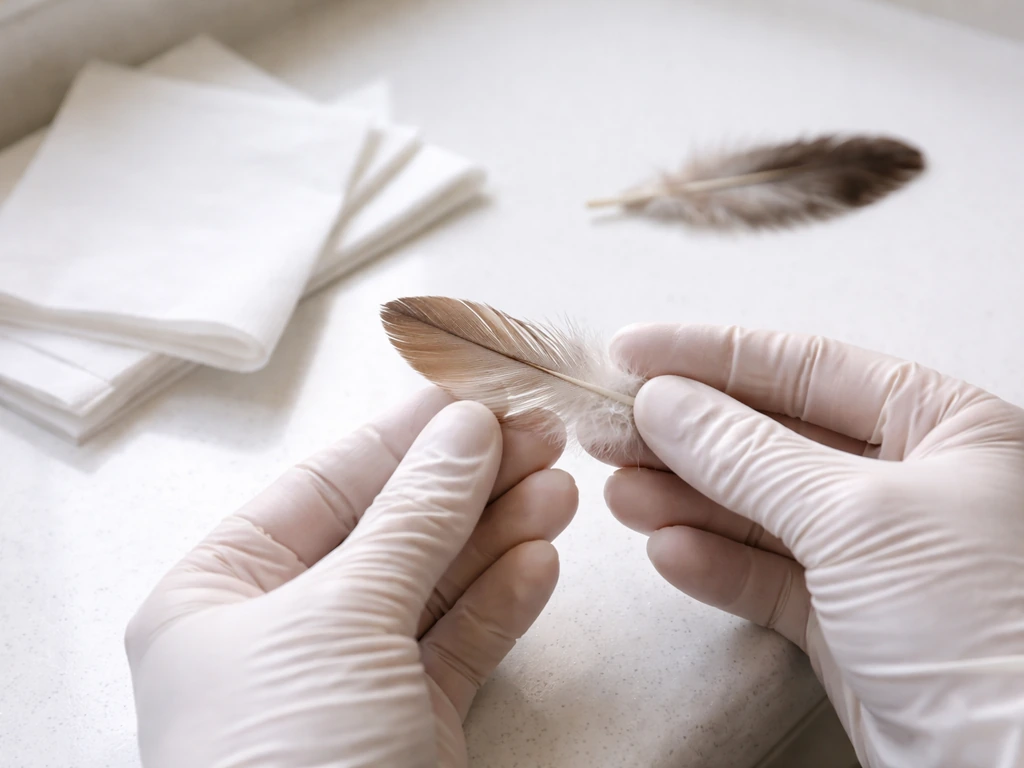
- Use gloves if you have them: Disposable nitrile or latex gloves are ideal. If you don't have gloves, the ECDC describes a workable workaround: use a plastic bag as a makeshift glove by putting your hand inside it to pick the item up, then invert the bag around it.
- Avoid soiled feathers with bare hands: If a feather is visibly contaminated with droppings, blood, or is wet and matted, that's the one to leave alone or handle only with a glove or bag.
- Don't bring it near your face: No smelling it, no showing it close-up to a child who might mouth it. Keep it at arm's length.
- Bag it immediately: Once picked up, place the feather in a sealable plastic bag if you're keeping it. This contains any loose particles and keeps the feather from shedding material in your pocket or bag.
- Don't shake or blow on it: Disturbing a dry feather can release whatever particulate matter is on it into the air you're breathing.
The bar for using bare hands is that the feather looks clean and dry and you're planning to wash your hands right afterward. If any of those conditions aren't met, use a barrier. It's also worth knowing that the same general caution applies when you touch a bird with bare hands, since direct contact with the animal itself carries more risk than a shed feather.
What to do after handling a feather

The single most important step after handling any bird feather is washing your hands with soap and water. This is not optional advice or overcaution, it's what the CDC specifically recommends after touching birds, their droppings, or items in their environment. Soap and water is preferred over hand sanitizer for this kind of contamination, especially if your hands were in contact with biological material. Twenty seconds of scrubbing under running water is the standard. If soap and water aren't available, an alcohol-based hand gel is an acceptable temporary measure, per CDC guidance.
If you handled a soiled feather or one from near a dead bird, take these additional steps:
- Discard disposable gloves in a sealed bag before removing them, then wash hands immediately.
- If you weren't wearing gloves, avoid touching your face until you've washed up thoroughly.
- Change clothing if you handled a heavily contaminated feather or were near a dead bird. The CDC's West Nile virus protocols advise that used PPE should be discarded or disinfected after handling dead birds.
- Wipe down any surfaces the feather touched (like a car seat or tabletop) with a household disinfectant.
- If you stored the feather in a bag, handle that bag with the same care the next time you access it.
The same handwashing logic applies when you've been near a bird nest. If you're wondering about that scenario specifically, the guidance on what happens if you touch a bird nest covers the hygiene steps relevant to nest contact as well.
When to avoid handling, or get medical advice
Some situations call for skipping the feather entirely: ECDC guidance also advises that if birds are sick or dead, you should not touch them with bare hands and should report them to appropriate local authorities or veterinary services skip the feather entirely.
- The feather is from a dead or visibly sick bird and you have no gloves or bag available.
- There is an active avian influenza outbreak in your area involving wild birds or poultry.
- You are immunocompromised, pregnant, or have a respiratory condition that makes you more vulnerable to airborne pathogens.
- The feather is heavily soiled with droppings or blood.
- You're in a region with known histoplasmosis or cryptococcosis risk (fungal diseases associated with accumulated bird droppings) and the feather is from an area with heavy dropping accumulation.
If you did handle a higher-risk feather without protection and you develop symptoms in the days following, pay attention to respiratory symptoms (cough, shortness of breath, fever) and skin or eye irritation. These are the symptoms most associated with ornithosis/psittacosis and avian influenza. Neither is a reason to panic, but both are reasons to contact a doctor and mention the potential bird exposure so they can rule out infection. A doctor who knows about the contact can make a much more informed call than one who doesn't.
One common worry people have when they interact with birds is whether the contact somehow harms the bird or its family. The concern about if you touch a bird will the mother reject it is a separate question, but it's worth noting that shed feathers on the ground don't involve any living bird, so that particular concern doesn't apply to feather collecting.
Feather risk at a glance
| Feather Type | Risk Level | Recommended Action |
|---|---|---|
| Clean, dry feather from a healthy environment | Low | Bare hands acceptable; wash hands after |
| Feather with visible droppings or soiling | Moderate | Use gloves or bag; wash hands thoroughly after; avoid face contact |
| Feather near or from a dead bird | Higher | Gloves required; bag and discard; wash hands; change clothing if heavily exposed |
| Feather near a sick bird or during an active outbreak | Higher | Avoid handling if possible; if necessary, full PPE; consult local public health guidance |
| Feather in accumulated droppings (e.g., roosting site) | Moderate to Higher | Mask and gloves; avoid dry disturbance; wash hands and clothing after |
The bottom line is that feather contact is a manageable risk, not a reason to panic every time you spot a beautiful jay feather on the trail. Know what you're looking at, use a barrier when in doubt, keep your hands away from your face, and wash up when you're done. That approach handles the real risks without tipping into unnecessary fear.
FAQ
What should I do if I accidentally rub bird feather dust into my eyes or mouth before washing my hands?
If the feather is clean and dry and you only touch it briefly, a spill does not automatically equal “pathogen exposure.” The safer move is to rinse the area with clean water, then wash your hands with soap and water. If the feather was clearly soiled, came from near a dead bird, or you got it on broken skin, consider covering the spot and contacting a clinician if redness, swelling, or fever develops over the next several days.
Is it worse if I touch my face after picking up a feather but then wash right away?
Handwashing is still the priority. If you touched your face right after handling (before washing), wash your hands immediately and rinse your face gently. Avoid scrubbing inside the eyes. If you develop eye pain, significant redness, or new discharge, get medical advice, especially if symptoms start within about a week.
Is it safe for kids to pick up bird feathers, and do I need extra precautions?
Yes, but the “how” matters. If you are using bare hands to collect feathers, your risk is mainly transferred to your skin and then to your mouth, nose, or food. For children, use a barrier (gloves or a tool), supervise closely, and ensure immediate handwashing after. If your child has asthma or known bird allergies, treat any feather collection as a trigger risk for wheezing or rashes.
Can feather handling trigger asthma or allergic reactions even if the feather looks clean?
For allergy-prone people, the biggest issue is often not infection but symptom flares. If you have asthma or a history of bird dander sensitivity, wear protection like gloves and avoid bringing feathers near your face. If you start wheezing, coughing, or develop hives after handling, stop exposure and use your prescribed rescue medication, then seek care if symptoms do not settle promptly.
What if I touch a feather and then make lunch before I wash my hands?
Avoid preparing food with hands that have been around any feather, droppings, or nests. If you already touched food, discard any items you suspect were contaminated by feather dust and wash hands thoroughly first. Clean kitchen surfaces with soap and water, then follow with a household disinfectant if there was visible contamination.
Does picking up feathers near a nest increase the health risk compared with a feather on open ground?
Yes. If you find a feather on a nest site, especially if it is wet, heavily soiled, or you see nearby droppings, use gloves or a tool and avoid disturbing the area. Also resist the urge to “check” nests, because nest contact adds another contamination pathway and can increase stress for the birds.
Is it safe to collect and store feathers, like for crafts or a collection?
Wear gloves and plan to bag the feathers to reduce dust. If you intend to keep or display feathers, handle them minimally and avoid activities that aerosolize dust (like dry brushing, shaking, or blowing compressed air). After handling, wash hands and launder any clothing that became dusty.
When should I seek medical care after touching a feather, and what symptoms matter most?
Some exposures justify medical advice even without severe symptoms. Contact a doctor and mention bird feather or wild bird contact if you develop fever, worsening cough, shortness of breath, or eye redness that persists, particularly within the following days to a couple of weeks. Bring details like where the feather was found and whether it was near a dead bird or visibly soiled.
How can I tell when a feather is too dirty or risky to touch at all?
Yes, avoid. If a feather is wet, smells bad, is crusted with material, or came from an area with lots of droppings or a visible dead bird, treat it as higher risk. Do not use bare hands in that situation, use a barrier, and prioritize disposal or careful bagging followed by handwashing.
If I only have hand sanitizer available, is that good enough after handling a feather?
Hand sanitizer helps when you lack a sink, but it is less reliable than soap and water if there was visible biological contamination. If you used sanitizer because you had no other choice, wash with soap and water as soon as you can, ideally within a short time window.