Touching a bird usually causes more stress to the bird than harm to you. For most brief, incidental contact with a healthy bird, the realistic outcome is a frightened animal, maybe a peck or scratch, and a small hygiene task: wash your hands with soap and water for at least 20 seconds and move on. That said, the specifics matter a lot. An injured wild bird, a nestling fallen from a nest, a sick bird, or a prolonged handling situation each carry different risks for both you and the bird. Here is exactly what happens in each case, and what you should do about it.
What Happens If You Touch a Bird: Risks and What to Do

Marcus Whitmore
2 May 2026
What the bird experiences when you touch it
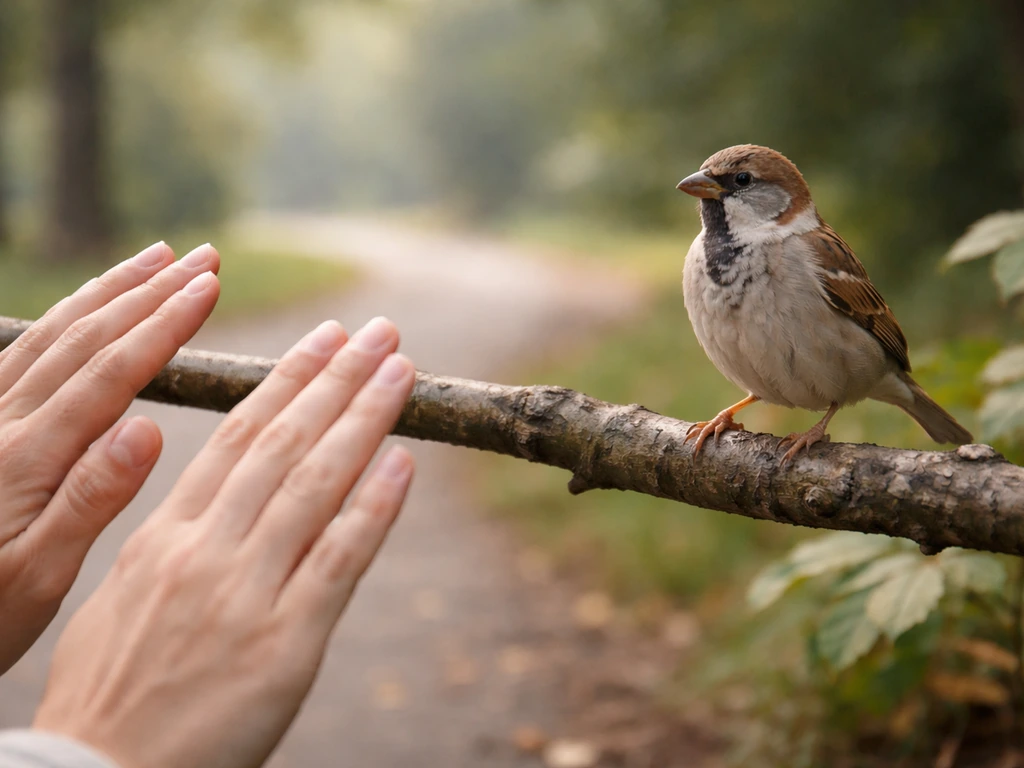
The first and most immediate consequence of touching a bird is stress to the animal. Birds have a pronounced fight-or-flight response, and even a brief handling event floods them with stress hormones. For a healthy wild bird, that stress usually passes once it escapes. For an already injured or sick bird, the added physiological load of being handled can genuinely worsen its condition or even trigger cardiac arrest in fragile individuals.
Defensive behavior scales with how threatened the bird feels. Research on nesting birds shows that parental defense escalates in stages: alarm calling, then injury-feigning (the broken-wing act), then active chasing, and finally direct swooping and striking. How you approach matters as much as whether you approach at all. A slow, indirect approach near a nest provokes a different response than walking directly toward it. The closer and more persistent the intrusion, the more aggressive the response becomes.
Physical injury to the bird from handling is also a real risk. Birds have hollow bones and fragile respiratory systems. Gripping a small bird too firmly can fracture bones or restrict breathing. Even well-meaning handling by someone who does not know proper technique can cause internal injuries that are not visible from the outside.
What could happen to you: pecks, scratches, and why they matter
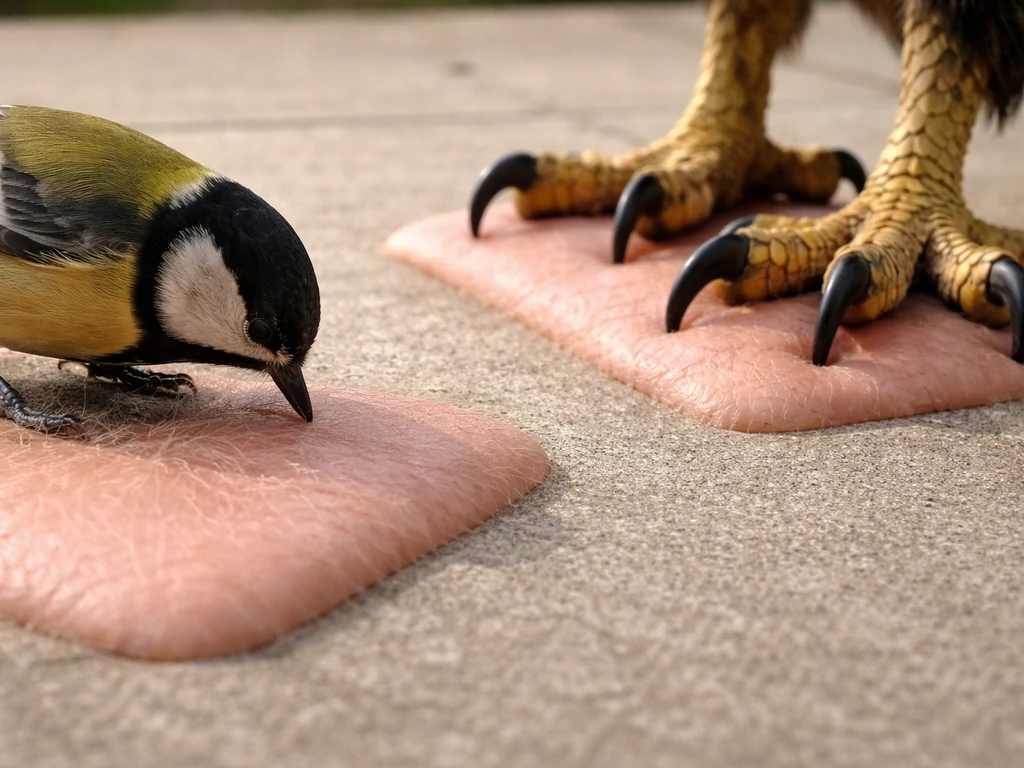
Most birds are not going to seriously injure you. A songbird peck barely breaks the skin. But larger birds, raptors especially, can deliver real puncture wounds with their talons, and waterfowl like geese can bruise with their wings and bite hard enough to draw blood. Even a minor wound from a bird deserves attention.
For any wound that only scratches the surface without breaking the skin, basic first aid is enough: wash thoroughly with soap and running water. If the skin is broken, Mayo Clinic and Johns Hopkins both recommend washing the wound with soap and running water (pressure helps flush debris), then seeking a provider's guidance within 24 hours. Puncture wounds in particular are more prone to infection than they look, and your tetanus status becomes relevant. The CDC flags puncture wounds, especially those contaminated with dirt, feces, or saliva, as situations where a tetanus booster may be needed. If you are not current on tetanus, get checked.
Disease risk after touching a bird: what's actually realistic
This is where a lot of misinformation circulates, so it helps to be precise about routes of transmission. The diseases most commonly associated with birds, including psittacosis, histoplasmosis, Salmonella, Campylobacter, and avian influenza, are not equally transmitted by a simple touch.
| Disease | Primary transmission route | Risk from casual touch |
|---|---|---|
| Psittacosis (Chlamydia psittaci) | Inhaling dust from dried droppings or respiratory secretions | Very low from touch alone; higher risk if you stir up dry droppings |
| Histoplasmosis | Inhaling airborne fungal spores from disturbed soil or droppings | Negligible from touch; risk comes from disturbing accumulated droppings |
| Salmonella | Fecal-oral: touching contaminated surfaces then touching your mouth | Real but preventable with handwashing after contact |
| Campylobacter | Fecal-oral route | Same as Salmonella; handwashing is the key control |
| Avian Influenza A (bird flu) | Close, prolonged, unprotected contact with infected birds or contaminated surfaces | Very low from brief casual contact; main risk is sustained exposure |
The CDC is clear that psittacosis and histoplasmosis are primarily inhalation diseases, not contact diseases. Touching a bird and then washing your hands does not expose you to either. The fecal-oral diseases like Salmonella and Campylobacter are genuine touch-related risks, but they are also completely preventable: do not touch your face or eat without washing your hands after any bird contact. Avian influenza risk, according to the CDC, is associated with close and prolonged unprotected contact with infected birds, not a brief incidental touch. The risk profile changes significantly if you are regularly handling large numbers of wild birds without gloves.
It depends on the situation: four very different scenarios
Healthy wild bird
This is the lowest-risk scenario. A healthy wild bird that lands on you or that you briefly handle has a low disease burden and, as long as it does not scratch or peck, the main task is handwashing afterward. The bird's stress is the bigger concern here. If you are wondering whether trust is involved, the answer is mostly about avoiding added stress, not about whether the bird believes you mean well if a bird lands on a branch does it trust. Let it go quickly and do not attempt to hold or tame it.
Injured or sick wild bird
This is the highest-risk category. A sick bird is more likely to be carrying a pathogen load that matters, and an injured bird in distress will bite and scratch more aggressively. The CDC and US Fish and Wildlife Service both advise against handling obviously sick or dead birds with bare hands. If you must move an injured bird, use gloves or improvise a barrier (a folded towel, a cardboard box). Do not touch your face. Wash hands and any exposed skin immediately afterward. Wash your hands thoroughly and frequently for at least 15 seconds with soap and water, especially after contact with surfaces contaminated with bird mucus, saliva, or feces, as OSHA recommends for avian influenza prevention wash hands and any exposed skin immediately afterward.
Nestling or fledgling
Here is where the most persistent myth lives. The idea that touching a baby bird guarantees its parents will abandon it is simply not supported by evidence. Scientific American, Cornell Lab's All About Birds, and wildlife rehabilitators consistently debunk this. Parent birds do not have a finely tuned 'human scent detector' that causes them to reject offspring. If a nestling has fallen and the nest is accessible, you can gently place it back. Leave the area promptly and give the parents time to return, ideally observing from a distance. If parents do not return after a couple of hours, that is when you call a rehabilitator.
Pet bird
A pet bird that you handle regularly poses minimal risk, with one important exception: psittacine birds (parrots, cockatiels, parakeets) can carry Chlamydia psittaci, the bacterium that causes psittacosis, even without appearing sick. The transmission route is still primarily inhalation of dried droppings, not touch, but regular close contact with a pet bird in an enclosed space without cleaning its cage properly does create meaningful cumulative exposure. Regular cage cleaning with damp materials rather than dry sweeping, and good ventilation, are the real controls here.
What to do right now: step by step
- Move away from the bird calmly. Do not continue handling it unnecessarily.
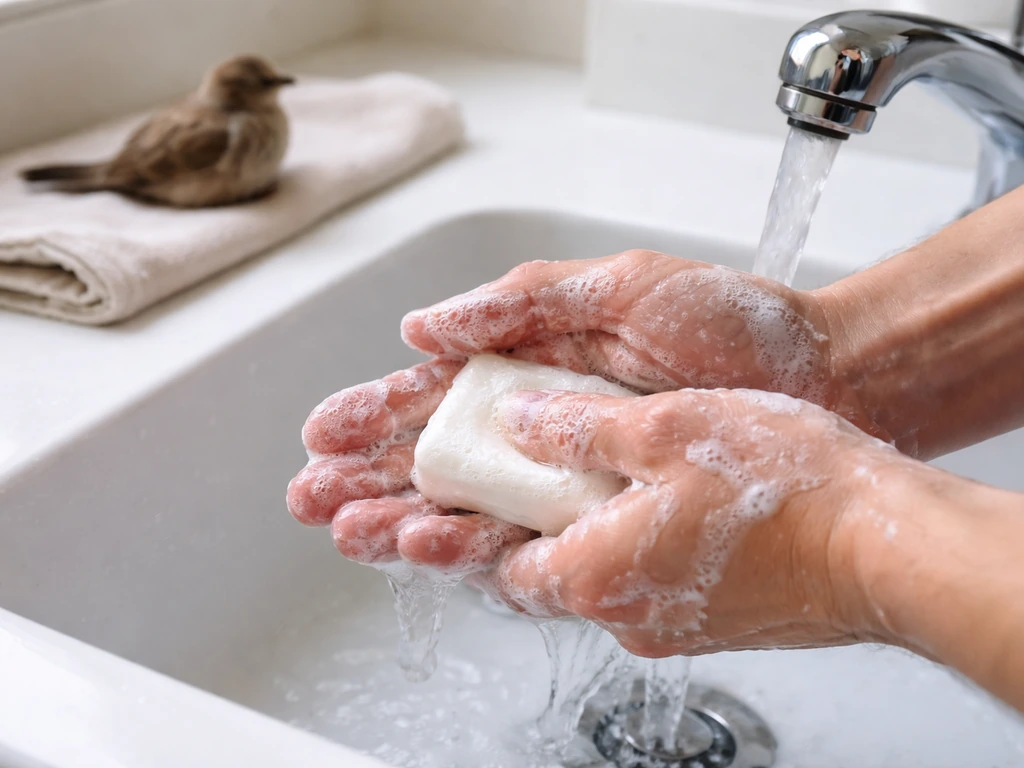
- Wash your hands immediately with soap and running water for at least 20 seconds. OSHA recommends at least 15 seconds of thorough washing after contact with bird mucus, saliva, or feces. If soap and water are not available, use an alcohol-based hand sanitizer as a temporary measure until you can wash properly.
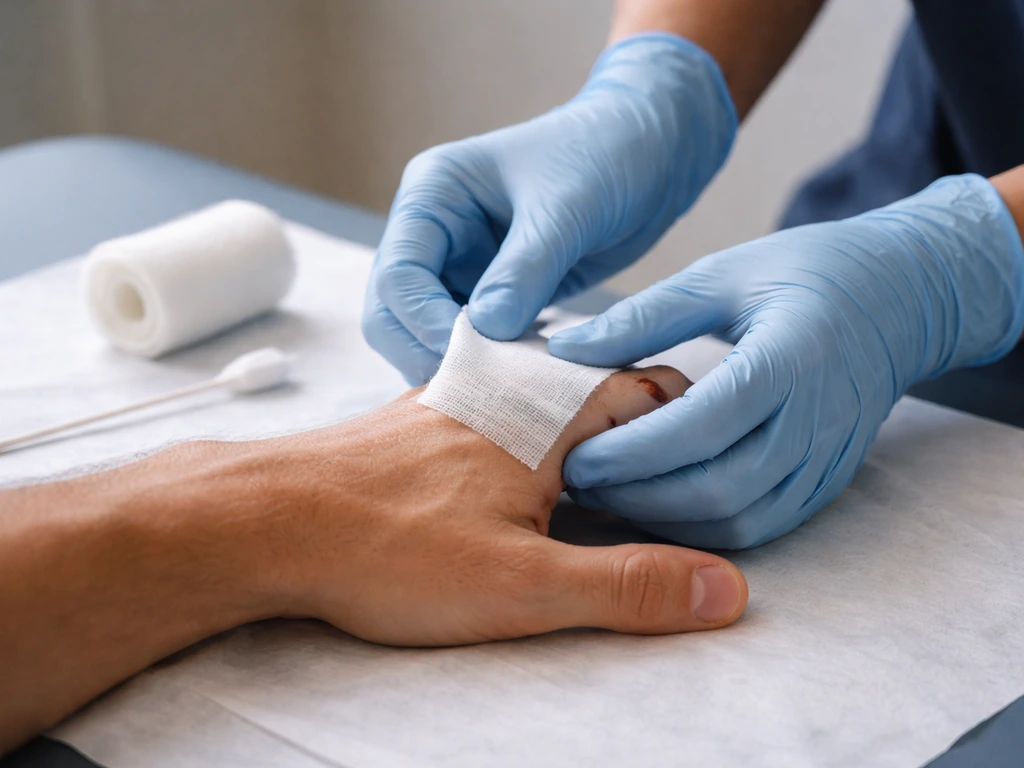
- Check for wounds. If the skin is unbroken, basic cleaning is sufficient. If there is a puncture or a bite that broke the skin, wash it under running water with soap, apply a clean bandage, and seek medical advice within 24 hours.
- Avoid touching your face, mouth, or eyes before washing.
- If you handled an injured or sick bird without gloves, change and launder any clothing that contacted the bird.
- Monitor for symptoms over the following days: fever, cough, rash, or gastrointestinal symptoms after handling a sick or wild bird warrant a call to your doctor, with a mention that you had bird contact.
What not to do: myths and harmful "rescues"
The instinct to help is understandable, but some common responses make things worse for the bird and riskier for you.
- Do not assume a fledgling on the ground is abandoned. Fledglings (feathered young birds that have left the nest) are supposed to be on the ground. Their parents are usually nearby. Picking them up and taking them home removes them from natural parental care and is often illegal for protected species.
- Do not try to feed an injured or baby wild bird unless you have been specifically instructed to do so by a rehabilitator. Feeding the wrong food can kill a bird faster than the original injury.
- Do not handle a dead or obviously sick bird without a barrier. This is when disease risk is at its highest. No bare hands.
- Do not panic about guaranteed disease transmission from a brief touch. The reality is that casual, single-contact touch of a healthy bird followed by handwashing carries very low disease risk. Treating it like a biohazard emergency is not warranted by the evidence.
- Do not attempt to 'rehabilitate' a wild bird at home for extended periods without contacting a licensed wildlife rehabilitator. Prolonged handling increases stress to the bird and your cumulative exposure risk.
- Do not put a found nestling in an enclosed box without ventilation and leave it for hours. If you need to contain it temporarily, use a box with ventilation holes in a quiet, warm place, and call for professional guidance promptly.
When to call for help
For the bird: wildlife rescue
Contact a licensed wildlife rehabilitator if the bird is visibly injured (bleeding, unable to stand, wing dragging), if it is a nestling (naked or sparsely feathered with no nest nearby), or if parent birds do not return to a fledgling within two to three hours of you moving away from the area. Your state wildlife agency or a quick search for your local wildlife rehabilitation network will connect you with the right people. Do not transport the bird to a regular vet without calling first; not all vets are equipped for wild birds.
For yourself: medical care red flags
See a doctor promptly if you have a deep puncture wound or bite that broke the skin, if you are not current on tetanus, or if you develop fever, respiratory symptoms, or a spreading rash within two weeks of contact with a sick or dead wild bird. Tell your provider specifically about the bird contact so they can assess for relevant exposures. For routine scratches from a pet bird with no systemic symptoms, a phone call to your provider or a telehealth consult is usually enough to determine whether you need to come in.
How to prevent this from happening again
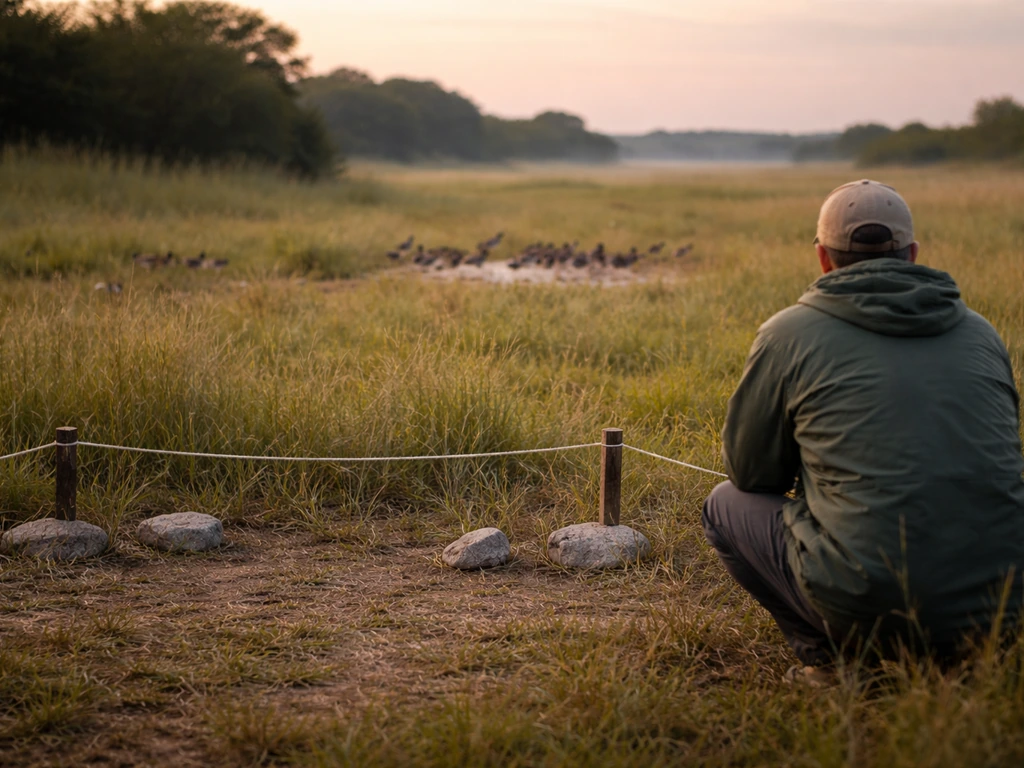
For most people, the best prevention is maintaining appropriate distance from wild birds in the first place. Most wild birds do not want contact with humans, and their stress response alone is reason enough to give them space. A few practical steps make a real difference:
- Keep a minimum distance of several meters from nesting birds, especially during breeding season. Research shows that defensive behaviors escalate sharply as humans move closer to nest sites.
- Wear disposable gloves when cleaning bird feeders, bird baths, or any surfaces contaminated with droppings. The CDC specifically recommends this for bird hobbyists.
- Wash hands after every bird interaction, including handling your own pet bird or cleaning its cage. This single habit addresses the most common transmission routes for Salmonella and Campylobacter.
- If you work in environments with large concentrations of birds or accumulated droppings (attics, barns, caves, or professional wildlife handling), wear an N95 respirator and disposable gloves. This addresses the inhalation risk for histoplasmosis and psittacosis.
- Teach children not to approach or pick up wild birds. The advice not to handle wild birds is not because of guaranteed disease risk but because it causes real harm to the bird and removes the habit that matters most: hands off unless there is a genuine safety reason.
- If you find a dead wild bird during an avian influenza outbreak period, report it to your state wildlife agency rather than handling it. The reporting protocol exists precisely so trained people can assess the risk.
Whether you are curious about bird behavior, a parent whose child just picked up a sparrow, or someone who regularly works near birds, the through-line is the same: wash your hands, avoid unnecessary handling, and know when to call a professional. The risks are real but manageable, and in most cases, the bird was far more stressed by the encounter than you need to be. If you are deciding whether to touch one at all, it also helps to review where not to touch a bird so you can avoid the highest-risk situations.
FAQ
If I touched a bird with gloves on, do I still need to wash my hands for 20 seconds?
Yes. Gloves can pick up droppings or shed material, and touching your phone, door handle, or face through the glove defeats the purpose. Remove gloves without snapping them, then wash hands and any exposed skin with soap and water for at least 20 seconds.
What if the bird just landed on me, and I did not touch it directly?
Treat it like a low-risk contact. If the bird made contact with your clothing, or if you brushed against it, wash exposed skin and change out the piece of clothing. Avoid shaking or brushing the clothing dry, which can aerosolize particles.
Do I need to disinfect my hands with alcohol gel instead of soap and water?
No, soap and running water are the priority after bird contact because they physically remove droppings and debris. Alcohol gel can be helpful as a temporary backup when soap and water are not immediately available, but wash with soap and water as soon as you can.
How do I handle a bird that is bleeding or has visible injury, without increasing risk to myself?
Use a barrier if possible, such as a towel, thick cloth, or a box with ventilation. Avoid bare-hand contact, keep the bird contained rather than squeezing it, and wash hands and any exposed skin right after. Contact a licensed rehabilitator instead of trying to care for it yourself.
If I get scratched or pecked but the skin looks intact, should I still see a doctor?
Usually no for routine superficial marks, but monitor closely. If redness rapidly spreads, swelling worsens over 24 to 48 hours, you develop fever, or you notice increasing pain, get medical care. Those changes can signal deeper irritation or infection even when the skin was not fully broken.
What should I do if a bird contact happened and I already touched my face or ate?
Wash your hands immediately with soap and water, then avoid further face-touching until you have cleaned up. If you start to feel unwell, especially with fever or gastrointestinal symptoms, contact a clinician and mention the timing and that it followed wild bird contact.
Can I clean the area where the bird was with a vacuum?
Avoid dry sweeping or vacuuming that stirs up dust. For small outdoor areas, use water and gentle cleaning when appropriate. For indoor messes from droppings, ventilate and follow safer cleanup practices, because aerosolized particles increase exposure risk.
At what point does a nestling situation become an emergency?
Call a rehabilitator if the nestling is without feathers or sparsely feathered, there is no accessible nest to return it to, or parents do not return within about two to three hours after you step away. Also get help if the nestling is injured or exposed to predators or traffic.
How long should I wait after returning a nestling before I leave completely?
Leave promptly once the nestling is placed back or secured. If you want to check, watch from a distance without lingering. If parents do not resume normal care within a couple of hours, switch from observation to calling a rehabilitator.
I have a pet parrot, and it seems healthy, do I still need extra precautions?
Yes, because psittacosis can be carried without obvious illness. Focus on reducing airborne exposure by cleaning the cage regularly with damp methods rather than dry sweeping, improving ventilation, and washing hands after handling or cleaning.