Yes, a bird can absolutely be electrocuted on a wire. But here's the part most people get wrong: simply sitting on a power line is not what kills them. The real danger is much more specific than that, and understanding exactly why some birds survive their whole lives on power lines while others die on contact is the difference between a helpful observer and someone who makes a bad situation worse. can a bird get struck by lightning
Can a Bird Get Electrocuted on a Wire? What Happens

Marcus Whitmore
23 Mar 2026
Can birds actually be electrocuted by wires?
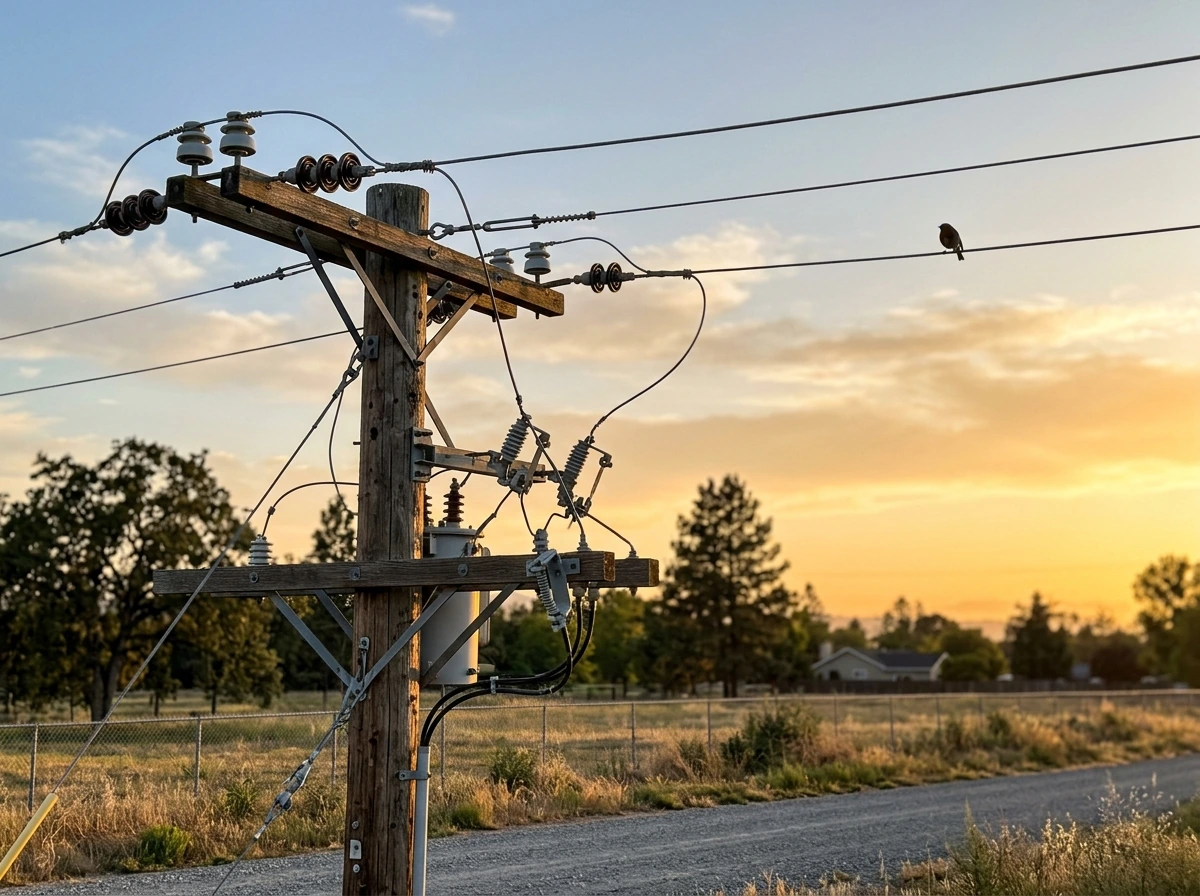
The short answer is yes, but the mechanism matters a lot. A bird is only electrocuted when it completes an electrical circuit, meaning current can enter through one part of its body, travel through its tissues, and exit through another point that's connected to a different voltage or to ground. The U. S.
Geological Survey explains that birds can be electrocuted when their appendages bridge energized parts or an energized part and grounded metal, completing a current path through the bird completing an electrical circuit.
A bird perched on a single wire, touching only that one conductor and nothing else, does not complete a circuit. Current has nowhere to go, so the bird is fine. The moment that changes, so does the bird's safety.
This is confirmed by USGS, APLIC (the Avian Power Line Interaction Committee), MIT engineering resources, and utility company protection plans alike. The consensus is clear: circuit completion is the key. A bird that bridges two energized conductors, or simultaneously touches an energized part and a grounded metal component like a transformer housing or cross-arm hardware, is in serious danger. One that doesn't is not.
How electricity actually harms birds
There are a few distinct mechanisms that can kill or injure a bird around power infrastructure. Knowing which one you're dealing with helps make sense of why incidents happen where and when they do.
Circuit completion: the core mechanism
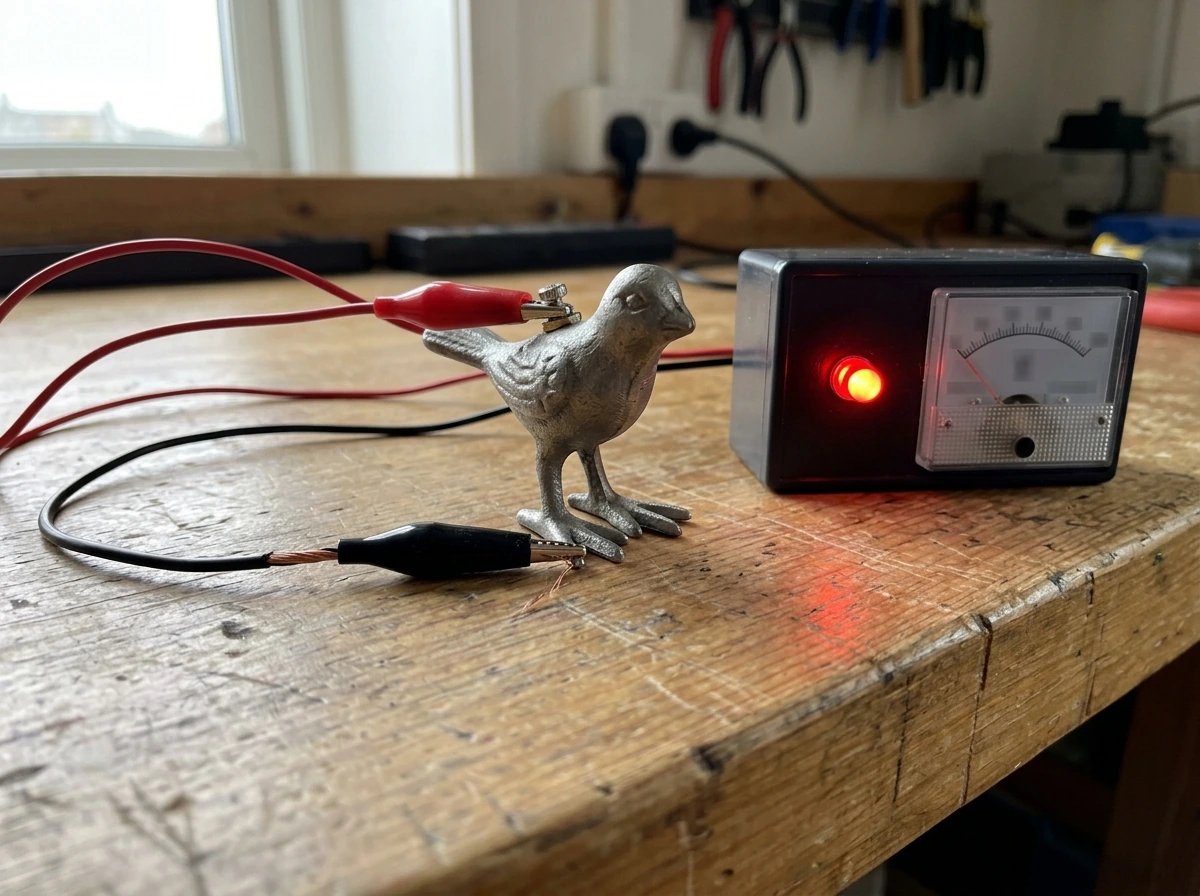
When a bird touches two conductors at different voltages (phase-to-phase contact) or an energized conductor and a grounded component (phase-to-ground contact), current flows through the bird's body along that path. The amount of current, and how it travels through tissues, determines the damage. Internal burns, cardiac arrest, and neurological injury can all result. This is the same basic principle that makes electrical safety so critical for humans working near live lines.
Contact points and flesh-to-flesh bridging
Here's a nuance that surprises most people: dry feathers are actually poor conductors. Electrocution typically requires fleshy contact, meaning the bird's skin, talons, beak, or bare wrist must be what's touching the conductive surface. A fully feathered bird brushing against a wire with its wing may not complete a meaningful circuit if only dry feathers are in contact, this is one big reason why bird doesn't get shock. But wet feathers change the equation, because water dramatically increases conductivity. Rain, damp morning mist, or a bird that's been in water before landing can all raise electrocution risk significantly.
Step potential
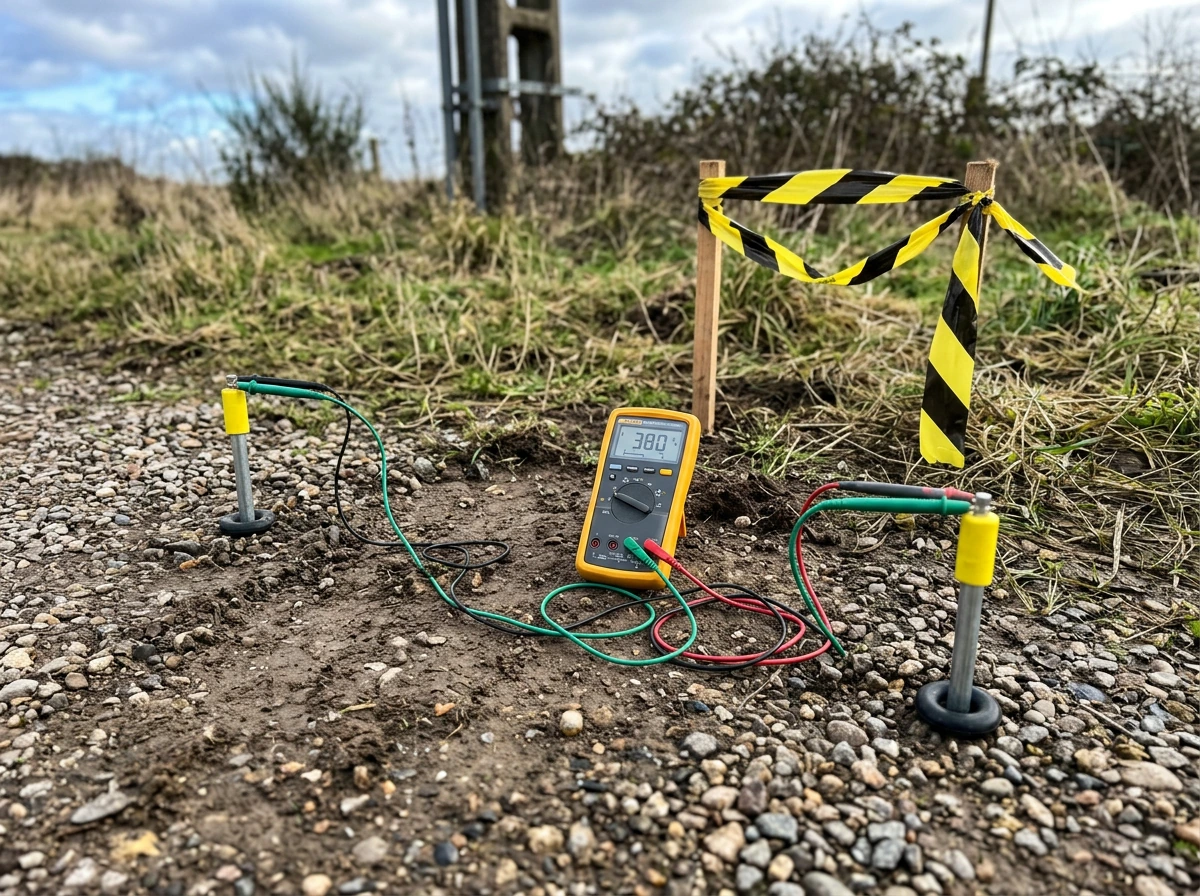
Step potential is less commonly discussed but worth knowing about. It refers to the voltage difference between two points on the ground (or two points a bird's feet can reach) caused by current radiating outward from a fault or downed line. A bird standing on the ground near a downed energized line can experience different voltage at each foot, and if that difference is large enough, current flows through the bird's body between those two contact points. This is more of a terrestrial risk than an in-air one, but it's real, especially around downed or damaged lines after a storm.
Arcing
Arcing is the scariest mechanism because it doesn't require direct physical contact. At high voltages, electricity can jump an air gap to reach a nearby conductive object, including a bird in flight. This is rare in everyday distribution line scenarios but is documented at higher transmission voltages. It's also why IPAF and other safety organizations emphasize that even approaching a high-voltage line without touching it can be lethal. For birds, arcing is most likely to matter for large raptors or soaring birds that pass very close to high-voltage infrastructure.
Why some birds are safe on lines while others aren't
Body size is the single biggest variable. Small songbirds, sparrows, starlings, and similar species can sit harmlessly on high tension wire because their entire body fits within the space of that one conductor. why a bird can sit harmlessly on high tension wire Their wingspan and leg span are small enough that they cannot simultaneously reach a second wire or a grounded pole component. They never complete a circuit, so they never get hurt.
This is also why bird doesn't get shock in the specific case of a fully feathered bird touching only a single conductor without circuit completion. This is why you can see hundreds of small birds lined up on a wire without incident. why is the bird on the wire safe
Large birds are a completely different story. Raptors like eagles, hawks, and owls have wingspans that can easily bridge the gap between a conductor and a grounded cross-arm or transformer housing. APLIC's spacing guidance for large birds recommends at least 60 inches of horizontal separation and 40 inches of vertical separation to prevent circuit completion, precisely because an eagle's flesh-to-flesh distance can reach that range. The Wildlife Society has documented that bird electrocutions on power lines have even triggered wildfires in California, giving a sense of how much energy is involved when a large raptor bridges a gap on distribution infrastructure.
Weather is the other major factor. A small bird with wet feathers in the rain faces a higher electrocution risk than a dry bird in the same position. Water doesn't make electrocution inevitable, but it lowers the threshold for current to flow. Seattle City Light's Avian Protection Plan specifically flags wet conditions as an aggravating factor in electrocution risk, alongside conductor spacing.
The type of infrastructure matters too. Distribution poles (the ones in your neighborhood) often have conductors, transformers, and grounded hardware clustered close together, making them more dangerous for large birds than high, widely-spaced transmission towers. Buried distribution lines eliminate the risk entirely, as the IFC's 2026 avian electrocution guidance notes.
What to do right now if you see a bird on or near a wire
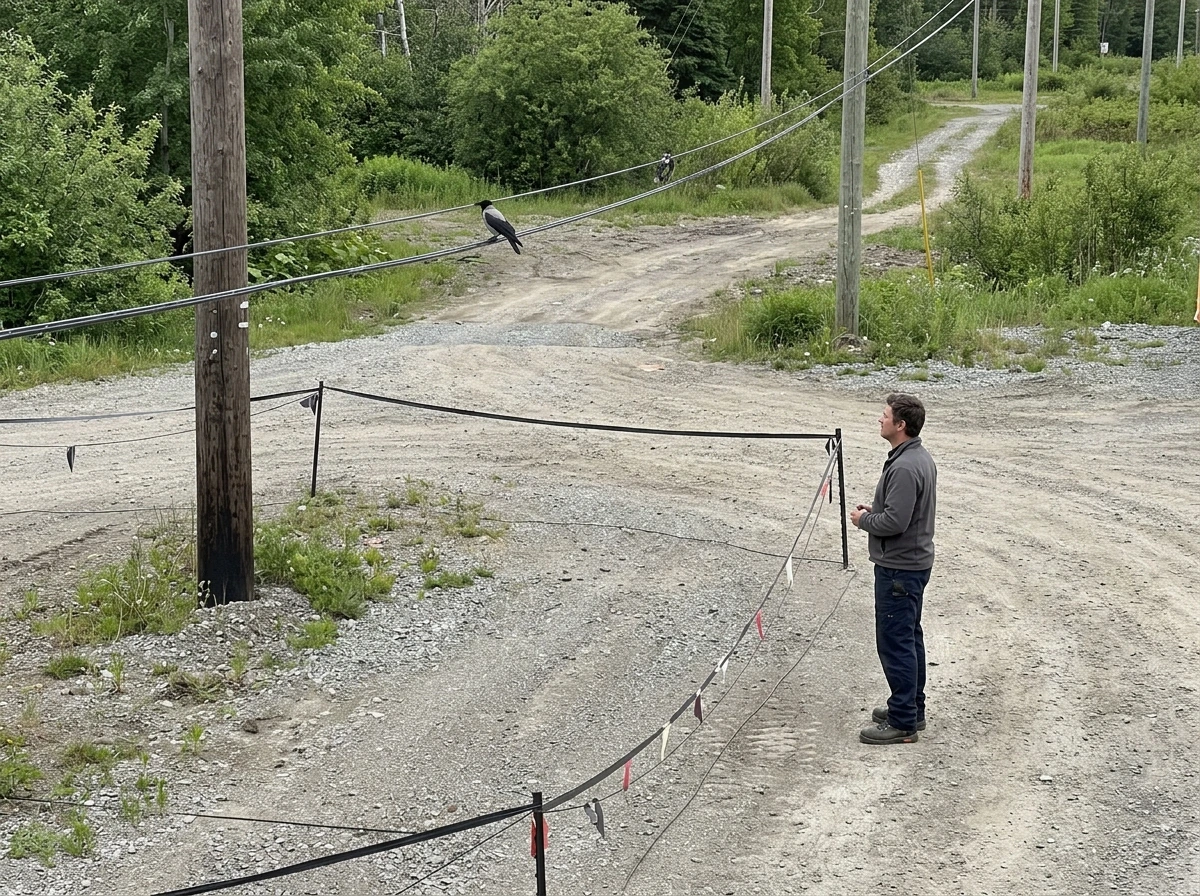
First priority: your safety, not the bird's. A live wire scenario is not one where you improvise. Here's a practical, step-by-step approach.
- Stay back. Keep at least 30 to 50 feet of distance from any downed or visibly damaged line. Voltage can spread through the ground outward from the contact point (step potential), so even the ground near a downed line isn't necessarily safe.
- Do not touch anything near the wire. Not a fence post, not a car, not a metal guardrail, and not the bird itself if it's near energized equipment. Grounded metal objects can carry current if they're in contact with an energized line.
- Call 911 if there's a downed line or if the wire appears damaged. Then call the local utility company. AEP Ohio, Black Hills Energy, and most utilities are clear: if lines are down, call 911 and keep others away. This is not a situation for animal control to handle alone.
- If the bird is simply perched on an intact overhead wire and appears healthy, watch from a distance. The bird almost certainly does not need your help. Let it leave on its own.
- If the bird appears stunned or injured but is not near an actively dangerous wire or downed line, move to the section below on getting it help safely.
The key rule: if you're not a utility worker with proper training and equipment, your job is to observe, call for professional help, and stay safe. Everything else comes after that.
What not to do: myths and genuinely dangerous mistakes
There are a few persistent myths and instinctive reactions that can get people hurt. The reality is that good intentions don't protect you from physics.
- Don't use a stick, broom, or rope to push a bird or anything else away from a wire. Xcel Energy and other utilities explicitly warn that high line voltages can travel through objects that seem nonconductive. A wooden stick is not protection at distribution or transmission voltages.
- Don't assume rubber gloves or rubber-soled shoes make you safe near high-voltage lines. Household insulating materials are not rated for utility-scale voltages.
- Don't try to touch or retrieve a bird you see near transformer equipment or pole hardware. APS (Arizona Public Service) is direct about this: if a bird or nest is on or near power line equipment, call the utility, not the bird.
- Don't assume the bird exploded or was vaporized if you hear a loud pop near a line. Dramatic electrocution deaths are rare. Many birds found near power infrastructure died from falls after being stunned, not from being destroyed by current.
- Don't assume a bird sitting calmly on a wire needs rescuing. Sitting on a single intact conductor is safe for that bird. Intervening where no intervention is needed creates risk without benefit.
If the bird looks injured or stunned: how to get help
If you find a bird on the ground near power infrastructure that appears stunned, injured, or unresponsive, and you've confirmed the immediate area is safe to approach (no downed lines, no active hazard), here's how to handle it.
- Do not give the bird food or water. This is the one thing almost every wildlife rehabilitation organization agrees on. Food and water given to a shocked, cold, or injured bird can cause aspiration, digestive harm, or other complications. Audubon, California Wildlife Center, and the AZ Wildlife Resource all give the same guidance: no food, no water.
- Place the bird in a dark, quiet, warm environment. A cardboard box with ventilation holes, lined with a soft cloth (not terry cloth, which can snag talons), is ideal. Darkness reduces stress significantly. Keep it away from pets, children, and noise.
- If the bird feels cold, provide gentle warmth. WERC recommends a warm water bottle wrapped in a cloth placed near (not under) the animal. Do not overheat.
- Call a licensed wildlife rehabilitator before doing anything else. Most states have networks of licensed rehabbers accessible through state wildlife agencies, local Audubon chapters, or the National Wildlife Rehabilitators Association. Do not try to treat the bird yourself.
- Minimize handling. Every time you pick up a stressed bird, its heart rate spikes. Handle it only as much as needed to get it safely contained.
APLIC also notes that if you find a bird carcass near power equipment and suspect electrocution, you should leave it in place and report it to the utility or wildlife agency. Carcasses near electrocution sites can be evidence for monitoring programs that track avian mortality, and moving them disrupts that data.
Reducing electrocution risk: what actually works
For utility and infrastructure operators
The engineering solutions are well-established. APLIC and the U.S. Fish and Wildlife Service released formal guidelines as far back as 2006 specifically for reducing avian electrocutions on power lines, and those guidelines have been updated since. The core approaches are: increasing spacing between conductors and grounded hardware to exceed the flesh-to-flesh span of large birds, adding insulating covers or wraps to high-risk conductors and hardware, and identifying 'problem poles' (structures with documented bird incidents or high-risk configurations) for priority retrofit. Seattle City Light's Avian Protection Plan is a good real-world example of how a utility implements these principles systematically. Buried distribution lines eliminate avian electrocution risk entirely, though they're expensive to retrofit.
For property owners and bird enthusiasts
If you're managing a property where birds are active, the biggest electrical risks are usually around outbuildings with older exposed wiring, not the main utility lines. Make sure any exposed wiring in barns, sheds, or outdoor structures is properly insulated and enclosed. Backyard feeders and bird baths placed near old overhead service drops (the lines running from the street to your house) can attract birds to a higher-risk zone, so placement matters.
Window collisions are actually a far more common cause of bird injury and death around homes than electrocution. If you're concerned about bird safety in your yard, window decals and screens statistically save more birds than most other interventions. That said, if you notice birds repeatedly perching near old, corroded, or visibly damaged electrical equipment on your property, that's worth a call to an electrician or your utility.
Quick reference: risk factors at a glance
| Factor | Lower Risk | Higher Risk |
|---|---|---|
| Bird size | Small (sparrow, starling) | Large (eagle, hawk, owl, heron) |
| Contact type | Single conductor only | Two conductors or conductor + grounded hardware |
| Feather condition | Dry feathers | Wet feathers (rain, recent swimming) |
| Infrastructure type | High-voltage transmission towers (wide spacing) | Distribution poles (close conductor/hardware spacing) |
| Line condition | Intact, overhead lines | Downed or damaged lines |
| Conductor insulation | Insulated/covered conductors | Bare, uninsulated conductors |
The bottom line is that bird electrocution is a real and documented hazard, particularly for large species near distribution infrastructure, but it's also a well-understood one with practical solutions. The physics are consistent: complete a circuit, get hurt; don't complete one, don't. Most small birds on most wires are fine. When things go wrong, they tend to go wrong for large birds, near complex pole hardware, in wet conditions. Knowing that helps you assess a situation quickly and respond in a way that's actually useful.
FAQ
I see a bird sitting on one wire, how can I tell if it’s actually at risk?
Usually, yes, but not because the bird is “safe.” If it’s small and only perched on one conductor, it may avoid circuit completion. If you see wetness, unusual behavior, or the bird is near transformer housings, cross-arms, or multiple conductors, treat it as potentially hazardous and keep distance until the utility confirms the area is safe.
If the bird feathers look dry, can it still be electrocuted?
Do not assume it’s harmless if the bird looks dry or lively. Dry feathers reduce conductivity, but wet talons or a beak touching metal hardware can still create a circuit. If there’s any chance the bird is contacting more than one conductive point, the safest choice is to call the utility rather than handle it.
Can a bird get electrocuted if it never touches the wire, like after a downed line?
Yes. A bird can be injured after a storm even if it never touched a wire. Step potential can occur when current spreads from a fault or downed line, creating different voltages at the bird’s feet. If you find a stunned bird on the ground near storm-damaged infrastructure, avoid approaching until you’re sure there are no downed or energized lines.
What information should I give the utility if I report a possible electrocution?
If you call for help, tell them exactly what you observed: bird size, location type (pole, transformer area, service drop, or near a high-voltage tower), weather conditions, and whether the bird is on the conductor, on hardware, or on the ground nearby. Utilities can use that to decide whether they should de-energize a span, inspect, or file a “problem pole” report.
Should I pick up a dead or injured bird I find near power lines?
Do not remove a carcass or relocate an injured bird without coordination. Leaving it in place (when safe) helps confirm the electrical hazard and supports monitoring and retrofit decisions. If you need to intervene for animal welfare, wait for utility or wildlife instructions so you do not destroy evidence or put yourself at risk.
Can a bird be electrocuted without touching anything, like from “jumping” electricity?
Even without contact, arcing risk increases with voltage and proximity to conductive objects. If the bird appears very close to high-voltage conductors or is soaring near transmission infrastructure, keep people and pets away and contact the appropriate utility, since you cannot reliably judge arc distance from the ground.
Why are raptors like eagles and hawks more dangerous for power poles than small songbirds?
Yes, larger birds are more likely to bridge from a conductor to grounded hardware, because their wing span and leg span are bigger. If you notice raptors perching on distribution poles or near transformer components, that configuration is a classic high-risk scenario even when the bird is not visibly tangled.
If a bird is on the wire, will it always stay safe because it started on just one conductor?
Not typically in a way you can safely verify from your side. The “no circuit completion” idea applies when only one conductor is contacted, but birds can shift, spread wings, or grab hardware suddenly. If you see the bird change position or touch multiple structures, assume risk and back away.
How can I reduce the chance of electrocutions around my yard?
Yes, placement of backyard feeders and bird baths matters. If those stations are near older overhead service drops or corroded equipment, birds will spend more time in a higher-risk zone. Consider moving feeding and water sources farther from nearby overhead wiring and obviously damaged electrical hardware.