
Yes, a bird can be struck by lightning. It is not a common cause of bird death, but it is a real and documented one. A peer-reviewed case report published in the journal Animals described a griffon vulture most likely killed by a lightning strike, with postmortem findings consistent with a side-flash mechanism. This is not folklore or guesswork. Birds are subject to the same basic physics as any other living creature standing in an open environment during a thunderstorm, and while their instincts generally keep them out of harm's way, those instincts are not infallible.
Can a Bird Get Struck by Lightning? What to Do Fast

Marcus Whitmore
23 Mar 2026
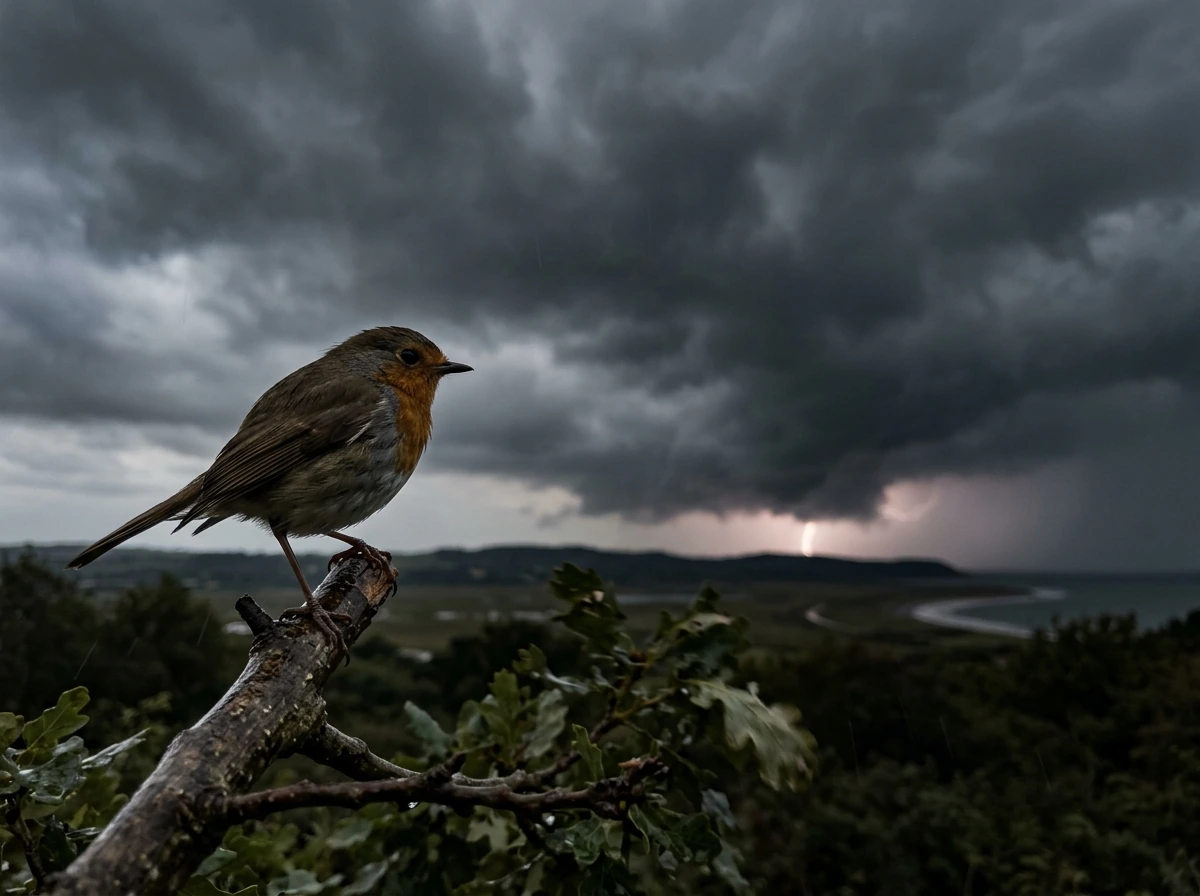
Can birds actually be struck by lightning?
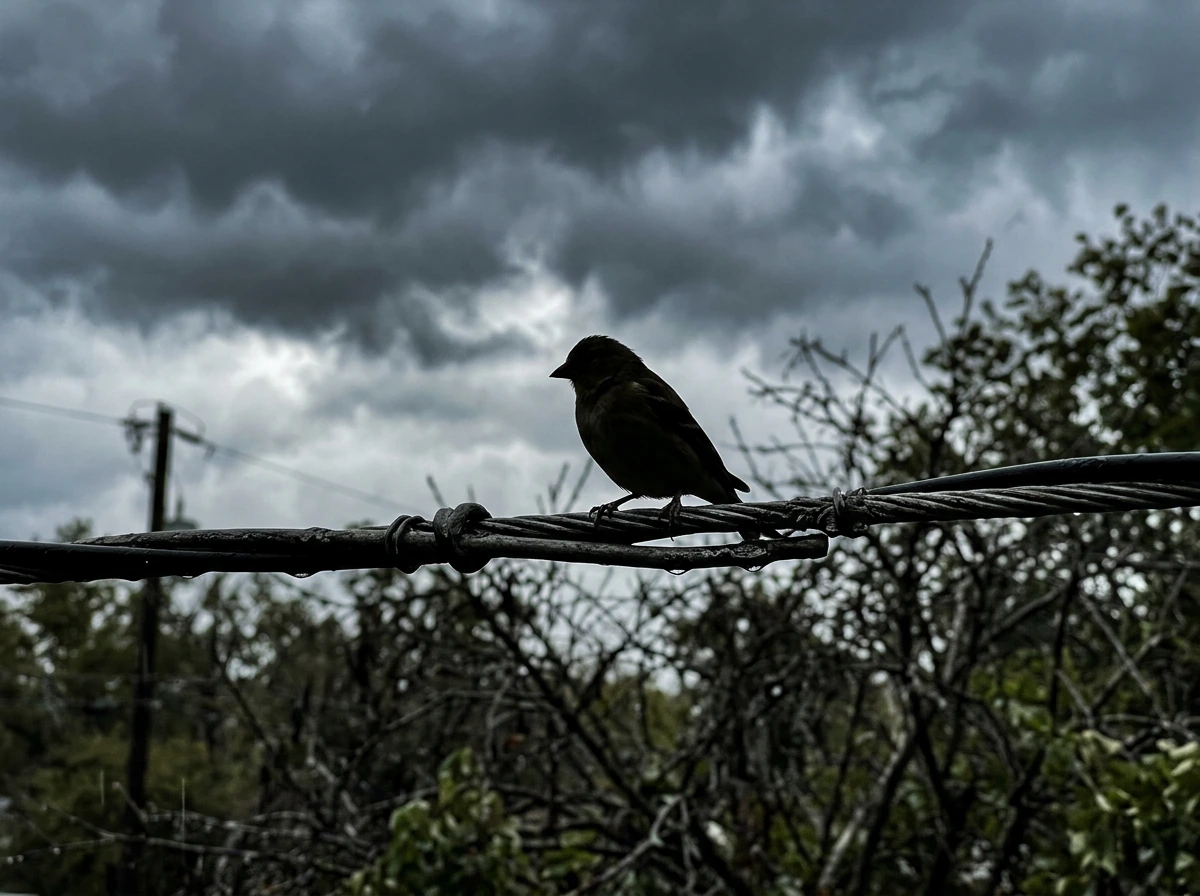
The short answer is yes, and the slightly longer answer is that it depends heavily on where the bird is and what it is doing when a storm hits. Like humans and other animals, birds can be affected by lightning in more than one way. A direct strike is the most dramatic scenario, but statistically speaking, it is not the only or even most likely mechanism of injury. The griffon vulture case mentioned above involved a probable side flash, meaning the discharge jumped from a nearby object to the bird rather than hitting it directly from the sky.
Birds that roost in tall trees, perch on exposed structures, or flock in open fields during a storm are at measurably higher risk than birds sheltered in dense brush or underground burrows. Size matters too. Larger birds with wider wingspans that perch or soar in elevated, exposed positions face greater exposure than small songbirds tucked into hedgerows. That said, no bird is completely immune if conditions are right.
How lightning affects birds: direct strikes vs indirect mechanisms
The Merck Veterinary Manual identifies several distinct injury mechanisms for animals caught in a lightning event, and all of them are relevant to birds. Understanding the difference matters because each mechanism carries different probabilities and different outcomes.
Direct strike
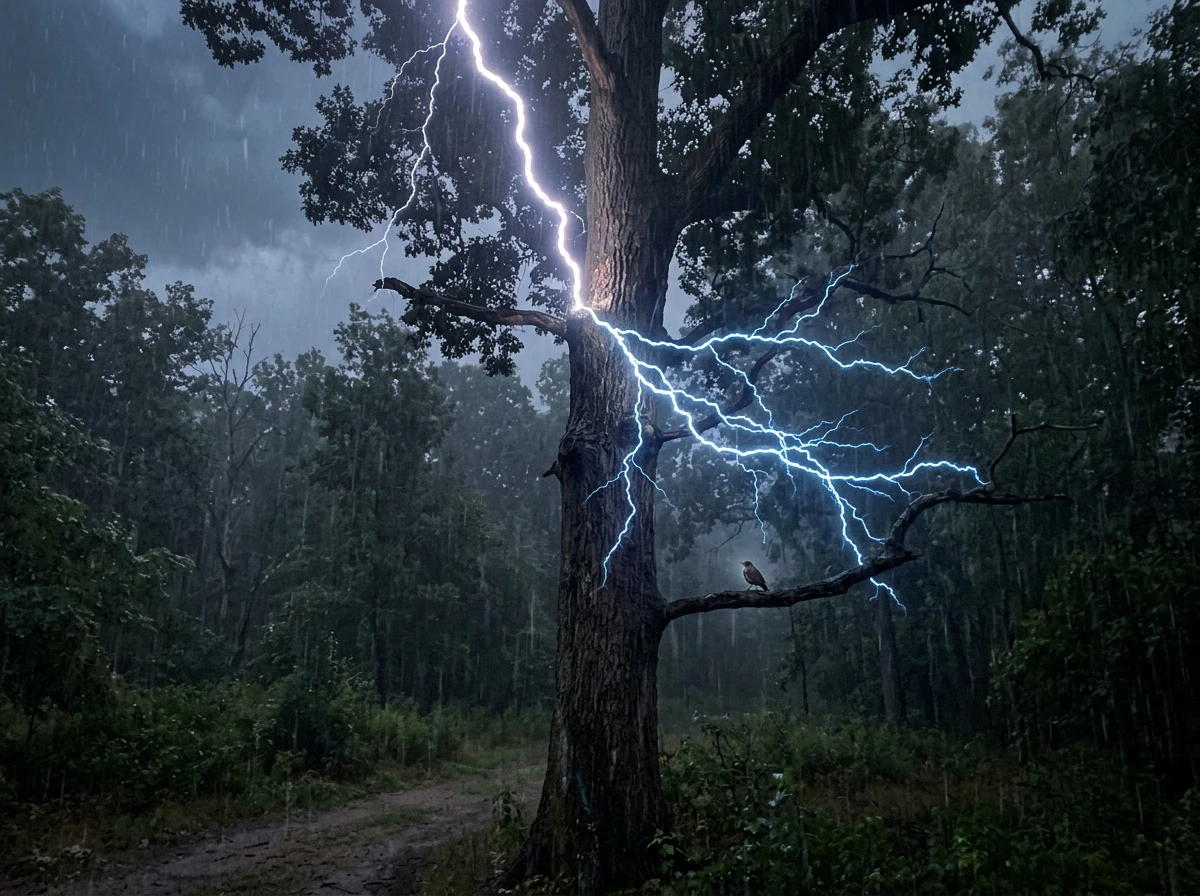
This is what most people picture: a bolt hits the bird directly. It is the least common mechanism but the most severe. External burn lesions are the most visible sign, and internal damage to the heart, nervous system, and organs is extensive. Survival from a direct strike is unlikely for a small or medium-sized bird.
Side flash
This is exactly what the vulture case study described. A bolt strikes a tall object nearby (a tree, a tower, a cliff face) and a portion of the current jumps sideways to the bird perched on or near that object. The energy involved can still be lethal, and the injury profile looks similar to a direct strike, though sometimes less severe depending on how much of the discharge reached the animal.
Ground current (step potential)
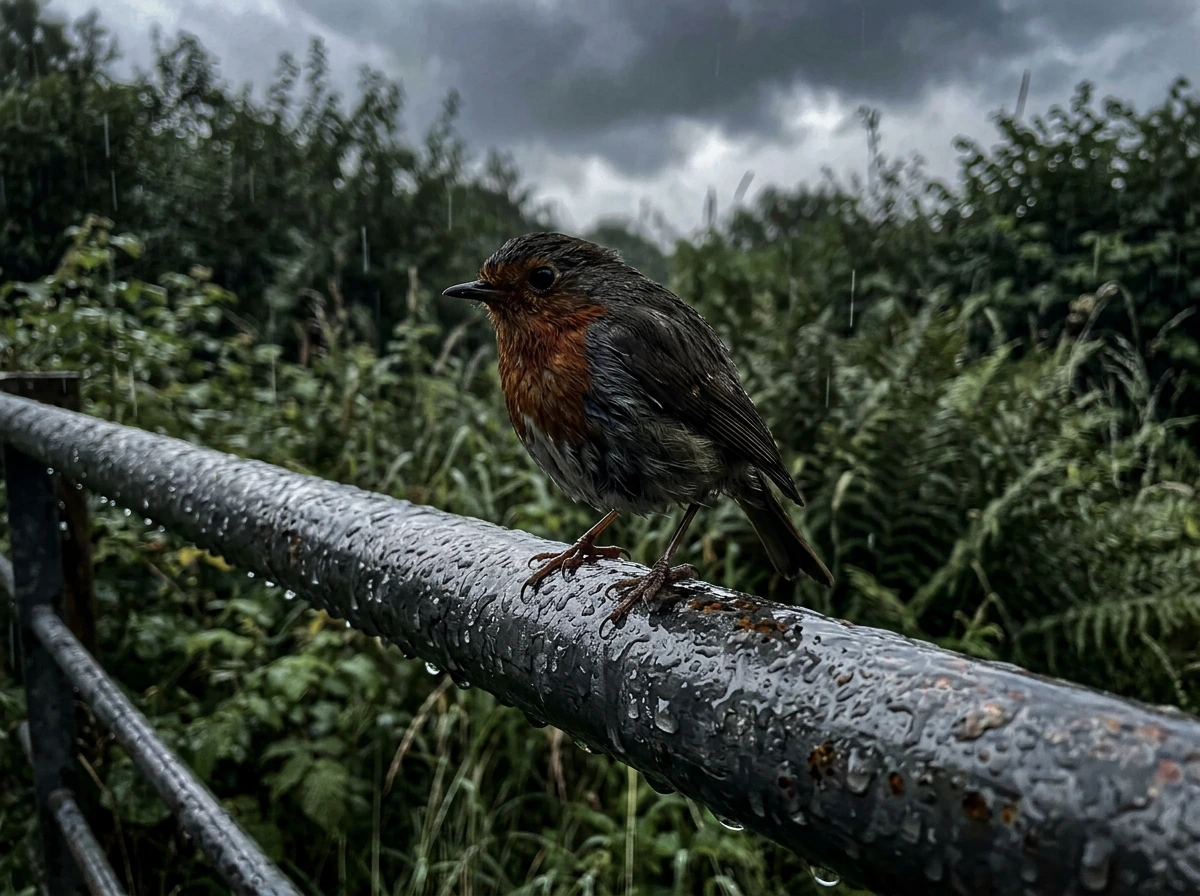
When lightning strikes the ground, electrical energy radiates outward from the impact point in decreasing voltage gradients. Any bird standing or walking on that ground completes a circuit between two points at different voltages. Ground current is actually responsible for a large share of animal deaths in open-field lightning events, particularly with livestock and roosting birds. A flock of birds on the ground during a storm can suffer multiple casualties from a single nearby strike.
Touch potential and blast injury
Touch potential occurs when a bird is in contact with an object that is directly struck, such as a metal fence, a wire, or a wet tree trunk. Blast injury from the explosive expansion of air around a lightning channel can also cause physical trauma even without direct electrical contact. For birds perched close to a strike point, the concussive force alone can be fatal or disorienting.
What it looks like when a bird has been affected
This is where it gets genuinely difficult. Birds are prey animals and instinctively mask signs of distress, which means you may not recognize a lightning-affected bird immediately. What you are more likely to find is a bird that looks "wrong" in ways that are easy to misread.
According to the Merck Veterinary Manual, in animals that survive lightning or electrical injury, standard blood work (CBC and basic biochemistry) is often unremarkable in the short term, which means even a vet cannot always confirm lightning as the cause from a blood draw alone. The observable signs are more useful in the field.
- Found on the ground in an open area during or immediately after a storm with no obvious physical reason to be grounded (not fledgling-age, no visible broken wing)
- Disoriented, unresponsive, or unable to stand or perch properly
- Singed or burned feathers, particularly on the head, back, or wingtips
- Visible skin lesions or scorch marks (more common after a direct strike or side flash)
- Twitching, tremors, or loss of coordination suggesting neurological disruption
- Dead birds found in clusters near a tree or open field after a storm (suggesting ground current event)
A single bird found stunned on the ground after a storm could also be a victim of hail, wind impact, or window collision, so the surrounding context matters. Multiple birds down in the same area with storm timing is a strong indicator of lightning involvement.
What to do immediately if you find a lightning-affected bird
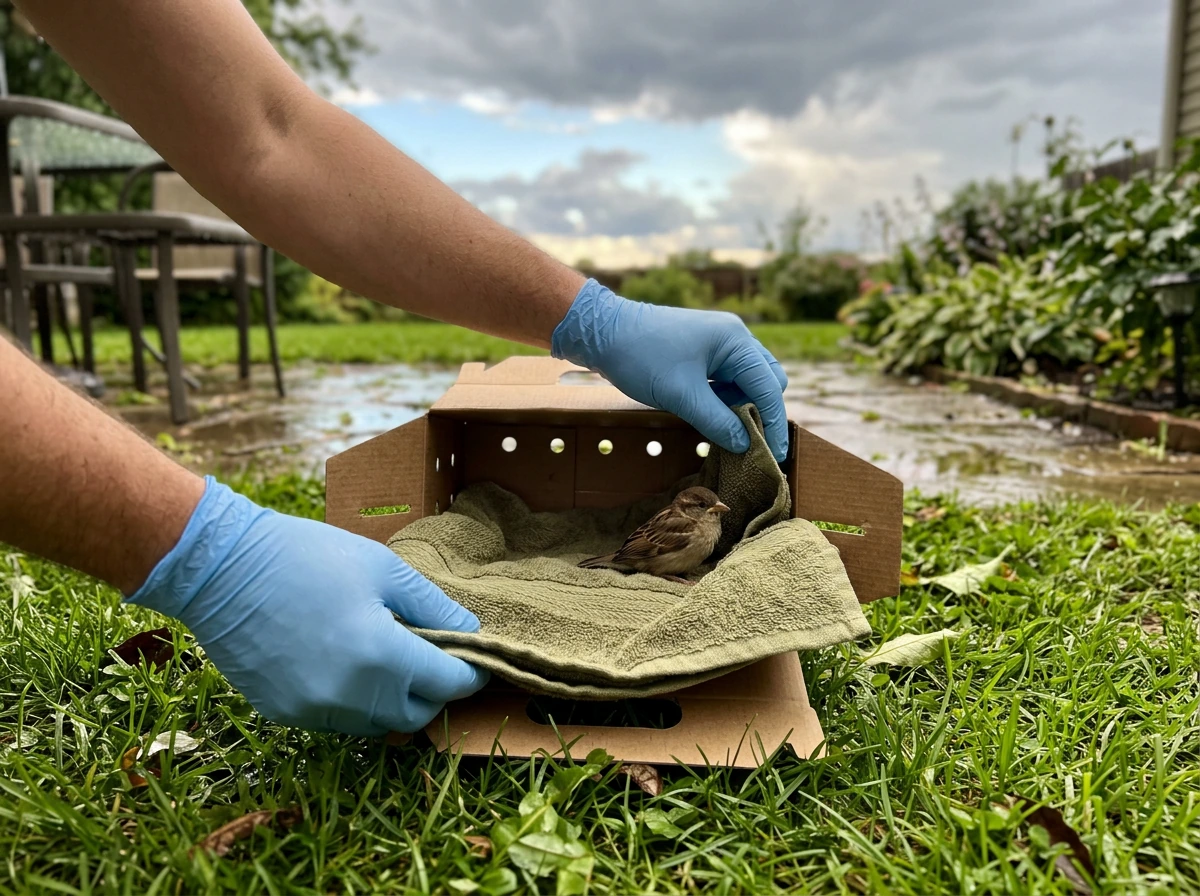
First, keep yourself safe. If the storm is still active, do not expose yourself to recover a bird. Lightning risk to humans remains elevated for 30 minutes after the last visible flash or audible thunder. The CDC is clear that while a lightning strike is uncommon, the consequences are serious, and that applies to you too.
- Wait until the storm has fully passed before approaching. Thirty minutes of silence from thunder is the standard safe window.
- Do not handle the bird with bare hands if you can avoid it. Use gloves or a folded towel. This protects you from potential pathogens and reduces stress on the bird.
- Place the bird gently in a ventilated cardboard box lined with a clean cloth or paper towels. Keep it in a quiet, dark, warm (but not hot) environment.
- Do not offer food or water. A disoriented bird can aspirate liquids, and feeding the wrong thing can cause further harm.
- Contact a licensed wildlife rehabilitator or your nearest wildlife rescue center immediately. In the U.S., the National Wildlife Rehabilitators Association directory is a reliable starting point. For pet birds (parrots, poultry, domestic fowl), call a veterinarian directly.
- Note where and when you found the bird and what condition it was in. This information helps the vet or rehabilitator assess what happened and what treatment is needed.
- If multiple birds are down in the same area, report that specifically. A cluster of casualties changes the assessment and may warrant broader investigation.
The Merck Veterinary Manual notes that supportive care is the cornerstone of treatment for animals that survive lightning injury. Time matters. The sooner you get an affected bird into professional hands, the better its chances. The Washington Department of Fish & Wildlife also advises calling a permitted wildlife rehabilitator as soon as possible and confirming the person has a wildlife rehabilitation permit.
Where birds actually go during storms (and why some end up exposed)
Most birds have storm-sensing capabilities that humans lack. They detect the drop in barometric pressure hours before a storm arrives and adjust their behavior accordingly. Songbirds typically seek dense low vegetation. Cavity-nesting species retreat to holes in trees or nest boxes. Shorebirds and waterfowl may fly ahead of a storm front entirely.
But this system is not perfect. Fast-moving storms can outpace a bird's ability to respond. Birds on migration are particularly vulnerable because they are already flying in unfamiliar territory and may be caught in open airspace when conditions deteriorate rapidly. Large soaring birds like vultures, eagles, and raptors that rely on thermals can find themselves aloft and exposed as a storm develops beneath them.
Roosting birds that choose tall trees at the edge of open fields are at structural risk from side flash even after they have settled for the night, Roosting birds that choose tall trees at the edge of open fields are at structural risk from side flash even after they have settled for the night, similar to why dont bird get electrocuted on power lines. This is not a failure of instinct so much as a limitation of it.
The tree that offers shelter from rain is also the tree most likely to attract a strike. And as the vulture case study showed, a bird does not need to be the tallest object in the landscape to be caught in a side-flash discharge from nearby.. This is not a failure of instinct so much as a limitation of it. The tree that offers shelter from rain is also the tree most likely to attract a strike.
And as the vulture case study showed, a bird does not need to be the tallest object in the landscape to be caught in a side-flash discharge from nearby.
For birds nesting during storm season, a lightning event can also destroy a nest outright even if the bird survives, which connects directly to questions about whether a bird nest can survive a storm. The physical destruction of nesting habitat is a separate but related concern worth understanding in context.
Myths vs facts about lightning and birds
| Common Myth | The Reality |
|---|---|
| Birds are immune to lightning because of their light weight | Body mass has no meaningful protective effect against electrical discharge. The physics of lightning do not favor small animals. |
| You would always find burn marks on a lightning-struck bird | Not necessarily. Ground current and blast injuries can kill without leaving visible burns. Internal damage may be the primary finding. |
| Birds on power lines are safe from lightning for the same reason they don't get electrocuted | These are different phenomena. Power line safety is about voltage differential across the bird's body, not about storm protection. A direct strike or side flash to a power line during a storm can absolutely affect a bird perched on it. |
| Lightning never strikes the same place twice, so a bird in a previously struck area is safe | This is a myth regardless of species. Lightning regularly strikes the same locations repeatedly, especially tall structures and isolated trees. |
| A bird found stunned after a storm was probably hit by lightning | Hail, wind, window collisions, and disorientation from barometric pressure changes are all more common causes of post-storm bird grounding than lightning. Context and physical signs matter. |
| Wild birds instinctively know to shelter completely before any storm hits | Birds have good barometric sensing but can still be caught off guard by fast-moving or unusually severe storm systems, particularly during migration. |
Staying safe during thunderstorms: for you, your pets, and local wildlife
If you are outdoors and a storm is building, your own safety takes priority over rescuing any bird you might spot in distress. The CDC's guidance on lightning risk is consistent: low probability, high consequence. Get inside a fully enclosed structure or a hard-topped vehicle, and stay there until 30 minutes after the last thunder.
For pet birds (parrots, backyard poultry, domestic fowl)
Bring outdoor birds inside before a storm if you can, if you're wondering why a bird can sit harmlessly on high tension wire, it helps to understand how side flash and ground current work during lightning events. If you are wondering why is the bird on the wire safe, the key is that lightning injuries usually happen through side flash and ground current rather than simple “touch” on a wire.
why bird not get electric shock Free-range poultry that roost in open-sided structures are at real risk from ground current and side flash if a strike hits nearby. Free-range poultry that roost in open-sided structures face a related hazard from side flash and ground current, which is also why a bird can sit harmlessly on high tension wire.
Free-range poultry that roost in open-sided structures are at real risk from ground current and side flash if a strike hits nearby, and this is the related mechanism behind why dont bird get electrocuted on power lines. A covered, enclosed coop is meaningfully safer than an open perch or wire run. Indoor companion birds in cages near windows should be moved away from the glass during severe storms.
A lightning strike through or near a window can cause a side flash inside the room. That is also why birds typically do not get electric shock in the everyday sense, even though lightning currents can still injure them side flash.
For wild birds you observe in your yard or property
- Do not put bird feeders or baths under tall isolated trees during storm season. If you are trying to attract birds to a safe space, dense shrubs and covered low structures are better choices.
- If you find a grounded bird after a storm and conditions are safe, follow the handling steps outlined above and contact a wildlife rehabilitator.
- Avoid approaching large raptor species (hawks, owls, eagles, vultures) without professional guidance. An injured large bird can cause serious injury even when disoriented.
- Report any cluster of dead or stunned birds to your local wildlife agency. It may indicate a ground current event worth documenting.
A note for aviation and airfield environments
For professionals managing birds around airfields and open infrastructure, lightning events add a layer of complexity to normal bird management. A storm that grounds or disorients migratory flocks can push unusual concentrations of birds onto runways and taxiways during or immediately after the event. Standard bird dispersal protocols may need to be suspended during active lightning risk, and a post-storm sweep for downed or disoriented birds is a reasonable precaution before resuming operations. The intersection of storm conditions and bird behavior on airfields is worth having a specific protocol for, separate from routine wildlife management.
The bottom line is that lightning is a genuine, documented hazard for birds, it is just not a common one. Most birds most of the time avoid the worst exposure through instinct and biology. But when conditions align, whether through a fast-moving storm, an unfortunate roosting choice, or a ground current event affecting a whole flock, the outcome can be serious and occasionally fatal. Knowing what to look for, and knowing how to respond without putting yourself at risk, is the practical takeaway here.
FAQ
If I find a bird stunned after a storm, how can I tell it was lightning and not something else like hail or a collision?
Treat the finding as “unknown electrical trauma” until proven otherwise. Lightning victims can look oddly quiet, weak, or uncoordinated, but bloodwork may not show a clear lightning signature right away. Focus on stabilization (warmth, low stress, dark environment) and get veterinary or wildlife help quickly, especially if the bird was found soon after thunder or multiple birds were affected in the same area.
Can I rescue a bird during the storm if I see it fall or act strangely? How long should I wait after the last thunder?
Yes, but timing matters. You generally should not attempt rescue during active storms or when thunder and lightning are still occurring nearby. Even after the last flash or thunder, stay indoors or in a hard-topped vehicle for about 30 minutes before going out to retrieve the bird.
If the bird has no obvious burns, can it still have been struck by lightning or affected by it?
Open ground strikes can still injure birds without any visible burn lesions on the bird itself. Ground current and side-flash mechanisms can cause internal damage, disorientation, and collapse in birds standing or roosting near where the lightning hit, so “no burns” does not rule lightning out.
What’s the safest way to handle a bird suspected of lightning injury without putting myself at risk?
Do not use bare hands, and do not place yourself on the same risky surfaces. Lightning can leave the area with hazardous conditions temporarily, and a struggling bird increases the chance of you getting startled or falling. Use a towel or gloves for handling, and move the bird to a stable, sheltered container after you are in a safe location.
What should I do in the first 10 to 30 minutes if the storm has passed and I have a suspected lightning-affected bird?
Immediately move it to a quiet, warm, dark enclosure (a ventilated box) and minimize handling. Once safe, contact a wildlife rehabilitator or veterinarian, because supportive care is time-dependent for animals that survive lightning or electrical injury.
If only one bird is down, does that make lightning less likely than if multiple birds are affected?
Yes, especially in areas with dense roosting and exposed perches. Because a single lightning event can involve ground current, multiple birds can be affected close together, so one bird is not always “an isolated case.” If you see several birds down around the same time and area after a storm, treat it as a stronger likelihood of lightning involvement.
How can I reduce risk for backyard birds or indoor companion birds when severe weather is coming?
Yes. If you have pet birds in cages, relocate them away from windows and any spot where a strike could create side flash indoors. For outdoor birds or poultry, choose covered, enclosed housing over open-sided structures, because ground current and side-flash risk increase when birds are exposed on open perches or on the ground.
If the bird seems to perk up after I bring it inside, should I still get it checked?
Because the bird may mask signs of distress, waiting for “improvement” can delay care. Even if the bird seems alert after you bring it inside, get professional guidance promptly if the bird was downed or behaving abnormally soon after the storm, since short-term lab tests may be unremarkable and clinical changes can evolve.
Can lightning harm a bird indirectly by damaging nests or nesting habitat even if the adults survive?
Yes, nest impacts can occur even if adult birds survive. Lightning can destroy nests directly, or otherwise compromise nesting habitat during storm season. This matters for conservation and for backyard nesting plans, because you may need to address nest safety and replacement decisions even without a clearly injured adult.
Is lightning more likely to affect birds during migration, and how should that change what I do when I find a bird down?
Migration can increase exposure because birds may be caught in open airspace and conditions can deteriorate faster than they can adapt. A downed bird during migration is therefore not “impossible” to link to weather, but it still requires rapid, safe triage since collisions, wind injury, and other storm-related causes can look similar.