Birds don't get electrocuted on power lines because sitting on a single wire doesn't complete an electrical circuit. That's the short answer, and it's backed by straightforward physics. Both of a bird's feet are touching the same wire at the same time, which means both feet sit at exactly the same electrical potential. When there's no difference in potential between two contact points, there's no motivation for electrons to move through the bird's body. No electron flow means no current, and no current means no shock.
Why Don’t Birds Get Electrocuted on Power Lines?

Marcus Whitmore
11 Apr 2026
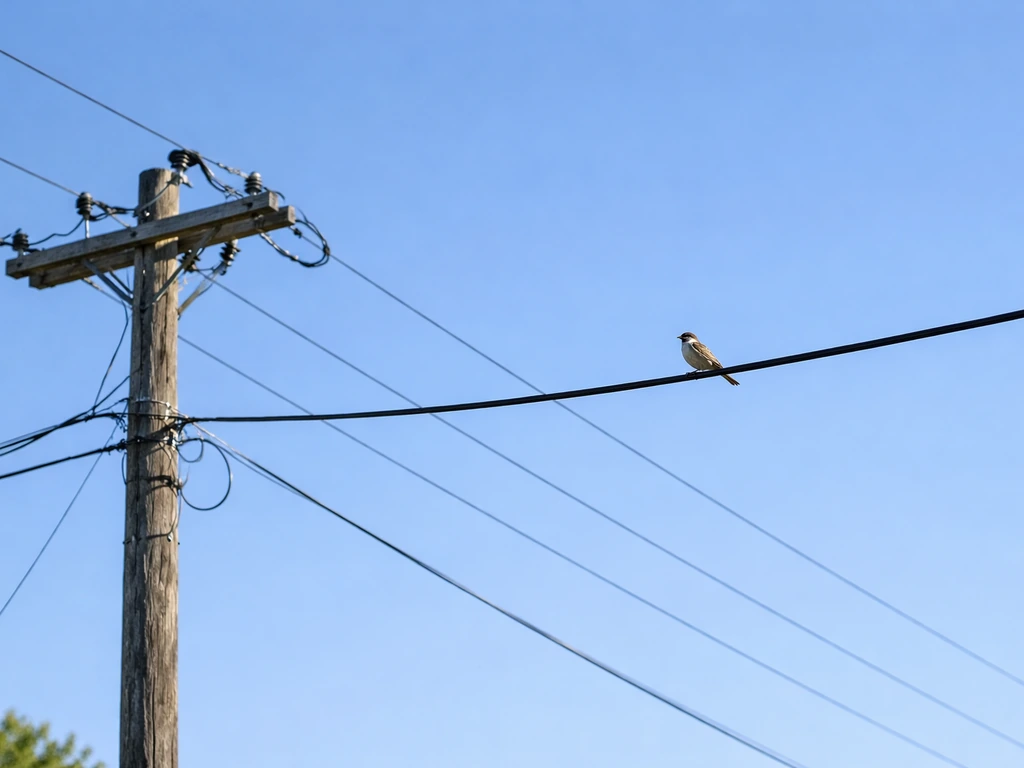
This trips people up because we instinctively assume that anything touching a high-voltage line is in danger. But voltage alone doesn't electrocute you. Current flowing through your body does, and current only flows when there's a complete circuit between two points at different electrical potentials. A bird perched neatly on one wire, feet close together, simply doesn't create that circuit.
The simple circuit explanation: why one wire usually isn't enough
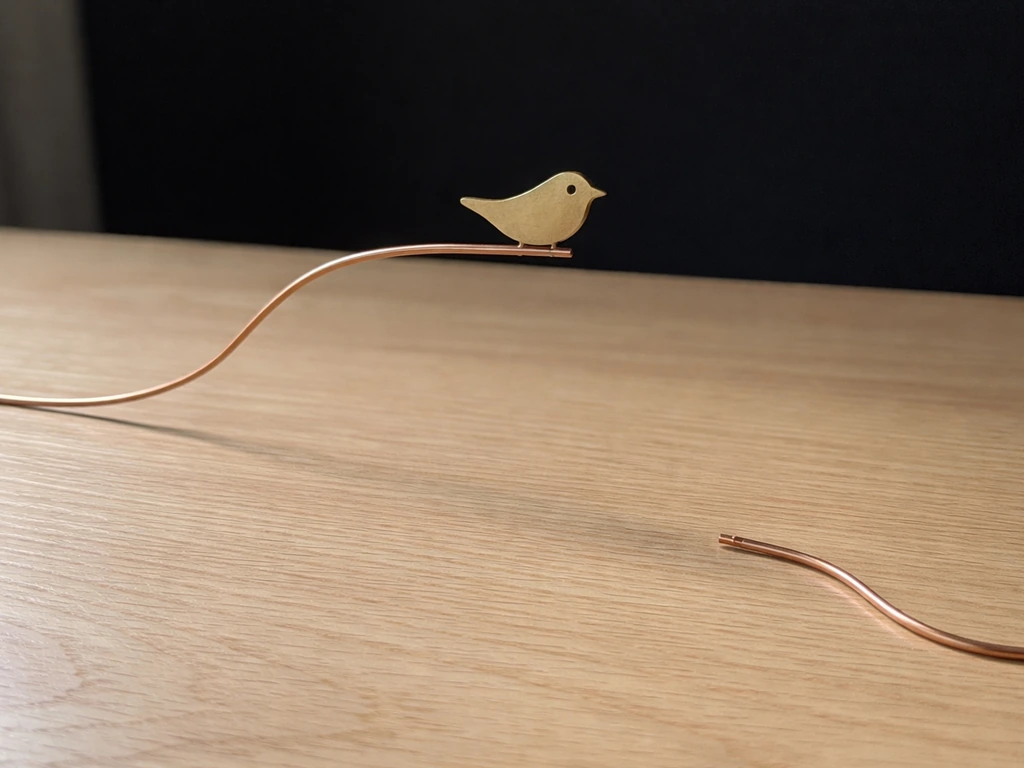
Think of electricity like water in a pressurized pipe. Pressure (voltage) alone doesn't make water flow. You need an opening, a path from high pressure to low, before anything moves. Power lines carry high voltage, but a bird perched on a single conductor is like a drop of water sitting on the outside of a pressurized pipe. The pressure is there, but there's nowhere for the water to go.
Electricity needs a complete circuit to flow. A single energized wire, by itself, is not a complete circuit. The bird sitting on it is not touching the ground, not touching a grounded structure, and not touching a second wire at a different potential. As APS (Arizona Public Service) puts it directly: birds can sit on a power line and not get shocked because they are not touching the ground or any other grounded object. MGE (Madison Gas and Electric) echoes the same principle in its public safety materials: electricity needs a complete circuit to flow, and a bird in contact with only one wire doesn't provide one.
This is also why the bird on the wire is safe in the first place: the wire itself isn't the hazard. The hazard is what else the bird might touch at the same moment.
How current actually flows (contact points, grounding, and bird anatomy)
Current takes the path of least resistance between two points of differing potential. For a bird to be electrocuted, it has to bridge those two points with its body. That bridge can form in a few ways: touching two energized conductors at different phases simultaneously, or touching one energized conductor while also touching a grounded metal component (like the pole hardware or cross-arm). In either case, the bird's body becomes the wire connecting two sides of a circuit, and current flows through it.
Bird anatomy adds a layer of protection that's often overlooked. Feathers are poor electrical conductors. As long as a bird is dry and only contacting one point, its feathers act as a partial insulator between the conductor and the skin. Current conduction tends to occur at bare-skin contact points: the talons, the beak, or exposed skin patches. This matters because it means the risk isn't just about where a bird lands, but which parts of its anatomy are making contact and with what.
This is exactly why a bird doesn't get a shock under normal perching conditions. The feet are close together on a single conductor, the rest of the body is in the air, and the bare-skin contact points (talons) are both at the same potential. The circuit never closes.
When birds do get electrocuted: scenarios that complete the circuit
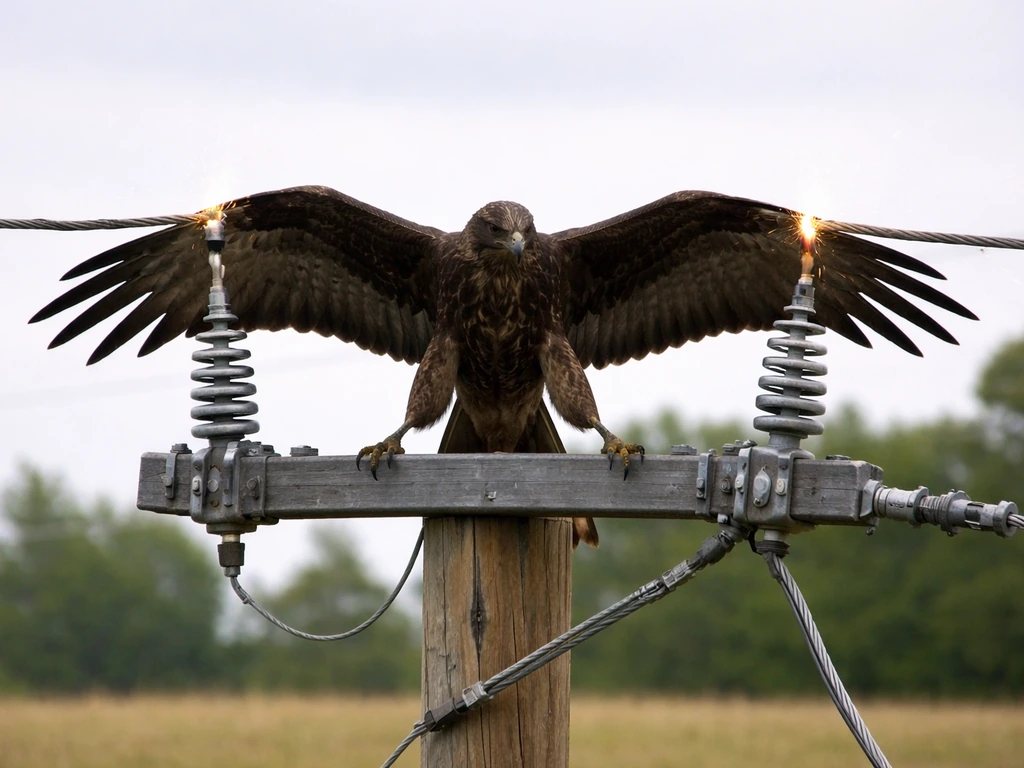
The risk becomes very real the moment a bird bridges two components at different electrical potentials. The USGS is clear on this: if a bird's appendages bridge the gap between two energized parts, or between an energized part and a grounded metal part, electricity flows through that bridge and the bird is electrocuted. The mechanism isn't mysterious once you understand circuits, but the circumstances that cause it are worth knowing in detail.
Large birds are disproportionately at risk. A red-tailed hawk or a bald eagle has a wingspan that can easily span the gap between a live conductor and a grounded cross-arm on a distribution pole. Raptors tend to favor these poles as perches and launch points precisely because they offer height and visibility, putting them in contact with exactly the kind of infrastructure geometry that creates bridging risk. As MIT explains, the danger scenario is when a bird stretches a wing or leg to touch a second wire with a different potential: that opens a path for current through the bird's body.
The scale of the problem is documented. A German study recorded along just 11 kilometers of medium-voltage overhead line in October 2000, where 200 kestrels and 48 steppe eagles were killed by electrocution. That's a stark number for a short stretch of line, and it illustrates how distribution infrastructure, not just high-tension transmission lines, poses genuine hazard to bird populations.
Cambridge Core research on raptor electrocution in Asia identifies three distinct circuit-completion scenarios: a bird simultaneously contacts two phases, a bird contacts a phase while its perching site is earthed (grounded), or arcing occurs from a phase to a grounded bird nearby. That third mechanism, arcing, is particularly underappreciated. A bird doesn't have to physically touch two points to be electrocuted. At high enough voltages, electricity can jump an air gap to complete the circuit, which is part of what can get a bird electrocuted on a wire even without direct multi-point contact.
Behavioral factors also raise risk. The USFWS notes that birds can be electrocuted when flying on or off a distribution pole, and that when large numbers of birds roost simultaneously, lines can sway enough that birds make unintended electrical connections. A crowded roost site isn't just a nuisance: it's a scenario where the odds of bridging increase with every additional bird.
Real-world factors that change conductivity (wet feathers, debris, insulation issues)
The "feathers as insulation" protection has limits. USGS research is specific: feathers are poor conductors, but conduction can occur if contact is made at bare skin, talons, or beak, or if the feathers are wet. Wet feathers improve current flow through the bird significantly. A bird that lands on a distribution pole after heavy rain, with waterlogged feathers, is in a meaningfully different risk situation than a dry bird on a sunny day.
Beyond moisture, physical debris on or around conductors matters. Nesting material, accumulated grime, or damaged insulation can create unintended conductive pathways between components that are supposed to be isolated. A bird landing on a nest built across energized hardware may inadvertently complete a circuit that wouldn't exist on clean equipment. This is one reason utility companies monitor and clear nesting from certain structure types, not just for fire risk but for avian electrocution risk as well.
Insulation degradation on older lines is another real factor. When insulating covers crack, harden, or fall away, they expose conductors and hardware that were previously protected. A bird perching on what looks like an insulated surface may actually be in contact with energized metal underneath. This is especially relevant near poles that see heavy raptor use, where repeated landing and gripping can accelerate wear on protective coverings.
It's also worth noting that the physics here shares some overlap with storm-related electrical hazards. If you've ever wondered whether a bird can get struck by lightning, the same circuit-completion principle applies: a strike creates a massive, instantaneous voltage gradient that can overwhelm the usual protections. Storm conditions that damage lines also increase the likelihood of exposed conductors, ground faults, and other hazards that raise bird electrocution risk significantly.
What to do if you see a bird on a power line
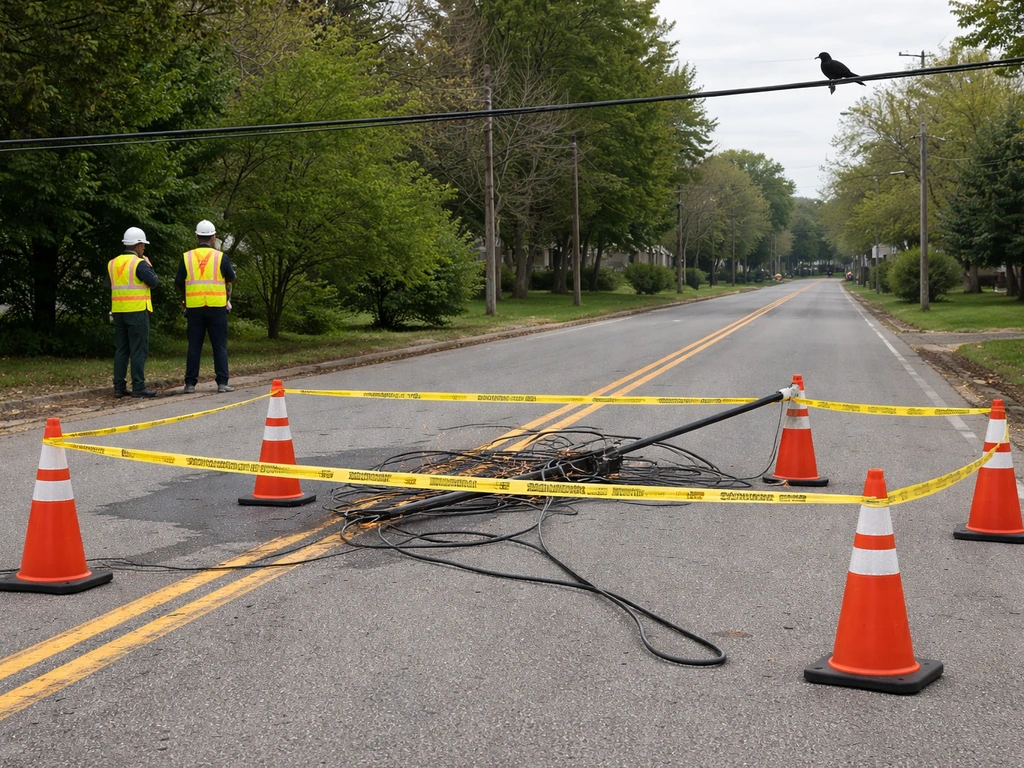
If you spot a bird sitting calmly on a single wire, you don't need to do anything. That bird is almost certainly fine. The physics is working in its favor. But a few scenarios warrant attention and a clear-headed response.
If you see a bird near a downed power line, treat the situation as a life-safety emergency, for you and anyone nearby, before worrying about the bird. Southern California Edison's public safety guidance is direct: always treat downed power lines as energized, keep at least 100 feet away, do not touch anything in contact with energized equipment, and warn others to stay back. PG&E gives the same instruction: if you see downed power lines, stay away and call for help. A bird on or near a downed line may already be injured or dead, but approaching it puts you in the current's path.
If you see a bird that appears injured near power infrastructure but there's no downed line, keep people and pets away from the area and contact a licensed wildlife rehabilitator. Don't attempt to pick up a potentially electrocuted bird yourself. Birds that have been electrocuted often have internal injuries that aren't visible, and a disoriented or injured raptor can cause serious harm.
For non-emergency concerns, like a nest built on a utility pole or vegetation growing into power lines, Hawaii's DCCA recommends contacting your local electric utility directly. Utilities typically have processes for handling these situations safely, and many have avian protection programs that handle nest relocation in coordination with wildlife regulations.
Reducing bird-power-line risks for pet owners and professionals
If you keep birds of prey, work in facilities near power infrastructure, or are involved in habitat or land management near distribution lines, there are concrete things you can do to reduce risk.
For facility and utility professionals
The Avian Protection Plan (APP) guidelines developed by APLIC (Avian Power Line Interaction Committee) represent the most comprehensive framework for reducing bird electrocution on distribution infrastructure. The core strategy is simple in principle: cover energized conductors and hardware so birds can't simultaneously contact components at different electrical potentials.
Mitigation strategies described by the American Eagle Foundation, in coordination with information sanctioned by APLIC, include insulating or covering energized hardware and using perch guards or triangular plastic deterrents to redirect birds away from dangerous perch points cover energized conductors and hardware so birds can't simultaneously contact components at different electrical potentials.
In practice, this means insulating covers over conductors and insulators, perch guards that redirect birds away from dangerous contact zones, and addressing spacing issues where energized and grounded components are close enough to be bridged by a large bird.
Products like insulator covers and raptor guard vertical-mount spikes are designed specifically for this purpose. The spikes aren't intended to harm birds: they're physical deterrents that discourage perching on high-risk spots like cross-arms and pole tops, redirecting birds to safer locations. When adequate spacing between components can't be achieved through structural redesign, insulating/covering materials and perch guards become the primary mitigation tools.
The USFWS draws an important distinction here: the evidence base for electrocution prevention on distribution poles is strong and well-established, while the science around collision prevention on transmission lines is still evolving. If you're prioritizing resources, distribution pole retrofits have the clearest proven benefit for bird safety.
Understanding why a bird can sit harmlessly on a high tension wire is the foundation for knowing which infrastructure is actually dangerous: it's not the wire itself, it's the pole hardware, cross-arms, and anywhere two components of different potential are close together.
For bird owners and hobbyists
If you own large birds like parrots, raptors used in falconry, or other species that spend time outdoors, be aware of what's near your aviaries, training areas, or outdoor perches. Power lines running close to outdoor flight areas create genuine risk if a bird escapes or is flown nearby. Keep outdoor enclosures and flight areas a safe distance from distribution poles in particular, since these are the structures where close-together energized and grounded hardware creates the highest bridging risk.
It's also worth knowing that why a bird doesn't get an electric shock in normal circumstances has nothing to do with any special biological adaptation. Your pet bird has no innate protection against electrocution beyond the physics of circuit completion. If it lands on a pole cross-arm and touches both energized and grounded hardware simultaneously, the same rules apply as to any wild bird.
For those in habitat management or land stewardship roles, it's worth considering that a nest's survival through a storm doesn't eliminate the hazard that power lines pose to nesting birds. The USFS and various wildlife agencies note that whether a bird nest can survive a storm is a separate question from whether the structure it's built on is electrically safe. Nests built directly on or spanning energized hardware are a hazard to both the birds and the lines themselves, particularly in wet weather.
The bottom line on birds and power lines
The reason birds don't get electrocuted on power lines under normal conditions is simple physics: no circuit, no current, no shock. A bird on one wire with both feet at the same potential is as safe as a rubber-soled person touching one terminal of a battery. The danger enters the picture the moment a bird bridges two points at different potentials, whether that's two conductors, a conductor and a grounded pole, or through arcing at close range. Wet feathers, large wingspans, crowded roosts, aging insulation, and pole hardware geometry are the real risk factors, not the wires themselves.
If you want a practical takeaway: watch where birds perch, not just what they perch on. The wire is almost always fine. The pole, the cross-arm, the transformer hardware, that's where the physics gets dangerous.
FAQ
Why is a bird more likely to be shocked during rain or right after a storm?
Because the circuit problem changes. A bird in a wet nest, on a rain-soaked pole, or with waterlogged feathers can conduct more readily at the talons and skin contact points. Dry, one-wire perching is usually low risk, but wet conditions make bridging and arcing more likely.
If I see a bird near a power line after it went down, what should I do before calling anyone?
Treat it as possibly energized. A bird may be on the ground or on a nearby surface while still in the shock zone, and electricity can spread through wet soil or other conductive paths. Keep people and pets back until the utility declares the area safe.
If a bird looks fine on a pole, could it still be electrocuted or at risk?
Don’t assume it is “safe because it’s only a bird.” If the bird is close enough to touch two different potential points (for example, cross-arm hardware plus a conductor), it can be electrocuted even if it seems calm. The safer assumption is that any bird on or near energized infrastructure could be in danger or already injured.
Can birds get shocked without touching two different points at the same time?
Yes, and it’s easy to miss. Arcing can occur when a bird is close enough for electricity to jump an air gap, so it may not need to touch two spots. This is more plausible on high-risk distribution geometry and in conditions that increase conductivity, like high voltage, dampness, or conductive debris.
Where on a utility pole are the highest-risk perching spots for large birds?
The highest-risk cases are usually where energized and grounded hardware are close enough for a large bird to bridge, such as pole tops, cross-arms, and areas where spacing forces wide leg or wing extension. Small songbirds can still be affected, but large birds and raptors with larger wingspans have more opportunities to connect points.
Do feathers always protect birds from electric shock when they land on power lines?
Feathers provide limited insulation mainly when contact is through talons and the bird remains dry. Wet feathers, bare-skin contact, or damaged/contaminated insulation reduce that “buffer,” so the bird’s risk increases even though it is still perched on what looks like a single wire.
What’s the safest response if I find an injured bird near a power pole but I don’t see a downed line?
If you need to act, your goal is separation, not rescue. Move people and pets away, and contact a licensed wildlife rehabilitator for birds, or the electric utility for anything involving downed or possibly energized lines, nests on structures, or repeated bird electrocution at a site.
How do raptors and other birds of prey change the risk compared with smaller birds?
Birds of prey also create additional risk through behavior. Perching for long periods, repeated wing or leg stretching, and using poles as launch points can repeatedly place their body in positions that bridge conductors and grounded parts.
Is a bird ever electrocuted even if it appears to be touching only one conductor?
A “single wire” can still be part of a system. If the bird is also contacting a nearby grounded component (pole hardware, cross-arm metal, ladder rungs, or a nearby conductor at a different potential), the circuit can close. So the key question is what else the bird’s body might touch simultaneously.
What types of utility or property upgrades are most effective at preventing electrocution on distribution lines?
Many “bird-safe” fixes involve changing how birds can physically contact conductors and hardware, not just adding insulation. Examples include perch guards that redirect birds away from cross-arms and insulated covers on conductors and certain insulator regions, because the harmful circuits often involve specific hardware geometry.
If a bird nest survives a storm, does that mean the power-line hazard is gone?
Yes. If you manage land, note that hazards depend on the structure, spacing, and exposure, not just whether birds nest successfully. A nest that survived a storm can still be on energized hardware, spanning risky gaps, or exposed to conductive debris after rainfall.