
Yes, killing a state bird is almost certainly illegal in the U.S., but not specifically because it is a state bird. The state bird designation is symbolic. What actually makes killing one illegal is a separate layer of wildlife protection laws: federal statutes like the Migratory Bird Treaty Act (MBTA), state wildlife codes, and sometimes additional federal protections like the Bald and Golden Eagle Protection Act. Whether a specific killing is a crime, and how serious a crime, depends on the species involved, your state, the circumstances, and whether you had any kind of permit or authorization. You can get a clearer answer by checking the federal Migratory Bird Treaty Act, your state wildlife code, and any relevant permit rules for the species and situation is it illegal to kill a bird.
Is It Illegal to Kill a State Bird? US Legal Answer

The law is actually three layers, not one
Most people assume there is one clean rule covering state birds. There is not. The legal reality is stacked: federal law sits on top, state law fills in below it, and local ordinances occasionally add more restrictions on top of both. Understanding which layer applies to your situation is what actually tells you whether something is legal.
At the federal level, the Migratory Bird Treaty Act (16 U.S. Code § 703) makes it unlawful to pursue, hunt, take, capture, kill, or possess most wild birds in the U.S. without authorization. The MBTA covers the vast majority of common bird species, including most state birds. Northern cardinals (North Carolina's state bird), western meadowlarks (Nebraska's and Montana's state bird), northern flickers (Alabama's state bird, the 'yellowhammer'), and hundreds of other species all fall under MBTA protection regardless of what any state calls them ceremonially. The federal law does not care about the symbolic designation at all.
If a state bird also happens to be a bald or golden eagle, the Bald and Golden Eagle Protection Act adds another layer on top of the MBTA, with its own set of stronger prohibitions and criminal penalties. That applies to two states: Utah (golden eagle) and American Samoa. For everyone else, the MBTA is the main federal concern.
Below the federal layer, every state has its own wildlife code that independently regulates the taking, possession, and harassment of birds within its borders. Even if a species were somehow not covered by the MBTA (rare, but it happens with some non-migratory species), state law would still apply. Some states have stronger protections than federal minimums; others rely almost entirely on federal coverage. Local ordinances occasionally add another layer in municipalities, but those mostly address things like feeding, nesting on structures, or nuisance control.
What 'kill' actually means under these laws
The legal definition of 'take' under the MBTA is deliberately broad. Under 50 CFR § 10.12, take includes pursuing, hunting, shooting, wounding, killing, trapping, capturing, or collecting a migratory bird, or any attempt to do those things. Harassment that results in injury or death also qualifies as prohibited take under FWS interpretation. The protection extends beyond the bird itself to any part, nest, or egg of a protected species. That means destroying an active nest, crushing eggs, or cutting down a tree with an active nest inside can all constitute unlawful take, even if you never touch the bird directly. This is why destroying bird nests often raises the same legal issues as harming the birds themselves active nest, crushing eggs, or cutting down a tree with an active nest inside can all constitute unlawful take.
North Carolina's wildlife statutes go even further on nests, making it unlawful to intentionally destroy or substantially impair wildlife nesting and breeding areas or render them unfit through purposeful acts (G.S. § 113-291.1). This is a real criminal provision, not just a guideline, and it shows that state law can extend protections well beyond just the moment of killing.
Legal exceptions that actually exist
Exceptions do exist, but they are narrower than most people expect. The most important ones are: A depredation permit is required before any person may take, possess, or transport migratory birds for depredation control purposes under 50 C.F.R. § 21.100.
- Depredation permits: If a bird is causing documented property damage or agricultural loss, you can apply to USFWS for a depredation permit that authorizes take. You generally cannot just kill the bird and apply for the permit afterward (50 CFR § 21.100).
- Birds trapped inside buildings: Under 50 CFR § 21.14, there is a narrow MBTA exception for removing a migratory bird trapped inside a building if it is causing a health/safety risk or may injure itself. This exception does not cover eagles or certain other listed species, which require additional authorization.
- Licensed hunting seasons: For species that are also legal game birds (like some doves or woodcock), authorized hunting under a valid state license during an open season is legal. Most state birds are not legal game species, but a few overlap.
- Permitted wildlife rehabilitation: A licensed wildlife rehabilitator can receive, handle, and temporarily possess injured migratory birds under a USFWS rehabilitation permit (50 CFR § 21.76). Average members of the public cannot legally do the same thing without that permit.
- Endangered Species Act permits: If a state bird is also a federally threatened or endangered species, 'incidental take' permits under the ESA can authorize limited, accidental harm under specific conditions.
One myth worth addressing directly: being on your own property does not exempt you. If you are trying to figure out whether a particular action is illegal, start by checking whether the species is protected under the Migratory Bird Treaty Act and your state wildlife code being on your own property. The MBTA applies on private land. The species being common and abundant does not matter either. Cardinals and meadowlarks are not endangered, but they are still fully protected under the MBTA. The idea that 'it's legal if no one sees it' is just not how federal wildlife enforcement works.
What the penalties actually look like
MBTA violations are federal offenses. For penalty purposes, the CRS explains that taking a migratory bird under the MBTA is treated as a “strict liability” offense under 16 U.S.C. § 707 strict liability” offense under the MBTA. Most standard violations (killing or possessing a protected bird without authorization) are federal misdemeanors under 16 U.S. Code § 707, carrying fines and/or imprisonment. Selling or bartering migratory birds elevates the offense to a felony with significantly higher maximum penalties and can include forfeiture of equipment like traps, nets, or firearms used in the illegal take. Bald and golden eagle violations under BGEPA carry their own criminal penalty structure and are treated more seriously.
State penalties vary considerably. Some states treat unlawful take of a protected bird as a misdemeanor with modest fines. Others, particularly for species with additional state-level protection, can impose substantial fines and even jail time. States also commonly add civil restitution requirements, meaning you may owe the state a dollar value for the wildlife killed regardless of the criminal outcome. Enforcement tends to be complaint-driven at the state level, with conservation officers responding to reports from neighbors, property owners, or wildlife rehabilitators who receive injured birds.
Practically speaking, accidental killings (window strikes, vehicle collisions, unintentional captures) rarely result in prosecution, but 'accidental' is not a blanket defense. If the activity that caused the death was itself reckless or negligent, or if you then possess or keep the dead bird or its feathers, that possession itself can be a separate violation.
State bird protections go beyond just not killing them
A lot of people focus on the kill question, but the legal protection for state birds is actually broader than that in practice. Under the MBTA and many state wildlife codes, the following actions can all be unlawful even without a bird dying:
- Destroying or removing an active nest containing eggs or young
- Harassing a bird in a way that causes it to abandon a nest
- Trapping or capturing a bird without a permit
- Possessing a dead bird, feathers, or eggs you found (even if you did not kill it)
- Repeatedly disturbing a roosting or nesting area to drive birds away
The 'harassment' category is one people are surprised by. FWS technical guidance is clear that injury or death resulting from harassment constitutes prohibited take under the MBTA. So chasing a nesting bird repeatedly, using noise devices that cause nest abandonment, or similar actions can all create legal exposure even without a direct physical act against the bird. That said, passive deterrents (reflective tape, netting, physical exclusion from a structure before nesting begins) are generally acceptable and usually the right practical approach.
If a state bird is causing a real problem or emergency
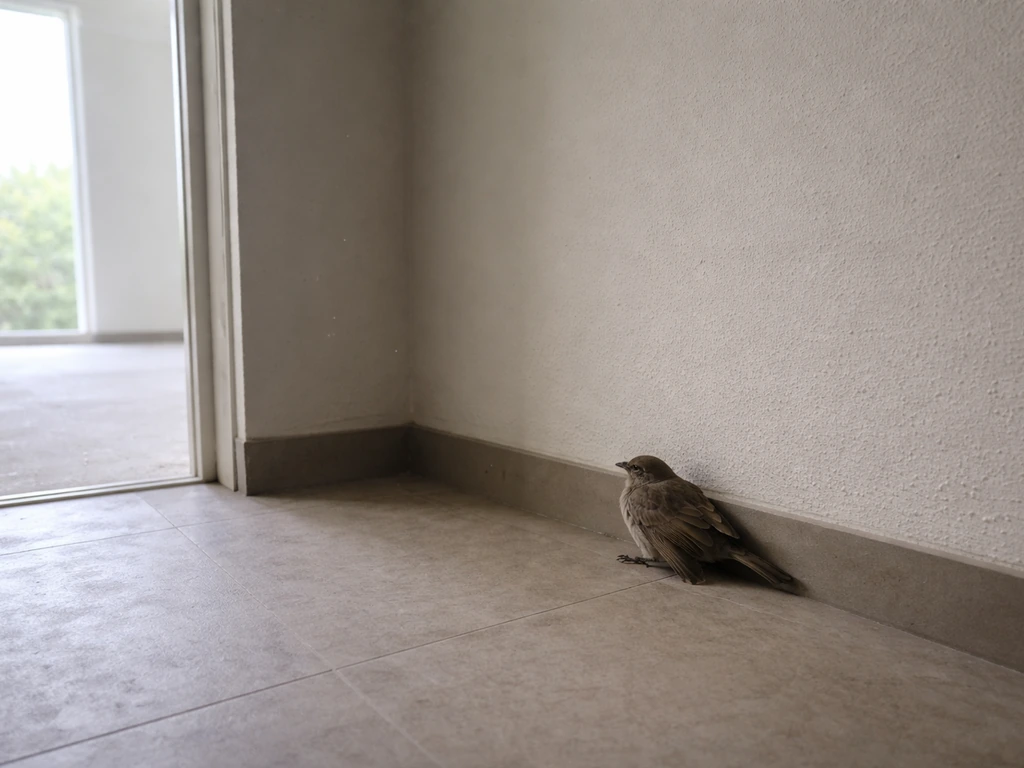
This is the question I get most often in practical terms: what do you do when a bird is actually causing a problem right now? The answer is almost always to call rather than act yourself. Here is how to handle the most common scenarios legally:
- Bird trapped inside a building: The narrow MBTA 'birds in buildings' exception (50 CFR § 21.14) may allow you to remove it if it presents a health/safety risk or is likely to injure itself. Open a window or door and guide it out if possible. If it is an eagle, call USFWS or a licensed rehabilitator before touching it, because eagles require separate authorization.
- Injured or orphaned state bird outdoors: Do not pick it up and try to nurse it yourself. Contact your state wildlife agency or a licensed wildlife rehabilitator. Iowa DNR guidance reflects what most states require: call a professional first, because possession of an injured migratory bird without a rehabilitation permit is itself a violation.
- Bird causing property damage: Document the damage, then contact USFWS to ask about a depredation permit. Do not take action first and apply after. The permit must come before the take.
- Bird posing an immediate physical threat: Genuine, imminent physical threat is a rare situation with birds, but if a large bird is actively attacking someone, moving away is the first and best response. If you must physically intervene to protect a person, that context matters in any subsequent legal review, but it is not a guaranteed defense and you should still report the incident.
- Bird nesting in a problem location: If the nest is active (has eggs or young), you generally cannot touch it legally. Wait until the nest is complete and the young have fledged, then remove it and install deterrents before nesting season begins again. Contact your state agency if you need guidance.
The consistent theme here is that wildlife agencies would much rather hear from you before something goes wrong than after. Conservation officers are generally more interested in compliance than prosecution, especially for people who contact them proactively and act in good faith.
What to do if you already harmed a state bird
If you accidentally or intentionally harmed a state bird and are wondering what to do now, acting quickly and transparently is almost always better than doing nothing. Here is a practical checklist:
- Stop any further contact with the bird, nest, eggs, or feathers. Do not pick up, keep, or relocate anything. Additional contact can add separate possession or disturbance violations on top of whatever already happened.
- Document what happened: write down the date, time, location, species (if known), and exactly what occurred, including whether it was accidental. Take photos if the bird or nest is visible and you can do so without further disturbance.
- Contact your state wildlife agency. Every state has a wildlife enforcement or conservation officer division. Report the incident honestly. For most accidental kills (window strikes, cats, vehicle collisions), this is often a short call and agencies typically provide guidance without pursuing charges against someone who reports in good faith.
- If the bird is injured but alive, ask the wildlife agency to direct you to a licensed wildlife rehabilitator. Do not transport it yourself unless the agency specifically authorizes it.
- If the incident was intentional or involved significant damage (a nest destroyed, multiple birds, an eagle), consult an attorney before making detailed statements to wildlife officers. This is not about deception; it is about understanding your rights and obligations before the conversation.
- Do not post about it on social media before you have spoken to the agency. Documented admissions complicate situations that might otherwise be handled informally.
The reality is that most people who end up in this situation did not set out to harm a bird. Wildlife agencies deal with accidental incidents regularly and are equipped to handle them. The worst outcomes generally come from people who panicked, hid the incident, and were found out later.
A quick comparison: state bird legal status at a glance

| Factor | What it means for legality |
|---|---|
| Bird is the state bird | No direct legal protection from designation alone; it is purely symbolic |
| Bird is covered by MBTA (most species) | Federal misdemeanor or felony to kill, take, possess, or disturb nests/eggs without authorization |
| Bird is a bald or golden eagle | Stricter federal protection under BGEPA; higher criminal penalties; requires separate permits |
| Bird is state-threatened or endangered | State wildlife code adds additional protection; penalties may be more severe than MBTA baseline |
| Kill was accidental | Reduces (but does not eliminate) legal exposure; possession of dead bird afterward can still be a violation |
| Kill was on private property | Does not exempt you; MBTA and state wildlife laws apply on private land |
| You had a valid depredation permit | Legal take within the permit's scope; no permit means no defense regardless of damage caused |
| Bird was trapped inside your building | Narrow MBTA exception may apply; eagles and some other species still require additional authorization |
Separating the myths from the real legal logic
A few persistent myths are worth addressing directly because they lead people into real legal trouble. The myth that 'birds are always protected no matter what' overstates it: exceptions and permits exist, and not every accidental incident results in prosecution. But the opposite myth, that common abundant birds can't really get you in legal trouble, is equally wrong. The MBTA does not require a bird to be rare. The myth that 'it's my property so I decide' has no basis in federal wildlife law. And the idea that 'accidents never count' ignores that possession of a dead protected bird, even one you found, is itself a potential violation.
The real legal logic is simpler once you strip the myths away: the species' biology and federal listing determine the baseline protection; your authorization (permit, license, or regulatory exception) determines whether your specific action was legal; and the context (intentional vs. accidental, proactive reporting vs. concealment) shapes how enforcement plays out in practice. State bird status is genuinely irrelevant to all of that, which is why it is worth understanding what actually governs these situations rather than fixating on the symbolic designation. In India, whether bird hunting is legal depends on wildlife protection statutes, permitted seasons, and species-specific rules bird hunting legal in india.
If you want to go deeper on related questions, the rules around what specific birds are prohibited to kill, whether bird nests carry their own legal protections, and the broader question of which birds are illegal to kill at all are each worth exploring separately, since the legal details shift meaningfully depending on the species and situation.
FAQ
If it is illegal to kill a state bird, is it because the bird is a state symbol?
In the U.S., “state bird” status alone usually does not create a separate protection. Instead, legality depends on whether the bird (or its nest/eggs) is protected under federal MBTA and your state wildlife code, plus whether you had any permit or regulatory authorization for that exact species and situation.
What if I do not kill the bird, I just try to drive it away from my property?
If you are just trying to scare birds away without touching them, passive deterrents are generally safer than active or harmful methods. Avoid repeated chasing, noise designed to disrupt nesting, or actions that could injure or kill birds, since harassment that leads to injury or death can still count as prohibited take.
Can it still be illegal if the bird survives?
Even if a bird survives, some actions can still be illegal if they constitute prohibited take, for example harassment that results in injury or death, or “take” by wounding. The safest approach is to stop the activity and contact a local wildlife agency for guidance when birds are being injured.
If I find a dead state bird, is it legal to keep it or take it home?
Possessing a dead protected bird, including feathers or parts, can be a separate violation from the original incident. If you found a dead bird, do not keep it, sell it, or display it, and contact your state wildlife agency or a wildlife rehabilitator about proper handling.
Do permits make it legal, and how do I know which one I would need?
A permit can change the legality, but permits are typically species-specific and tied to authorized activities, locations, and documentation. If you think an exemption might apply, identify the exact species and confirm the permit authority with your state wildlife agency and, if relevant, the federal rules that cover that bird.
If the nest is empty or it seems abandoned, can I remove it or destroy it?
Not necessarily. “Active” nests, eggs, and occupied breeding areas can be protected, and damaging habitat may be treated like prohibited take even without touching the bird directly. If birds are nesting in or near a structure, landscaping, or utilities work, pause and get instructions before proceeding.
What changes if the state bird is a bald or golden eagle?
If the incident involves eagles covered by the Bald and Golden Eagle Protection Act, penalties and compliance requirements are more stringent. Your state bird might be an eagle in some places, so confirm the species before assuming MBTA-only rules apply.
I accidentally hit a bird, does that make it automatically legal?
Whether a “window strike,” “vehicle collision,” or “unintentional capture” leads to enforcement depends on facts, but “accidental” is not a free pass. If you were reckless or negligent, or you later possess the bird or its parts, you can still face violations. The prudent step is to document what happened and contact wildlife authorities.
What should I do if the bird problem is happening right now and I need a quick solution?
Yes, certain conflicts are handled through agency coordination rather than self-help, for example when birds are nesting on buildings, creating health risks, or causing ongoing damage. Calling first is usually the fastest way to learn what options are allowed for that species, location, and time of year.
Does it matter if nobody saw what happened?
Enforcement priorities can differ, but some actions increase risk regardless of whether others witness it, such as keeping feathers, attempting to sell parts, or continuing the conduct after being warned. If you think you may have violated the law, reporting promptly and cooperating usually reduces the chance of a worse outcome.
Are common state birds allowed to be killed because they are not endangered?
If a bird is protected, “not rare” does not automatically mean “allowed.” Common birds like cardinals and meadowlarks are still protected under federal MBTA, so you should not assume abundance removes legal restrictions.
Does state bird protection depend only on state law, or can local rules matter too?
State bird laws do not control the federal baseline. Also, rules can change by municipality, especially for nuisance issues around structures. Confirm both your state wildlife code and any local ordinances that may restrict wildlife handling even if you believe federal law is the only issue.