If a horse has stepped on or near a bird and you heard a squeak, stop what you are doing, move the horse away from the area, and check whether the bird is still moving. That squeak could mean a direct hoof strike, a near-miss that startled the bird, or a bird vocalization that had nothing to do with contact at all. The first job is to figure out which scenario you are actually dealing with before you touch anything.
Horse Steps on Bird Squeak: What to Do Now

Marcus Whitmore
27 May 2026
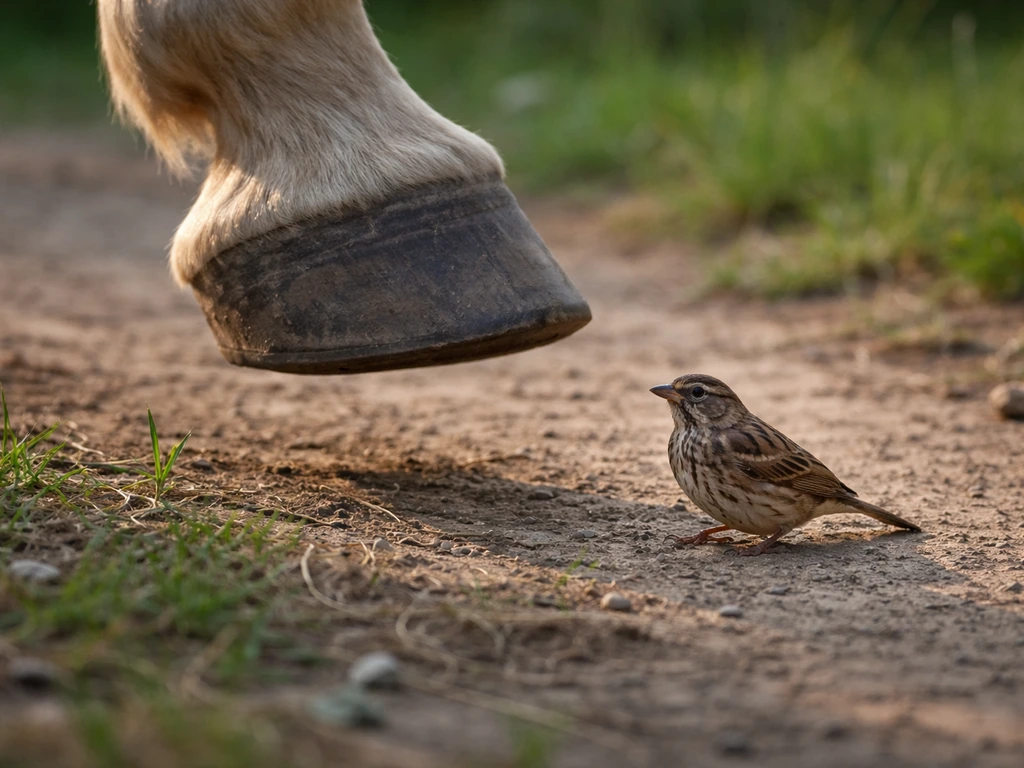
What 'horse steps on bird squeak' actually means, three scenarios to rule out
This phrase covers a surprisingly wide range of situations, and the right response depends heavily on which one you are in. Here are the three most common scenarios.
- Direct hoof contact: The horse's hoof came down on the bird's body. The squeak was likely a pain or distress vocalization from the bird. This is the most urgent scenario and requires immediate triage.
- Near-miss or trap: The hoof landed close enough to pin a wing, tail, or foot without full body contact. The bird may be temporarily immobilized or in shock even without a crushing injury.
- Alarm or startle call: The horse stepped nearby and the bird issued a sharp alarm call but was not struck. Many ground-nesting and ground-feeding birds, including killdeer, produce sharp 'dee' calls or bubbling trills specifically when alarmed. The squeak you heard may have been a warning, not a pain response.
Identifying the scenario matters because your response is different in each case. A bird that was not touched at all may simply fly off once the horse moves away. A bird that was pinned or struck needs careful observation and possibly containment. The sections below walk you through distinguishing between these outcomes quickly.
Immediate safety steps, for you, the horse, and the bird
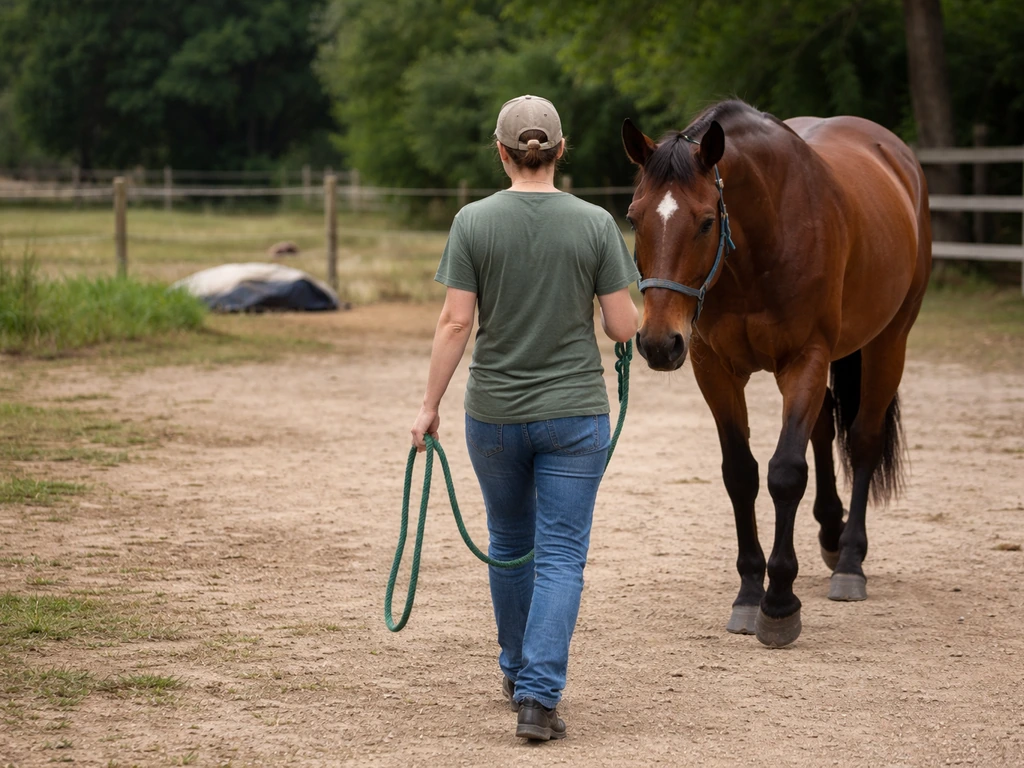
Your safety and the horse's calm come first, because a spooked horse near a downed bird only makes things worse. Here is the order of operations.
- Move the horse away from the area. Lead it calmly to a stall, paddock, or tied position well away from where the bird is. Do not rush or startle the horse in the process.
- Remove any other animals. If dogs or other pets are present, get them out of the area first. U.S. Fish and Wildlife Service guidance specifically emphasizes removing pets before approaching injured wildlife, because a secondary animal encounter can cause additional harm.
- Keep children and bystanders back. Ask anyone not actively helping to step away. A quiet environment is critical for the bird and safer for everyone.
- Observe the bird from a few feet away before touching it. Watch for movement, breathing, and posture. Give yourself 30 to 60 seconds to assess before reaching for it.
Once the horse and other animals are clear, crouch down and watch the bird. Is it upright? Is it moving? Is it trying to fly? These visual cues tell you a lot before you ever make contact.
Can a horse's hoof actually hurt a bird, and what injuries to look for
A horse hoof exerts enormous downward force. Even a light-breed horse weighs 900 to 1,100 pounds, and that weight concentrated on a small hoof surface can be catastrophic for a bird. A direct strike can cause blunt force trauma to soft tissues, internal hemorrhage, rib or keel fractures, spinal or leg fractures, head trauma, and in severe cases, immediate death. The reality is that birds are far more fragile under direct compression than they appear. Their hollow, air-filled bones are optimized for flight, not for absorbing ground impacts.
One important nuance: birds are also skilled at hiding injury. The Merck Veterinary Manual notes that wild birds routinely mask symptoms of illness and trauma as a survival mechanism, which means a bird that looks calm or quiet after an incident may still be seriously hurt. Do not interpret stillness as a good sign on its own.
Here are the specific signs to look for when you observe or carefully handle the bird after a suspected hoof contact:
- Wing droop: One wing hanging lower than the other or held away from the body at an abnormal angle. This is a reliable indicator of fracture or soft tissue damage.
- Inability to stand or perch: If the bird cannot right itself, hold its legs under its body, or grip a surface, this indicates shock, neurological impact, or leg/keel injury.
- Open-mouth breathing or tail bobbing: Both are signs of respiratory distress. The Merck Veterinary Manual lists these as primary triage markers after avian trauma.
- Active or dried bleeding: Blood on feathers, around the beak, nares, or vent area is an emergency indicator.
- Fluffed feathers, cold to the touch, eyes half-closed: Classic signs of shock in birds. SpectrumCare describes avian shock as a critical state triggered by blood loss and trauma, presenting as weakness, fluffed appearance, and sudden inability to perch.
- Lethargy and unresponsiveness to nearby movement: A bird that does not react when you approach slowly is in serious distress.
- Ataxia or head tilting: Inability to coordinate movement or an obviously tilted head suggests head trauma or spinal involvement, consistent with RSPCA guidance on ataxic presentation post-trauma.
If you see none of these signs and the bird flies away within a minute or two of the horse being moved, that is a genuinely positive outcome. But if the bird is on the ground and showing any of the above, move to the next steps.
What to do next: stabilization, containment, and when to call for help
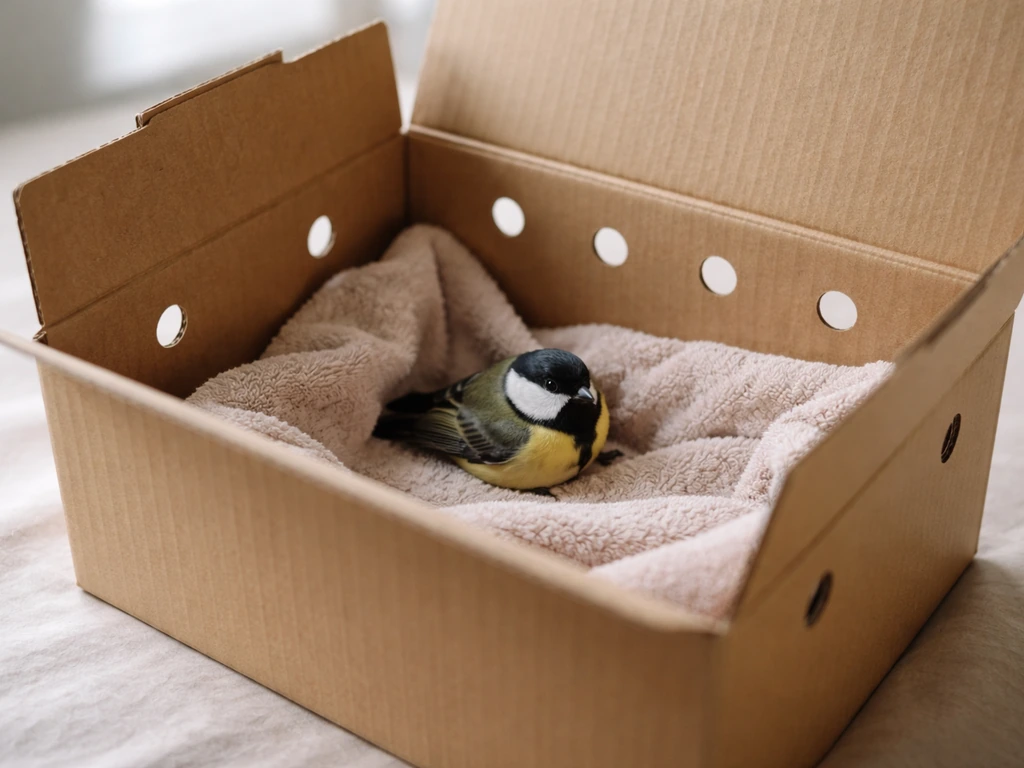
Safe containment, the most important thing you can do right now
If the bird is injured and cannot fly, your job as a lay responder is containment and warmth, not treatment. Humane Society Veterinary Medical Association (HSVMA) wildlife care guidance similarly emphasizes keeping an injured bird warm and in a dark, quiet place and not offering food or water during lay stabilization before rehab or veterinary care [containment and warmth, not treatment](https://www. humanevma. org/assets/pdfs/hsvmawildlifecare_handbook.
pdf). Tufts Wildlife Clinic, Audubon, and the Golden Gate Bird Alliance all give essentially the same instruction: place the bird in a dark, quiet, ventilated container (a cardboard box or shoebox lined with a cloth or paper towel works well), keep it warm, and do not give food or water. The warmth and darkness reduce stress, which is itself life-threatening in a traumatized bird.
The ban on food and water is not arbitrary, it is because the wrong food can cause metabolic harm, water can be aspirated into injured airways, and feeding delays proper care.
If the bird feels cold, place the box on one end of a heating pad set to its lowest setting. The bird should be able to move away from the heat source if needed. Fully feathered adult birds may not need added warmth, but a cold or wet bird almost always does. Keep the box away from loud noise, direct sunlight, and vibration.
Handling the bird safely
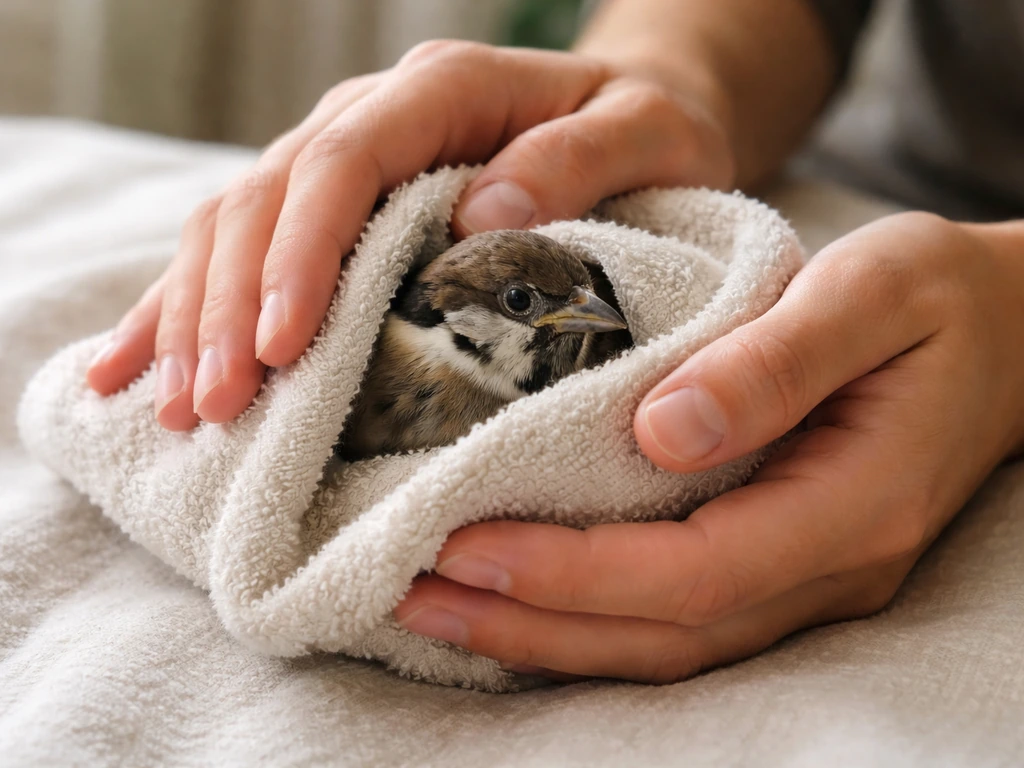
Use a light cloth or towel to pick up the bird. Wrap it loosely so its wings are held gently against its body but it can still breathe. This reduces flailing, which can worsen fractures. Keep handling to an absolute minimum. The Merck Veterinary Manual explicitly warns that captured wild birds can experience complications from handling itself, and the goal is to get the bird contained as quickly and calmly as possible, not to examine every injury yourself.
Who to contact, and how fast
Contact a licensed wildlife rehabilitator as soon as the bird is stabilized in its box. The CDC recommends reaching out to a wildlife rehabilitator or your state wildlife agency for animals that are badly injured or very sick. You can find a permitted rehabilitator near you through the National Wildlife Rehabilitators Association directory or by calling your state fish and wildlife agency. Audubon's guidance makes the decision boundary clear: if the bird does not fly away when given the chance, or if you can see obvious injury like bleeding or a broken wing, you need to make that call.
If it is after hours and no rehabilitator answers, Golden Gate Bird Alliance advises keeping the bird in a dark box overnight for stabilization until you can reach someone in the morning. That is a reasonable bridge, but do not delay beyond the next morning. Internal injuries, shock, and infection progress quickly in small birds.
One practical note: if the bird is a species protected under the Migratory Bird Treaty Act (which covers most wild songbirds, shorebirds, and waterfowl in the U.S.), you are not legally permitted to keep it in your possession beyond the time it takes to get it to a licensed rehabilitator. This is not a reason to avoid helping it, but it is a reason to make that call quickly.
Preventing this from happening again, practical strategies for horse environments
Horse barns, paddocks, and arenas are attractive to birds. Grain, feed spills, water sources, insects in manure and bedding, and the structural features of barns all draw birds in close contact with horses and their hooves. Here is how to reduce the risk.
Manage feed and attractants
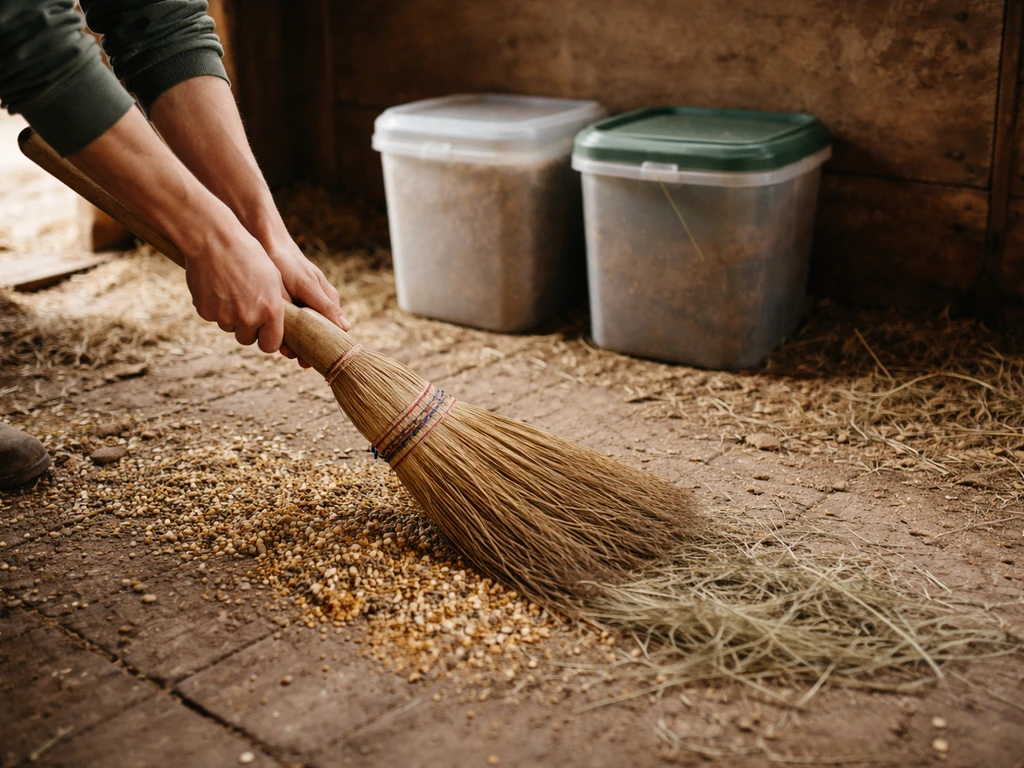
Spilled grain and hay on stall and arena floors is the single biggest draw for ground-feeding birds. Sweep feeding areas after every meal. Store feed in sealed containers. Avoid throwing loose grain directly on the ground in areas where horses are worked or turned out. If you use bird feeders anywhere near the barn or paddock, move them at least 30 feet away from high-traffic horse areas.
Modify barn and arena structure
- Install fine mesh or bird netting over open stall windows and barn eaves to prevent birds from nesting in areas where they will inevitably come into contact with horses.
- Check for reflective glass surfaces in or near arenas. Bird Collision Prevention Alliance guidance notes that glass reflecting habitat can trap birds in repeated collision cycles. Cover or break up reflections on any large glass panels.
- If birds are nesting in active stall areas, address this before nesting season begins rather than trying to relocate a nest mid-season.
Mowing and ground management
The Pennsylvania Game Commission recommends keeping grass at least 3 inches tall and avoiding mowing between April and August when ground-nesting birds are most active. If you mow paddock edges or the areas surrounding arenas during that window, you risk disturbing or injuring nesting birds that are completely invisible until it is too late. Schedule major grounds work for late summer or early fall when possible.
Supervision during high-risk conditions
Ground-feeding birds are most active in early morning and late afternoon. If you notice birds frequently foraging in a paddock or arena, supervise horses more closely during those windows or temporarily exclude birds from the area using visual deterrents (reflective tape, fake predator decoys moved regularly) while you work through longer-term habitat modifications.
Myths vs. facts about bird squeaks and what they actually mean
A squeak or sharp call from a bird near a horse does not automatically mean the bird was struck and is dying. Many people also compare what happened in similar cases on sites like Reddit, including posts about a horse stepping on a bird horse steps on bird reddit. This is probably the most important myth to clear up, because the misinterpretation causes people to either panic unnecessarily or, conversely, dismiss a genuine injury because the bird seems vocal and 'alert.'
| Myth | The Reality |
|---|---|
| A bird squeaking means it was hit and is seriously injured. | Bird squeaks and sharp calls are often alarm vocalizations triggered by a nearby threat, not pain responses. Cornell Lab of Ornithology research on killdeer describes sharp 'dee' calls that intensify when birds are alarmed, with no physical contact involved. |
| A quiet bird after a hoof contact is uninjured. | Silence can be a sign of serious injury or shock. The Merck Veterinary Manual explicitly notes that birds mask injury as a survival mechanism. A quiet, fluffed, and still bird after trauma is more concerning than a vocalizing one. |
| If the bird is still moving, it's fine. | Movement and flight ability can persist even after significant internal trauma. Tufts Wildlife Clinic notes that window-strike birds often look ambulatory minutes before dying from internal hemorrhage. The same principle applies to blunt trauma from hooves. |
| Giving the bird water will help it recover. | Water given to an injured bird can be aspirated into the airway, causing aspiration pneumonia. Multiple authoritative sources, including Audubon, Tufts, and the Golden Gate Bird Alliance, explicitly say do not give food or water. |
| You can treat a hoof-struck bird at home with basic first aid. | You cannot. The Merck Veterinary Manual cautions that improvised home care with incorrect technique causes additional harm. Your role is containment, warmth, and getting the bird to a licensed rehabilitator as fast as possible. |
| A bird that squeaks and then hops away is definitely fine. | Possibly true, but not certain. Monitor from a distance. If the bird cannot sustain flight, returns to the ground quickly, or shows any of the injury signs listed above, treat it as injured regardless of initial movement. |
The Environmental Literacy Council makes a useful point here: vocalizations are one indicator of distress, but body language and overall behavioral context matter just as much as the sound itself. A bird that squeaks and immediately flies a normal flight path to a tree is almost certainly fine. A bird that squeaks, flutters, and ends up grounded needs help. Read the whole picture, not just the sound.
If you are researching this after the fact, related scenarios like a dog stepping on a bird or other large animal contacts follow similar triage logic. The core principles of minimal handling, warmth, darkness, no food or water, and prompt contact with a licensed rehabilitator apply across all of them. The horse-specific element is mainly in the prevention side, because barns create a unique confluence of bird attractants and large hooved animals that most other environments do not. Audubon’s collision-prevention approach emphasizes blank" rel="noopener noreferrer">reducing window reflections and managing plants visible within windows or atria to lower the chance of structural strikes.
FAQ
I heard a squeak, but I never saw the hoof hit the bird. Do I still need to check for injury?
If you did not see any bird go down, focus on the bird’s behavior as your “go/no-go” rule. If it flies off normally within a minute or two of the horse moving away, you can usually stop at a brief check. If you see any sign of being grounded, off-balance movement, or ongoing distress (staggering, dragging one side, repeated flutters), treat it as injured and contact a rehabilitator.
What if the bird seems alert after the squeak, should I still be worried?
Assume a risk exists even if the bird looks lively. Small birds can appear calm while still having internal trauma, especially after direct pressure. A bird that remains on the ground, keeps flapping without gaining height, or shows breathing effort (open-mouth breathing, tail bobbing) needs stabilization and a call to a wildlife rehabilitator.
Can I offer the bird water or food while I wait for help?
Do not feed, give water, or offer “soft food” or seeds, even if the bird appears awake. In injured birds, food can worsen metabolic stress, and liquids can be aspirated into airways. Warm, dark, ventilated containment, minimal handling, then rehabilitator guidance is the safer sequence for lay responders.
Should I use a heating pad, and how do I avoid overheating the bird?
Yes, but do it in a way that prevents overheating and allows escape from the warmth. Place the container on one end of a low setting heating pad so the bird can move away. If the bird feels hot to the touch, smells scorched, or shows extreme panting, remove the heat and keep it in a stable dark room.
What should I do if there’s visible bleeding or a broken wing?
If the bird is bleeding or has a visible break, the priority remains containment and warmth, not improvised first aid. Avoid applying ointments, trying to straighten fractures, or bandaging tightly. Use loose wrapping only to limit flailing during transport, then call a rehabilitator as soon as possible.
What kind of container is safest if I need to keep the bird overnight?
Dark and quiet helps, but ventilation is not optional. Use a box with small air gaps or breathable sides, keep the lid secure, and avoid airtight containers. Also keep the box away from exhaust, fans, or strong odors, because respiratory stress can worsen quickly in small birds.
The horse is still restless. How should I manage the situation while checking the bird?
If you can safely do so without chasing, move the horse away and then reassess the bird from a distance first. If the horse is agitated, do not attempt to retrieve the bird immediately. Your best order is safety, horse calm, then bird observation, then containment if the bird is grounded or injured.
Is it legal to keep the bird overnight or until I can find a rehabilitator?
Yes. In the U.S., most native wild birds are protected, and keeping an injured bird is generally not legal beyond getting it to a permitted wildlife rehabilitator. If you cannot reach one the same day, keep the bird in a dark box overnight only as a short bridge, and call immediately in the morning.
How do I decide whether to keep handling to a minimum, or if I should examine the bird more closely?
Avoid routine “no contact” troubleshooting like repeatedly picking up the bird to check the injury. Handling can increase shock and worsen fractures. Instead, check the key signs once, then proceed with containment and a call, keeping handling to the minimum needed for transport.
What are practical prevention steps if this happens repeatedly at the same barn?
To reduce repeat incidents, identify predictable triggers. If birds are repeatedly using the same ground-feeding spots, remove attractants first (especially spilled grain) and adjust barn routines during peak foraging times (early morning, late afternoon). Also screen reflective tape and decoys to rotate regularly, because birds can habituate quickly.