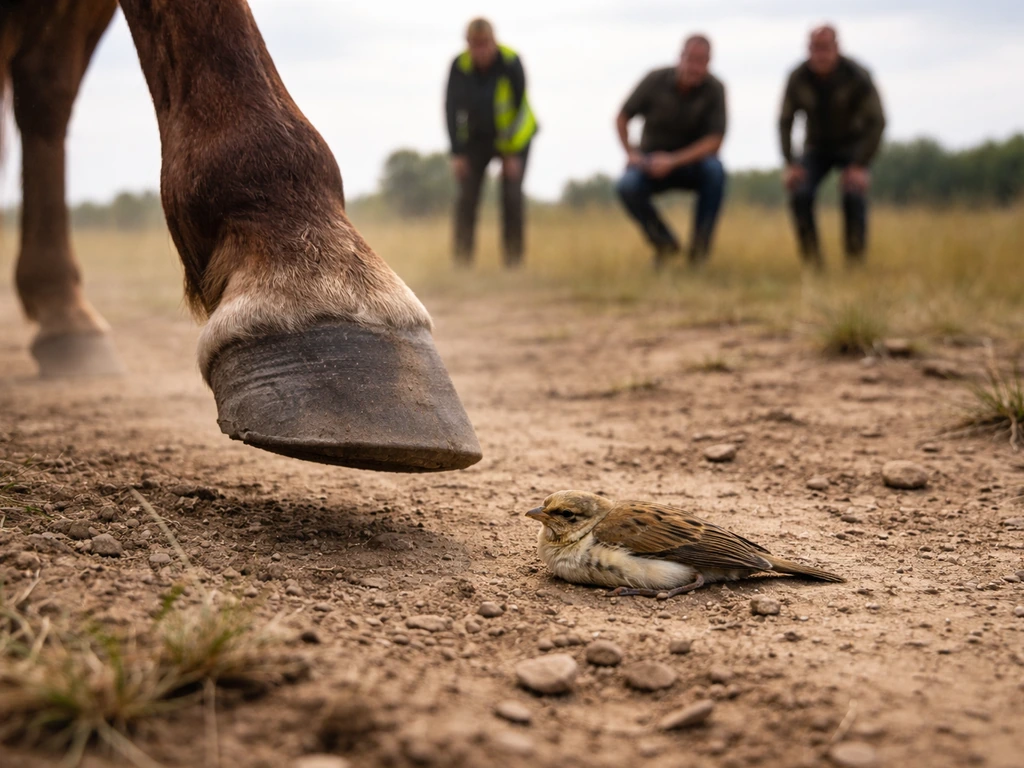
If a horse just stepped on a bird in front of you, here is what to do right now: move the horse away calmly to prevent a second strike, don't touch the bird with your bare hands yet, and assess whether the bird is breathing and bleeding before anything else. Most Reddit threads on this topic spiral into either panic or dismissal, and neither helps you or the bird. The reality is that a horse hoof can deliver a significant crushing force, but outcomes range from a stunned, fully recoverable bird to fatal internal injuries, and what you do in the first five minutes matters a lot.
Horse Steps on Bird: What to Do Right Now After a Reddit Incident

Marcus Whitmore
22 Jun 2026
Immediate safety and scene control
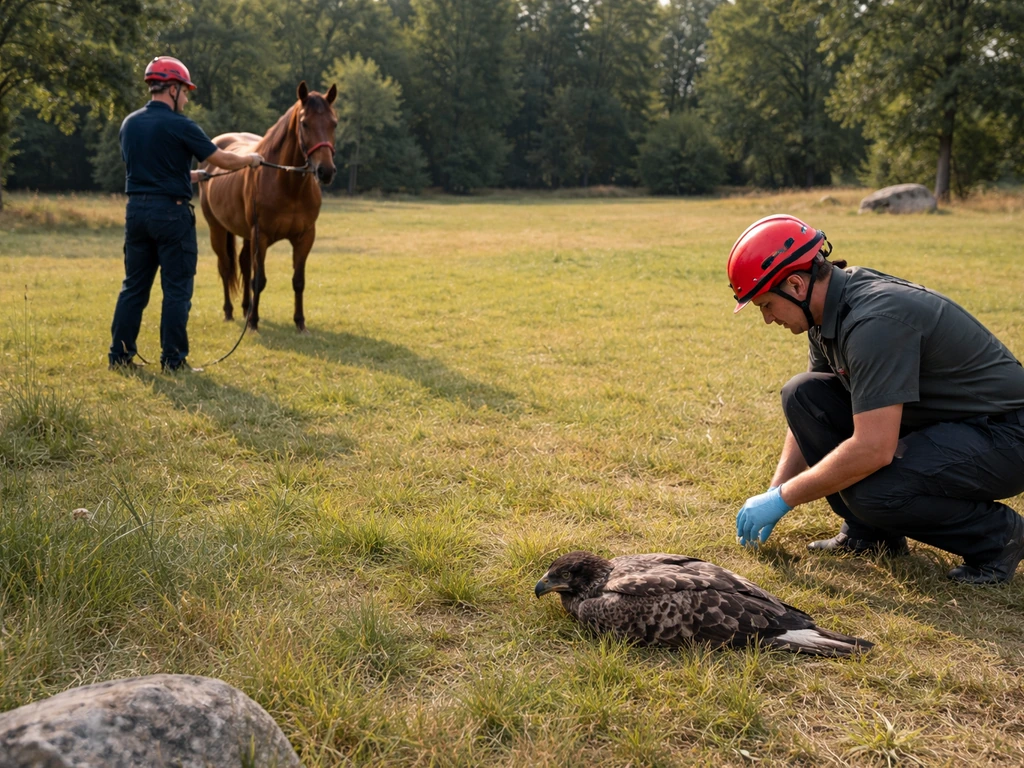
Your first priority is preventing a second accident. A startled horse near a flapping or distressed bird is unpredictable, and the last thing you need is the horse stepping on the bird again, stepping on you, or bolting. Lead or ride the horse away from the scene as calmly as possible. If you are riding, dismount at a safe distance before approaching the bird. Tie the horse securely or hand the reins to someone else before you crouch down to look at the bird. Do not rush this step. A few extra seconds to secure the horse prevents a chain of events that turns a manageable situation into an emergency.
Once the horse is at a safe distance, scan the ground around the bird before you move in. Check for anything that could indicate where the bird came from, whether there are others nearby (a nest, other fledglings, a flock), and whether the ground is wet, muddy, or has any sharp debris that could complicate handling. Keep bystanders, dogs, and children well back. A stressed injured bird will attempt to flee or bite, and a frightened horse reacting to commotion can make things worse fast.
Quick assessment: did the bird get critically injured (and is the horse safe)?
Look before you touch. From a safe crouch, spend 20 to 30 seconds just watching the bird. You are looking for several things at once.
- Is the bird breathing? Watch the chest for movement. Open-mouth breathing, tail bobbing with each breath, or labored heaving are signs of respiratory distress and mean you need help fast.
- Is there visible bleeding? Blood on feathers, on the ground, or seeping from any body opening is a red flag for internal or external injury.
- Can the bird hold its head upright? A bird lying flat with its head on the ground or with eyes partially closed is in shock.
- Are the wings symmetrical? A drooping or oddly angled wing suggests a fracture.
- Is the bird attempting to right itself or move? Even weak, uncoordinated movement is a better sign than complete stillness.
- Is the bird fluffed up and cold to the touch? Fluffed feathers combined with stillness and a cold body temperature are classic shock indicators.
The reality is that birds are masters at hiding injury. A bird that looks like it is just sitting there stunned might have significant internal trauma. Conversely, a bird that flutters around erratically is not necessarily fine, it may be disoriented from a concussive impact. Do not let an absence of visible blood convince you the bird is uninjured. A direct hoof strike can cause internal hemorrhage, broken ribs, or organ damage without leaving an obvious external wound.
As for the horse, check it for signs of distress as soon as the situation allows. A bird bone or debris could theoretically cause a minor puncture to the hoof, and any penetrating hoof wound, even a small one, is worth taking seriously. Watch for immediate lameness after the incident. Note whether the horse is bearing weight normally on all four feet. A puncture wound to the hoof can track into deeper structures including tendon sheaths and joints, and those infections can become severe quickly if untreated.
What to do right away for the bird (humane first aid basics)
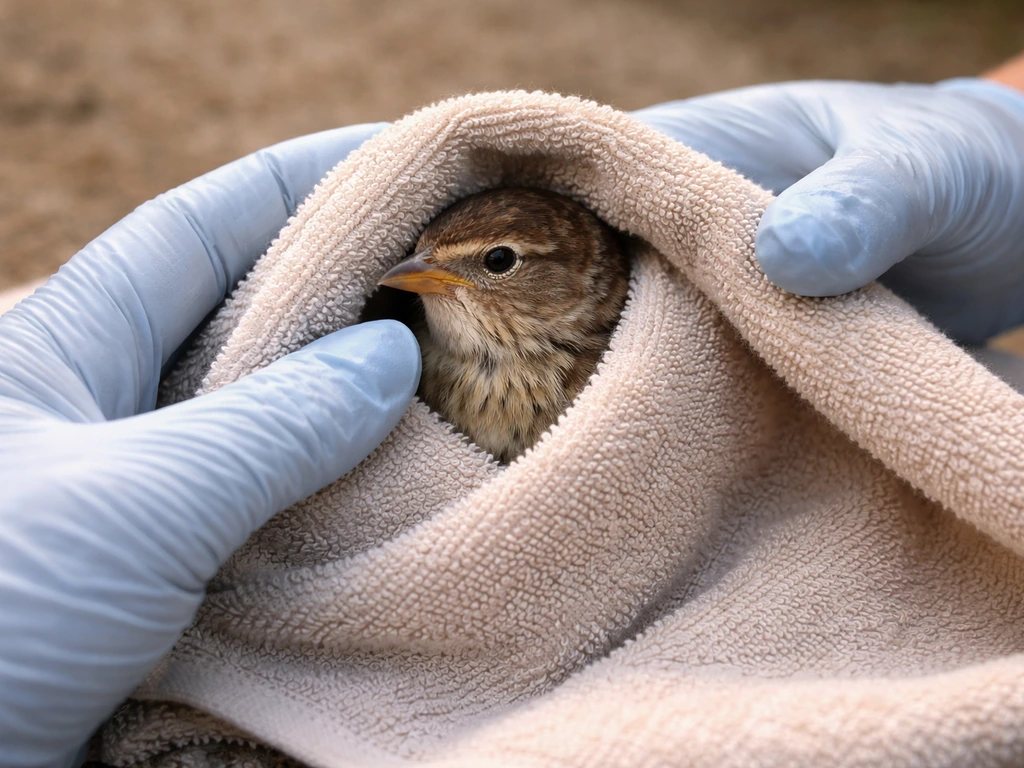
Avian first aid in the field comes down to one core principle: stabilize, contain, and transfer. You are not trying to treat the bird. You are trying to keep it alive until someone qualified can.
- Protect your hands. Use a towel, a cloth, gloves, or even your jacket. Wild birds carry parasites (lice, mites, occasionally ticks) and can transmit bacteria through bites or scratches. A stressed bird will bite or scratch even if it seems docile. Larger birds, including pigeons, can deliver a surprisingly forceful peck.
- If there is active bleeding, apply gentle, firm direct pressure with a clean cloth or gauze for up to five minutes. If bleeding does not stop within five minutes, escalate immediately to emergency veterinary or wildlife rehabilitation contact. Do not remove the cloth if it becomes soaked; add more material on top.
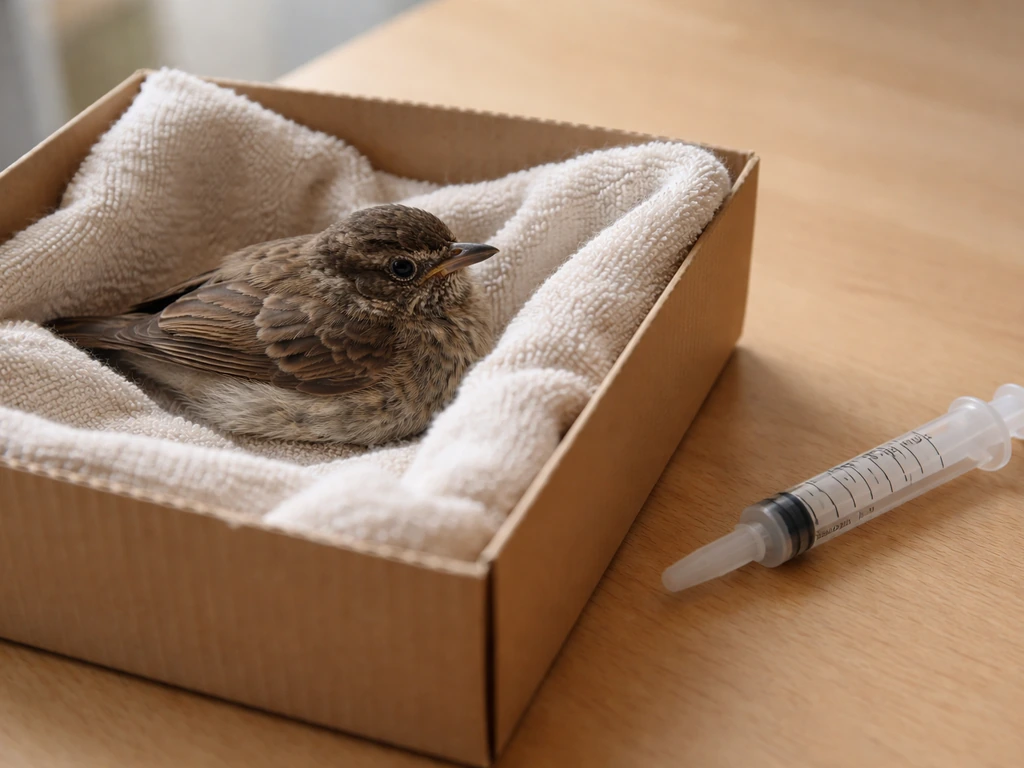
- Place the bird in a cardboard box. The box should be large enough that the bird is not crammed, but small enough that it cannot flap wildly and injure itself further. Punch a few small air holes in the sides. Close the top.
- Keep the box in a warm, dark, quiet place indoors. Away from pets, children, loud music, and sunlight. A dark environment reduces panic in the bird, which reduces the risk of self-injury and slows the spiral of shock.
- Do not give the bird food or water. This is one of the most consistently repeated and most consistently ignored pieces of advice. Forcing liquids into a bird in shock or with respiratory compromise can cause aspiration. Offer nothing by mouth.
- Do not try to splint or bandage the bird unless you have specific training. Improper immobilization can worsen fractures, cut off circulation, or cause a stressed bird to injure itself trying to remove the bandage.
- Keep the box in a warm environment but avoid placing it directly on a heat source. A warm room temperature, around 80 to 85 degrees Fahrenheit, is appropriate for most injured wild birds in shock. Excessive heat can worsen some injuries.
If the bird is a larger species, a raptor, a heron, a goose, or any bird with a sharp beak and strong feet, do not attempt to handle it yourself. These birds can cause serious injury. Call a licensed wildlife rehabilitator or animal control and describe the situation accurately so they can advise on safe capture.
When to call for help and where to take the bird
Call a licensed wildlife rehabilitator as soon as the bird is contained. Do not wait to see if it improves on its own. Here is how to find one quickly:
- Search the US Fish and Wildlife Service's online directory of wildlife rehabilitators by state and county.
- Call your nearest wildlife hospital or nature center and ask for their emergency line.
- In many US states, you can contact your state's fish and wildlife agency for a referral.
- If it is after hours, many rehabilitators have answering services or partners who handle emergency intake.
Call a veterinarian (ideally an avian or exotic vet) if you cannot reach a rehabilitator, if the bird is bleeding heavily and it is not slowing, if breathing is visibly labored, or if the bird is completely unresponsive. Emergency stabilization at a vet clinic, including oxygen therapy for respiratory distress, can be the difference between survival and death for a severely traumatized bird.
Rush in immediately if you see any of these: ongoing bleeding that will not stop, open-mouth gasping or labored breathing, blue or gray discoloration of the mucous membranes (visible at the beak or gum line in some species), complete limpness with no response to gentle touch, or visible protruding bone or organ material. These are emergency signs, not wait-and-see signs.
When transporting the bird, keep the box in the car away from direct air conditioning or heating vents. Drive steadily, minimize sharp turns and braking, and keep the radio off or at a very low volume. Keep conversation in the car to a minimum. Stress kills birds in shock faster than many of their physical injuries do.
What NOT to do (common Reddit mistakes and hazards)
Reddit threads about injured birds are full of well-meaning but genuinely harmful advice. Here is what to skip:
- Do not give the bird water by dropper or syringe. Aspiration is a real risk, especially in a bird with any respiratory compromise, and it can be fatal.
- Do not feed the bird bread, seeds, crackers, or anything else. Its digestive system is not the priority right now, and the wrong food can cause additional harm.
- Do not leave a visibly injured bird outside to 'see if it flies away on its own.' If it took a direct hoof strike and is not flying, it is injured. It will not spontaneously recover from a fractured bone or internal bleeding by resting on the grass.
- Do not try to splint a wing with sticks and tape based on instructions you found online unless you have hands-on training. Improper splinting restricts blood flow and causes pain.
- Do not assume the bird is dead just because it is not moving. Birds in shock often become very still and appear dead. Check for breathing before concluding it is beyond help.
- Do not assume the bird is fine just because it does not look obviously injured. A bird that was directly struck by a hoof and is sitting hunched and quiet is not okay. It is injured and in shock until proven otherwise.
- Do not put the bird in a wire cage where it can flap against the bars and worsen fractures or cause feather damage that will affect flight recovery.
- Do not let children hold the bird in the car on the way to the rehabilitator. An injured bird that suddenly rallies and struggles can bite or scratch, and a child's instinct to grip harder makes injuries worse.
Could the horse be injured or affected? checklists and monitoring
Most of the time, a horse stepping on a small bird will not cause any meaningful injury to the horse. Even in cases where the horse steps on the bird, you still want to monitor both the horse and the bird closely for complications after the incident horse steps on bird. Bird bones are lightweight and the impact is asymmetrical in the horse's favor. However, there are real, if uncommon, scenarios where the horse can be affected.
Check the hoof immediately after the incident
- Pick out each hoof that was involved in the contact and look for any visible debris, bone fragment, or feather material lodged in the sole or white line.
- Check the frog and the sulci (the grooves on either side of the frog) for any small penetrating material.
- Look for any sign of bleeding from the hoof or coronary band.
- If you find a foreign object embedded in the hoof, photograph it and call your vet before removing it. Removing a penetrating object without veterinary guidance can allow material to be drawn deeper into the tissue.
Watch the horse over the next 24 to 48 hours
- Check for lameness at walk and trot on both hard and soft ground.
- Monitor for heat or swelling in any lower limb or hoof.
- Note whether the horse is willing to bear full weight on all four feet.
- Watch for behavioral changes that suggest discomfort, reluctance to move, pinned ears when touched, or unusual stance.
- If the horse is lame, especially if the lameness involves a limb near where contact occurred, call your vet. Puncture wounds in the hoof can track into tendon sheaths and joints, and these injuries worsen rapidly without treatment.
It is also worth noting that horses can carry diseases transmissible between species, but the risk of disease transmission from a brief, incidental hoof-on-bird contact is extremely low. Horses do not need vaccination or prophylactic treatment after stepping on a bird. The bird poses no meaningful contagion risk to the horse in this type of encounter.
Prevention: reducing bird/horse collisions in day-to-day riding/yard life
These incidents happen more often than people expect, especially in yards with bird feeders, grain storage, or open compost. Ground-foraging birds like sparrows, starlings, pigeons, and doves are particularly at risk because they feed in the same spaces where horses move. A few practical changes make a real difference.
Manage attractants in the yard and stable
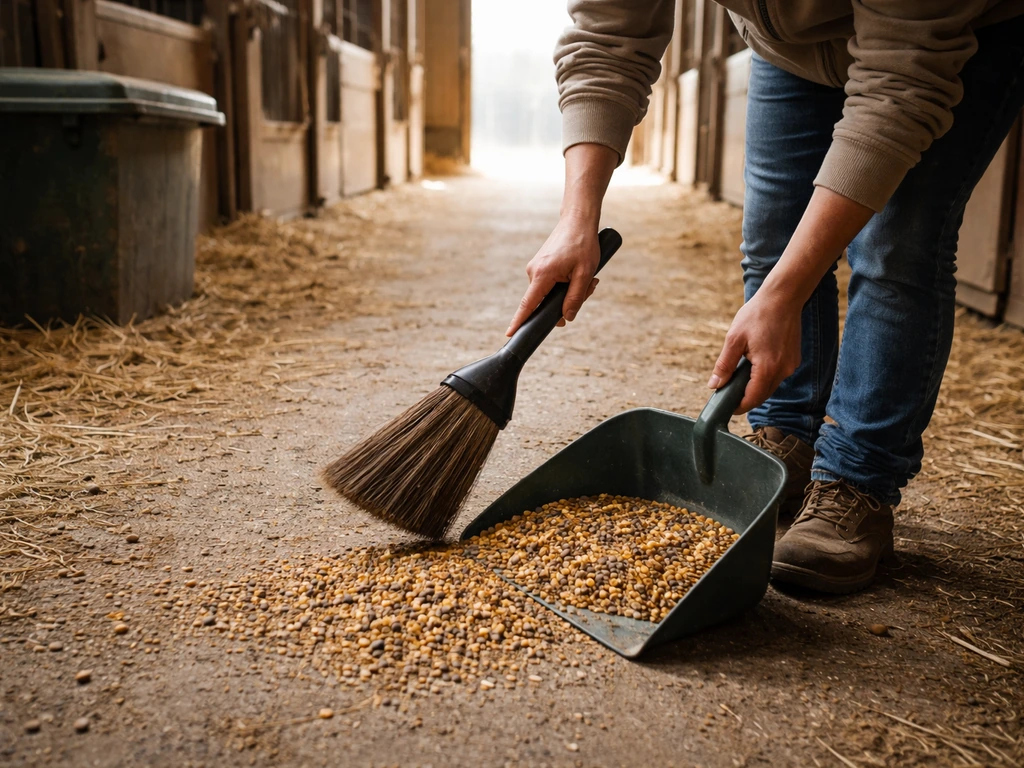
- Clean up spilled grain promptly. Spilled feed is a primary attractant for ground-feeding birds. A quick sweep after feeding time removes the draw before birds can gather.
- Move bird feeders away from high-traffic horse areas. If feeders are within the paddock or near gates and doorways horses use regularly, relocate them at least 20 to 30 feet away from those zones.
- Manage manure and compost piles. These attract insects, which in turn attract insect-eating birds. Proper manure management reduces the concentration of foraging birds in active horse areas.
- Secure grain storage so spills are minimized and birds cannot access storage areas.
Training horses for wildlife encounters
Desensitization work that exposes horses gradually to birds, small animals, and sudden wildlife movements reduces spooking and panic reactions that lead to accidental trampling. This is especially relevant on trails where ground birds like grouse or quail can flush suddenly from underfoot. Working with a trainer to expose your horse to unexpected bird sounds and movements in a controlled setting pays dividends in both safety and confidence on the trail.
Practical ground habits during turnout, grooming, and trail work
- Scan the ground ahead of you when leading a horse through areas where birds congregate. A brief visual check before walking through a grain spillage or compost area takes two seconds and prevents the incident entirely.
- Be extra alert in spring and early summer when ground-nesting birds may be present in pasture grass, around fence lines, or in low scrub along trail edges.
- When riding trails with heavy ground bird activity, reduce speed and give the horse time to see and react to wildlife rather than rushing through.
- At grooming and tacking areas, keep the immediate space clean and free of feed materials that attract birds to ground level near active horse feet.
The same principle that applies to reducing bird hazards near managed land generally applies here: reducing attractants reduces the concentration of birds in high-risk zones. USDA APHIS also warns not to encourage wildlife by feeding or leaving out food scraps, because it can draw animals into areas where vehicle-animal accidents are more likely blank" rel="noopener noreferrer">reducing attractants reduces the concentration of birds in high-risk zones. The FAA’s wildlife hazard guidance also notes that land uses and attractants, such as composting operations and agricultural crops, can increase hazardous wildlife presence near managed areas reducing attractants reduces the concentration of birds in high-risk zones. You cannot prevent every encounter, but you can meaningfully reduce the frequency with a few consistent habits. Incidents involving a dog stepping on a bird or a similar accidental contact with other animals follow the same first-aid logic, with differences in the handling risks and containment approach depending on the size and species of bird involved.
What realistically happens next
If the bird reaches a wildlife rehabilitator in good condition, the most common injuries from this type of incident are wing fractures, leg fractures, internal bruising, and concussive shock. Depending on the species and the severity, many birds can recover from fractures with proper immobilization and supportive care. Smaller songbirds have less reserve than larger birds and deteriorate faster, so speed of transport matters. Some birds will not survive despite best efforts, particularly if there was significant internal hemorrhage or crush injury to the spine or skull. That is not a failure on your part if you followed the right steps.
What you can control is acting quickly, keeping the bird calm and contained, getting it to qualified hands as fast as possible, and not making things worse with well-intentioned but harmful interventions. That is the practical, evidence-based answer behind every 'what do I do?' thread you will find on this topic.
FAQ
Should I immediately pick up the bird to see if it is alive?
No. Do not try to check the bird’s “response” by repeatedly picking it up or forcing it to stand. Instead, keep the horse secured away, watch from a safe distance for 20 to 30 seconds, then only handle if you must transfer it to a container for transport (and only if you can do so without injuring yourself or the bird).
If there’s no obvious blood, does that mean the bird is fine?
A small amount of bleeding from a feather is not the same as internal injury. Birds can have serious internal trauma even when the surface looks clean, so decisions should rely on breathing quality, responsiveness, posture, and whether bleeding is ongoing, not just what you see on the skin.
How long should I wait before calling help if the bird seems stunned?
Treat “stunned” as a temporary state, not a diagnosis. Watch for any sign of worsening over the next several minutes, especially labored breathing, increasing limpness, open-mouth gasping, or discoloration at the beak or gums. If any emergency sign appears, escalate to a vet or wildlife rehab immediately.
What counts as an emergency sign after a horse hoof incident?
If you see continued bleeding that does not slow, open-mouth gasping or clearly labored breathing, blue or gray mucous membranes, complete limpness with no response, or any protruding tissue or bone, that is an emergency. Do not prioritize comfort measures like “letting it rest” or waiting for a calmer moment.
What is the safest way to contain the bird for transport?
If you need to move the bird, use a container strategy rather than hand-carrying. Place the bird into a box or carrier you can cover for darkness and reduce motion, then keep the container stable during transport. You can briefly use a towel as a barrier if the bird must be coaxed, but avoid squeezing.
Should I check the horse too, or only the bird?
Whether the horse is in pain or not, recheck for lameness once the incident is over. A hoof puncture can track deeper into structures and infections can develop later, so if there is any reluctance to bear weight, heat, swelling, or a puncture site, contact a veterinarian promptly.
Why does securing the horse first matter so much?
Yes, because the horse can still spook or shift position while you are attending to the bird. If you are dismounted, keep the horse secured before crouching, and keep kids and dogs away from the horse’s hind end. A calm setup prevents a second accident while you assess.
Can training prevent these incidents, or is it too risky to try?
Desensitization is useful, but it is not an instant fix, and it should not be done during an emergency response. Use training proactively in controlled sessions, focusing on gradual exposure to birds flushing and ground movement, then only ride in higher-risk areas when the horse is already conditioned.
Who should I call first if I cannot reach a wildlife rehabilitator immediately?
Rely on avian or exotic veterinary guidance when possible, but do not delay contacting wildlife rehabilitators just because you also reach a vet. If you can’t reach rehab quickly and the bird has emergency symptoms, go through a vet for immediate stabilization.
Do I need to disinfect the horse or worry about disease transmission after the incident?
You generally do not need any disinfecting ritual for the horse after a brief accidental contact. The disease transmission risk from a one-off hoof on bird situation is extremely low, but keep the bird’s handling materials separate, and wash hands after any contact to be safe.
What home changes reduce the chance of this happening again?
Yes, especially in yards with bird feeders, grain storage, compost, or any spot where ground-foraging birds concentrate. The quickest risk reduction is removing attractants near horse traffic and improving ground management so birds are less likely to be in the walking path.
Does the same first-aid approach apply if it’s a dog stepping on a bird instead of a horse?
Dogs can be a major complicating factor because they may chase or collide with the bird and then shift the horse’s attention and behavior. Apply the same basic bird first-aid decision logic, but keep dogs controlled and separate from both the horse and injured bird during containment and transport.