
In most cases, no, a bird will not abandon its nest just because you touched it. If you wonder whether should you touch bird feathers, the guidance is similar: avoid handling unless it is necessary for a real hazard. The idea that a single brief touch causes parents to reject their eggs or chicks is one of the most persistent myths in backyard wildlife lore, and it is not supported by science.
Will a Bird Abandon Its Nest If You Touch It?

Marcus Whitmore
12 May 2026
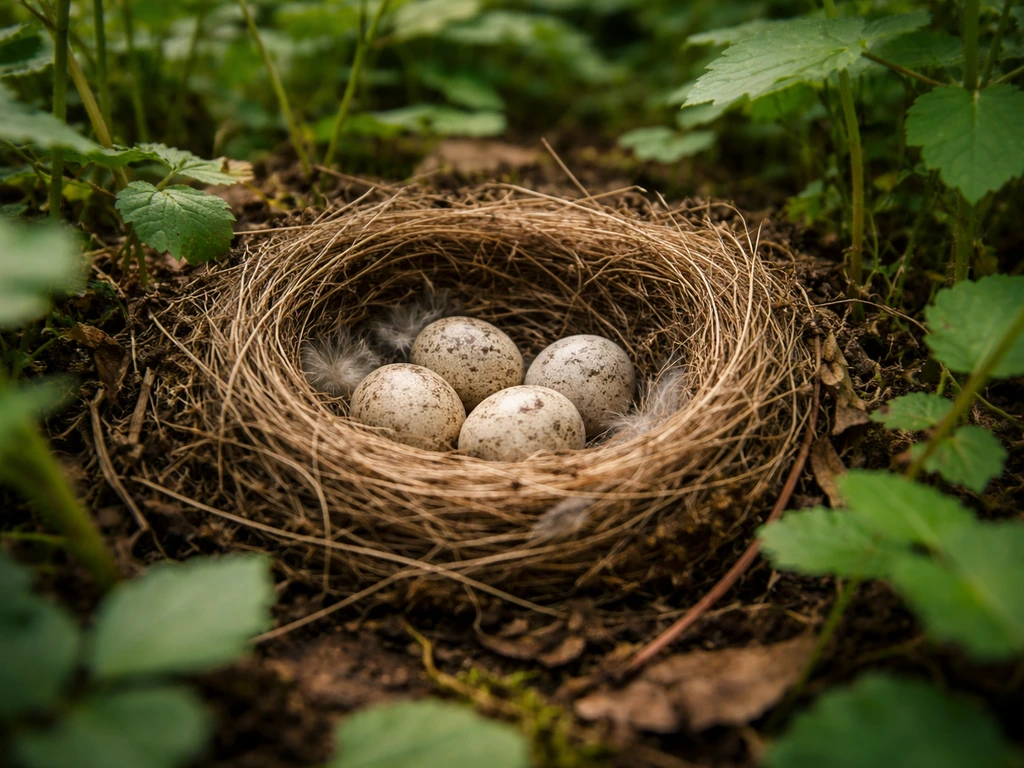
If you are wondering, “is it safe to touch a bird,” the answer usually depends on whether it is nesting and how much you disturb it, but a brief accidental contact is typically low risk persistent myths. Researchers routinely handle nesting birds for banding and monitoring without triggering systematic abandonment.
That said, the full picture is more nuanced: abandonment does happen, but it is driven by sustained disturbance, repeated human presence, egg chilling, and predator pressure, not by the faint trace of human scent left by a momentary touch.
What to expect after you accidentally touch a nest
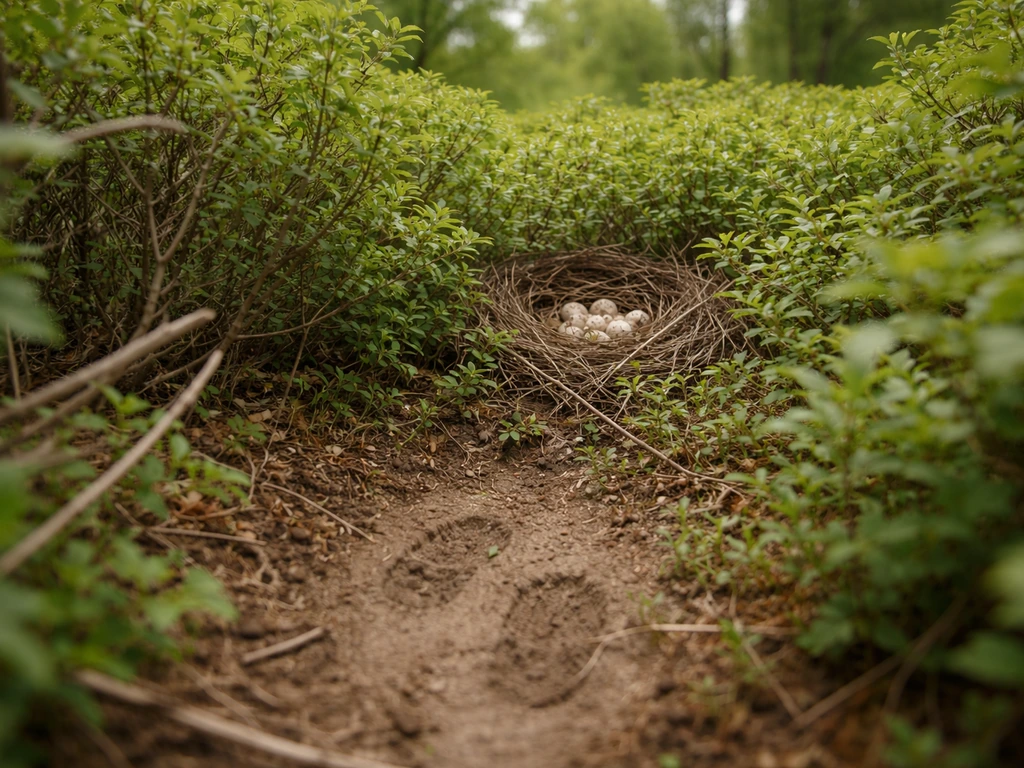
If you accidentally brushed a nest, reached into a bush and felt eggs, or even picked up a fallen chick and placed it back, the most likely outcome is that the parents will return and continue incubating or feeding. Audubon's guidance is direct on this: 'touching the bird will not harm it or make the parents not want to take care of it. ' Scientific American has reviewed the evidence and describes the 'slightest touch causes abandonment' claim as unsupported.
What you should watch for after accidental contact is whether the parents return within roughly 30 minutes of you moving well away from the area. If they do (and they usually will), the nest is fine. If an hour passes and there is no sign of an adult, that is worth monitoring more carefully.
The key variable is what happens after the touch, not the touch itself. Did you linger near the nest for 20 minutes? Did pets or kids repeatedly approach afterward? Did you handle the eggs extensively or move them? Those follow-up behaviors matter far more than the initial contact. A quick, accidental touch followed by a calm retreat is genuinely low-risk.
Why abandonment varies so much by species and nesting stage
Not all birds respond to disturbance the same way, and the stage of the nesting cycle matters enormously. A robin that has been incubating eggs for 10 days is far more committed to that clutch than one that laid its first egg yesterday. Research on Arctic shorebirds shows that abandonment probability tracks closely with disruption to incubation patterns, specifically how long eggs are left unattended during what are called 'recesses.' The longer and more frequent those cooling periods, the closer the nest gets to failure. This is a behavioral and physiological mechanism, not a scent-rejection one.
Species also have very different temperaments around human presence. Raptors, colonial waterbirds like Common Terns, and some shorebirds are among the most disturbance-sensitive. The Raptor Research Foundation notes that 'human activities near nests with young rarely cause nest abandonment, and then only because of severe disturbance,' which implies a threshold effect. Meanwhile, many urban-adapted songbirds (robins, house sparrows, mourning doves) are relatively tolerant of human proximity and will return to nests even in actively used spaces like porches and mailboxes. Grassland passerines tend to sit in the middle.
| Factor | Lower abandonment risk | Higher abandonment risk |
|---|---|---|
| Species type | Urban-adapted songbirds, doves | Raptors, shorebirds, colonial waterbirds |
| Nesting stage | Mid-to-late incubation or with chicks | Early incubation (fresh eggs, 0–2 days) |
| Type of contact | Brief accidental touch, single visit | Repeated visits, nest relocation, long presence |
| Follow-up disturbance | Immediate calm retreat, no pets/kids | Ongoing foot traffic, predator scent trails, pets |
| Environmental stress | Mild weather, covered nest | Cold snap, exposed nest, eggs left cooling |
What actually harms eggs and chicks (and what does not)
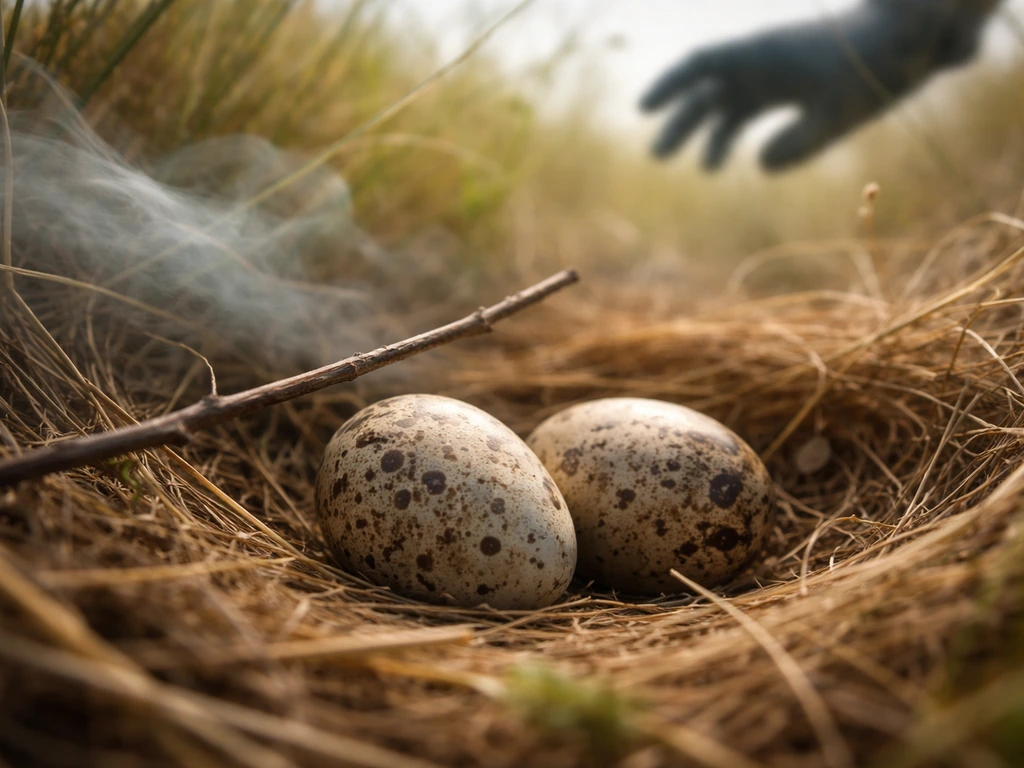
The scent myth gets all the attention, but the real threats to nesting success are much more concrete. A USGS study tracking 69 grassland passerine nests found that predation, not human disturbance, was the dominant cause of nest failure, with mammals including mice, ground squirrels, weasels, badgers, and canids being primary culprits. Human disturbance mattered mostly when it was associated with camera setup or repeated observer visits, not single contacts.
Egg chilling is another real danger that gets underplayed. Research on great tits shows that incubation temperature depends on a careful rhythm of sitting sessions and recesses, and disrupting that rhythm, especially in cold weather, directly affects embryo development. If you cause a parent to abandon the nest for an extended period during cold or wet weather, the eggs can cool enough to fail even if the parent returns later. This is the mechanism behind disturbance-related failure, not scent.
The Smithsonian's nest monitoring guidelines make a useful point about scent: walking back and forth to a nest creates scent trails that predators can follow to find the nest. So the concern about scent is real, but it is about predators locating the nest, not parents rejecting their own young. That is a meaningful distinction because it changes what you should actually do (approach from varied directions, minimize trips) versus what the myth implies (never touch anything). If you are wondering what to avoid beyond touching, see where not to touch a bird for more specific do’s and don’ts.
- Predation by mammals and other birds is the leading cause of nest failure, not human touch
- Egg chilling from extended parental absence during cold or wet weather can kill embryos
- Repeated human visits create scent trails that help predators locate nests
- Stress from sustained human presence can cause parents to stay away long enough for eggs or chicks to die
- Premature fledging, chicks frightened out of the nest before they are ready, is a real risk from sustained disturbance
- Human scent left by a brief touch has not been shown to cause parental rejection in scientific literature
You already touched it: here is what to do right now
Step one is simple: walk away. Move at least 30 to 50 feet from the nest, go inside if possible, and give the parents 30 to 60 minutes of uninterrupted quiet. Resist every urge to go back and check. The single most helpful thing you can do in the immediate aftermath is remove your presence entirely and quickly.
- Move away from the nest immediately, at least 30 to 50 feet, and go indoors if possible
- Keep pets and children away from the area for the rest of the day
- After 30 to 60 minutes, observe from a distance (binoculars help) to see if a parent has returned
- If a parent is on or near the nest, you are done: the situation is resolved
- If no parent has returned after an hour, do one more quiet check from a distance, then leave for another hour before reassessing
- Do not add food, water, or extra materials to the nest: it can cause more disruption
- If you moved eggs or chicks, gently return them to the nest cup in the same orientation if possible, then leave immediately
- Do not repeatedly visit the nest 'to check': every visit adds stress and scent trail
When you need to check or address a real hazard

Sometimes you cannot simply walk away. Construction work, a nest built directly in a piece of equipment, or a nest in a location where pets or children pose an ongoing threat are all real situations where you need to make a decision. The key principle here is to minimize the number of disturbance events, keep each one as brief as possible, and plan your approach so you are not creating repeated scent trails in the same path.
If you need to work near a nest, the U. S. Fish and Wildlife Service is worth knowing about before you act: under the Migratory Bird Treaty Act, it is illegal to destroy an active nest containing eggs or chicks. The U.
S. Fish & Wildlife Service notes that the Migratory Bird Treaty Act makes it illegal to destroy an active nest that contains eggs or chicks [under the Migratory Bird Treaty Act, it is illegal to destroy an active nest containing eggs or chicks. ](https://www. fws.
gov/story/bird-nests). U. S. Army guidance also reiterates that destroying an occupied nest is prohibited under the Migratory Bird Treaty Act and outlines the associated penalties [destroy an active nest containing eggs or chicks](https://www.
army. mil/article/102834/leavethenests_alone). 'Active' means eggs or live young are present. If the nest is empty or being built, you have more flexibility.
If eggs or chicks are present and the hazard is not immediate (meaning no one is in danger right now), the practical guidance from most wildlife agencies is to wait until the nesting cycle is complete, which for most songbirds is 4 to 6 weeks from egg-laying to fledging.
If the hazard is immediate (machinery must run, a structure is unsafe, a predatory pet cannot be contained), document the situation, contact your state wildlife agency for guidance, and follow their direction. Acting without guidance when eggs or chicks are present can put you in legal jeopardy in addition to harming the birds.
How to prevent nest disturbance going forward
Prevention is easier than damage control. If you find a nest during the nesting season (roughly March through August for most of North America, though this varies), the best practice is to mark the area and build a buffer around it so people and pets naturally avoid it.
- Mark a radius of at least 10 feet around the nest with stakes or a simple string boundary, without touching the nest itself
- Redirect foot traffic paths so people do not walk directly past the nest
- If the nest is in a garden area you tend regularly, suspend routine maintenance (watering, weeding, mowing) within that buffer until fledging
- Keep cats and dogs indoors or leashed when they are near nesting areas: cats are among the most significant causes of nest predation
- Approach the area for any necessary checks from different directions each time to avoid creating a single strong scent trail
- Use binoculars to monitor from a distance rather than walking up to the nest to check on progress
- If you know birds nest in a particular shrub or tree each year, prune that plant outside the nesting season (late fall or winter) to reduce habitat conflicts the following spring
When to actually intervene and who to call
Most nest disturbance situations resolve on their own with a quick human retreat. But there are real scenarios that warrant intervention. A chick that has fallen from a nest and cannot be returned (nest is too high, nest is destroyed) and is being ignored by parents for more than two hours is a candidate for wildlife rehabilitation. An injured adult bird that can no longer care for the nest is another. Eggs that have been abandoned for more than a day in cold weather are unlikely to be viable.
The USFWS framework is useful here: if you are not certain the bird is injured or orphaned, leave it alone and observe. If after honest observation it is clear the parents are not returning and the animal is in distress, that is when you contact a licensed wildlife rehabilitator. Do not give food or water while you wait. Do not try to raise the bird yourself unless you are licensed to do so, which in most states requires a federal and state permit.
To find a licensed wildlife rehabilitator, the USFWS website maintains a directory, and organizations like the National Wildlife Rehabilitators Association (NWRA) and the International Wildlife Rehabilitation Council (IWRC) can help you locate permitted help in your area. Your state fish and wildlife agency can also point you to the right contact. When you call, describe the species if you can identify it, the approximate age of the bird (hatchling with no feathers, nestling with pin feathers, fledgling with most feathers), and what you observed about parental activity. That information helps them triage quickly.
One last thing worth knowing: if you regularly work near birds, whether you are in construction, landscaping, aviation ground operations, or just an active backyard birder, developing a basic familiarity with local nesting species and their typical season timelines saves a lot of reactive stress. Knowing that a killdeer does a broken-wing display to draw you away from a ground nest, or that a mockingbird dive-bombing you is protecting chicks rather than eggs, helps you make faster and better decisions in the field. The behavior of the adult is often your best real-time data on what is actually happening at the nest. If a bird lands on a branch, it can be a sign of perceived safety, but it still does not mean the bird will tolerate human disturbance nearby if a bird lands on a branch does it trust.
FAQ
What should I do right after I accidentally touch a nesting bird or brush a nest?
If the nest is active and you can tell parents are still nearby, your best move is to leave the area immediately and avoid additional visits. A practical check is timing: in many cases you should see an adult resume incubation or feeding within about 30 to 60 minutes after you fully move away. If adults do not return after an hour, switch from “assume it’s fine” to “monitor from a distance” and contact wildlife help if the situation worsens.
If I picked up a fallen chick and returned it, is it still likely the parents will take over?
If you picked up a fallen chick and put it back, the most important factor is whether you can minimize further disturbance. Do not keep handling to “confirm” it is okay, and do not repeatedly approach for photos or videos. For some species, placing a chick back near the original location can be more helpful than leaving it where predators can reach it, but ongoing human checking increases risk.
Does touching eggs or nest lining increase abandonment risk more than touching a bird once?
Touching your hands to eggs or nest material is more concerning because it can lead to repeated disturbance, but a single moment is usually not what drives failure. What matters most is whether you caused long unattended periods, moved eggs extensively, or lingered in a way that kept adults away. After accidental contact, step back, keep distance, and do not keep working the area.
If the parent bird comes back right away, does that mean everything is guaranteed to be fine?
A bird may appear “calm” or may resume normal behavior quickly, but that does not guarantee the nest is safe from other problems like egg chilling, predator attraction, or ongoing harassment. Even if adults return, avoid creating new disturbance events, especially in cold or wet weather when incubation timing is critical.
When is abandonment more likely after a person touches or approaches a nest?
Yes, there are cases where abandonment risk is higher, especially for certain disturbance-sensitive groups (like many raptors, colonial waterbirds, and some shorebirds) and during sensitive parts of incubation. Extra risk is also linked to repeated human presence, repeated approach attempts, or letting pets and kids repeatedly come close after the initial contact.
How can I tell the difference between normal nest leaving and a true abandonment signal?
You should not treat “the bird flew away” as a reliable signal. Adult birds may leave during normal recesses or while responding to perceived threats, then return. Better real-time data is whether adults continue to return and incubate or feed without prolonged gaps after you have fully backed away.
My nest conflict is with pets or yard activity, what is the safest way to prevent repeated disturbance?
Start by identifying the threat source. If kids or pets are the issue, create a buffer using barriers or temporary exclusion so you are not the only deterrent. If it is a human activity issue (lawn care, construction, vehicles), the safest approach is to pause work nearby and coordinate with the appropriate wildlife or land manager guidance rather than trying to “work around” the nest repeatedly.
What if I must keep working near a nest, like mowing, landscaping, or construction?
Yes. If you have to work near an active nest, plan to minimize disturbance events, keep people traffic brief and predictable, and avoid pacing back and forth along the same path. Also be aware of legal constraints under the Migratory Bird Treaty Act, which restrict destroying active nests with eggs or chicks, so pause and get guidance before proceeding.
Is human scent on the nest actually why parents abandon, or is it something else?
“Scent myths” are often misunderstood. The practical risk from human scent is mainly that repeated movement and trails can help predators find the nest, not that parents will reject their own eggs. That distinction changes what you should do, reduce repeated trips, vary your approach if you must pass nearby, and limit your time in the area.
I found a “small baby bird” near a nest, how do I know if it is orphaned before I call for help?
If you are uncertain whether a chick is orphaned, the safest default is to observe briefly from a distance rather than intervene. If parents truly do not return and the chick is in distress, contact a licensed wildlife rehabilitator. Avoid offering food or water yourself, and do not try to raise it unless you are properly permitted.
What should I do if I think the nest has been abandoned and it is cold or wet outside?
If eggs have been abandoned for more than a day in cold conditions, they are unlikely to be viable, but intervention is still situation-dependent. Do not assume that means you can move them. Check whether the nest is actually inactive, document what you observed, and contact a local wildlife agency or rehabilitator for species-specific guidance.
How can I prevent repeated nest disturbance next time during the season?
For prevention, the most effective approach is to create a buffer so people and pets avoid the area without constant human supervision. Marking the area during the nesting season and choosing predictable detours for foot traffic can reduce disturbance and predator exposure. If birds repeatedly nest in the same spot year after year, plan longer-term exclusion (not harm) and schedule noisy work outside the nesting peak when possible.
Is it ever appropriate to touch a nesting bird to “help” it?
Do not handle a nesting bird for “rescue” unless there is an immediate, clear safety hazard (for example a dog that cannot be contained, active machinery that cannot be stopped, or a human-injury threat). If the bird is just visibly uncomfortable or defending the nest, the correct response is usually to step back and remove the ongoing hazard rather than touching the bird.