Bird netting can absolutely hurt birds, but whether it actually does depends almost entirely on how it's installed and what type of mesh you use. Poorly chosen or sloppily installed netting is one of the more common sources of wildlife injury in residential and commercial settings. The good news is that when you get the mesh size, tension, and edge sealing right, netting becomes a genuinely effective barrier that keeps birds out without harming them. The problem isn't the concept, it's the execution. Bird spikes are a different kind of deterrent than netting, so they may help prevent perching and droppings without creating the same kinds of wildlife entanglement risks the execution.
Does Bird Netting Hurt Birds? Safe Use Checklist

Marcus Whitmore
28 Jun 2026
How bird netting hurts birds
The U.S. Fish and Wildlife Service has stated plainly that material 'marketed as bird netting can entrap and kill birds.' That's not a fringe opinion, it's a documented regulatory concern. There are a few distinct ways this plays out in practice.
Entanglement
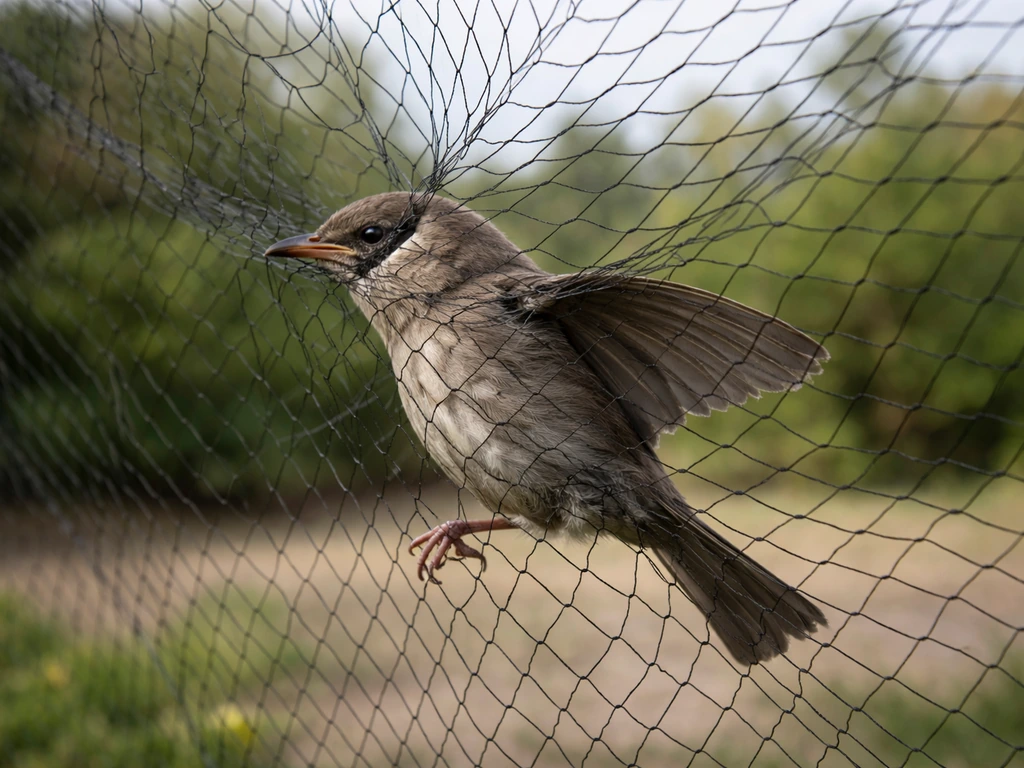
This is the most common harm. When mesh openings are too large, birds push their heads, wings, or feet through the holes and then can't reverse out. The more they struggle, the tighter the netting cinches around them. WIRES volunteers in the Eurobodalla region of New South Wales reported 22 rescues of wildlife caught in fruit-tree netting in 2024 alone, and those are just the ones found in time. OWL Rehab notes that animals not found quickly enough can die from entanglement even when the initial injury wasn't life-threatening, because they exhaust themselves trying to escape.
Suffocation and constriction
When netting wraps tightly around a bird's neck or chest, it can restrict breathing or cut off circulation. This is essentially the same mechanism NOAA describes for marine entanglement: mesh geometry determines whether an animal gets a limb or appendage trapped in a way that causes constriction injury. For birds, the neck and wing joints are the most vulnerable.
Stress and exhaustion
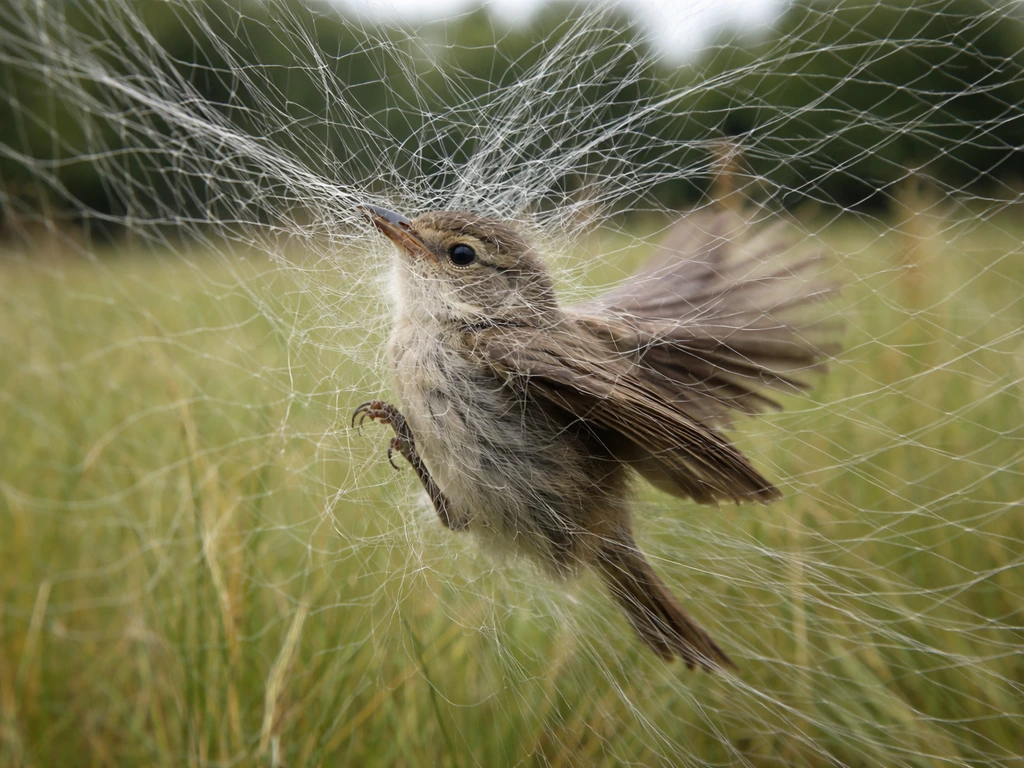
Even when a bird isn't physically injured, being trapped in netting is acutely stressful. Birds caught in netting will thrash, which burns energy and raises their heart rate dramatically. A bird that arrives at a wildlife rehabber after two hours of struggling in netting is at real risk of capture myopathy, a condition where the muscle damage from extreme exertion becomes life-threatening even after the bird is physically freed.
Loose or poorly secured edges
Wildlife Victoria specifically warns against loose gathers of material hanging down from installed netting. Birds enter through these openings and become trapped inside the net rather than being excluded by it. This failure mode is particularly nasty because the bird is now enclosed, making escape even harder and rescue more difficult.
When bird netting is actually safe
The reality is that correctly installed netting with the right mesh size causes little to no harm to birds. The key variables are mesh size, installation tension, and edge security. Get those three right and netting shifts from a hazard to a genuinely wildlife-friendly exclusion tool.
Mesh size is the most critical factor
The wildlife-friendly standard, adopted in Australia and backed by groups like the RSPCA and Eurobodalla Council, is a mesh opening no larger than 5mm x 5mm when the net is fully stretched. The practical test: if you can poke a finger through, the mesh is too large. The USFWS guidance for exclusion applications sets a ceiling of 3/4 inch (roughly 19mm) mesh for general bird exclusion, which is appropriate for larger birds in warehouse or aviation contexts but still too large for small songbirds and garden settings. Commercial suppliers commonly recommend 3/4 inch to 1 inch mesh as a versatile option for mid-sized birds, and professional installers match mesh to the target species.
Tension and anchoring matter just as much
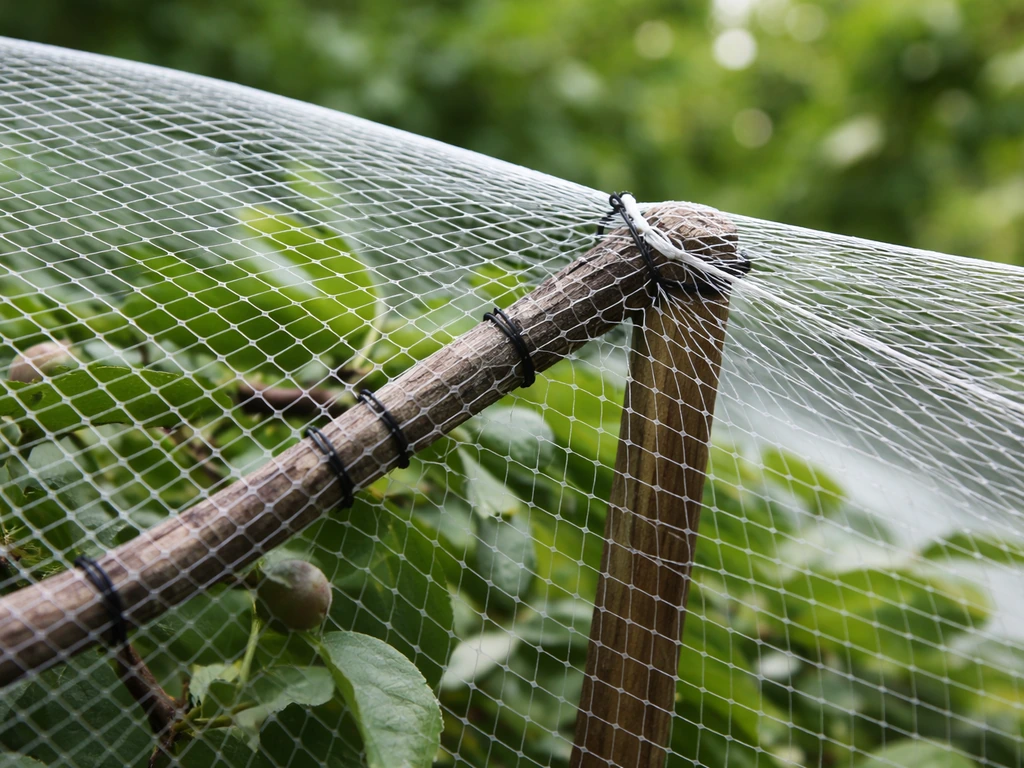
A properly tensioned net keeps mesh openings uniform and prevents birds from wedging themselves into distorted gaps. Slack netting sags, creating larger effective openings than the mesh rating suggests. Professional installers secure perimeter anchors, pull tension consistently across the net, and make sure corners are fixed rather than floating. For DIY installs, this means using dedicated fixing points rather than just draping netting over a structure.
Where it works well
Bird netting is a proven exclusion tool in the right contexts: fruit trees and vegetable gardens, balconies and rooftop terraces, warehouses and semi-enclosed industrial spaces, and aviation facility perimeters. It's less effective for some species, and the Minnesota DNR notes that exclusion netting doesn't work well for laughing gulls, which will nest on top of the net rather than being deterred by it. Matching the method to the specific bird species and behavior is part of getting it right. USDA APHIS notes that in bird exclusion or dispersal programs, key choices like netting and mesh size are species-dependent to prevent birds from gaining access while maintaining effectiveness and safety Matching the method to the specific bird species and behavior.
Best practices checklist before and during installation
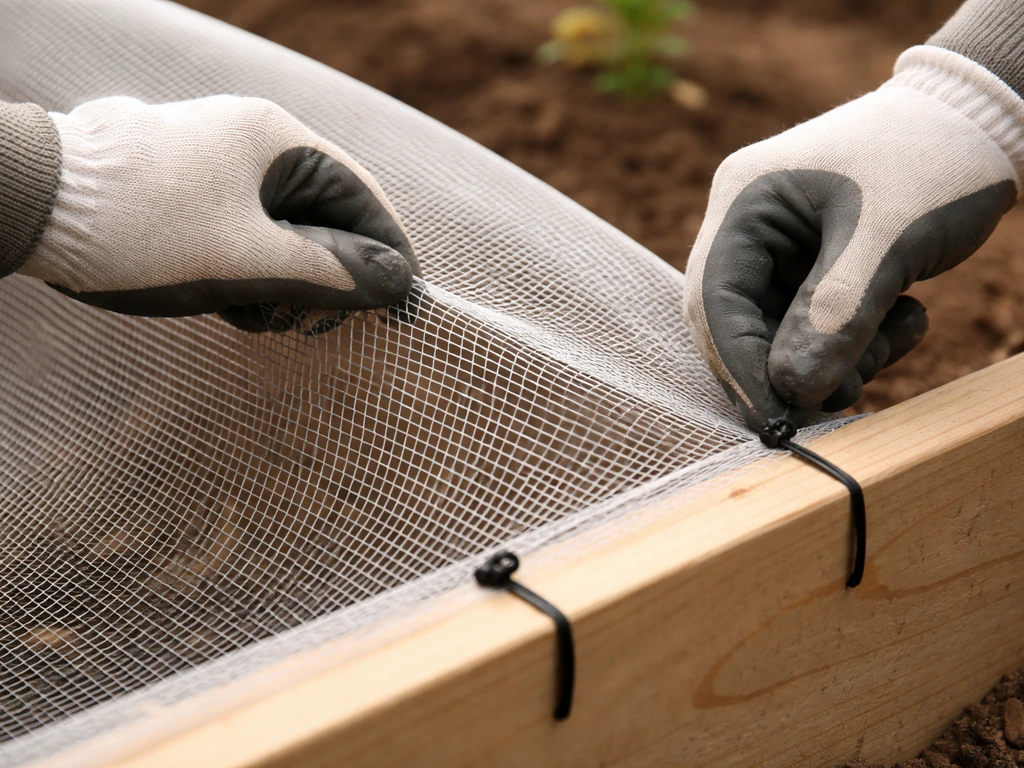
If you're installing netting today, or checking an existing installation, work through this list. Each point addresses a known failure mode.
- Choose mesh with openings no larger than 5mm x 5mm (fully stretched) for garden, fruit tree, and residential use. For larger birds in commercial settings, 3/4 inch mesh is acceptable.
- Check that you cannot poke a finger through the mesh when it's at full stretch. If you can, it's not wildlife-friendly.
- Anchor the netting at all perimeter points using proper fixtures, not just draped or loosely tied.
- Pull the net to consistent tension across the entire installation. Sagging sections create larger effective openings.
- Seal all edges completely to the structure or ground. Leave no gaps, loose folds, or hanging sections where birds could enter and become enclosed.
- Eliminate any loose gathers of material, especially at corners and base sections where the net meets walls or soil.
- Inspect the net regularly (at least monthly for active bird seasons) for tears, sagging, or anchor failures.
- Remove the netting when it's no longer needed, particularly for seasonal fruit trees once harvest is complete.
- For species-specific installations (warehouses, rooftops), verify the mesh size and install method with the target species in mind, ideally with professional guidance.
If a bird gets caught: what to do right now
Finding a bird tangled in netting is stressful, but your actions in the first few minutes matter. If you are asking whether birds get stuck in bird netting, the answer is yes, especially when mesh openings are too large or edges are loose. Here's what to do, in order. Place the bird in a dark, ventilated box, keep it quiet, and do not offer food or water while waiting for rehab, advice often shared by WildlifeRehab community members blank" rel="noopener noreferrer">place the bird in a dark, ventilated box and keep it quiet.
- Approach slowly and quietly. Sudden movement causes more panic and thrashing, which worsens injury.
- Gently drape a light cloth or towel over the bird to calm it before attempting to free it. Covering the eyes reduces stress significantly.
- Assess the entanglement carefully before touching the netting. If the net is loosely looped around a leg or wing, you may be able to gently lift the mesh over the bird. Do not pull or cut blindly.
- If the netting is wrapped tightly or embedded in skin or feathers, stop. Chicago Bird Collision Monitors explicitly cautions against attempting removal when material is tightly embedded, because improper removal causes additional injury and makes recovery harder.
- Once free (or if you can't safely free the bird), place it in a ventilated cardboard box with a few crumpled paper towels for padding. Audubon and Tufts Wildlife Clinic both recommend this as the correct interim container.
- Do not offer food or water. Tufts is specific on this: feeding an incorrect diet can cause additional injury or death.
- Keep the box in a warm, quiet, dark environment. Turn off radios or music nearby.
- Call a licensed wildlife rehabilitator immediately. If it's after hours, call anyway, most rehab centers have emergency lines or answering services. Search NWRA (National Wildlife Rehabilitators Association) or your state wildlife agency for local resources.
- Transport the bird with the car radio off and the box secured. Keep conditions calm throughout.
After the bird is removed or rescued, find and fix the failure point in your netting before birds return. If one bird got trapped, others will too.
Signs your netting installation is causing problems
You don't always find a bird mid-entanglement. Watch for these warning signs that your netting may be harming wildlife even when you're not watching.
- Feathers or blood visible on or around the netting
- A bird sitting motionless near the net (possible shock or injury from a recent escape)
- Tears or stretched sections in the mesh, which create much larger openings than the rated size
- Loose material hanging below the main net body
- Netting that has separated from anchors at corners or edges, creating a gap birds can enter through
- Sagging sections where the net has lost tension and is puddling on a surface
Legal and ethical considerations
In Victoria, Australia, using backyard fruit-tree netting with mesh larger than 5mm x 5mm has been illegal since September 1, 2021. The Victorian government linked this regulation directly to the rising rate of wildlife entanglement and injury caused by large-mesh netting. The regulation reflects a broader ethical framework: using a product that you know or should know causes wildlife harm is not just an ecological problem, it's increasingly a legal one.
In the United States, the Migratory Bird Treaty Act protects most wild bird species from harm, and using netting in a way that foreseeably traps and injures migratory birds could create legal exposure, particularly for commercial or industrial operators. The USFWS avoidance and minimization measures are designed precisely to give landowners and businesses a compliance framework. Following the mesh-size guidance and installation standards they outline is both the ethical and legally safer path.
Alternatives worth considering
Netting isn't your only option. Depending on the setting and the species involved, some alternatives are actually more effective and carry less risk of incidental harm.
| Method | Best For | Key Limitation |
|---|---|---|
| Fine-mesh exclusion netting (5mm or less) | Fruit trees, garden beds, balconies | Requires proper installation; must be removed seasonally |
| Physical spikes | Ledges, rooftops, signage | Doesn't work on flat open surfaces; effectiveness varies by species |
| Reflective deterrents (tape, discs) | Open areas, warehouses | Birds habituate quickly; needs regular repositioning |
| Predator decoys | Rooftops, open agricultural land | Habituation is a major problem; limited long-term effect |
| Habitat modification | Gardens, orchards | Requires structural changes but provides lasting results with no injury risk |
| Row cover fabric (dense woven material) | Vegetable gardens, low fruit plants | Less durable; not suitable for large trees or permanent structures |
Bird spikes are a commonly compared alternative to netting, and whether they hurt birds is a separate question with its own nuances worth understanding. The general principle across all physical deterrents is the same though: correct selection and installation determine whether the product works as intended or becomes a hazard.
If you're dealing with a specific bird pressure problem and netting feels like too much to manage correctly, habitat modification is the most permanent solution with the lowest risk to wildlife. Removing food sources, blocking access to nesting sites before birds establish, and using dense physical barriers at entry points are all approaches that exclude birds without creating entanglement opportunities. Before using any deterrent like bird spikes, check whether the specific spikes are designed to minimize injury and whether alternatives would reduce risk dense physical barriers. They take more upfront planning, but you're not left doing monthly inspections for trapped animals.
FAQ
Is bird netting ever safe for birds, or does it always cause harm?
It can be safe when the mesh is correctly rated for the target species and the net stays uniformly tensioned with sealed edges. The danger comes from specific failure modes like loose perimeter gaps, slack sagging, or mesh sized too large for small birds.
How can I tell if my netting is tight enough, not just the mesh size on the label?
Do a “fully stretched” check. If any area sags when birds or wind press on it, the effective openings become larger than the mesh rating. Use dedicated fixing points to prevent corners and seams from floating or relaxing.
Can birds still get trapped if the mesh opening is small but the net is installed incorrectly?
Yes. Even small mesh can cause entanglement if birds can reach slack gathers, loose tails at the edges, or distorted gaps at junctions (like where the net meets a wall, balcony rail, or trellis). Edge sealing and eliminating hanging material matter as much as mesh size.
What should I do right away if I find a bird tangled in netting?
Move slowly to reduce stress, remove the net carefully so you do not tighten the mesh, and get the bird to a wildlife rehabilitator as soon as possible. Afterward, inspect for and repair the exact entry point that allowed the capture, because the same path will trap others.
How quickly should I respond to a bird caught in netting?
As quickly as you can. Stress and exhaustion begin early, and a bird that thrashes for even a short period can face delayed complications after release (for example, muscle damage from extreme exertion). Fast removal reduces both immediate entanglement risk and downstream health risks.
Does netting hurt birds more on hot days or during high winds?
It can. Heat can increase distress if a bird is confined, and wind can create temporary slack and distortions that increase effective openings. If weather commonly loosens your installation, you may need stronger tensioning or wind-appropriate fastening methods.
Is finger testing (“can I poke a finger through?”) enough to confirm the net is the right mesh size?
It is a useful quick screen, but test the net when it is fully stretched and at the points birds would approach. A net that passes in one area but sags in another can still create larger openings where entanglement happens.
What are the most common DIY mistakes that lead to birds getting inside?
Three big ones are draping netting loosely rather than tensioning it, failing to secure corners and seams so they lift or flex, and leaving any loose gathers or hanging ends. These create entry points where birds become trapped instead of being excluded.
Can netting be used over nesting areas, or does it need to be installed before birds arrive?
For lowest risk, install before birds establish nesting or roosting. If birds are already present, they may attempt to pass through openings or become trapped while trying to access eggs or nesting materials, increasing both welfare impact and rescue difficulty.
Does netting work equally well for all birds?
No. Species behavior matters. Some birds may land on top of the net or find ways to bypass it, which reduces effectiveness and can lead to repeated exposure. Matching mesh size, placement height, and deterrent strategy to the specific species gives better outcomes.
If I use netting instead of spikes, do I still need to do inspections?
Yes. Netting installations can degrade over time due to weather, UV exposure, and physical wear at edges and anchor points. Plan periodic checks for slack areas, damaged mesh, and new entry gaps, especially after storms.
What are safer alternatives when netting is difficult to install correctly?
Habitat modification is often the safest long-term approach, such as removing food sources or blocking access to nesting sites before birds arrive. Dense physical barriers at entry points can also reduce risk compared with solutions that rely on entanglement-prone geometry.
Are there legal or regulatory considerations I should know about?
Yes, especially if you live in places with restrictions tied to mesh size and entanglement risk. In the US, federal protections can apply to migratory birds, and knowingly using netting in a way that predictably traps and injures birds can create compliance risk, particularly for commercial or industrial sites.