
Wind turbines do kill birds, but the evidence does not support the claim that they are destroying bird populations. For most species, especially common songbirds, the current science finds no demonstrated population-level collapse linked to wind energy. There are real, documented risks for specific groups (particularly certain raptors and migratory species at poorly sited facilities), and those risks deserve serious mitigation. But the sweeping narrative that windmills are wiping out birds misreads how mortality works at the population level, conflates local carcass counts with extinction risk, and ignores the much larger toll taken by cats, buildings, and vehicles.
Are Windmills Destroying the Bird Population? Evidence and Mitigation

Marcus Whitmore
4 Jul 2026

Do wind turbines meaningfully reduce bird populations overall?
The U.S. National Academies reviewed the best available evidence and concluded that wind facilities do cause bird fatalities, but that population-level effects (meaning actual declines in species numbers) are not well demonstrated for most bird species. USGS reaffirmed this finding, stating that most bird species, especially songbirds, appear to be at low risk of population-level impacts from wind energy development. That does not mean zero risk exists. It means that counting dead birds under a turbine is not the same as demonstrating a population crash. The two require very different evidence.
The distinction matters enormously. A species' population can absorb some level of additional mortality if that mortality stays below certain demographic thresholds. Researchers use survival rates, fecundity data, and Bayesian demographic models to evaluate whether collisions at wind sites actually push a species toward decline, or whether the losses fall within natural variation. For common, high-reproducing birds, wind-turbine deaths are generally a small fraction of total mortality. For long-lived, slow-reproducing species like golden eagles, even a modest increase in adult mortality can tip the demographic balance in ways that matter. The risk is real but species-specific, not universal.
How wind turbines actually kill birds (and what else affects them)
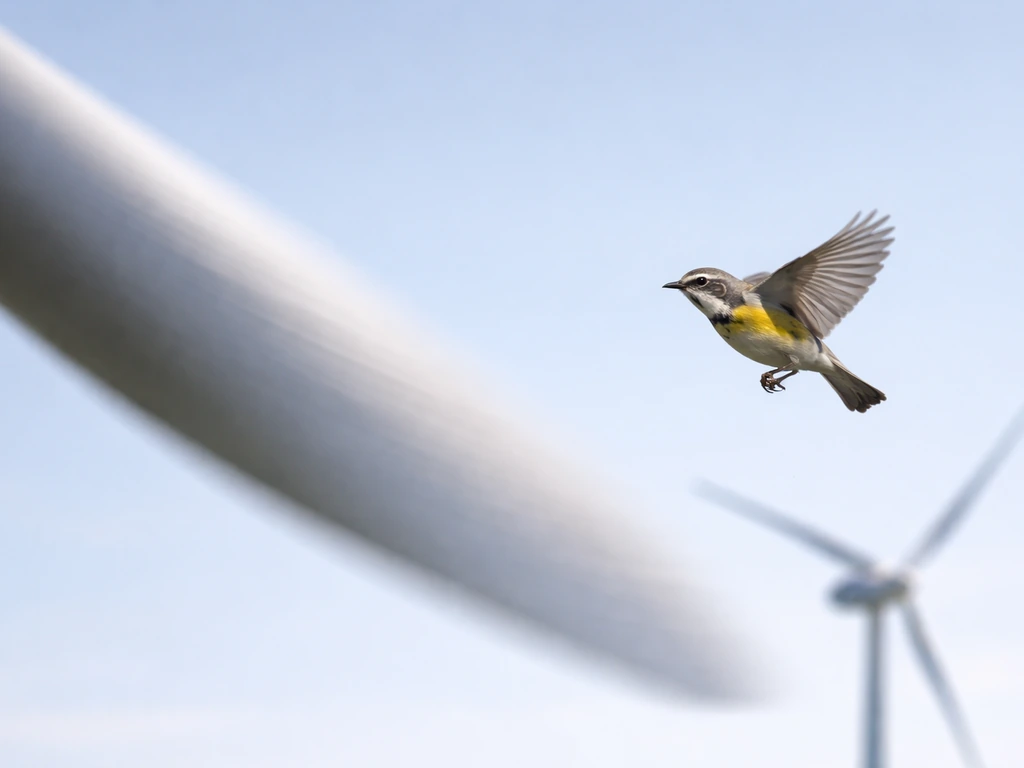
The primary mechanism is direct collision with rotating blades. Birds fail to detect or avoid the rotor-swept zone, strike a blade, and die from blunt-force trauma. This happens most often during migration, at night, or in low-visibility conditions. A peer-reviewed framework for offshore wind development on marine birds also recommends lighting best practices such as minimizing deck lighting, using downward or shielded light sources, and avoiding broad-spectrum lighting to reduce collision risk for nocturnal migrants during reduced visibility. It is not a mystery mechanism, and it is not caused by sound or electromagnetic fields, despite claims you will find online. The DOE has stated clearly that there is no evidence turbine sound directly harms birds, and the physics of blade-strike mortality is straightforward.
Beyond direct collisions, there is a displacement or avoidance effect. Some birds actively avoid areas around operating turbines, which can reduce available foraging or nesting habitat. Studies confirm this happens, but the demographic consequences are hard to measure and generally considered secondary to collision mortality for most species. Habitat fragmentation from access roads, substations, and cleared land around wind projects adds a third layer, again typically smaller in magnitude than collision risk but worth tracking at large-scale developments.
How bird deaths at wind sites are measured (and why the numbers are tricky)
Fatality estimates do not come from simply counting every dead bird found. Researchers use standardized carcass searches and then correct for two major sources of undercounting: scavenger removal (a carcass can be eaten within hours before anyone looks) and searcher efficiency (even trained observers miss carcasses, especially small birds in dense vegetation). USGS developed the GenEst software specifically to combine these correction factors and produce statistically adjusted per-turbine-per-year estimates with uncertainty ranges, rather than raw body counts.
These corrections matter a lot. Studies have shown that small birds are missed at high rates in many monitoring programs, meaning raw carcass numbers systematically undercount actual mortality for small species. Searcher bias trials and carcass persistence experiments are run alongside fatality monitoring to calibrate the math. Even after all this work, a single facility's number cannot be blindly generalized to the entire U.S. fleet because site conditions, vegetation, scavenger communities, and searcher effort all vary. There is no single definitive national body count, though published estimates have ranged from roughly 140,000 to over 500,000 U.S. bird deaths per year from wind turbines, depending on methods and the years studied.
Translating any of those fatality estimates into a statement about bird populations requires a second step: demographic modeling. PCBs can also move up food chains and become more concentrated in higher-trophic-level birds, which may contribute to population declines through biomagnification. You need to know how many individuals of a given species exist, what their natural survival and reproduction rates are, and how much additional mortality the population can absorb before it begins declining. Most studies acknowledge that this demographic linkage is either absent or uncertain for most species and facilities. That is an honest limitation of the field, not a cover-up.
Which birds are most at risk, and where
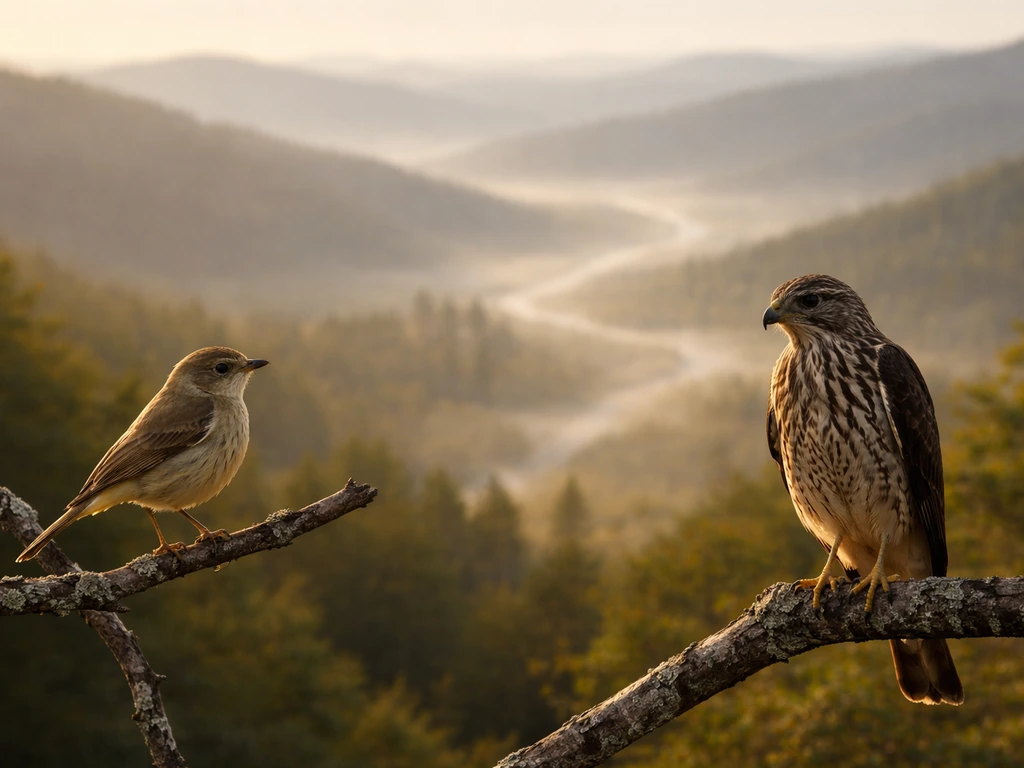
Risk is not evenly spread. Nocturnal migratory passerines (think warblers, thrushes, and sparrows) show up frequently in carcass monitoring, with clear spikes during spring and fall migration. Their populations are large enough that current collision rates generally do not threaten them at the population level, but that depends heavily on how much wind capacity expands and how well sited future projects are.
Raptors are the group that draws the most legitimate conservation concern. USGS modeling has flagged golden eagles, barn owls, ferruginous hawks, American kestrels, and red-tailed hawks as species where population-level impacts are more plausible given their life history. Long-lived birds with low reproductive rates cannot compensate quickly for elevated adult mortality. A demographic study of golden eagles showed that even relatively small numbers of turbine-caused deaths could measurably affect population growth rates. The Altamont Pass wind facility in California became a landmark case for this problem, with documented raptor fatalities that prompted retrofitting and operational changes over many years.
Spatially, risk concentrates in specific places. Ridgelines that funnel migrating raptors, coastal and inland migration corridors, areas near wetlands, and landscapes where eagles have high territorial fidelity are all elevated-risk zones. A wind project built away from these features carries substantially lower biological risk than one sited directly across a major flyway.
One important clarification: bats are often lumped with birds in public discussions about wind turbine wildlife impacts. Bats face their own distinct mortality risk from wind turbines (including barotrauma from pressure changes near blades, not just physical strikes), and the monitoring, seasonality, and demographic implications differ from birds. When you see alarming statistics about wind turbine wildlife deaths, check whether the number combines birds and bats, because the two categories should not be treated as interchangeable for conservation purposes.
What the evidence actually supports versus common myths
The reality is that most viral claims about windmills annihilating birds do not hold up. A FactCheck.org analysis found that assertions of over one million bird deaths per year from wind in the U.S. were not supported by the available evidence, and figures in the billions cited in political contexts are wildly inflated. The DOE and Renewable Energy Wildlife Institute estimate that wind turbines account for less than 0.01% of all human-caused bird mortality in the U.S. annually. House cats kill an estimated 1. As a result, it is hard to find a single reliable number for how many bird die from wind turbines in total, because estimates vary by method, location, and time period Wind turbines, while a real concern for specific species, are nowhere near the top of the list.. 3 to 4 billion birds per year in the U.S. alone. Building collisions add another 600 million or more. Wind turbines, while a real concern for specific species, are nowhere near the top of the list.
| Mortality Source | Estimated Annual U.S. Bird Deaths | Population-Level Concern? |
|---|---|---|
| House cats (feral and domestic) | 1.3 to 4 billion | Yes, demonstrated for some species |
| Building/window collisions | ~600 million | Yes, for some migratory species |
| Vehicles | ~200 million | Moderate |
| Wind turbines | ~140,000 to 500,000+ | Low overall; elevated for specific raptors |
| Power lines | ~25 million | Elevated for large birds/raptors |
You will also see claims that painting one blade of a turbine black dramatically reduces bird deaths. There is actually published research supporting this as a modest intervention at some sites (a Norwegian study found reductions in fatalities at a specific installation), but it is not a universal fix and has not been evaluated at scale across diverse species assemblages. Similarly, the idea that turbine noise directly repels or injures birds is not backed by evidence. Collisions, not acoustics, are the documented mechanism.
The "windmills everywhere" argument assumes that U.S. wind capacity scaling means proportional increases in bird deaths. The relationship is not linear. This is where correlation vs causation bird thinking comes in: even if two things move together, you still have to show that wind turbines are actually causing population declines. Better siting, modern mitigation technology, and operational controls can break that proportionality if they are required and enforced. Assuming that every new turbine added kills birds at the same rate as poorly sited legacy facilities like Altamont Pass is simply wrong given what we now know about site selection and operational mitigation.
Mitigation strategies that are working right now

The single most effective intervention is still upstream siting. The National Academies framework places avoiding high-risk areas (migration corridors, ridgelines used by raptors, wetland edges) at the top of any mitigation hierarchy, because preventing exposure beats managing it after the fact. Pre-construction surveys, isotopic tracking of bird usage, and geographic modeling of collision risk are all standard tools for evaluating prospective sites, and they should be required, not optional.
Once a project is operating, the most evidence-backed tools are curtailment-based. Seasonal curtailment, meaning slowing or stopping turbines during peak migration windows, has demonstrated reductions in fatalities for migratory birds. For raptors specifically, AI-based detection systems like IdentiFlight use real-time image recognition to identify large birds entering rotor-swept zones and issue automated shutdown commands within seconds. Peer-reviewed studies of these systems have shown measurable reductions in eagle collisions, though misidentification rates and system reliability remain ongoing engineering challenges.
Other interventions with supporting evidence include:
- Radar-triggered curtailment that detects approaching bird flocks and pauses turbines during high-migration nights
- Tower design choices: lattice towers attract perching raptors more than tubular monopole towers, and switching tower types reduces raptor presence near rotors
- Reducing or shielding lighting on turbine structures, since steady lights attract nocturnal migrants; flashing or downward-directed lighting is less disruptive
- Post-construction fatality monitoring using GenEst-corrected methods, which enables before-and-after comparisons to actually evaluate whether mitigation is working
- Land management around turbine bases, including reducing vegetation cover that attracts prey species (which in turn attract raptors into blade-strike zones)
What you can actually do about this
If you are a curious citizen or researcher
Start by looking at the USGS and DOE resources directly rather than relying on social media summaries. The USGS FAQs on wind turbine wildlife impacts are publicly available and cite the actual monitoring literature. When evaluating a specific project in your area, request the pre-construction biological assessment and the post-construction monitoring plan from the developer or permitting agency. These are typically public documents. Look for whether the monitoring uses GenEst or a similarly bias-corrected estimator, and whether the project has operational mitigation requirements (curtailment periods, AI detection) written into its conditions of approval.
If you are a pet owner or concerned homeowner near a wind project
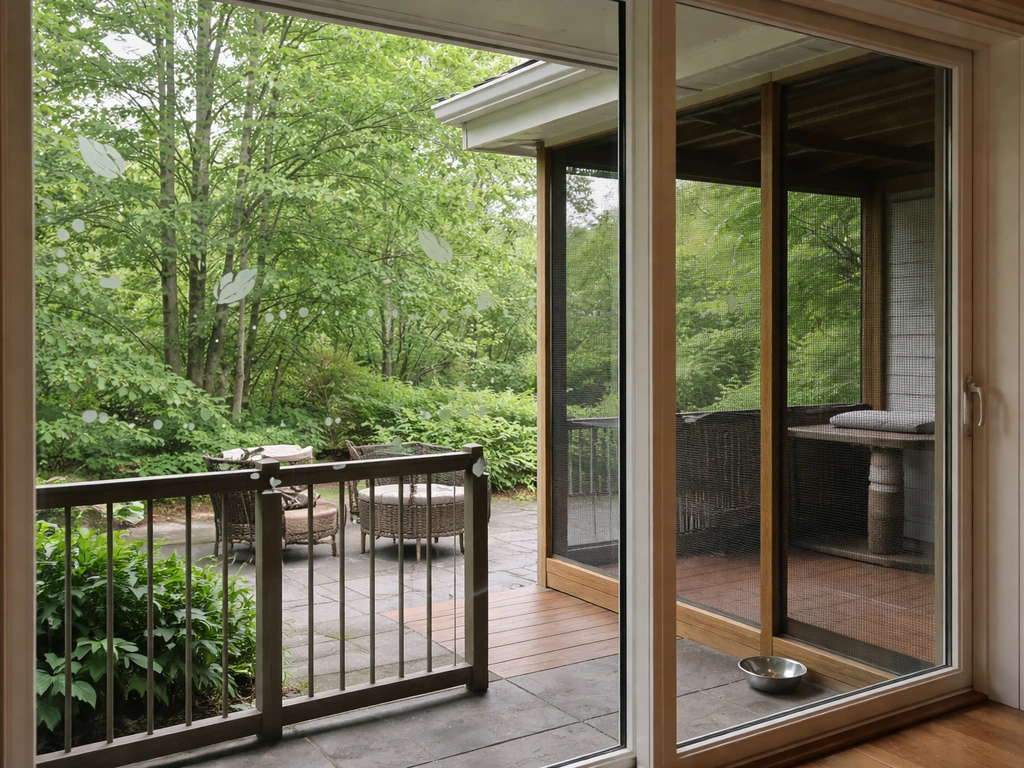
The practical reality is that your outdoor cats, picture windows, and nearby roads pose a far greater threat to local bird populations than nearby wind turbines. This bird-death picture is one reason analysts compare wind-turbine mortality against other major causes, including fossil-fuel powered power generation your outdoor cats, picture windows, and nearby roads. If local bird conservation is genuinely your concern, keeping cats indoors and applying window collision deterrents are among the highest-impact personal actions available. You can also report unusual bird mortalities near any infrastructure (including turbines) to your state wildlife agency or to eBird and iNaturalist for documentation.
If you work in energy, planning, or wildlife management
Advocate for mandatory post-construction monitoring with bias-corrected estimators as a standard permit condition, not a developer-optional courtesy. Support requirements for AI-based curtailment systems at any facility within documented raptor use areas. Push for population-level demographic analysis for species flagged as vulnerable during pre-construction review, particularly golden eagles and other raptors with low reproductive rates. The USGS population-level assessment methodology is a published, peer-reviewed framework that exists precisely to move this conversation beyond raw carcass counts toward actual conservation decision-making.
The broader context matters too. Understanding which threats actually drive bird population declines (habitat loss, invasive species, pesticide use, and climate change dominate that list) helps put wind turbine impacts in proportion. Has science gone too far bird? Understanding what most drives bird population declines helps put wind turbine impacts in proportion. That proportionality is not an excuse to ignore turbine-related mortality. It is a reason to spend mitigation resources on the highest-risk sites and species rather than treating every turbine as equally dangerous. Precision matters more than blanket alarm.
FAQ
If wind turbines kill birds, why don’t we see proof of bird population collapse from wind energy for most species?
Because “killed at a site” does not automatically equal “declines in the number of birds in the wild.” Researchers test whether additional turbine-related adult or juvenile mortality pushes a species past demographic thresholds using survival and reproduction rates, and for many common, high-reproducing birds the modeled added mortality remains within normal year-to-year variation.
How can carcass counts under a turbine be misleading, even when monitors find many birds?
Most monitoring is corrected for carcass scavenging (birds removed before searches) and searcher efficiency (observers miss carcasses, especially small birds in dense vegetation). Without those bias corrections, raw counts systematically understate true fatalities, which can distort comparisons between sites and across seasons.
Why do some projects report high bird deaths, while others report lower numbers?
Fatality estimates depend heavily on site conditions (vegetation density, weather), the local bird community, scavenger activity, and how thoroughly searches are conducted. That is why a “single facility number” usually cannot be generalized to the entire U.S. fleet without comparable monitoring methods and context.
Are raptors always the most at-risk group, or are there cases where songbirds are more concerning?
Raptors are often higher priority because many are long-lived with low reproductive rates, so modest extra adult mortality can matter. Songbirds are generally at lower population risk where sites are average and monitoring shows losses are small relative to total mortality, but poorly sited projects near heavy migration routes can still raise concerns for specific species or seasons.
Do wind turbines pose more risk at night or during migration?
Risk tends to spike during migration, especially at night and in low-visibility conditions when birds are less able to detect and avoid rotor-swept areas. That seasonal pattern is one reason curtailment windows are often targeted to peak movement periods rather than applied year-round.
What is the difference between collision mitigation and “displacement” mitigation?
Collision mitigation aims to reduce blade strikes (for example, operational curtailment or detection-triggered shutdown). Displacement mitigation addresses habitat avoidance, where birds steer away from turbine areas, reducing available foraging or nesting space. Avoidance can matter, but its demographic impact is harder to measure than collision rates.
Is it true that painting turbine blades black prevents most bird deaths?
There is evidence that blade painting can reduce fatalities at some installations, but it is not a guaranteed or universal solution. Effects can vary by species, lighting, local conditions, and how the change interacts with visibility and bird flight behavior, so it should be evaluated with site-specific before-and-after monitoring.
Do turbine sound and electromagnetic fields harm birds directly?
The documented and understood mechanism for bird fatalities is physical collision with blades. Sound and electromagnetic effects have not been supported as direct causes of injury in the way collision physics has, so mitigation efforts that focus on detection and curtailment typically target the main causal pathway.
What should I look for in a wind project’s monitoring plan to know whether results are reliable?
Check whether the plan includes standardized carcass searches plus bias correction (for scavenging and searcher efficiency), uses an estimator approach like GenEst or an equivalent method, and specifies uncertainty ranges. Also look for whether the plan includes strong operational triggers tied to identified risk (for example, migration-period curtailment or raptor detection shutdown rules).
How do curtailment and AI-based shutdown systems actually work in practice?
Curtailment reduces or stops turbine operation during defined high-risk windows, such as peak migration. AI detection systems aim to identify large birds entering rotor-swept zones in real time and then trigger rapid shutdown commands, but performance depends on detection reliability and misidentification rates, so effectiveness should be assessed with ongoing engineering and field validation.
If a project is located near a migration corridor, what mitigation step is usually prioritized first?
Upstream siting decisions and avoidance are typically prioritized, because preventing exposure is more effective than trying to “manage after the fact.” When siting cannot fully avoid risk, the next priority is usually targeted operational controls during peak risk periods, coupled with raptor-specific monitoring and population-focused demographic evaluation for vulnerable species.
Why do some estimates claim wind turbines cause millions of bird deaths, while others say the number is much lower?
Different studies use different methods, assumptions, correction factors, and time periods, which can drastically change estimates. The most policy-relevant work separates raw carcass observations from bias-corrected fatalities and then evaluates demographic population effects, rather than treating a single uncorrected number as the final answer.
Do wind turbines pose the same wildlife problem as bats?
No, bats face distinct wind-related risks that can involve pressure changes near blades (barotrauma) and different seasonal activity patterns. If a public claim combines birds and bats into one total, it can hide whether the underlying risk is actually collision-driven for birds or pressure-related for bats, which matters for choosing the right mitigation.
If I want to assess whether turbines are a conservation priority in my area, what’s the most practical next step?
Ask for the project’s pre-construction biological assessment and the post-construction monitoring reports, then compare what species are flagged as at-risk and what mitigation is required during those species’ peak windows. If the documentation does not include bias-corrected fatality estimates and operational risk responses, treat the conclusions as incomplete.