
Bird bangers and bird bombs are both pyrotechnic scare devices used to frighten birds away from fields, docks, airports, and other problem sites. They are not the same thing, and the terminology gets muddled enough that people often order one when they need the other. Bird bangers are typically cartridge-based noisemakers (often 15 mm diameter, 60 mm length cardboard tubes) that produce a sharp crack or bang to startle birds at a distance.
Bird Bangers vs Bird Bombs: Differences, Risks, and What Works

Marcus Whitmore
2 Jun 2026
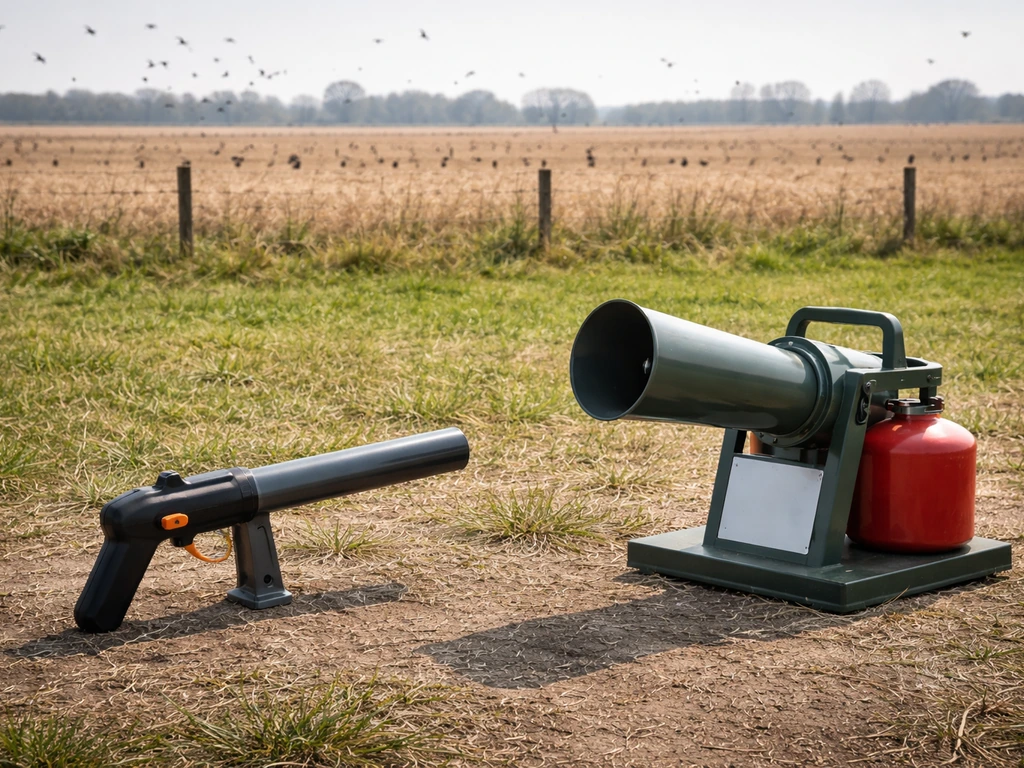
Bird bombs (also called shell crackers or explosive pest control devices) are more powerful pyrotechnic projectiles that travel downrange before detonating with a louder blast. Neither device kills birds under normal use; both work by intimidation, not injury. Which one you need depends on your site, the species causing problems, and whether you can legally use them at all in your location.
What they are (and why the naming is such a mess)
The confusion starts with the fact that there is no single industry-wide standard for what gets called a "banger" versus a "bomb." Different manufacturers, regions, and regulatory agencies use the terms almost interchangeably, and a product sold as a "bird banger" in Canada may be functionally identical to something sold as a "shell cracker" or "bird bomb" in the United States. That said, a few practical distinctions tend to hold across most product lines.
Bird bangers in their most common form are cartridges fired from a pistol or launcher. The cartridge travels a short distance and then produces a single loud crack. They are relatively low-power compared to shell crackers, and the sound is the entire deterrent mechanism. Bird bombs (or shell crackers) are fired the same way but contain a larger pyrotechnic charge. They fly further before detonating and produce a more explosive blast with a wider acoustic footprint. Some products marketed as bird bombs contain flash powder, which puts them squarely in the U.S. ATF's category of high explosives, with all the storage and handling requirements that come with that classification.
There is also a completely separate category of device: the propane cannon. These are stationary, automated units that fire timed blasts of gas. People sometimes call these "bird bangers" in casual conversation, especially in agricultural settings like vineyards. They are not pyrotechnic, they do not involve explosive materials, and they have their own completely different set of considerations around setbacks and timing. Just be aware that when someone says "bird banger" they might mean a cartridge device, a propane cannon, or something else entirely, depending on where they are and who they learned the term from.
How they actually work
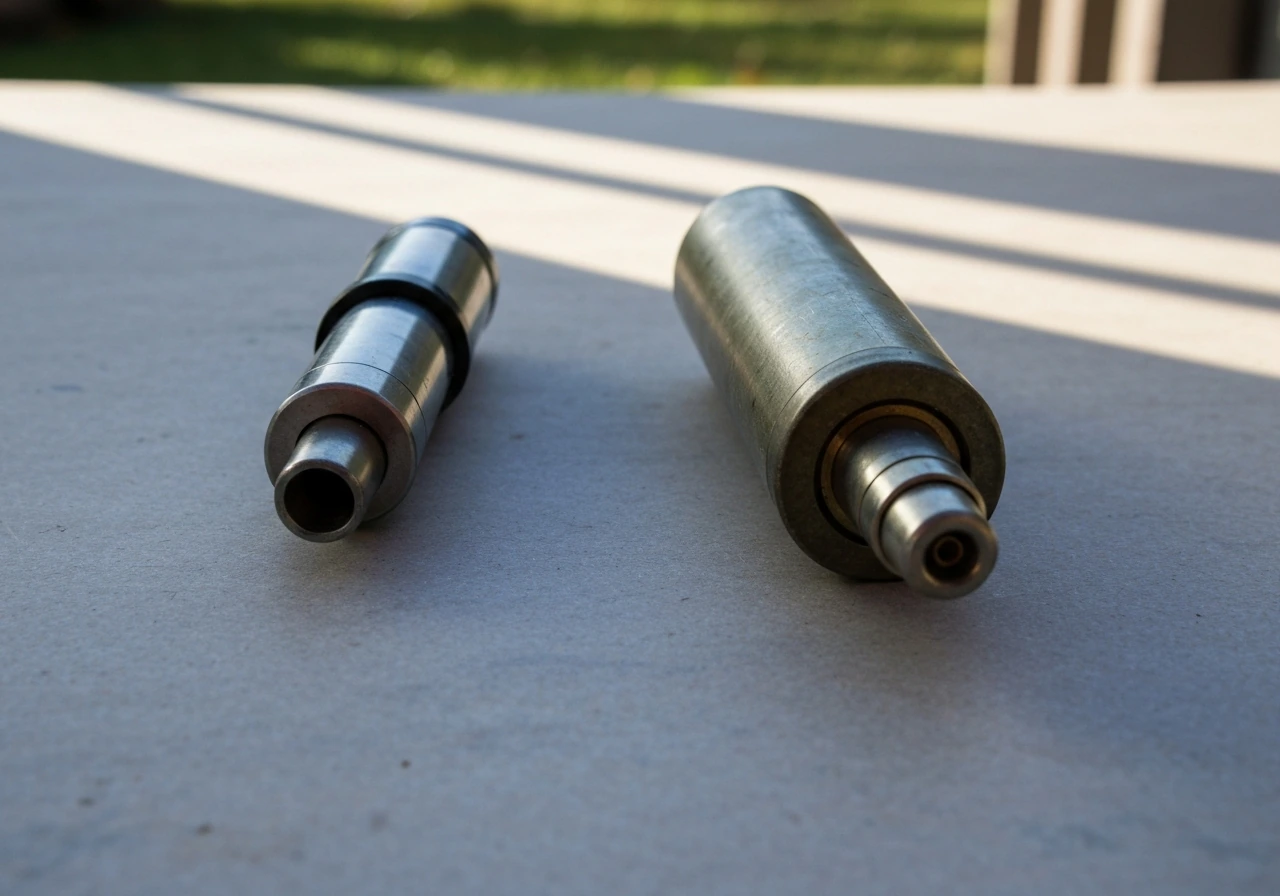
All of these devices operate on the same core principle: sudden, loud, unpredictable noise triggers a startle and escape response in birds. The acoustic shock is the deterrent. Birds do not need to be hit, injured, or even closely approached; the sound alone is what drives them off. Research published in Scientific Reports in 2025 confirmed that high-frequency and high-amplitude sounds enhance bird deterrence, which is consistent with why the explosive crack of a bird bomb tends to outperform a simple bang at pushing birds off large open areas.
Bird bangers work best at closer ranges, in areas where a sharp crack is enough to flush birds from a specific spot. Bird bombs carry the detonation point further out, which is useful when you need to push birds off a large field or a pond where you cannot get close without flushing them yourself. Propane cannons, by contrast, provide a repeating automated stimulus without any human operator needed, but they lack the directional flexibility of a handheld launcher. In airport wildlife management, Transport Canada recommends integrating pyrotechnics with other controls including distress calls, propane cannons, and, where permitted, shooting, because no single tool does everything.
When they help and when they fail
The honest answer here is that pyrotechnic deterrents work well in certain conditions and fail predictably in others. They tend to perform best when deployed immediately the moment birds arrive at a site, before those birds have had any chance to settle and establish a feeding pattern. Transport Canada's aerodrome guidance is explicit about this: get on it fast, before birds get comfortable. When used reactively, after a flock has already been feeding at a site for days or weeks, these devices become much less effective.
Habituation is the main reason pyrotechnic programs fail. Birds are not stupid. USDA/APHIS Wildlife Services warns directly that habituation is common, especially when cannons or launchers are fired on a predictable schedule. Once birds learn that the bang is not followed by any real consequence, they ignore it. A Transport Canada evaluation (TP 13029) found that pyrotechnic deterrence at aquaculture sites can wear off in as little as a few hours to a few days, depending on how hungry the birds are and how persistent the operator is.
Species matter a lot too. Highly motivated foragers like cormorants, starlings, and Canada geese feeding in a food-rich location are much harder to shift than casual visitors. Birds with limited alternative food sources nearby will tolerate more harassment before relocating. In warehouse settings, where birds have found a warm, dry, predator-free roosting spot, acoustic scare devices alone almost never produce lasting results because there is nothing replacing the shelter that made the site attractive in the first place.
Settings where pyrotechnics tend to work
- Open agricultural fields, orchards, and vineyards, where birds are foraging opportunistically and can easily relocate
- Airport runways and taxiways, when used as part of an active, integrated wildlife hazard management program
- Aquaculture ponds, when deployment starts before birds establish a strong feeding routine
- Large open water bodies with multiple haul-out or loafing sites available to displaced birds
Settings where they often fail
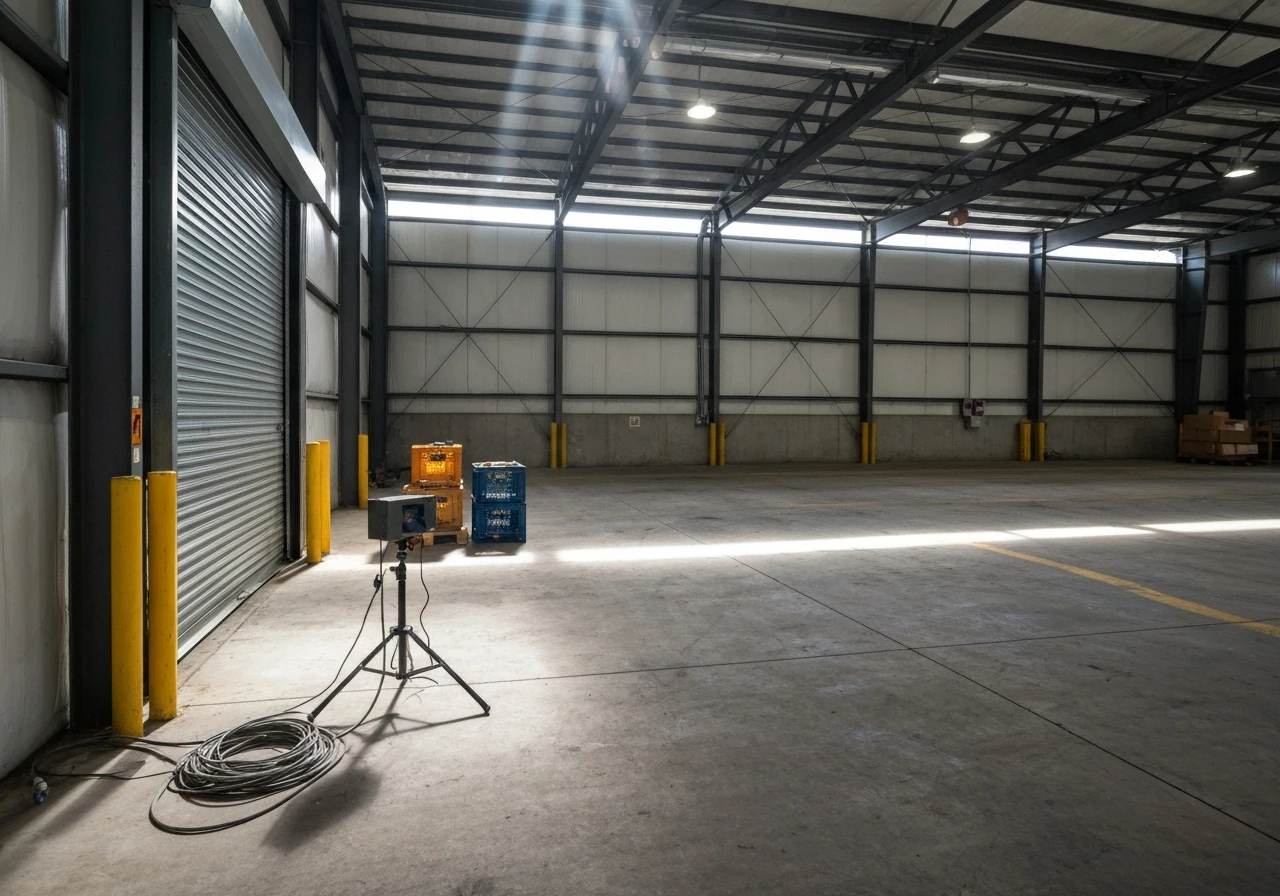
- Enclosed or semi-enclosed spaces like warehouses and hangars, where sound distortion and enclosed roosting make scare devices ineffective and potentially dangerous
- Residential yards and urban settings, where habituation happens fast and legal/neighbor concerns are significant
- Sites where birds have already established long-term roosting or nesting, especially colonial nesters
- Any site where the same schedule and location is used repeatedly without variation
Safety realities: birds, pets, people, and property
Let's be clear about what these devices do and do not do to birds. Under normal use, bird bangers and bird bombs do not injure or kill birds. They are scare tools, and the entire mechanism is acoustic stress, not physical harm. The birds fly away. That is the goal, and it is what happens in the vast majority of deployments. The reality is that the "lethality" concern that sometimes surrounds these products is mostly folklore, not documented field reality, as long as the devices are used as directed.
The real safety concerns point in a different direction: toward people, pets, and property. Bird bombs fired from handheld launchers produce a significant detonation at the far end of their trajectory. Misfires, incorrect launcher use, and debris landing in unintended areas are all documented risks. At airports specifically, Transport Canada's aerodrome guidance flags Foreign Object Debris (FOD): spent pyrotechnic casings on runways and taxiways are a genuine hazard that must be actively collected after use. Fire risk from ejected burning material is a serious concern in dry agricultural settings, particularly in grasslands, orchards, and vineyards during summer.
Pets and livestock react unpredictably to sudden explosive sounds. Dogs in particular can be severely traumatized by repeated close-range detonations, a fact worth considering seriously before deploying these tools near populated or residential areas. People standing within the blast radius of a misfired shell cracker can be injured.
Legal and permit requirements you cannot ignore

This is where many people get into serious trouble. In the United States, the ATF regulates explosive pest control devices (EPCDs) under its explosives framework. Products that contain flash powder, including many devices commonly marketed as bird bombs or shell crackers, are classified as high explosives. That means storage must comply with ATF explosive magazine requirements: a Type 1 or Type 2 magazine for permanent storage, or a Type 3 magazine for temporary attended storage. These are not suggestions. Improper storage of flash-powder-based bird deterrents is a federal violation.
Beyond federal explosives regulations, local ordinances frequently restrict or prohibit the discharge of pyrotechnic devices in residential zones, near schools, or within city limits. Some states require an explosives user permit. At airports, the FAA's Wildlife Hazard Management framework governs what tools are used and by whom, and operators working airside typically need specific training and authorization. If you are working in Canada, Transport Canada's aerodrome safety circulars and provincial wildlife regulations apply.
Before purchasing or deploying any of these devices, check your local ordinances, your state or provincial wildlife regulations, and if applicable, the specific requirements of the FAA or Transport Canada for your site type. Using unlicensed or improperly stored explosive pest control devices carries real legal consequences.
Choosing the right device for your situation
The decision between bird bangers and bird bombs is really a decision about scale, setting, and how much infrastructure you can put behind a deterrence program. Here is a practical comparison to help you match the device to the problem.
| Factor | Bird Banger (Cartridge) | Bird Bomb / Shell Cracker | Propane Cannon |
|---|---|---|---|
| Primary use | Close-range flushing, targeted harassment | Long-range dispersal over large areas | Automated, ongoing deterrence over fields |
| Explosive classification (US) | Typically lower-class; verify with product | Often classified as high explosive (flash powder); ATF regulated | Not pyrotechnic; not explosives-regulated |
| Operator required | Yes, handheld launcher | Yes, handheld launcher | No, automated timer |
| Effectiveness range | Short to medium | Medium to long | Fixed radius from unit |
| Habituation risk | High if schedule is predictable | High if schedule is predictable | Very high without repositioning |
| Fire risk | Low to moderate | Moderate to high in dry conditions | Low |
| Best setting | Fields, ponds, airports (close work) | Large open fields, water bodies, airports | Vineyards, orchards, grain fields |
| Indoor/warehouse use | Not recommended | Not recommended | Not recommended |
If you are managing a large open agricultural field with foraging birds and you have the permits and training to handle regulated explosive devices, a shell cracker or bird bomb gives you the range and acoustic impact to cover the full area. If you are doing precision work at an airport or along a pond edge, a cartridge-based bird banger gives you more control. If you need an overnight or unattended solution in a vineyard or orchard, a propane cannon (with proper setbacks and rotation) is the more practical choice, though it requires active management to prevent habituation.
If you are a homeowner dealing with a few corvids or sparrows in a backyard, neither bird bangers nor bird bombs are appropriate tools. They are overkill, likely illegal to discharge in your area, and will not solve the underlying problem anyway.
How to deploy them effectively, step by step
Assuming you have confirmed that your device is legal for your site and you have the appropriate permits, here is how to run a pyrotechnic deterrence program that actually gets results.
- Start immediately. The moment birds begin using your site, begin deterrence. Do not wait until a flock establishes a pattern. Early intervention dramatically reduces how long you will need to run the program.
- Vary your timing. Never fire at the same time every day. Birds learn schedules quickly. Mix up the time of day, the interval between firings, and which part of the site you are working. USDA/APHIS specifically flags predictable timing as a primary cause of program failure.
- Vary your position. Move around the perimeter and interior of the site. Firing from the same spot every time tells birds which area is safe. Approach from different directions to prevent birds from simply relocating to the far corner.
- Keep the interval tight. Do not let too long a gap pass between firings during active bird presence. Ontario's propane cannon guidance emphasizes that sustained stimulus is more effective than sporadic loud events. If birds are present, keep the pressure on.
- Observe setback rules. Ontario's propane cannon guidance uses a 125-meter (410-foot) minimum setback from residences as an example based on field sound measurements. For handheld devices, check your product instructions and local ordinances for minimum firing distances from structures, people, and livestock.
- Collect your debris. At airports and any airside environment, spent cartridges and casings must be collected immediately to prevent FOD hazards on runways and taxiways. Even in agricultural settings, cleaning up debris reduces fire risk and keeps the site safe.
- Combine with other tools. Pyrotechnics work best as part of a suite, not as a standalone solution. Pair them with distress call playback, visual deterrents, or other harassment methods for compounding effect.
- Monitor and document. Keep a log of which species you are seeing, how many, at what time of day, and how they respond to each deterrent event. This data tells you whether habituation is setting in and where you need to change tactics.
- Know when to stop. If you have been running a consistent program for two to three weeks with no reduction in bird activity, the pyrotechnic approach alone is not working for this site and species. Escalate to an integrated approach or bring in a professional wildlife damage management specialist.
Troubleshooting common problems
- Birds return within minutes of each firing: Habituation is already established. Immediately change device type, firing location, and timing. Add distress calls or visual scare elements the same day.
- Birds move to one side of the site: You are only covering part of the area. Reposition and work the entire perimeter.
- Neighbors complaining: Verify local ordinances, review your setback compliance, and reduce firing frequency during early morning or late evening hours. If you are using a propane cannon, check the sound level setting and reduce if possible.
- Device malfunctions or misfires: Stop immediately, treat the device as a live explosive, follow the manufacturer's misfire procedure, and do not attempt to re-fire or disassemble a misfired pyrotechnic round.
Better options that often work when bangers and bombs do not
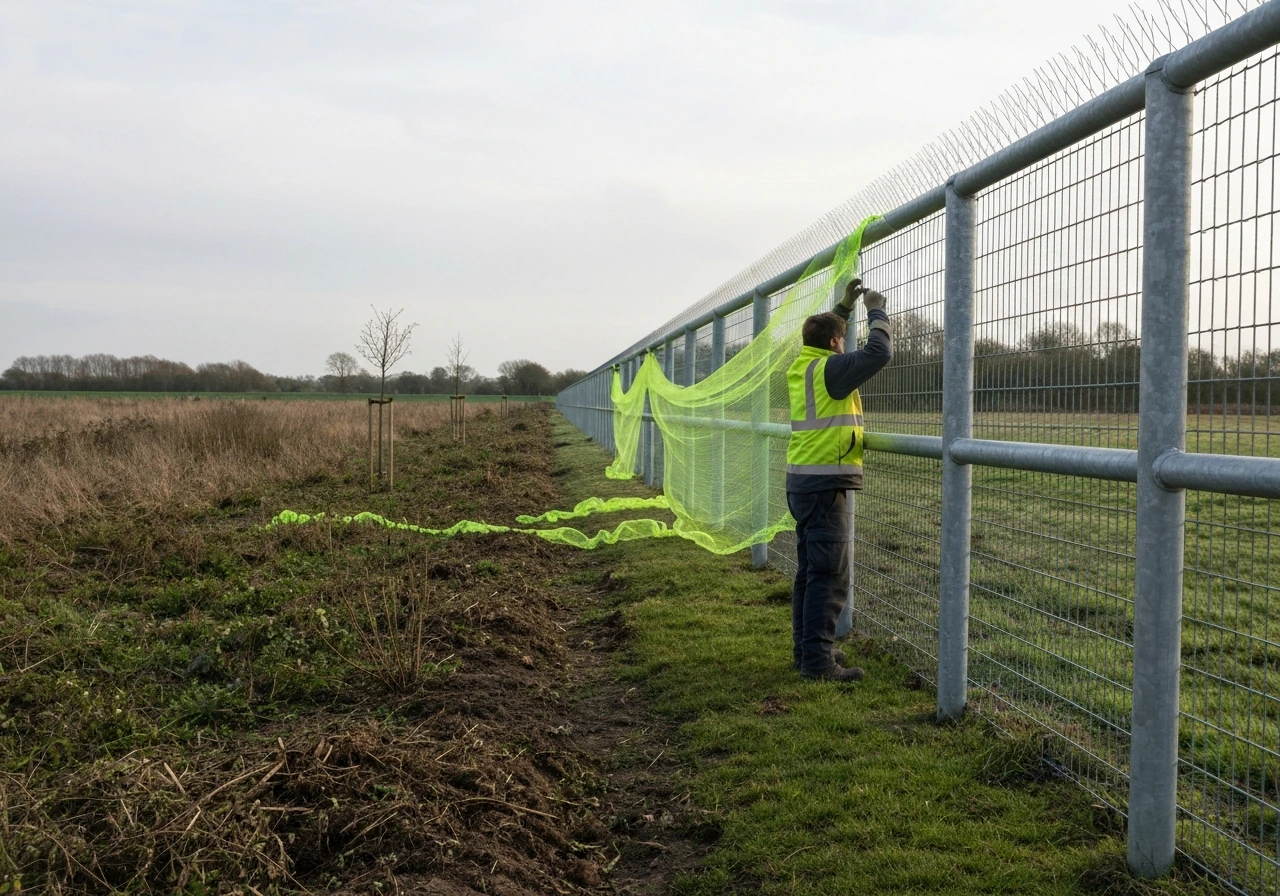
The U.S. Fish and Wildlife Service is unambiguous about this: a suite of harassment techniques consistently outperforms any single method. If bird bangers and bird bombs are not producing lasting results, or if they are not appropriate for your site at all, here are the science-backed alternatives that tend to produce more durable outcomes. Some people also look into playful sounding methods like Superkitties bird bop for a “pickle problem,” but those need to be checked against real, legal wildlife-deterrence guidance for your location.
Habitat modification
This is the most durable solution available and the one most often skipped because it requires actual work. Remove or reduce whatever is attracting birds to the site. Standing water, open grain storage, easy nesting ledges, abundant insects, or nearby food sources all pull birds in. If the habitat modification removes the reason birds are there, you do not need a deterrence program at all. For persistent problems in enclosed spaces like warehouses, habitat modification combined with exclusion netting is almost always more effective than acoustic scare tools.
Physical exclusion
Netting, bird wire, spikes, and slope systems physically prevent birds from landing or roosting. Unlike acoustic tools, exclusion does not require ongoing human effort after installation, and it does not wear off due to habituation. For warehouses, docks, and agricultural structures, properly installed exclusion netting is among the most cost-effective long-term solutions available.
Distress and alarm call playback
Electronic systems that play species-specific distress calls are more information-rich to birds than a generic loud bang. A starling that hears another starling's predator alarm call receives a biologically meaningful signal. These systems work best when combined with physical presence or other deterrents, and they still require rotation and variation to avoid habituation. Used correctly, they extend the effective life of an acoustic deterrence program significantly.
Laser deterrents
Low-power, long-wavelength red-beam lasers have proven effective at flushing birds, particularly in low-light conditions like dawn and dusk when bird activity is highest. The USFWS references lasers in its guidance on deterring herons and egrets. They produce no noise, no debris, no fire risk, and no regulatory concerns around explosives. They work best as a supplemental tool rather than a standalone solution, but they are genuinely useful in settings where noise-based devices are impractical.
Integrated professional management
For serious, persistent bird problems at airports, large agricultural operations, or commercial facilities, the most reliable outcome comes from engaging a licensed wildlife damage management professional or a certified airport wildlife biologist. These specialists combine tools in ways that prevent habituation, stay within regulatory requirements, and adapt to species-specific behavior in ways that a single device purchase simply cannot replicate. The FAA's Wildlife Hazard Management at Airports manual and USDA/APHIS Wildlife Services both emphasize integrated, professionally managed programs over reliance on any single deterrent technology.
If you are dealing with nuisance birds in a complex setting, whether that is a warehouse full of roosting starlings, a vineyard under siege from starling flocks, or a recurring bird hazard at a regional airfield, the fastest path to a real solution is usually combining at least three complementary tools, starting with the ones that address why birds find your site attractive in the first place.
Bangers and bombs are useful components of that toolkit, but they are rarely the whole answer on their own. If you are dealing with an unrelated computer issue where macOS shows high CPU from the bird process, the first step is to identify the exact process name and check for known causes in Activity Monitor macOS high CPU from the bird process.
A “train bird problem” typically means you have a recurring bird issue that requires a practical, repeatable deterrence strategy rather than a one-off scare device bird problems. For longer-term results, many programs pair pyrotechnics with non-explosive methods to avoid birds learning the pattern Bangers and bombs. Grackles can be especially tough to deter because they adapt quickly to repeated, predictable noises.
FAQ
How can I tell whether a “bird banger” listing is actually a pyrotechnic device or something like a propane cannon?
Check for details like a cartridge, launcher, shell, or pyrotechnic charge. Propane cannons are stationary, automated, and described in terms of gas, timers, and firing cycles. If the product mentions flash powder, explosive classification, or a projectile that detonates downrange, assume it is the higher-risk pyrotechnic type and confirm legality before ordering.
If “bird bombs” travel and detonate farther, how do I choose between them and cartridge bangers without overshooting my target area?
Start by marking the area you need to clear and the “safe zone” where spent casing and debris can land. Then pick the device class that keeps the detonation and fallout inside that boundary. When you cannot define a safe fallout area, a short-range cartridge banger or a non-projectile option (like exclusion or lasers) is usually the safer operational choice.
Do these devices work if birds have already been feeding at the site for weeks?
Often poorly. Once birds have established a routine, the scare effect fades quickly because habituation sets in. If birds are already settled, plan for a program that includes habitat removal or exclusion, and use any pyrotechnics only as one component of a rotating, time-sensitive harassment plan.
How quickly should I rotate or vary when using pyrotechnic scare devices?
Avoid firing on a consistent schedule. Instead, vary timing, sequence, and locations within the site so birds cannot predict “bang then nothing happens.” A practical approach is to change patterns daily and also respond to bird behavior, for example, increasing stimulus frequency only during peak arrival windows.
What is the safest way to handle the “foreign object debris” problem after firing shell crackers?
Treat casings and spent material like runway or crop debris, not harmless trash. Do a sweep immediately after each session, then again after the first wind or mowing cycle, since debris can shift into sensitive areas. If you are near hardscape, treat tool selection (brooms, rakes, vac systems for fine debris) as part of your safety plan.
Can dogs and other pets be harmed just from sound, even if the device does not hit them?
Yes. Pets can become severely distressed or traumatized by repeated close-range detonations, and some may bolt into roads or injury hazards. Keep people and animals well away from the site, and if you need bird control in residential settings, consider non-explosive alternatives rather than pyrotechnics.
What are common “legal mistakes” people make when buying or storing these devices?
The biggest errors are treating explosive pest control devices as normal fireworks, storing them without required magazine type for flash-powder products, and assuming local discharge rules match federal rules. Even if the device is legal to possess, the act of firing can be restricted by city, county, or state ordinances.
Are bird bangers and bird bombs ever appropriate for homeowners or small backyards?
Usually no. They are commonly overkill for small areas, may violate local discharge ordinances, and can create safety risks for neighbors and pets. For backyard cases, habitat changes (cover, food removal), exclusion like netting for specific structures, or humane professional guidance tends to be more proportionate.
If I need something for overnight or unattended deterrence, what should I consider besides pyrotechnics?
An unattended solution often points to propane cannons with careful rotation planning, or non-explosive strategies like exclusion netting or physical barriers that do not depend on immediate firing. If you use unattended automated units, you still need to manage habituation by rotating patterns and ensuring setbacks and timing match the site risks.
How do lasers fit in compared with acoustic devices?
Low-power red-beam lasers can be effective at flushing birds in low-light periods, and they reduce many risks associated with noise, debris, and fire. They generally work best as a supplemental tool, especially when birds are perched or moving slowly. Avoid relying on lasers alone if birds can continue feeding from protected roosts.
What should I do first when bangers or bombs “don’t work” even though I’m using them correctly?
Re-check the cause of attraction, timing, and bird behavior. Many failures come from firing too late, firing too predictably, or leaving the attractant in place (standing water, grain, nesting ledges). Start with habitat and access changes first, then retest deterrence methods as part of a rotated, integrated plan.
Should I hire a professional if the site is an airport, aquaculture facility, or large commercial property?
Yes, especially where regulatory compliance, training, and safety management are critical. Professionals can design integrated programs that address species-specific behavior, prevent habituation through variation, and manage hazards like debris control, fire risk, and documentation requirements.
Do “lethality” concerns usually mean birds are being killed?
Under normal directed use, the goal is intimidation rather than harm, and documented bird deaths are not the typical outcome. The more common real-world concerns are human injury from misfires, debris hazards, and fire risk, especially in dry conditions. If you see abnormal outcomes, stop and reassess device selection and handling.