Birds in a warehouse are not just a nuisance. They are a health hazard, a slip risk, a contamination liability, and in food-handling or pharmaceutical facilities, a compliance violation waiting to happen. The good news is that most warehouse bird problems are solvable without harming a single bird, and a team that acts systematically today can see meaningful results within a week.
Bird Problem in Warehouse: Troubleshoot and Prevent Fast

Marcus Whitmore
6 Jun 2026
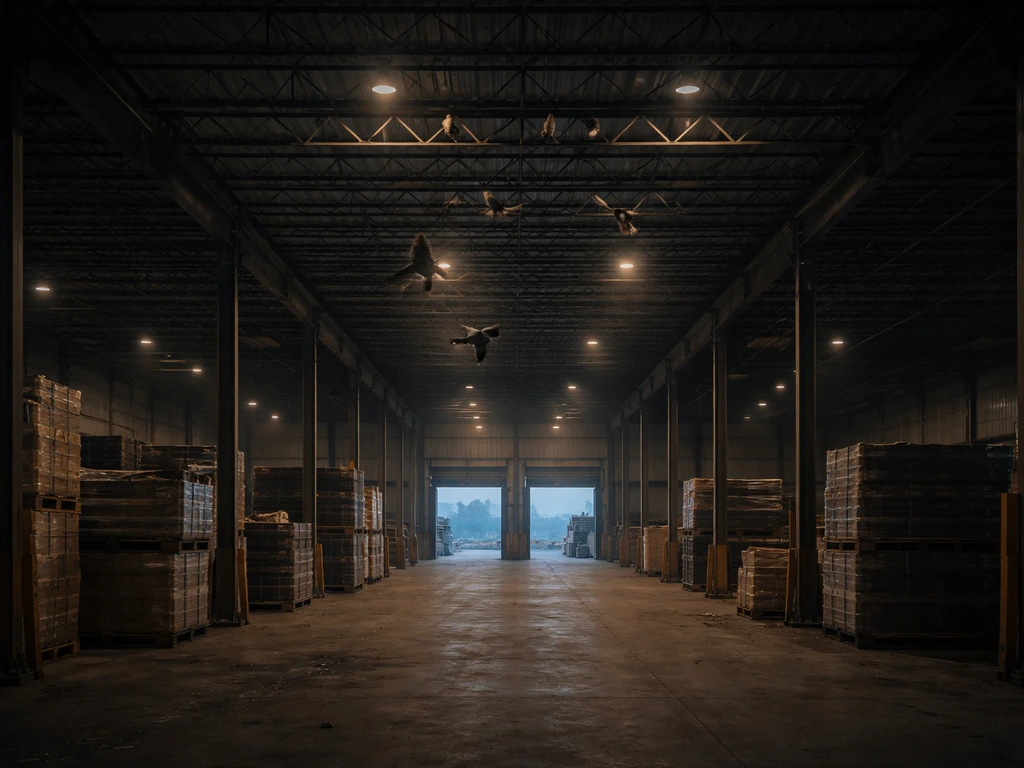
The process comes down to four steps: figure out exactly what is happening and why, cut off access, eliminate what is attracting the birds, and keep them from coming back. If you are dealing with the superkitties bird bop or pickle problem, use the same systematic assessment and exclusion steps to stop the birds from returning superkitties bird bop / pickle problem.
If you see sustained high CPU usage on a Mac, check for the specific process and update, then limit what triggers it.
Spot the real problem: signs, timing, and what the birds are actually doing
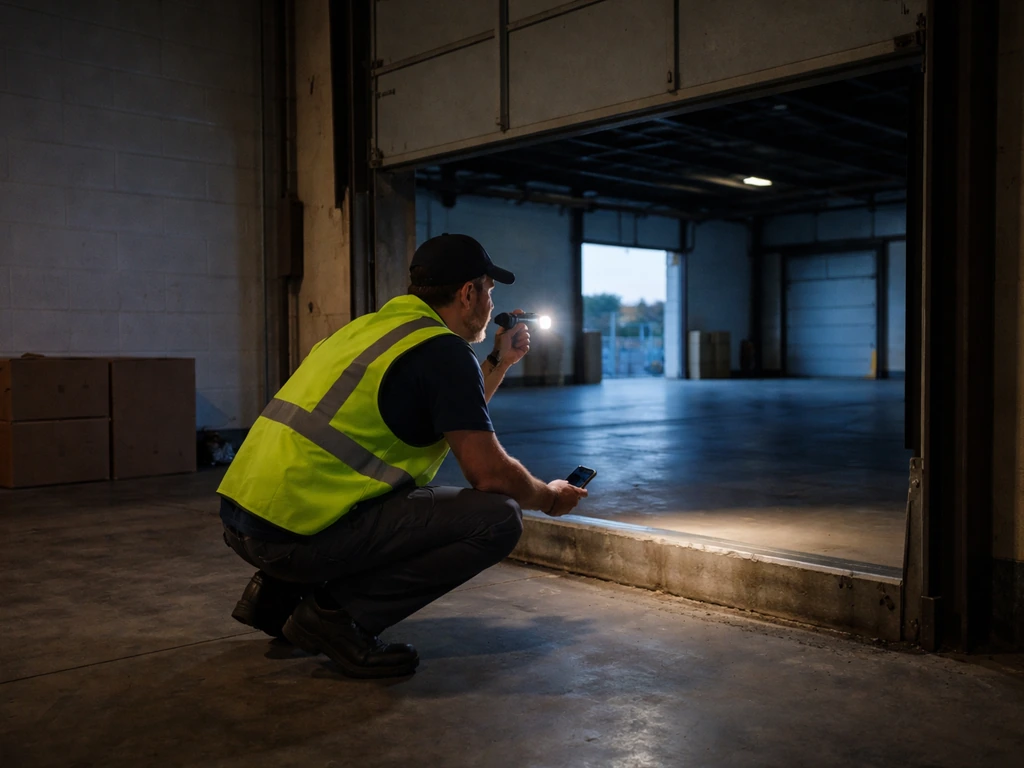
Before you buy anything or block anything, spend 30 minutes doing a proper assessment. Walk the facility at different times of day, including early morning and dusk, because bird activity is not random. The timing tells you a lot. If birds are mostly coming and going in the morning and leaving by noon, they are foraging inside for food and water. If they are still there at dusk and roosting on beams or racking, the situation is more serious and harder to reverse quickly.
The species matters too. Pigeons, sparrows, starlings, and swallows are the most common warehouse offenders in North America, and they behave very differently. Pigeons tend to roost in place, building up heavy droppings on beams, racking, and floors below. Sparrows and starlings are more mobile, often nesting in corners, HVAC ductwork, or overhead structures. Swallows are seasonal and almost always protected under the Migratory Bird Treaty Act, which limits what you can legally do once nesting has begun.
Document what you find. Note the species (photograph them if you are unsure), the locations of droppings and nests, how many birds you observe, and the time of day. This record matters for two reasons: it tells you which deterrents and exclusion methods will actually work for your situation, and it becomes part of your compliance documentation if regulators or auditors ever ask.
- Fresh droppings under beams, racking, loading dock doors, or skylights indicate active roosting spots
- Feathers, nesting material (twigs, grass, paper scraps), or actual nests in overhead structures signal established nesting
- Food debris near droppings suggests birds are finding a food source inside the facility
- Chirping or wing sounds from inside ductwork or wall cavities means birds have gotten into the building envelope itself
- Staining or uric acid damage on racking, equipment, or products is a sign the problem has been going on longer than it might appear
Why warehouses attract birds and where they get in
Warehouses are, from a bird's perspective, nearly ideal habitat: large open structures with plenty of elevated perch and nesting sites, food and water often available, and gaps that are large enough to fly through but not obvious enough for humans to notice or fix quickly. Understanding the attraction is not just academic. If you block one entry point without removing the attraction, birds will find another way in within days.
The three things birds need are food, water, and shelter. In a warehouse, food sources include spilled grain or product, open waste bins, organic debris near loading docks, and palletized food goods stored without adequate covering. Water can come from condensation on pipes, standing water in drains or low spots on the floor, or leaking equipment. Shelter is provided by the building itself: rafters, trusses, overhead conveyor systems, mezzanine edges, and the inside of loading dock bays.
Common entry points fall into predictable categories. Loading dock doors left open for extended periods are by far the most frequent cause. Birds simply walk or fly in during normal operations. Beyond that, gaps around HVAC penetrations, damaged roof panels or ridge vents, broken louvers, gaps between roller doors and the door frame, and open personnel doors all serve as secondary entry points. Even a gap of 1.5 inches is enough for a house sparrow to pass through.
- Loading dock doors left open during receiving or shipping operations
- Damaged or missing dock seals and dock leveler gaps
- Uncapped roof vents, ridge vents, and HVAC exhaust penetrations
- Gaps around conduit, pipe, and cable runs through exterior walls or roofline
- Broken or missing soffit panels and fascia
- Propped-open personnel doors, especially at break areas where food is present
- Skylights with gaps at the frame or failed seals
What you can do right now: immediate fixes for today
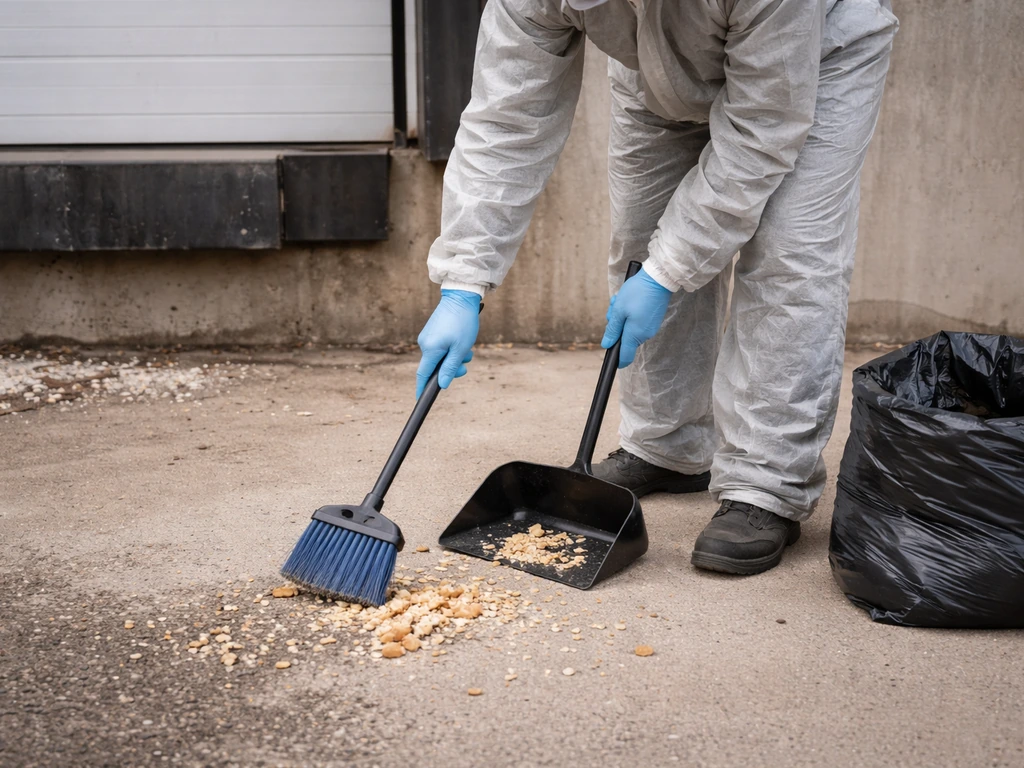
Some of the most effective bird management actions cost nothing and can be implemented today. The goal for the first 24 to 48 hours is to make the facility less attractive and reduce open access while you plan longer-term exclusion work.
- Sweep and clean all visible food debris, especially near loading docks and break areas. Birds learn quickly where food is reliable.
- Move waste bins and dumpsters away from dock doors and ensure they have lids that close fully. Even organic packaging waste is enough to attract foraging birds.
- Inspect all loading dock doors and implement a policy: doors open only when a truck is actively docked, and closed immediately after. Post visible signage as a reminder for staff.
- Walk the perimeter at roofline level (safely, using ladders or aerial equipment) and tag every gap larger than one inch with flagging tape or a marker so repairs can be prioritized.
- Check for standing water inside the facility and eliminate it. This includes drip trays under equipment, low spots in the floor, and drainage channels that are not draining properly.
- If birds are already inside, avoid shouting, chasing, or sudden loud noises as a first response. These tactics temporarily scatter birds but do not change the underlying situation and can cause birds to fly into walls or equipment and injure themselves.
- If active nests are present and the species may be protected (swallows, most songbirds), photograph and document before touching anything. Check with your state wildlife agency or a licensed nuisance wildlife control operator before removal.
Exclusion and physical barriers: the only things that actually keep birds out long-term
Physical exclusion is the most reliable, most humane, and most defensible approach to warehouse bird control. Everything else, whether visual deterrents, sound devices, or repellents, is supplemental. If birds can physically access the space, they will eventually learn to ignore other deterrents. Exclusion removes the option entirely.
Bird netting for interior spaces
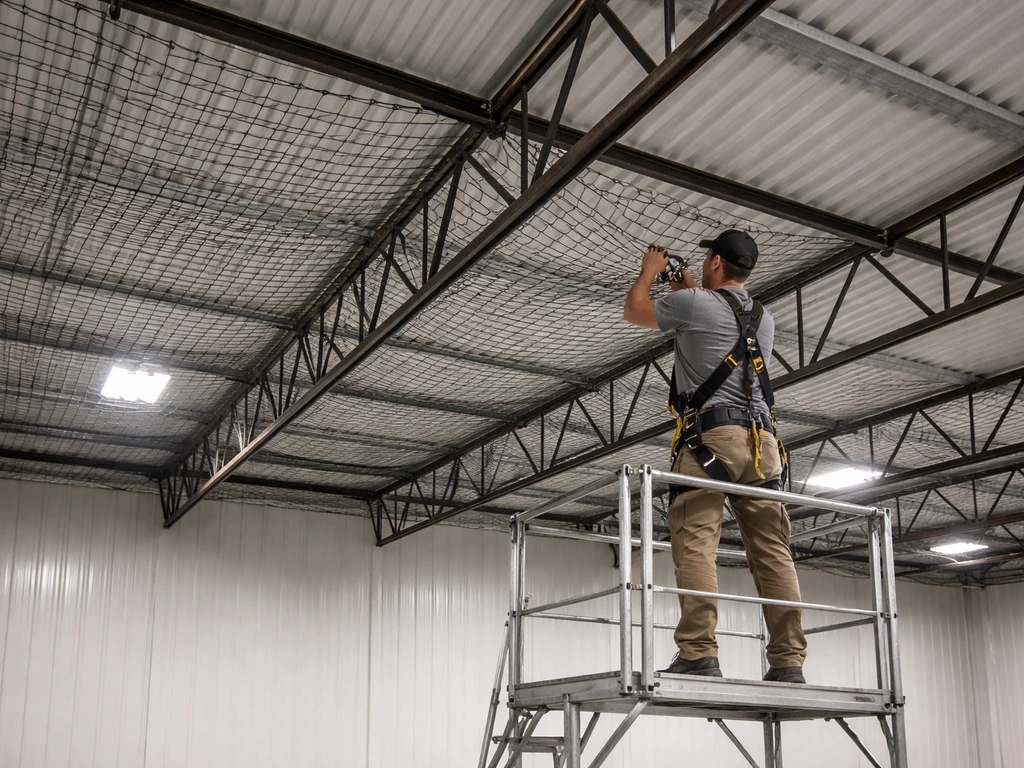
Heavy-duty polyethylene or polypropylene bird netting strung across the full upper section of a warehouse bay is the gold standard for preventing roosting and nesting on rafters and trusses. The mesh size you choose depends on the target species: 3/4-inch mesh excludes sparrows and starlings; 1-1/8-inch mesh is sufficient for pigeons. Installation quality matters enormously.
According to guidance from professional netting suppliers, the finished installation should have no gaps, openings, wrinkles, or excessive sag, because any imperfection creates a point of failure that birds will find and exploit. This is not a weekend DIY project for a large warehouse bay. Improper installation tends to trap birds inside the netting rather than exclude them, which creates a worse situation and potential legal problems under the Migratory Bird Treaty Act.
Perch deterrents for beams and ledges
Stainless steel bird spikes or wire coil systems mounted on beam flanges, ledges, conduit runs, and racking tops prevent birds from landing and roosting. These work well for pigeons and larger birds. For smaller birds like sparrows, the spike spacing needs to be tighter. These are not cruel devices: the bird simply cannot land comfortably and moves on. They require periodic inspection to make sure debris and nesting material have not filled in the gaps between spikes, which would defeat the purpose.
Sealing the building envelope
Use appropriate materials for each gap type. Small penetrations around conduit or pipe can be sealed with hardware cloth (galvanized wire mesh with 1/2-inch openings or smaller) or foam backer rod plus exterior caulk. Larger openings around vents and louvers should be covered with galvanized wire mesh or replaced with louvers that include integral screens. Dock seals and dock bumpers should be inspected and replaced if they are worn enough to leave gaps at the top or sides of the dock door opening. Replacement seals are not expensive relative to the contamination liability a bird access point creates.
Door management technology
High-speed roll-up doors that close automatically and quickly after each use are highly effective at reducing the window of time during which birds can enter at loading docks. Strip curtains (heavy PVC strips) across frequently used personnel doors and dock openings provide a physical barrier without impeding airflow or pedestrian movement much. These are especially useful in warm months when doors must stay open for ventilation.
Deterrents that work, deterrents that don't, and the myths worth skipping
The deterrent market is full of products that promise a lot and deliver inconsistently. Understanding why some methods work and others fail saves money and prevents the frustration of watching birds simply ignore your investment.
The core problem with most deterrents is habituation. Birds are intelligent animals. They observe, test, and eventually learn that a plastic owl does not move, that a sound cannon fires at predictable intervals, and that a mylar tape strip poses no real threat. USDA APHIS wildlife damage management research confirms that habituation is common with many hazing and scare methods, particularly when timing is predictable, and recommends multi-sensory approaches that vary in pattern and type to extend effectiveness.
Even with rotation and variation, most deterrents alone cannot solve an established bird problem. If your situation feels like the train and bird problem in miniature, start by mapping access points and removing the birds' incentives before you rely on deterrents. When comparing bird bangers vs bird bombs as deterrents, remember they are supplemental and can be subject to habituation without solid physical exclusion. They work best as part of an integrated strategy that starts with physical exclusion.
Methods with genuine usefulness
- Laser bird deterrents: moving laser beams (green is most effective) projected in roosting areas at dusk and dawn disrupt settling behavior. They work better in darker interior spaces and require rotation and repositioning over time to prevent habituation.
- Predator decoys with movement: stationary owls or hawks fail quickly, but decoys that move (especially those that spin or sway in airflow) maintain effectiveness longer. They still need to be repositioned regularly.
- Auditory deterrents with varied programming: propane cannons and distress call systems are more effective outdoors or in very large open structures. They must be programmed with variable timing and species-specific distress calls to delay habituation.
- Bird gel repellents: applied to ledges and beams, these sticky polybutylene gels make landing uncomfortable. They are most effective for pigeons on structural steel. They degrade with UV exposure, collect dust and debris, and require reapplication every 6 to 12 months.
- Falconry and live predator programs: in some facilities, periodic visits from a licensed falconer with trained raptors can be very effective at pressuring established flocks to abandon a site. This is a legitimate professional service, not a gimmick, but it requires ongoing visits and cannot be a one-time solution.
What genuinely does not work (and one thing that is illegal)
- Static owl or hawk decoys: birds figure these out within days to weeks. The reality is that any decoy that does not move, make noise, or change position will stop working almost immediately in an established roost.
- Reflective tape and mylar balloons alone: these provide temporary disruption but not lasting deterrence. Use them only as a short-term measure while structural fixes are implemented.
- Ultrasonic repellers: there is no credible peer-reviewed evidence that ultrasonic devices affect bird behavior meaningfully. Birds do not hear ultrasound the way rodents do. Save the budget.
- Poisoning birds without federal permits: it is illegal under the Migratory Bird Treaty Act to kill, capture, or 'take' most wild bird species without prior authorization from the U.S. Fish and Wildlife Service. This includes the use of pesticides or poisons not registered for that purpose. Violations carry significant civil and criminal penalties.
- Trapping and relocating birds on your own: in many states, trapping and relocating nuisance wildlife requires a licensed nuisance wildlife control operator. Relocating birds without expertise also tends to fail because birds return to their home territory or the population is simply replaced.
Lighting, ventilation, and layout: making the warehouse less inviting
Structural and operational changes that reduce the appeal of a warehouse to birds are often overlooked but provide lasting passive deterrence. These are changes you make once and benefit from for years.
Lighting has a significant effect on bird attraction, particularly at night. Bright white or blue-toned lighting (high color temperature LEDs) near openings or skylights actively draws birds, especially during migration seasons. The U.S. Fish and Wildlife Service recommends warm amber lighting with a correlated color temperature below 2700 Kelvin to reduce attraction and skyglow effects. Inside a warehouse, this translates to a practical recommendation: use motion-activated lighting in areas that do not need to be continuously lit, and switch to warm-spectrum LEDs near any exterior-facing openings. Lights that are on only when humans are present also reduce the time window during which birds find the interior welcoming.
Ventilation design affects bird access indirectly. Open ridge vents and louvers that are not screened create direct entry points. But there is also a subtler effect: ventilation paths that draw warm air through large openings also draw the smells of food and organic material, which attract foraging birds from outside. Ensuring that HVAC intakes and exhaust vents are screened with 1/2-inch or smaller mesh closes this pathway.
Layout changes worth considering include removing or relocating any horizontal surfaces near exterior walls where birds can perch before entering, installing sloped covers on beam flanges and horizontal ledges at 45 degrees or steeper to eliminate flat resting surfaces, and reorganizing product storage so that food or organic material is not stored near loading dock doors or exterior walls. The goal is to make the interior feel less like habitat and more like an obstacle.
Health risks, contamination control, and what to document
Bird droppings in a warehouse are not just aesthetically unpleasant. They are a documented occupational health hazard and, in food or pharmaceutical facilities, a regulatory liability. Understanding the actual risks helps you protect workers and make the case internally for the resources needed to fix the problem properly.
Histoplasmosis is the risk that should be taken most seriously in large accumulations of droppings. It is a fungal lung infection caused by [Histoplasma spores that grow in soil and organic material contaminated with bird or bat droppings. ](https://www. cdc.
gov/histoplasmosis/index. html) According to the CDC, the best way to prevent exposure is to prevent droppings from accumulating in the first place. When cleanup is unavoidable, the CDC and NIOSH recommend carefully wetting the material with water or a wetting agent before removal to suppress aerosolization of spores. Workers involved in cleanup should wear NIOSH-approved respirators (N95-class at minimum), gloves, and slip-resistant footwear, as wet droppings create significant slip hazards.
Washington State University's environmental health and safety resources note that risk increases substantially when flocks occupy an area and droppings accumulate over time, so early intervention matters.
Cryptococcosis, salmonellosis, and avian influenza are additional disease risks associated with bird contact or droppings. For avian influenza specifically, the CDC recommends avoiding stirring up dust, waste, or feathers during cleaning, not touching droppings or surfaces without PPE, and using N95-class respiratory protection along with eye and face protection in situations where exposure to bird feces or fluids is possible. These are not theoretical risks for warehouse workers, particularly if there are large roosts or active nesting colonies present.
The CDC also advises simply not picking up droppings with bare hands under any circumstances. This seems obvious, but in fast-paced warehouse operations it is common for workers to sweep or handle contaminated material without thinking about it as a biohazard.
Cleanup protocol for bird droppings
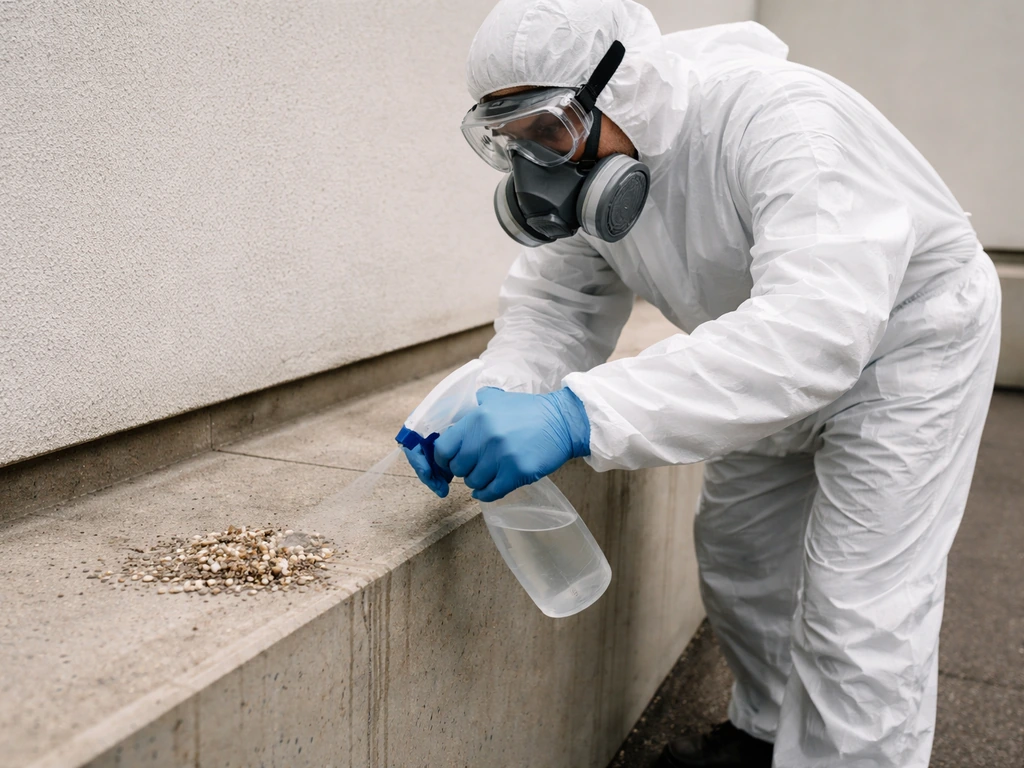
- Do not sweep dry droppings. Wet them thoroughly with water or a diluted disinfectant solution first to bind the material and reduce airborne spore and particle release.
- Workers must wear disposable gloves, N95 or higher respirators, and eye protection. For large accumulations, full Tyvek suits and boot covers are appropriate.
- Double-bag collected material in heavy-duty plastic bags before disposal. Check local regulations for disposal requirements for this category of biological waste.
- Disinfect all surfaces after removal with an EPA-registered disinfectant appropriate for the surface type.
- Wash all PPE or dispose of disposables appropriately before leaving the contaminated area. Workers should wash hands thoroughly before eating, drinking, or touching their face.
What to document and why
Keep a log of every bird sighting, every nest found, every cleanup event, and every control measure implemented with the date and the person responsible. Photograph everything. This record serves multiple purposes: it helps you track whether your control measures are working, it provides evidence of due diligence for food safety audits or regulatory inspections, and it protects you legally if a worker claims a health exposure. If you ever need to engage a licensed professional or USFWS permitting for removal of protected species, your documentation of the infestation history will be required.
A long-term prevention plan and when to call a professional
Solving a bird problem in a warehouse is a process, not a single intervention. This is often called the “train bird problem” because birds keep showing up until access and attraction are fully addressed. The facilities that manage it well are the ones that build bird control into routine maintenance and operations, not the ones that react after every infestation gets out of hand.
Weekly and monthly maintenance tasks
| Task | Frequency | Who Is Responsible |
|---|---|---|
| Inspect loading dock seals and door gaps | Weekly | Maintenance team |
| Remove food debris near docks and break areas | Daily / per shift | Operations staff |
| Check and empty waste bins, ensure lids are closed | Daily | Operations staff |
| Inspect overhead beams and racking for new droppings or nesting material | Weekly | Safety/maintenance |
| Reposition or vary deterrent devices | Monthly | Maintenance team |
| Inspect netting, spikes, and wire systems for damage or debris buildup | Monthly | Maintenance or contractor |
| Walk exterior roofline for new gaps or damage | Monthly | Maintenance team |
| Review lighting and ensure motion sensors are functioning | Quarterly | Facilities/maintenance |
| Full bird control audit with documentation update | Annually | Safety officer or external auditor |
Compliance basics you need to know
The Migratory Bird Treaty Act prohibits the 'take' of protected migratory bird species without prior authorization from the U.S. Fish and Wildlife Service. 'Take' includes killing, capturing, transporting, and disturbing active nests. Most common warehouse bird pests (house sparrows, European starlings, and rock pigeons) are not protected under the MBTA, but swallows, swifts, and many other species are. Before removing any nest or attempting to trap any bird, identify the species and verify its protection status. If you are unsure, stop and consult a licensed professional.
Many states require a licensed Nuisance Wildlife Control Operator (NWCO) for wild animal trapping and removal. New York's DEC, for example, directs property owners to contact a licensed NWCO rather than attempting removal themselves. Licensing requirements vary by state, so check your state wildlife agency's requirements before any trapping activity.
When to bring in a professional
There are specific situations where trying to handle a bird problem with in-house staff alone is the wrong call. If you have an established colony of pigeons or starlings with significant droppings accumulation (anything more than what one person can clean in an hour), the cleanup alone warrants professional involvement for health and safety reasons. If you have identified or suspect protected species like swallows nesting in your facility, do not touch anything until a licensed professional advises you.
If your facility is under a food safety certification scheme (SQF, BRC, FSSC 22000, etc. ), bird control is an audit category and an unmanaged infestation can cost you your certification. A qualified pest control contractor with specific bird management experience will be familiar with what auditors expect and how to document it.
For large-scale netting installations, the same logic applies. Planning a bird net installation in a complex industrial space requires matching net mesh size to species, selecting the right support cable system for the span and load, and executing an installation with no gaps or sag. Errors in installation do not just reduce effectiveness. They can trap birds in the netting, creating a welfare issue and a potential legal one. A professional installer who specializes in industrial bird exclusion is worth the cost compared to a failed DIY installation that has to be redone.
The facilities that succeed long-term at bird control treat it the same way they treat pest control or equipment maintenance: as an ongoing program with defined responsibilities, regular inspections, and budget allocated in advance rather than as an emergency response. The tools exist to keep nearly any warehouse bird-free. The difference between facilities that stay bird-free and those that keep fighting the same problem year after year almost always comes down to consistency, not the choice of deterrent.
FAQ
How do I tell if birds are nesting inside the warehouse or just using it for foraging?
Compare timing and location of activity. If birds are mostly present in the morning or during loading activity, then gone by midday, that often points to foraging access. If you find fresh nests, eggs, or repeated roosting in the same elevated spots at dusk, that indicates nesting or night roosting, which usually requires tighter exclusion and faster escalation for any protected species.
What is the fastest “first response” step when we discover a bird problem mid-shift?
Stop new access immediately by closing or securing the most obvious entry points (for example, keep loading dock doors shut, repair dock seals, and control any personnel doors left open). Then reduce incentives by covering or containing exposed food residues and emptying or sealing waste bins. Avoid trying to chase birds around the floor during active cleanup, it can increase aerosol and spread droppings.
If I seal one gap, why do birds still show up within days?
Birds usually find alternate routes, or the sealed area was never the main driver. Common misses include unsealed overhead paths (HVAC penetrations, ridge vents, soffits), gaps around dock door frames, and open times created by operating procedures. Re-walk the facility at the same times birds appeared, then verify with a documented access map rather than assuming the last fix was the root cause.
Do I need to identify the bird species if we plan to use netting everywhere?
Yes, because mesh size and the exclusion approach depend on the bird. For example, sparrows and starlings require tighter mesh than larger pigeons, and swallows or other protected migratory species may require delaying or modifying work to stay compliant. Species identification also helps prioritize which zones to retrofit first for maximum impact.
What should we avoid when cleaning droppings to reduce health risk?
Do not dry-sweep or use compressed air, avoid shoveling or agitation that turns material into dust, and do not handle droppings with bare hands. If cleanup is unavoidable, wet the material with a suitable wetting agent before removal to suppress aerosolization, and use slip-resistant footwear since wet droppings can create both slip and contamination hazards.
How do I decide whether to hire a professional versus handling it internally?
Use a threshold-based decision. If there is a substantial accumulation that one person cannot clean in about an hour, or you suspect a long-established roosting colony, professional involvement is usually the safer option for worker protection and speed. Also stop and consult a licensed bird management contractor if protected species are suspected, because removal timing and method can be legally sensitive.
We’re considering deterrent products like spikes and gels, can we rely on them alone?
Usually not for an established problem. Exclusion is the most reliable, supplemental deterrents are most effective when birds still cannot access the space. If birds can physically enter and roost after you install deterrents, habituation becomes likely and the issue will persist until access and attractants are fully addressed.
What are common installation mistakes that make bird netting fail?
Look for gaps, openings, and sagging sections, especially around edges, beams, penetrations, and transitions between bays. Even small imperfections become landing and entry points. Also ensure the installation is treated as an engineered work item, improper installation can trap birds and create a worse compliance and welfare situation.
Can we use foam, caulk, or sealant to block all gaps?
Not always. Small penetrations can be sealed with appropriate materials like hardware cloth for tiny holes or foam backer rod plus exterior caulk for certain cracks, but vents, louvers, and larger openings typically need screens or replacements designed for airflow. Match the sealing method to the gap type and verify the result with an inspection after normal operations begin.
How should we manage lighting changes without harming safety or operations?
Use motion-activated lighting in areas that do not need constant illumination, and swap to warm-spectrum lighting near exterior-facing openings. Keep human safety requirements in mind, coordinate with facility lighting standards, and prioritize reductions in night exposure windows that birds use to explore and enter.
What documentation should we keep for auditors or regulators?
Maintain a dated log of sightings, suspected or confirmed nests, droppings cleanup events, and every control measure implemented, including who performed it. Add photos of problem areas and the state before and after interventions. If protected species are involved or removal requires permitting, this timeline often becomes essential for demonstrating due diligence.
What if we see swallows or other likely protected species, what should we do immediately?
Do not disturb nests or attempt removal until you identify the species and confirm protection status. In practice, isolate the affected area, keep operations away from the nest zone, document observations, and contact a licensed professional who can advise on compliant next steps and timing.
After we exclude birds, when can we safely remove old droppings and nests?
Only do cleanup once birds are confirmed excluded and cannot re-access the area, otherwise you risk disturbing active nests or re-contaminating work zones. Plan cleanup with worker protection controls, and manage scheduling to minimize cross-traffic through contaminated areas while materials are wet and being removed.