If you searched for the 'Superkitties Bird Bop / Pickle Problem,' you're most likely looking up Season 1, Episode 14 of the Disney Junior animated series SuperKitties. But if a real bird has shown up in your home, gotten batted around by a cat, or is stuck somewhere and you need to know what to do right now, this guide covers that too. If you are seeing unusually high CPU usage on macOS, the bird-related process you notice is worth checking so you can stop it from running nonstop. The two scenarios aren't as unrelated as they sound: the episode's premise maps neatly onto a very real situation pet owners face when cats and birds collide in everyday life. Here's what's actually happening, what the risks are, and exactly what you should do next.
Superkitties Bird Bop Pickle Problem: Safe Steps Guide

What the 'Bird Bop / Pickle Problem' likely means in real life
The SuperKitties episode 'Bird Bop / The Pickle Problem' (S1, E14) runs two paired segments. In 'Bird Bop,' the SuperKitties deal with Zsa-Zsa. In 'The Pickle Problem,' the conflict centers on Pickles making false claims that the SuperKitties don't believe, creating a credibility problem that escalates. It's a classic lesson about honesty and observation. If you're here because your kid watched it and is now asking about birds getting bopped, or because the title showed up in a search and you genuinely have a bird situation at home, both are completely valid reasons to be reading this.
In the real-world version of this scenario, a 'bird bop' usually means a cat has swatted, caught, or stunned a bird. If you're comparing what counts as a “non-contact” scare versus the more extreme outcomes that can happen with bird bangers, the related discussion on bird bangers vs bird bombs can help you set the right expectations bird bop. This happens indoors when a bird flies in through an open window, and outdoors when a free-roaming cat encounters one. It also happens when birds collide with windows on their own, land stunned in a yard, and then get investigated by a curious cat. The biology here matters: a bird that looks fine after being caught by a cat is often not fine. Even a brief capture leaves puncture wounds from teeth or talons that are invisible to the eye but introduce dangerous bacteria, particularly Pasteurella multocida, into the bird's body. The RSPCA is direct about this: any bird caught by a cat or dog needs prompt professional attention, not a wait-and-see approach.
Immediate safety steps for your pets and for the bird
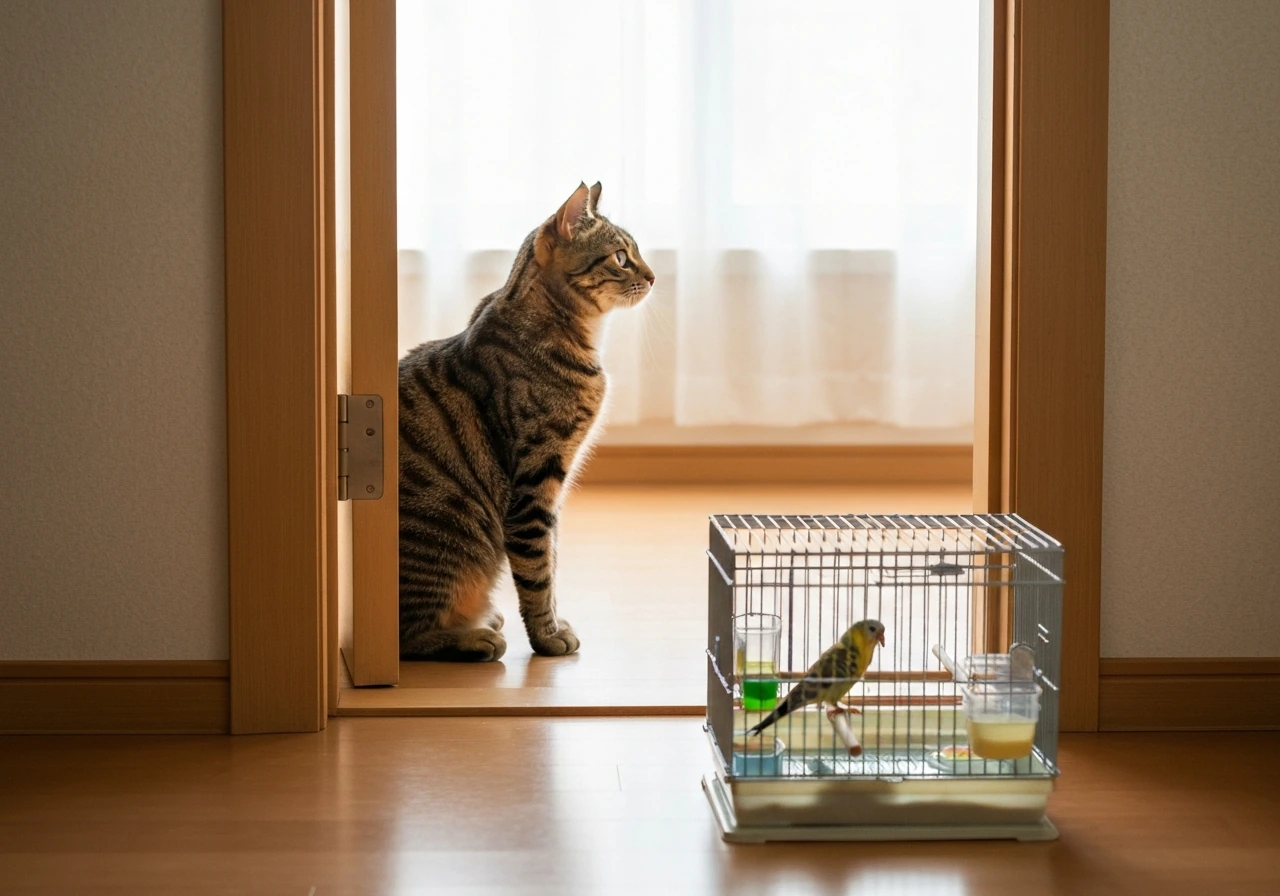
The first priority is separation. Get your cat away from the bird immediately and keep them separated. This protects the bird from further stress and physical harm, and it protects your cat from potential disease exposure. The ASPCA specifically flags the risk of avian diseases, including avian influenza, when cats come into contact with sick or dead wild birds. Even if the bird looks healthy, you don't know its history.
Once the cat is secured, assess the bird from a distance before you touch it. If it's standing upright, alert, and moves away from you normally, it may just be startled. Give it space and watch for five to ten minutes. If it's on its side, can't stand, has a drooping wing, or isn't moving away, it needs help. Here's the step-by-step first response recommended by Tufts Wildlife Clinic and supported by Audubon and All About Birds:
- Put on gloves or use a light cloth to pick up the bird gently. Never grab it by the wings.
- Place it in a small cardboard box or paper bag with air holes. Line the bottom with a paper towel.
- Close the container so it's dark inside. Darkness reduces stress significantly.
- Keep the container in a warm, quiet room away from pets, kids, and noise. Do not put it outside.
- Do not offer food or water. This sounds counterintuitive, but force-feeding a stunned bird can cause aspiration. Leave that to professionals.
- Do not handle it more than necessary. Every extra interaction adds stress and can worsen internal injuries you cannot see.
- Contact a local wildlife rehabilitator as soon as possible.
If your cat was in contact with the bird, monitor your cat for any respiratory symptoms, lethargy, or unusual behavior over the following days. The CDC advises pet owners to seek veterinary care if a pet shows illness signs after exposure to wild birds, particularly during periods of active avian flu circulation.
What's actually risky: bird behavior versus common myths
There are two categories of myth worth clearing up here, because they push people toward the wrong response in opposite directions.
Myth 1: A bird caught by a cat is probably fine if it flies away
The reality is that a bird that flies away after being caught by a cat can still die within 24 to 72 hours from bacterial infection introduced by the cat's teeth and claws. Cats carry Pasteurella multocida in their mouths as normal flora. A peck wound so small you'd need a magnifying glass to find it can deliver a lethal bacterial load into a bird. If you have any reason to believe a cat made contact, the bird needs a rehabilitator, not freedom.
Myth 2: Birds near homes are dangerous to cats and people
The reality is that the typical backyard bird poses essentially no direct threat to a healthy adult cat or human. If you are dealing with grackles repeatedly at your property, treating them as a nuisance bird can help you choose the safest deterrents are grackles a nuisance bird. Birds will dive-bomb and 'mob' predators during nesting season, including cats, but this is defensive behavior, not predation. The genuine risk runs the other way: free-roaming cats are among the most significant human-related causes of bird death in North America. The indirect risks to cats are real but mundane: the ASPCA notes that birds and other animals can distract cats into falls or other accidents. Avian disease transmission to cats is a lower-probability concern but not zero, which is why the CDC and ASPCA both recommend keeping cats away from bird feeders, baths, and wild bird congregating areas.
Myth 3: Window strikes are minor and birds always recover on their own
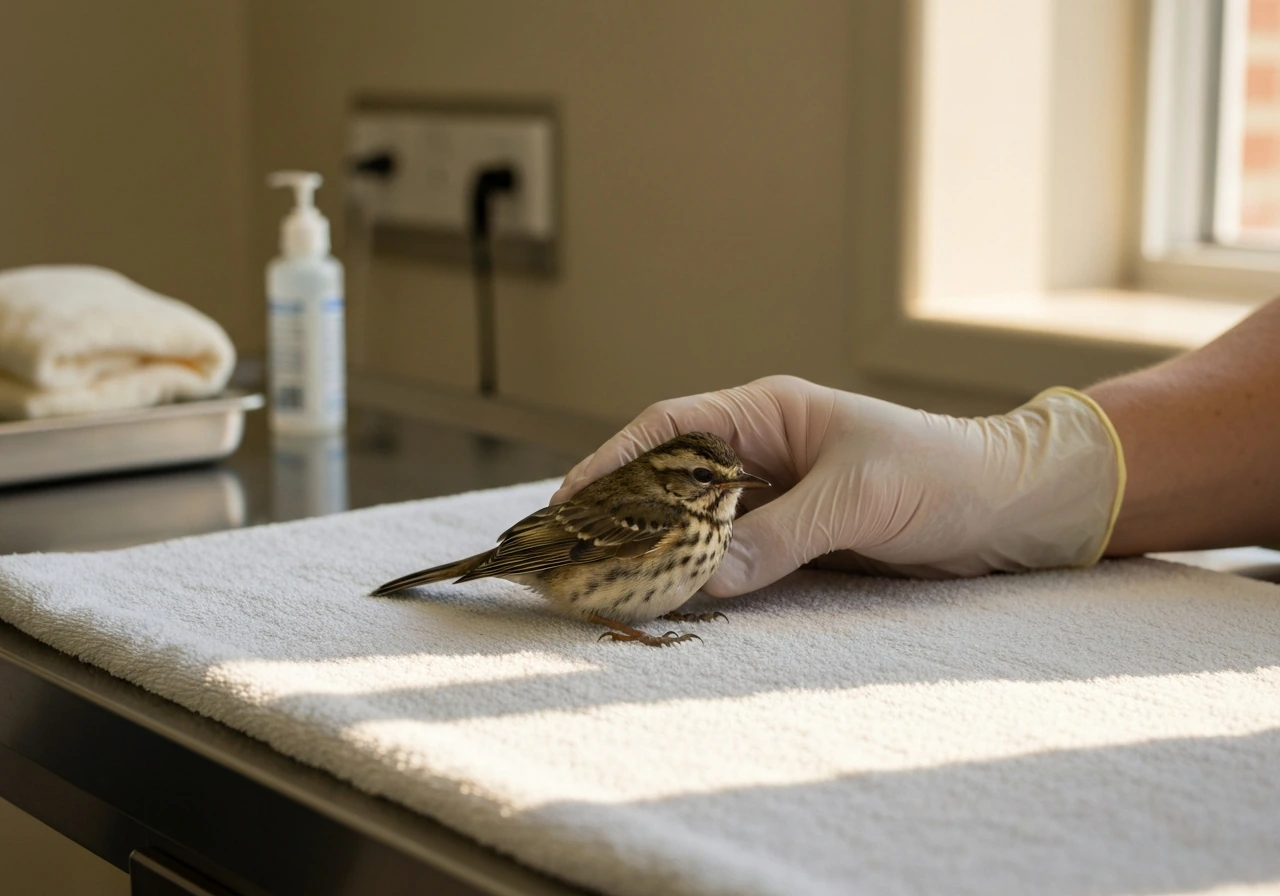
Window collisions can cause intracranial hemorrhaging and internal injuries that aren't visible from the outside. The Wildlife Center of Virginia documents this clearly. A stunned bird sitting quietly on the ground after a window strike may be dying from internal bleeding, not just catching its breath. Some birds do recover from mild strikes, but you can't tell which category a given bird falls into without professional evaluation. Dark, quiet containment and a call to a rehabilitator is always the right move.
How to stop repeat incidents: deterrence and environment changes
If birds are regularly ending up in contact with your cats, whether through window collisions or direct outdoor encounters, the environment needs to change. The good news is that most of the effective interventions are straightforward.
For window collisions
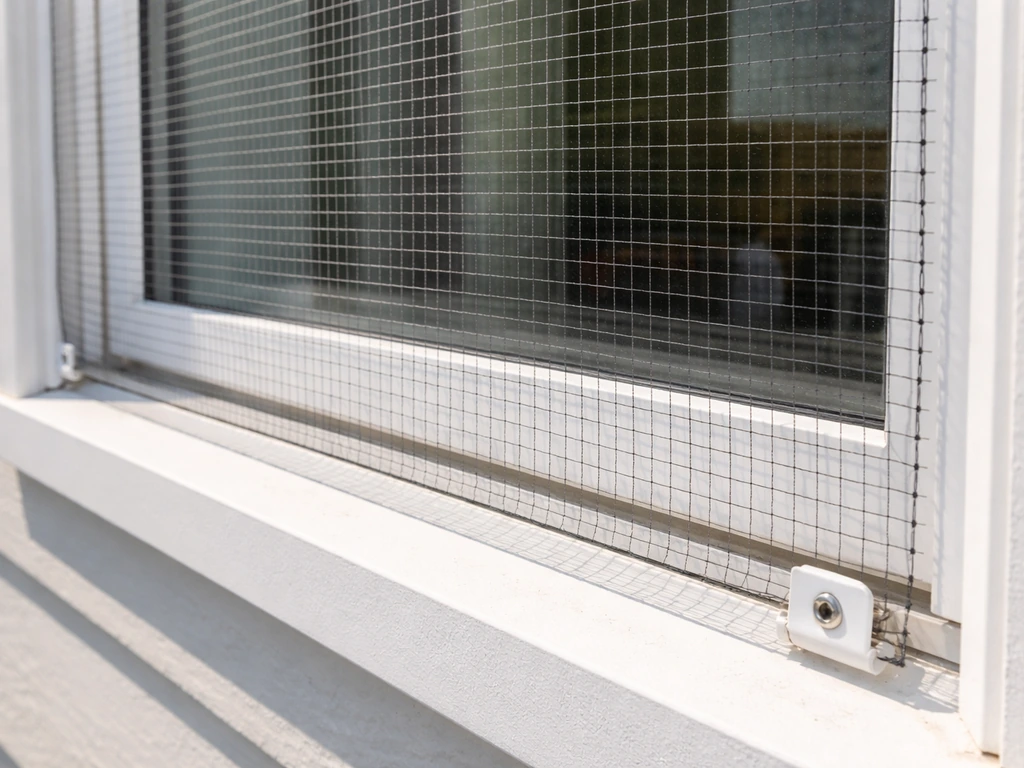
External netting or screens placed a few inches from the glass surface is one of the most reliable solutions. All About Birds recommends this approach because it deflects birds before impact rather than just making glass more visible. Decals and tape patterns applied to the outside of the glass also help, though they need to cover enough of the surface area to be effective. Bird feeders placed either very close to windows (less than 2 feet) or very far away (more than 30 feet) have lower collision rates than feeders placed at mid-distance, where birds build up enough speed to cause serious injury. Relocating feeders is a simple fix worth trying.
For cat-bird encounters
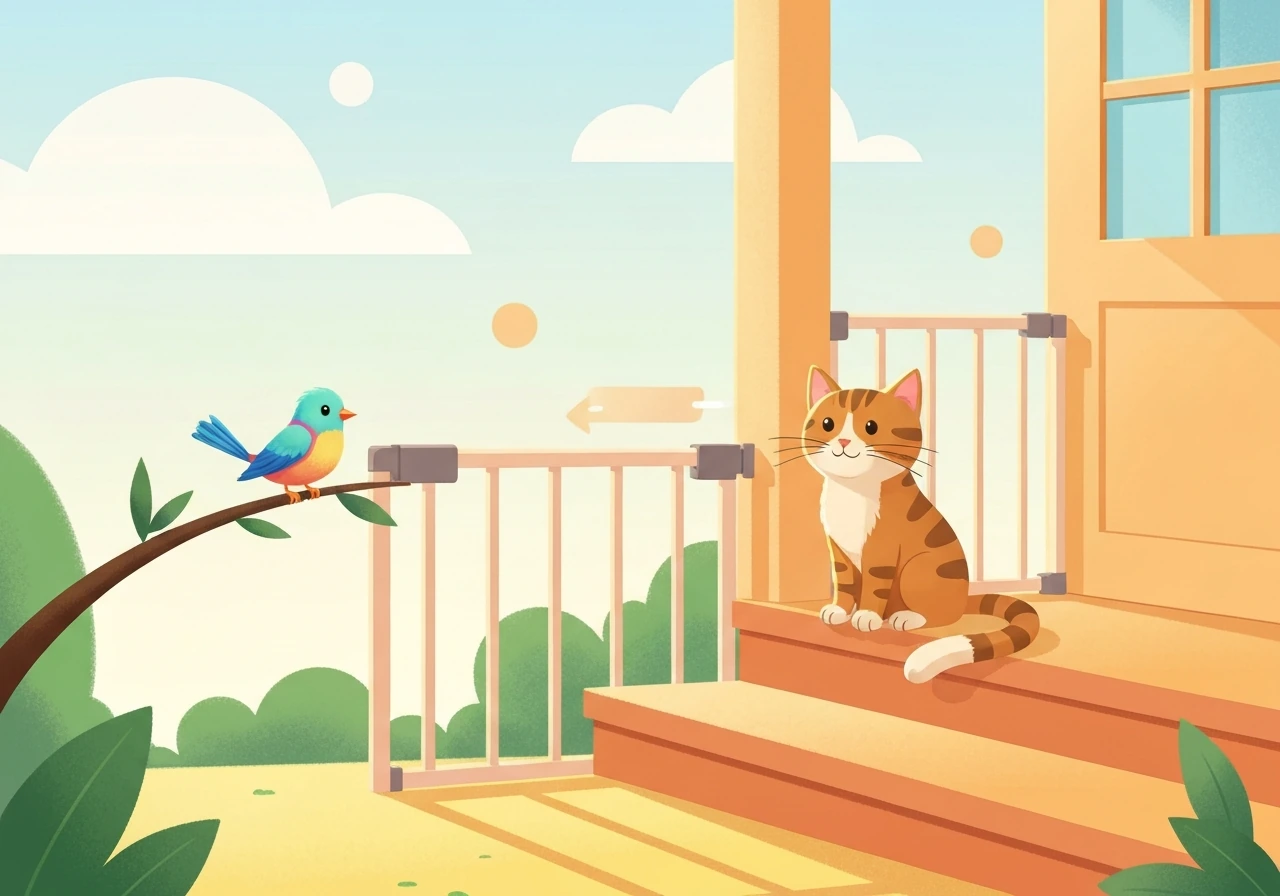
The single most effective intervention is keeping cats indoors. The U.S. Fish and Wildlife Service, Michigan Audubon, the ASPCA, and the HSUS all support this as the primary recommendation, and it protects cats as well as birds. If full indoor living isn't workable for your cat, a catio (an enclosed outdoor structure) or leash/harness walks are solid alternatives endorsed by the FWS. These give cats outdoor enrichment without unsupervised access to wildlife.
If your cat does go outdoors, collar-mounted deterrents are worth considering as a supplemental layer. Research on the Birdsbesafe collar, a brightly colored collar cover, shows it can reduce bird predation meaningfully, particularly during spring and summer. Bells also have some supporting evidence, though results across studies are inconsistent. Neither device should be treated as a complete solution on its own. The predation-deterrent research literature is clear that outcomes vary and no single collar eliminates the risk entirely.
Removing attractants from areas where your cat roams also helps. The CDC and USDA APHIS both recommend keeping pet food and water indoors, particularly at night, and managing bird feeders and baths thoughtfully. Feeders that draw large flocks create high-density bird zones that increase the likelihood of both predation and window strikes near your home.
If there's an injured or trapped bird: what to do next
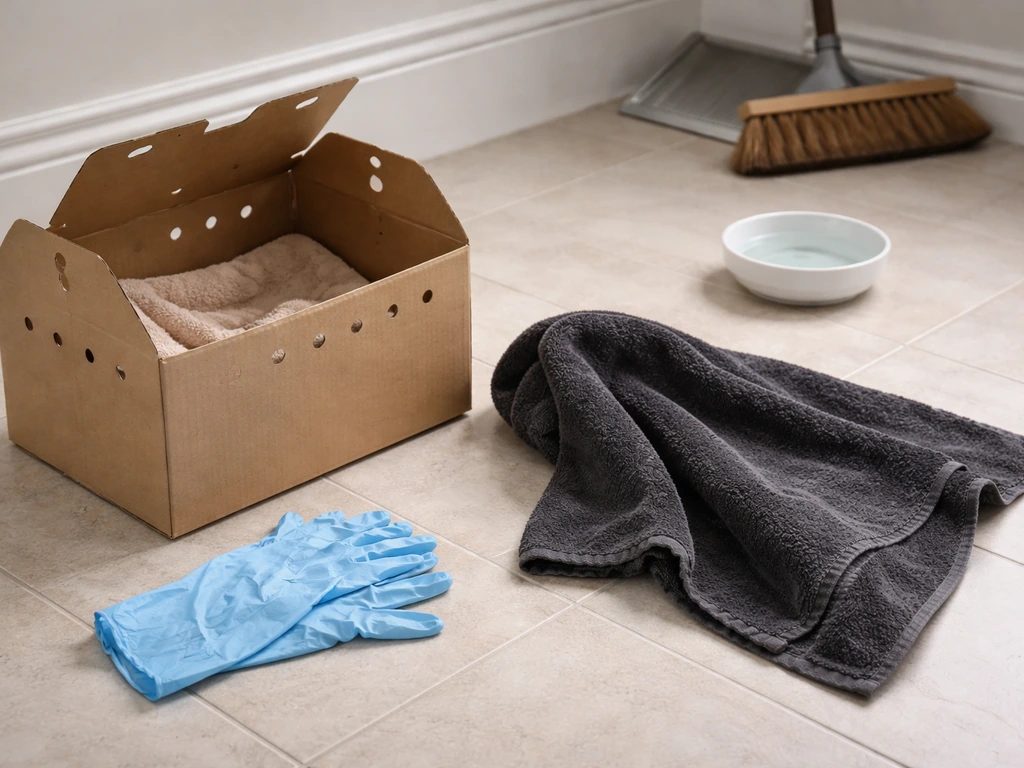
Work through this decision quickly but without panicking. The key variables are whether the bird is injured versus stunned, whether it's an adult versus a baby, and whether it was caught by a cat.
| Situation | What to do | Timeline |
|---|---|---|
| Stunned from window strike, no cat contact | Dark box, warm and quiet, monitor for 1-2 hours; contact rehabber if no improvement | Act within minutes of finding the bird |
| Caught by a cat, any condition | Contain in dark box, call wildlife rehabilitator immediately regardless of apparent condition | Do not wait; bacterial infection risk is time-sensitive |
| Visibly injured (drooping wing, bleeding, can't stand) | Contain gently, do not attempt treatment, contact rehabilitator or vet immediately | Same day |
| Baby bird on ground, feathered, hopping | Leave it alone; fledglings are supposed to be on the ground and parents are nearby | Monitor from a distance for a few hours |
| Baby bird featherless or eyes closed | Place in a small container, contact a wildlife rehabilitator | Immediately |
| Bird trapped indoors | Close other rooms to funnel it toward an open window or door; dim lights; do not chase it | Give it time; minimize stress |
One point worth repeating: do not offer food or water to any injured or stunned bird unless a wildlife professional tells you to. It causes more harm than good in most situations. And do not attempt to trap or restrain an injured bird before speaking with a rehabilitator. The U.S. Fish and Wildlife Service is explicit about this. The goal of initial containment is to reduce stress and prevent further injury, not to begin treatment.
When to get expert help
Call a wildlife rehabilitator any time a bird has been caught by a cat, is showing clear signs of injury, fails to recover from a window strike within two hours, or is a baby without feathers. If the bird is featherless or has its eyes closed, it often needs intervention, so follow the USFWS guidance for injured or orphaned baby birds blank" rel="noopener noreferrer">a baby without feathers. The CDC advises keeping pets away from bird feeders, bird baths, and the surrounding areas, and to blank" rel="noopener noreferrer">contact a wildlife rehabilitator or your state wildlife office if an animal is badly injured or sick. If the bird problem in your warehouse keeps happening, focus on removing entry points and controlling where birds can land and forage bird problem in warehouse. The ASPCA recommends the National Wildlife Rehabilitators Association as a starting point for finding a licensed local rehabilitator. Your state wildlife agency and local Audubon chapter are also good resources and can often connect you with someone quickly.
If you're dealing with a recurring bird problem rather than a one-time incident, the type of expert you need depends on the context. Repeated window strikes at your home point toward a building modification solution, which any bird-safe building consultant or a local Audubon chapter can advise on. A pattern of cats and birds conflicting in your yard is a wildlife management and pet behavior issue best addressed with help from a humane organization or certified animal behaviorist. If you see this pattern repeatedly, the train and bird problem framing can help you troubleshoot the cause and choose the right fixes. If you're in an aviation or industrial context and birds are creating safety risks around structures or aircraft, that's a specialized avian control field with its own professionals and methods.
The bottom line: a bird involved in any kind of collision or predation event deserves professional eyes on it, not just wishful thinking. If you’re dealing with a train bird problem, the safest move is still to keep people and pets away and get expert help quickly. The biology is unforgiving in ways that aren't obvious. Getting the bird to the right hands quickly is the single most useful thing you can do.
FAQ
What should I do if the bird is still breathing but seems very weak after a cat encounter or window strike?
Keep the bird contained in a dark, quiet box or carrier (with small air holes) and limit handling. Contact a wildlife rehabilitator promptly, especially if it cannot stand, has trouble breathing, or shows a drooping wing. If you notice bleeding or a rapidly worsening condition, treat it as urgent and don’t wait for “maybe it will recover.”
Is it okay to give the bird water or food “just in case” while I’m waiting for help?
In most cases, no. Don’t offer food or water to injured or stunned birds because it can worsen shock, increase aspiration risk, and delay proper care. If the bird is conscious, dehydrated, or fluffed up, the safest interim action is to keep it warm and still (not hydrated by hand) and get professional guidance.
How long should I observe the bird from a distance before deciding it needs help?
If the bird is fully upright, alert, and moving away normally, you can watch for a short period, typically several minutes, while keeping people and pets away. If you don’t see meaningful improvement or it shows any injury signs (side-lying, drooped wing, weakness, disorientation), contact a rehabilitator rather than extending the wait.
What if the bird is a baby (nestling or fledgling), and I’m not sure which it is?
Baby birds need different handling than adults. If it has little or no feather coverage, can’t stand steadily, or appears to be unable to return to a nest, treat it as a case for a wildlife rehabilitator. Avoid giving it food, and do not “put it back” if the area is actively threatened by cats or if you cannot confirm where a nest is located.
Should I check my cat for scratches or bites after contact with a bird?
Yes. Even if you didn’t see obvious injury, any bite or claw contact can transmit bacteria and can also be hidden under fur. If you find punctures, swelling, unusual lethargy, coughing, or reduced appetite, contact a veterinarian and mention the wild bird exposure.
What symptoms in my cat after a bird incident mean I should seek veterinary care right away?
Look for respiratory signs (coughing, labored breathing), significant lethargy, abnormal behavior, feverish feeling, reduced eating, or vomiting. Because illness can emerge over the days after exposure, don’t wait for symptoms to “pass,” especially if your cat acted ill or the bird appeared diseased.
If the bird looks fine and flies away, do I still need to call a rehabilitator?
Not always, but it depends on whether you believe a cat truly made contact. If there was a capture, even brief, the bird can deteriorate later due to infection from tiny punctures. In that case, consider calling a rehabilitator for advice, and watch the area for signs it becomes unable to fly or remains on the ground.
What’s the safest way to contain a bird I found after a window collision?
Use a clean, sturdy container that prevents escape, line it with paper towels, and keep the space dark and quiet. Avoid bright lights, don’t shake the bird, and limit exposure time before contacting a rehabilitator. If you can’t safely transport it, call ahead so they can advise on next steps.
Can I deter birds using tape, decals, or lights instead of netting/screening?
Yes, but coverage and placement matter. Tape and decals work best when they break up the bird’s flight path across a large portion of the window surface, not just a small corner. If collisions continue, prioritize physical barriers like netting or screens placed slightly away from the glass, since those reduce impact rather than relying only on visual cues.
Are bells or bird-collar covers reliable enough to prevent bird predation?
They can reduce risk but are not dependable as a stand-alone fix. Outcomes vary by study, cat behavior, and environment (for example, dense vegetation and peak activity times). If you use them, treat them as supplemental and pair them with stronger measures like indoor time, a catio, or supervised leash walks.
What should I do if birds are repeatedly colliding with the same window but my household also has cats?
Handle both hazards at once. Make the window safer using netting/screens or properly applied visual patterns, then reduce cat access to birds through indoor housing or secure outdoor enclosures. It’s common for a remaining collision problem to keep creating injured birds, and a remaining cat-access problem turns “injured” into “captured,” which raises urgency for professional care.
If birds keep showing up at my property (for example grackles repeatedly), how do I choose the right deterrent?
Start by identifying the bird species you’re dealing with and what resources attract them (food sources, nesting spots, water). Then pick deterrents matched to that behavior, since broad, inconsistent measures often fail. Also consider changing feeding practices, such as adjusting feeder placement and managing dense flocks near windows, rather than only trying to scare birds away.