Birds and trains collide more often than most people realize, and the causes are almost never mysterious. The core problem comes down to a predictable mismatch: railways create ideal habitat for birds (open corridors, perching structures, prey-rich edges, quiet resting spots), while modern trains are fast, quiet enough at certain speeds to give little warning, and travel through corridors that cut right across bird flight paths. Understanding which factors are driving incidents at your location, whether you're a rail worker, a wildlife officer, or just someone who keeps finding dead birds along a line, determines what you actually do about it.
Train and Bird Problem: Causes, Risks, and Next Steps

Marcus Whitmore
12 Jun 2026
What the bird–train problem actually is and why it keeps happening
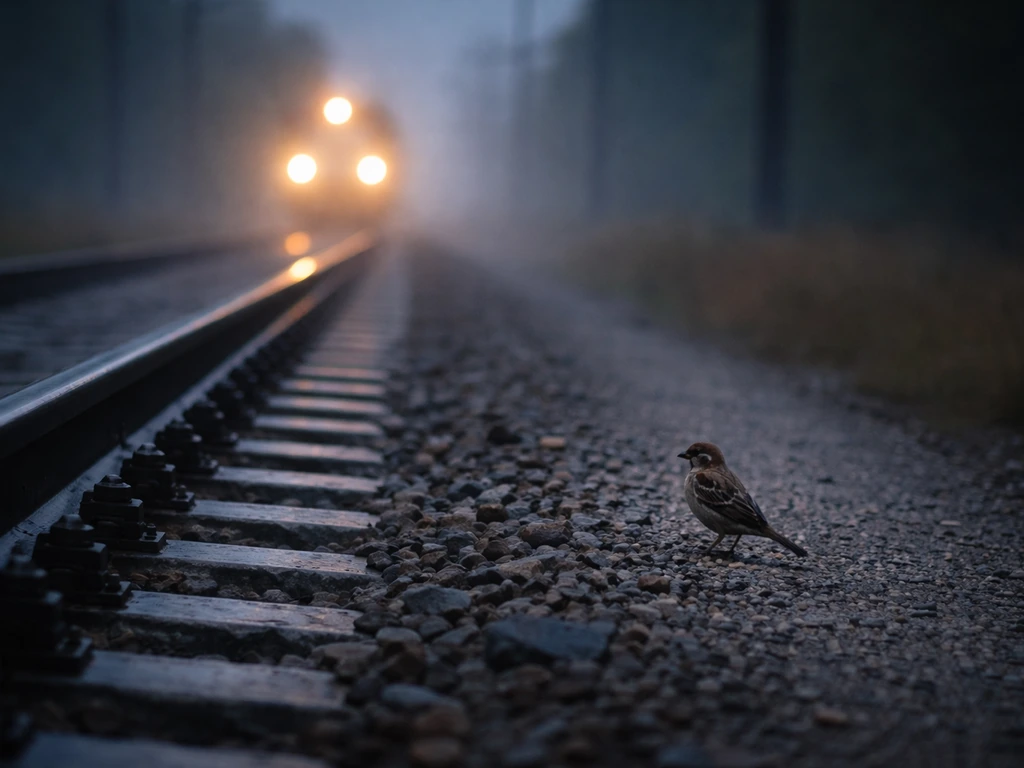
At its simplest, the bird–train problem is a collision and habituation problem. Rail corridors do something counterintuitive: they attract birds while simultaneously threatening them. The open, linear structure of a railway creates edge habitat, which many species actively seek out for feeding and nesting. Trackside vegetation provides cover and insects. Ballast retains heat and offers grit for digestion. Overhead catenary wires and gantries serve as perches and hunting platforms for raptors. The result is that birds are not just accidentally near tracks: they are drawn to them deliberately, and they return repeatedly.
Research on high-speed railways bears this out clearly. A 2017 Frontiers study using on-board video recording documented bird behavior and collisions directly, finding that birds using the railway for feeding, resting, and nesting, including agrarian-landscape species and raptors attracted to carcasses or prey along the track, were consistently implicated in mortality events. A separate infrastructure study across a 300 km high-speed rail corridor in Spain identified an 8.5-meter "danger zone" between the tracks and the catenary wire: the geometry of the rail infrastructure itself, not some random factor, shapes where and when collisions happen. So the problem is structural and behavioral at once, and that's exactly why simple fixes rarely work on their own.
Spotting the real causes: bird behavior vs. train factors
When you're trying to understand why incidents are happening at a specific location, it helps to think in two columns: what the birds are doing, and what the train environment is doing. Both matter, and they interact.
On the bird side
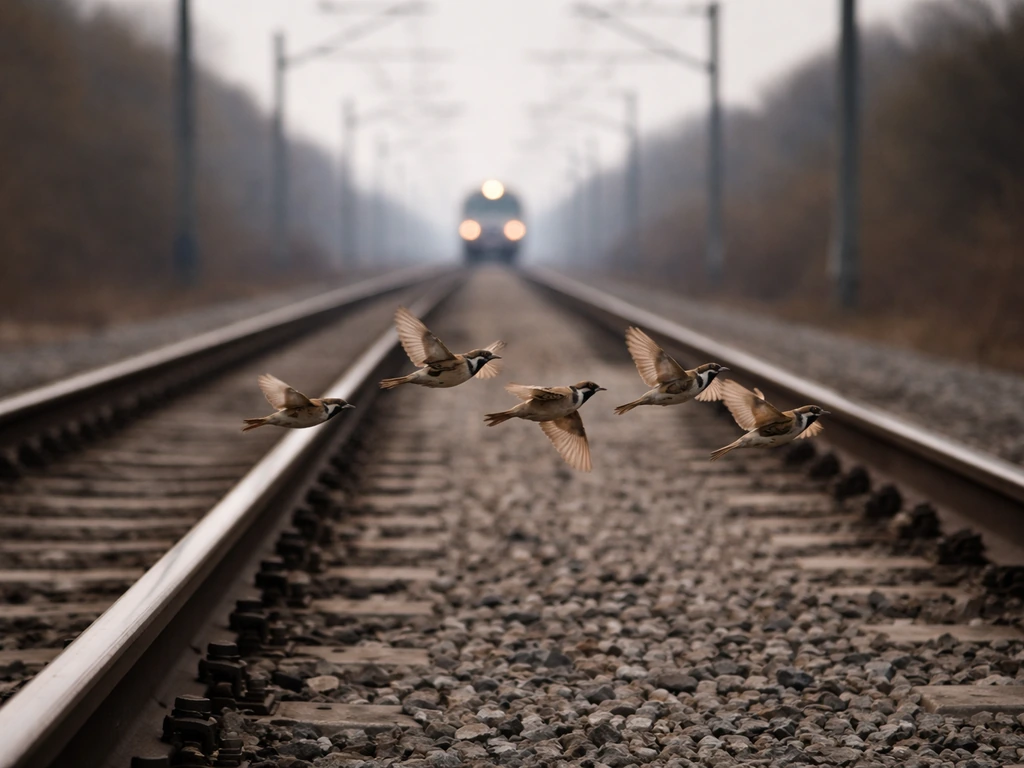
- Flight crossing behavior: birds crossing tracks perpendicularly are at the highest risk because they spend more time in the danger zone. Parallel flight along the corridor is less dangerous.
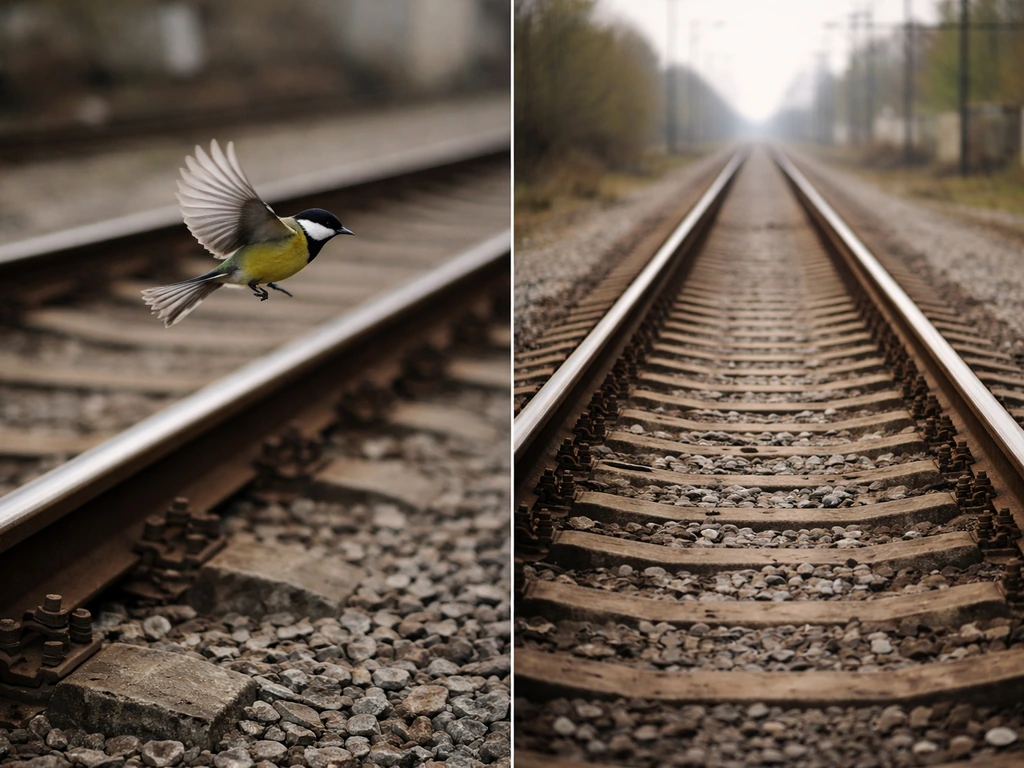
- Feeding on the track bed: ground-feeding species like sparrows, finches, pigeons, and doves forage in ballast and are slow to flush. Raptors drawn to small mammal activity or carcasses along the corridor face the same slow-response problem.
- Nesting on infrastructure: birds nesting on bridges, retaining walls, catenary masts, and signal gantries are repeatedly exposed to trains passing at close range.
- Seasonal migration: migratory movements increase crossing traffic dramatically. At night or in low-visibility conditions, birds fly lower, which pushes them into the strike zone more often.
- Habituation: birds that use a rail corridor regularly can become habituated to passing trains and delay flushing, reducing their escape margin.
On the train and infrastructure side
- Speed: higher speed dramatically reduces the time birds have to react. High-speed rail (above 200 km/h) leaves almost no reaction window for a bird that delays flushing by even a fraction of a second.
- Low audibility: a ScienceDirect study on wildlife collisions found that trains can be surprisingly hard for wildlife to detect against ambient background noise, especially in vegetated or wind-affected corridors. Birds may simply not register the approach until it is too late.
- Lighting conditions: trains operating at dawn, dusk, or in overcast low-light conditions encounter birds that are actively moving but have reduced reaction speed. Poor visibility also suppresses the contrast cues birds use to detect approaching objects.
- Trackside attractants: unmanaged vegetation, standing water, insect-rich edges, and accessible food sources (including carcasses from previous strikes) concentrate birds near the track.
- Infrastructure geometry: catenary height, viaduct design, and the presence of perching structures all influence where birds are positioned relative to the danger zone.
A USGS study on avian radar found meaningful relationships between bird activity levels, meteorological factors, and collision risk, reinforcing that weather and visibility are genuine operational variables, not background noise. When cloud ceilings drop and visibility falls, birds fly lower, approach angles flatten, and reaction times shrink. The US Fish and Wildlife Service confirms this pattern from the aviation context: reduced visibility consistently increases collision risk. The same physics applies to trains. If your Mac is showing unusually high CPU from the bird process, the macOS equivalent is to trace the cause in system activity rather than guess The same physics applies to trains..
Risk to birds: what actually kills them and how to read what you find
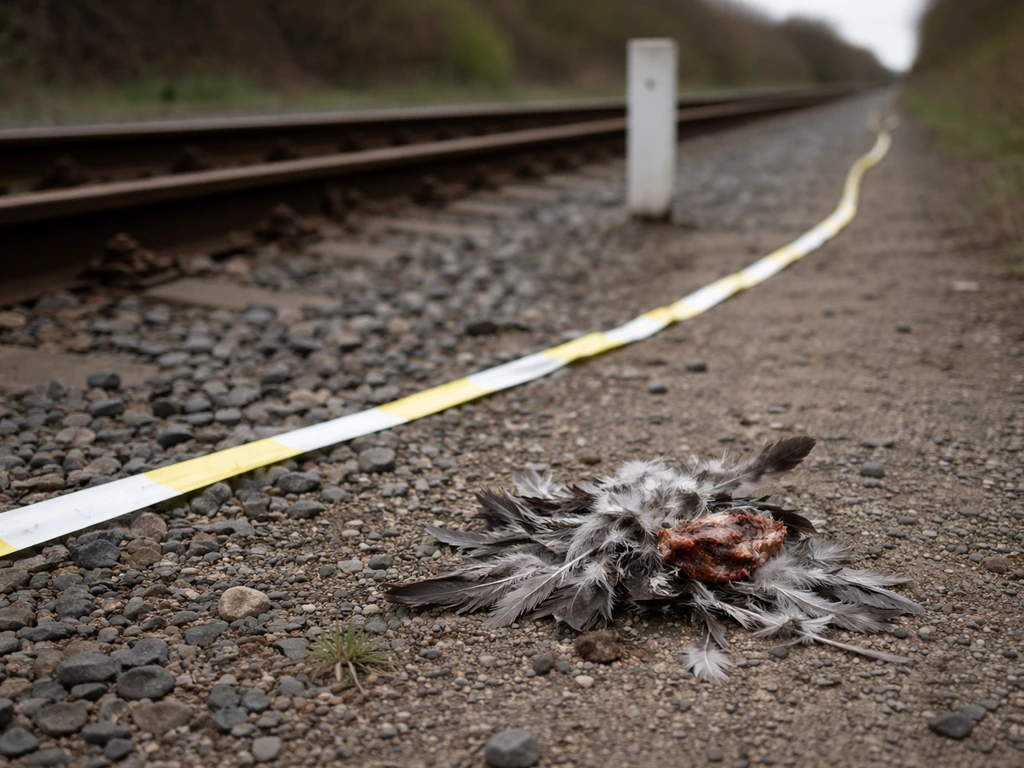
Not every dead bird found near a rail line was killed by a train. And not every bird killed by a train looks the same. Getting the interpretation right matters, especially if you're surveying for conservation purposes or trying to document a local problem.
A PMC-published study monitoring bird deaths along high-speed railways used weekly carcass surveys with corrections for carcass persistence and detectability. The researchers found that raw counts consistently underestimate actual mortality because carcasses disappear quickly, through scavenging, decomposition, and displacement by train airflow. What you find on a survey is always a fraction of what actually died. This means that if you're seeing even occasional carcasses, the true mortality rate is likely higher than it appears.
The injuries that train strikes cause are also worth understanding because they tell you something about the mechanics involved. Direct strikes at high speed typically produce blunt trauma and are instantly fatal. Birds found injured but alive near tracks more often show signs of strike by displaced air (the pressure wave ahead of a fast train), secondary collision with ballast or infrastructure after a glancing blow, or disorientation from noise exposure. Birds found dead without obvious trauma may have died from the concussive pressure effect rather than direct contact.
Larger species and raptors are disproportionately represented in high-speed rail mortality data, partly because their longer flight initiation distances mean they often don't flush at all when habituated to the corridor, and partly because they are drawn to the corridor as a feeding resource in the first place. Smaller passerines are struck more randomly, often during crossing attempts.
Risk to people and operations: what's real and what's overstated
From an operational standpoint, bird–train interactions create several distinct risk categories, and they don't all carry the same weight.
| Risk Type | Mechanism | Realistic Severity |
|---|---|---|
| Visibility obstruction | Bird flocking or nesting near signals, sensors, or driver sightlines | Low to moderate; usually manageable with maintenance |
| Signal or sensor fouling | Nesting material or droppings on trackside equipment | Moderate; can cause false readings or equipment faults |
| Driver distraction / strike event | A large bird strike at speed can startle a driver or damage rolling stock externally | Low probability, moderate consequence; documented but rare |
| Service disruption | Flock presence requiring speed restriction or stop; injury response on track | Low frequency, variable duration |
| Carcass accumulation | Repeated strikes creating attractants (raptors drawn to prey) | Moderate long-term if unmanaged; compounds itself |
Derailment caused directly by a bird strike is not a realistic risk for standard rail. Different response plans apply depending on whether the incident looks like bird bangers versus bird bombs bird bangers vs bird bombs. Birds simply do not have sufficient mass to destabilize a train on the rail. The real operational concerns are equipment fouling, visibility degradation, and the compounding effect of repeated strikes creating carcass attractants that pull in more birds.
A single unmanaged nest on a signal housing can cause intermittent faults that are difficult to diagnose. A persistent raptor presence fed by small mammal activity in trackside vegetation is harder to disperse than a temporary flock. These are maintenance and reliability problems, not safety emergencies in most cases, and they respond to management rather than alarm.
Immediate actions when birds are present near tracks
If you're on or responsible for infrastructure and you're seeing a significant bird presence near an active line, here's the practical response sequence. The priority order matters: your personal safety and operational safety come before any bird welfare action.
- Do not go onto or near an active line to investigate or respond without confirming with your railway controller or Route Control that it is safe to do so. Network Rail's own incident response protocols require explicit confirmation from Route Control before any personnel approach the track environment.
- If birds are on or immediately adjacent to an active section and you have any operational authority, notify the controller so that speed restrictions or a temporary stop can be considered. This protects both crew and birds while you assess.
- For a single dead or injured bird found trackside: if you're not on active infrastructure, you can safely approach, document the find (photograph in place first), and note the location precisely. If the bird is alive and injured, contact a licensed wildlife rehabilitator. Do not handle raptors or large birds without appropriate protection and authorization.
- If you find a pattern of dead birds at one location: document species, approximate number, condition (fresh vs. degraded), and GPS coordinates. This data is what triggers proper investigation and informs whether a mitigation response is warranted.
- For active nests on infrastructure: in England, Network Rail's guidance on legally working around birds mandates specific legal constraints under the Wildlife and Countryside Act. Active nests of most wild bird species cannot be disturbed without a license. Identify the species before any maintenance proceeds near the nest.
- For flocking behavior near tracks (e.g., starling murmurations, roost gatherings): notify operations so crew are aware. Use non-lethal dispersal (noise, visual deterrents) only if you have the appropriate authorization and only away from the danger zone. Do not attempt dispersal onto or across active lines.
- Coordinate with relevant authorities: for larger incidents involving injury to people, wildlife agency contact, or significant operational disruption, Network Rail's emergency coordination procedures (consistent with JESIP frameworks) apply. Don't freelance the response.
Long-term mitigation: infrastructure, operations, and habitat
Short-term responses deal with what's in front of you. Long-term mitigation is about changing the conditions that keep creating the problem. The research is clear that effective solutions have to address both the infrastructure attractants and the surrounding habitat, not just bird behavior at the moment of approach.
Infrastructure and physical modifications
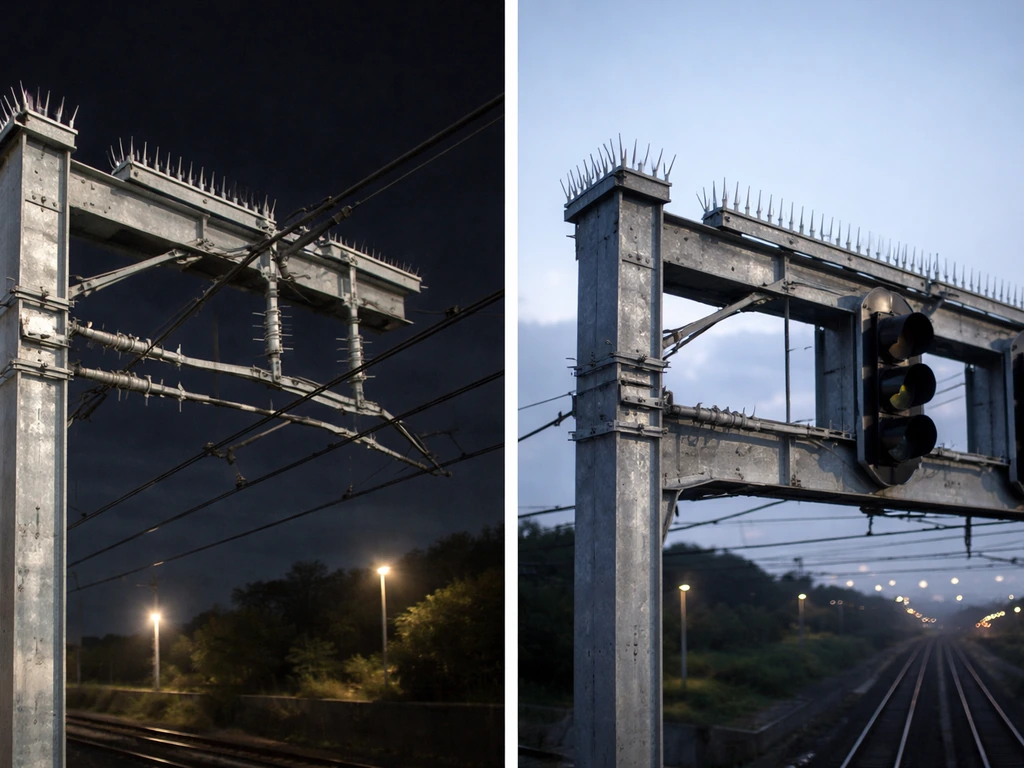
- Reduce perching opportunities on catenary masts, signal gantries, and overhead structures by installing anti-perch spikes or angled guards. Fewer perches mean fewer birds positioned in the danger zone.
- Install bird deterrent markings or visual warning devices on catenary wires in sections with high crossing activity. High-speed rail studies support that making infrastructure more visible to approaching birds reduces strike frequency.
- Review catenary height and geometry at viaducts and bridges in consultation with engineers. The 8.5 m danger zone defined in the Spain HSR study is a useful reference: infrastructure profiles that push this zone lower increase risk.
- Ensure signal housings and sensor enclosures are sealed or fitted with deterrents to prevent nesting. Address these during planned maintenance windows, not reactively after a fault.
- Carcass removal protocols should be formalized. Leaving strike carcasses in place attracts raptors and scavengers into the corridor, compounding the problem. Network Rail's vegetation management teams or maintenance contractors should have a standing task for this.
Vegetation and habitat management
- Manage trackside vegetation to reduce the density of ground-foraging habitat immediately adjacent to rails. Network Rail's vegetation management guidance specifically considers vegetation risk profiles; reducing dense low cover near the track edge is both a safety measure and a bird deterrent.
- Control water accumulation in ballast and drainage areas. Standing water attracts wading birds and waterfowl that are particularly slow to flush and have wide wingspans that increase strike probability.
- Where possible, work with surrounding landowners to shift attractive habitat features (seed crops, standing water, dense shrub cover) away from the track corridor. A bird that feeds 200 m from the track is still a bird that may cross it, but the frequency of crossing decreases.
- Document baseline species use of the corridor before making vegetation changes. As Canadian railway research (MDPI Diversity, 2017) highlights, understanding which species use the rail ecosystem and how they use it is essential for designing mitigation that's targeted rather than generic.
Operational practices
- Flag high-risk sections (known nesting sites, regular raptor activity, migratory crossing points) in the operational management system so drivers receive appropriate advisories.
- Use avian radar or acoustic monitoring at persistent high-risk locations if warranted by incident frequency. USGS research demonstrates that avian radar can identify relationships between bird activity, weather conditions, and collision risk, allowing proactive management rather than reactive responses.
- Adjust maintenance scheduling to avoid disturbing nesting birds during the active breeding season (typically March through August in the UK and similar temperate regions), which is both a legal obligation and good practice for reducing displacement stress.
- Train relevant personnel (maintenance crews, inspection teams) to recognize legally protected species and active nests so they can flag issues before work begins rather than mid-task.
Debunking the most common myths about birds and trains
A lot of what circulates about why birds die near railways or seem to "attack" trains is folklore dressed up as explanation. Here are the most common ones and what the evidence actually says.
Myth: Trains' electromagnetic fields attract or disorient birds
Birds do have a genuine magnetic sense (magnetoreception), and this is well-documented in peer-reviewed research. [But magnetoreception is a navigational tool used over large distances during migration. ](https://pmc. ncbi.
nlm. nih. gov/articles/PMC6769297/) There is no credible evidence that the electromagnetic fields generated by train power systems attract birds to tracks or interfere with their navigation in any meaningful way. The reality is that birds are near tracks because tracks provide food, perches, and shelter, not because of any magnetic lure.
Audubon’s myth-debunking discussion shows how claims about electronics harming birds can persist as dramatic-sounding narratives even when they are unsupported by evidence Audubon used to debunk claims that 5G radio waves kill birds. The same pattern of logic that Audubon used to debunk claims that 5G radio waves kill birds applies here: proximity plus a dramatic-sounding mechanism does not equal causation.
Myth: Birds "attack" trains or are drawn to motion
Birds don't attack trains. What looks like an attack is almost always a territorial or defensive flush response gone wrong. A bird defending a nest near a track may fly toward the perceived threat (the approaching train) rather than away from it, which is a normal defensive reflex, not aggression. The outcome can be fatal for the bird, but the mechanism is behavioral biology, not predatory intent. Understanding this matters because the solution (relocating attractants and nesting opportunities away from the active zone) is different from what you'd do if birds were genuinely drawn to the train itself.
Myth: Quiet trains are safer for birds
This one is more nuanced. Modern electric and high-speed trains are genuinely quieter than older diesel stock, and quieter trains are generally better for communities and wildlife habituation in a general sense. But research on low audibility and wildlife collisions found that trains that are harder to hear against ambient background sound can actually increase collision frequency, because animals rely on acoustic cues to detect and respond to approaching trains.
A train that birds can hear coming gives them time to flush. A nearly silent train at 250 km/h does not. This is not an argument against quiet trains, but it is an argument for complementary visual deterrents and habitat management rather than relying on noise as the primary bird alert mechanism.
Myth: Finding lots of dead birds means a sudden, unusual event
Carcass surveys along monitored rail lines consistently show that carcass detection rates are a fraction of actual mortality, because scavengers, decomposition, and airflow displacement remove evidence quickly. When you find a cluster of carcasses, it's more likely evidence of a persistent, ongoing problem at that location than a single dramatic event. The research framing from high-speed rail mortality studies is useful here: treat carcass patterns as indicators of underlying structural or habitat conditions worth investigating, not as evidence of a one-off mystery.
Myth: There's nothing railways can do without harming birds during the process
Legal constraints on working around nesting birds are real, and they do require planning. But they aren't an obstacle to mitigation, they're a framework for it. Network Rail's published guidance on legally working around birds in England is specifically designed to help operators plan work within legal boundaries. The constraints are seasonal and species-specific, and working within them is straightforward when maintenance and infrastructure upgrades are scheduled properly. The myth that "the law makes it impossible to manage birds on railways" misreads what the law actually requires. It requires timing and identification, not inaction.
The bird–train problem is genuinely solvable at the local level when you separate real mechanisms from folklore, apply targeted infrastructure and habitat changes, and build legal compliance into operational planning from the start. If you're dealing with a specific site, start with documentation, identify the attractants, and work through the immediate response steps above before escalating to more complex interventions. With the right documentation and response steps, you can also address the superkitties bird bop / pickle problem in a clear, practical way. If you are dealing with grackles specifically, you can use the same approach to identify what in the corridor is drawing them close and then adjust habitat and deterrents accordingly.
FAQ
How can I tell whether birds near a line are dying from train strikes versus other causes?
Use an interpretation checklist before action: confirm train timetable alignment (recent trains within minutes to a few hours), check for visible strike patterns (blunt trauma versus apparent pressure-related injury), note scavenger disturbance, and record the exact spot relative to catenary, ballast edges, and vegetation. This avoids treating a weather-driven mortality spike or a migratory die-off as a corridor-wide habituation issue.
What’s the best way to estimate true bird mortality when carcass surveys miss evidence?
Plan surveys with correction in mind. If you only do one pass, raw counts will understate mortality because carcasses disappear quickly. Better practice is repeated, scheduled searches (for example weekly at a minimum) combined with basic notes on persistence at each micro-site (shade, proximity to scavengers, drainage flow) so you can estimate how much evidence you are likely missing.
If bird strikes are causing operational issues, how do I decide what kind of response is appropriate?
Different outcomes call for different response levels. Trackside fouling, signal malfunctions, and visibility degradation are usually addressed through maintenance and corridor management, not emergency passenger safety steps. Derailment concerns are generally not realistic from bird mass, so response plans should prioritize detection and removal of attractants, reducing nesting opportunities, and handling equipment vulnerabilities that a nest can intermittently cause.
Should bird mitigation plans change depending on weather and visibility?
Timing matters. If visibility is poor (low cloud ceilings, fog, heavy precipitation, dusk/dawn), bird behavior and approach geometry change, increasing collision risk. Adjust your work and monitoring windows, and if you’re running mitigation trials, run them across varying weather conditions so you can tell whether the change is structural (habitat) or temporary (visibility).
How should I interpret a small number of carcasses near a rail line?
Don’t treat a single dead bird or small cluster as proof the corridor suddenly got worse. Clusters more often indicate persistent attractants, like an unmanaged nesting pocket, raptor perches, or prey-rich edges. Look for repeated carcass locations across days or weeks, and map them to habitat features to target the specific attractant rather than applying broad, low-impact deterrence.
Why do many bird deterrence efforts fail, even when they seem to scare birds away temporarily?
Habitat changes often need to be layered. If you only try short-term deterrents near the moment of approach, birds may continue to use the corridor for feeding or roosting. Combine attractant reduction (nesting sites, perching options, prey-supporting vegetation) with corridor redesign where feasible, and treat any deterrent trial as something that should be measured over time, not assumed to “work” after one day.
How does species type change the mitigation strategy?
Keep an eye on which species are involved. Raptors and other larger birds may persist because they use perches and hunting opportunities and may be habituated enough that they do not flush. Smaller passerines can strike during crossing attempts, so solutions that only target perching or roosting might not address the crossing behavior that drives random strikes.
Is it okay to rely on train noise reduction as a bird safety solution?
Quiet trains can increase risk when animals rely on acoustic cues to detect and respond. The practical implication is to add complementary visual deterrents and strengthen habitat management, especially in areas where birds are likely to be perched or foraging. Quietness should not be used as justification for doing nothing else.
What can injury patterns tell me that improves how I target the problem?
If you document injuries, you can infer the likely mechanism: visible blunt trauma often indicates direct high-speed contact, while signs consistent with pressure wave effects or secondary impacts suggest glancing blows or concussive injury. That helps you prioritize changes that reduce approach attempts and time-to-flush, rather than only removing carcasses after the fact.
How do I prevent myths from wasting time or resources on the wrong fix?
Avoid folklore mechanisms when selecting mitigation. Train power electromagnetic fields are not considered a meaningful attraction mechanism, and “birds attacking” is usually misread defensive flush behavior near nests. Your next step should be to identify nearby attractants and nesting opportunities, then relocate or modify them, rather than investigating speculative causes like power emissions.
What should I do first to stay compliant when mitigation involves working near nesting birds?
Plan legal work as a scheduling and documentation task, not a ban on action. In practice, you need species and season identification, then align maintenance or upgrades to the permitted timing windows. If you’re coordinating teams, build this into the project calendar early so habitat adjustments and nest-related restrictions are handled before fieldwork starts.