The train bird problem is most commonly one of three things: birds roosting or nesting near rail infrastructure and getting struck by passing trains, birds congregating on or near tracks because the corridor provides food, water, or shelter, or birds colliding with moving trains because they fail to perceive the vehicle as a threat in time to evade it. Which version you're dealing with shapes everything about how you respond, so the first step is identifying the actual pattern before reaching for a deterrent.
Train Bird Problem: Causes, Myths, and Practical Fixes

Marcus Whitmore
21 Jun 2026
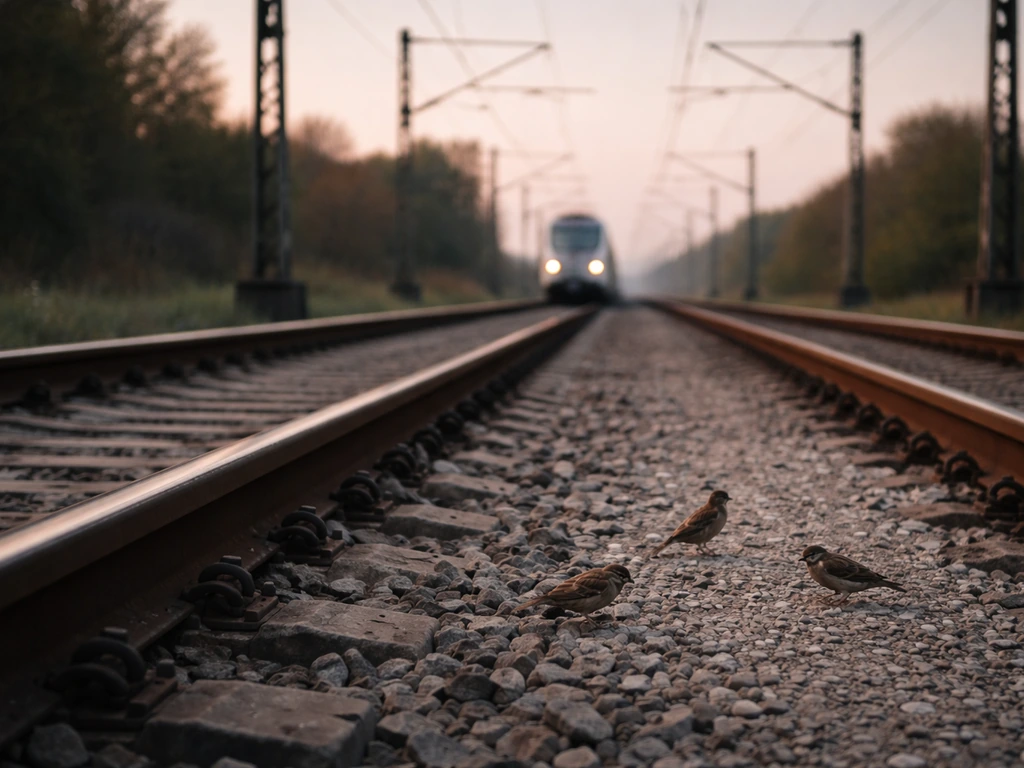
What kind of bird–train problem are you actually facing?
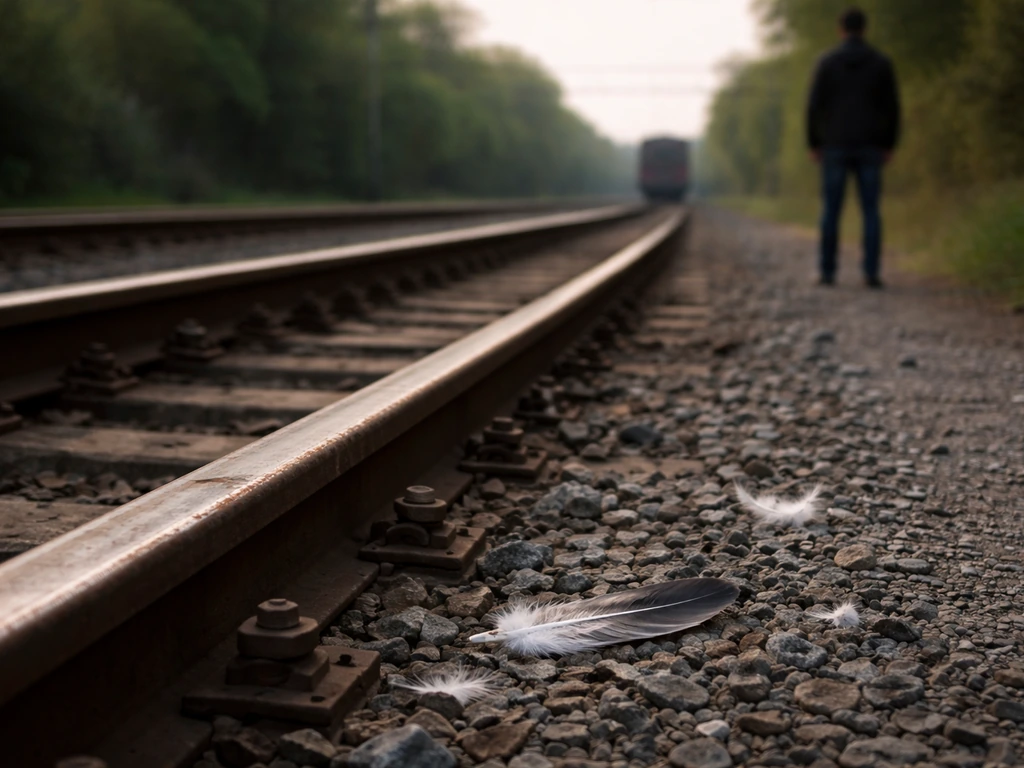
Not every bird near a rail line is a problem, and not every dead bird near tracks was killed by a train. Before anything else, you need to define what's happening. There are four common scenarios, and each one has a different root cause and solution.
- Strike events: birds are being hit by moving trains, either as one-off incidents or as a recurring pattern at specific locations or times of year.
- Roosting and nesting: birds are using rail infrastructure (bridges, signal gantries, station rooftops, overhead line equipment) as resting or breeding habitat, creating fouling, nest debris, and obstruction risks.
- Track-level congregation: birds are foraging on or immediately beside tracks, attracted by spilled grain, seeds, insects, or standing water in ballast drainage areas.
- Noise and disruption: birds (especially corvids and gulls) are interacting with rail equipment, cargo, or waste at sidings, yards, or stations, causing both operational nuisance and harm to individual birds.
Each of these creates different risks for both the birds and the operation. A strike event on a high-speed line is a very different safety profile from grackles roosting under a station canopy. Nail down which one applies before you do anything else.
Why rail corridors attract birds in the first place
Rail corridors are genuinely appealing habitat for a wide range of bird species, and understanding why helps you target the right part of the problem. It's not random, birds are responding to very specific features of rail infrastructure and the land management practices around it.
Food and foraging opportunities
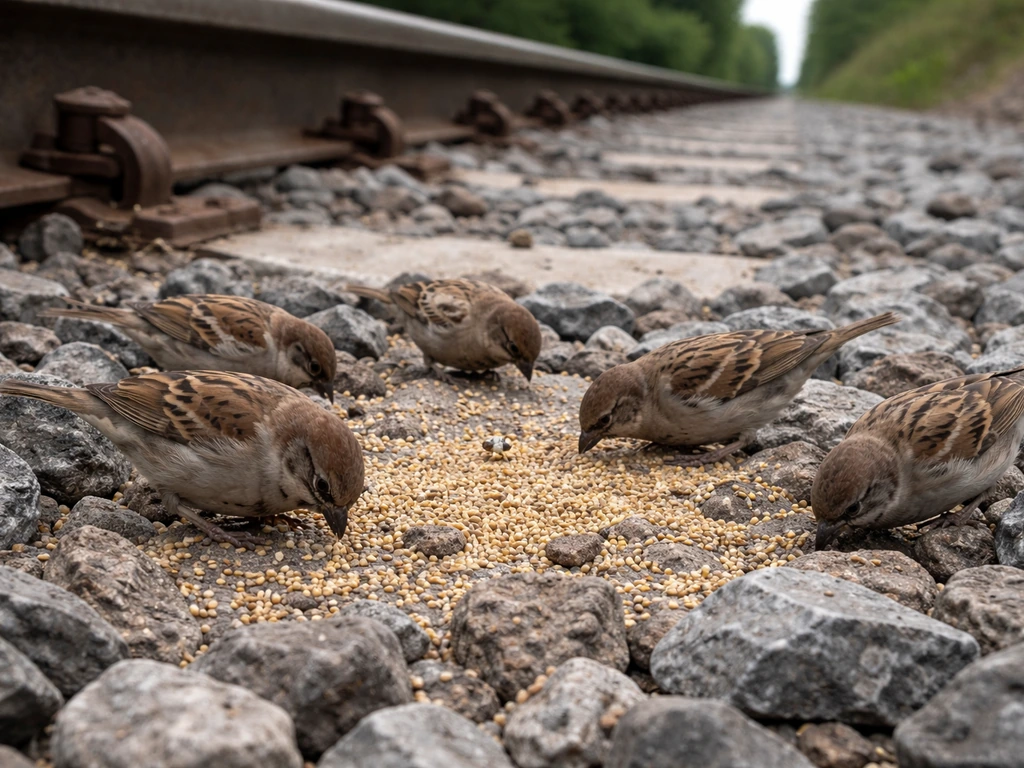
Freight rail corridors in particular are a consistent source of spilled grain, seeds, and organic waste. Ballast between tracks traps seed material and supports insect populations. Granivorous species like sparrows, doves, and pigeons zero in on this. In freight yards, the concentration of spilled cargo can sustain very large resident bird populations year-round. Corvids (crows, ravens, jays) are also drawn to rail yards because of general waste and scavenging opportunity.
Shelter, warmth, and elevated perches
Rail infrastructure creates an abundance of elevated perch sites that birds use for territorial display, predator surveillance, and resting: signal gantries, overhead line masts, bridge superstructures, station canopies, and retaining walls. In urban and suburban corridors, these structures are often the tallest features in the local landscape. Tunnels and underpasses provide sheltered roosting sites, and the thermal mass of concrete and steel structures retains warmth, which matters in colder months.
Water and vegetation
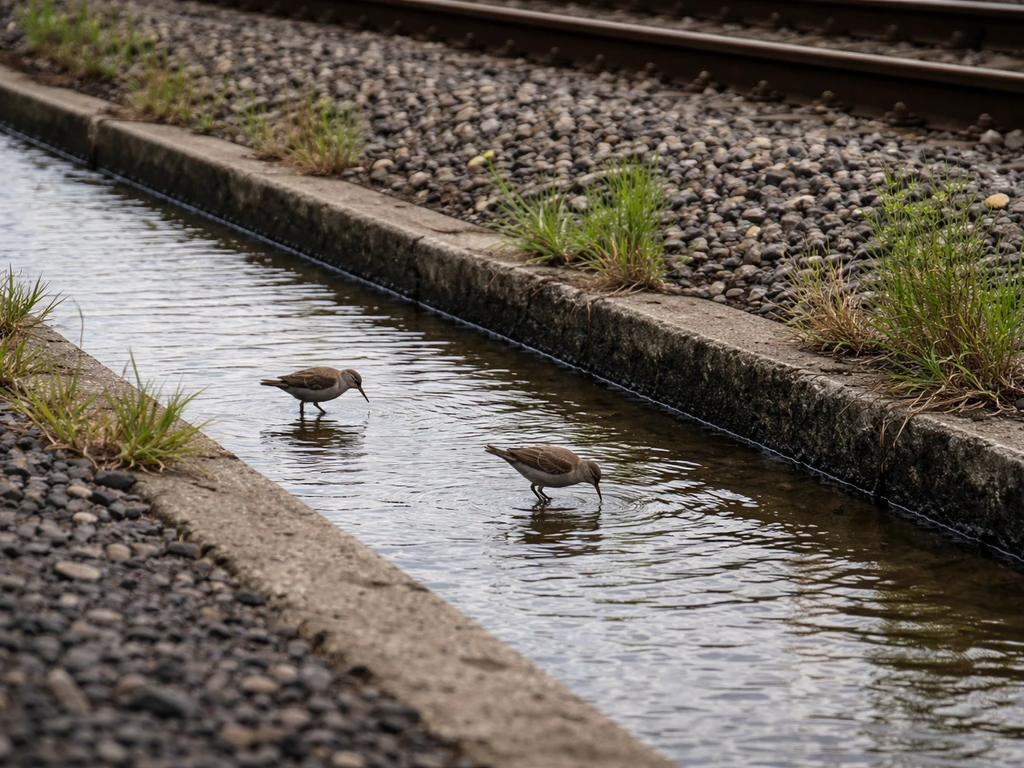
Rail drainage systems, culverts, and ballast channels often hold standing water, which attracts wading birds, waterfowl, and insectivores. Track-side vegetation management in many countries leaves a strip of rough grassland alongside the rail corridor that functions as ideal foraging habitat for raptors, skylarks, and ground-feeding birds. In some regions, this vegetation corridor is actually a conservation benefit, but it also draws birds close to the moving-train zone.
Lighting at night
Station and yard lighting is a well-documented attractant for nocturnally migrating songbirds. Light pollution draws migrating birds off their routes and keeps them circling in illuminated areas, which increases collision risk with structures and trains during predawn departures. This is especially relevant in spring and autumn migration windows.
Separating myths from what the evidence actually shows
There's a lot of folklore around what causes bird strikes and what harms birds near rail infrastructure. Getting this wrong leads to wasted effort and, in some cases, makes things worse. Here are the most common misconceptions, and what the evidence actually supports.
Myth: birds always see or hear trains in time to get out of the way
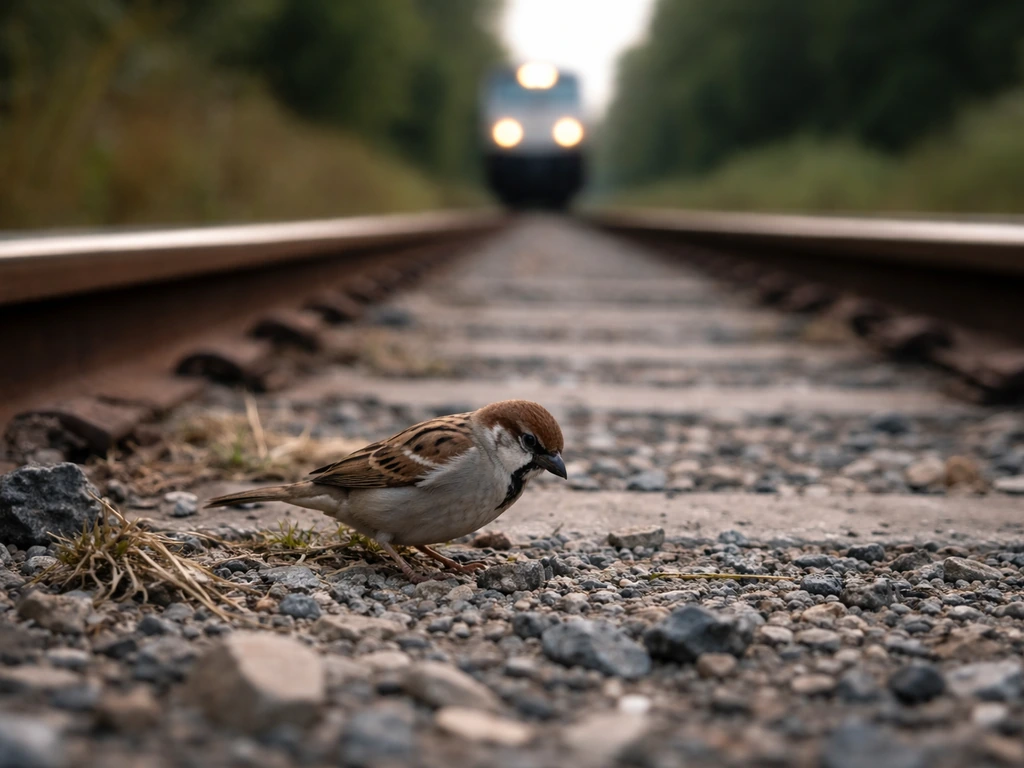
The reality is that many species have poor forward visual acuity relative to their lateral vision. Birds foraging on or near tracks are often looking down or sideways. Modern trains, especially electric multiple units, are significantly quieter than diesel locomotives and produce less low-frequency vibration in the rail, giving birds less warning. High-speed trains close the gap between a bird and a collision far faster than the bird's escape response time. The assumption that birds will simply fly away is not reliable.
Myth: bird deaths near tracks are always caused by trains
Window strikes, predation, electrocution from overhead line equipment, and entanglement in netting or fencing all produce bird carcasses near rail infrastructure. If you're finding dead birds regularly, the cause needs to be investigated rather than assumed. Overhead line equipment at 25kV AC or 750V DC third rail is responsible for a documented number of raptor and large bird deaths globally, and this is a separate problem from train strike with different solutions.
Myth: aggressive deterrents make birds afraid of trains over time
Birds do not generalize 'train = danger' from a single aversive experience in the way this theory assumes. Habituation works in the opposite direction: birds exposed repeatedly to non-lethal deterrents (pyrotechnics, loud noises, predator silhouettes) almost universally habituate within days to weeks and return to the same behavior. One-time shock events don't create lasting behavioral avoidance of rail corridors.
Myth: more birds near tracks means more strikes
Species composition matters far more than raw bird density. A large flock of small passerines feeding in ballast creates very different strike risk from a pair of nesting red-tailed hawks on a signal gantry overhanging the track. Strike frequency is driven by specific species behaviors, track geometry, train speed, and sight lines, not simply by how many birds are present.
What you can do today: observe, document, and report
Whether you're a blank" rel="noopener noreferrer">rail safety professional, a researcher, or someone who regularly travels a route and has noticed a pattern, the most valuable thing you can do immediately is document what you're seeing with enough specificity to be actionable. Vague reports of 'birds near the tracks' don't move the needle. Precise, consistent documentation does.
- Record the location precisely: use GPS coordinates or mileposts, not just 'near the station.' Bird concentration points, strike locations, and roosting infrastructure all need to be pinned to specific coordinates to be useful for hotspot analysis.
- Note the species if you can: at minimum, record the size category (small songbird, pigeon-sized, crow-sized, large raptor), coloring, and behavior. Many bird identification apps can help with this in real time.
- Document the time and conditions: time of day, season, weather, and train speed at the location are all relevant variables. Strike and near-miss events are heavily patterned by these factors.
- Photograph the infrastructure: if birds are roosting or nesting on specific structures, photographs that show the species, the exact structure, and the scale of the congregation are far more useful than written descriptions alone.
- Use formal reporting channels: in the US, the Federal Railroad Administration's safety reporting systems are the appropriate destination for rail-related safety incidents. For close-call events that didn't result in damage or injury but could have, the FRA's Close Call reporting program is specifically designed for this type of safety learning — it exists precisely to capture near-miss data before harm occurs. Reporting consistently builds the dataset that allows agencies to identify strike hotspots and allocate mitigation resources.
- Cross-report where appropriate: aviation wildlife strike data is managed through the FAA's National Wildlife Strike Database, and patterns identified there have been used to target ground-level mitigation at airports. The same logic applies to rail: reported data drives resource allocation, and unreported incidents disappear from the record entirely.
Prevention and mitigation options for rail operators
If you have operational responsibility for a rail corridor or facility, you have more levers to pull than most people realize. The most effective mitigation programs combine habitat modification (removing what attracts birds in the first place) with targeted physical exclusion where removal isn't possible.
Habitat and waste management
The single highest-return intervention at freight yards and sidings is reducing food availability. Regular sweeping of spilled grain and organic waste from yard areas, prompt repair of leaking cargo containers, and covered waste storage dramatically reduce the resident bird population over weeks to months. This is not glamorous, but it consistently outperforms active deterrence when food is the primary attractant. Track-side vegetation management, particularly keeping vegetation short and sparse in the immediate track zone, reduces cover and foraging opportunities for ground-feeding species.
Physical exclusion and structural modification
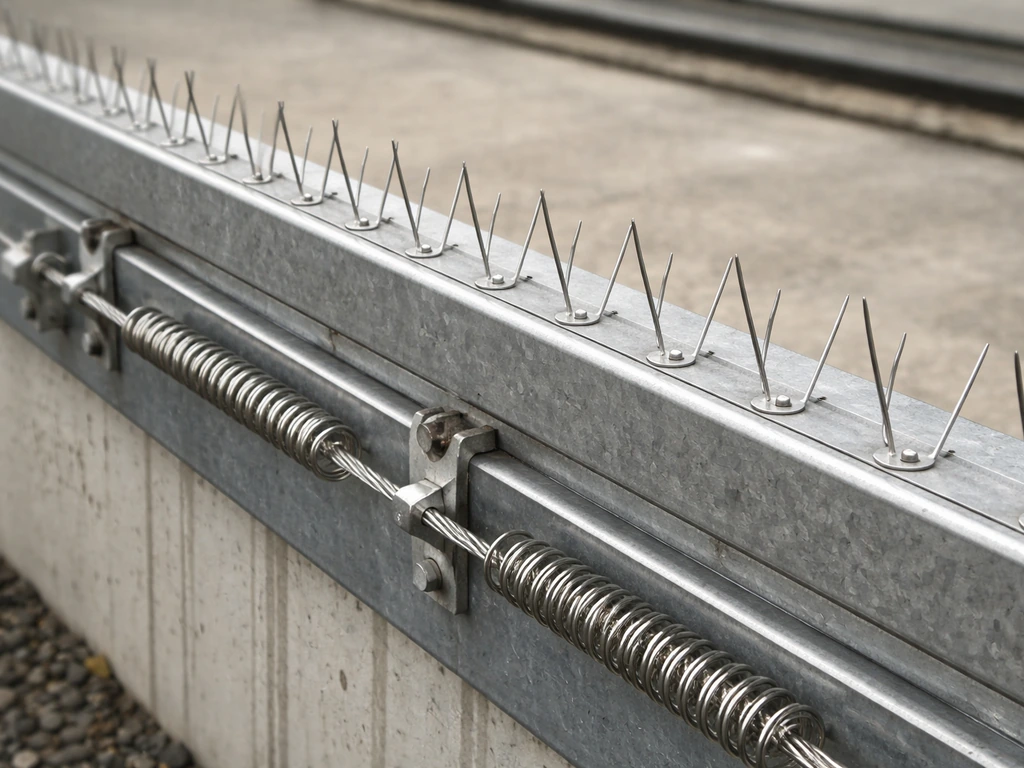
For roosting and nesting birds on infrastructure, exclusion is the most reliable long-term solution. Anti-perch systems (stainless steel spikes, coil systems, tensioned wire systems) installed on ledges, beam flanges, and gantry horizontal surfaces prevent birds from landing without harming them. Netting can exclude birds from enclosed spaces like station canopies and bridge undersides. These interventions are most effective when installed before nesting season, since active nests of most species are legally protected during the breeding period in many jurisdictions, removing an active nest without the appropriate permit creates legal exposure.
Lighting management
Switching to downward-directed, motion-activated, or lower-intensity lighting at stations and yards reduces the attraction of nocturnal migrants during spring and autumn migration windows. Where security requirements permit dimming, reducing overhead light intensity during peak migration hours (roughly 11pm to 4am) has documented effects on the number of migrants drawn into lit areas. This is a low-cost, non-invasive intervention that also reduces energy expenditure.
Drainage and water management
Eliminating or reducing standing water in ballast drainage channels and culverts removes a key attractant for wading birds and waterfowl. Improved ballast drainage design and regular maintenance of culvert outlets are the practical mechanisms. Where standing water cannot be eliminated, steep-sided drainage channels reduce the accessibility of the water to foraging birds.
Coordination with wildlife agencies
For persistent problems involving protected species, early engagement with the US Fish and Wildlife Service (or equivalent national agency) is essential. Some species require federal depredation permits before any active deterrence, and attempting to resolve a protected-species problem without agency coordination is both legally risky and often counterproductive. Agencies can also advise on species-specific interventions that have an evidence base behind them.
Deterrence methods: what works, what doesn't, and what to avoid
Deterrence gets the most attention and deserves the most skepticism. The market is full of products that sound persuasive and underdeliver consistently. Here's an honest breakdown based on the available evidence. Superkitties bird bop / pickle problem is a common way people describe how multiple small, specific triggers can combine into recurring bird issues on or near rail corridors.
| Deterrent type | How it works | Evidence of effectiveness | Key limitation |
|---|---|---|---|
| Pyrotechnics (bird bangers, bird bombs) | Loud noise and flash startle birds | Short-term dispersal, moderate | Rapid habituation (often within 1–2 weeks); requires trained operator; noise complaints |
| Raptor/predator decoys (plastic owls, hawk kites) | Visual predator cue | Very limited, rapid habituation | Birds learn decoys are static within days; moving kites last slightly longer |
| Physical anti-perch systems (spikes, coils, wires) | Prevents landing on specific surfaces | High, long-term | Only addresses roosting/nesting; does not deter birds from the area generally |
| Exclusion netting | Physical barrier to enclosed spaces | High, long-term | Requires professional installation; trapping risk if improperly maintained |
| Bioacoustics (distress call playback) | Species-specific distress or alarm calls | Moderate, species-dependent | Must match target species; habituation occurs; ineffective for non-target species |
| Laser deterrents | Visual disturbance via laser beam sweep | Moderate in low-light conditions | Ineffective in daylight; safety concerns near rail workers and operators |
| Habitat modification (food/water removal) | Removes the attractant | High, long-lasting | Requires sustained operational commitment; not a one-time fix |
| Chemical repellents (polybutylene gels, methyl anthranilate) | Tactile or olfactory aversion | Variable; best for food plots | Can trap small birds in gel products; limited rail application |
The methods to avoid outright are those that cause direct harm to birds without a legal permit (poisoning, trapping without authorization, destruction of active nests), any DIY electrical deterrents that create a hazard for both birds and rail workers, and any approach that relies on a single passive deterrent as a permanent solution. Monoculture deterrence always fails because birds habituate. Effective programs layer habitat modification with targeted exclusion and use active deterrents only as a short-term bridge.
For readers interested in the specific performance comparison of pyrotechnic options, the distinction between bird bangers and bird bombs is worth understanding in more depth, as they differ significantly in application range and suitable use contexts near rail infrastructure.
Troubleshooting checklist: species, season, and location
Use this checklist to narrow down the most likely cause and best response for your specific situation. Work through each factor in order. If you’re dealing with a Mac that has a bird-related process driving CPU usage high, check Activity Monitor and isolate what’s responsible before trying any fixes macos bird process high cpu.
Step 1: Identify the location type
- Freight yard or siding: food-source attraction is the primary driver; start with waste management audit.
- High-speed intercity corridor: strike risk from low-flying birds is the main concern; focus on sight-line vegetation management and reportable incident documentation.
- Urban station or terminus: roosting and nesting on structures is primary; exclusion and anti-perch systems are the intervention.
- Rural or semi-rural track through grassland or wetland: seasonal concentrations of foraging or migrating birds; assess whether vegetation or drainage is the attractor.
- Tunnel entrance or underpass: roosting in enclosed spaces; assess netting exclusion feasibility and check for nesting species before intervening.
Step 2: Identify the season
- Spring (March to May): active nesting season for most species. Do not attempt to remove nests or install exclusion on structures where nesting has already begun without checking legal requirements first. Focus on documentation and planning exclusion for after the nesting season ends.
- Summer (June to August): post-breeding flocking in some species; juveniles are less experienced and more vulnerable to strikes. Vegetation control is most practical during this window.
- Autumn (September to November): peak migration. Lighting management is most impactful now. Increase reporting frequency; strike risk may spike at specific migratory bottleneck locations.
- Winter (December to February): roosting congregations often largest now as birds group for warmth. Anti-perch installation can proceed freely (no active nests). Food availability at yards should be minimized; birds are under nutritional stress and will work harder to access food sources.
Step 3: Identify the species or species group
- Pigeons and doves: food and roosting problem; exclusion from structure ledges plus waste management.
- Corvids (crows, ravens, jays): intelligent, adaptive; requires rotating deterrent methods and waste management; habituation to static deterrents is rapid.
- Sparrows and finches: grain/seed attraction is primary; sweep tracks and ballast areas; reduce vegetation cover in the immediate track zone.
- Raptors (hawks, falcons, owls): attracted by prey concentration near tracks; do not target the raptor, address the prey base; raptors are legally protected and require permits for any active deterrence.
- Starlings and grackles: large roosting flocks on infrastructure; bioacoustic dispersal combined with anti-perch exclusion is the standard approach. The nuisance-bird classification of species like grackles is a separate but related topic worth understanding if this is your situation.
- Waterfowl and wading birds: drainage and standing water attraction; habitat modification is the primary intervention.
- Nocturnally migrating songbirds: lighting attraction at stations; reduce or redirect lighting during migration windows.
Step 4: Confirm your role and what you can do directly
- Rail operator or infrastructure manager: you have the widest range of options; start with a site audit covering food sources, water, roosting structures, and lighting before selecting interventions.
- Train operator or driver: your most valuable contribution is accurate incident reporting through the FRA's close-call and accident systems; location-specific, time-stamped reports build the dataset that justifies mitigation investment.
- Researcher or safety professional: cross-reference reported strike locations against species range maps, migration corridors, and seasonal timing to identify systemic patterns; engage wildlife agencies for hotspot analysis.
- Pet owner or local resident near a rail corridor: document what you observe, report to the local rail operator or authority, and consult local wildlife rehabilitation organizations if you find injured birds. Do not attempt to handle injured birds of prey without training.
The train bird problem is rarely a single-cause, single-solution situation. The most effective outcomes come from combining accurate documentation, removal of the primary attractant, and targeted exclusion where physical access to infrastructure is the issue, all coordinated with the appropriate wildlife and rail safety agencies. FRA provides blank" rel="noopener noreferrer">formal accident and incident definitions for rail equipment reporting, including how to distinguish deaths and injuries and occupational illness from other incidents. If you're dealing with birds in other infrastructure contexts, similar principles apply whether you're managing a warehouse bird problem or addressing bird congregation in other enclosed or semi-enclosed industrial settings.
FAQ
How can I tell if the issue is roosting on infrastructure versus birds feeding on the ballast or yard waste?
Look at timing and location patterns. Roosting problems usually peak at dusk and dawn and are concentrated on specific raised structures (gantries, masts, canopy edges). Feeding-driven congregation tends to track food sources and is often most noticeable during daylight hours, with birds clustered along ballast or near spill-prone yard areas and waste storage zones.
What should I record during documentation so the data is actually useful to a rail or wildlife team?
Capture repeatable details: date and time window, exact spot description (milepost or landmark), bird species if known, estimated group size, behavior (perching, roosting, feeding, nesting), weather and train schedule at the time, and whether you observed near-miss behavior versus only carcasses. Photos or short video clips from a safe location help determine whether collisions, predation, or electrocution are likely.
If I find dead birds near the tracks, is it ever safe to assume it was a train strike?
Not safely. Carcasses near rail corridors can come from multiple causes, including electrocution from overhead line equipment or predation near perches. If you can, note the relationship to electrified infrastructure, fencing or netting, and whether deaths occur in the same micro-location repeatedly, which often indicates a non-train cause.
Do deterrents like loud noise or predator silhouettes work long-term on a rail line?
Usually not. Birds commonly habituate to repeated non-lethal deterrents within days to weeks, especially in stable corridors. Use active deterrents only as a short-term bridge while you implement habitat modification (food, water, cover) or physical exclusion (anti-perch, netting).
What are the most common reasons exclusion solutions fail?
Gaps and wrong surface targeting. Birds can re-land on adjacent ledges, cant rails, beam flanges, or other accessible planes if coverage is incomplete. Another frequent failure is installing exclusion after nests are already present, then stopping work or removing structures during the breeding period, which leaves birds a brief window to continue using the site.
Is it okay to apply deterrents during nesting season if the goal is to reduce danger?
Often you still need permits and careful coordination. Many jurisdictions protect active nests, and removing an active nest or otherwise disturbing protected breeding birds without authorization can create legal exposure. Plan exclusion and habitat changes ahead of nesting windows whenever possible.
How should lighting changes be evaluated if the site is also used for security or operations?
Treat lighting as a system, not just a brightness setting. Where security rules require illumination, consider downward-directed shielding, motion-activated modes in low-traffic periods, or reducing intensity only during peak migration hours. Confirm that dimming does not create new hazards such as reduced visibility for operators or maintenance crews.
Can reducing standing water alone solve the train bird problem?
It can substantially reduce one category of attractants, especially for wading birds and waterfowl, but it rarely addresses feeding and perching simultaneously. The highest success usually comes from pairing drainage improvements with food and cover reduction, because birds will switch to other available resources if only one attractant is removed.
Why do small numbers of birds sometimes cause more strikes than large flocks?
Because strike risk depends on species behavior and spatial geometry, not just counts. A small group of large raptors or ground-feeding species choosing consistent approach lines can create higher collision probability than many small passerines foraging in ballast at different heights and sight-line angles.
What’s the fastest practical way to reduce risk at a freight yard before a longer mitigation plan is implemented?
Start with food availability and immediate ground truth. Prioritize sweeping spilled grain and organic waste, fixing leaks in containers quickly, and improving or covering waste storage. These actions can reduce resident populations over weeks to months and are often more effective than relying on hardware deterrents alone.
Are there deterrents that should be avoided because they create hazards for people or rail operations?
Yes. Avoid any DIY electrical deterrents and any approach that could injure rail workers, interfere with overhead line equipment, or create unsafe conditions around electrified infrastructure. Also avoid lethal actions or actions that disturb protected species without the correct permits and agency coordination.
If the rail corridor is adjacent to conservation habitat, how do I prevent mitigation from harming legitimate ecological value?
Aim for targeted changes in the immediate train zone rather than broad habitat removal. Shorten or thin vegetation specifically within the access distance birds use for foraging and cover, and preserve conservation areas outside that zone. Coordinate with the appropriate wildlife agency so interventions align with both safety goals and local ecological constraints.
Who should be involved if protected species are suspected at the site?
Engage early with the appropriate national or regional wildlife authority. Protected species may require specific depredation, handling, or deterrence permissions, and the agency can advise on species-specific timing, exclusion design, and acceptable methods that reduce legal and operational risk.