
Yes, bird nests are legally protected in most countries, but the scope of that protection depends on two things: the species involved and whether the nest is currently active. If you are looking for what is bird nesting divorce, the key idea is that actions affecting a protected nest can create legal and practical consequences similar to other protected-bird scenarios legally protected.
Are Bird Nests Legally Protected? Laws, Permits, and Steps

Marcus Whitmore
3 May 2026
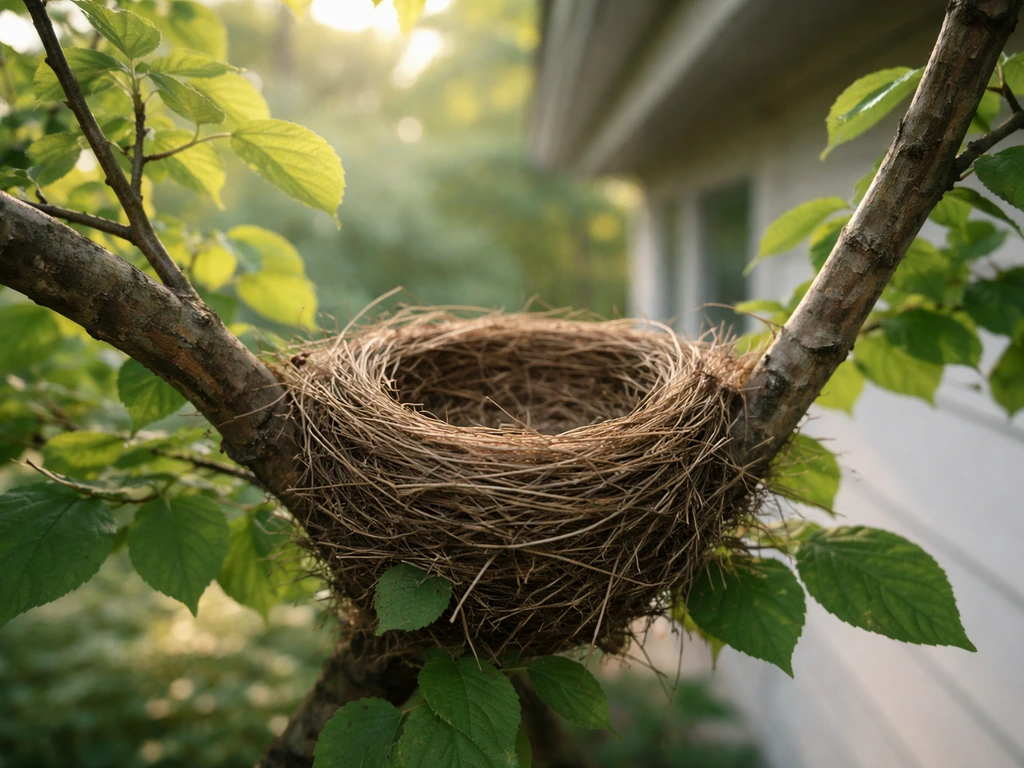
In the United States, the Migratory Bird Treaty Act (MBTA) makes it illegal to destroy, remove, or possess the nest of any covered migratory bird species if that nest contains eggs, chicks, or dependent young. [In the UK, all wild bird nests are protected under the Wildlife and Countryside Act 1981. ](https://www. rspca.
org. uk/adviceandwelfare/wildlife/birds/nests/moving) Across the EU, the Birds Directive prohibits deliberate destruction, damage, or removal of nests and significant disturbance during breeding. If you have a nest on your property right now and you're wondering what you can legally do about it, the species and the current status of the nest are the two facts you need to establish before you touch anything.
The general rule across most jurisdictions

Nest protection laws exist because birds, eggs, and nests are treated as part of the same protected unit. You cannot legally harm the bird directly but leave the nest alone and call it compliant. Most frameworks close that gap explicitly. The MBTA, for instance, prohibits take of 'any migratory bird, or the parts, nests, or eggs' of covered species except as authorized by permit (50 CFR § 21.
11). The EU Birds Directive covers deliberate destruction or damage to nests and eggs, removal of nests, and deliberate significant disturbance during breeding and rearing. England's Wildlife and Countryside Act 1981 goes a step further: it protects all wild birds and their nests, not just a listed subset.
The common thread across all of these is that active nests, meaning nests that are in use, receive the strongest protection, and in most places you need a permit to remove or disturb one lawfully.
It is worth noting that nest protection is closely tied to the broader question of what is legal to do to birds at all. The same laws that protect nests typically govern whether killing, trapping, or relocating birds is permitted, which is why understanding species identity matters so much at the outset. In India, the legality of bird hunting depends on the species and the applicable wildlife protection rules and permits is bird hunting legal in india.
What 'active' means and which species qualify
The legal weight of a nest depends almost entirely on whether it qualifies as 'in use' or 'active.' The U.S. Fish and Wildlife Service's January 2025 Nest Memorandum (MBPM-2) defines an inactive nest as one that does not contain viable eggs or nestlings. An in-use nest, by contrast, is one that is currently occupied by eggs, chicks, or young that still depend on it for survival. The memo states clearly: 'Destruction of an in-use nest requires MBTA authorization.' Once a nest is genuinely inactive, meaning the young have fledged and the nest will not be reused, it generally falls outside the scope of the take prohibition, though possession rules still apply for covered species.
On the species side, U. S. In the United States, the Migratory Bird Treaty Act (MBTA) is what makes it illegal to kill protected migratory birds without authorization killing, trapping, or relocating birds. law is selective.
The MBTA covers hundreds of migratory bird species but does not cover non-native species like European starlings, house sparrows, or rock pigeons. Those species' nests are not protected under federal law, though state law may add protections. In England, every wild bird species is covered, making species identity less critical for nest protection there (though Schedule 1 species carry additional disturbance offenses). In the EU, the Birds Directive covers all naturally occurring wild bird species in European territory.
Always confirm which species are covered under your specific jurisdiction before drawing conclusions.
What you can and can't do when a nest is present
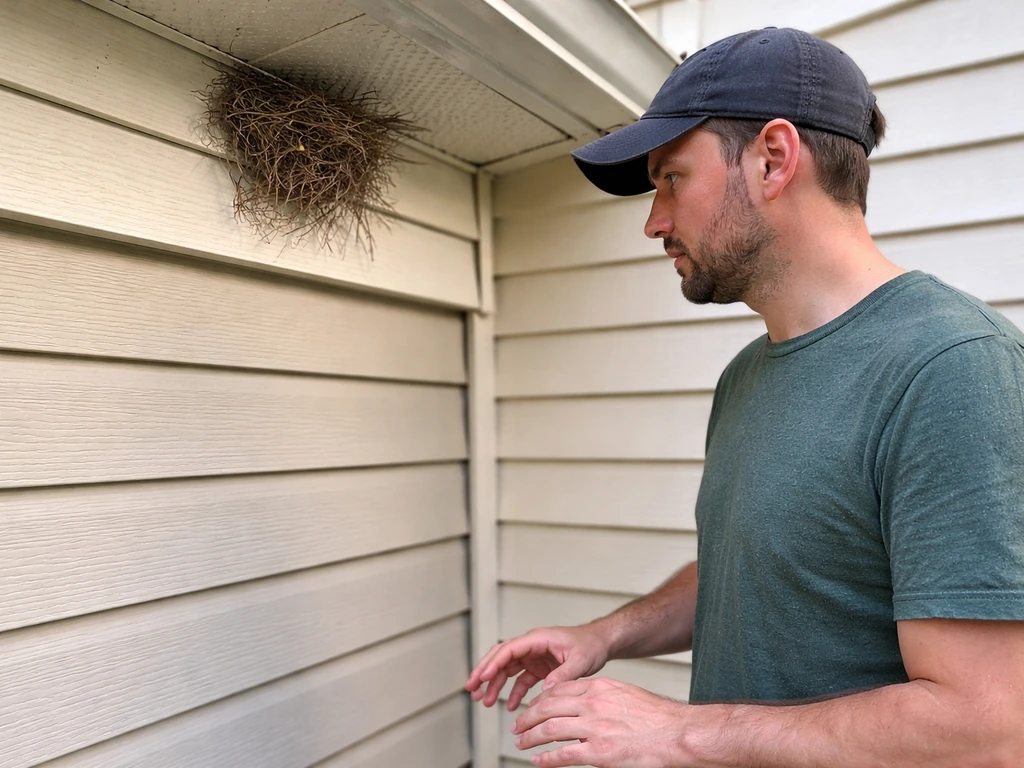
People often assume that because they own the property the nest is on, they have the right to remove it. That is not how nest protection law works in most places. The law attaches to the bird and the nest, not to the property owner's preferences. Here is a realistic breakdown of what is typically permitted versus what is not.
| Activity | Active Nest (eggs/chicks present) | Inactive Nest (fledged, no eggs) |
|---|---|---|
| Remove or destroy the nest | Illegal without a permit in most jurisdictions | Generally permitted for non-protected species; possession rules may still apply |
| Trim vegetation or trees near a nest | High-risk disturbance; defer if possible, especially for Schedule 1/raptors | Usually permitted with normal care |
| Routine building maintenance (painting, cleaning) | Problematic if it causes abandonment; delay if feasible | Generally fine |
| Blocking access to a nesting site (e.g., sealing a vent) | Illegal if birds are inside or eggs are present | Permitted in most cases once confirmed inactive |
| Moving a nest a short distance | Requires a permit in the U.S. and UK; not a DIY option | Lower risk but confirm local rules |
| Monitoring or photographing the nest | Permitted; avoid causing disturbance or repeated flushing of adults | Permitted |
| Cleaning up nest debris after fledging | Wait until confirmed inactive | Generally permitted |
The most common mistake people make is assuming that 'just moving it a few feet' is a harmless workaround. In the U.S., relocating an in-use nest without authorization is still take under the MBTA. The reality is that even well-intentioned DIY relocation can result in nest abandonment and, legally, still constitutes a violation.
What to do right now: a practical checklist
If you have discovered a nest and need to act (or figure out whether you need to wait), follow this sequence. Do not skip steps two and three, because species identity and activity status determine everything else.
- Identify the bird species. Use a field guide app (Merlin, eBird, or similar) or photograph the adults visiting the nest. Species identity determines which laws apply and whether the nest is federally protected.
- Assess nest activity. Is there a sitting adult? Eggs? Visible chicks? Or has the nest been untouched for two or more weeks with no adult visits? Document what you observe.
- Photograph and date-stamp everything. Take clear photos of the nest, its location, any eggs or young, and the surrounding area. Note the date and time. This protects you if a compliance question arises later.
- Determine your jurisdiction. Federal law applies in the U.S. regardless of state, but state law may add protections. In the UK, check whether you are in England, Scotland, Wales, or Northern Ireland, as the legislation differs slightly. In the EU, check your member state's transposition of the Birds Directive.
- Look up the specific protections for that species in your jurisdiction. The U.S. Fish and Wildlife Service, Natural England, and your relevant national wildlife authority all publish online species lists and guidance.
- Do not disturb the nest until you have confirmed its legal status. If the nest is active, assume it is protected until proven otherwise.
- Contact the appropriate authority if you have any doubt (see the permits section below).
Permits, exemptions, and who to call

Legal removal of an active, protected nest almost always requires a permit or formal authorization. In the U.S., the MBTA authorizes FWS to issue depredation permits and other special purpose permits for nest take when there is a documented conflict. You apply through the U.S. Fish and Wildlife Service's Migratory Bird Permits program; turnaround times vary, but you should contact them well before any planned construction or maintenance that could affect nesting birds. For state-protected species, contact your state wildlife agency.
In England, Natural England can issue licences for nest disturbance or removal under specific purposes, including development, health and safety, and air safety at aerodromes. In Scotland, contact NatureScot; in Wales, Natural Resources Wales. These licensing bodies do not issue blanket approvals, so you need to demonstrate that the action is genuinely necessary and that alternatives have been considered. For EU countries, the competent authority is typically the national environment or nature ministry or a designated wildlife agency.
For aviation and airfield professionals dealing with nesting birds near runways or aircraft movement areas, wildlife control permits are available through the relevant civil aviation authority and wildlife regulator working jointly. This is a recognized safety exemption category in both U.S. and UK frameworks, but it still requires documentation of the hazard and formal authorization before removal.
- U.S.: U.S. Fish and Wildlife Service Migratory Bird Permits Office (regional offices), plus your state wildlife agency for state-only protections
- England: Natural England Wildlife Licensing
- Scotland: NatureScot (formerly Scottish Natural Heritage)
- Wales: Natural Resources Wales
- Northern Ireland: Northern Ireland Environment Agency (NIEA)
- EU member states: your national environment/nature ministry or designated wildlife agency
- Canada: Environment and Climate Change Canada (Migratory Birds Regulations under the Migratory Birds Convention Act)
For nuisance species not covered by federal or national protection (starlings and house sparrows in the U.S., for example), no permit is needed for nest removal under federal law, but confirm your local municipal or state rules before acting, as some local ordinances add their own protections.
Construction, renovations, and other special situations
Construction and building renovation are the most common real-world collision points between humans and protected nests. The single most effective legal strategy is timing. If you can schedule tree removal, roof work, or exterior repairs to begin before the nesting season starts or after it ends, you sidestep almost every legal complication. In most of the northern hemisphere, the core nesting season runs roughly from March through August, though specific species vary. Some cavity-nesting species start earlier; urban species may nest year-round in mild climates.
If work has already begun and you discover an active nest mid-project, stop work in that immediate area and get professional guidance. Courts and regulators do not generally accept 'we didn't know it was there' as a defense for destroying a protected nest. The most defensible position is documented discovery followed by a halt and a call to the relevant wildlife authority.
For pet owners worried about birds nesting in areas accessible to cats or dogs: relocating the nest requires the same permit process as any other nest removal. The better practical approach is temporarily blocking the pet's access to the area until the nest becomes inactive. This is not just legally cleaner; it also aligns with the evidence on what actually threatens nesting success. Domestic cat predation is a documented mortality factor for ground-nesting species, so keeping pets away during the active period is both effective and protective.
Aviation professionals should be aware that bird nests in or near aircraft movement areas are treated as a genuine safety issue by regulators, and permit frameworks exist specifically to address this. The key is to act through official channels rather than removing nests informally, which creates liability and may not be as effective as a coordinated wildlife management plan anyway.
What happens if you get it wrong
Violations under the MBTA carry civil penalties of up to $15,000 per violation and criminal penalties including fines and imprisonment for willful take. For companies and large construction projects, the reputational and financial risk from a federal enforcement action is significant, and prosecutions do happen, particularly when nest destruction is documented and clearly deliberate. In the UK, under the Wildlife and Countryside Act 1981, offences carry fines of up to £5,000 per bird, nest, or egg offense, plus possible imprisonment. EU member states have their own penalty ranges under national law implementing the Birds Directive, but meaningful fines and criminal liability are common across the bloc.
The practical takeaway is that the cost of a quick call to a wildlife agency or a short delay in a work schedule is almost always lower than the cost of an enforcement action, even if the violation was unintentional. Regulators in most jurisdictions are far more accommodating to people who proactively seek guidance than to those who are discovered after the fact. Document your steps, contact the right authority, and give yourself enough lead time to get a permit if you need one.
Quick-reference: how to stay on the right side of the law
- Identify the species before doing anything. Unknown species should be treated as protected by default.
- Confirm nest status: active (eggs or dependent young present) vs. inactive (fledged, no eggs).
- Photograph and document the nest with timestamps immediately upon discovery.
- Check your specific jurisdiction: federal, state/national, and local rules can all apply simultaneously.
- Do not rely on DIY relocation as a legal workaround. Moving an in-use nest without a permit is still a violation in most jurisdictions.
- Plan work seasonally. Scheduling construction and maintenance outside the nesting season is the simplest way to avoid conflicts.
- Contact the relevant wildlife authority before removing or disturbing any active nest you suspect is protected.
- For unprotected species (e.g., non-native starlings and house sparrows in the U.S.), confirm both federal and state/local rules before acting.
- If in doubt, wait. A few weeks of patience is almost always a lower cost than a compliance violation.
FAQ
Does “protected” mean I can’t touch the nest at all, even to move branches or remove debris nearby?
In most jurisdictions, protection covers the nest itself and activities that damage it or cause abandonment. Even if the nest is untouched, moving branches, clearing brush, or operating equipment too close can be treated as damaging or disturbing an active nest, so you should keep a buffer zone and confirm with the relevant wildlife authority before doing any work in the area.
Are bird nests still legally protected if the birds seem to have abandoned them?
Legality usually depends on whether the nest is truly inactive, not on how it looks from a distance. If eggs were laid recently or nestlings could still be present, regulators may treat it as active. The U.S. inactive standard commonly turns on whether viable eggs or nestlings are present, so when in doubt, wait or get an identification visit rather than assuming abandonment.
What if the nest is on my property, and I only want to remove it after the nesting season ends?
Timing helps, but you still need to confirm two things: the species coverage in your jurisdiction, and whether the nest is considered inactive or whether dependent young or viable eggs remain. Also, in many places possession rules can still apply even after birds leave, so take and disposal steps may still require care for covered species.
Can I relocate the nest outside the building or to another spot on the same property?
Relocation of an active, protected nest is often treated as “take” because it can cause abandonment. Even when a nest seems easy to move, the legal risk usually remains. A safer option is to avoid disturbance and block access for pets, then address removal only after inactivity (or with a permit if the work is unavoidable).
If the birds are non-native, are their nests automatically unprotected everywhere?
Not automatically. Federal or national rules may not cover some non-native species, but local ordinances, state or provincial wildlife rules, and habitat protections can still apply. You should check your municipal and regional requirements, especially for dense urban areas and protected habitat zones.
What counts as an “active nest,” and how can I verify it without breaking the law?
An “active” nest typically means it contains eggs, nestlings, or dependent young. The safest way to verify is through a qualified wildlife professional or using non-invasive observation from a distance. Avoid opening the nest, shining bright lights directly into it, or handling materials, because those actions can themselves be treated as disturbance or damage.
If I find a nest during construction, do I need to stop everything or only work near it?
Most agencies expect you to stop the specific activity that could affect the nest area immediately. Practically, that usually means halting work within a reasonable disturbance buffer and documenting the discovery, then contacting the wildlife authority for guidance before resuming any near-nest operations.
Do I need a permit if the goal is health and safety, like a falling-branch risk or obstruction?
Often, yes for covered active nests, but there are pathways for authorization. In many frameworks, licensing is possible for specific purposes such as health and safety, yet you still must demonstrate necessity and show alternatives were considered. The exact documentation requirements and approval timelines vary by jurisdiction.
Is there a difference between “disturbance” and “destruction,” legally?
Yes. Some laws focus on direct destruction or removal of nests, while others also penalize significant disturbance that affects breeding or rearing, even without physically breaking the nest. That means loud equipment, heavy traffic, repeated approach, or vibration near the nest can create liability similar to direct damage.
If I hire a contractor, am I still legally responsible if they destroy the nest?
In many places, yes. Hiring a contractor does not automatically transfer liability if the permitted work requirements apply and the action occurs without proper authorization. You should confirm that the contractor is experienced with wildlife timing and has a plan for nest surveys and stop-work procedures.
For pets, is blocking access legally safer than removing the nest?
Generally, yes. Temporarily keeping cats or dogs away from the nesting site reduces the main risk of nest failure without requiring nest removal. It also avoids the legal step of “take” that applies to many protected nests, as long as you do not disturb the birds or nest during the active period.
What documentation should I keep if I contacted a wildlife agency or requested guidance?
Keep proof that you acted responsibly: dates of discovery, photographs taken from a distance, notes on observed activity (eggs or young), a copy of any emails or call logs with the wildlife authority, and a record of what work you paused or changed. This documentation can be critical if questions arise after the fact.