
Bird hunting is not universally illegal in the U.S., but it is also not universally legal. Whether it is lawful in your specific situation depends on the species you are targeting, where you are, what time of year it is, how you plan to do it, and whether you have the right licenses and permits in hand. Get any one of those details wrong and a legal hunt becomes a federal or state violation. The short version: most common game birds (ducks, geese, doves, pheasant, quail, turkey) can be hunted legally under the right conditions, while the vast majority of songbirds, raptors, and migratory non-game birds are federally protected and cannot be legally hunted at all.
Is Bird Hunting Illegal? How to Check US Laws Today

Marcus Whitmore
15 Jun 2026

How bird hunting laws are structured in the U.S.
Bird hunting law in the U.S. runs on two parallel tracks: federal law and state law. Both apply simultaneously, and you have to comply with both. Federal authority over migratory birds comes primarily from the Migratory Bird Treaty Act (MBTA) of 1918, codified at 16 U.S.C. § 703. That law makes it unlawful to take, kill, capture, possess, or transport protected migratory birds without prior authorization from the U.S. Department of the Interior. 'Take' is interpreted broadly, so this is not just about shooting a bird. The implementing regulations live in 50 CFR Part 20 (Migratory Bird Hunting), which spells out seasons, shooting hours, bag limits, permitted methods, and the HIP registration requirement. Federal rules set the ceiling on what states can allow. States then layer on their own regulations through their wildlife agencies, and those state rules are often more restrictive than the federal framework.
Non-migratory resident game birds like pheasant, quail, grouse, and wild turkey are generally regulated by states rather than federal law (though federal land rules still apply based on location). If the bird does not cross international borders as part of its life cycle, state law is usually the primary authority. That said, many species that people assume are purely 'local' birds are actually on the federal MBTA protected list, which is why checking species status before anything else is the right first move.
Figuring out if your target species is protected

This is the most important step, and people skip it constantly. The federal MBTA-protected species list is codified at 50 CFR § 10.13, and it is long. Hundreds of native North American bird species are on it, including most songbirds, shorebirds, raptors, waterfowl, and wading birds. If a species is on that list, you need federal authorization to take it, full stop. Woodpeckers may or may not be protected depending on the species, so check the MBTA species list or your state and federal guidance before taking any action federal authorization to take it. The U.S. Fish and Wildlife Service (USFWS) maintains a 'Find a Species' search tool on their website where you can look up any bird by common or scientific name and get its federal status.
Beyond the MBTA, some birds are also listed under the Endangered Species Act (ESA) as endangered or threatened. ESA listings trigger separate, stronger take prohibitions. The USFWS IPaC tool (Information for Planning and Consultation) lets you enter a specific geographic location and pull an official list of federally listed threatened and endangered species that may occur there, plus relevant migratory birds. That is a genuinely useful tool if you are dealing with a location-specific question.
A few species are not protected by either federal framework and are considered unprotected non-native birds. The three most commonly cited examples in the U.S. are European starlings, house sparrows, and feral pigeons (rock doves). These are not covered by the MBTA, so state law governs whether and how they can be controlled or taken. Even then, state rules vary, and some states do regulate them. Do not assume 'not federally protected' means 'do whatever you want.'
| Bird Category | Primary Legal Authority | Can Be Hunted Legally? |
|---|---|---|
| MBTA-protected migratory game birds (ducks, geese, doves, etc.) | Federal (MBTA + 50 CFR Part 20) + State | Yes, during open season with valid licenses/permits and HIP registration |
| ESA-listed endangered or threatened birds | Federal (ESA) | No, with very narrow permit exceptions |
| MBTA-protected non-game birds (songbirds, raptors, most shorebirds) | Federal (MBTA) | No, generally prohibited without special federal permit |
| Non-migratory resident game birds (pheasant, quail, turkey, grouse) | State wildlife agency | Yes, during open season with valid state license |
| Non-native unprotected birds (European starlings, house sparrows, feral pigeons) | State law (not MBTA) | Depends on state; often yes, but check local rules |
Licenses, seasons, permits, and bag limits: the details that actually make or break legality
Even when a species is legal to hunt, the way you hunt it has to comply with a specific set of requirements. Missing any one of them converts a legal hunt into a violation. Here is what you need to have right.
State hunting license

Every state requires a valid hunting license for game birds. You purchase this from your state wildlife agency. Requirements vary by age and residency status. This is the baseline, and you need it before anything else.
HIP registration
Under 50 CFR § 20.20, most migratory bird hunters in the U.S. (all states except Hawaii) must register with the Migratory Bird Harvest Information Program (HIP) annually. You do this through your state's licensing authority when you buy your hunting license. You must carry evidence of HIP compliance while hunting. Minnesota DNR describes HIP as an annual hunter information program and explains how it helps hunters remain compliant when hunting migratory game birds HIP compliance. States including New Jersey, Virginia, Texas, and Minnesota have their own HIP enrollment processes tied to the federal requirement. This is not optional and is a common compliance gap for newer hunters.
Federal Duck Stamp for waterfowl
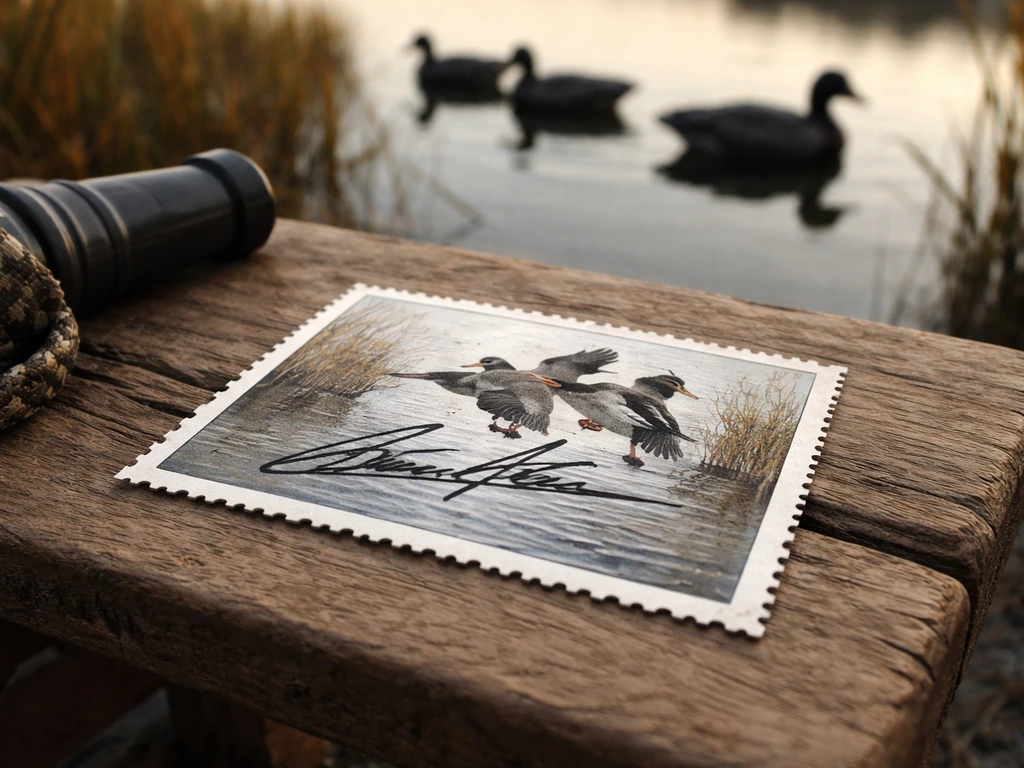
Anyone 16 or older who hunts migratory waterfowl must purchase a Federal Migratory Bird Hunting and Conservation Stamp (Duck Stamp) each year. It must be signed in ink across the face. Some states also require a state waterfowl stamp. Virginia's wildlife agency, for example, references a Federal Migratory Duck E-Stamp requirement as part of their waterfowl hunting compliance checklist.
Open seasons and shooting hours
The USFWS publishes annual migratory game bird hunting frameworks that establish specific open seasons, shooting hours, and geographic zones. Under 50 CFR § 20.22, hunting during a closed season is prohibited. Under 50 CFR § 20.23, hunting outside of permitted shooting hours is also prohibited even during an open season. For most migratory birds, shooting hours typically begin around 30 minutes before sunrise. Check the annual regulations, not last year's, because these frameworks are updated every year.
Bag limits and possession limits
Federal and state rules set daily bag limits (how many birds you can take per day) and possession limits (how many you can have on hand at any time) for each species. These vary by species and sometimes by zone within a state. Exceeding them is a violation regardless of your intent.
Wanton waste and transportation rules
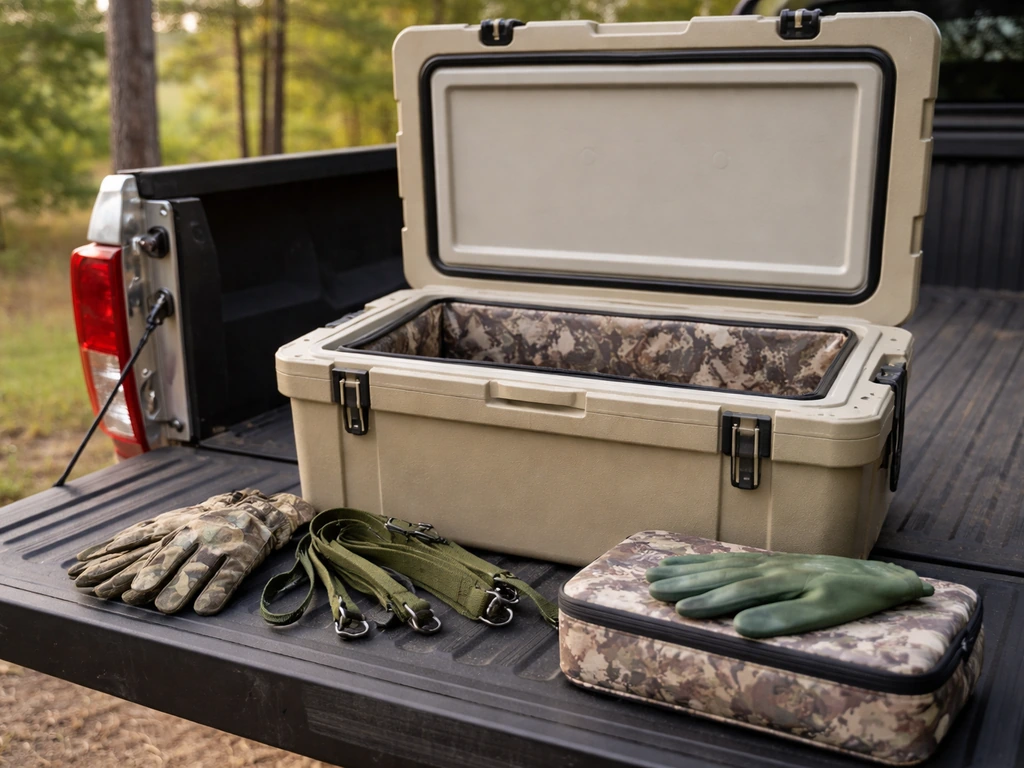
Under 50 CFR § 20.25, you must make a reasonable effort to retrieve migratory game birds you take and keep them in custody through specified checkpoints. Shooting birds and leaving them is a federal violation called 'wanton waste.' When transporting birds, 50 CFR § 20.43 requires that at least one fully feathered wing or the head remain attached to the carcass so the species can be identified. That identification requirement applies until the bird reaches your home, a commercial processor, or a licensed preservation facility.
What counts as 'hunting' vs. trapping, pest control, or just shooting to scare birds
This is one of the most common gray areas, and the law does not care much about what you call your activity. The MBTA's prohibition on 'take' is broad enough to cover killing, capturing, pursuing, or attempting to do any of those things. Under 50 CFR § 20.21, illegal hunting methods for migratory game birds include traps, snares, nets, poisons, drugs, explosives, and stupefying substances, among others. If you are using any of those methods on protected birds, it does not matter whether you label it 'pest control' rather than 'hunting.' You still need federal authorization.
The 'I was just shooting to scare them' argument also does not hold up well legally if birds are actually being taken. Harassment of MBTA-protected birds that rises to the level of disturbing or injuring them can qualify as take under federal interpretation. This matters for people dealing with bird nuisance situations on their property. If your method of scaring birds off is resulting in birds being killed or injured, you are in MBTA territory.
Genuine pest control depredation of non-protected species (starlings, house sparrows, feral pigeons) is a different story and generally does not require a hunting license, though methods may still be regulated at the state level. If you are dealing with a bird pest situation and you want to know whether your approach is legal, the cleanest path is to contact your state wildlife agency directly. This is also where the question of bird-related legality overlaps with topics like whether bird spikes or other deterrents are permitted alternatives, since those involve different legal frameworks entirely. If you are wondering whether are bird spikes illegal, the answer depends on the species involved and how the deterrent affects birds under the relevant state and federal rules bird-related legality overlaps with topics like whether bird spikes or other deterrents are permitted.
Hunting on your property vs. public land: location matters a lot
One of the most persistent misconceptions is that owning land gives you special permission to do what you want with wildlife on it. It does not. Wildlife in the U.S. is held in trust for the public under state law, and federal protections like the MBTA apply regardless of who owns the land beneath the birds. You still need valid licenses, you still have to comply with seasons and bag limits, and MBTA protections still cover birds flying over your property.
That said, location affects legality in other important ways. Hunting on National Wildlife Refuges is governed by 50 CFR Part 32, with refuge-specific rules under Subpart B. Some refuges are open to hunting certain species during specific periods, with additional restrictions like non-toxic shot requirements (50 CFR § 32.2). Others are closed entirely. You cannot assume a refuge is open just because it allows some recreational activities.
National Park Service lands are more restrictive. The NPS treats hunting and trapping as prohibited by default in park units unless the park is specifically designated by statute to allow hunting. If there is no explicit legal designation permitting hunting in a particular park unit, it is closed, and that closure applies even if neighboring land is open. The NPS guidance is clear: check the specific park's rules on their website before assuming anything. State wildlife management areas and private land each have their own access and permission rules as well, so the location question is never one-size-fits-all.
How to verify legality quickly today
If you need to confirm whether a specific hunt is legal right now, here is the most efficient path through the research.
- Identify the species precisely. Look it up by common and scientific name in the USFWS 'Find a Species' tool to confirm its federal status. Cross-reference against 50 CFR § 10.13 if you want the regulatory source.
- Check the current federal migratory game bird hunting framework. The USFWS publishes annual season regulations in the Federal Register. Search '[current year] migratory game bird hunting regulations USFWS' to find the active framework for your flyway and zone.
- Go to your state wildlife agency website. Every state posts its hunting regulations online. Look for the migratory bird or upland game bird section depending on your species. Confirm open dates, zones, bag limits, and licensing requirements.
- Confirm your license and permit stack. Verify you have a valid state hunting license, HIP enrollment for the current year, and a Federal Duck Stamp if you are hunting waterfowl. Carry proof of each.
- Check location-specific rules. If you are hunting on a National Wildlife Refuge, find the specific refuge listing under 50 CFR Part 32 or on the USFWS refuge website. If it is a national park, check the park's website directly.
- Use the USFWS IPaC tool for location-specific species checks. Enter your specific coordinates or address to get an official list of federally protected species that may occur at that location. This is especially useful if you are hunting in habitat that might support listed species.
- Document everything. Keep your licenses, stamps, HIP certification, and any permits on your person during the hunt. If you are questioned, having documentation organized and accessible matters.
If you have a specific question that the regulations do not clearly answer, call your state wildlife agency directly. Most states have a hunter information line, and a five-minute phone call beats guessing. You can also contact a USFWS regional office for federal-level questions about permits or MBTA interpretations.
If hunting is not legal: lawful alternatives and coexistence options
If the bird you are dealing with is federally protected and hunting is not an option, you are not without recourse. The key is shifting from 'take' to deterrence and exclusion, which avoids MBTA issues entirely.
- Physical exclusion: Netting, wire mesh, and physical barriers are the most effective long-term solutions for keeping birds away from structures, crops, or specific areas. These do not harm birds and do not require permits.
- Approved deterrents: Visual deterrents (predator decoys, reflective tape, laser systems), sound deterrents (distress calls, propane cannons where permitted locally), and habitat modification (removing food sources, water sources, or roosting structures) are all lawful options.
- Bird spikes and surface deterrents: Physical perch deterrents on ledges and structures are widely used and are legal in most contexts, though there are some nuances worth understanding depending on the application.
- USFWS depredation permits: If protected birds are causing genuine economic or safety damage, USFWS issues depredation permits under MBTA authority that authorize take of specific species in specific circumstances. These are not easy to obtain, but they exist for legitimate cases involving things like crop damage or airfield bird strikes.
- Working with a licensed wildlife control operator: For persistent problems, a licensed nuisance wildlife control operator familiar with your state's laws can often implement solutions faster and with less legal exposure than DIY approaches.
- Contact your state wildlife agency: They can advise on what actions are permissible for your specific species and situation without you having to interpret the regulations yourself.
The reality is that most bird-related nuisance situations can be resolved without hunting or lethal control, and non-lethal methods are often more durable solutions anyway because they address the root attractant rather than just removing individual birds. If understanding why bird protections exist in the first place interests you, the broader context around why we protect bird species is worth exploring, as is the specific protection status of individual species like woodpeckers, which are protected and cannot be hunted despite sometimes being perceived as pests.
The bottom line on 'is bird hunting illegal' is this: it is not a yes or no question. If you are considering training a bird to steal money, you should treat it the same way you would any other bird-related activity and check the applicable bird protection and “take” rules first train a bird to steal money. It is a checklist question. Run through species status, location, season, permits, and method, and you will have your answer. Skipping any step is where people get into trouble.
FAQ
If my state says bird hunting is allowed, can it still be illegal for me?
Yes, it can. Even if your state allows hunting, the federal MBTA can still apply if the bird is on the protected migratory list or if your actions amount to a “take” (shooting is not the only trigger). To avoid surprises, verify the species on the federal list before you rely on state permission.
Is it legal to shoot blanks or use noise to “scare birds away”?
Not in the simple way people assume. If the targeted birds are protected or if your method causes birds to be killed or injured, “scaring” can still be treated as a take. As a practical rule, only use harassment methods that reliably prevent injury and killing, and confirm with your state wildlife agency if you are unsure.
Can I do lethal pest control without a hunting license if I’m calling it pest control?
If the bird is federally protected (MBTA) or federally listed under the ESA, “pest control” labels do not change the legal outcome. Conversely, some common nuisance birds are not protected under MBTA, but state rules can still require registration, restrict methods, or prohibit certain devices. The legality often turns on species status first, then method under state law.
What if I just bring my shotgun and don’t shoot, is that still an issue?
Carrying a weapon is not, by itself, the same as hunting, but you can still cross into “take” if you are attempting to pursue, capture, or otherwise kill the bird. If you are in the field during a closed season or outside permitted hours, many states also restrict possession or hunting activities in a way that can create violations.
Are there legal requirements for how I transport or store birds I shoot?
Yes, transporting can be a separate compliance point. Federal rules require correct carcass identification during transport and have rules on custody and retrieval for migratory game birds. If you stop to get help, use a processor, or keep birds overnight, make sure you are still meeting the custody and identification steps.
What happens if I accidentally go over the bag limit?
Exceeding bag limits and possession limits is a violation even if you meant well or are experienced at hunting. Keep a running count per species and double-check the current season’s daily and possession numbers, since zones and limits can differ within a state.
Do I need to check the hunting season dates every year, or can I use last year’s schedule?
USFWS annual frameworks can change. If you hunt on the wrong dates, or even on the right dates but during the wrong times of day, you can violate federal hunting-hour and season rules for migratory birds. Always confirm the current year’s framework before you go.
Can I hunt on a National Wildlife Refuge if nearby public land is open?
It depends on the refuge unit’s specific rules. Some National Wildlife Refuges allow hunting only for certain species and periods, while others are closed. Even within refuges, restrictions like non-toxic shot requirements may apply, so check the refuge’s rule set rather than assuming it matches nearby land.
If I’m hunting on my own property, do I still need to worry about ESA or MBTA?
Often, but not always. ESA coverage is location and timing dependent, and MBTA coverage can include birds people assume are local. If your question is about a specific address or property boundary, use the USFWS planning tool (IPaC) or call a wildlife office so you do not rely on a generic “bird type” assumption.
If birds are a nuisance, are bird spikes or other deterrents automatically legal?
Yes. Some states regulate or prohibit certain deterrents, and bird protection rules can make what looks like “non-lethal deterrence” illegal if it harms protected birds. If you are dealing with a bird nuisance, ask your state wildlife agency whether the particular device or method is permitted for your species and situation.
What should I do if the bird is protected and I still have damage on my property?
If you want to do something that results in “take” risk but you cannot hunt legally, you generally need non-lethal, exclusion-based solutions that do not harm protected birds. In practice, the best next step is to confirm protection status first, then ask your state wildlife agency for allowable deterrence or exclusion options for that exact species.