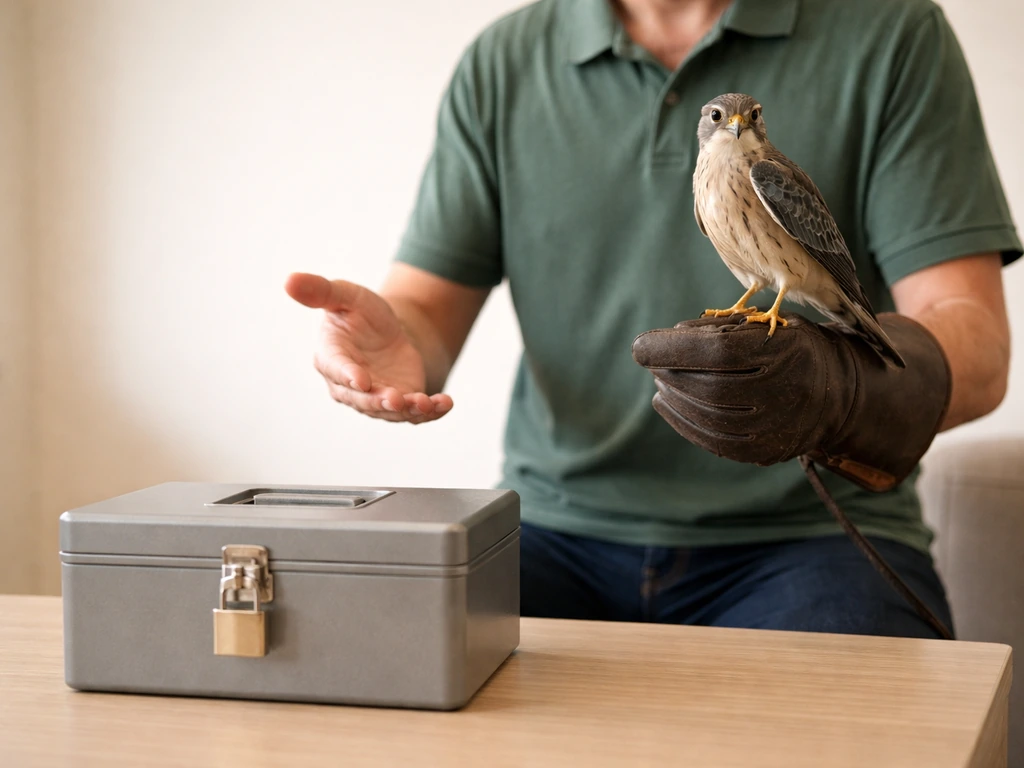
Yes, training a bird to steal money is almost certainly illegal in most jurisdictions, though not because a specific 'bird theft' statute exists. If the bird is directed to take someone else's money without consent, that can be illegal. Instead, it falls under broader theft, fraud, or property laws that apply regardless of whether a human or an animal does the physical taking. On top of that, animal welfare laws, trespass rules, and in some contexts aviation or public safety regulations can pile on additional liability. The exact combination depends heavily on where you are, what species the bird is, and what you actually intend to do with the money.
Is It Illegal to Train a Bird to Steal Money?

Marcus Whitmore
10 Jun 2026
Why the answer depends on where you are
There is no single global 'using a bird to steal' statute. What exists instead is a patchwork of laws that cover the outcome (property taken without consent), the method (animal used as a tool), and the welfare of the animal involved. In England and Wales, the Theft Act 1968 defines theft as dishonestly appropriating property belonging to another with the intention to permanently deprive the owner of it. The law does not require a human hand to directly take the item. If you direct a bird to retrieve money from someone else, you are the person acting dishonestly, the bird is the instrument, and the appropriation still happened. The Crown Prosecution Service looks at intent and dishonesty when building a case, and those elements attach to you, not the bird.
In the United States, theft and fraud statutes are state-level for the most part, and each state words them differently. Some cover 'obtaining property by deception' or 'using an agent' broadly enough to capture an animal acting on a person's instruction. At the federal level, statutes like 18 U.S.C. § 667 address property obtained through certain commercial or interstate contexts. The overarching principle across most common-law jurisdictions is the same: the law cares about intent and outcome, not the mechanism. Using a trained bird is not a loophole.
This article is general guidance, not legal advice. Laws differ significantly between countries, states, and even municipalities. Before drawing any conclusions about your specific situation, you need to check the statutes in your jurisdiction or speak to a lawyer.
How theft and fraud law actually applies when an animal does the taking
The key concept in most theft statutes is intent. When you train a bird with the goal of having it retrieve money from another person or place without permission, the intent to permanently deprive sits with you. Courts in England and Wales have long interpreted the Theft Act broadly enough to cover indirect appropriation, and prosecutors are guided by the CPS's Theft Act offences framework, which assesses dishonesty and intention as the core elements. A bird retrieving a banknote on command is legally similar to a person picking it up on your instruction.
Fraud angles can apply too. If the setup involves deceiving someone into leaving money accessible, or if the bird is used as part of a scheme where you profit by misrepresentation, that can trigger fraud or obtaining property by deception statutes alongside basic theft. The moment money changes hands without the original owner's genuine consent, you are in theft or fraud territory regardless of what species retrieved it.
It is worth noting that simply training a bird to pick up coins or objects in a controlled, private setting for enrichment or entertainment, where no actual theft of anyone else's property occurs, generally does not meet the threshold. The illegal element is the intent to take property belonging to another without consent, not the training itself.
Animal welfare laws add another layer of risk

Even if you somehow argued the theft angle was ambiguous, animal welfare laws can independently make certain training approaches illegal. In England and Wales, the Animal Welfare Act 2006 makes it an offence to cause an animal unnecessary suffering, and prosecution turns on whether the act caused suffering and whether the person knew or reasonably ought to have known that was likely. Training a bird using aversive methods, including punishment-based techniques, food deprivation used to increase motivation beyond welfare limits, or forcing interactions that cause fear responses, can cross that threshold.
In the US, state animal cruelty statutes vary but most include a duty-of-care concept. Rhode Island, for example, requires reporting of animals known or reasonably believed to be neglected or abused by someone entrusted with their custody. The practical upshot is that any training regime that causes demonstrable stress, injury, or suffering to the bird creates welfare liability that is entirely separate from any theft charge.
The science on this is clear. Research comparing aversive versus reward-based training methods in companion animals consistently shows that aversive approaches increase stress indicators and harm welfare. The International Association of Animal Behavior Consultants (IAABC) Standards of Practice explicitly opposes the intentional use of aversive stimuli in training and requires members to avoid such methods. Birds trained under fear or pain-based systems are more likely to bite, become phobic, or develop chronic stress, none of which serves the bird or the handler.
The RSPCA also flags practical welfare risks specific to bird training: bites and scratches are genuine injury hazards for handlers, and a bird sent outside or into public spaces during training could escape, become lost, or be injured. Critically, the RSPCA warns that online guidance on bird training is often unreliable, which is a real problem if someone is piecing together a training plan from informal sources.
Trespass, property access, and aviation safety concerns
If the scenario involves sending a trained bird into a space it is not authorized to enter, such as a shop, another person's home, a vehicle, or a restricted area, trespass and property-access laws become relevant. If you are also considering physical bird deterrents like bird spikes, you should check local rules on whether are bird spikes illegal in your area. Most jurisdictions treat unauthorized entry onto or into property as a civil or criminal matter, and directing an animal to enter does not shield you from liability.
The aviation angle is one that people rarely consider but that this site's audience of aviation professionals will recognize immediately. The US Federal Aviation Administration's wildlife hazard management framework (14 CFR § 139.337) requires certificated airports to manage wildlife that poses a hazard to aircraft operations. A trained bird being released or used near an airport, or near any airspace where it could come into contact with aircraft movement areas, could trigger serious regulatory consequences. The FAA maintains extensive wildlife hazard guidance and reporting requirements precisely because bird strikes are a major aviation safety risk. Deliberately releasing a trained bird in such an environment, even without any intent related to aircraft, could put you in violation of aviation safety regulations on top of everything else.
Public safety considerations also show up in sentencing guidance. The UK Sentencing Council's animal cruelty guidelines reference the danger an animal poses to public safety as a factor courts weigh when determining outcomes. If a trained bird causes injury to a bystander or creates a public disturbance, that aggravates any existing animal welfare charge.
What to do right now: a practical checklist

If you are genuinely trying to understand your legal position, here is how to get a reliable answer quickly rather than relying on general guidance like this article.
- Identify your jurisdiction precisely: country, state or province, and municipality. Laws at each level can add requirements or restrictions.
- Identify the bird species. Protected species (many parrots, raptors, corvids, and others) carry additional legal restrictions under wildlife protection laws. Whether woodpeckers or other species are protected in your area matters in overlapping ways, similar to how wildlife offence statutes treat capture, disturbance, or possession of items used to commit offences.
- Define the actual scenario clearly: Is the bird retrieving property from your own space for enrichment? From a public space? From another person's property? For a paid show or demonstration? Each scenario has a different legal profile.
- Check your local theft, fraud, and property statutes. Your state or country's official legislative database is the most reliable source. Do not rely solely on summaries.
- Contact local animal control or a wildlife officer if the species is a wild or protected bird. Possession and training requirements apply before you even get to theft questions.
- Consult a licensed solicitor or attorney in your jurisdiction before proceeding with anything involving public spaces, restricted areas, or another person's property.
- If your activity is near an airport or involves outdoor use near airspace, contact the relevant aviation authority (FAA in the US, CAA in the UK) to ask about wildlife hazard reporting obligations.
Training that is genuinely safe and legal: what actually works
Birds, particularly parrots and corvids, are genuinely capable of sophisticated learning. Research on Goffin's cockatoos shows they can discriminate objects based on weight alone and generalize learned rules to novel problems. Goffin's cockatoos have been shown to discriminate objects based on weight alone and to generalize those discrimination rules to novel problems discriminate objects based on weight alone and generalize learned rules to novel problems. Studies on non-tool-using parrots demonstrate physical cognition and means-end reasoning. This cognitive ability is precisely why birds can be trained to retrieve specific objects. It is also why enrichment-based training, directed at the bird's welfare rather than at obtaining someone else's property, is so effective and rewarding for both bird and owner.
Positive reinforcement training, where the bird is rewarded with food, attention, or play for performing a desired behavior, is the scientifically supported approach. It avoids the welfare harms associated with aversive methods, reduces biting and fear responses, and produces more reliable and stable behaviors. The RSPCA recommends keeping handling sessions short, ensuring the bird can breathe freely (never apply pressure to the chest), and building trust gradually.
If you want to train a bird to retrieve objects for entertainment, demonstrations, or enrichment, keeping the activity in a controlled private space with objects you own eliminates the theft angle entirely. Birds trained to carry tokens, rings, or props for shows do not raise legal issues as long as no one else's property is involved, the bird's welfare is protected, and the bird is not released into public or restricted airspace.
| Training scenario | Legal risk level | Welfare risk level | Recommended? |
|---|---|---|---|
| Retrieving owner's objects at home for enrichment | Very low (no theft element) | Low if positive reinforcement used | Yes, with proper technique |
| Stage or show tricks with props you own | Low (check permit rules for public performances) | Low to moderate depending on method | Yes, with welfare safeguards |
| Retrieving objects from a public space without permission | High (theft/fraud, trespass) | Moderate to high (escape, injury risk) | No |
| Retrieving objects from another person's property | Very high (theft, possible fraud charges) | High (stress, escape, injury) | No |
| Using bird near airport or restricted airspace | Very high (aviation safety regulations) | High (bird strike risk, escape) | No |
Common misconceptions worth clearing up
The biggest misconception is that a bird 'stealing' money is harmless or funny because the bird does not understand ownership. The reality is that the law does not care whether the bird understands the concept of theft. What matters is your intent. You are the principal actor; the bird is the means. This is no different legally from using a tool, a vehicle, or another person acting under your direction.
A second misconception is that birds in the wild 'steal' food from each other, so a trained bird retrieving money is a natural extension of normal behavior. Research on western scrub-jays and New Zealand robins does show that birds engage in cache protection and even strategic re-caching to prevent other birds from pilfering their food. But ecological pilfering between animals is not legally or morally equivalent to directing an animal to take human property. The behavior may be natural in a foraging context; using it to appropriate someone else's money is not.
A third misconception is that using a bird creates a legal gray area because statutes mention 'persons' committing theft. Courts have consistently interpreted theft and fraud statutes to cover indirect acts and agents. You do not escape liability by adding a non-human step in the chain.
Finally, some people assume that training a bird to do this is automatically cruel. That is not necessarily true. Birds can be trained to retrieve objects using entirely humane, reward-based methods without suffering. The welfare harm comes from how you train, not from the retrieving behavior itself. The legal harm, however, comes from what you use that retrieving behavior to accomplish. If your question is specifically whether are woodpeckers a protected bird in your area, wildlife protection rules can create additional legal constraints beyond the theft or animal welfare issues discussed here. Protecting the bird is essential because training methods and handling conditions can create separate legal and welfare risks beyond the theft discussion welfare harm comes from how you train.
FAQ
If the bird steals money but I did not directly touch it, am I still liable?
Yes. In many places you are treated as the person acting through an agent, so directing or setting up the bird to take money without consent can satisfy the intent and dishonesty elements even if you never physically take the cash.
What if I teach the bird to pick up money that I own, then it sometimes grabs someone else’s money by mistake?
You could still face liability if you knew, reasonably should have known, or failed to control a realistic risk that the bird would access other people’s property. A practical step is to use only your own objects and strict barriers, then stop immediately if the bird generalizes to other cash.
Does “permission” from the person who owns the money make it legal?
Permission can reduce or eliminate theft or fraud risk, but it does not automatically solve animal welfare, trespass, or public safety issues. You may still have problems if the training causes stress or if the bird is used in unauthorized locations.
Is training alone enough to be illegal, even if the bird never actually takes anyone’s money?
Sometimes. Prosecutors may look at preparatory acts, intent, and whether you took concrete steps toward appropriation. However, animal welfare offenses can apply regardless of whether any theft occurs.
Can I avoid theft laws by having the bird take money from a place I rented, like my own booth or a store I control?
You reduce the “another person’s money without consent” problem, but not the other risks. If the bird enters areas it is not authorized to access, causes disturbance, or creates hazards for customers or aircraft, you can still face separate charges or enforcement.
What if the bird is trained to retrieve an object that is not money, but the handler later swaps it for cash?
That substitution can still be treated as a theft or fraud plan, because the handler is engineering the outcome. It may also strengthen the argument that the intent was dishonest from the start, not just a neutral training exercise.
Could this be charged as fraud even if the bird never deceives anyone?
Possibly. Fraud can attach if the overall scheme depends on misrepresentation to get money accessible or to make someone believe something untrue. The bird does not have to be the deceptive actor if you are profiting through deception.
Are humane, positive-reinforcement training methods enough to avoid animal welfare charges?
They can significantly reduce welfare risk, but not always. You still need to avoid situations that cause fear, prolonged stress, injury, or risky handling, and follow any species-specific welfare requirements where you live.
What training practices are most likely to trigger animal welfare problems for birds?
Practices that cause demonstrable distress, such as food deprivation beyond safe limits to drive behavior, punishment-based or aversive stimuli, forcing handling or interactions that trigger panic, and leaving the bird in unsafe conditions during training sessions can create welfare liability even if the goal seems entertainment-related.
If I keep everything private and never use someone else’s property, is it automatically safe legally?
Not automatically. You can still run into issues if the bird escapes, bites a person in the area, violates local wildlife or pet-keeping rules, or creates public nuisance concerns. Containment, safety protocols, and authorization for the species matter.
Does bird “escape risk” matter legally?
Yes. Even absent theft, sending or releasing a trained bird into spaces where it could be lost, injured, or interfere with public life can create exposure under local animal control, trespass by the animal, or public safety rules. Use secure housing and retrieval plans.