Yes, birds can absolutely hear
Birds can hear sound, and they do it remarkably well, even without the external ear structures humans have. The short answer is that birds possess functional middle and inner ear anatomy that picks up, amplifies, and processes sound with real precision. Experimental testing confirms this: a bullfinch, for instance, has been shown to respond to conditioned auditory stimuli across a range of roughly 100 to 12,800 Hz. That is not a marginal sensitivity, it is a wide, capable hearing range that supports everything from detecting a predator's wingbeat to decoding a mate's song. So if you are wondering whether birds notice the sounds around them, the answer is yes, and the follow-up question worth asking is which sounds matter most.
How bird hearing actually works
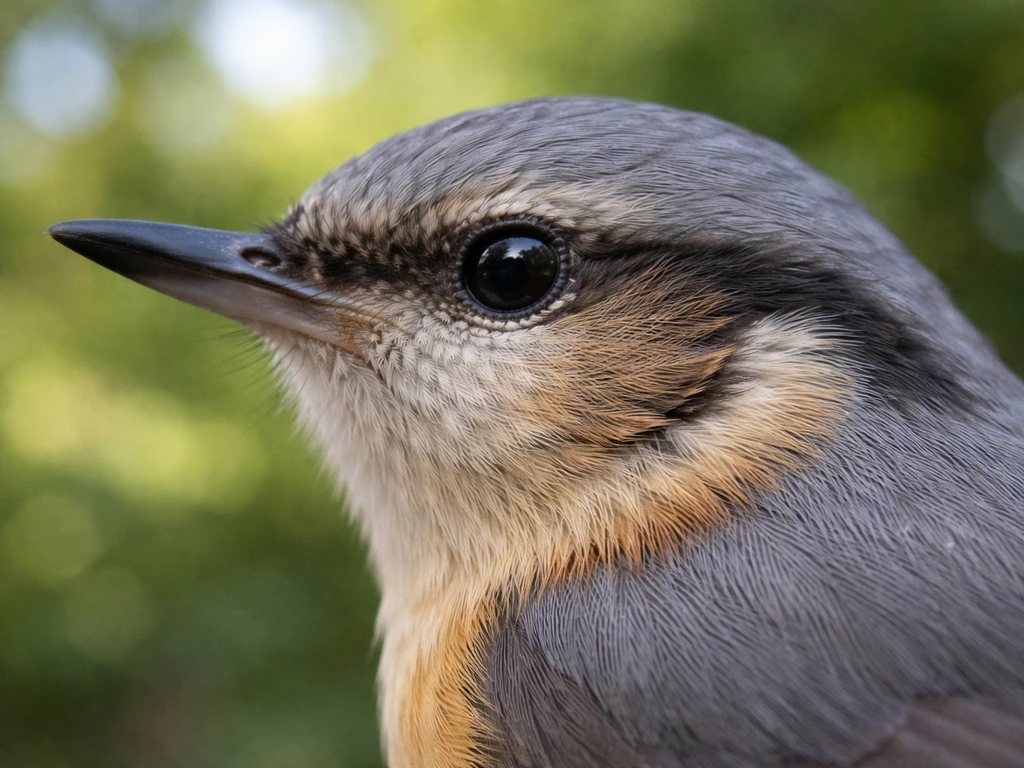
Birds do not have a pinna, the fleshy outer ear cup that humans and most mammals use to funnel sound. What they do have is a tympanic membrane (eardrum) sitting close to the surface of the head, often covered by specialized feathers. Sound waves travel through a small air-filled cavity in the middle ear and are conducted inward by a set of tiny bones called the columella and extracolumella, which together act as an impedance-matching system.
A peer-reviewed review in ScienceDirect describes how avian middle-ear impedance matching is achieved using specific components such as the tympanic membrane, columella and extracolumella, and associated ligaments and muscles to transfer sound energy toward the inner ear impedance-matching system of the middle ear. Without this middle-ear transformer mechanism, hearing would be far less sensitive.
The sound energy is then transferred to the oval window and into the inner ear, where sensory hair cells sit on a structure called the basilar papilla. This is the bird's version of the mammalian cochlea, and it is what turns mechanical vibration into the neural signals the brain interprets as sound.
Locating where a sound is coming from is a separate but related skill. Birds compute interaural time differences (how long it takes sound to reach each ear) and interaural intensity differences (how loud it is at each ear) to pinpoint a source. Owls take this to an extreme: some species have ears positioned asymmetrically on their skulls, which gives them improved ability to locate sounds in the vertical plane, a huge advantage when hunting in the dark. This is a specialized adaptation, but it illustrates just how sophisticated avian auditory processing can get.
What birds can hear: frequency ranges and sensitivity
Most birds hear best in the range of roughly 1 to 5 kHz, and behaviorally tested songbirds tend to show peak sensitivity between about 2 and 5 kHz, with the ability to detect pure tones up to around 8 kHz. The audiogram of a typical bird is U-shaped, meaning sensitivity drops off at both the very low and very high ends of the spectrum. This shape is not random: the peak usually lines up closely with the frequency range of that species' own vocalizations, which makes biological sense. A bird tuned to hear its own call will communicate and survive more effectively.
That said, there is real variation between groups. Passerines (songbirds) that produce higher-frequency vocalizations tend to show somewhat better sensitivity above about 4 kHz compared to other bird groups. Research on estrildid songbirds, including species like zebra finches and Bengalese finches, has produced detailed behavioral audiograms showing these species-specific tuning patterns clearly. There is also a developmental angle worth knowing: controlled experiments in juvenile owls have shown that early auditory experience can actually shift frequency tuning, meaning hearing is not purely hardwired. This matters for anyone raising young birds in noisy environments.
| Bird Group | Approximate Best Sensitivity | Upper Frequency Limit (approx.) | Notable Feature |
|---|
| Most songbirds (passerines) | 2–5 kHz | ~8 kHz | Peak tuned to own vocalizations |
| General avian average | 1–5 kHz | ~8–10 kHz | U-shaped audiogram |
| Owls (asymmetric-eared) | ~3–8 kHz (varies) | Up to ~12 kHz (species-dependent) | Specialized vertical sound localization |
| Bullfinch (tested behaviorally) | Broad range | ~12,800 Hz documented | Wide tested range via conditioned response |
What noises actually matter in real life
Pet birds at home
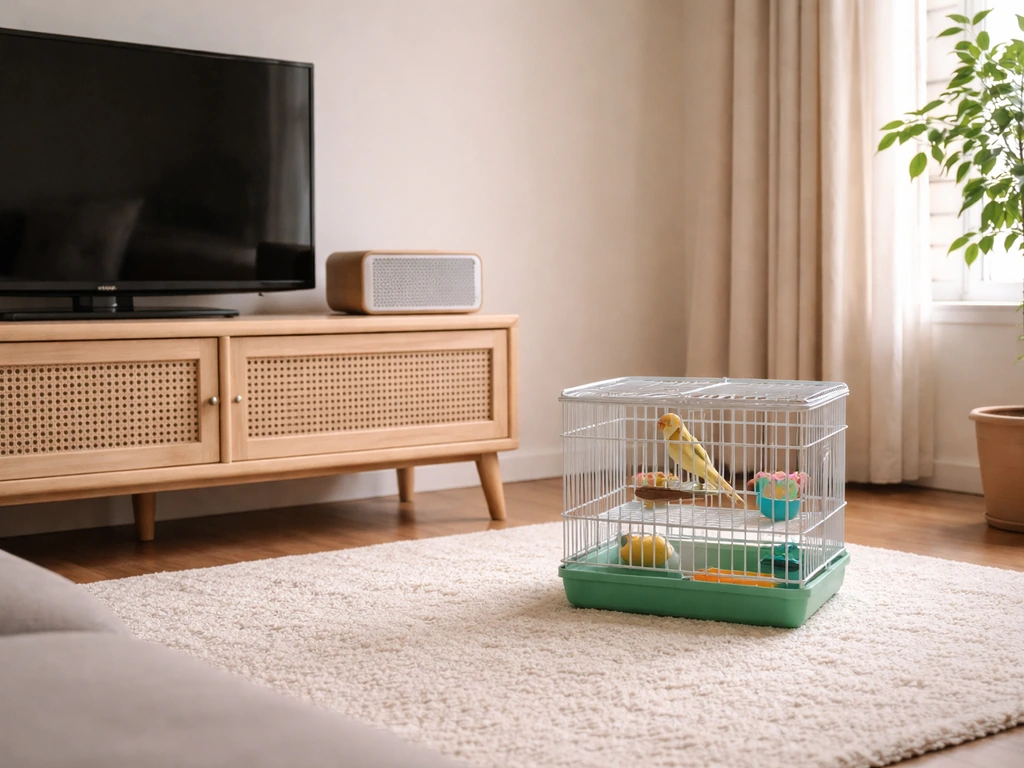
For anyone keeping pet birds, noise is a genuine welfare issue. Chronic exposure to loud sounds, including television at high volume, music, construction, and even loud arguments, can cause measurable physiological stress. A peer-reviewed study on house sparrows found that chronic traffic-noise exposure can affect telomere length, linking traffic noise to physiological stress markers in avian nestlings [Chronic exposure to loud sounds, including television at high volume, music, construction, and even loud arguments, can cause measurable physiological stress. ](https://pmc.
ncbi. nlm. nih. gov/articles/PMC4614433/).
Research on free-living tree swallows exposed to chronic traffic noise found elevated corticosterone (a primary avian stress hormone) in both adults and nestlings, meaning the stress response is not just behavioral but hormonal and systemic. Traffic noise has also been linked to suppressed immune function and disrupted vocal development in juvenile birds. These findings apply directly to the home environment. A parrot or finch sitting next to a loud speaker all day is not just uncomfortable, it may be compromised.
Background noise at high levels is also a masking problem. When ambient sound covers the frequency range of a bird's own vocalizations, those signals become harder to detect. For social species that rely on vocalizing for bonding and communication, this is more than an inconvenience. It disrupts a core behavior. And if you are using bird calls or playback near pet birds, be cautious: playing bird calls around other birds can trigger territorial responses and stress hormone spikes, effects that are well-documented in field studies.
Wildlife and outdoor birds
Wild birds living near roads, construction zones, or urban areas deal with chronic anthropogenic noise that masks their songs and disrupts communication. Field experiments with house wrens have shown that traffic noise reduces song transmission and detectability in natural areas. Birds in these conditions sometimes shift their vocal frequencies upward to avoid masking, but this adaptation has limits and costs. The broader takeaway: noise pollution is not just a human problem, it structurally degrades the acoustic environment that wildlife depends on.
Aviation and airfield contexts
Airports use auditory deterrents as part of integrated wildlife hazard management, but the evidence on how well they work is mixed. The FAA has explicitly noted that some audio-based bird repellent devices have not proven effective in airport settings. The reason is partly biological: birds can habituate to repeated sound stimuli, especially if those sounds are not associated with a genuine threat. Whether common deterrent products actually work depends heavily on the species, the context, and how the sounds are deployed. There is also a practical safety concern: very high-intensity sound deterrents can cause hearing damage in the humans operating them, so intensity, frequency, and exposure duration all need to be evaluated as part of any deterrent plan.
Canadian aviation technical guidance categorizes auditory deterrents and notes that the strongest rationale for their use is when sounds mimic known biological threats, like predator calls. Even then, field trial results vary substantially by species, and extended testing is recommended before committing to any single approach. Bird whistles and similar sound tools are part of this same conversation: their effectiveness depends on whether they produce sounds birds actually respond to as meaningful threats.
How to tell if a bird is responding to sound
You do not need specialized equipment to assess whether a bird is reacting to sound. The most reliable method is careful observation before any handling or intervention. Watch for orienting responses: does the bird turn its head toward a sound source? Does it freeze, vocalize, or change its posture when it hears something new? Prey species often go still when they detect a novel sound, while social species like parrots may vocalize in response. These are normal, healthy hearing responses.
Stress responses are the warning signs. Open-mouth breathing, increased respiratory rate, tail bobbing, panting-type behavior, and hissing are all signs that a bird is beyond curious alertness and into distress. If you introduce a sound and see these signs appear, reduce or remove the stimulus immediately. This is especially important during handling or veterinary exams, where the bird is already stressed. If you need to catch a bird for examination or relocation, minimize noise throughout the process, it compounds the fear response significantly.
Another practical test for pet birds: play a brief, unfamiliar sound at moderate volume from across the room and watch the response. Head-turning, pupils dilating (pinning), or feather position changes all suggest the bird heard it and registered it as novel. Absence of any response to repeated stimuli over time can indicate habituation (normal) or, if it is a new behavior, possible hearing impairment, which is worth raising with an avian vet. Hearing loss in pet birds, particularly older parrots, does occur and can affect behavior in ways that look like personality changes or reduced responsiveness.
It is worth noting that birds rely on multiple senses together. Questions like whether a bird can smell humans and how birds perceive glass are part of the same picture: sound is one input in a multimodal sensory system, and birds integrate information from hearing, vision, and sometimes smell to make decisions. Hearing is important, but it works alongside other senses, not in isolation.
Practical steps to reduce noise stress and hearing risk
The practical guidance here is consistent across pet care, wildlife welfare, and veterinary settings. The core principle is reduce unnecessary sound, especially in the frequency range birds are most sensitive to (1 to 5 kHz), and avoid sudden loud noises that trigger acute stress responses.
- Keep ambient noise levels in bird housing areas below 85 dB SPL. This is a commonly referenced threshold in vivarium welfare guidance; above this level, both auditory and non-auditory stress pathways are activated. Use a simple sound level meter app if you are unsure how loud your bird's environment is.
- Avoid A-weighted sound measurements when evaluating your bird's environment. Human hearing is weighted toward mid frequencies, but birds have their own sensitivity curves. A sound that seems soft to you may be well within a bird's peak sensitivity range.
- Position cages and perches away from televisions, speakers, dishwashers, and HVAC vents. These sources produce chronic, unpredictable noise that is harder for birds to habituate to than steady background sound.
- Use the 'quiet, warm, dark' approach during stressful events like vet visits, transport, or illness recovery. This principle appears in avian veterinary welfare guidance for good reason: reducing all sensory input, including sound, lowers the overall stress burden on a bird that is already physiologically taxed.
- When handling is unavoidable, talk in a calm, quiet voice and move slowly. The Merck Veterinary Manual specifically recommends minimizing restraint time and using a quiet voice to reduce stress in pet birds during exams and procedures.
- If using auditory deterrents for wildlife management, test species-specific responses before full deployment, build in a rotation or variation schedule to reduce habituation, and evaluate sound intensity for potential hearing impact on both birds and humans.
- Monitor for stress signs after any significant noise event: open-mouth breathing, tail bobbing, increased respiratory rate, or prolonged fluffing. These signs mean the bird's stress response has been activated, and ongoing noise exposure in that context is not safe.
One thing worth keeping in mind: birds that appear unbothered by noise are not necessarily unaffected. Chronic low-level noise stress can suppress immune function and disrupt normal behavior without producing obvious visible signs. The absence of a dramatic response is not the same as the absence of a welfare impact. This is especially relevant for birds that have lived in noisy environments their whole lives, where the baseline has shifted but the biological cost has not disappeared.
For anyone genuinely concerned about their bird's health after a loud event, an avian vet is the right next step, particularly if you notice any respiratory changes. And if you have ever wondered whether odd behaviors like sneezing or nasal discharge could be noise-related versus something else, understanding what a bird sneeze actually means can help you sort out what warrants attention.