Birds can see glass just fine. The problem is that they often have no reason to recognize it as a solid barrier. That distinction matters enormously, because if you think birds are simply blind to glass, you'll reach for the wrong fixes. The real mechanism is more specific, and once you understand it, the solutions become obvious.
Can Birds See Glass? Why They Hit Windows and How to Stop It

Marcus Whitmore
11 Apr 2026
How birds actually perceive glass
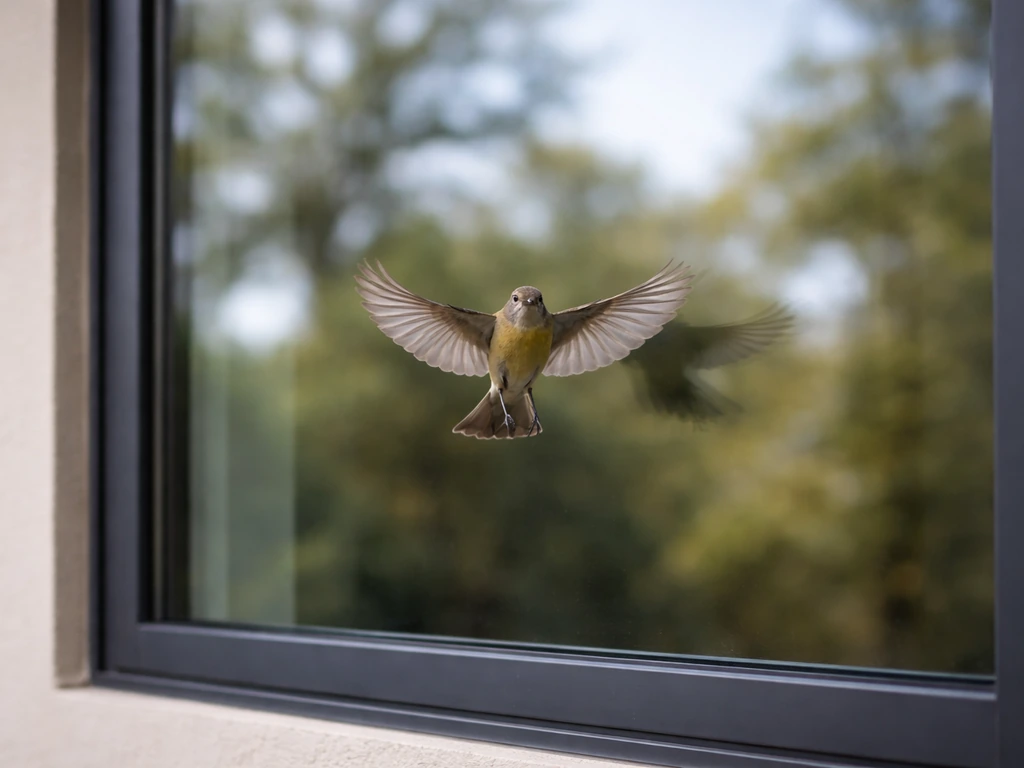
Bird vision is, in most respects, sharper than ours. Many species can detect ultraviolet light and have four types of cone photoreceptors compared to our three. They're not walking around half-blind. What they lack is evolutionary experience with glass as a category of object. For millions of years, a reflection of sky meant sky, and something transparent you could see through was open air. Glass breaks both of those rules, and birds have had no time to learn the exception.
That said, how birds hear and process their environment is part of a broader sensory picture. Vision dominates their flight decision-making, which is exactly why glass is so dangerous. When a bird is moving fast and reading visual cues to navigate, a misread reflection or a transparent pane can be fatal within a fraction of a second.
Why birds hit glass (it's not that they can't see it)
The folklore version is: birds are too dumb to see glass. The reality is more interesting. Ornithologist Daniel Klem's foundational research, published in the Wilson Bulletin in 1989, framed the problem precisely: birds fail to perceive windows as barriers. They're not blind to the surface, they're misreading the signal it sends. There are two main failure modes.
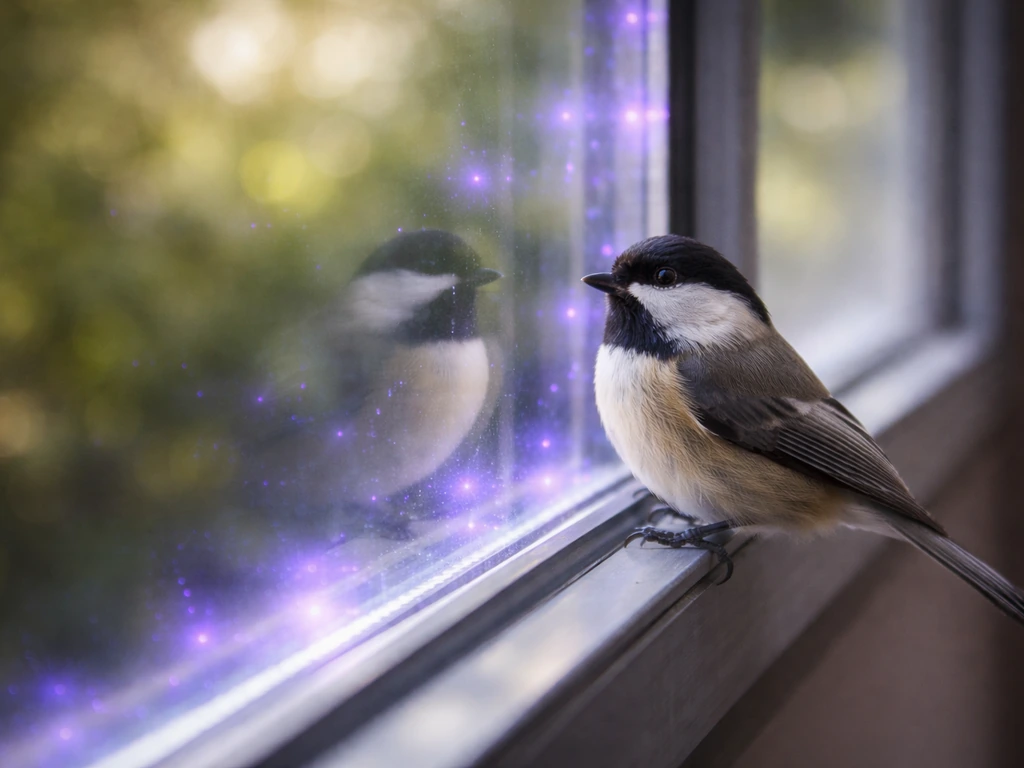
The first is the reflection hypothesis. Reflective glass mirrors the sky, trees, or surrounding habitat so convincingly that a bird reads it as open flyway. It's heading toward what looks like a continuation of habitat, not a wall. The second is transparency. Clear glass lets light and visual information pass through, so a bird can see a plant on a windowsill or a garden on the other side, and the glass simply doesn't register as an obstacle. Either way, the bird commits to the flight path. By the time any tactile feedback is possible, it's too late.
Understanding whether a bird can smell human presence is a separate question, but it illustrates the same point: birds rely on specific sensory cues for specific decisions. Glass just happens to exploit a gap in their visual threat-detection system.
Which types of glass cause the most collisions
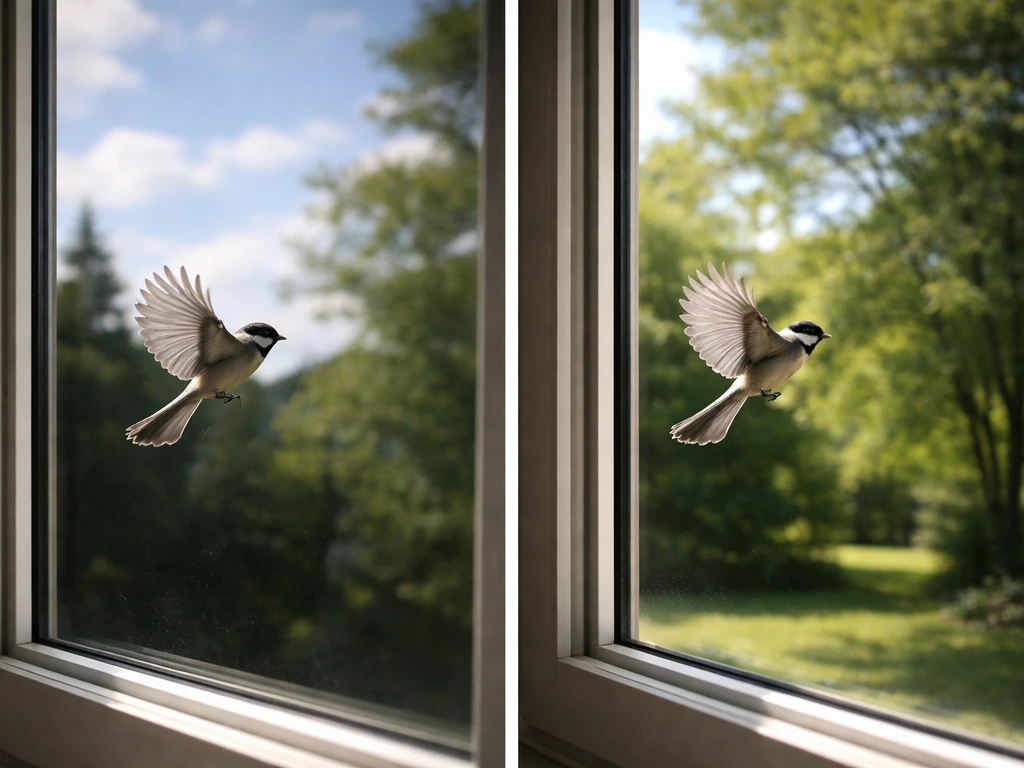
Not all glass is equally dangerous. Research published in Avian Conservation and Ecology found that mirrored and highly reflective glass is associated with significantly increased collision risk. A two-year open-access study on mitigation efficacy confirmed the same pattern: mirrored glass correlates with more collisions, while permanently patterned bird-friendly windows (like fritted glass or ORNILUX Mikado UV-reflective windows) correlate with fewer. Muhlenberg College’s Acopian Center for Ornithology summarizes practical bird-safe window options such as visible patterning and fritted-glass approaches, drawing on decades of research to reduce collision mortality. The type of glass matters before you even think about adding deterrents.
Audubon's guidance identifies the specific risk factors to watch for: shiny reflective glass exteriors, interior plants placed near windows, glass corners (which create perpendicular reflection problems), and dense greenery immediately outside a building. Large unbroken panes of clear glass are also high-risk because they provide no visual interruption for a fast-moving bird. Atrium glass, glass facades on commercial buildings, and floor-to-ceiling residential windows all fall into the danger zone.
| Glass Type | Risk Level | Primary Hazard |
|---|---|---|
| Mirrored/highly reflective | High | Reflects sky and habitat as open flyway |
| Large clear panes (unbroken) | High | Transparent to flight path cues beyond |
| Glass corners | High | Perpendicular reflections from two directions |
| Fritted or UV-patterned (e.g., ORNILUX) | Low | Provides visible interruption birds read as obstacle |
| Small individual panes (traditional divided lights) | Low | Physical grid interrupts reflection/transparency |
| One-way or privacy film (exterior-applied, patterned) | Variable | Depends on density and external visibility of pattern |
How to test whether your setup is risky right now
The fastest practical audit starts with your collision history. U.S. Fish & Wildlife Service guidance explicitly recommends identifying windows with past bird strikes as the first step in prioritizing which glazing needs treatment. Check the ground beneath your windows for feathers, marks, or dead birds. Look at the glass itself during daylight for the faint smudge of a strike, which often shows as a dusty wing-print impression.
Then do a quick visual assessment from outside. Stand where a bird would approach and look at each window. Does it reflect trees, sky, or vegetation convincingly? Can you see through it to plants or open space on the other side? Either condition is a red flag. Conditions that compound risk: bird feeders or dense plantings within 3 meters of a window, large unbroken reflective or clear panes, and windows positioned to catch morning or afternoon sun at a low angle when reflections are strongest. FWS guidance also notes that bird feeders or dense plantings near windows are key factors that can increase collision risk and should be considered when planning mitigation bird feeders or dense plantings within 3 meters of a window.
Canada's federal guidance also recommends a simple pattern test: if there are no visible markers on the glass with spacing tighter than 5 cm in every direction, the window is almost certainly presenting a risk to birds. That rule of thumb is your quick pass/fail check.
Practical fixes to stop window strikes
All effective solutions share one principle: make the barrier externally visible. Internal solutions like blinds or curtains help somewhat by reducing the plant-or-open-space visual cue birds see through the glass, but external treatments are consistently more effective because they intercept the bird's perception before it commits to a flight path.
External treatments that work
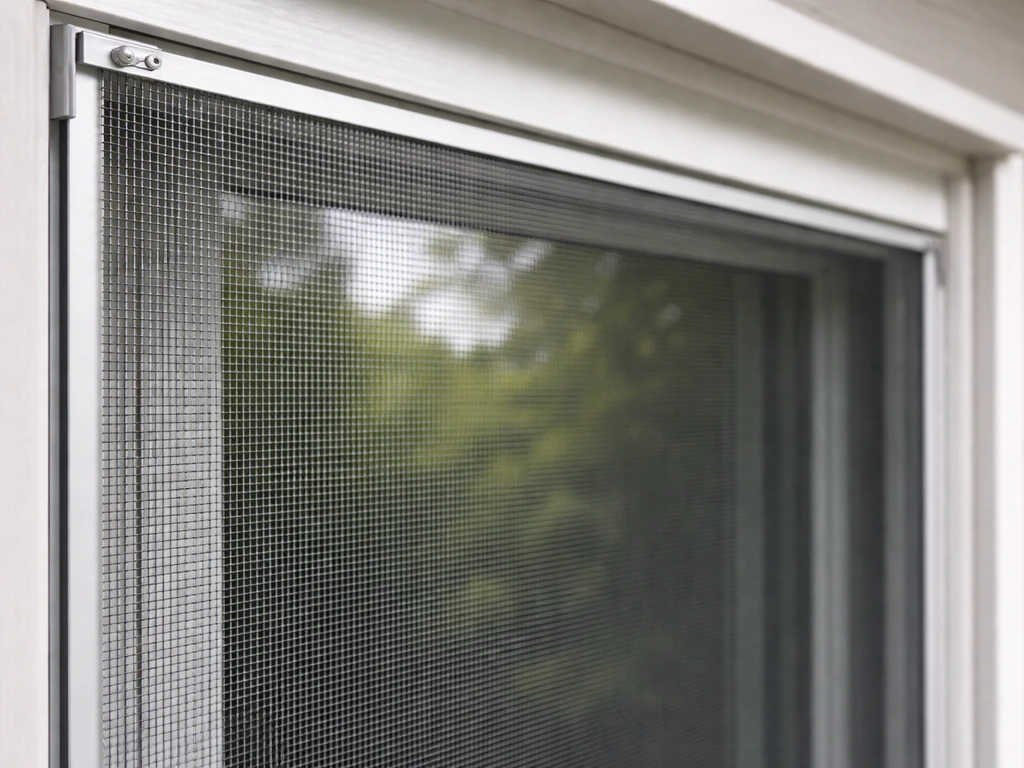
- External screens or netting: Physical mesh installed a few centimeters away from the glass surface. Birds bounce off rather than strike hard. Highly effective and durable.
- Patterned window films (externally applied): Products like Feather Friendly tape or similar films create a grid of opaque dots or lines. Effective spacing: no gap wider than 5 cm between elements in any direction, with individual elements at least 6 mm wide. Visible contrast in all light conditions is essential.
- Tempera paint or liquid chalk markers: Drawn in a tight grid on the outside of the glass. Cheap and fast, but require reapplication.
- Acopian BirdSavers (parachute cord strips): External vertical cords hanging across the window face, spaced no more than 10 cm apart. Proven effective in field and tunnel testing.
- Permanent fritted or patterned glass: The gold standard for new construction or major retrofits. Products with visible UV-reflecting and standard-light-visible patterning built into the glass perform best long-term.
- Reducing glass area: As noted in MDPI research on building surroundings and glass cover, simply reducing the proportion of a building's facade covered by glass lowers collision frequency.
Internal changes that help on the margin
- Move interior plants away from windows so they don't serve as visual lures visible through the glass.
- Close blinds or curtains partially during peak migration periods (dawn and dusk, spring and fall).
- Turn off unnecessary interior lights at night during migration season. Federal agency guidance specifically recommends this to reduce attraction and lighting-driven collision risk.
- Reposition bird feeders. Place them either within 1 meter of the glass (so birds can't build fatal speed) or more than 10 meters away (so they're not using a flight path that intersects the window).
Temporary vs. long-term solutions
If you've just found a strike or you want to act today, temporary solutions are fine as a starting point. Tempera paint grids, soap patterns, or adhesive tape in a tight pattern can go up within an hour. These work while they're visible. The catch, as FLAP Canada documents clearly, is that visibility degrades. Rain, window cleaning, UV exposure, and simple weathering all erode contrast and adhesion. Some UV-only coating products degrade even faster and may become ineffective without you being able to tell, which is a real problem.
For a permanent solution, the options are more durable but require more investment. External screens or netting last years with basic maintenance. Quality patterned films last 5 to 10 years if applied correctly and not aggressively cleaned. Built-in fritted or patterned glass is effectively permanent. The recommendation from most standards-setting bodies (FLAP Canada, Safe Wings, U.S. FWS) is to use temporary fixes to stop immediate harm while you plan a durable retrofit.
| Solution Type | Time to Deploy | Durability | Effectiveness | Cost |
|---|---|---|---|---|
| Tempera paint grid | 30 minutes | Weeks (degrades with rain) | Good if dense enough | Very low |
| Adhesive tape pattern (DIY) | 1 hour | Months | Good if spaced correctly | Low |
| Feather Friendly / commercial film | Half day | 5–10 years | High | Moderate |
| Acopian BirdSavers (cord strips) | Half day | Several years | High | Low–moderate |
| External netting/screens | 1 day+ | 5–15 years | Very high | Moderate–high |
| Fritted / patterned glass replacement | Days (contractor) | Decades | Very high | High |
How to know if your fixes are actually working
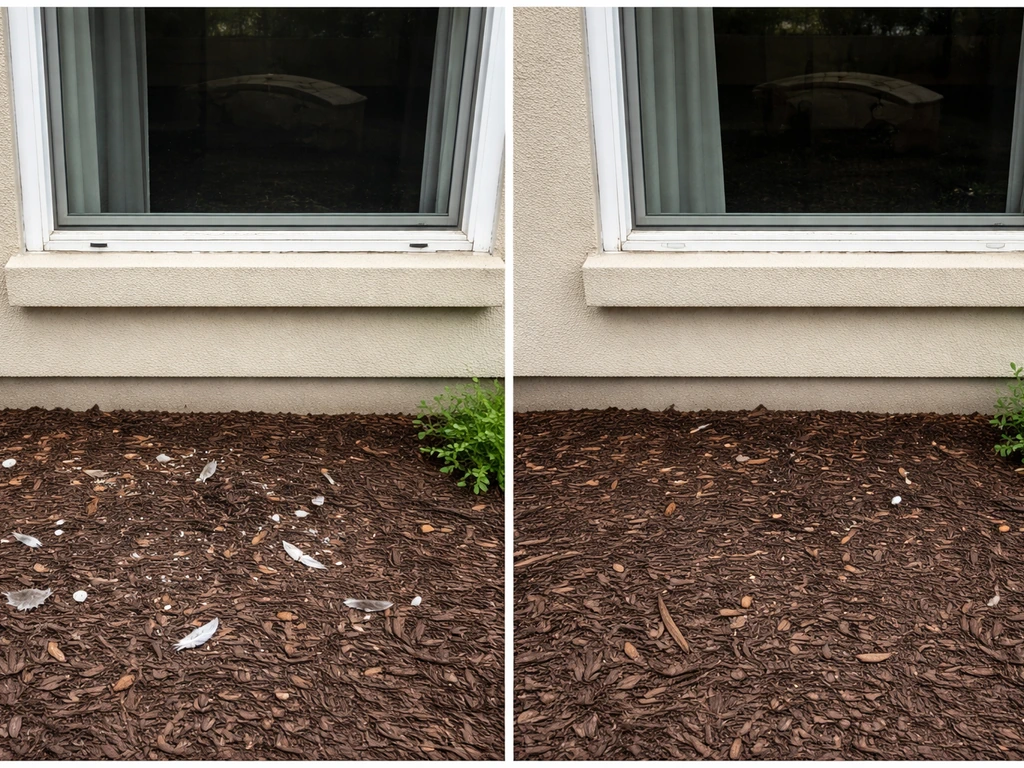
The most direct feedback is the absence of strikes. After installing a treatment, keep checking the ground beneath treated windows for at least one full migratory season (spring and fall). Note whether the dust-and-feather impact marks stop appearing on the glass. That's your primary success metric.
Beyond the obvious, do a visibility audit on your deterrents every few months. Walk outside and look at each treated pane from a bird's-eye approach angle. Can you clearly see the pattern? Does it still have visible contrast? If you've cleaned the windows recently or there's been heavy rain, recheck immediately, because FLAP Canada is explicit that reapplication after washing and rain is often necessary for temporary treatments.
Canada's federal FAQ also recommends reducing window cleaning frequency during peak migration seasons as a simple operational measure. That advice is easy to dismiss as a quirk, but it makes practical sense: cleaning can remove temporary markers or reduce film contrast right when migratory traffic is heaviest.
It's worth being realistic about what "working" looks like. A deterrent that passes the visual audit but still produces occasional strikes probably has gaps in its pattern that exceed the 5 cm spacing threshold. Go back and fill those gaps. If you're seeing zero strikes and the pattern is still visually intact, maintain it and you're done until the next inspection.
If you're using commercial deterrent products and want to cross-check their track record, it's worth doing the same critical evaluation you'd apply to any bird-management tool. Just as evaluating whether Bird B Gone products actually work requires looking at real evidence rather than marketing claims, the same scrutiny applies to window films, UV coatings, and decal sets. Density, external placement, and visible contrast under normal lighting are the variables that determine outcome, not brand name.
A few things people get wrong
Single hawk silhouette decals do not work at scale. A single decal in the center of a large pane leaves enormous uninterrupted gaps around it, and birds simply fly around the decal. The spacing rule (no gap larger than 5 cm) exists for a reason: coverage needs to be dense enough that a bird can't find a clear path through.
UV-only products are unreliable for another reason beyond degradation. While many birds do detect UV, the assumption that a UV-only pattern will always register as a barrier ignores lighting conditions and species variation. Safe Wings' best-practices criteria explicitly caution against relying on UV detection alone, recommending instead that patterns be visible in standard light conditions.
And despite how intuitive it seems, placing feeders near windows to "watch the birds" is one of the most consistent risk factors. If you're using feeders, the same logic applies as it does to whether bird whistles and call devices actually attract or redirect birds: you're influencing bird behavior around your structure, and the setup has to account for the collision risk that comes with increased bird traffic near glass.
On a related note, some people wonder whether frightening birds away is a solution. Deterrents that rely on startling birds (motion devices, sound) can reduce traffic temporarily, but they don't address the core problem: a bird that approaches will still not perceive the glass as a barrier. Visual marking of the glass surface is what actually works. Questions like whether playing bird calls near buildings changes approach behavior are interesting, but they're secondary to treating the glass itself.
Finally, if you find a bird that's stunned after a strike and you're wondering whether to intervene, that's a separate question from prevention. But if you're trying to assess whether a bird is responsive, keep in mind that catching or handling a stunned bird requires knowing what you're doing to avoid causing additional stress or injury. Prevention, though, is always the better path.
What to do right now
- Walk outside and visually inspect every window from a bird's approach angle. Note which ones reflect sky, trees, or vegetation convincingly, or let you see through to interior plants and open space.
- Check the ground beneath your windows and the glass surface itself for impact marks or feathers from past strikes.
- For any high-risk window: apply a temporary tempera paint grid or adhesive tape pattern today, using a maximum spacing of 5 cm between elements in both directions.
- Move interior plants away from high-risk windows immediately. This reduces the visual lure birds see through the glass.
- Reposition any feeders that sit between 1 and 10 meters from a window. Put them either within 1 meter or beyond 10 meters.
- Plan a durable retrofit (external film, netting, or patterned glass) for windows that have a history of strikes.
- Schedule a visibility audit of your deterrents monthly and always immediately after window cleaning or heavy rain.
The reason birds hit glass isn't mysterious, and it isn't a sign of low intelligence. It's a predictable sensory mismatch between what glass signals visually and what birds have evolved to expect from their environment. Once you accept that, the fix is straightforward: make the barrier externally visible, make the pattern dense enough, and maintain it. That's the whole problem and the whole solution.
Bird biology has other surprising quirks too. For instance, whether birds can sneeze might seem like a trivial curiosity, but it reflects the same principle: understanding bird physiology accurately leads to better decisions about how to coexist with them. In this case, that coexistence starts with treating your glass.
FAQ
If birds can see glass, why doesn’t seeing it automatically stop collisions?
Most species are not actually “avoiding glass,” they are failing to treat it as a barrier. If you want a quick proxy test, look for whether the pane shows a full visual “through line” to sky, trees, or habitat, then confirm the same from a bird-approach height. If birds can read either a reflection continuation or a view-through escape route, deterrents need denser external patterning, not just more product.
Where on a window should I apply deterrents for the best results?
Start at windows with the strongest sightlines. Place markers on the outside of the glass near the places where birds commit to flight, not only at the center of the pane. Pay extra attention to corners and areas near feeders, bird baths, and dense shrubs, because those cues increase approach speed and fix their target location right at the glazing.
How soon after installing a window film or marker should I expect it to still work after rain or cleaning?
Do a “post-install cleanup rule.” After installation, avoid aggressive washing for a few days, then recheck after the first rain and after you normally clean windows. Temporary solutions and some films lose contrast after repeated cleaning, so your schedule should be based on your household cleaning habits, not the day you applied the product.
What should I do if birds still hit a window after I added deterrents?
If a bird strikes a treated window, treat it like a coverage gap. Reinspect the pattern at normal daylight angles, then check for any missing strips, curled edges, bubbles, or areas where dirt and glare reduce contrast. The 5 cm spacing rule is unforgiving, so even small uncovered bands along a seam can allow a pass-through trajectory.
Will indoor curtains or blinds prevent bird collisions?
Yes, but only if it reduces the visual cue birds use. Interior blinds can lower the view to plants or open space inside, yet reflections from the outside can still carry sky or trees into the glass. For best reliability, choose exterior solutions or at least make sure the pane no longer offers either a strong reflection or a clear through-view during daylight.
Are UV-only window coatings or stickers enough by themselves?
Not reliably. UV-only approaches assume the bird will interpret the UV pattern as a barrier under your specific lighting and viewing conditions. If the pattern is not obviously visible in normal light, you may miss failures caused by glare, angle, or species differences. Use the external visibility audit as your acceptance test rather than trusting UV detection alone.
Are there types of windows that are riskier than others?
Ceiling-to-floor glass and large uninterrupted panes tend to be higher-risk because they provide few or no visual breaks. If you have to use a limited budget, prioritize the widest panes and the most transparent sections, then fill smaller gaps later. Also consider that atriums and commercial facades often get constant bird traffic, so start there even if they are “harder to reach.”
How do I decide which windows to fix first if I can only treat a few?
Use the strike record as the main prioritization tool, then do a second pass based on risk cues. Confirm from outside whether you can see convincing sky or trees, whether birds can see through to vegetation beyond the pane, and whether low-angle sun makes reflections stronger in the morning or afternoon. This two-step method prevents you from over-treating low-risk windows.
What is the risk of relying on temporary fixes like tape, soap patterns, or tempera grids?
Temporary markers can be a fast lifesaver, but you should plan a durable upgrade rather than treating them as a long-term fix. Visibility degrades with rain, cleaning, UV exposure, and adhesion loss, so set a maintenance window to reapply or replace before migration peaks return.
How can I measure whether my deterrent setup is actually working?
Don’t judge success by “fewer birds around.” Success is whether strike evidence stops. Check the ground beneath treated windows for new feathers or impact marks over at least one full spring and fall cycle, then do occasional pattern rechecks from a bird-approach angle.
Do hawk or predator silhouette decals work on large windows?
If you’re using decals, cover the need for density. One or two silhouettes on a large pane usually leave wide gaps that birds can thread through, especially during fast approaches to reflected or viewed habitat. Use tightly spaced, comprehensive patterning, and confirm it passes the visible external audit.
Does moving a bird feeder change my collision risk even if glass is unaltered?
Yes, and feeders are one of the biggest behavior amplifiers. If you add a feeder or bird activity and then do not treat nearby glazing, you often increase collision risk because more birds approach and concentrate in the same airspace. If you want to keep feeders, treat the windows within the same sightline radius as a priority.
Why don’t motion or sound deterrents fully solve the problem?
Avoid “behavior-only” deterrents as your primary strategy. Motion, sound, and startle devices may temporarily reduce visits, but they do not fix the core failure mode, the bird’s misreading of reflection or transparency as open habitat. Use startle tools, if at all, only as a short-term bridge while you implement visual marking of the glass.