If a bird gets tangled in or tugs on your hair, the most likely outcome is a brief, startling moment of discomfort for you and a short burst of panic for the bird. Serious injury to either party is uncommon, but the way you react in the next few seconds matters a lot. Pulling away fast, swatting at the bird, or grabbing it roughly can escalate a minor nuisance into a real problem, including scratches, bites, or a genuinely injured bird. The good news: with calm, slow movements you can resolve almost every hair entanglement in under a minute.
What Happens If a Bird Gets Your Hair and What to Do

Marcus Whitmore
6 May 2026
What 'getting your hair' actually means (the scenarios)
The phrase covers a few very different situations, and the right response depends on which one you're dealing with.
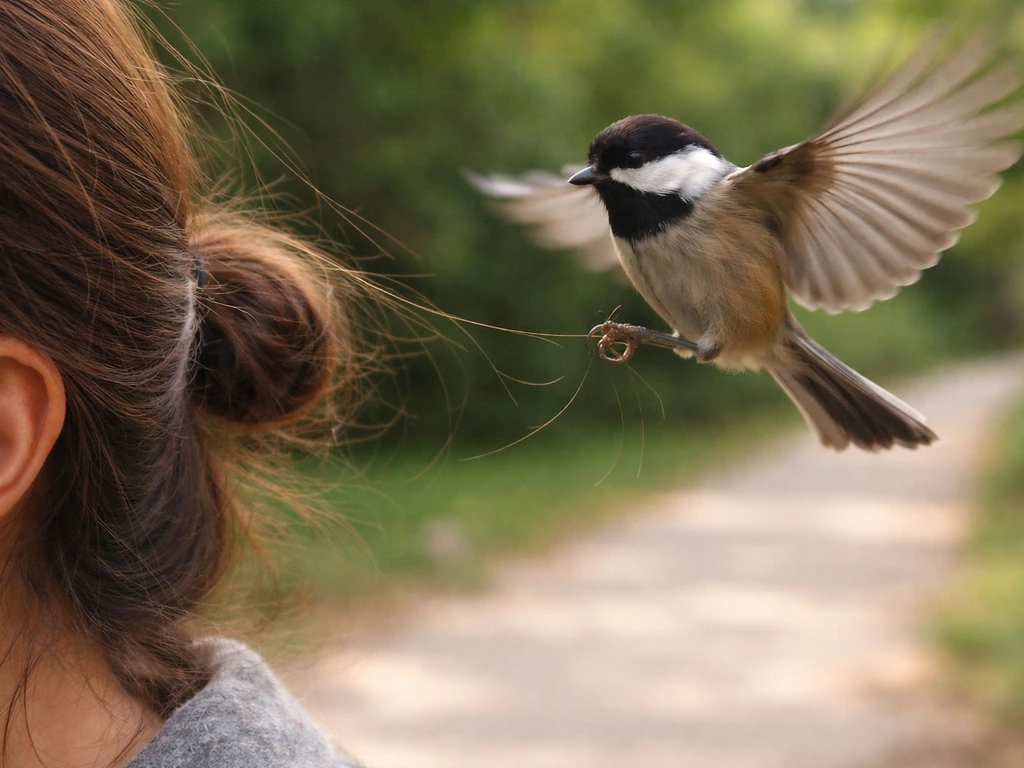
- A flying bird briefly hooks a claw or talon into loose hair as it passes or lands on your head. This is the most common scenario, especially with wild birds in parks. The bird usually frees itself within seconds.
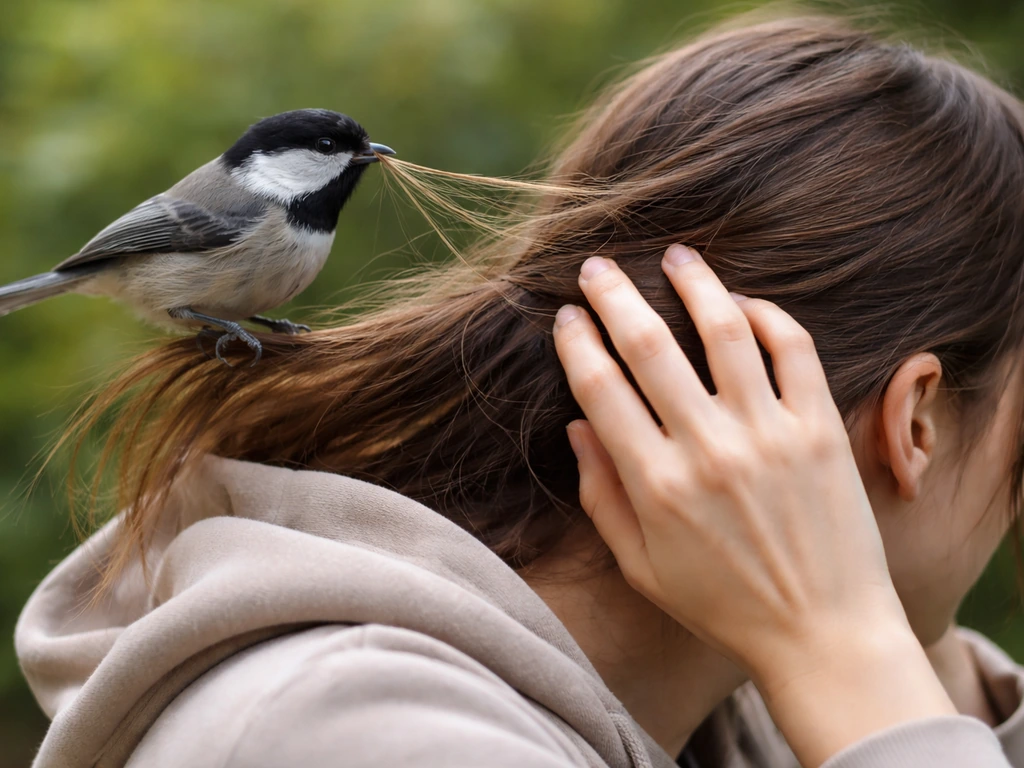
- A pet bird (parrot, cockatiel, conure) uses its beak or feet to actively play with, tug at, or preen your hair. This is exploratory behavior, not aggression, but loose long hair can still wrap around a toe or nail.
- A wild bird (crow, magpie, mockingbird) swooping to defend a nest makes contact with your hair during a dive. This is a defensive strike, not a real attempt to grab you.
- Your hair physically entangles around a bird's leg, toe, or beak, creating a genuine bind where neither of you can easily pull free without risk of injury.
The last scenario is the one that requires the most careful handling. A strand of hair wrapped tightly around a bird's toe can cut off circulation surprisingly quickly, which makes staying calm and working methodically essential.
Immediate risks to you and the bird
What's actually likely
For you, the realistic risks are a sharp tug (mildly painful), a surface scratch from a claw during the bird's struggle to free itself, or a bite if the bird feels cornered. If you do get bitten, what happens next depends on whether the beak breaks your skin and how you treat the wound right away what happens if a bird bites you. Bird beaks can cause real damage even when the bird isn't trying hard, so a defensive nip from a large parrot or a wild corvid is not trivial. The CDC specifically notes that bird beaks can cause significant damage and recommends washing any wound immediately with warm soapy water. For most small backyard birds, though, a bite will be minor.
Disease transmission from casual hair contact is not a meaningful risk. The concern rises only if the bird's beak or claws break your skin, and even then the risk is low compared to, say, a mammal bite. That said, the CDC is clear that bites and scratches from wild animals can spread germs even when wounds look minor, so treating any skin break properly matters.
What's unlikely but worth knowing
The reality is that birds don't intentionally target human hair as prey. A wild bird tangled in your hair is frightened, not attacking. A pet bird chewing your hair is curious, not malicious. Serious puncture wounds, major lacerations, or significant disease risk from a hair-contact incident are genuinely uncommon. You don't need to panic, but you do need to act carefully and promptly.
For the bird, the bigger risk is injury from struggling. A small bird thrashing against a strand of wrapped hair can fracture a leg bone or dislocate a toe. Stress alone can be dangerous for birds, since they can go into shock more quickly than most people expect. Sudden, forceful human reactions (grabbing, swatting, pulling hair hard) are the main driver of bird injury in these situations.
How to safely separate your hair right now
Work through these steps in order. Speed matters less than staying calm and deliberate.
- Stop moving immediately. Freeze. Any sudden motion pulls tighter and frightens the bird further.
- Lower your voice and slow your breathing. If others are nearby, quietly ask them to stop making noise or approaching.
- Assess what's actually caught. Is it a claw briefly snagged, or is hair wrapped around the bird's foot or beak? Don't just yank.
- If a claw is lightly hooked: gently tilt your head toward the bird to create slack, then use one hand to slowly guide the claw free. Let the bird do most of the work once there's slack.
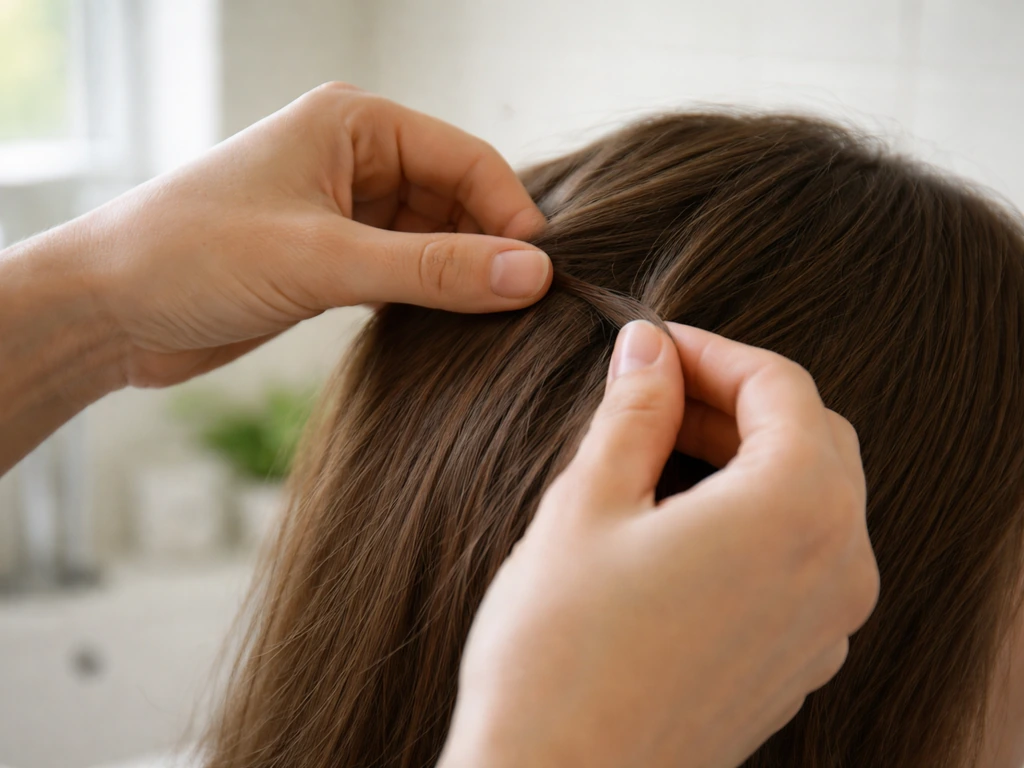
- If hair is wrapped around the bird's toe or leg: use your fingers to unwind the strand slowly, counterclockwise or clockwise, whichever unwinds it. Do not pull the hair straight; unwinding is the only safe method.
- If the bird is wild and you can't free it quickly (within 30 to 60 seconds): use a light cloth or towel to gently wrap and hold the bird's body steady while you work. This limits struggling and reduces injury risk for both of you.
- Once free, release a wild bird by opening your hands and stepping back. Give it a clear escape path. For a pet bird, return it calmly to its perch.
- Do not attempt to grab the bird by its wings or tail, and do not pull your hair sharply. Both actions can cause fractures.
If you're scratched or bitten: first aid and when to get help
Any skin break from a bird claw or beak should be treated right away. Wash the wound thoroughly with warm soapy water for at least 20 seconds. Then rinse under clean running water, apply an antiseptic, and cover with a clean bandage. This applies whether the bird is a pet parakeet or a wild crow.
Watch the wound over the next 24 to 48 hours. blank" rel="noopener noreferrer">The CDC advises seeking medical attention if the wound becomes red, painful, warm, or swollen, or if you develop a fever. You should also check in with a doctor if it has been more than five years since your last tetanus shot, since even minor punctures can be a pathway for tetanus in unvaccinated individuals. Related questions about bird bites, including whether they hurt, how dangerous they can be, and whether a tetanus shot is needed, are worth reviewing if this is the first time you've been nipped. A bird bite is simply what people call an injury from a bird’s beak, often referred to as a nip or bite depending on how severe it is. If you are wondering, is bird bite dangerous, the key factor is whether it broke your skin and whether you need medical care based on symptoms how dangerous they can be. If you're wondering whether do bird bites hurt, the good news is that most bites are minor, but you should still clean the area and watch for signs of infection.
If the scratch or bite is from a wild bird and you are immunocompromised, pregnant, or working in a setting with dense wild bird populations, a quick call to your doctor or urgent care clinic is a reasonable precaution, not an overreaction.
When the bird needs professional help
After the separation, watch the bird for a few minutes if you can. Most birds shake themselves off and fly away or return to normal perch behavior within moments. Some show signs that need attention.
- The bird cannot bear weight on one leg, holds a leg up, or has a visibly bent or swollen toe or limb.
- The bird is unable to fly and just sits on the ground after several minutes.
- The bird is breathing with its mouth open, holding its wings out from its body, or appears to be in shock (glassy eyes, unresponsive).
- There is visible bleeding on the bird that has not stopped within a few minutes.
- The bird is a pet and any of the above signs appear.
For wild birds, contact a licensed wildlife rehabilitator in your area. In the US, the National Wildlife Rehabilitators Association and the Wildlife Rehabber directory can help you find the nearest center by zip code. Do not try to care for an injured wild bird at home long-term, since that requires permits and specialized knowledge. As LafeberVet's avian first aid guidance emphasizes, first aid for birds is about stabilizing until professional care can be provided, not replacing it.
For a pet bird showing any signs of injury or prolonged distress, call an avian veterinarian the same day. Birds mask illness and injury effectively, so what looks minor can be more serious underneath.
How to prevent this from happening again
Around pet birds
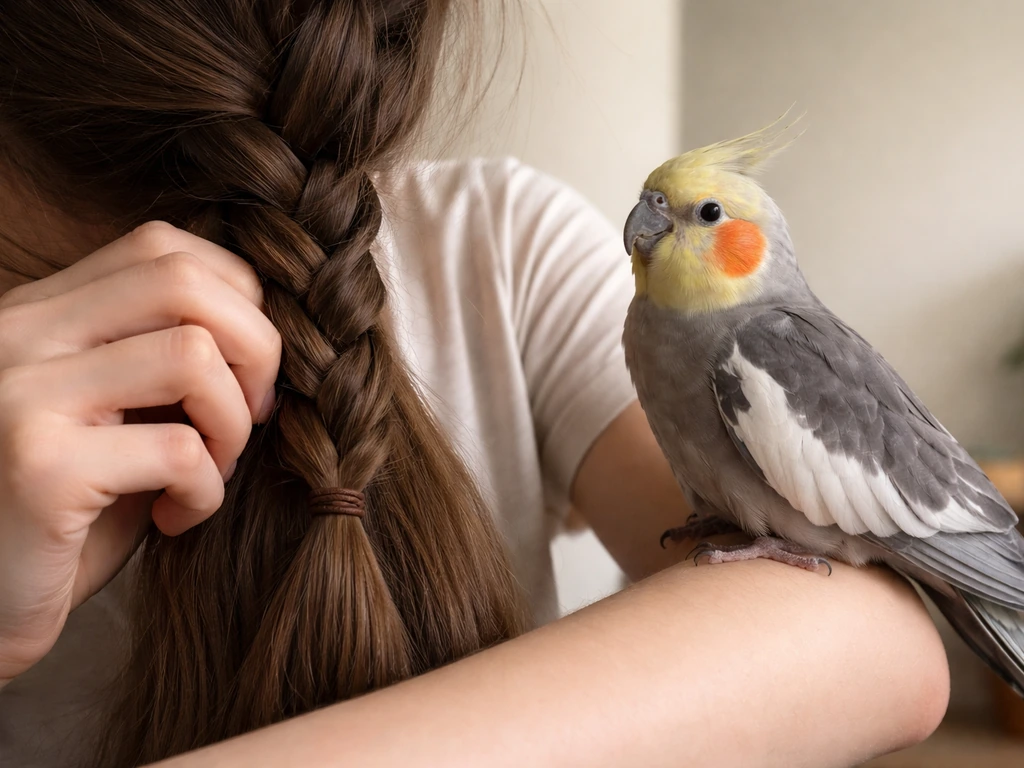
Tie back or braid long hair before handling a pet bird. This is the single most effective prevention step. Loose hair is irresistible to curious parrots and cockatiels, and the longer it is, the easier it is for a strand to wrap around a toe mid-play. If you have a bird that particularly fixates on hair, keep handling sessions shorter and redirect its attention with a toy or treat.
Around wild birds outdoors
In areas where birds are known to swoop or approach people (parks with hand-fed waterfowl, nesting season hotspots, bird sanctuaries), wearing a hat is the most practical barrier. During nesting season, particularly from April through July in North America, birds like red-winged blackbirds and mockingbirds will dive at perceived threats near their nests. A hat removes the 'loose moving target' that hair presents.
Avoid shiny hair accessories like metallic clips or reflective headbands in areas with corvids (crows, magpies, jays). These birds are genuinely attracted to shiny objects and may investigate more aggressively than other species.
In aviation and professional settings
For aviation ground crew and wildlife control professionals working near bird-heavy environments, tying back hair and wearing close-fitting headgear is standard practice and should be treated as part of personal protective equipment, not just a comfort preference. Loose hair near bird netting, wildlife traps, or bird deterrent equipment creates genuine entanglement hazards for both workers and birds.
| Scenario | Risk to You | Risk to Bird | Key Action |
|---|---|---|---|
| Claw briefly hooked during flyby | Minor tug, unlikely scratch | Low if calm | Tilt head to create slack, guide claw free |
| Pet bird playing with/tugging hair | Minor, possible nip if startled | Low to moderate (toe wrap) | Unwind strand slowly, don't pull |
| Hair wrapped tightly around bird's toe | Possible scratch or bite during struggle | High if prolonged | Wrap bird in cloth, unwind methodically |
| Nesting bird dive contact | Possible scratch if claw catches | Very low | Walk away calmly, cover head next time |
| Wild bird tangled and struggling | Scratch or bite risk moderate | High (stress, fracture) | Contain gently with cloth, unwind, call rehab if needed |
The bottom line is that a bird getting into your hair is far more alarming than it is dangerous, for both of you. Staying still, staying calm, and working slowly resolves the vast majority of these incidents without harm. The situations that turn serious are almost always caused by a panicked reaction, not the initial contact itself.
FAQ
What should I do immediately if I see a bird has a strand of my hair caught on its toe or beak?
Stop moving and keep your head still, then gently lift the hair away from the bird rather than pulling your whole head back. If you can, use one hand to support the hair close to the bird and free the strand slowly, keeping tension low to avoid cutting circulation.
Is it better to pull my hair free quickly or to wait and work it out calmly?
Calmly working slowly is usually better. Rapid pulling or jerking is the main trigger for a bird to struggle harder, which increases the chances of bites, scratches, or a toe injury.
If the bird’s claw scratches me, do I need to cover it or leave it open?
After you wash with warm soapy water and rinse, cover it with a clean bandage. A bandage helps keep the area cleaner and reduces accidental rubbing that can reopen minor scratches.
What if my hair is wrapped tightly, but I cannot safely reach the bird’s toe or beak?
Do not try to “fight” the bird by grabbing it. Step back, keep your body still, and call for help if available, or contact a nearby wildlife professional if it is a wild bird. Your goal is to remove tension without making the bird thrash.
How do I tell whether I need medical care after a bird bite or scratch?
Seek medical attention if there is worsening redness, increasing pain, warmth, swelling, pus, or fever, or if the wound is deeper than a superficial scratch. Also consider care sooner for puncture-type injuries, especially if you cannot confidently clean the area right away.
Do I need antibiotics after a bird bite?
Not automatically. Many bites are minor and heal with proper cleaning and monitoring, but clinicians may prescribe antibiotics when there is puncture depth, significant swelling, visible contamination, or higher infection risk based on location (hand or face) and your health status.
Can bird claws or beaks transmit diseases if there is no visible bleeding?
The bigger concern is when the beak or claw breaks the skin. If the skin is intact, the risk of disease transmission from casual contact is very low, but you should still wash the area if there was debris on it.
What should I do if my tetanus shot is out of date or I am unsure when it was last given?
Check your vaccination record. If it has been more than five years for a wound, or you are not sure, contact a clinician for guidance on whether a booster is needed, since small punctures can still create a tetanus risk.
Should I disinfect with hydrogen peroxide or alcohol right after cleaning?
Warm soap and water is the priority. If you have already washed thoroughly, you can apply an antiseptic suitable for wounds and then bandage, but avoid repeated harsh soaking or anything that can overly irritate the tissue.
When is it appropriate to call a wildlife rehabilitator after a bird gets tangled in hair?
Call if the bird shows ongoing distress, does not resume normal perching or flying within a few minutes, has an obvious injury, or the hair caused a tight wrap around a toe that you cannot safely remove. Do not attempt long-term care without permits and training.
If it was my pet bird, should I monitor it even if it seems okay after the hair comes loose?
Yes. Watch for subtle signs like reluctance to perch, changes in breathing, fluffed posture that persists, reduced appetite, or limping. Birds can mask illness, so if you notice persistent distress, contact an avian veterinarian the same day.
What should I do to prevent repeat incidents when I have a bird that fixates on hair?
Tie back or braid long hair before handling, keep sessions shorter, and redirect attention with a toy or treat. Also remove loose accessories near the head, since dangling or shiny items can increase investigation and grabbing behavior.