
Bird harnesses can be safe, but the word 'safe' is doing a lot of heavy lifting there. A well-fitted harness introduced gradually with positive reinforcement, used under close supervision, on a species and individual bird that tolerates it, is a legitimate tool for outdoor enrichment. The same harness, forced onto a panicking bird, worn too tight, or left on unsupervised, can cause respiratory restriction, feather and skin damage, injury from frantic struggling, and serious stress. So the honest answer is: it depends almost entirely on fit, introduction method, and how carefully you read your bird's signals.
Are Bird Harnesses Safe? Risks, Fit Tips, and Safe Use

Marcus Whitmore
24 May 2026
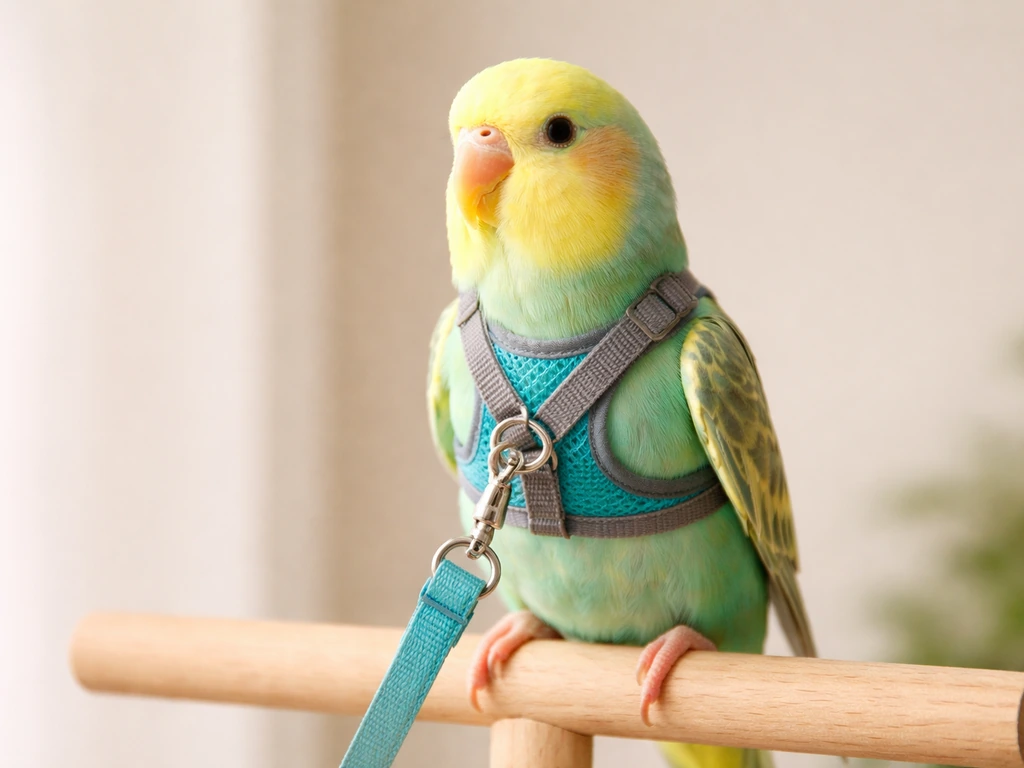
What 'safe' actually means for bird harnesses
Safety for a bird harness is not a product property, it is a relationship between the harness design, your specific bird, and how you use it. A harness that works beautifully on a calm, harness-trained African Grey can be a genuine hazard on a smaller, more flighty species or on any bird that has not been properly conditioned. The key risk factors are: chest and torso fit (too tight restricts breathing; too loose creates escape or entanglement risk), strap width and material against feathers and skin, the bird's individual temperament and stress threshold, how quickly you moved through training, and whether you are present and watching the whole time.
The RSPCA explicitly supports the use of well-fitted harnesses under direct supervision as a welfare-compatible option for companion birds taken outdoors, while simultaneously opposing tethering arrangements that severely restrict movement. That distinction matters: a harness used for a supervised outdoor session is not the same thing as a bird left tethered to a perch for hours. The former can be done safely; the latter compromises welfare almost by definition.
Most avian experts agree that taking a bird outside without either a secure carrier or a harness is genuinely risky, as even wing-clipped birds can catch a gust and be gone in seconds. So the safety question is not really 'harness versus no harness' but rather 'how do I use a harness without creating its own set of problems.'
The real risks: what can go wrong
Breathing restriction
This is the most serious acute risk. Birds breathe very differently from mammals: they use a system of air sacs that extend through the torso, and any pressure on the chest or abdomen can interfere with ventilation quickly. A harness strap that is even slightly too tight around the chest can cause respiratory distress, and a frightened bird that is struggling and pulling against the leash will compound that pressure with muscular tension. Open-mouth breathing at rest and visible tail bobbing are the two clinical signs avian veterinarians consistently point to as urgent red flags. If you see either of these while the harness is on, remove it immediately. Do not wait to see if it resolves.
Chafing, feather, and skin damage
Narrow straps, stiff synthetic materials, and poor fit all concentrate friction at contact points, especially around the wings, neck, and under the chest. Over repeated sessions this causes feather breakdown, skin abrasion, and in worse cases follicle damage that affects regrowth. Birds that are spooked while in a harness will also pull forcefully against the leash, and that sudden mechanical tension can injure skin and feathers at the harness contact points even without any design flaw.
Stress and fear responses
A bird that is not properly conditioned to accept a harness will experience restraint as a predator capture event. The physiological stress response that follows, including elevated cortisol, frantic flapping, and attempts to bite or escape, is harmful in itself, separate from any physical injury. Chronic stress suppresses immune function, disrupts behavior, and can permanently affect the human-bird relationship. Poor fit, rough handling, or a rushed introduction process can turn what should be a neutral piece of equipment into a significant welfare problem, and that damage to trust is often harder to reverse than a physical injury.
Falls, entanglement, and escape
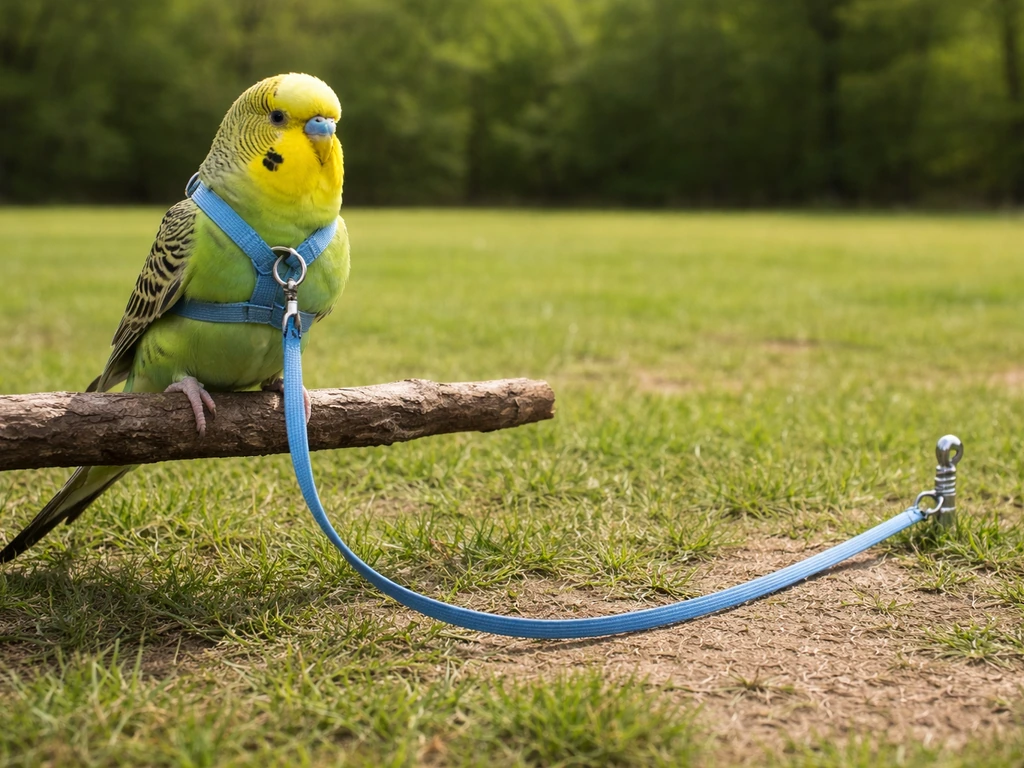
A harness-wearing bird that panics and launches into a frantic flap can fall, hit a surface, or become tangled in the leash. If the leash attaches to a fixed point rather than being hand-held, a falling bird can receive an abrupt jerk that injures the neck or wings. A harness that is slightly too loose creates escape risk, which matters enormously outdoors, and a loose harness with dangling hardware creates entanglement risk indoors and out.
Choosing a harness that is least likely to cause harm
Fit is everything. The harness must be designed for your bird's specific size and body shape, not just a rough weight category. Most reputable manufacturers publish species-specific sizing guides. When in doubt, go narrower on adjustability options so you can dial in chest clearance precisely.
| Feature | What to look for | What to avoid |
|---|---|---|
| Strap width | Broad, flat straps that distribute pressure | Narrow cord or rope-style straps that concentrate pressure |
| Material | Soft, smooth nylon or cotton-blend; lightweight | Stiff synthetic, rough weave, or heavy material that limits movement |
| Adjustability | Multiple adjustment points for chest, neck, and wing loops | Single-size or one-piece non-adjustable designs for first-time use |
| Closure hardware | Secure but smooth buckles or sliders with no sharp edges or protrusions | Clips with exposed sharp edges, large metal D-rings near the chest, or anything that can snag feathers |
| Leash attachment | Attachment point on the back/between wings, not the chest or neck | Neck-ring attachment that could tighten if pulled |
| Leash length | Short enough to keep under control; hand-held whenever possible | Long, unmanaged leashes that allow free flight with a sudden stop at the end |
Purpose-designed bird harnesses like the Aviator harness are frequently cited by avian behavior professionals because they are built around avian anatomy. Generic pet harnesses designed for cats or small dogs are not appropriate substitutes. They are shaped wrong, they often apply pressure in the wrong places, and they have not been tested against bird-specific movement patterns.
How to introduce and use a harness safely
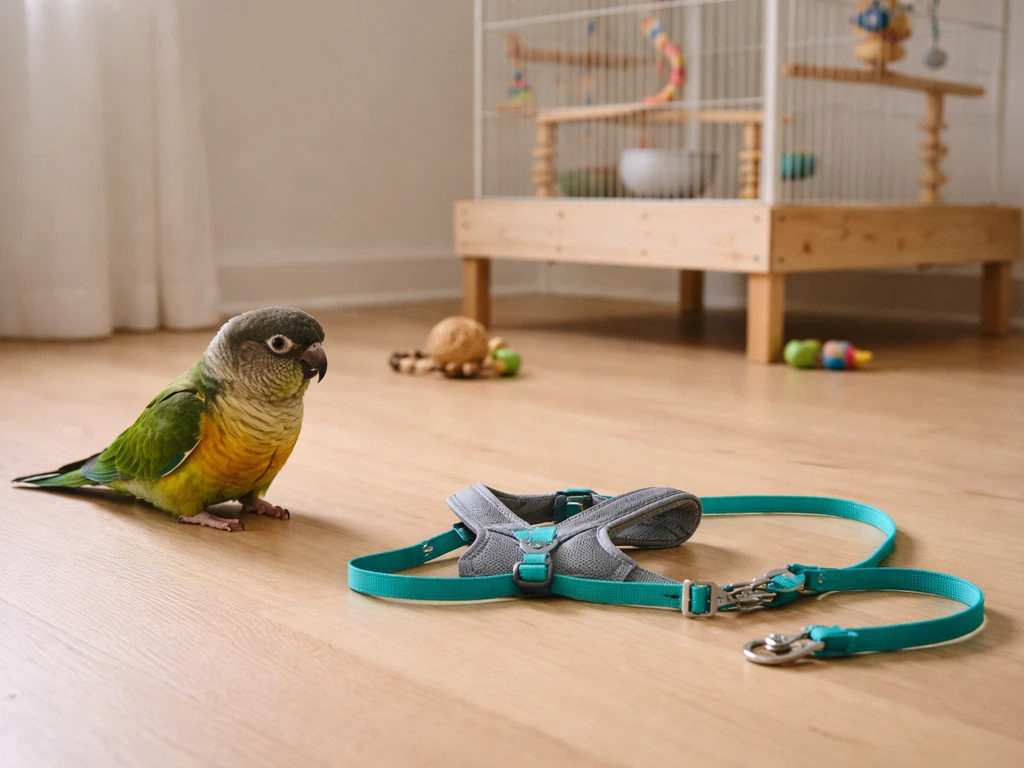
The introduction process is where most harness injuries and welfare problems originate. Forcing the harness on to 'just get it over with' is the single most common mistake. The goal is for the bird to view the harness as a neutral or even positive object before it ever touches them.
- Start by placing the harness near the cage or play stand for several days. Let the bird investigate it at their own pace. Reward any calm interest with a favorite treat. Do not attempt to put it on yet.
- Once the bird approaches or touches the harness without alarm, begin passing it near the bird's body without making contact. Continue pairing with treats and positive verbal reinforcement.
- Introduce the head loop first. Hold it open and let the bird put their head through voluntarily in exchange for a treat, rather than reaching over and pulling it on.
- With the head loop accepted, begin gently guiding the wing loops one at a time across multiple short sessions, 5 to 10 minutes maximum at first. Never rush to close the harness in one session.
- Once the harness is on and secured for the first time, keep the session very brief (2 to 3 minutes), provide continuous positive reinforcement, and then remove it calmly. End on a good note.
- Gradually extend session length only after the bird is consistently calm: relaxed posture, willing to eat treats, normal vocalizations, no attempt to chew or remove the harness.
- Condition to indoor use fully before ever going outside. Let the bird walk, step up, and perch while wearing the harness indoors with you holding the leash.
- For all outdoor sessions: keep the leash hand-held at all times, stay in a calm environment initially, avoid crowds and loud noises, and never leave the bird unsupervised even for a moment.
The desensitization principle here is the same one used in positive reinforcement training broadly: the bird always has some sense of control over the pace. When the bird has that control and the training is association-based rather than force-based, compliance comes faster and the stress response is far lower.
How to tell if the harness is causing problems
You should be watching your bird continuously during every harness session, and specifically checking for these physical and behavioral signals. Some are stop-immediately situations; others are signs to slow down your training progression.
- Open-mouth breathing at rest: remove the harness immediately and monitor; if it persists for more than a minute or two after removal, contact an avian vet
- Visible tail bobbing with each breath: same response as above, this is a clinical respiratory distress sign
- Frantic, uncontrolled flapping: remove, allow the bird to calm completely before any further attempt that day
- Falling from perch repeatedly: stop the session; this may indicate weakness, disorientation, or that the harness is affecting balance
- Prolonged freezing or 'shutdown' posture (puffed, eyes half-closed, completely still): the bird is overwhelmed, remove the harness and end the session
- Wide-eyed panic with feathers slicked tight against the body: the bird is in a fear response, do not continue
- Persistent frantic chewing or biting at the harness: the bird is not yet conditioned; go back several steps in the introduction process
- Refusal to take favorite treats during a session: one of the most reliable early-warning signs that stress is high enough to override food motivation
- Trembling or visible muscle weakness after removal: consult an avian vet before the next session
Between sessions, check the skin under the strap contact points (neck, chest, under the wings) for redness, abrasion, or any feather breakdown. Run your finger under each strap while the harness is on: you should be able to slide a finger underneath without forcing, but the harness should not shift freely. If you cannot get a finger under, it is too tight. If it shifts more than about a centimeter with light pressure, it is too loose.
Alternatives to harnesses and when to get professional help
A harness is not the only or always the best option for out-of-cage enrichment. For birds that cannot or will not tolerate harness training, a secure carrier is the appropriate outdoor transport method. For indoor enrichment, a dedicated play stand with foraging opportunities, climbing structures, and interactive toys can provide substantial environmental stimulation without any restraint at all. Bird backpacks are a related option some owners explore for transport, and bird leashes are sometimes discussed as an alternative to full harnesses, though the fit and safety principles are essentially the same. If you are also wondering about foot support in another context, a quick check of whether are all bird shoes good for plantar fasciitis can help you avoid choosing gear for the wrong problem. However, if you are considering bird leashes for outdoor time, you should also think carefully about whether they are safe and how they fit and function for your specific bird Bird backpacks are a related option. Bird backpacks can be risky for the same reasons as harnesses, so the fit and supervision requirements still matter a lot.
Not every bird is a good candidate for harness training. Very small species (budgies, lovebirds, small parrotlets) have a narrower margin for error in fit and are more physiologically vulnerable to chest restriction. Is your hum skinny bird safe? For very small birds, the margin for error is smaller, so you need expert guidance on harness fit and training. Highly stressed, fearful, or previously traumatized birds may never become comfortable enough for the process to be ethical or safe. However, for a specific product like HexClad, you should only consider it safe for a bird if the fit and supervision match these same safety principles is hexclad bird safe. That is not a training failure; it is reading your bird honestly.
blank" rel="noopener noreferrer">Consult an avian veterinarian before starting harness training if your bird has any known respiratory issue, cardiac condition, or history of feather-destructive behavior. Some people also consider ultrasonic bird repellers for keeping birds away, but if you are trying to reduce risk around dogs, it is worth checking whether the device could affect them too. Consult one immediately if your bird shows any respiratory distress signs during or after a session. And if your training is stalling, or the bird is showing persistent avoidance, lunging, or distress responses after multiple patient sessions, an avian behavior professional can assess whether the approach needs adjusting or whether harness use simply is not appropriate for that individual bird. Reaching out to a professional is not an admission of failure; it is exactly what responsible bird ownership looks like.
A quick pre-session safety checklist
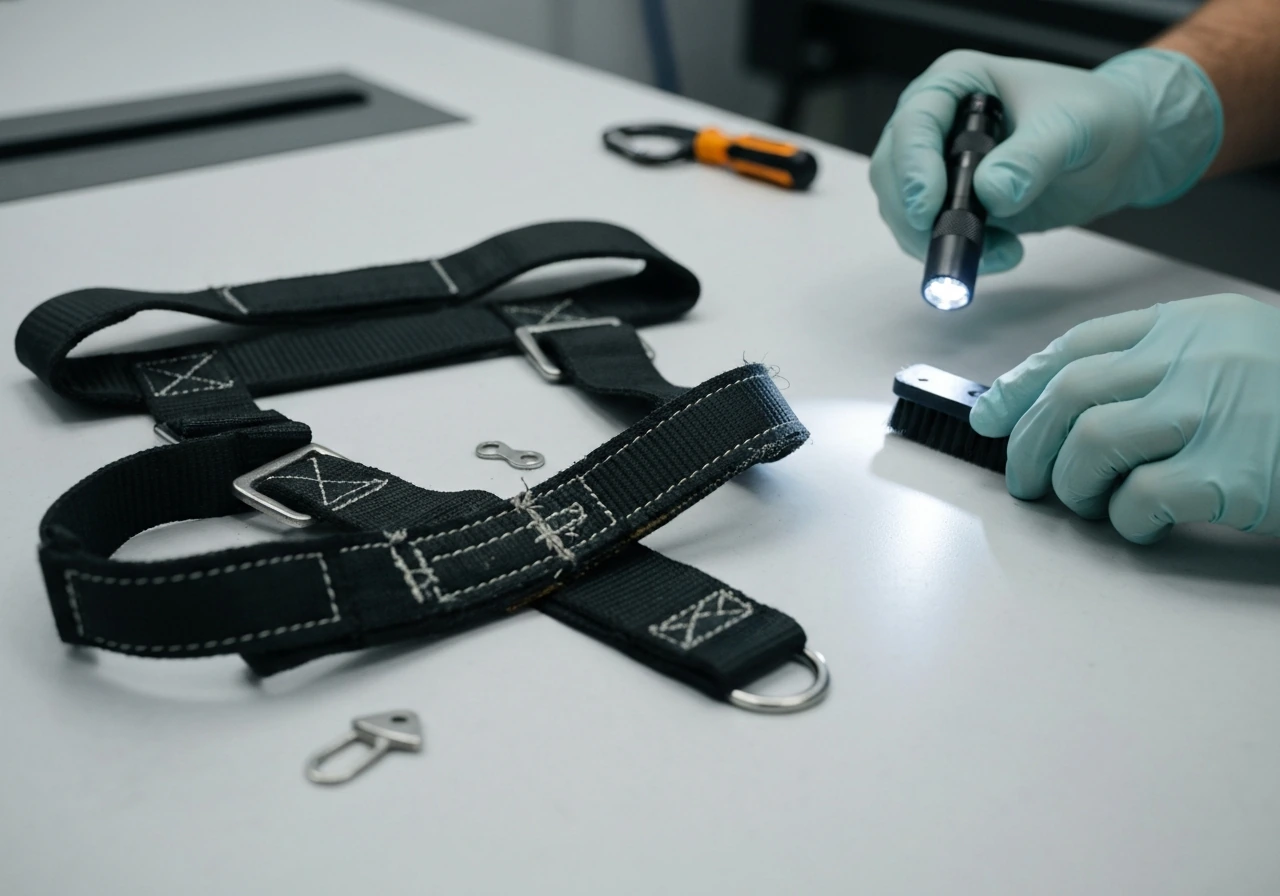
- Inspect the harness for any worn stitching, frayed straps, or damaged hardware before each use
- Check all adjustment points are set to the correct position for your bird before putting it on
- Confirm the bird is calm, eating normally, and showing no signs of illness before starting
- Have a treat your bird actively wants available throughout the session
- Plan to stay present and hold the leash for the entire session with no distractions
- Know your stop signals (open-mouth breathing, tail bobbing, frantic flapping) before you begin, not during
- Have the avian vet's number accessible for any session involving a new bird or new environment
FAQ
What should I do if my bird starts breathing strangely while wearing a harness?
Probably not. If your bird shows open-mouth breathing at rest, strong tail bobbing, gasping, wheezing, or a rapid breathing pattern while the harness is on, treat it as a stop-now situation and remove the harness immediately. If symptoms persist after removal or recur in subsequent tries, only an avian vet should guide next steps, because the issue may be airway pressure, anxiety-related hyperventilation, or an underlying respiratory problem.
How long should harness sessions be during training?
Start with very short sessions and only increase length if your bird stays calm and your skin checks stay normal. A practical rule is to end the session before your bird reaches visible panic, then repeat more gradually over days, not minutes. For many birds, the biggest gains come from frequent micro-sessions rather than one long outing, because prolonged struggling increases both stress and friction damage.
How can I tell if a harness fits correctly before going outside?
You can test fit at home before any outdoor use. With the harness properly adjusted, you should be able to slide a finger under each strap with gentle, consistent movement, without forcing, and the harness should not freely shift around the body when your bird moves normally. If straps migrate, you repeatedly need to “tighten during the session,” or the harness twists, the issue is fit or sizing, not something you should push through outdoors.
Is it safe to leave the harness on when I am not actively watching?
Avoid leaving a harness on in any situation where you cannot directly supervise. Even with good fit, unsupervised time increases the chance of distraction, chewing, snagging on furniture, or a sudden spook leading to a fall. If you want a carrier-free outdoor experience, use the harness only for the active session, then remove it immediately when you go back indoors.
Can I walk my bird outside using a harness, and what is the safest way to start?
Yes, but only if the bird tolerates it while stationary first. If the harness-trained bird becomes calm during short standing and step-in practice, then you can add movement in stages, like brief indoor walking while you keep the leash slack. Do not begin with fast walking, crowded places, or sudden stimuli, because leash tension plus unfamiliar sights increases the likelihood of a struggle that can injure the contact points.
Should I use a harness instead of a carrier for getting to the park or appointment?
Do not use a harness as a substitute for a secure carrier for transport. For “getting there,” a carrier is still the safer default, because harnesses do not protect from sudden impacts, tipping vehicles, or escape attempts inside the transport environment. Consider the harness as a supervised outdoor accessory, not the primary containment method during travel.
Are harnesses safer for larger parrots than for tiny birds like budgies or lovebirds?
For small species, not all harness designs have the same margin for error. Birds with a narrower chest and less tolerance for any pressure require species-specific sizing and very conservative training pacing, and many will do better with a secure carrier or closely supervised play stand instead. If you cannot achieve stable chest clearance without excessive tightening, or your bird repeatedly avoids or panics, treat that as a sign the harness is not the right option for that individual.
Is using a fixed leash attachment safe?
Most avian vets would say no, because wing and neck pressure can change quickly when a bird tenses. If you use a leash, keep it hand-held and maintain slack rather than letting it pull taut. A fixed attachment point increases jerk risk if the bird falls or launches, which can cause neck or wing injury even when the harness itself is well designed.
If my bird dislikes the harness, can I just try to tough it out for longer sessions?
Not if the bird is not conditioned and not if you cannot keep tension under control. The safest approach is training with the bird controlling pacing, slack during normal movement, and removal at the first urgent stress signs. If your bird becomes fearful to the point of biting, frantic flapping, or persistent avoidance after multiple patient sessions, it is better to switch to enrichment options that do not involve restraint.
Are bird leashes a safe alternative to full harnesses?
Bird leashes can be discussed, but they inherit the same core safety principles as harnesses, and they can add risk if they increase tension. For any leash setup, choose the correct harness first, then use slack, avoid fixed anchor points, and keep supervision continuous. If your bird tends to startle easily outdoors, consider whether a carrier plus out-of-cage supervised alternative offers a better risk balance.