
Most bird protectors are safe when you choose the right type for your situation and install them correctly. The risks are real but avoidable: poorly hung netting traps and kills birds, sharp spikes can injure pets and people during installation, and some chemical repellents carry toxicity concerns if misapplied. The short version is that physical exclusion methods like properly tensioned netting, bird wire, and rigid spikes are the most effective and safest options when installed by the book. Bird leashes are sometimes marketed as a way to keep birds contained, but safety depends heavily on how they are made and used. The problems almost always trace back to the wrong product for the job, or a rushed installation.
Are Bird Protectors Safe? Human, Pet, and Bird Guide

Marcus Whitmore
20 Jun 2026
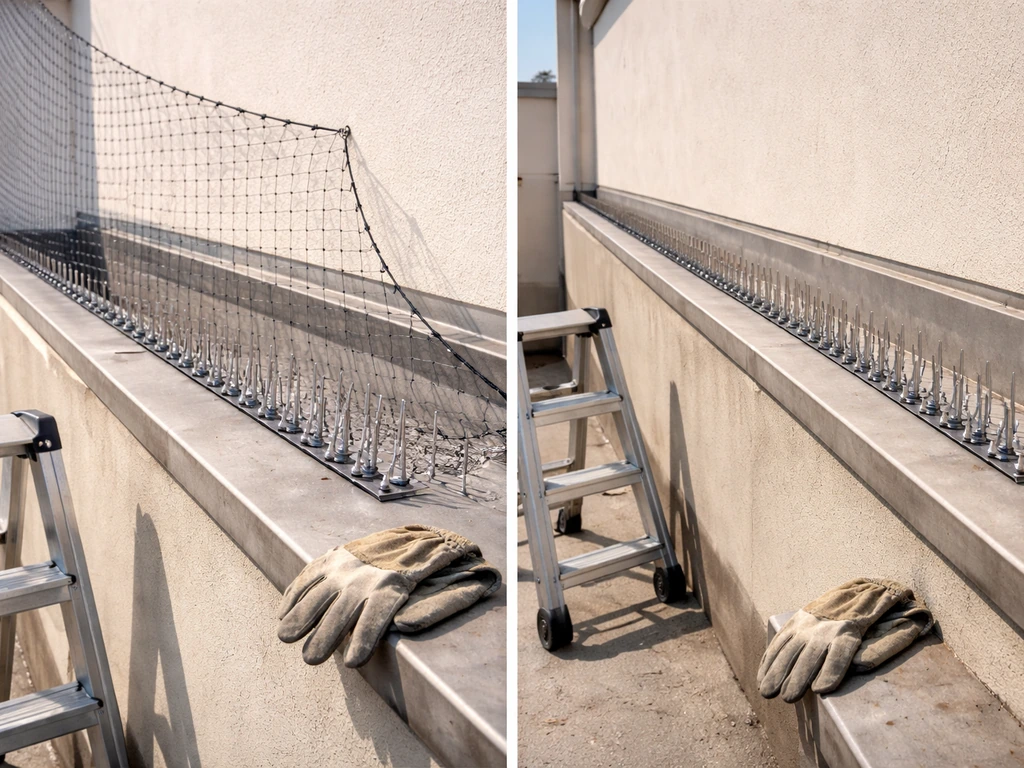
What people mean by 'bird protectors' (and the main types)
The term 'bird protector' gets used loosely online. In practice, it covers several distinct categories of product, and their safety profiles are very different from each other. Understanding what you're actually buying matters a lot before you install anything.
- Physical exclusion netting: mesh barriers that block birds from roosting, nesting, or accessing an area. The USDA APHIS Wildlife Services lists this alongside bird wire and spikes as a primary physical exclusion device.
- Bird spikes: rigid strips of polycarbonate or stainless steel rods attached to ledges, sills, and beams to prevent perching. According to USDA APHIS, they work either by making landing impossible or by pricking birds that attempt to land.
- Bird wire systems: tensioned wire strung between posts along ledges, creating an unstable surface birds won't land on. Less visible than spikes, often used on commercial buildings.
- Visual deterrents: reflective tape, predator decoys (fake owls, hawks), flash tape, and holographic devices that disrupt bird comfort in an area.
- Audio deterrents: ultrasonic devices, distress call speakers, and propane cannons intended to drive birds away through sound. Some of these overlap with the ultrasonic repeller category, which raises its own questions about effects on non-target animals.
- Chemical and gel repellents: sticky gels applied to surfaces and chemical sprays (methyl anthranilate is the most common active ingredient) that irritate or deter birds.
- Electric track systems: low-voltage electrified strips that deliver a mild shock to discourage perching on sensitive surfaces.
Each category carries its own risk profile. A polycarbonate spike strip on a window ledge is a very different proposition from a loosely hung piece of netting over a koi pond. Treating them as the same thing is where most people go wrong.
Safety for people and pets: what can actually hurt you
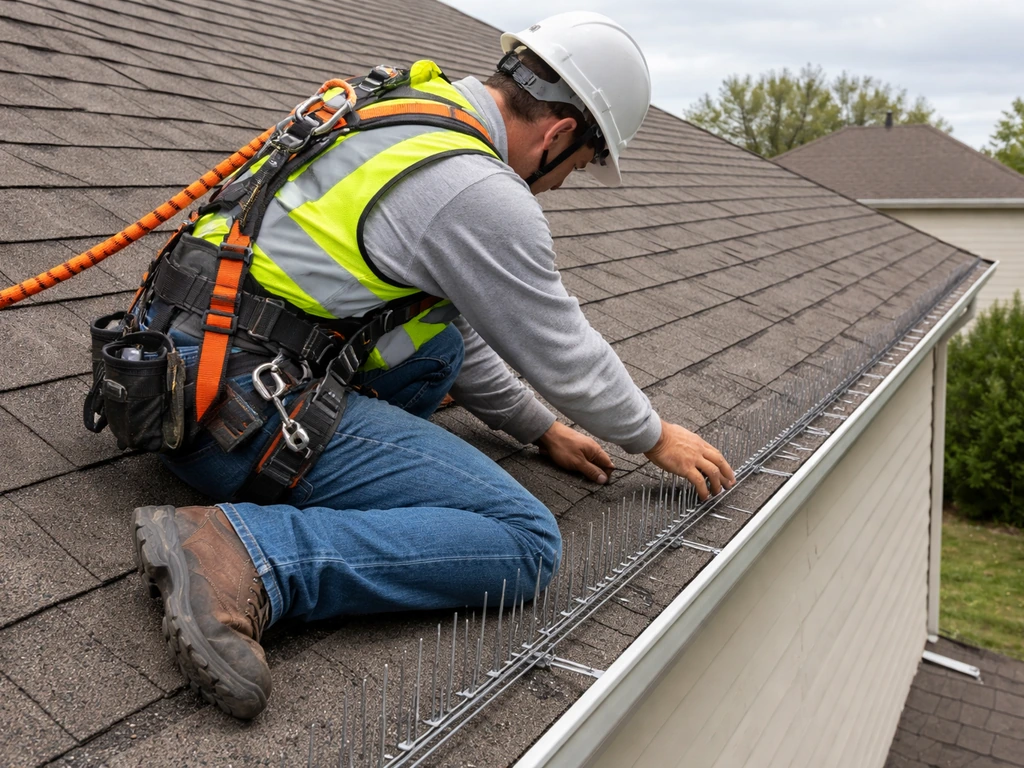
For humans, the biggest risks come during installation rather than day-to-day use. Spike strips involve working at height on rooflines, ledges, and gutters, which means fall risk is real. The spikes themselves can puncture skin and gloves, especially stainless steel varieties. Chemical repellent gels are sticky and difficult to remove from clothing, skin, and pet fur. Methyl anthranilate sprays are derived from grape extract and are generally low-toxicity, but concentrated formulations can cause eye and respiratory irritation if you're spraying without protection in an enclosed space.
Electric track systems deserve a separate mention. These run on low voltage, typically 3 to 9 volts, and are designed to startle rather than injure. That said, small pets, children, and anyone with a pacemaker should not be exposed to them. Always confirm the voltage spec before purchasing and treat the installation area as a restricted zone for vulnerable household members.
For pets, the main concerns are entanglement in loose or sagging netting (cats in particular can get caught), ingestion of gel repellents, and contact with electric tracks. Bird wire and rigid spike strips pose a low but non-zero injury risk if a dog or cat runs across a treated ledge at speed. If you have pets that access rooftop spaces, terraces, or garden walls, spike placement needs to account for their movement patterns.
Safety for birds: where protectors can do real harm
This is the part that gets underemphasized in most product marketing. The RSPCA states directly that bird deterrent netting can trap or kill wild birds if it is not installed or maintained properly. That is not a fringe concern. Loose netting with gaps large enough for a bird to enter but small enough to snare a wing or leg is one of the more common causes of preventable bird injury in urban environments.
The USFWS is even more specific on this point. In guidance on deterring heron and egret breeding, they warn against using loosely hung small-mesh netting because it can cause bird loss and attract regulatory attention under the Migratory Bird Treaty Act. This is important: many of the birds you are likely trying to deter, including herons, egrets, swallows, and sparrows, are protected under federal law. Harming or killing them unintentionally through negligent netting installation can still carry legal consequences.
Spikes present a subtler risk. Properly installed, they deter without injuring. But if debris accumulates in spike strips, birds can get feet or legs caught. Pigeons have also been documented nesting on top of improperly spaced spike strips, essentially defeating the purpose while creating an entanglement hazard. Sticky gels can coat feathers in a way that impairs flight and insulation, which is why most wildlife organizations recommend against gel products in areas where non-target birds are likely to contact them.
Stress is a less visible but still real concern with audio deterrents. Continuous distress-call broadcasts in nesting season can disrupt breeding, cause nest abandonment, and stress non-target species. The evidence on ultrasonic deterrents specifically is mixed, and their effects on pets and wildlife are worth considering alongside the more obvious effects on dogs, which is a topic addressed separately for ultrasonic repellers.
Evidence vs. marketing: what the research actually supports
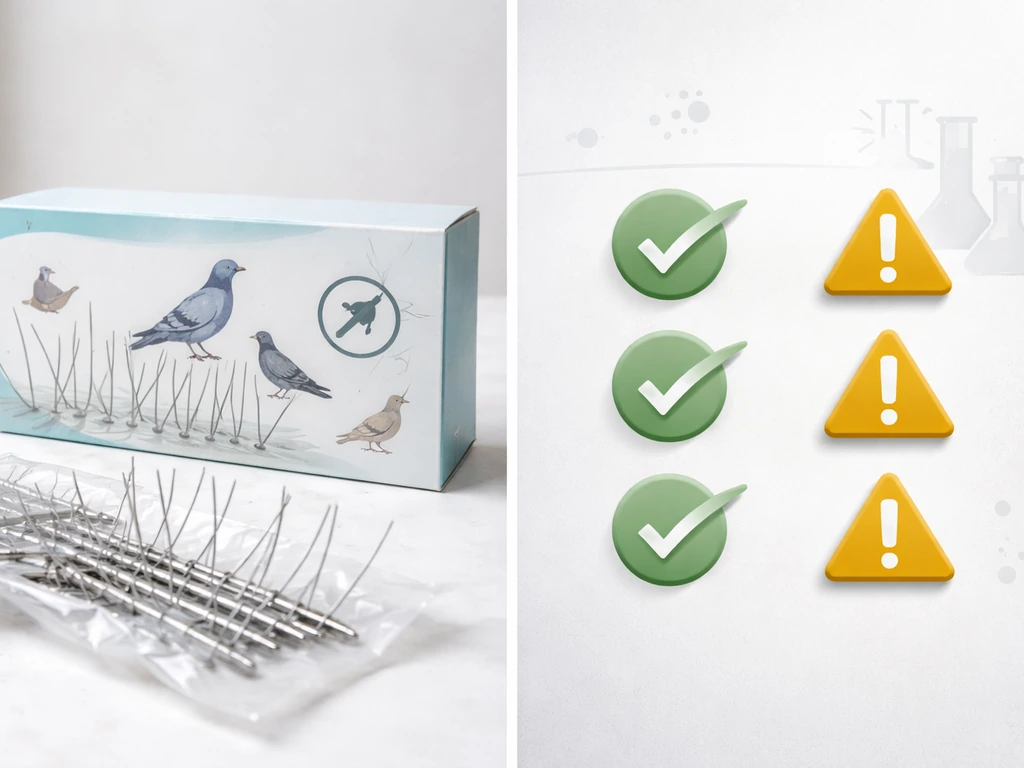
Bird deterrent products are sold with a lot of confident claims, and most of them are only partially backed by evidence. Here is where the science lands, based on what credible agencies have documented:
| Method | Evidence of Effectiveness | Key Safety Concerns |
|---|---|---|
| Properly installed exclusion netting | Highest. USFWS calls it the most effective deterrent method for roost and nest exclusion. | Entanglement/death if loosely hung or small-mesh. Must be maintained regularly. |
| Bird spikes (rigid, polycarbonate or stainless) | Good for ledge perching prevention. Included in USDA APHIS physical exclusion toolkit. | Debris accumulation leads to entanglement. Injury risk during install. |
| Bird wire systems | Good on ledges and beams. Less intrusive than spikes. | Requires professional tensioning; sagging wire creates perch rather than deterrent. |
| Visual deterrents (decoys, flash tape) | Short-term only. Birds habituate within days to weeks. | Minimal safety risk to people or birds, but low utility. |
| Audio/ultrasonic deterrents | Mixed evidence. Distress calls have some effect; ultrasonic claims are poorly supported. | Potential stress to non-target wildlife and pets. |
| Chemical repellents (methyl anthranilate) | Moderate for open spaces (turf, runways). Limited on structures. | Low toxicity but irritating if inhaled; gel forms can coat feathers. |
| Electric tracks | Good for sensitive surfaces like solar panels and signage. | Voltage must be verified; risk to children, small pets, and pacemaker users. |
The reality is that no single product is both universally effective and zero-risk. The USDA APHIS Wildlife Services technical series on bird dispersal techniques makes clear that professional wildlife damage management typically combines methods based on site assessment, species behavior, and local regulations, rather than relying on a single off-the-shelf product.
How to choose the right bird deterrent for your situation
The right choice depends on three things: the species you are dealing with, the location, and how tolerant your setup is of maintenance. Getting any one of these wrong tends to produce a product that either does not work or creates unintended harm.
Match the method to the species and behavior
Pigeons and gulls perching on ledges: rigid spike strips or tensioned bird wire work well. If you're thinking about using bird backpacks, treat them as part of a broader safety plan and verify the exact product type and installation steps first are bird backpacks safe. Starlings or sparrows trying to roost inside a building void or eave: exclusion netting or entry-point blocking is the answer. Herons targeting a garden pond: vertical exclusion netting (properly tensioned, correct mesh size) over the water surface is what USFWS recommends, not loose netting draped over the area. Generalist approaches like visual deterrents and audio devices wear out their welcome fast because birds are smart enough to learn a static decoy is harmless.
Match the method to the location
- Rooftops and ledges: spikes, bird wire, or electric track depending on the surface and access.
- Garden ponds and open water: tensioned exclusion netting with correct mesh size (tight enough to exclude, large enough not to snare).
- Open turf areas (lawns, sports fields): methyl anthranilate spray or propane cannons for short-term dispersal.
- Building voids, eaves, and soffits: physical exclusion with netting or hardware cloth, installed after confirming no active nests are present.
- Solar panels: bird-specific panel skirting and mesh kits designed for that application.
Check local and federal regulations first
Before you install anything, confirm which species you are dealing with. Most songbirds, waterfowl, and raptors in the U.S. are protected under the Migratory Bird Treaty Act. You cannot legally disturb active nests, eggs, or birds of most species without a permit. If you act before nesting begins, exclusion is legal and straightforward. If birds are already nesting, you may need to wait out the season or contact your local USDA Wildlife Services office.
Installation, maintenance, and mistakes that create safety problems
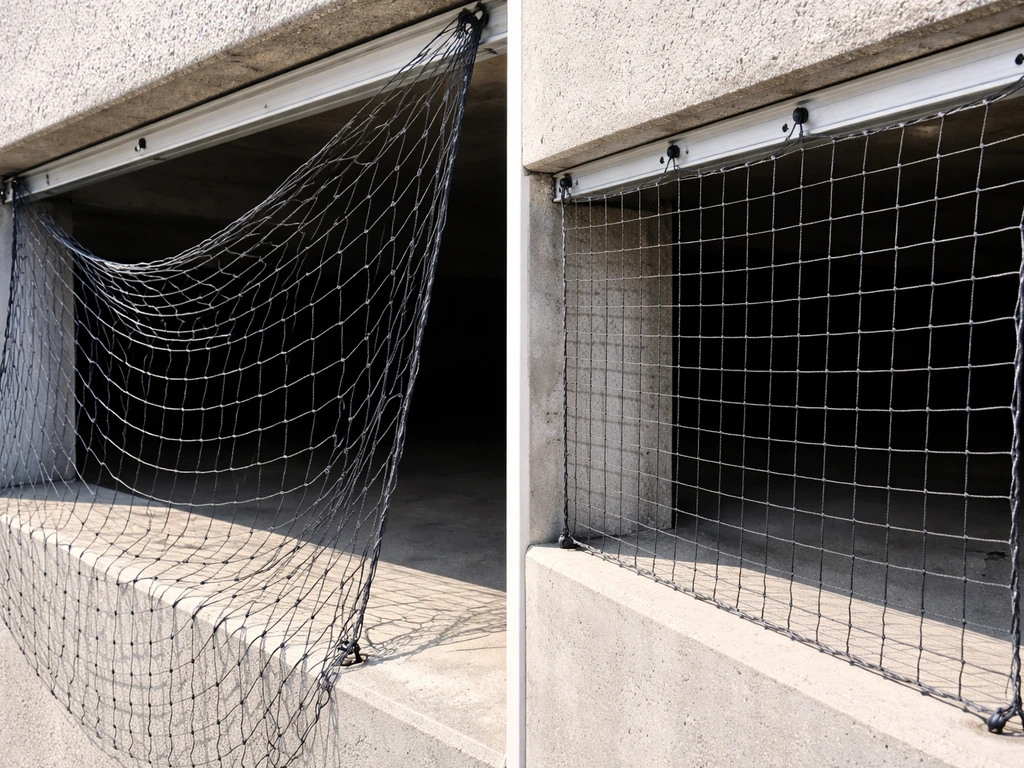
Most of the serious safety failures with bird protectors come down to installation shortcuts and skipped maintenance. Here is what to do and what to avoid:
Installation do's
- Inspect the site before installing anything. Confirm no active nests are present. If they are, stop and consult your local wildlife authority.
- Use PPE during spike and netting installation: cut-resistant gloves, eye protection, and a harness if working at height.
- Tension netting correctly. It should be taut enough to prevent a bird from getting under it or being caught in a sagging section. RSPCA guidance specifically links improper installation to bird trapping and death.
- Use the correct mesh size for your target species. Small-mesh netting that can snare a wing defeats the purpose of humane exclusion.
- Seal all entry points when doing void exclusion, but only after confirming the space is empty.
- Follow manufacturer spacing guidelines for spike strips exactly. Too-wide spacing creates gaps birds can nest between.
Maintenance schedule
Inspect netting and spike strips at least twice a year, and after any major storm. Check for debris accumulation in spike strips, sagging or torn netting, and any signs of entangled birds or animals. Replace UV-degraded netting before it becomes brittle and full of gaps. Gel repellents need reapplication every few months and should be removed from surfaces where non-target bird contact is likely before each reapplication cycle.
Common mistakes that lead to unsafe outcomes
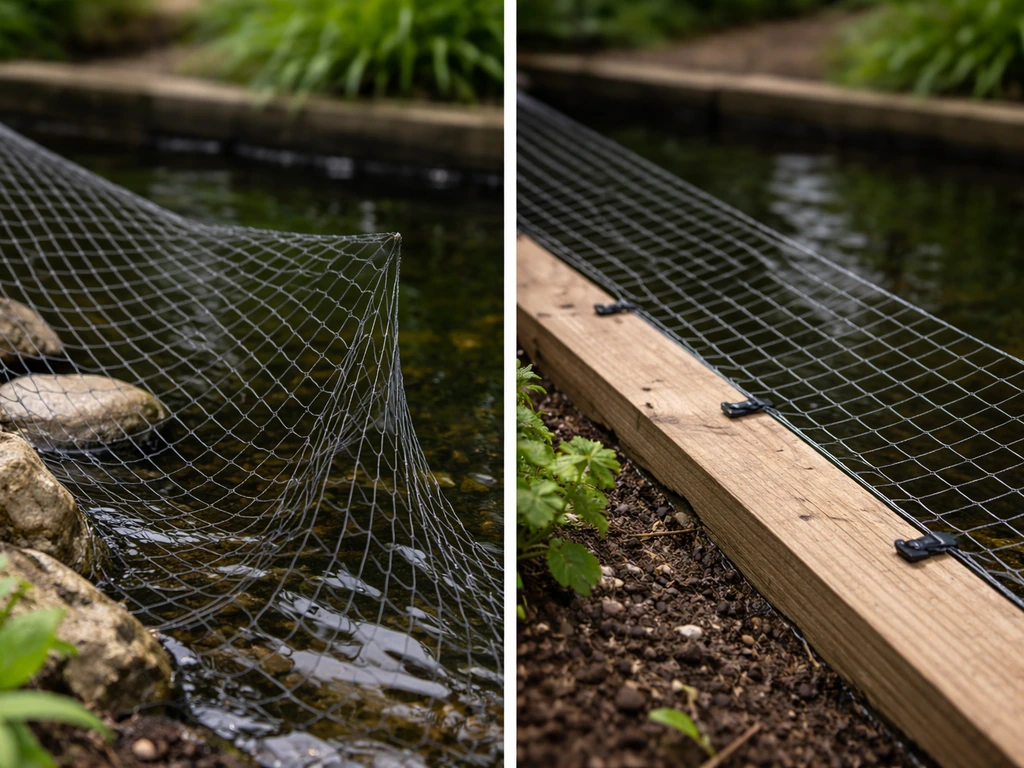
- Draping loose netting over a pond or garden bed without tensioning it. This is the single most common cause of bird entanglement reported by the RSPCA.
- Using netting with mesh sizes too large for the target species, allowing birds to enter but not exit.
- Installing spike strips on a roofline without checking for existing nests in adjacent areas.
- Relying on decoys or flash tape alone as a long-term solution. Birds habituate and the deterrent becomes useless, leaving the area unprotected.
- Applying sticky gel repellent in areas where wild birds perch, rather than just where humans want to protect surfaces.
- Skipping professional assessment for complex sites like commercial rooftops, heritage buildings, or areas with protected species activity.
Alternatives and smarter coexistence approaches
Sometimes the safest and most effective approach is not a product but a habitat change. Birds come to a location because it offers something: food, shelter, water, or nesting substrate. Removing or modifying that attractant is often more durable than any deterrent you can install. If you meant “bird shoes” as footwear-like protectors, the plantar fasciitis angle is often discussed alongside whether any shoe design is actually appropriate for that condition are all bird shoes good for plantar fasciitis.
- Habitat modification: remove food sources (uncovered bins, accessible compost, fallen fruit), eliminate standing water that attracts wading birds, and trim vegetation that provides nesting cover where it is not wanted.
- Exclusion first, deterrent second: physical exclusion that blocks access to the specific resource birds want is more effective and longer-lasting than trying to scare birds away from an open area.
- Professional wildlife management assessment: for persistent or large-scale problems, USDA APHIS Wildlife Services offers site assessments and can advise on legal, species-appropriate management strategies.
- Timing: if you need to prevent nesting in a particular location, install exclusion before nesting season rather than during it. In most of the U.S., this means acting before late February to early March.
- Coexistence by design: in garden settings, redirecting birds to a dedicated area with feeders and a birdbath can reduce pressure on protected plants or water features without any deterrent at all.
It is also worth noting that 'bird protector' sometimes refers to protective gear worn during close contact with birds, harnesses for pet birds, or accessories used during bird handling. If you are coming from that angle, the safety considerations are entirely different and involve fit, material, and stress on the individual bird rather than the deterrent and exclusion questions covered here. Those topics follow their own logic, and the same careful, evidence-first approach applies.
The bottom line: bird protectors are safe when matched to the right situation, installed with care, and maintained consistently. If you are specifically considering Hexclad for bird protection, check its bird-safety guidance and installation risks before using it. The hazards are not imaginary, but they are almost entirely preventable. Choose physical exclusion over chemical or auditory methods wherever possible, tension your netting properly, inspect twice a year, and confirm your local regulations before you act. That covers the vast majority of situations most people will encounter.
FAQ
Are bird protectors safe for pets indoors, or only outdoors?
Safety depends on the specific category, but indoors the risk shifts from entanglement to contact with treated surfaces and access to installation points. For example, spike strips on window ledges or tracks inside a room can still injure a dog’s paws during an accidental dash. If your pet can reach the treated area, treat the installation zone as off-limits and block access until everything is fully secured and free of debris.
How can I tell if a netting installation is “safe enough” to avoid trapping birds?
Look for gaps that are smaller than a bird’s ability to enter but large enough to prevent snaring, and ensure the netting is fully tensioned with no sagging pockets. After installation, run a hand-check along seams and anchor points, then re-check after the first wind or rain event. Any loose section that forms a pocket is a warning sign because it can function like a snare even when the rest looks tight.
Do bird spikes or wire harm birds if they’re properly installed?
Properly installed rigid spikes or correctly tensioned bird wire are designed to deter without puncturing. The key caveat is maintenance: if debris accumulates, birds can get their feet or legs caught and pigeons may nest on top of improperly spaced strips. A “safe” installation is one you can keep clean and gap-free, not one you set once and forget.
Are chemical bird repellents safe for birds and for humans?
Some repellents are low-toxicity by design, but safety is highly dependent on concentration and your exposure conditions during application. Sticky gels are a bigger practical concern than acute poisoning because they can coat clothing, skin, pet fur, and feathers, potentially impairing flight. If you use any chemical repellent, treat the process as protective-gear work (especially around eyes and enclosed spaces) and remove residue from areas where non-target contact is likely.
If I’m using audio or ultrasonic deterrents, are they safe for neighbors and household pets?
Even when the devices are not physically harmful, the risk is behavioral and stress-related. Distress-call style audio can disrupt nesting and may cause nest abandonment in certain species during breeding season. Ultrasonic effects can also vary and may be more noticeable to pets, so if you share walls with neighbors or have noise-sensitive animals, plan for a short test period and be ready to switch methods if you see stress signs.
Can I use bird protectors if birds are already nesting?
Often you should not. In many U.S. situations, most active nests, eggs, and birds are protected, and disturbing them can require a permit. If you find active nesting, the safer path is to wait out the season where possible or contact your local USDA Wildlife Services office for a compliant, species-specific plan rather than improvising with exclusion products.
What maintenance schedule actually prevents most safety problems?
A practical rule is to inspect at least twice yearly, and also after major storms, because wind and debris change the coverage and alignment quickly. For spike strips, specifically check for debris buildup and any new spacing issues. For netting, look for sagging, torn areas, and loosened anchor points. For gel repellents, plan for removal of residue from contact-prone surfaces before each reapplication cycle.
Are bird protectors safe on rooflines if I install them myself?
The main risk for humans is often fall-related rather than the deterrent itself. Spike-based systems typically require working at height on ledges and gutters, so safety equipment and a stable access plan matter as much as the product. If you cannot access the area safely and can secure anchors correctly, it’s usually safer to use a professional or choose a lower-risk exclusion method.
Will “bird leashes” or backpack-style containment products be safe for my situation?
They can be, but only if the product type and setup match the target behavior and the fit or attachment is not creating entanglement. Because marketing terms are inconsistent, verify the exact design and how it prevents both escape and snagging. Treat containment-style products as part of a broader safety plan, not a guaranteed stand-alone fix, especially where pets or other animals can interfere.
Do bird protectors help legally, or can they still get me in trouble?
Even if a product is intended to deter, careless netting installation can harm protected birds, which can create regulatory risk. Also, guidance in some contexts recommends avoiding loosely hung small-mesh netting because it can cause bird loss. The safest approach is to identify the species and location, then confirm local rules before acting, particularly if herons, egrets, swallows, or similar protected species are involved.