
Yes, European starlings (Sturnus vulgaris) are genuinely classified as a nuisance bird in the United States and many other parts of the world, and that classification is backed by substantial economic and ecological data, not just frustrated homeowners. A population of roughly 150 million birds across North America, documented crop losses approaching $189 million annually across five fruit crops alone, verified roles in pathogen transmission at livestock facilities, and thousands of recorded aircraft strikes all put starlings firmly in the nuisance category. That said, 'nuisance' is not a simple label: the degree of harm varies enormously by context, and the bird itself is not the villain of a nature documentary. Understanding where starlings actually cause measurable problems, and where concern is overblown, is what makes effective management possible.
Are Starlings a Nuisance Bird? Evidence, Risks & Controls Guide

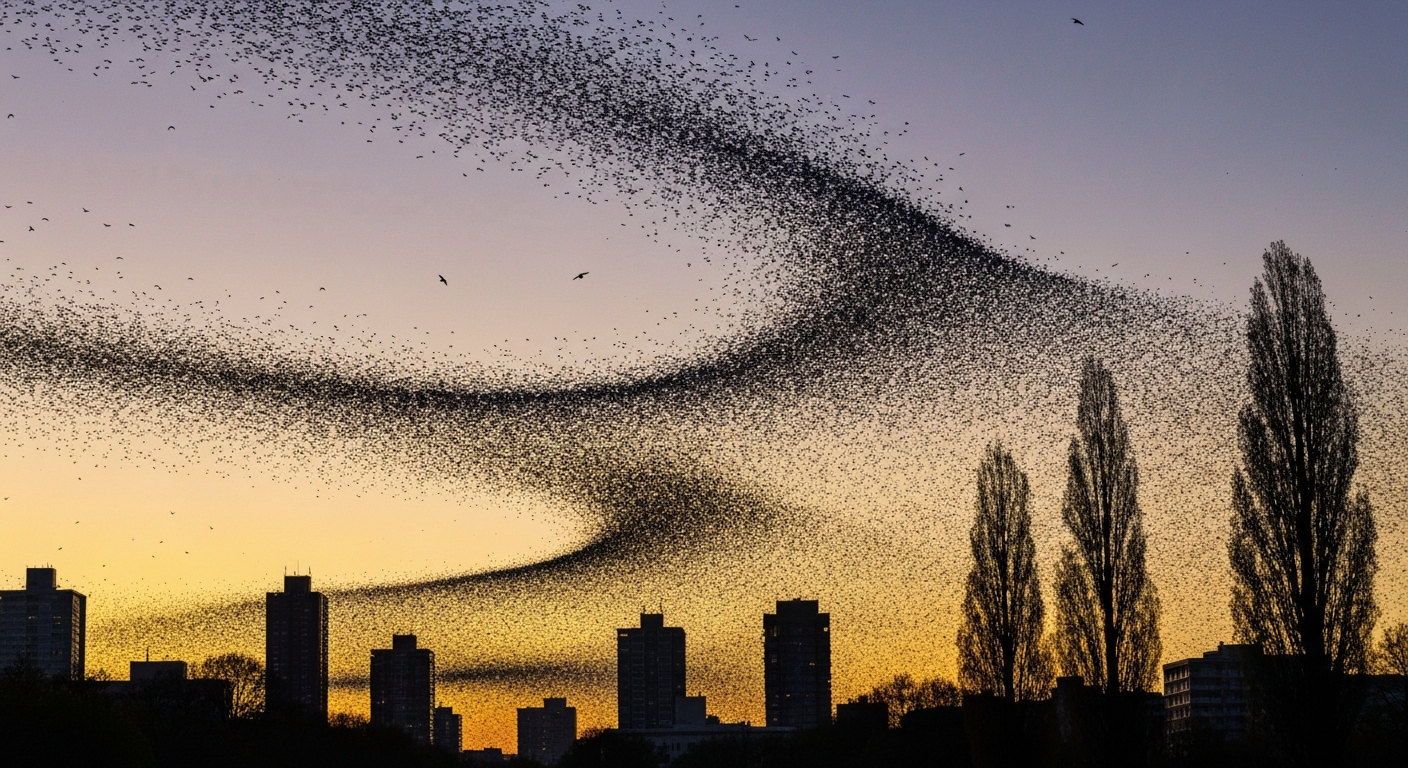
Are European starlings actually a nuisance? The honest answer
USDA-APHIS formally classifies European starlings as an invasive species in the United States and identifies their primary conflict zones as agricultural settings and winter urban roosts. That is a yes, with context. The nuisance designation is well-earned when starlings are roosting in the tens of thousands over a feedlot, stripping a cherry orchard, or fouling the roof of a commercial building. It is less clear-cut when a handful of birds are foraging in a suburban yard. The harm is real, but it is concentrated, seasonal, and strongly tied to specific land uses.
The reality is that starlings were introduced to North America from Europe, have no natural predators equipped to keep pace with their reproductive rate, and compete aggressively with native cavity-nesting birds. Those factors, combined with their adaptability to human-modified landscapes, are why they remain on the short list of bird species that land managers, farmers, airport wildlife officers, and public-health professionals take seriously. Whether they rise to the level of a 'pest' in any given situation depends on scale, location, and what resources are at stake.
Identifying European starlings: how to tell them apart from blackbirds and similar species
One reason starling nuisance reports get muddled is that most people call several entirely different birds 'blackbirds.' When someone reports a 'blackbird problem,' they might mean a starling, a common grackle, a red-winged blackbird, a brown-headed cowbird, or in some contexts a crow or raven. These species overlap in habitat and behavior, but they differ enough that ID matters for management and legal reasons. For more detail on identifying and distinguishing a 'black bird problem', see the related internal guide.
blank" rel="noopener noreferrer">The Cornell Lab of Ornithology describes the European starling as a stocky, short-tailed bird measuring 19 to 21 cm, roughly the size of a robin but with a chunkier profile. In non-breeding plumage, adults are glossy black with white speckles; in breeding season, the speckles wear away and the bill turns bright yellow. That yellow bill is one of the most reliable field marks. Their foraging posture, strutting across the ground with quick, jerky head movements, is also distinctive.
| Feature | European Starling | Common Grackle | Red-winged Blackbird | American Crow |
|---|---|---|---|---|
| Length | 19–21 cm | 28–34 cm | 17–24 cm | 40–53 cm |
| Bill shape | Pointed, triangular; yellow in breeding season | Long, heavy, slightly curved | Conical, medium | Large, heavy, black |
| Tail | Short, square | Long, keeled (V-shaped in flight) | Medium, rounded | Medium, fan-shaped |
| Plumage | Glossy black with white speckles; iridescent green/purple | Iridescent black with purple-blue head | Black with red-yellow shoulder patches (male) | All black |
| Eye color | Dark brown | Bright yellow | Red-orange (male) | Dark brown |
| MBTA protection (USA) | Not protected (non-native) | Protected | Protected | Protected |
Field guides including Sibley, Peterson, Audubon, and National Geographic all note the same key separators: the triangular yellow bill, the short square tail, and the speckled non-breeding plumage. In flight, starlings look compact and pointed-winged, almost like a small flying triangle, which is noticeably different from the longer-tailed grackles. University extension IPM guides add that eye color (dark in starlings, yellow in grackles) and tail shape are reliable even at a distance. Getting the ID right is not pedantic: it determines what management options are legally available.
The documented nuisance behaviors and what they actually cost
Roosting: scale and fouling
Winter roosts are where starling nuisance behavior peaks. A single roost can hold hundreds of thousands of birds, occasionally exceeding a million in the U.S. Midwest. The accumulated droppings under such a roost create a genuine sanitation problem: pavement, vehicles, and structures become coated, and the nitrogen load can kill vegetation. Businesses located near high-use roost trees report significant cleaning costs. More on the health angle below, but the physical fouling problem alone is enough to justify management in urban and commercial settings.
Crop damage: the numbers behind the complaints
A 2012 multi-state field survey found that bird damage to sweet cherries ranged from 3 to 25 percent of the crop and damage to grapes ranged from 4 to 10 percent. Growers in the surveyed states estimated annual bird damage at more than $70 million to wine grapes, $51 million to sweet cherries, and $33 million to blueberries, for a total across five fruit crops of approximately $189 million. Anderson and colleagues (Crop Protection, 2013) conducted an economic analysis of that same survey data and estimated the aggregate benefits of bird damage management at $737 to $834 million, which illustrates how the costs of inaction can far exceed management expenses. Starlings are not the only species involved in these losses, but they feature prominently in the assessments because of their flock sizes and their preference for soft fruits.
Livestock facilities: feed theft and disease vectors
USDA-APHIS estimates that a flock of 1,000 starlings using a concentrated animal feeding operation (CAFO) for 60 days will consume approximately 1.5 tonnes of cattle feed, at a direct cost of $200 to $400 per 1,000 birds. Beyond the feed loss, starlings move freely between feed storage, water troughs, and manure, creating conditions for pathogen transfer. There are documented cases where starling activity at feedlots increased feeding costs and reduced production metrics, not as a hypothetical but as a recorded operational outcome.
Noise
Starlings are skilled mimics and highly vocal, capable of reproducing sounds from other birds, machinery, and human speech. Large roosts produce sustained noise that has led to documented complaints from residents and businesses near roost sites, particularly in areas where roosts are established in commercial or mixed-use zones. While noise alone rarely triggers formal wildlife management interventions, it is a consistent quality-of-life factor that drives requests for dispersal or exclusion.
Competition with native birds
Starlings are aggressive cavity nesters that evict woodpeckers, bluebirds, purple martins, and other native hole-nesting species. This is an ecological harm that does not show up in economic loss estimates but matters significantly to conservation biologists and anyone monitoring native bird populations. It is one reason starlings appear on lists of the most ecologically damaging invasive birds in North America.
What the evidence says about disease risk to humans and pets
This is an area where accurate information matters, because it sits at the intersection of genuine risk and internet-era alarm. The reality is that starling roost droppings do present a public-health concern, but the risk to healthy adults in normal outdoor environments is low. The more serious concerns arise in occupational settings, at livestock operations, and when people disturb or clean large roost accumulations without protection.
The most documented pathogen concern is Histoplasma capsulatum, a fungal organism that grows in soil enriched by bird or bat droppings. CDC and NIOSH guidance explicitly notes that outbreaks of histoplasmosis have been linked to blackbird roosts, including roosts involving starlings. CDC/NIOSH notes that Histoplasma capsulatum grows in soil enriched by bird or bat droppings, that outbreaks have been linked to blackbird roosts (including starlings), and recommends preventing accumulation of droppings and using dust‑suppression and respiratory PPE when cleaning roost sites Histoplasma in the Environment: An Overview — CDC/NIOSH (Histoplasmosis guidance). The risk comes primarily from inhaling disturbed dry droppings or contaminated soil, which is why CDC recommends preventing large accumulations and using dust suppression and respiratory PPE when cleaning roost sites. Casual contact with droppings in a park or yard is very different from shoveling a decade of accumulated guano under a roost tree.
At livestock facilities, the data are more specific. Carlson and colleagues (Journal of Applied Ecology, 2011) documented starlings' role in the spread of Salmonella within CAFOs, showing the birds can carry and deposit multiple Salmonella serovars across feed and water sources. Cernicchiaro and colleagues (Zoonoses and Public Health, 2012) found farm-level associations between wild bird density, including starlings, and E. coli O157 prevalence in dairy herds in Ohio between 2007 and 2009. These are not theoretical pathways: the microbiological and epidemiological work has been done, and the connections are statistically grounded.
For pet owners, the direct risk from incidental starling contact is low, but outdoor cats and dogs that consume dead or sick birds can be exposed to Salmonella. Pet birds housed outdoors face a different concern: starlings can transmit diseases through shared airspace or contaminated surfaces if they are attracted to outdoor aviaries. Keeping feed and water covered, and preventing starlings from landing near outdoor pet enclosures, is a reasonable precaution.
One query that surfaces in this topic area is the phrase 'plague and is it a bird,' sometimes appearing in the context of the game Plague Inc. The short answer is that starlings are not a significant vector for plague (Yersinia pestis), which is primarily rodent-associated. The legitimate concern with starlings is fungal respiratory disease and bacterial contamination at scale, not plague transmission. Treating that distinction carefully is exactly the kind of fact-versus-folklore separation that matters here. For readers wondering about the specific query 'plague inc is it a bird', see the related discussion on plague inc is it a bird for context about how that game frames disease vectors.
Invasive bird status: how starlings got here and what that means legally
European starlings were intentionally introduced to Central Park in New York City in the early 1890s by a group attempting to establish all birds mentioned in Shakespeare's works in North America. From that initial release of roughly 60 birds, the species expanded to occupy virtually all of the continental United States, southern Canada, and parts of Mexico within decades. The current North American population is estimated at approximately 150 million birds, making it one of the most successful avian introductions in ecological history.
The phrase 'invasive bird meaning' captures an important distinction: an invasive species is not simply any non-native animal, but one that has established a self-sustaining population outside its native range and causes measurable harm to native species, ecosystems, or human interests. European starlings meet all three criteria. USDA-APHIS formally applies that classification to this species.
The invasive classification has direct legal implications. Under U.S. law, the Migratory Bird Treaty Act (MBTA) protects most wild birds from take without a federal permit. However, European starlings, along with rock pigeons and house sparrows, are explicitly exempt from MBTA protections in many management contexts because they are non-native species. This means that federal depredation orders and permits allow management and lethal removal of starlings under defined regulatory procedures without the permit requirements that would apply to protected native species. State laws vary, so confirming local regulations before any lethal control is still necessary, but the federal framework is substantially more permissive for starlings than for native blackbirds, grackles, or crows.
Are birds pests? Where starlings fit among other pest bird species
The question of whether birds qualify as pests is both definitional and contextual. A bird becomes a pest when its behavior causes harm to human property, health, agriculture, or safety at a scale that warrants management action. By that standard, yes, several bird species qualify in specific circumstances, and starlings are among the most consistently cited examples of pest bird species in North America.
Other commonly cited examples of bird pests include rock pigeons (urban fouling and structural damage), house sparrows (nest site competition and agricultural damage), Canada geese (turf and water quality degradation near golf courses, parks, and airports), and in some regions, double-crested cormorants (fish farm depredation). For additional context and specific species profiles, see examples of bird pest. Starlings share space on that list primarily because of their agricultural and aviation impacts, and because their flock size amplifies damage in ways that smaller populations of other species do not.
It is worth being precise here: most bird species are not pests. The vast majority of wild birds cause no measurable harm to human interests and provide ecological services (pest insect control, pollination support, seed dispersal) that are economically valuable. The 'pest' designation applies to a small subset of species, primarily adaptable generalists that thrive in human-modified environments, like starlings. Treating all black birds, or all birds in urban settings, as a homogeneous problem is both ecologically inaccurate and practically counterproductive.
Transportation and aviation: aircraft strikes, rail collisions, and operational risks
Aviation: strike frequency and damage costs
Starlings are a recognized flight-safety hazard at airports globally, and the data on this are specific. USDA-APHIS reports 7,534 combined blackbird and starling strikes to civil aircraft in the United States between 1990 and 2018, producing more than $9 million in documented damage. Analysis of the FAA National Wildlife Strike Database by Ross and colleagues (Wildlife Society Bulletin, 2025) identified European starlings among the species with the highest strike counts, recording 1,757 starling strikes in a recent multi-year dataset.
The risk profile is partly a function of flock behavior. Starlings fly in dense, coordinated murmurations that can envelop an aircraft engine in a fraction of a second. A single strike by one bird is usually manageable; an encounter with a flock is not. The 1960 collision between a Lockheed Electra and a starling flock near Boston, which resulted in 62 fatalities, remains one of the most cited examples in aviation wildlife strike literature and was a direct driver of subsequent FAA wildlife hazard management requirements.
FAA Advisory Circulars (including AC 150/5200-38 and AC 150/5200-36B) require certified Part 139 airports to assess wildlife hazards and implement Wildlife Hazard Management Plans. These plans must address monitoring, reporting to the FAA Wildlife Strike Database, and active mitigation for flock species including starlings. The guidance covers everything from habitat modification (removing food sources and attractive vegetation) to active dispersal (pyrotechnics, falconry, laser deterrents) to lethal control where necessary.
Rail and train collisions: a different risk profile
The 'two trains and bird' problem is a real phenomenon in railway safety and environmental assessment, though it operates differently from aviation wildlife strikes. On-board video recording studies of high-speed rail lines, including work published by Domènech and colleagues (Frontiers in Ecology and Evolution, 2017), document bird-train collisions along rail corridors, with passerines (small songbirds in the size class that includes starlings) frequently appearing in collision data. Rail-line mortality studies have recorded rates ranging from tens to hundreds of birds per kilometer per year on some high-speed rail routes, with infrastructure profile and surrounding land use identified as the key predictors of collision frequency.
Starlings are not the dominant species in all rail collision datasets, but they appear in collision records particularly where rail lines pass through agricultural or mixed-use landscapes where starling flocks forage. The concern for rail operators is less about equipment damage (a starling strike rarely damages a train) and more about collision mortality accumulation in environmental impact assessments, species management obligations, and in rare cases, the potential for high-density flocks to create sensor or visibility interference. Rail operators in Europe, where Sturnus vulgaris is native, have incorporated bird-aware infrastructure design into newer high-speed line planning.
How management differs by sector
Airports and aviation authorities
Certified airports in the U.S. operate under FAA Wildlife Hazard Management Plan requirements, which give aviation wildlife officers a broad and legally supported toolkit. Habitat modification is the first line of response: removing standing water, managing grass height to reduce invertebrate food sources, and eliminating perch structures. Active deterrents including pyrotechnics (shell crackers, screamers), broadcast distress calls, falconry programs, and laser devices are used to break up roosts and discourage flock use of airfield environments. Lethal control, typically via lethal trapping or shooting by USDA-APHIS Wildlife Services personnel, is used when non-lethal methods are insufficient. The key outcome data are reported back to the FAA Strike Database, allowing refinement of hazard management plans over time.
Rail and transport authorities
Rail operators approach starling and bird management primarily through infrastructure design and environmental management along rights-of-way. This includes vegetation management to reduce roosting and perching opportunities near tracks, particularly at stations and in tunnels. In high-speed rail environmental assessments in Europe, mitigation measures such as modified track-side fencing profiles and noise barriers have been evaluated for their effect on bird collision rates. Reporting obligations vary by jurisdiction but are increasingly incorporated into environmental impact assessments for new rail infrastructure.
Farms and agricultural operations
Agricultural operators have the widest documented experience with starling management and the most economically validated reasons to act. Exclusion netting over high-value crops is the most effective and durable solution but also the most capital-intensive. Scare devices (propane cannons, visual deterrents, falconry patrols) reduce damage when deployed consistently, though birds habituate to static deterrents over time and rotation of methods is necessary. USDA-APHIS Wildlife Services offers direct technical assistance and, where warranted under depredation permits, lethal population management at feedlots. Because starlings are exempt from MBTA protection, farmers have more flexibility in legal removal options than they would with native species, though EPA-registered chemical methods (like DRC-1339 avicide) require specific federal authorization.
Urban property managers and homeowners' associations
For urban and suburban property managers, the primary concerns are fouling of structures, noise from roost sites, and occasionally nesting in HVAC systems or roof voids. Exclusion is the most practical long-term solution: bird netting, post-and-wire systems, angled ledge deterrents, and sloped surfaces prevent landing and nesting on building features. Spiking and gel deterrents provide partial protection on ledges. Removing food attractants, particularly exposed waste food near commercial premises, reduces the incentive for large flocks to use an area at all.
Homeowners' associations typically do not have direct legal authority to authorize lethal control on private property but can establish standards for deterrent installation and work with municipal or county wildlife services when roosts reach a public-health threshold. Calling a licensed wildlife control operator is appropriate when roosts are large enough to create sanitation hazards, when birds are nesting inside building structures, or when deterrent installation requires equipment or expertise beyond what a property manager can reasonably deploy.
Documented mitigation outcomes
The economic modeling by Anderson and colleagues (Crop Protection, 2013) estimated that the aggregate benefits of bird damage management across five fruit crops and five U.S. states ranged from $737 to $834 million, against an estimated damage cost of $189 million without management. That gap reflects the value of active intervention versus no-management scenarios and is the most comprehensive published cost-benefit framework for bird damage management in U.S. agriculture. At airports, consistent implementation of wildlife hazard management plans has been associated with measurable reductions in strike rates at facilities where pre- and post-intervention data are available, though site-specific reporting varies.
Practical next steps: decide, monitor, or call a professional
Not every starling interaction requires a management response. A useful decision framework looks like this: if you are dealing with a few birds foraging in a yard or garden, monitoring and minor habitat modification (covering compost, removing accessible food) is sufficient. If you are managing a roost of more than a few hundred birds on a commercial structure or near a livestock facility, professional assessment is warranted. If you are operating a Part 139 airport and starlings are using the airfield, you have a regulatory obligation to address it under your Wildlife Hazard Management Plan.
- Confirm the species identification before initiating management: starlings are not MBTA-protected, but grackles, crows, and native blackbirds are.
- Start with exclusion and habitat modification; these have the longest-lasting effect and carry no legal risk.
- For farms and livestock facilities, contact USDA-APHIS Wildlife Services for technical assistance and, if necessary, depredation permit authorization.
- For large urban or commercial roosts presenting a sanitation or public-health concern, engage a licensed wildlife control operator with documented bird management experience.
- For airports and aviation facilities, follow FAA Advisory Circular requirements and document all management actions in your Wildlife Hazard Management Plan.
- For rail operators dealing with bird mortality along rights-of-way, incorporate mitigation into environmental management plans and consult published infrastructure design guidance.
- When cleaning any large roost accumulation, follow CDC guidance: use PPE including N95 respiratory protection, wet down droppings before disturbance, and avoid creating dry aerosols.
The evidence is clear that European starlings cause real and quantified harm in specific contexts, from the fruit orchard to the airport taxiway. What the evidence does not support is treating every starling sighting as a crisis or assuming that the same management response fits every situation. Understanding the species accurately, knowing which legal protections apply (or do not), and matching the management response to the documented scale of the problem is where science-based nuisance bird management actually starts.
FAQ
Are European starlings (Sturnus vulgaris) a nuisance bird?
Yes — with important nuance. European starlings are widely considered a nuisance/invasive bird in many regions (especially North America and parts of Australasia) because they form large communal roosts, damage fruit crops and livestock feed, foul property, create noise, and contribute to pathogen transmission in concentrated‑animal settings. The severity varies by context: low for isolated backyard sightings, moderate to high for commercial agriculture, livestock operations, urban roosts, and transport/aviation facilities.
How do starlings differ from 'blackbirds' and other similar species (ID tips)?
Key ID points: starlings are stocky, short‑tailed (19–21 cm), with a triangular/pointed bill that is yellow in breeding season and darker in winter; plumage is glossy iridescent with white speckles outside breeding season. Grackles/blackbirds are usually longer‑tailed, slimmer, and have a different bill/head profile; crows/ravens are much larger with heavier bills. Use bill color, tail length/shape, overall size and iridescence to separate starlings from other 'black' passerines.
What nuisance behaviors do starlings show, and are there quantified impacts?
Documented nuisance behaviors: large communal roosting (nuisance fouling, odor, structural damage), crop depredation (fruit and grapes), feed consumption in livestock facilities, noise, and potential pathogen/vector roles. Quantified impacts: USDA‑APHIS and peer‑reviewed surveys estimate North American population ≈150 million and crop losses in surveyed states ~ $189 million for five fruit crops (2012 survey), with management benefits estimated $737–$834 million. APHIS estimates a flock of 1,000 starlings at a CAFO for 60 days can consume ≈1.5 tonnes of cattle feed (cost ~$200–$400 per 1,000 birds). Aircraft strike databases record thousands of starling/blackbird strikes and millions of dollars in damage.
Are starlings an invasive species and what does that mean legally/management‑wise?
Yes — European starlings are non‑native and classified as invasive in the U.S. and many other regions. 'Invasive' here means they established self‑sustaining populations following introduction and cause ecological, economic, or social harm. Legally, because they are non‑native, management options differ from protected migratory species: many jurisdictions allow removal or control under fewer permitting constraints. In the U.S., certain non‑native species (starlings, rock pigeons, house sparrows) are often exempt from some Migratory Bird Treaty Act protections; wildlife managers use depredation orders/permits and follow federal, state, and local regulations when conducting lethal control.
What are the specific risks starlings pose to transportation and aviation?
Risks to aviation: starlings form flocks that increase bird‑strike frequency (numerous strikes reported in FAA/NWSD). Their flocking behavior raises probability of multiple‑bird strikes, which can damage engines, airframes, and cause delays. Airports are required to assess and manage wildlife hazards (FAA guidance, Wildlife Hazard Management Plans). For rail/high‑speed rail, studies show passerines (including starlings) are recorded in collisions; infrastructure and adjacent land use influence mortality and service interruptions. Management differs by sector: airports use active monitoring, habitat modification, exclusion, dispersal and coordinated wildlife control; rail operators focus on vegetation/right‑of‑way management, detection where feasible, and environmental assessment/mitigation measures.
What humane and practical prevention or control measures work for starlings?
Nonlethal/habitat approaches are first line: exclusion (netting over orchards; sealing building roost sites), habitat modification (remove roost attractants, trim vegetation, reduce food/water sources), deterrents (visual/pyrotechnic deterrents, falconry, trained dogs, noise devices—effectiveness often short‑term), and population reduction where necessary via coordinated methods. For agriculture: netting, scare tactics integrated with timing, and targeted removal of problem flocks. For livestock: secure feed storage, cover feed, and exclude birds from feed areas. Lethal control (shooting, toxicants where permitted) is legally and ethically constrained; it should be conducted by licensed professionals under local regulations and as part of an integrated program.