
Bird nests are not inherently dangerous, but they can create real, specific risks depending on where they are, which species built them, and whether the nest is active. The actual dangers break down into three categories: defensive aggression from parent birds protecting eggs or chicks, health risks from droppings, parasites, and fungal spores in nesting debris, and property hazards from poorly placed nests in gutters, vents, or electrical boxes. Most nests you find in a garden shrub or tree pose almost no risk at all. The ones built inside your dryer vent, on your solar panels, or directly over a frequently used doorway are worth taking seriously.
Are Bird Nests Dangerous? Risks, Safety Steps, and Removal

Marcus Whitmore
30 Jun 2026
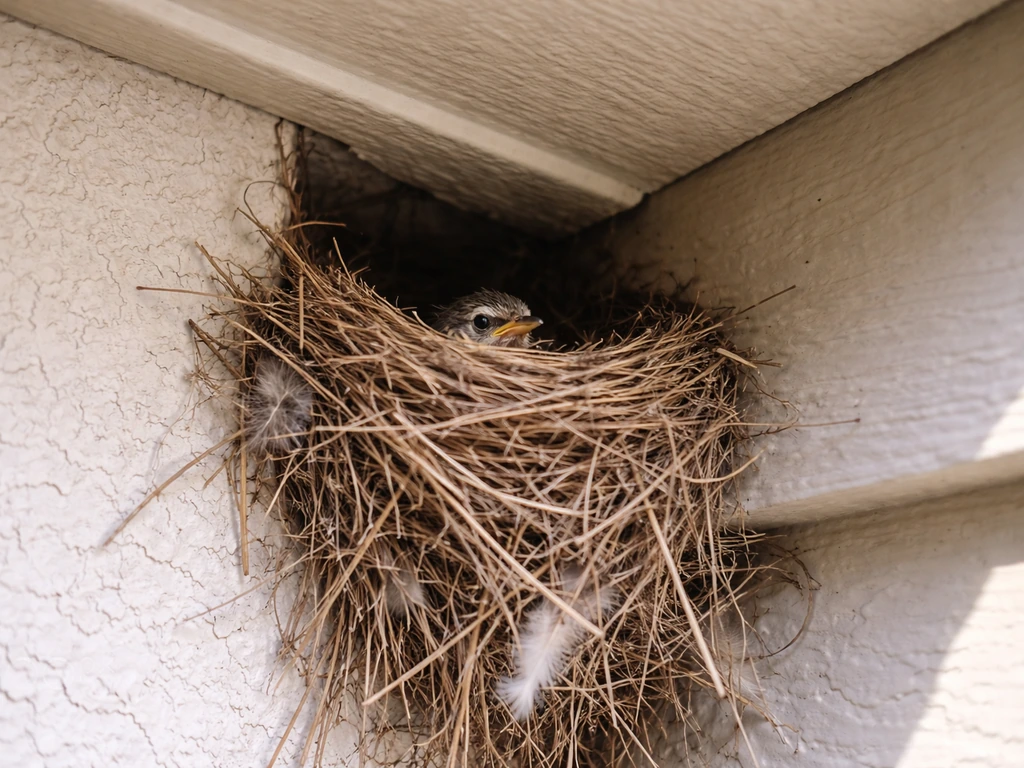
How bird nests can be risky (and when they're not)
The risk from a bird nest is almost entirely context-dependent. A robin nest tucked into a hedge ten feet from your back door is not a threat. The same robin nest built inside a wreath hanging on your front door is a completely different situation, because every time you open the door you are entering what the bird perceives as its nest's defense perimeter.
The core risk factor with active nests is proximity combined with foot traffic. Birds defending eggs and chicks will behave in ways they never do at other times of year. Massachusetts Audubon specifically names Northern Mockingbird, American Robin, Gray Catbird, and Blue Jay as species that will pursue or physically attack people and domestic animals when nesting close to human activity. This is not random aggression. It is a predictable, well-documented anti-predator response that stops almost completely once the chicks fledge.
Inactive nests (ones with no eggs, no chicks, and no adults coming and going) carry zero aggression risk. The remaining concern with inactive nests is purely about what has accumulated in and around them: droppings, parasites, fungal growth, and debris. That is a much more manageable problem than it sounds, and it is worth separating myth from real concern before you decide what to do.
Common nest danger scenarios: bites, scratches, disease, pests, and allergies
Defensive bites and scratches
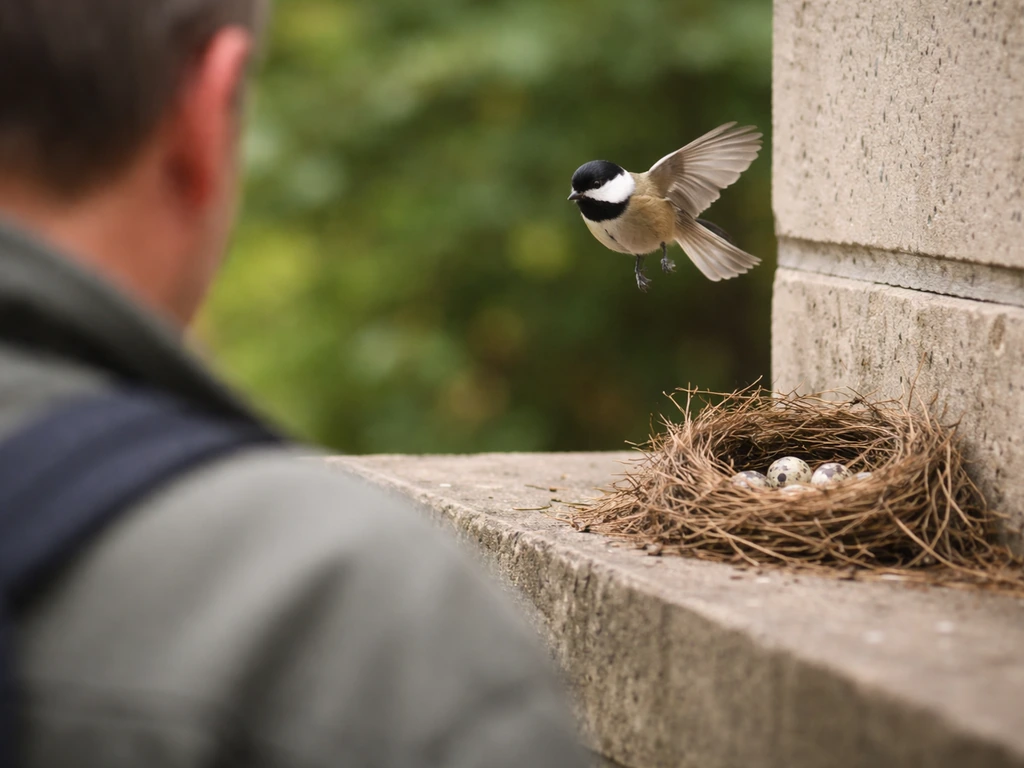
Dive-bombing is the most common defensive behavior you will encounter. Audubon describes this dive-bombing as a strong nest-defense anti-predator behavior where birds fly directly at an intruder to drive it away from the nest blank" rel="noopener noreferrer">Dive-bombing is the most common defensive behavior you will encounter. Birds fly directly at an intruder's head to drive them away from the nest, and they are surprisingly accurate. The USDA Forest Service has documented these defensive interactions extensively in cavity-nesting bird studies. Canada geese take it further: the US Fish and Wildlife Service notes that blank" rel="noopener noreferrer">attacking geese will strike perceived nest predators with their wings and bite. Goose bites are forceful enough to bruise and break skin, particularly on children and small dogs. Songbird strikes rarely break skin, but a mockingbird or red-winged blackbird hitting the back of your head repeatedly is startling and can cause minor scratches. If you or someone gets hit, treat any bird scratches seriously, wash the area promptly, and watch for infection, especially if the scratch is deep or breaks the skin minor scratches. The practical takeaway is that if a bird is actively dive-bombing you, give it a wider berth rather than trying to push through.
Disease exposure from droppings and nest materials
The genuine disease concern with bird nests comes from accumulated droppings and decomposing organic matter in nesting materials, not from the nest structure itself. Dried droppings and debris can harbor Histoplasma capsulatum, a fungal pathogen that causes histoplasmosis when spores are inhaled. This is the most clinically significant bird-related respiratory risk. It is most associated with large-scale accumulations (think roost sites with years of layered droppings) rather than a single backyard nest, but any situation involving enclosed spaces, dried droppings, and disturbance without respiratory protection warrants real caution.
Parasites and pests
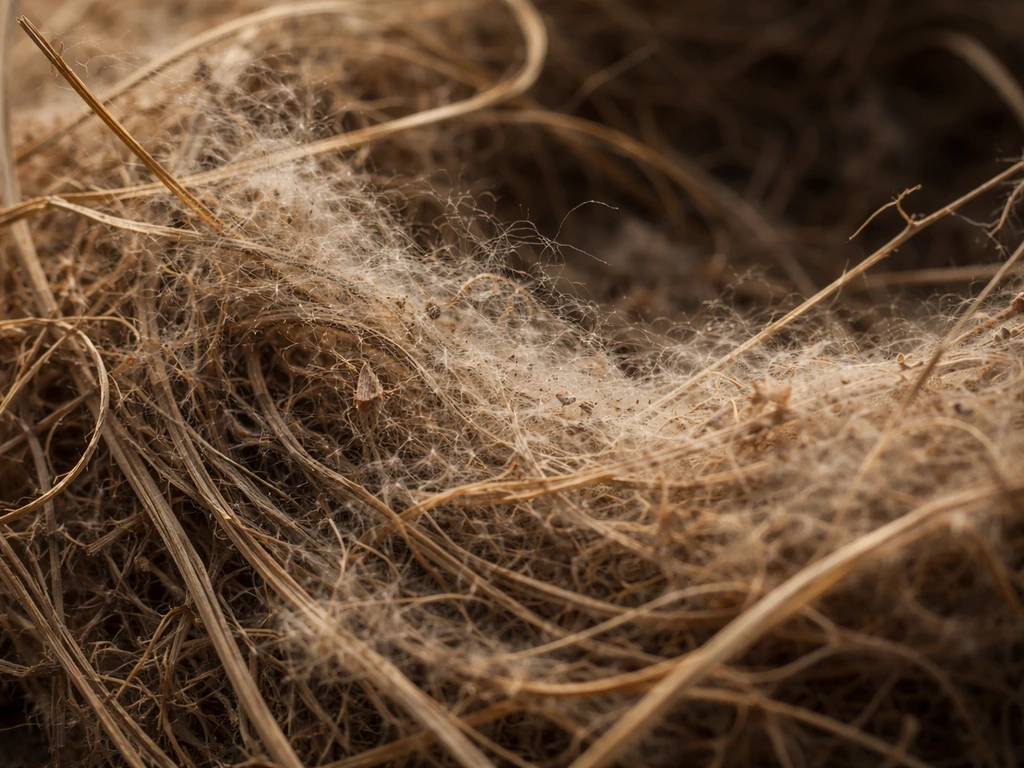
Active bird nests are living ecosystems. They commonly harbor bird mites (Dermanyssus gallinae and Ornithonyssus sylviarum), lice, fleas, and occasionally soft ticks. When a nest goes inactive and the birds leave, these parasites sometimes migrate into the surrounding structure looking for a new host, which can include people and pets. This is the most underappreciated nest hazard, particularly for nests built inside wall cavities, attic spaces, or window air conditioning units. The infestation typically resolves on its own within a few weeks once the host birds are gone, but it can be intensely itchy and disruptive in the meantime.
Allergic reactions
Nesting materials (dried grasses, feathers, animal hair, and fungi) are legitimate allergen sources. People with existing respiratory sensitivities or mold allergies can experience worsened symptoms if a nest is built in or near an HVAC intake, a frequently opened window, or an attached garage. This is worth knowing about but is not a reason to panic. Improving ventilation and keeping the nest away from air intakes is usually sufficient.
Health risk reality check: what diseases and parasites actually matter
A lot of internet content exaggerates bird nest health risks dramatically. The reality is that for the vast majority of people encountering a backyard nest, the disease risk is close to zero, provided they are not disturbing the nest, handling nesting material bare-handed, or working in an enclosed space with heavy accumulation. Here is what the evidence actually supports:
| Risk | Realistic Concern Level | Conditions That Elevate Risk |
|---|---|---|
| Histoplasmosis (fungal, inhaled) | Low for casual exposure; moderate for enclosed cleanup | Enclosed space, dried droppings, no respiratory PPE |
| Bird mites migrating indoors | Moderate after nest goes inactive inside structures | Nest inside wall cavity, attic, or HVAC; warm weather |
| Salmonellosis from droppings | Low; requires ingestion via contaminated hands or surfaces | Touching nest debris then touching face/food |
| West Nile or arbovirus (mosquito-mediated) | Low; birds are reservoir hosts, not direct transmitters to humans | Mosquito populations near standing water where birds nest |
| Psittacosis (Chlamydia psittaci) | Very low; mainly associated with parrots and poultry, not wild passerines | Close contact with sick birds, not healthy nests |
| "Poisonous" nests or toxic bird contact | Not a real risk; no North American bird species produces toxins dangerous to humans via nest contact | Not applicable |
The bottom line: bird nests do not routinely make people sick. Healthy adults with normal immune function who briefly encounter a nest are at negligible risk. The calculus changes when you are talking about enclosed spaces, heavy accumulation, immunocompromised individuals, young children, or pets that mouth debris. In those specific situations, taking protective measures is the right call.
Property and structural risks: droppings, damage, and fire hazards
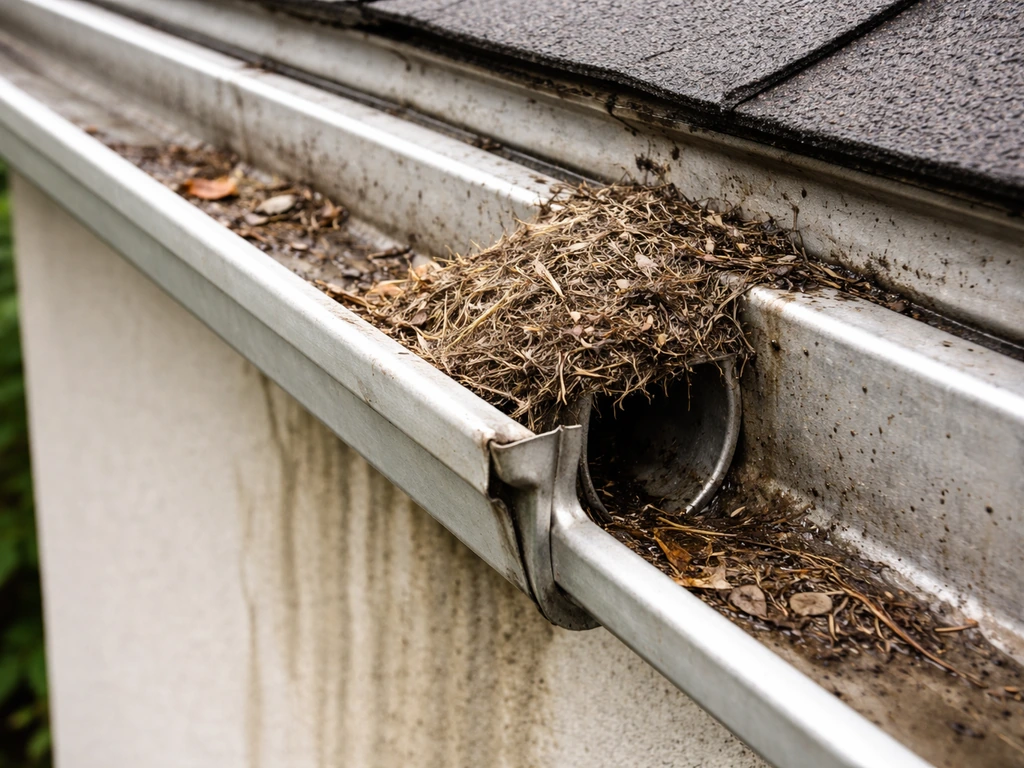
Nest placement is often the deciding factor in whether a nest is a nuisance, a real hazard, or simply a temporary guest. A nest in a tree is almost never a property issue. A nest in the wrong location is a different story.
- Gutters and downspouts: Nest material compacted into gutters blocks drainage, which can cause water to back up under roofing and into fascia boards. This is one of the most common and genuinely costly bird-nest property issues.
- Dryer and bathroom exhaust vents: Birds, particularly house sparrows and starlings, readily nest in unscreened vent openings. This blocks airflow, reduces appliance efficiency, introduces flammable dried material near a heat source, and can become a genuine fire risk in dryer vents.
- Electrical boxes, junction boxes, and transformers: Nests built in or near electrical equipment create both fire risk and electrocution risk for the birds themselves. This is a documented utility problem in rural and suburban areas.
- Solar panels: Nests built underneath solar panels are an increasingly common complaint. Debris and droppings accumulate in the gap between the panel and the roof, reducing panel efficiency, voiding some manufacturer warranties, and creating the same fire-adjacent concern as nests near any heat-generating surface.
- Roof vents and soffits: Nesting in these locations allows moisture, debris, and eventually parasites direct access to attic spaces.
- Corrosion from droppings: Bird droppings are highly acidic (pH around 3 to 4.5). Prolonged accumulation on painted surfaces, metals, and roofing materials causes accelerated corrosion and staining that is expensive to remediate.
Aviation professionals already know the risks extend well beyond residential property. Nesting birds near runways and taxiways create bird strike risk, and nests inside aircraft components (hangars left open, wheel bays, engine nacelles during extended downtime) are a documented pre-flight safety concern. The FAA and individual operators maintain nest-removal protocols for precisely this reason.
When to remove a nest and when to leave it alone
This is where the legal dimension matters and most people get it wrong. Under the Migratory Bird Treaty Act (MBTA), the US Fish and Wildlife Service is clear: it is illegal to destroy nests that contain eggs, chicks, or young birds still dependent on the nest. This covers the vast majority of wild songbirds, raptors, shorebirds, and waterfowl in the US. The MBTA does not protect every species (house sparrows, European starlings, and rock pigeons are not covered), but if you are not certain of the species, assume it is protected.
The practical framework for decision-making looks like this:
| Situation | Recommended Action | Legal Status |
|---|---|---|
| Active nest with eggs or chicks, low-risk location (tree, hedge) | Leave it. Wait for fledging (usually 2 to 6 weeks depending on species). | Removal illegal under MBTA for most species |
| Active nest in a dangerous location (dryer vent, electrical box) | Contact a licensed wildlife rehabilitator or USDA Wildlife Services; do not remove yourself during active nesting if protected species | Requires permit for interference; document the hazard |
| Inactive nest, no eggs, no dependent young, problematic location | Remove it, block the entry point, and clean the area with appropriate PPE | Generally legal once nest is confirmed inactive and birds gone |
| Inactive nest, low-risk location (tree, empty planter) | Leave it or remove it by preference; no real urgency | Legal either way |
| House sparrow or European starling nest (unprotected species) | Can be removed at any stage, including with eggs | Legal; these are not MBTA-protected |
| Nest with obvious structural hazard (blocked dryer vent, active fire risk) | Document, consult USDA Wildlife Services, and prioritize safety | Permits can be expedited for genuine safety hazards |
One thing worth saying directly: the waiting period feels longer than it is. Most small songbirds fledge within 10 to 21 days of hatching. If you can live with the situation for a few weeks, doing so is almost always the right call. The nest will be empty, the birds will be gone, and you can then clean up and block future access without any legal or ethical complication.
Safe next steps you can take today
Assess the situation first
Before doing anything else, figure out whether the nest is active. Watch from a distance (at least 10 to 15 feet) for five to ten minutes. Are adult birds coming and going? Can you hear chicks? Is there a parent sitting on the nest? If yes, the nest is active and your immediate options are limited to creating distance and reducing disturbance. If the nest appears abandoned and you see no bird activity for 24 to 48 hours, it is likely inactive.
Managing aggression from defensive birds
If a bird is actively dive-bombing a path you need to use, there are a few simple measures that work. Wearing a wide-brimmed hat significantly reduces strike contact. Carrying an open umbrella overhead when passing through the area is the most reliably effective deterrent. Avoiding the area entirely during peak morning activity hours (roughly 6 to 10 AM) reduces encounters considerably. Do not try to scare the bird away with noise or gestures: this typically escalates the defensive response. The behavior will stop on its own within a few weeks once the young fledge.
Cleanup PPE and safe removal practices
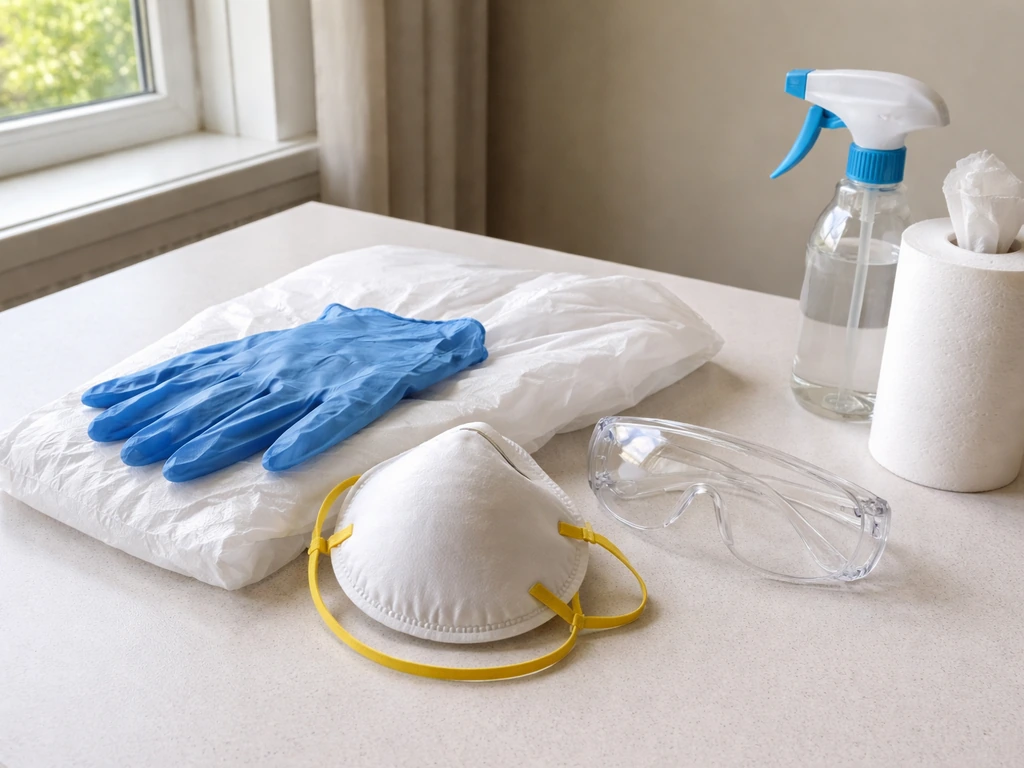
If you are removing an inactive nest or cleaning up droppings, treat it like a basic hazmat situation rather than a casual task. If you are worried about whether bird scooters are dangerous, the same idea applies: avoid disturbing birds and their nesting areas are bird scooters dangerous. The key steps are straightforward:
- Wear an N95 respirator or better, not a standard dust mask. This is the single most important protective measure against fungal spore inhalation.
- Put on nitrile or latex gloves and dispose of them after. Do not touch your face during cleanup.
- Lightly mist dry nesting material and droppings with water or a dilute bleach solution (1 part bleach to 10 parts water) before disturbing them. This suppresses dust and aerosolized spores.
- Place all debris directly into a sealed plastic bag. Do not shake or blow nest material.
- Disinfect the area with the bleach solution after removal.
- Wash hands thoroughly and change clothes after working in heavily contaminated areas.
- Block the entry point (mesh, hardware cloth, vent covers) after cleanup to prevent re-nesting.
Deterrence steps that actually work
The most effective deterrence is physical exclusion: capping open vents with appropriate mesh, installing bird netting over eaves and solar panels, and using hardware cloth to close off any gap larger than an inch. If you are considering electric heaters or other heat-emitting devices near birds, keep them positioned so they do not create nesting-friendly gaps or venting access solar panels. These measures stop nesting before it starts without harming birds. Reflective tape, plastic predator decoys, and ultrasonic devices have inconsistent results at best. If the goal is to prevent future nesting in a specific location, physical barriers are the only reliably effective option.
If you are managing a recurring problem on a larger scale (commercial building, aviation facility, agricultural property), engaging USDA Wildlife Services is the right move. If a Bird scooter is broken or damaged, you should report it to Bird so the company can handle pickup and safety checks what happens if you break a bird scooter. They can provide legal, species-specific management plans that go beyond what most property owners can accomplish independently.
The overall picture here is one of manageable, well-understood risks rather than scary unknowns. Bird nests are worth paying attention to when they are in the wrong place, but the typical backyard nest in a tree or shrub deserves a few weeks of peaceful coexistence more than it deserves anxiety. If you're also thinking about other bird-related hazards around the home or pets, the same evidence-based approach applies across the board, whether the question involves bird interactions directly or devices and equipment used near birds. If you are wondering specifically, bird scarers are often misunderstood, and it is reasonable to check whether they create any real risk to people or pets.
FAQ
How can I tell if a nest is active without getting too close or triggering more aggression?
Use short, distant observation, from about 10 to 15 feet away, and look for a pattern over 5 to 10 minutes, adult birds flying in and out, a parent sitting low or on the nest, or any visible begging behavior from chicks. Occasional presence without repeated arrivals can still mean activity, but if there is zero adult movement and no detectable chick sounds for a full day or two, it is more likely inactive.
Is it dangerous to touch or pick up nesting material or a nest that looks abandoned?
Touching dried debris is where most people run into health and allergy problems, because droppings and moldy materials can release irritants and fungal spores when disturbed. Even if the nest seems “empty,” assume it may have parasites or contaminated material. If cleanup is needed, use gloves and avoid dry brushing or shaking debris into the air.
What should I do if a bird nest is in a dryer vent, garage door track, or other enclosed intake area?
Treat it as a high priority placement, because disturbance can drive birds into machinery or vents and because droppings and nesting debris can build up in hidden spaces. Focus on exclusion first, seal openings with appropriate mesh or hardware cloth, and avoid running fans that could spread dust or debris until the area is cleared after nesting ends.
Can bird mites or ticks spread from a nest to my home?
Yes. When a nest becomes inactive, some mites or soft ticks can crawl into surrounding structures such as wall cavities, attics, or near window units if they are seeking a new host. Expect the problem to be most noticeable after birds leave and it may cause intense itch for people and pets, in that case professional pest inspection or Wildlife Services can be worth it.
If a bird hits me, how do I decide whether it is just a scare or something to get checked?
Seek urgent medical care for head or face injuries that involve suspected concussion, uncontrolled bleeding, trouble breathing, or eye involvement. For skin contact, wash promptly and monitor for worsening redness, swelling, warmth, or pus, especially if the skin broke. Even small repeated impacts can be more than a minor scratch.
Are bird nests safe around children and pets, especially if they might mouth debris?
It is usually low risk for brief outdoor exposure, but it becomes higher risk if pets chew nesting material or if children touch and then rub their eyes or put fingers in their mouths. Keep pets off the area during active nesting and cleanup, and after nesting ends, remove debris carefully and wash hands thoroughly before normal play resumes.
Is mold the main danger from bird nests, or is there a specific disease concern?
Allergen and irritant exposure from dried nesting material is common, but the main clinically serious concern discussed in nest debris is inhalation of spores tied to histoplasmosis risk from heavily accumulated droppings. That risk is most relevant when you have enclosed spaces with years of layered droppings or repeated roosting, not typical single nests in open garden areas.
How long should I wait before assuming the nest is inactive?
A practical rule is about 24 to 48 hours of no adult coming and going and no signs of chicks, after you have confirmed you are not missing activity. If you are unsure, extend observation to a few more days. If it is in a high-traffic or enclosed location, delay disturbance until you have a clearer read on activity.
Do repellents like tape, decoys, or ultrasonic devices actually prevent nesting?
They are often unreliable because birds may habituate or ignore them. The consistently effective approach is physical exclusion that blocks access points, for example capping vents with mesh and sealing gaps larger than about an inch with hardware cloth, then keeping the area blocked until the birds would have no safe access.
What if I accidentally damage a nest while trying to exclude birds or fix a vent?
Stop the work immediately, assess whether eggs or chicks could be present, and avoid further disturbance. In the US, the Migratory Bird Treaty Act can apply, so the safer next step is to contact the appropriate local wildlife authority or a permitted wildlife removal professional to determine the correct, legal course before cleanup or repair.
If the nest is on my property but not in a dangerous spot, can I just leave it indefinitely?
Often yes, as long as it is not creating a health, allergy, or property hazard and it is not interfering with safe access. The birds will typically fledge within about 10 to 21 days of hatching, then you can handle cleanup later. Leaving it for the long term can increase accumulation and the chance of parasites or irritant buildup, especially in enclosed or sheltered areas.