
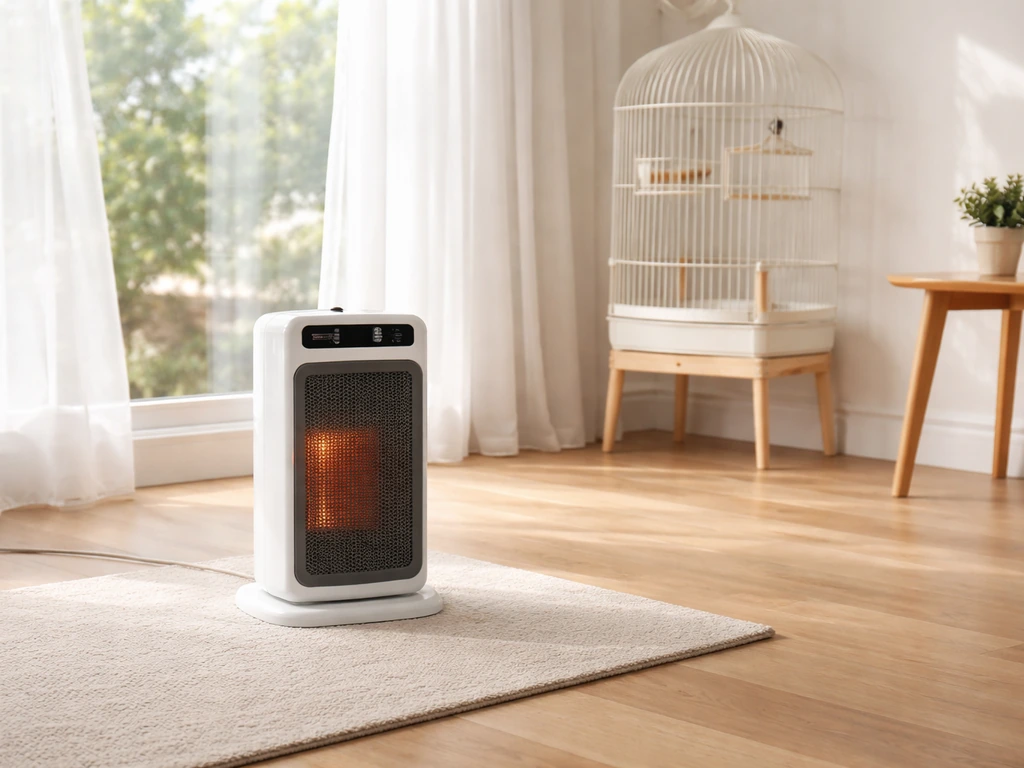
Most electric heaters are reasonably safe to use around pet birds, provided you choose the right type, place them correctly, and keep the room ventilated. The real danger is not electricity itself but the materials some heaters contain, specifically non-stick PTFE coatings that release toxic fumes when overheated, and the fire or burn risks that come with any poorly positioned space heater. A ceramic or radiant electric heater with no non-stick coatings, placed at a safe distance from the cage, is a very different risk profile from a cheap space heater with a coated heating element running at full blast in a poorly ventilated room.
Are Electric Heaters Bird Safe? Practical Safety Guide

Marcus Whitmore
26 Jun 2026
Why birds are more vulnerable than other pets
Birds have a highly efficient respiratory system that extracts oxygen very effectively, which is exactly why they are so sensitive to airborne hazards. The same anatomical feature that makes them strong flyers makes them absorb airborne toxins faster and at lower concentrations than dogs, cats, or humans. This is not folklore. It is the reason canaries were historically used in coal mines as early-warning systems for toxic gases. That sensitivity matters a lot when you are evaluating heaters, because what barely registers as an odor to you can be a genuine respiratory emergency for a parrot or finch.
The actual risks: what heaters can do to birds
PTFE and non-stick fumes
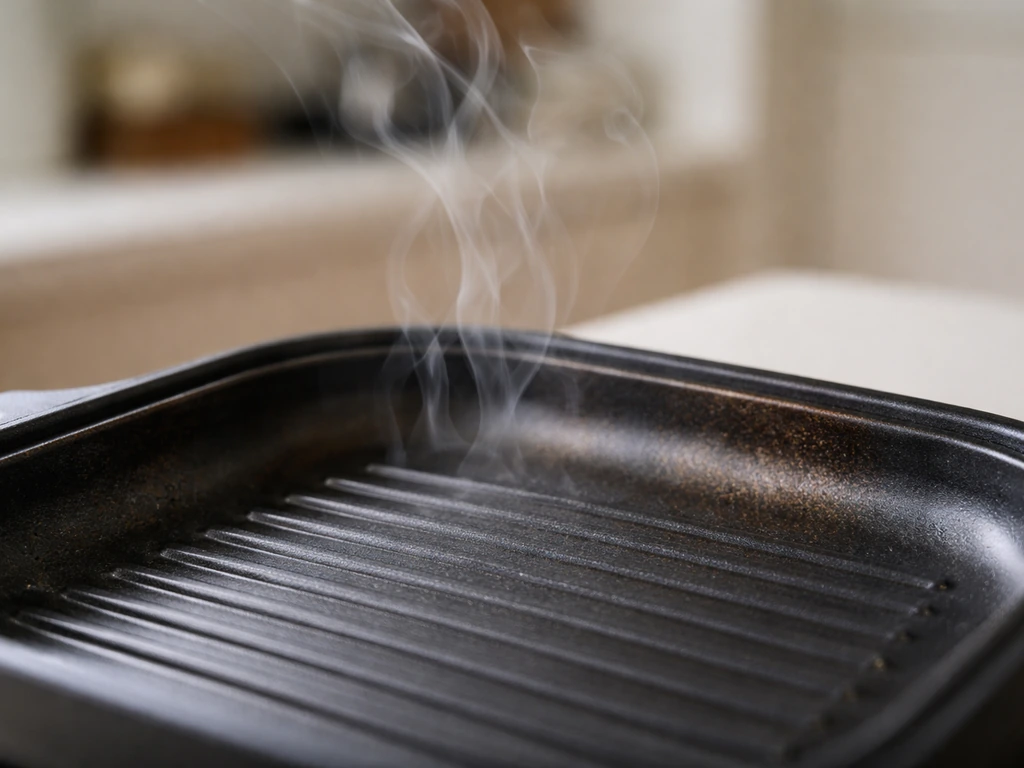
This is the most serious and least obvious risk. PTFE (polytetrafluoroethylene), the chemical behind non-stick coatings like Teflon, releases toxic fumes when overheated, generally above around 500 degrees Fahrenheit. Some space heaters, heat lamp covers, and older portable heaters have components coated with these fluoropolymers. When those components get too hot, the fumes they release can kill a bird within minutes. This is called PTFE toxicosis, and both Petco and SpectrumCare flag space heaters as a documented source of exposure, not just non-stick pans. If you buy a new electric heater and notice a chemical smell the first time it runs, that off-gassing is a real warning sign, not just a factory smell you can ignore.
Direct heat and burns
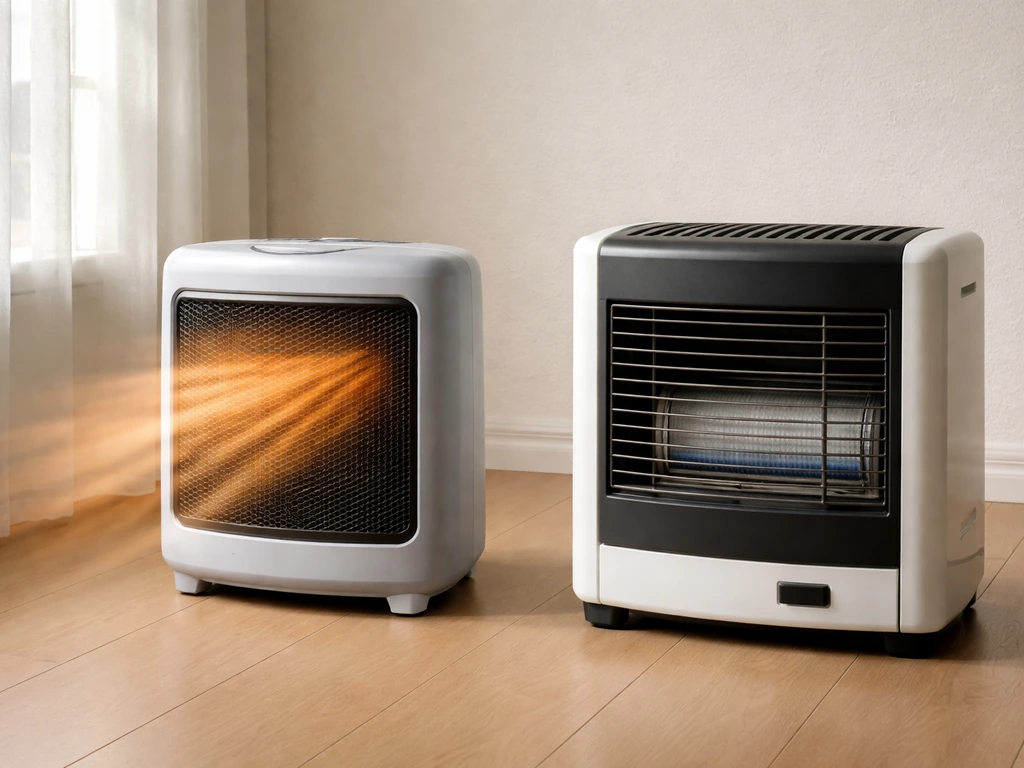
Birds that can access a heater directly, especially free-flight birds or those in open-top enclosures, can land on or brush against hot surfaces and sustain serious burns. Convection heaters with exposed elements are the highest risk here. Even radiant heaters can cause burns if a bird is positioned too close. Heat lamps present a similar issue: a sick bird placed under one without temperature regulation can overheat quickly. The principle is the same as with any heat source. Distance and barriers matter.
Carbon monoxide and combustion byproducts
Purely electric heaters do not produce carbon monoxide during normal operation because there is no combustion. The CO risk comes from gas heaters, kerosene heaters, wood-burning stoves, and similar combustion-based heating. If your space heater is plugged into a wall outlet and relies entirely on electrical resistance or infrared emission to produce heat, CO is not a realistic concern under normal use. However, VCA Animal Hospitals notes that CO from other household appliances (furnaces, gas stoves, attached garages) is a genuine avian hazard, so it is worth having a CO detector in any home with birds regardless of what type of heater you use.
Smoke, particulates, and VOCs
A malfunctioning heater, a heater running at maximum output in a dusty room, or one placed where it can scorch nearby materials like curtains or furniture will produce smoke or particulates that stress a bird's airways. New heaters sometimes off-gas volatile organic compounds (VOCs) from manufacturing residues, which is why the CAFA Bird Club specifically advises running a new electric space heater away from birds before introducing it into their living space. That first burn-in should happen in a well-ventilated area without birds present.
Heater types: which ones are safer for birds
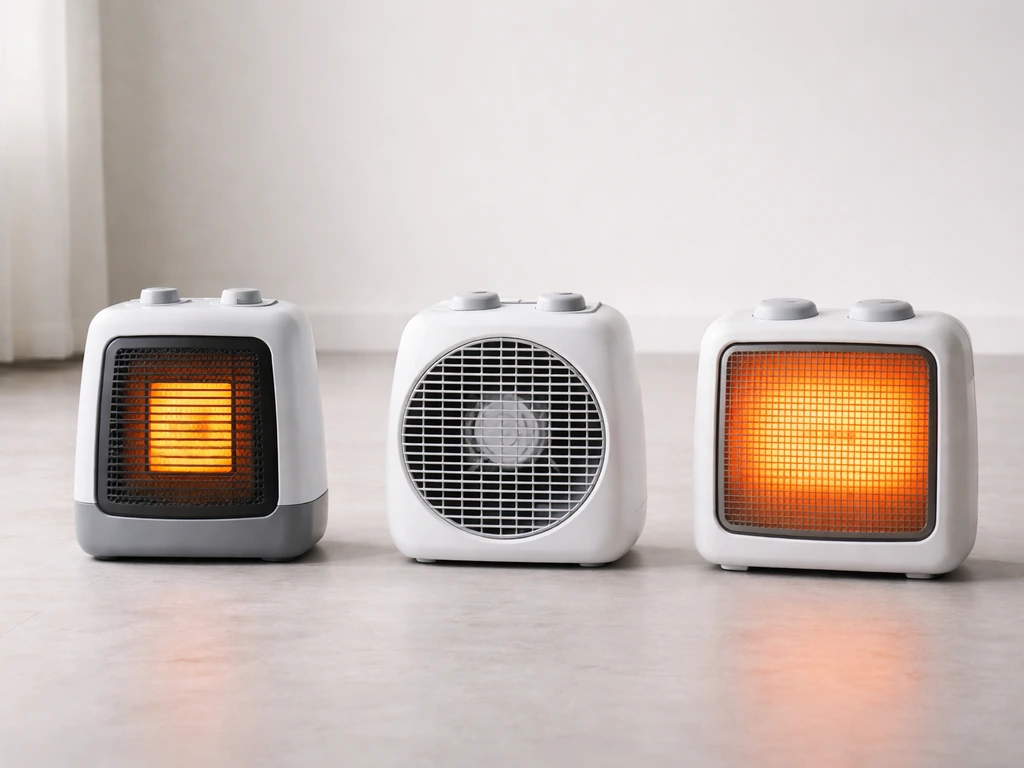
Not all electric heaters carry the same risk level. The key variables are whether the heating element involves any non-stick or coated surfaces, whether the unit has exposed elements that birds can contact, and whether it moves air in ways that stir up particulates.
| Heater Type | PTFE Risk | Burn Risk | Air Circulation | Bird Safety Notes |
|---|---|---|---|---|
| Ceramic space heater | Low (ceramic element, no coating) | Low to medium | Convection fan present | Good choice if PTFE-free confirmed; keep cage distance of at least 3 feet |
| Radiant/infrared panel heater | Low if no coated elements | Low (no exposed coil) | Minimal air movement | One of the safer options; minimal particulate stirring |
| Oil-filled radiator | Very low | Low (warm surface, not hot) | None | Surfaces reach moderate temps; generally considered safe if birds cannot directly contact fins |
| Coil/fan heater (cheap models) | Higher risk (coatings possible) | Medium to high | High airflow | Most risky category; avoid unless PTFE-free is explicitly confirmed |
| Heat lamp (incandescent/ceramic infrared) | Low for ceramic emitters | High if unguarded or too close | Minimal | Useful for sick birds with thermostat control; requires careful distance management |
| Gas or kerosene heater | N/A | High | Combustion gases | Not electric; produces CO and NOx; not appropriate near birds |
If you want a single recommendation: a ceramic infrared or oil-filled radiator with no non-stick coatings, combined with tip-over shutoff and overheat protection, is the safest practical choice for a room that houses pet birds. Zoo Med's ceramic infrared emitters, designed for reptiles but widely used for birds, are a good example of a PTFE-free heat source that can be thermostat-controlled for consistent temperatures.
Safety features to look for
- Tip-over automatic shutoff: the OCWR explicitly recommends this as a standard safety requirement for portable electric heaters
- Overheat sensor: cuts power before surfaces or elements reach dangerous temperatures
- Thermostat control: prevents the unit from running at maximum output constantly, reducing both heat stress and fume risk
- Cool-touch exterior: reduces burn risk if a bird contacts the housing
- No non-stick or PTFE-coated components: check the product specs or contact the manufacturer directly if this is not stated
How to set up a heater safely around birds
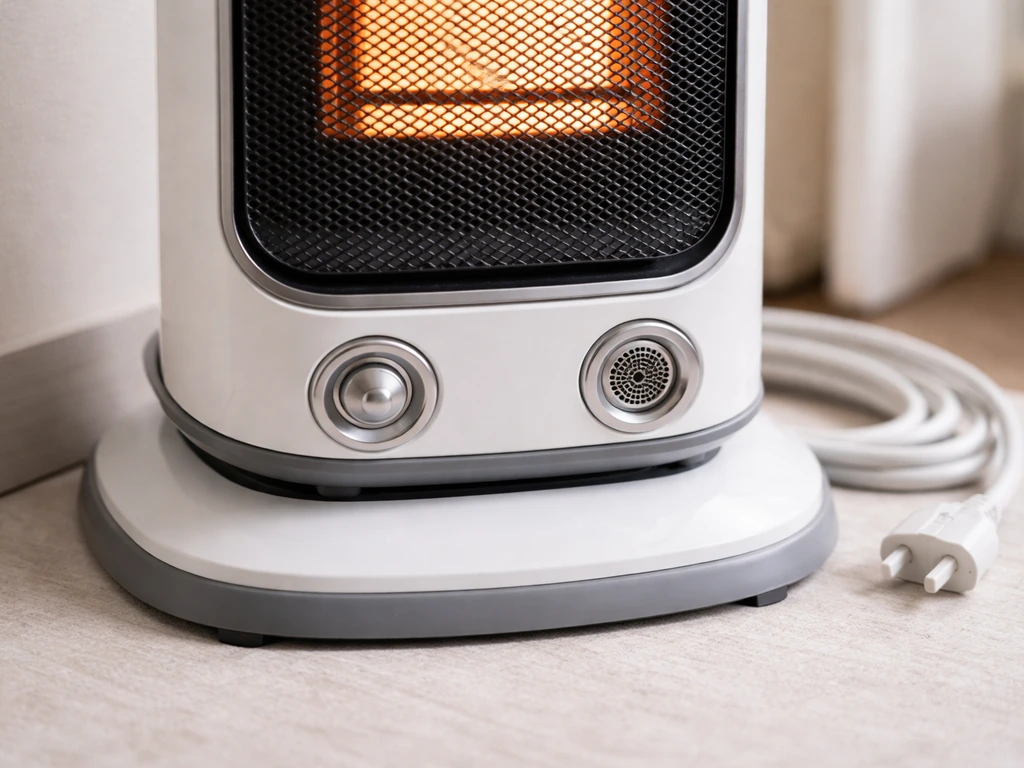
Distance and placement
Position any space heater at least 3 feet from a bird cage, and never aim a heater's output directly at the cage. You want to raise the ambient room temperature, not blast heat at the bird. Radiant heaters are especially directional, so angle them toward a wall or away from the cage rather than pointing the emitting surface at the birds.
The floor is generally a better location than a shelf or table, where a falling heater poses a greater risk to equipment or the cage below. The U. S. Army safety guidance, drawing from CPSC and NFPA sources, frames space heaters as supplemental heating devices, not primary sources, which is the right mindset here.
You are topping up a warm room, not replacing central heating.
Ventilation and airflow
Adequate ventilation is important but should not mean drafts blowing directly over a cage. Birds are sensitive to sudden temperature swings as much as to sustained cold. The goal is fresh air exchange in the room without creating cold drafts at cage level. Keep windows cracked in a distant part of the room if you need to run a heater in a smaller space. Avoid placing heaters in sealed, tiny rooms with no air exchange when birds are present.
Using supplemental heat for sick or recovering birds
Purdue University's caged-bird husbandry guidance and shelter supportive-care resources both note that controlled supplemental warmth is genuinely beneficial for ill or injured birds. A heat lamp, a K&H Snuggle-Up Bird Warmer (which runs on a low 12V adapter and is thermostatically controlled), or a heated pad under part of the cage can maintain warmth without the air-quality risks of a room space heater. The key for any of these is partial coverage: always leave part of the cage at normal temperature so the bird can self-regulate by moving away from the heat source.
What to avoid: practices that put birds at real risk
- Running a brand-new heater in the bird's room without a burn-in period first. New heaters can off-gas manufacturing residues and coatings. Run it in an unoccupied, well-ventilated area for at least a few hours before bringing it near birds.
- Using any heater with PTFE-coated components. This means checking product specs, not just assuming a heater is safe because it is electric.
- Leaving a space heater on unattended around birds. The OCWR is clear: portable electric space heaters should not be left on when no one is present. Fire risk is real.
- Placing the heater directly beside or on top of a cage. Contact burns and overheating are serious risks in this configuration.
- Using a combustion heater (gas, kerosene, propane) in a bird's space. These produce carbon monoxide and nitrogen dioxide, which are acutely dangerous to birds even at concentrations that do not immediately affect humans.
- Running a heater in a completely sealed room with no fresh air. Even with a purely electric heater, accumulated particulates and off-gassing in a zero-ventilation room can stress birds' airways.
- Ignoring burning smells. Any smell of burning plastic, chemicals, or scorching while a heater runs is a signal to remove the bird from the room immediately and investigate the heater before using it again.
Warning signs that a bird is being harmed
Birds hide illness well, so by the time you notice something is wrong, the situation can already be serious. Know what to watch for when any heater is running in a bird's space. If you mean breaking or damaging a bird scooter, the safest move is to remove the bird from any immediate hazards and assess for injury or leaking materials before seeking veterinary advice what happens if you break a bird scooter.
Respiratory distress signals
- Open-mouth breathing: one of the clearest signs of respiratory distress in birds
- Tail bobbing with each breath: the tail pumps up and down visibly as the bird works harder to breathe
- Increased sternal motion: the chest heaving more than normal
- Audible breathing sounds: clicking, wheezing, or a rattling quality to the breath
- Weakness or collapse: a bird sitting on the cage floor rather than a perch, unable to hold itself upright
LafeberVet and SpectrumCare both describe these signs as avian respiratory emergencies requiring prompt veterinary attention. If a bird shows any of these symptoms while a heater is running, move the bird immediately to fresh air, turn off and remove the heater, and contact a vet. Do not wait to see if the bird improves on its own.
Environmental and behavioral checks
- Fluffed feathers combined with lethargy: a bird that looks puffy and tired is not just cold, it may be ill
- Soot or residue on cage surfaces near a heater: a sign the heater is producing particulates
- Chemical or burning odor that does not dissipate: indicates off-gassing or a malfunctioning heater
- Bird moving consistently to the farthest corner from the heater: a behavioral signal that the bird is stressed by heat or fumes
- Sudden behavioral change, including screaming, pacing, or feather-picking, around heater use: birds sometimes display stress behaviors before obvious physical symptoms appear
Better alternatives and long-term coexistence
If you are not confident in your current heater's safety profile, or if your bird has shown any respiratory sensitivity in the past, there are practical alternatives that remove most of the risk. Because of that, bird scarers can pose real health risks if they expose birds to smoke, fumes, or sudden distress-inducing signals.
- Dedicated bird cage warmers: products like the K&H Snuggle-Up Bird Warmer run at 12V, are thermostatically controlled, and are designed specifically for use inside or adjacent to bird cages. They provide gentle localized warmth without heating an entire room.
- Ceramic infrared bulbs: used widely in reptile husbandry, these produce heat without light and can be controlled with a thermostat. They contain no non-stick coatings and have a well-established safety record when used at appropriate distances.
- Central heating adjustment: simply raising the home's thermostat by a few degrees is the lowest-risk option for birds. No supplemental heater, no off-gassing, no new fire risk.
- Insulating the cage: covering three sides of a cage with a breathable cover at night retains ambient warmth and reduces the need for supplemental heating.
- Heated bird perches: available from avian-specialty retailers, these provide warmth at the bird's feet without raising overall room temperature or introducing air-quality risks.
The long-term approach is straightforward: identify what type of heater you have, confirm it has no PTFE-coated components, ensure it has tip-over and overheat shutoffs, run it through a burn-in cycle away from birds before regular use, and maintain at least 3 feet of separation from the cage.
NYSDOH also advises using space heaters carefully and avoiding unsafe overheating, since overusing or overheating can increase indoor air risks such as carbon monoxide or nitrogen dioxide ensure it has tip-over and overheat shutoffs.
Birds can coexist perfectly well with thoughtfully chosen electric heat sources. Bird nests are usually not dangerous in the way some heat sources are, but specific materials and contamination can still be a concern. The birds that end up in trouble are almost always the ones exposed to heaters chosen, positioned, or operated carelessly, not birds in homes where owners have taken five minutes to check the basics.
It is also worth keeping perspective on where heating sits within the broader picture of household hazards for birds. Fumes from cooking surfaces, aerosol sprays, and scented candles are all in the same category of respiratory risks that bird owners need to manage. Electric heaters, when chosen and used correctly, sit toward the lower end of that risk spectrum compared to many other common household items.
FAQ
Are electric heaters bird safe if they have adjustable heat levels and a thermostat?
They can be, but thermostat control does not eliminate PTFE or VOC off-gassing risk. Your first priority is to confirm the heater has no PTFE or other non-stick coated components on or near the hottest surfaces, then test for any chemical odor during the initial burn-in in a separate, well-ventilated area before the bird returns.
Can I use an electric space heater if my bird cage is in the same room but more than 3 feet away?
Yes, distance helps, but placement still matters. Avoid aiming radiant output at the cage, keep the heater on the floor rather than a shelf or tabletop, and ensure curtains, bedding, or perches cannot drift or fall into the heater’s hot zone.
What should I do if I smell a “chemical” or “burning” odor the first time the heater runs?
Treat it as a stop signal, not normal operation. Turn the heater off, remove the bird to fresh air, and do not resume use until you identify the source and whether it involves coated heating elements or manufacturing residue that cannot be eliminated safely.
Do oil-filled electric radiators produce fumes that can harm birds?
They typically have less risk of PTFE toxicosis because they do not rely on non-stick coated elements, but you still need to watch for new-heater odors and verify safe guards like overheat protection and tip-over shutoff. If you detect persistent fumes or eye or throat irritation in you, assume it could be worse for a bird.
Is it safe to use a ceramic heat lamp or reptile-style infrared emitter for birds?
It can be safer than high-risk space heaters if the device has PTFE-free construction, temperature control, and a way to prevent overheating. Still, only use it with partial cage coverage so the bird can move away, and place it so the bird cannot land on the hottest emitting surface.
Can birds get PTFE toxicosis from any electric heater, or only from PTFE-coated ones?
The acute danger is linked to fluoropolymer coated components overheating, not to electricity itself. However, you should not assume PTFE-free based on marketing claims alone, if you see or smell non-stick-like or chemical odors during heating, stop and investigate what is coating the hottest parts.
Do electric heaters create carbon monoxide risks for birds?
Normal operation of resistance or infrared electric heaters does not produce carbon monoxide. The CO hazard comes from combustion sources in the home (like gas appliances, furnaces, attached garages), so using a CO detector is still a wise bird-safety step even if you only run electric heat.
Can a space heater be bird safe in a dusty or pet-hair-filled room?
Dust and hair can increase smoke and particulate exposure when heaters run hot. Bird sensitivity is high for airway irritants, so keep intake and surfaces clean, avoid maximum settings for long stretches, and never run a heater in a way that stirs airborne debris directly around the cage.
Are heated pads or low-voltage bird warmers safer than room space heaters?
Often yes, because they reduce air-quality disturbance and allow partial coverage, but they are not automatically risk-free. Confirm the warmer has a stable thermostat, use only under controlled portions of the cage or with partial coverage, and never let a bird contact any surface that becomes uncomfortably hot.
What bird symptoms mean I should act immediately if a heater is running?
Seek urgent veterinary care if you see rapid breathing, open-mouth breathing, wheezing or clicking, tail-bobbing, lethargy with respiratory effort, or changes in voice or posture. If symptoms appear, move the bird to fresh air, turn off and remove the heater, and do not wait for improvement.
Is it ever okay to run a heater all night with a bird in the room?
It can be, but only with the right safeguards and stable conditions. Use a unit with tip-over shutoff and overheat protection, avoid directional radiant output aimed at the cage, and consider leaving part of the cage at normal temperature so the bird can self-regulate.
My heater is on a timer or smart plug, is that a safe workaround?
Timers can help with duration, but they do not fix overheating or contact risks. A smart plug may even delay shutoff during a malfunction, so rely on built-in safety features first, then use timers only as an additional layer of control.