
If your bird is panicking, screaming, or lunging every time you hit or bang their cage, stop doing it immediately. That reaction is not dramatic or manipulative, it is a genuine fear response driven by biology, and repeating the trigger makes things measurably worse over time. Right now, the priority is to remove yourself and the noise source, let the bird settle in a quiet, dim space, and then check carefully for signs of physical distress. After that, the fix involves changing what you do around the cage, not conditioning the bird to tolerate something harmful.
Bird Freaks Out When You Smash Its Cage: What to Do

Marcus Whitmore
5 Jun 2026
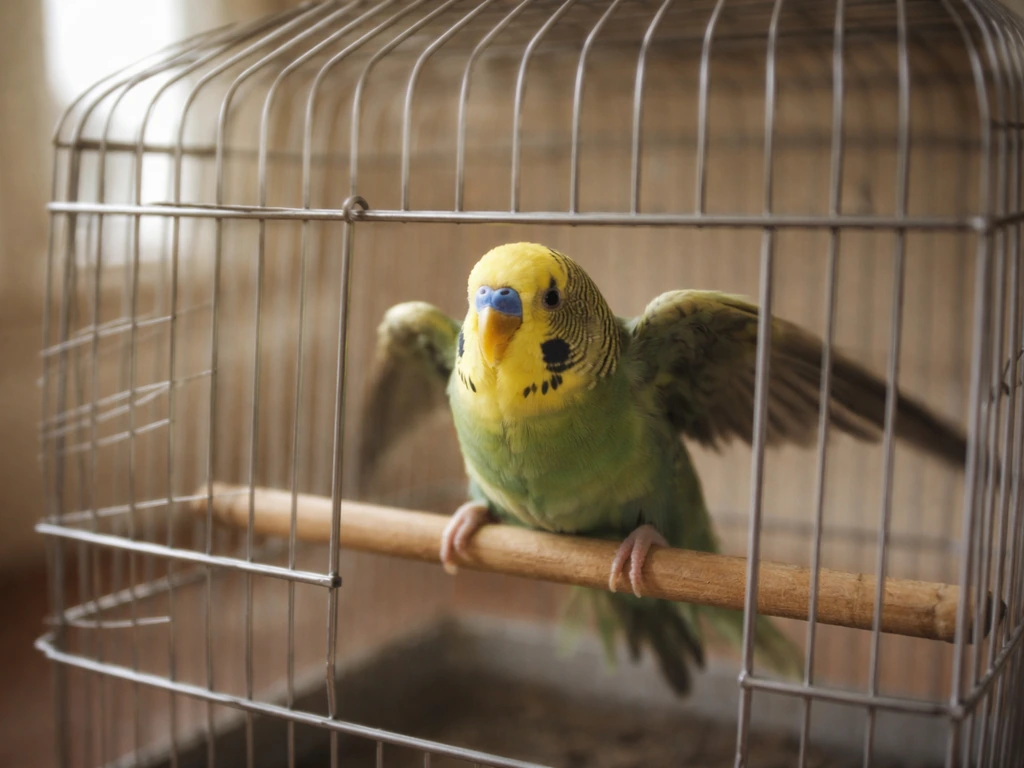
Why cage impacts trigger such a strong fear response
Birds evolved as prey animals. A sudden loud impact on or near their cage mimics exactly the kind of auditory and physical threat that would mean a predator just struck. Research on acute loud-noise exposure in birds documents measurable behavioral changes and stress physiology shifts after a single event. The biological mechanism is well understood: loud, unexpected stimuli trigger a cascade of stress hormones including corticosterone and catecholamines like epinephrine and norepinephrine.
These compounds drive rapid changes in heart rate, muscle tension, and alertness, the startle response. Laboratory work measuring startle reaction times in starlings confirms that birds react to sudden auditory stimuli at a measurable, physiologically costly level. Even a single cage impact can spike corticosterone, and studies on repeated stressors show that recovery takes longer than most people assume.
The cage adds another layer of vulnerability. When a bird cannot fly away from the threat, because it is confined, its stress response intensifies. It cannot do the thing its nervous system is screaming at it to do: escape. That is why you see the full spectrum of panic behaviors in response to something that might seem minor to you. From a caged bird's perspective, a sudden impact on their enclosure is one of the worst possible sensory events.
There is also a chronic dimension. Research on repeated unpredictable negative stimuli in captive birds shows that inconsistent, aversive events increase baseline fearfulness over time, not decrease it. The folklore that birds will simply 'get used to it' is not supported by evidence. The reality is that unpredictable aversive events tend to make birds more reactive, not less. Cage-hitting as a corrective measure makes the behavior worse, not better.
What 'freaking out' actually looks like, and how to assess injury risk
Bird panic is not one-size-fits-all. What it looks like depends on the individual bird, species, and how severe or repeated the trigger has been. Knowing the difference between a startled bird that recovers quickly and one in genuine physical danger is critical.
Common panic behaviors to expect
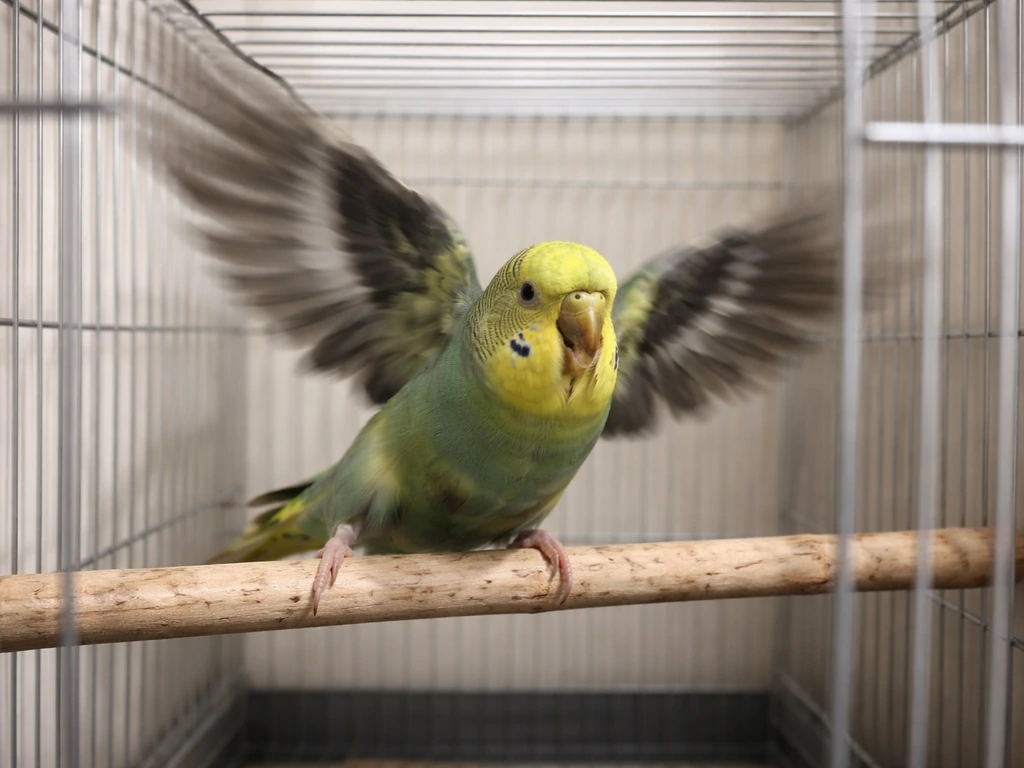
- Explosive wing-flapping and thrashing inside the cage
- Screeching, screaming, or alarm calls
- Lunging, biting, or feigning attacks at the cage bars
- Crashing into cage walls, perches, or toys
- Feather ruffling followed by rapid panting
- Clinging to the cage bars and refusing to move
- Flight attempts (repeatedly trying to escape even without flight clearance)
- Falling off perches during the startle
Signs that cross the line into medical emergency
Most birds settle within minutes of the trigger stopping, but some do not. Watch closely for these indicators of physical distress, because they require veterinary attention rather than just time and calm. [Open-mouth breathing at rest is a serious warning sign. ](https://lafeber.
com/vet/avian-emergency-critical-care-summary-page/) Tail bobbing, where the tail moves rhythmically up and down with each breath, is a classic indicator of respiratory effort and should not be dismissed. Increased sternal movement, audible breathing sounds (clicking, wheezing), and wing pumping with each breath are additional red flags. A bird sitting on the cage floor, unable to perch, or showing drooping wings after a panic episode is in distress.
Bleeding from a broken blood feather or a wound from cage impact also needs immediate attention. If any of these are present, contact an avian vet now.
Species and temperament differences
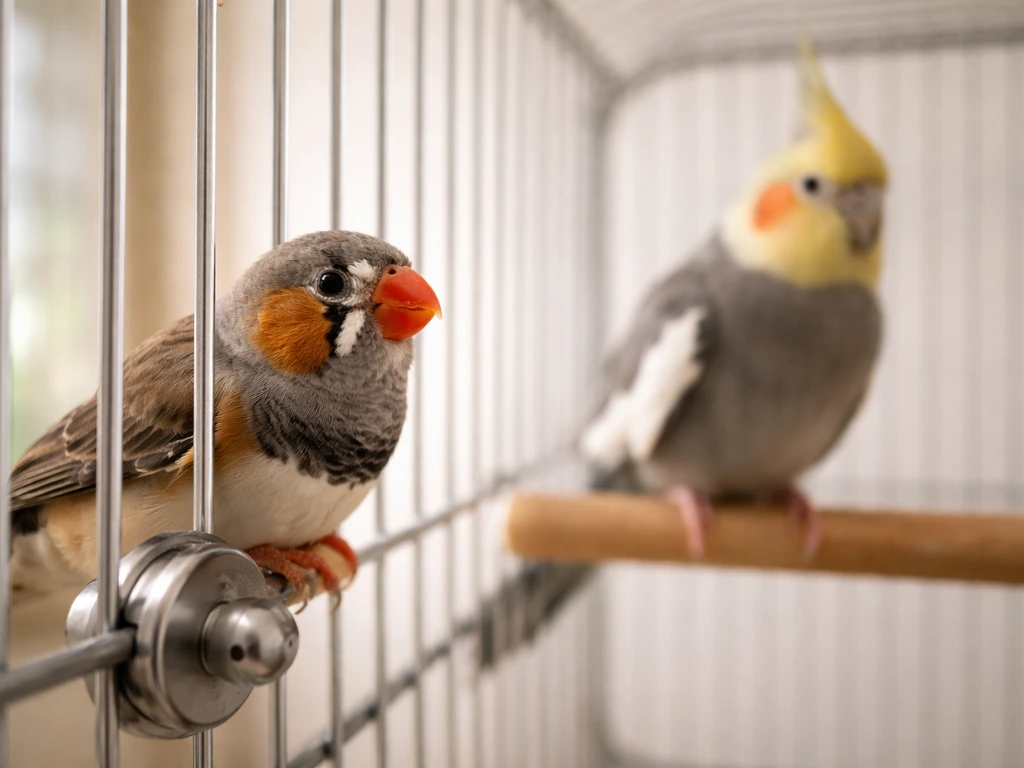
Smaller birds like finches, canaries, and budgerigars can injure themselves severely during thrashing because of their size relative to cage fixtures. Cockatiels are particularly prone to night frights and can escalate quickly. Larger parrots, African greys, cockatoos, macaws, tend to escalate toward biting and feather destruction and may develop longer-lasting fear associations. Conures are notoriously loud and reactive. That said, individual personality matters more than species generalizations: a hand-raised, well-socialized bird of any species will generally recover faster than a poorly socialized or previously traumatized one.
What to do right now: stop, calm, protect
If the bird has just panicked, follow this sequence. Do not skip steps or rush.
- Stop the impact immediately. Whatever you were doing — cleaning, moving, or striking the cage — stop. Remove yourself and any objects that were making the noise.
- Lower your own energy. Birds read body language and voice tone extremely well. Stand still, avoid direct eye contact, slow your breathing, and lower your voice or go silent.
- Dim the lights in the room if you can. Reduced light helps calm the startle response. A towel over part of the cage (not all of it, to allow airflow) can also help signal safety.
- Give the bird space — do not immediately reach in to handle it. A panicked bird is at its most likely to bite or thrash. Clinical guidance from avian behaviorists is clear: return an overstimulated bird to a calm environment and leave it alone to settle before attempting any interaction.
- Watch from a distance for 5 to 10 minutes. You are checking for the respiratory distress signs listed above. If the bird is vocalizing and moving around normally, that is a better sign than silence and stillness in a corner.
- Check for physical injury once the bird is calm. Look for blood feathers (a feather with a dark shaft that is bleeding), wounds, signs of a broken wing or leg (asymmetry, inability to bear weight), and any foreign objects the bird may have collided with.
- If injury or severe distress is present, set up a calm hospital cage — a small, dark, warm, quiet container with minimal perching — and call your avian vet.
Do not try to 'reassure' the bird with intense attention, sudden movements, or by repeatedly approaching the cage. That often re-triggers the response. Quiet presence from a distance is more effective than hovering. If the bird settles, resumes normal posture on a perch, and starts preening or vocalizing normally within 15 to 20 minutes, it has likely recovered from the acute episode without physical harm.
Safer cage handling and cleaning routines that won't startle your bird
Most cage impacts happen during routine maintenance: cleaning, moving the cage, replacing accessories, or locking and unlocking cage doors. Changing how you physically interact with the cage is the most direct prevention step available.
Core handling principles
- Move cage components slowly and deliberately. No sudden grabs, jerks, or drops.
- Announce your presence before approaching. Talk quietly as you approach the cage rather than appearing suddenly.
- Set things down gently. If you are replacing a water dish or a perch, lower it into place rather than dropping or snapping it.
- Avoid metal-on-metal contact where possible. Cage bars ringing together creates a sharp auditory impact. Rubber-tipped tools or gloved hands reduce this.
- Close and latch cage doors slowly. The 'clang' of a cage door is a common trigger. Practice deliberate, controlled closing.
- Never kick, strike, or tap the cage to get the bird's attention or to 'correct' behavior. This is not a training tool — it is a fear trigger.
Cleaning routines that minimize disruption
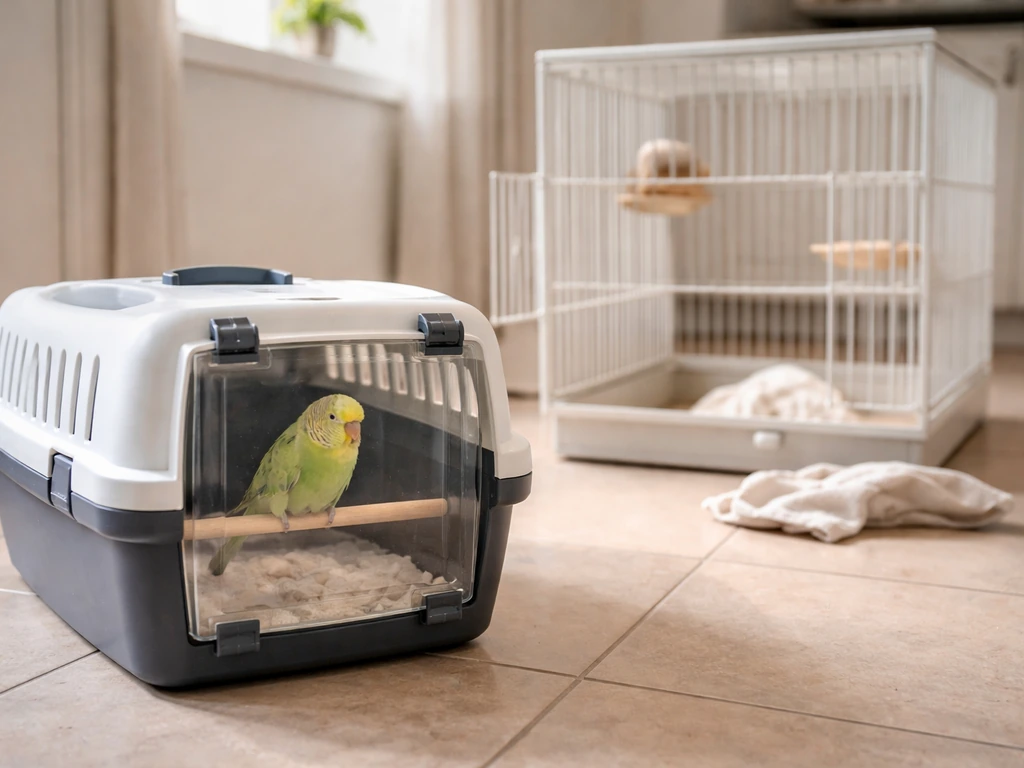
For deep cleaning, move the bird to a secure travel cage or separate enclosure first. This is the gold standard approach recommended by avian husbandry experts: separate the bird, clean the cage thoroughly without any time pressure or need to work around a frightened animal, and return the bird once the cage is dry and the environment is settled. Daily spot-cleaning can be done with the bird present, but use slow movements, narrate what you are doing in a calm voice, and stop immediately if the bird shows signs of agitation. If your bird is consistently reactive to cage cleaning, that is a signal to work on desensitization (covered in the next section) rather than to push through the distress.
Moving the cage
Moving the whole cage is one of the highest-impact stressors during routine husbandry. If you need to relocate it, move the bird first in a secure carrier. If the cage must move with the bird inside (for example during an emergency), do it slowly, keep the bird covered with a light cloth, and talk calmly throughout. Even minor cage vibrations during transport can trigger a startle cascade, so treat any cage movement as a procedure that deserves care and advance planning.
Training your bird to be less reactive: desensitization and counterconditioning
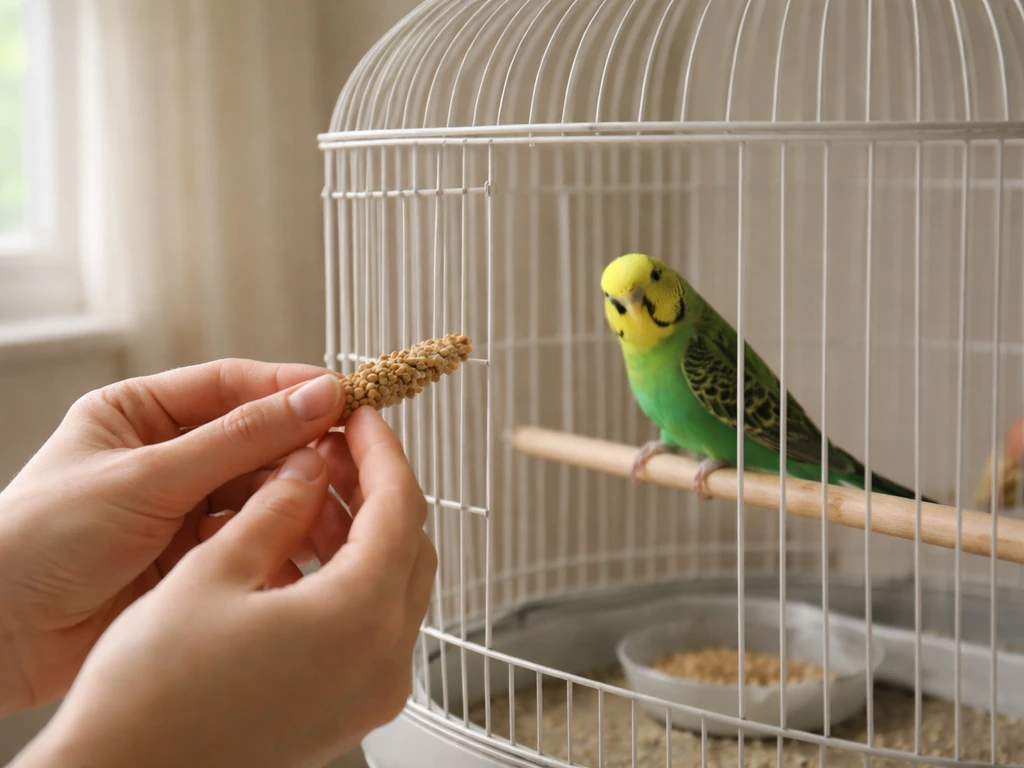
Systematic desensitization is the evidence-based approach used by avian veterinarians and certified bird behavior specialists to reduce fearful reactions. The goal is to gradually expose the bird to the fear-triggering stimulus at a level too low to cause a reaction, then incrementally increase intensity over many sessions while pairing the stimulus with something the bird values highly (a favorite treat, praise, or target training). This is counterconditioning: changing the emotional association from 'threat' to 'something good is coming.'
The Association of Avian Veterinarians recognizes desensitization as a core enrichment and behavior modification tool. Fear Free avian protocols explicitly describe counterconditioning and systematic desensitization as the methods of choice for reducing fear responses, and note clearly that positive punishment (aversive consequences like cage-striking) increases fear and aggression rather than reducing it.
A basic desensitization plan for cage noise
- Identify the specific trigger sounds: cage door closing, cleaning tools against bars, cage movement, etc.
- Start at the lowest possible intensity. For a cage door, this might mean touching the door lightly without closing it, while the bird is calm and at ease.
- Offer a high-value reward (a piece of the bird's favorite food) immediately after the low-intensity exposure. Timing matters — within 2 to 3 seconds.
- Repeat 5 to 10 times per session, keeping sessions short (3 to 5 minutes for small birds, up to 10 minutes for larger parrots). End on a success.
- Increase intensity only when the bird shows no reaction at the current level across multiple sessions. Moving too fast resets progress.
- If the bird shows any agitation, go back one step. Never push through fear — that is flooding, not desensitization, and it makes the fear worse.
- Build toward full cage closure sounds, cleaning sounds, and eventually brief gentle movement — all paired with rewards.
This process takes weeks to months, not days. Consistency matters more than speed. Multiple short sessions spread across the week produce better results than marathon training sessions. A bird that has been repeatedly startled by cage impacts may need additional time to build trust before desensitization can even begin, start with trust-building interactions completely away from the cage if needed.
What does not work
Flooding, deliberately exposing the bird to the full-intensity trigger until it 'gives up' reacting, is sometimes suggested in online forums as a way to 'get birds used to' noise. This is not supported by behavioral science and can cause severe and lasting psychological harm. Research on unpredictable repeated negative stimuli in captive birds shows that inescapable aversive exposure increases fearfulness rather than reducing it.
The same applies to cage-striking as a corrective measure for biting or screaming, evidence from avian behavior resources is consistent that punishment increases fear, aggression, and avoidance behavior. Cage-striking or similar “bird ringing” techniques are often framed as helpful, but this kind of aversive approach can be cruel and backfire bird ringing techniques. It does not teach the bird anything useful.
Setting up the environment to prevent panic in the first place
Behavior management is not just about training sessions, it is about the entire daily environment the bird lives in. Several environmental factors directly affect how reactive a bird is to sudden stimuli.
Cage placement
Place the cage where the bird can see routine human activity but is not exposed to unpredictable, high-intensity noise. Avoid kitchens (sudden appliance noise, fumes), hallways (unexpected door slams), and high-traffic areas near outside doors. Against a solid wall on at least one side gives the bird a sense of security. Eye level or slightly below is better than floor-level, where the bird feels vulnerable. Avoid positioning the cage directly in front of windows where outside movement and sounds can trigger repeated startle responses throughout the day.
Predictable daily routines
Birds habituate to predictable events. When you follow consistent daily routines, same feeding times, same approach patterns, same cleaning schedule, the bird learns to anticipate and accept these events as non-threatening. Unpredictability is the key driver of chronic stress in captive birds, so routine is one of the most powerful welfare tools available. Consistent light/dark cycles (12 hours light, 12 hours dark is a common recommendation for most species) also regulate stress physiology and sleep quality. Purdue University’s small-animal veterinary resources on general husbandry for caged birds also emphasize that appropriate rest and light/dark scheduling supports bird health rest/light/dark scheduling.
Enrichment and behavioral outlets
A bird that has adequate mental stimulation, foraging opportunities, and physical activity is a more resilient bird. Boredom and under-stimulation increase baseline stress levels, which makes startle responses more severe. Rotate toys, offer foraging opportunities (hiding food in paper, puzzle feeders), and ensure the bird has safe out-of-cage time if appropriate for the species. A well-enriched bird still startles, but recovers faster and is less likely to develop chronic fear-based behavior patterns.
Background sound management
Gradual, consistent background sound (like a radio or TV kept at a moderate volume) can reduce the contrast when unexpected sounds occur, making the environment feel less unpredictably quiet. That said, research on neural responses to acoustic stimuli in birds indicates that background noise does not fully eliminate the startle response to sudden stimuli. It helps at the margins, but it is not a substitute for structured desensitization or behavioral management.
Managing human behavior in the household
Anyone in the household who interacts with the bird's cage needs to understand these principles. Children who bang on cages out of curiosity, other pets who slam into furniture near the cage, or household members who engage in sudden loud activity near the bird's area are all sources of unpredictable aversive stimuli. Setting household rules around the bird's space is not overprotective, it is basic welfare management.
Related to this, questions about how captivity and confinement affect bird stress and behavior (including whether certain restraints like harnesses or other equipment are welfare-positive) are worth understanding alongside cage-handling practices. If you are considering using a bird harness, focus on welfare-positive alternatives and only use equipment that does not add chronic fear or physical distress restraints like harnesses.
If you are using a cat collar near the bird, check that it does not create sudden movement, noise, or startling cues that can trigger the same fear response cat collar bird warning.
When to call an avian vet or behavior specialist
Some situations go beyond what environmental management and basic training can address on their own. Get veterinary attention promptly if you see any of the following after a panic episode:
- Open-mouth breathing that does not resolve within a few minutes of the trigger stopping
- Tail bobbing at rest (the tail moving rhythmically with each breath is a reliable sign of respiratory effort)
- Audible breathing sounds: clicking, wheezing, or rattling
- Bleeding from a broken blood feather or wound sustained during thrashing
- The bird sitting on the cage floor and unable to return to a perch
- Collapse, severe lethargy, or loss of coordination
- Seizure-like activity or prolonged uncoordinated movement
Beyond acute emergencies, involve a certified avian behavior consultant or a veterinary behaviorist if: the bird has been startled repeatedly over a long period and has developed chronic fear-based behaviors (feather-destructive behavior, self-mutilation, persistent screaming, or severe aggression); standard desensitization is not producing progress after 6 to 8 weeks of consistent effort; or the bird shows fear responses to multiple stimuli that are expanding rather than contracting. Chronic stress from repeated aversive events does not simply resolve on its own, it often needs professional behavioral assessment, and sometimes a medical workup to rule out underlying conditions that are compounding the fear response.
If the cage impacts have been frequent, be honest with your vet about that history. It is relevant clinical information and it affects the treatment plan. A bird that has experienced repeated unpredictable aversive stimuli may need a longer recovery period and a more structured behavioral rehabilitation plan than one that experienced a single incident. The goal is a bird that is genuinely calmer, not one that has simply learned to suppress visible fear responses while still experiencing chronic stress.
FAQ
What should I do in the first 60 seconds after the bird freaks out from a cage smash or bang?
Immediately stop the noise and create distance, then dim the area and reduce light flashes. Avoid reaching in to “check” right away, instead watch from the outside for open-mouth breathing, tail bobbing, wing pumping, or bleeding, since early handling can re-trigger the startle cascade.
How do I tell the difference between a startled bird that will recover and one that needs urgent help?
If breathing looks normal and the bird regains perch stability, posture, and preening or normal vocalization within about 15 to 20 minutes, it likely recovered from an acute event. If you see open-mouth breathing at rest, audible clicking or wheezing, increased sternal movement, drooped wings, inability to perch, or any wound or blood, treat it as respiratory distress or physical injury and seek an avian vet the same day.
Can I move the bird back to the cage or cover it with a towel while it is still panicking?
Covering with a light cloth can be helpful only if you must do something urgent or you are relocating the bird slowly, but do not trap or restrain it while it is actively thrashing. If possible, wait until it is calmer, then handle gently and minimally to prevent escalating fear.
My bird panics mainly during cleaning. Should I just do the cleaning faster so it is over quickly?
No. Time pressure increases unpredictability and can prolong the fear response. The safer approach is to move the bird to a secure travel cage or separate enclosure first, clean thoroughly without working around a frightened animal, then return only after the cage is dry and the area is calm.
Is it ever safe to tap the cage to stop biting or screaming?
Avoid it. Using cage impacts as a corrective consequence tends to increase fear and can worsen aggression or avoidance over time. The more effective alternative is to remove the trigger, manage the environment, and use counterconditioning or training that pairs calm handling with valued rewards.
Does playing steady background noise (TV or radio) fully prevent startle reactions to sudden bangs?
It can reduce the contrast when unexpected sounds occur, but it does not eliminate the startle response to sudden impacts. Use background sound as an adjunct, not as a substitute for changing how you handle the cage and for gradual desensitization.
How long should I wait before trying desensitization again after a bad panic episode?
Do not resume immediately after a severe episode. Give the bird time to fully settle and confirm breathing and posture are normal, then start at a lower intensity than what caused the panic. If there were signs of distress, get veterinary guidance first.
How should I structure desensitization sessions to avoid making the bird more afraid?
Use very short sessions, keep the trigger at a level the bird can tolerate, and pair it consistently with something positive (favorite treat, praise, or target training). Track whether reaction intensity rises session to session, if it does, reduce the difficulty and slow the progression rather than “pushing through.”
What are common mistakes that make birds panic more around cage maintenance?
Trying to reassure through constant hovering or sudden talking, repeatedly approaching the cage during thrashing, moving or shaking the cage while the bird is inside without a slow plan, and cleaning on an unpredictable schedule all increase stress. Also avoid any approach that relies on punishment or “flooding” exposure to the full intensity trigger.
Should I reposition the cage for better safety, and where is the safest location?
Place the cage where the bird can see routine household activity without being hit by unpredictable high-intensity noise (like kitchens or door slams). Use at least one solid wall for perceived security, and avoid positioning directly in front of windows where outside movement can cause repeated startles.
What if my bird startles not just from cage bangs, but from other household sounds too?
That suggests fear may be generalizing. If the set of triggers is expanding despite consistent management, involve a certified avian behavior consultant or veterinary behaviorist, because the plan may need broader behavioral assessment and possibly a medical workup to rule out underlying issues increasing reactivity.
When should I involve a professional, and who is the right type?
Seek avian veterinary care urgently if there are respiratory signs or injuries after panic. For behavior, consult a certified avian behavior specialist or veterinary behaviorist if fear is chronic (feather destruction, persistent screaming, severe aggression), if you see no progress after 6 to 8 weeks of consistent desensitization, or if fear responses are worsening or spreading to more stimuli.