
A caged bird's fear almost always has a specific, identifiable cause rather than vague anxiety. The most common triggers are perceived predators (cats, dogs, or even an unfamiliar person moving toward the cage), sudden loud noises or movement, shadows passing overhead, poor air quality, temperature or airflow problems, inadequate or irregular lighting, disrupted sleep, and social stress from either too little attention or too much chaotic stimulation. The good news is that most of these are fixable once you know what you're looking for.
What Is the Encaged Bird Fearful Of? Signs and Fixes

Marcus Whitmore
1 Jul 2026
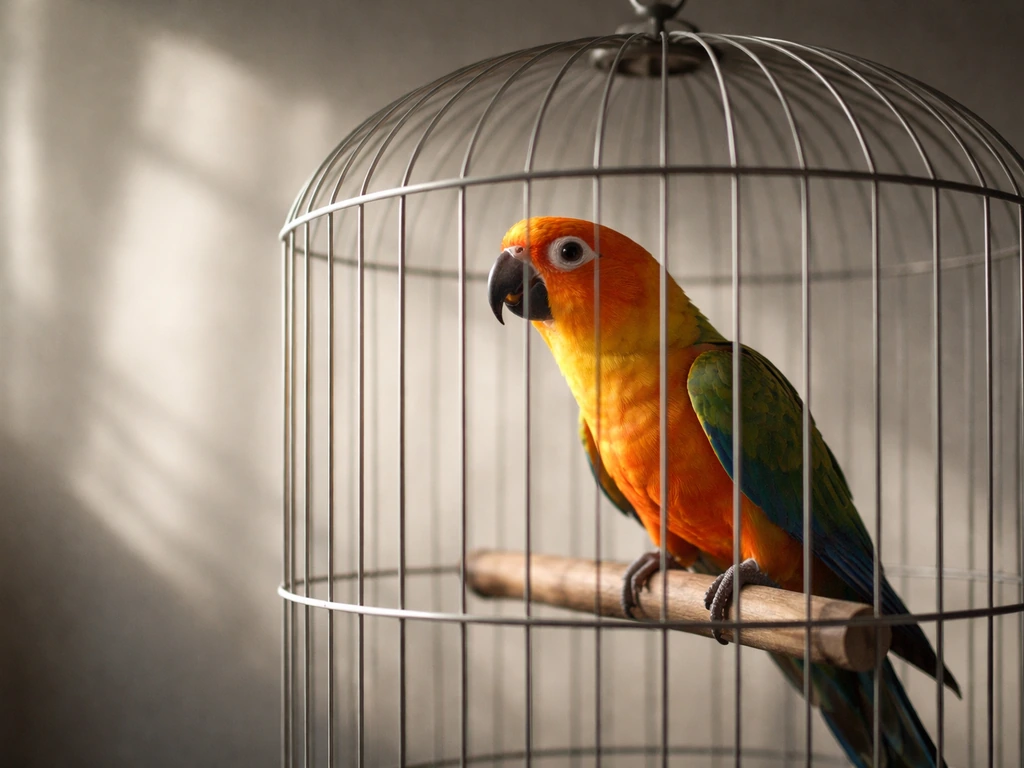
What caged birds are actually afraid of
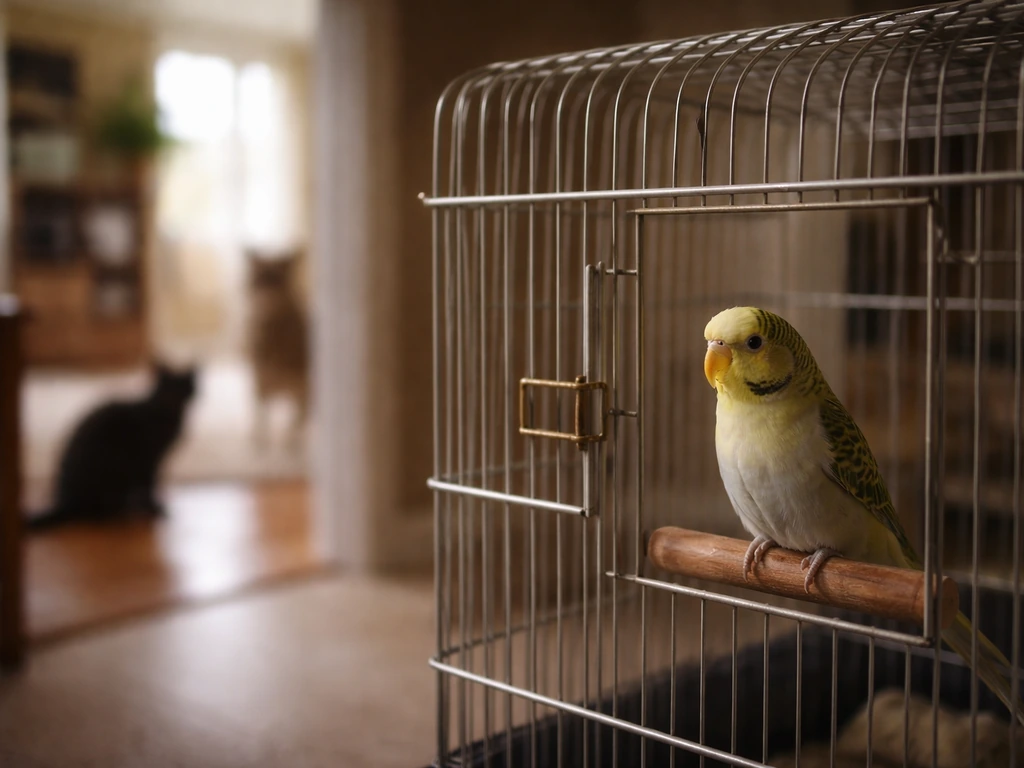
It helps to think like a prey animal. Birds evolved to treat almost any sudden, unpredictable stimulus as a potential threat. In the wild, a split-second hesitation can be fatal, so their nervous systems are wired toward caution. In captivity, that same wiring fires in response to a surprising range of household events.
Predator cues top the list. A cat walking past the cage, a dog barking nearby, or even a new person moving quickly toward the bird can trigger a full fear response. Research on domestic cats as a source of bird mortality underscores just how real the predator-detection instinct is, even in birds that have never encountered a wild predator. The bird does not need to be in danger to feel danger.
Sudden movements and shadows are closely related triggers. A moving shadow can mimic the silhouette of a hawk or other raptor, and birds near windows are especially vulnerable to this. Night frights, a well-documented phenomenon in caged birds, are often caused by appliances switching on or off, headlights moving across a wall, or outside sounds that the bird cannot contextualize.
Environmental conditions matter more than many owners realize. Federal animal welfare standards specifically cite inadequate ventilation as a welfare and stress risk factor, noting that accumulations of moisture, ammonia, and other noxious gases cause measurable discomfort in housed birds. A bird kept in a poorly ventilated room may be chronically stressed without any obvious behavioral trigger. Temperature swings and direct drafts have the same effect.
Social mismatch is another underrated cause. According to the Merck Veterinary Manual, birds that do not get enough attention can develop biting, screaming, and feather-pulling as behavioral problems rooted in loneliness. Conversely, a bird placed in an overly busy, noisy area of the home can become chronically overstimulated. Both extremes register as stress.
- Predators or animals moving near the cage (cats, dogs, unfamiliar pets)
- Sudden loud noises, including appliances, televisions, or arguments
- Shadows moving overhead or across the cage
- Hands or fingers thrust suddenly into or toward the cage
- Poor air quality: ammonia buildup, smoke, cooking fumes, aerosol sprays
- Drafts, temperature extremes, or direct air conditioning/heating vents
- Inadequate or irregular light cycles disrupting sleep
- Loneliness from insufficient interaction or attention
- Overstimulation from constant household noise or activity
- Lack of routine and predictability in feeding, handling, and sleep schedules
- Cage confinement with no visual privacy or ability to retreat
Reading your bird's body language to find the trigger
Body language is your diagnostic tool. Before you change anything in the environment, spend a few minutes watching the bird carefully, ideally before it notices you watching. The posture and behavior will usually point you toward the category of trigger.
Acute fear looks very specific. According to LafeberVet's fear, anxiety, and stress scale, a bird in acute fear will freeze in place, eyes wide open, feathers slicked tight and flat against the body, sometimes crouching and quivering as if bracing to escape. Wings may be held slightly away from the body. This is the fight-or-flight state, and it means something in the immediate environment just triggered a hard alarm response.
Avoidance and chronic stress look different. The bird leans or moves away from whoever is approaching, crouches with its tail lowered, or holds a tense posture with the tail angled upward. These are the postures described in behavioral fear-assessment frameworks as freeze or avoidance states. If you see these consistently when a specific person, pet, or location is nearby, that thing is likely the trigger.
Crest position is a useful indicator for crested species. A crest held very high signals fear or high arousal. A crest held flat while the bird crouches or hisses signals defensive fear. Quivering without obvious cause often means the bird is frightened or overexcited and does not know what to do about it.
One important caution: puffed or ruffled feathers are not always fear. Brief puffing can be normal, especially when a bird is relaxed or adjusting temperature. But persistent fluffing combined with lethargy, hunched posture, or tail bobbing at rest may signal illness rather than fear. LafeberVet draws a clear distinction here, and it matters because the response to fear and the response to illness are very different.
| Behavior | Likely meaning | Most common trigger |
|---|---|---|
| Feathers slicked flat, frozen, wide eyes | Acute fear response | Predator cue, sudden movement, loud noise |
| Leaning/moving away, tail lowered | Avoidance/chronic stress | Specific person, pet, or environmental factor |
| Quivering with wings slightly out | Acute fear or extreme stress | Immediate perceived threat |
| Crest very high (crested species) | Fear or high arousal | Novel stimulus, sudden approach |
| Puffed feathers + lethargy + tail bob | Possible illness (not just fear) | Infection, injury, or parasites — vet visit needed |
| Biting when handled | Fear mistaken for aggression | Forced handling, unfamiliar person, inadequate trust |
| Screaming or vocalizing repeatedly | Stress, loneliness, or alarm | Lack of attention, perceived threat, overstimulation |
| Tail bobbing at rest | Possible labored breathing | Respiratory illness — urgent vet visit |
What to do right now to make the bird feel safe
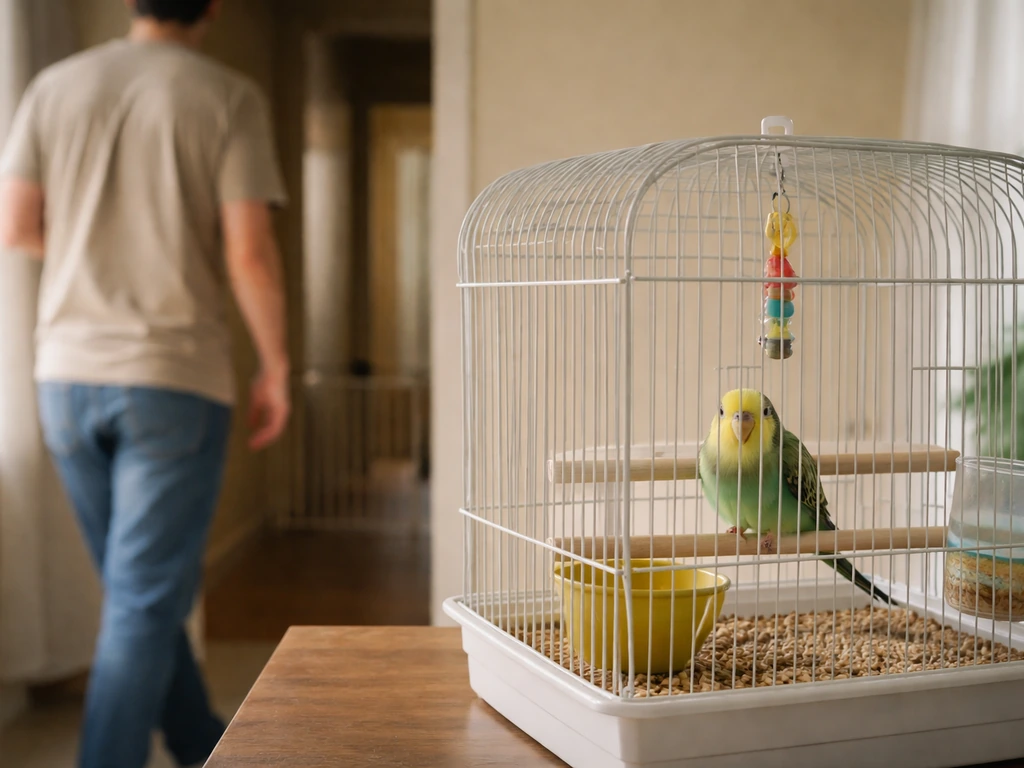
If your bird is actively frightened, the first priority is to reduce stimulation immediately without making things worse. Approaching too fast or reaching into the cage while the bird is panicking will intensify the fear response. Move slowly, lower your posture, and speak quietly. Give the bird a moment to register that the environment has calmed before you do anything else.
Remove the obvious trigger if you can identify it quickly. If a cat is near the cage, move the cat out of the room. If a loud TV is on, lower the volume. If the bird is near a window with heavy foot traffic or visible outdoor animals, move the cage back from the window or use a light curtain to break the sightline. PetMD specifically recommends moving cages away from windows and into quieter interior locations when outside animals or noises are the problem.
Covering the cage can help, but it is not a universal fix. Both Purdue's veterinary guidance and the Merck Veterinary Manual caution that covering a cage can itself cause stress in some birds. If your bird panics when covered, do not cover it. If you try a partial cover, use a light, breathable fabric and cover only the sides and back, leaving the front open so the bird does not feel trapped. The Avian Welfare Coalition suggests partial covering as one option in shelter contexts, while being explicit that it is not universally recommended for long-term care.
- Stop, slow down, and lower your voice immediately if the bird is in acute fear
- Remove or distance any obvious trigger (pet, loud appliance, window exposure)
- Avoid putting your hand into the cage until the bird has visibly calmed
- Offer a partial cover on the back and sides only if the bird responds well to it
- Reduce household activity and noise in the immediate area for 20 to 30 minutes
- Check that the cage is not in a draft, near a vent, or in direct sunlight
- Offer a familiar food treat from a distance before attempting any handling
Cage placement, light, airflow, and noise
Cage placement is one of the highest-leverage changes you can make for a fearful bird. The cage should be in a room with moderate, predictable activity, not in a hallway where people pass unpredictably, not directly beside a TV or speaker, and not near a kitchen where cooking fumes, aerosols, or non-stick cookware fumes can accumulate. Federal welfare standards for housed birds emphasize that ventilation must prevent buildup of ammonia, chlorine, and other noxious gases. Even if you cannot smell these, a bird can, and chronic low-level exposure contributes to stress.
Height matters too. Birds feel most secure when their cage is at or slightly above human eye level, where they can see the room without feeling exposed from above. A cage placed on the floor or at ankle height puts the bird in a vulnerable, low-status position that can sustain chronic anxiety.
Light cycles have a direct effect on behavior and stress. Birds need a predictable day/night cycle, generally 10 to 12 hours of darkness for sleep depending on species. Inconsistent lighting, flickering bulbs, or bright light late into the evening disrupt circadian rhythms and can cause chronic irritability and heightened fear responses. Full-spectrum lighting during the day supports natural behavior, while complete, consistent darkness at night is important for rest.
Airflow is a two-sided problem. The room needs enough ventilation to prevent gas buildup, but the bird should not be sitting in a direct draft from an air conditioning vent, fan, or open window. Position the cage so there is good overall air circulation in the room without any direct current flowing through the cage itself. Check this by holding a piece of tissue near the cage when the HVAC is running.
Noise sensitivity is often underestimated. Night frights in birds, which can involve a bird thrashing violently in the cage, are frequently triggered by sounds the owner does not even notice: a refrigerator compressor kicking on, a car alarm outside, or a phone notification sound. A low-wattage night light in the bird's room can help reduce the startle response to sudden sounds in darkness, because the bird can see its surroundings and reorient quickly rather than panicking.
Handling stress: feeding, sleep, and daily routine
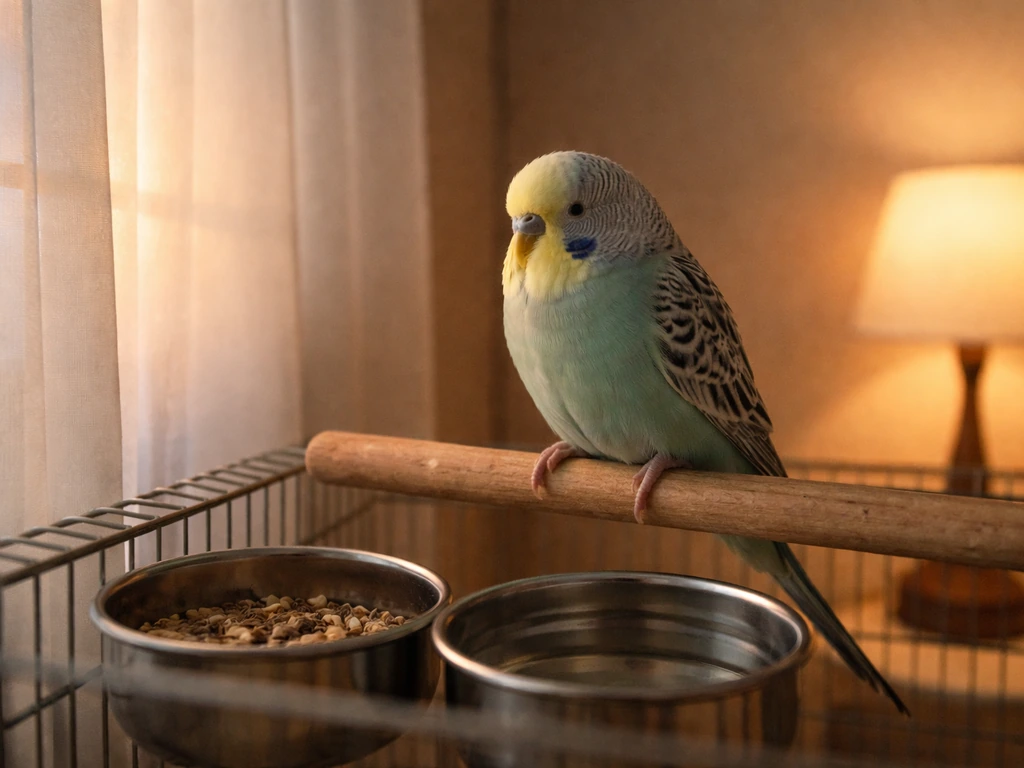
Predictability is one of the most effective anti-anxiety tools available to a bird owner. A bird that knows when food arrives, when the lights go off, and when interaction happens each day has a framework for understanding its world. Birds that live in chaotic, unpredictable households are chronically on alert because they cannot predict what happens next. This is not about being rigid; it is about being consistent enough that the bird can relax between events.
Sleep is non-negotiable. Merck emphasizes adequate sleep as a foundational element of normal bird care. A chronically sleep-deprived bird will be irritable, reactive, and more likely to bite, scream, or show fear responses to stimuli it would otherwise ignore. This is especially relevant in households where evening activity, noise, or light keeps the bird awake past a reasonable time. The target is a consistent, dark, quiet sleep period of 10 to 12 hours.
Feeding routine matters beyond just nutrition. The act of feeding at predictable times is itself a trust-building and calming ritual. Offering food by hand or placing it near the bird without sudden movements helps reinforce that your presence near the cage means something good, not something threatening. This is the foundation of counter-conditioning, and it works.
Handling itself should follow a read-the-bird approach. If the bird is tense, leaning away, or showing any of the fear postures described earlier, that is not a good time to force interaction. Forced handling when a bird is frightened will reinforce the fear association, not reduce it. Wait until the bird is in a relaxed posture, then offer your hand near (not inside) the cage. Gradual, voluntary contact builds trust far more effectively than repeated handling of a panicking bird.
When fear might actually be illness or injury
This is the most important diagnostic split you need to make. Fear-based behavior and illness-based behavior overlap significantly in birds, and because birds instinctively hide signs of weakness, by the time a sick bird looks obviously unwell, it is often in serious condition. The Merck Veterinary Manual explicitly flags open-mouth breathing as a key observation, and LafeberVet advises that veterinarians must consider whether non-specific signs like lethargy, fluffing, or abnormal breathing are medical rather than behavioral.
Tail bobbing at rest is one of the clearest red flags. Lafeber states directly that a bird bobbing its tail feathers while at rest may have labored breathing and should be taken to an avian vet right away. This is different from the tail movements associated with vocalization or normal perching adjustments. If the tail moves rhythmically at rest in a resting bird, treat it as urgent.
Open-mouth breathing with increased sternal (chest) motion is another sign that points toward respiratory illness rather than fear. LafeberVet lists this as a clinical sign of respiratory trouble. A frightened bird may breathe faster temporarily, but persistent open-mouth breathing after the obvious stressor is gone is a different situation entirely.
- Tail bobbing at rest (not during vocalization): urgent vet visit
- Open-mouth breathing that persists after stress is removed: vet visit
- Persistent fluffing with lethargy and hunched posture: vet visit
- Discharge from nares (nostrils) or eyes: vet visit
- Loss of balance or falling off the perch: urgent vet visit
- Droppings that have changed in color, consistency, or frequency: vet visit
- Fear behaviors that appeared suddenly in a previously calm bird with no environmental change: vet evaluation for pain or neurological issues
- Feather destruction or self-injury alongside fear behaviors: behavioral and medical evaluation
For any of these signs, the right move is to contact a qualified avian veterinarian, not a general small-animal vet unless no specialist is available. Avian medicine is a specialty, and the physical examination of a bird is very different from that of a cat or dog. If you observe these signs, keep the bird warm, minimize handling, and get to a vet that day if at all possible. The LafeberVet intersection of behavior and medical issues framework is worth keeping in mind: any sudden behavioral change in a bird that was previously stable is a medical question first, a behavioral one second.
Building a fear-resistant life for your bird long-term
Once the immediate situation is under control, the goal shifts to building an environment and a relationship that reduces the baseline probability of fear episodes. This is not complicated, but it does require consistency.
Enrichment reduces fear-reactivity over time. A bird with foraging toys, varied perches, safe chewable materials, and opportunities for problem-solving is a mentally occupied bird with less bandwidth for anxiety. Boredom and fear often feed each other: an under-stimulated bird is more reactive to novel stimuli because it has no positive behavioral patterns competing for its attention. Introduce new enrichment items gradually, placing them outside the cage first so the bird can habituate to them before they appear inside.
Gradual acclimation to social contact is more effective than forcing interaction. If a bird is fearful of hands, the process of building trust involves spending time near the cage without attempting contact, then offering treats through the bars, then allowing the bird to step onto a hand voluntarily. This process can take days or weeks depending on the bird's history. Birds that have experienced trauma, such as rough handling, sudden cage changes, or what some owners describe as a bird that freaks out when its cage environment changes dramatically, may need additional time and patience.
Cage safety and construction also matter more than they might seem. Clinical guidance from IVIS notes that poor cage construction, including unsafe wire types or inadequate space that prevents the bird from turning without feather damage, contributes to chronic stress. A bird that cannot move comfortably in its cage is a stressed bird, regardless of how calm the room is. Make sure the cage is appropriately sized for the species, with bar spacing that cannot trap a head or foot. Whether a bird harness is cruel depends on how it is fitted and whether it interferes with normal posture, breathing, and stress levels are bird harnesses cruel.
Protecting the bird from predator-related fear has some practical tools worth knowing about. Research on cat collar devices like the Birdsbesafe collar has looked at their effectiveness at reducing bird mortality from cats, and while that research is primarily about wild bird mortality, the principle of reducing predator cues near a housed bird's space applies directly to pet owners. For a cat collar solution, it is also important to follow cat collar bird warning guidance and ensure the collar is used safely and appropriately. Keeping cats out of the room where the bird is housed, rather than just supervising interactions, is a more reliable long-term solution than management alone. It is also worth noting that harnesses and other restraints used during outdoor time can themselves be stressors if introduced too quickly, a topic that connects to broader questions about whether bird restraints cause anxiety.
The underlying principle across all of these strategies is the same: reduce unpredictability, remove genuine threats from the bird's sensory environment, build trust through repetition and positive association, and take sudden behavioral changes seriously as potential medical signals. A bird that feels safe is a bird that behaves normally. If you are wondering whether bird ringing is cruel, it is especially important to consider the bird's welfare, stress level, and the legality and training behind any procedure. That is both the goal and the measure of success.
FAQ
How can I tell if my bird is fearful or sick?
Yes. Birds can show fear-like body language when they are ill, in pain, or struggling to breathe. If tail bobbing at rest or open-mouth breathing continues after the trigger is gone, treat it as a medical emergency and contact an avian vet the same day.
My bird panics at the same time every day, what usually causes that?
If fear happens only at certain times, focus on the predictable cause around that window. Common examples are lights switching on late, the bedtime routine causing sudden movement, or a noisy appliance that runs at a consistent time.
What should I do in the moment if my bird starts a panic episode?
First, stop approaching for a few minutes and reduce stimulation (no fast movement near the cage, quieter room, no direct shadow passing overhead). Then look for the last change that occurred right before the episode, like a pet entering the room, a door opening, a fan turning on, or a new person walking past.
Is covering the cage always a good idea for a fearful bird?
Yes, but it can backfire if it creates a sense of entrapment or reduces airflow. If covering helps, use a light breathable partial cover on the sides and back, keep the front open, and stop immediately if the bird shows worsening panic or lethargy.
My bird is afraid of me specifically, can I desensitize it safely?
If the bird repeatedly startles when you walk near, the fix is usually predictability plus distance. Try interacting only at calm, consistent times, approach slower and from the same direction, and use treats near the bars to build association without forcing contact.
Why does my bird get scared when I reach for it, even if I’m being gentle?
Often. Some birds fear because they are responding to “predator cues,” which includes quick, overhead or shadow-based movement. Move slowly, avoid sudden reaching from above, and keep your face and hands at about the bird’s eye-line rather than dropping down on it.
What are common hidden noise triggers for night frights?
Switching to a quieter interior location helps, but also check household sources you might not notice, like compressor hum from fridges, phone notification tones, or distant car alarms. A small night light can reduce disorientation at night, which reduces night frights.
Can cage placement make fear worse even when I never startle the bird?
Yes, the cage location can create chronic stress even if the room seems calm. Avoid placing the cage beside speakers, directly in front of HVAC drafts, in hallways with unpredictable foot traffic, or near kitchens where fumes and aerosol exposure can accumulate.
Will my bird’s fear get better if I fix its sleep routine?
Generally, yes. Birds typically need a consistent dark period, 10 to 12 hours depending on species. If you keep lights on, use dim lighting at night, and prevent flickering bulbs because instability in the light cycle can keep the bird in a heightened state.
How do I implement fixes without confusing my bird or not knowing what helped?
Change one variable at a time so you can identify what worked. For example, move the cage first, then after a few days adjust lighting or draft exposure, then introduce enrichment gradually, so you do not accidentally create a new stressor.
When is it safe to start training my fearful bird to step onto a hand?
Start with non-contact trust building. Place treats near the cage, let the bird approach on its own, then offer a hand near the bars only when the bird is relaxed. If fear postures show up (freezing, leaning away, defensive crouch), pause handling.
My bird bites and screams, how do I know if it is loneliness or fear?
Biting and screaming can be driven by both fear and frustration, especially if a bird receives too little predictable attention or too much chaotic stimulation. Separate “avoidance when I approach” from “acting out only during specific interaction times,” then adjust attention consistency accordingly.
My bird panics near the window, what specific adjustments help most?
Yes. If outside sounds and movement at the window cause raptor-like shadow triggers, break the sightline with a light curtain and reposition the cage farther from windows. If you suspect reflections or silhouettes, reduce direct window glare and avoid placing the cage where shadows cross frequently.
Are bird harnesses cruel for a fearful bird?
Yes, but only consider it after you confirm it is not illness. Also ensure the fit does not interfere with posture or breathing and that it does not increase panic during wear. If the bird shows defensive fear behaviors while wearing it, do not continue and ask an avian vet for guidance.