
A cat collar bird warning is a collar designed to make your cat more detectable to birds before it can get close enough to strike. The most common versions use a bell that jingles with movement, high-visibility or brightly coloured bibs and strips, or reflective panels. They genuinely do reduce the number of birds a cat catches, but none of them eliminate the risk entirely, and fitting them incorrectly can hurt your cat. Here is what actually works, what does not, and what you should do alongside any collar to make a real dent in the problem.
Cat Collar Bird Warning UK: What Works and What Fails

Marcus Whitmore
13 Jun 2026
What people actually mean by a "cat collar bird warning"
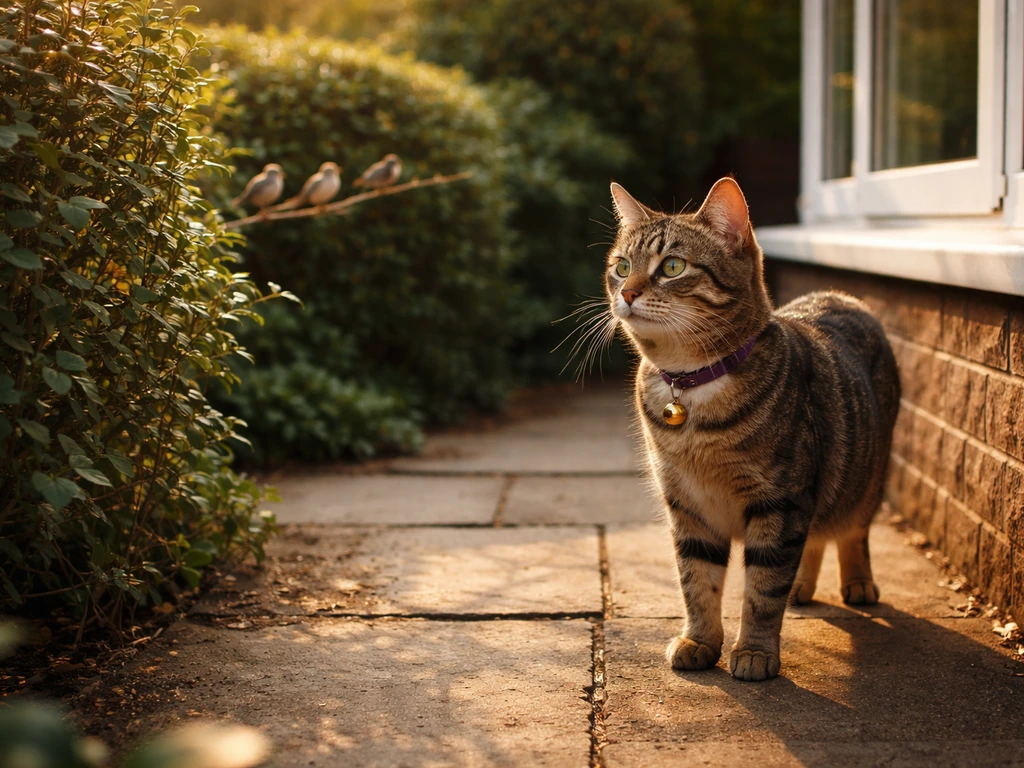
When someone searches for a cat collar bird warning, they are usually trying to solve one specific problem: their cat is killing or injuring garden birds, and they want to know whether a collar can stop it. The term covers a loose category of collar accessories, including bells, brightly coloured ruffs or bibs worn around the neck, reflective strips, and in some cases movement-activated beepers. The underlying idea in every case is the same: give birds enough advance warning that a predator is approaching so they can escape. That is a reasonable goal, and there is real evidence that some collar designs help. But it is worth being honest up front that no collar is a guaranteed solution, and anyone who tells you otherwise is overselling.
What UK guidance actually says
There is no UK law requiring you to put a bird-warning collar on your cat, and there is no legal obligation to keep cats indoors. However, both the RSPB and Cats Protection have clear, evidence-based recommendations. The RSPB's guidance on cats and garden birds explicitly acknowledges that domestic cats have a significant impact on wild bird populations and recommends keeping cats indoors overnight, specifically between dusk and dawn. Cats Protection backs this up from the cat welfare angle: cats are crepuscular, meaning they are most active around dawn and dusk, which is exactly when many garden birds are feeding and most vulnerable.
On collars specifically, Cats Protection states that bells and similar accessories may reduce the number of birds a cat can catch, referencing RSPB work. Their key safety condition is that any collar with a bell or disc must be a quick-release (breakaway) collar, because a cat's claw can get caught in the bell loop during grooming or climbing, which is a real strangulation and injury risk. If a cat freaks out or claws around the neck, a quick-release (breakaway) collar is also what reduces the risk of serious injury. In the UK, breakaway cat collars are widely available from brands such as Canny Cat, Rogz, and Ancol. If you want to add a bell, buy it as part of a pre-tested quick-release design rather than attaching a loose bell to any old collar.
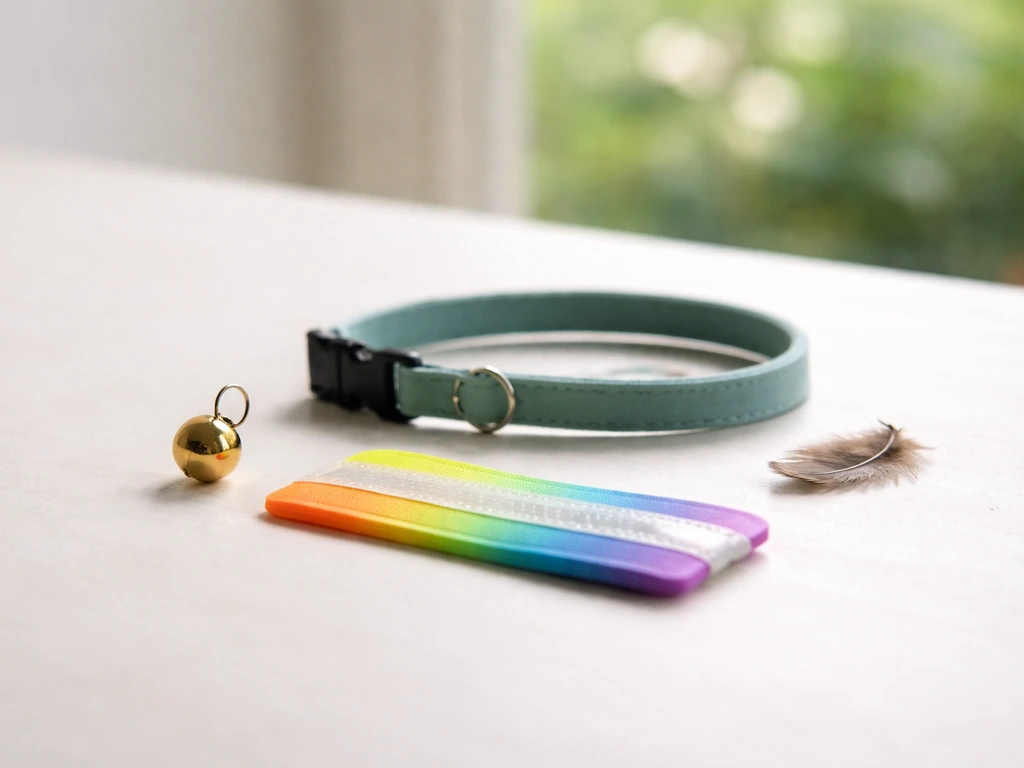
One UK-specific product worth knowing about is the Birdsbesafe collar cover, a brightly coloured fabric ruff that fits over an existing breakaway collar and uses colour rather than sound to warn birds. It is widely discussed in UK wildlife and cat owner communities and has peer-reviewed research behind it. The CatBib is another option available in the UK, a soft neoprene bib that disrupts a cat's pouncing motion. These are worth considering alongside or instead of a bell, depending on your cat's temperament and hunting style.
How cats actually harm birds (and why collars have limits)
The reality is that domestic cats are extraordinarily effective hunters, and they do not hunt the way many owners imagine. A cat does not sprint noisily across a garden and hope for the best. It uses slow, patient stalking, often freezing for several minutes at a time, before a final explosive lunge that covers the last metre or so in a fraction of a second. That final strike is faster than most birds' escape reflex, especially fledglings and birds distracted by feeding. This matters because it tells you something important: a bell only helps if it rings during the approach phase. A cat that has already frozen and is in its final lunge position may not ring its bell at all.
Beyond direct kills, cats injure birds that manage to escape, and those birds often die later from infection or shock. This is a category of harm that no collar addresses at all. And cats are most dangerous at the times birds are most active: dawn and dusk. If your cat is outside during those windows, any collar is working against much harder odds than if you simply keep the cat in during those hours.
Choosing between bells, visibility collars, and trackers

There are three main approaches, and they work through completely different mechanisms. Here is an honest comparison.
| Collar type | How it works | Evidence of effectiveness | Main limitation | Safety note |
|---|---|---|---|---|
| Bell collar | Sound alerts birds during cat's movement | Moderate: some reduction in catches, especially for less-experienced hunters | Experienced cats learn to move slowly; bell may not ring during final lunge | Must be quick-release; claw entanglement risk in bell loop |
| High-visibility bib or ruff (e.g. Birdsbesafe) | Bright colour warns birds visually, especially species with good colour vision | Good for songbirds and many garden birds; less effective for mammals and reptiles | Does not work well for colour-blind prey; bulky for some cats | Generally safe if properly fitted; check cat's comfort regularly |
| CatBib (motion-disrupting bib) | Soft bib interrupts the pouncing motion physically | Reasonable reduction in catches in trials; works through disruption not warning | Cat may adapt; does not warn birds in advance | Must be fitted so it does not restrict normal movement or eating |
| GPS tracker (e.g. Tractive, Pawfit) | Tracks cat location rather than warning birds | No direct bird protection; useful for identifying hunting hotspots and times | No bird-warning effect at all; monitoring only | Safe, but this is owner intelligence, not bird protection |
My honest recommendation: combine a quick-release bell collar with a Birdsbesafe-style high-visibility ruff. The two approaches address different vulnerabilities: the bell covers the approach phase, the colour covers moments when the cat is still. This combination has the best evidence behind it for garden birds specifically, which are the birds most UK cat owners are concerned about. A GPS tracker is a useful extra for understanding your cat's habits, but do not count it as bird protection.
How to fit and test the collar properly
Fitting matters more than most people realise. A collar that is too loose can catch on branches or the cat's own leg; one that is too tight restricts breathing and causes sores. The standard test is the two-finger rule: you should be able to slide exactly two fingers (not one, not three) between the collar and the cat's neck. For a quick-release collar, test the breakaway mechanism yourself before putting it on the cat by pressing the two sides of the buckle firmly together and checking it releases cleanly under moderate pressure. If it takes a lot of force, it is not safe.
When you first put on any collar with a bell or bib, watch your cat for at least 20 to 30 minutes. Some cats accept it immediately; others scratch at it, try to remove it, or show signs of distress such as hiding or refusing food. A short period of mild adjustment is normal. Persistent scratching, changes in gait, or not eating after an hour or two are signs the collar needs adjustment or removal. Check the fit again every few weeks because cats' weight fluctuates, and a collar that was right in January may be too tight by March.
To test whether the collar is actually doing anything, pay attention over the following weeks to whether you find fewer birds (dead, injured, or brought home as gifts). Keep a rough mental note of catches before and after. It is not scientific, but it gives you real-world signal. If catches do not drop after four to six weeks, try adjusting the approach: a louder bell, a more brightly coloured ruff, or a change in your cat's outdoor hours.
Going further: co-existence beyond the collar
A collar is a good start but not a complete solution. The single most effective thing you can do, supported by both RSPB and Cats Protection guidance, is to blank" rel="noopener noreferrer">keep your cat indoors between dusk and dawn. Cats Protection explains that cats are crepuscular, so keeping them indoors at night (between dusk and dawn) helps protect birds when they are most vulnerable blank" rel="noopener noreferrer">keep your cat indoors between dusk and dawn. This directly removes your cat from the garden during the two periods when birds are most active and most vulnerable. It does not require any special equipment, and it is free. If your cat is used to going out at night, transitioning to indoor nights takes a week or two of adjustment but most cats adapt well.
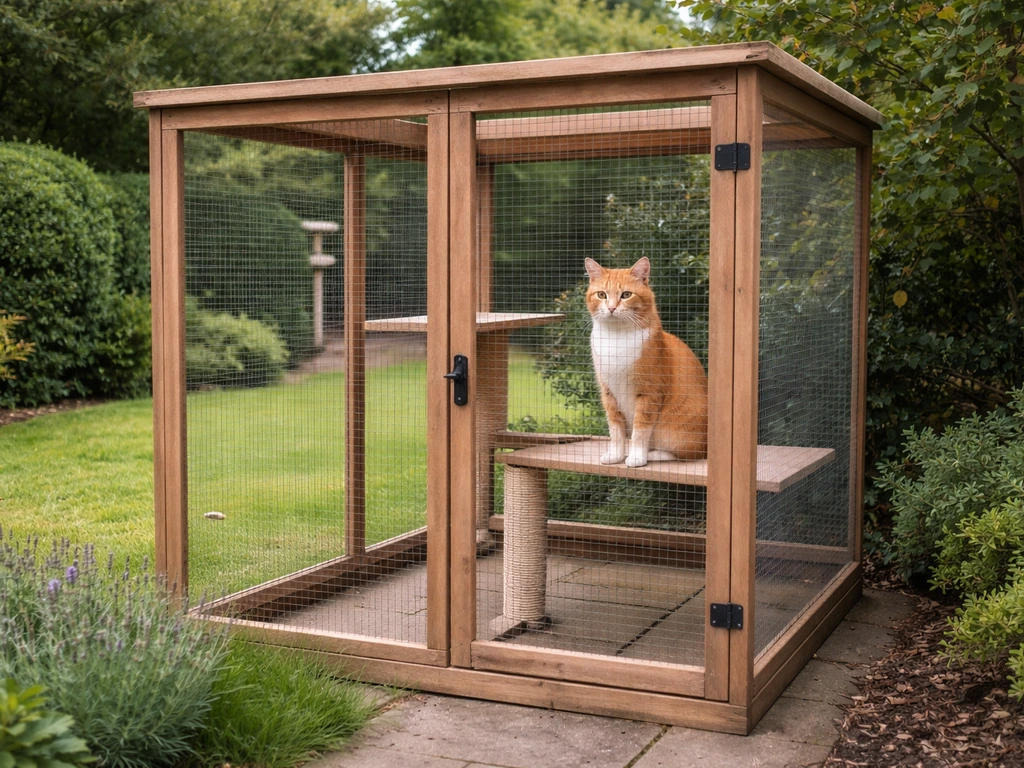
Cat enclosures (sometimes called 'catios') are the next level up. A catio gives your cat outdoor access, stimulation, and fresh air without giving it free range over the garden. Purpose-built catio kits are available in the UK from several suppliers, or you can build a simple one from timber and wire mesh. This is particularly worth considering if you live near hedgerows, woodland edges, or areas with ground-nesting birds.
In the garden itself, there are a few practical changes that make a real difference. Place bird feeders and bird baths at least two metres away from any shrub, fence, or surface that could give a cat a launching point, and ideally mount them on a smooth pole that cats cannot climb. Avoid low dense shrubs directly under feeders where a cat could hide and ambush. If you have dense ground cover near feeding areas, thinning it out removes a key stalking habitat.
Finally, think about timing your garden feeding. Putting food out later in the morning, once the early-dawn rush is over and light levels are higher (making cats more visible to birds), reduces risk without punishing the birds. These habitat and routine changes work alongside collar use, not instead of it, and together they represent genuinely science-based co-existence rather than a single-product fix.
If you are interested in how captivity and containment affect birds rather than cats, questions around bird welfare in enclosed or restrained situations involve a completely different set of considerations worth exploring separately. If you have ever wondered what the enclosed bird is fearful of, it often comes down to stress, unfamiliar movement, predators, and lack of safe hiding spots what the encaged bird fearful of. That is also why people sometimes ask whether bird ringing is cruel, and it deserves careful, evidence-based scrutiny is bird ringing cruel.
FAQ
Can I add a bell to any cat collar to create a cat collar bird warning?
You should not. If you want a bell, it needs to be part of a quick-release (breakaway) design, with the buckle tested for clean release under moderate pressure. Attaching a loose bell to a non-breakaway collar increases strangulation risk if the cat panics or the bell loop snags during climbing or grooming.
Will a bell always ring when a cat is hunting?
Not reliably. Cats often freeze before the final lunge, and if the freeze happens close to the bird, the bell may not ring during the critical moment. That is why colour-based ruffs, like Birdsbesafe-style covers, are useful as a separate warning layer.
What collar fit is safest for a quick-release bell or ruff?
Use the two-finger rule for fit, exactly two fingers between collar and neck (not one, not three). Then specifically check that the breakaway trigger releases smoothly when you press the buckle sides together, and recheck fit every few weeks because weight and fur change throughout the year.
My cat keeps trying to remove the collar. Should I persist?
Do a short adjustment period only, watch for distress like hiding, refusing food, or a noticeable change in gait. If scratching is persistent, the cat seems unable to settle, or symptoms continue beyond an hour or two, adjust the fit or remove the collar rather than “pushing through.”
Do bird warning collars prevent all bird deaths and injuries?
No. They can reduce the number of birds a cat catches, but they cannot eliminate harm. Cats can injure birds that escape and some die later, and no collar directly addresses that delayed-injury category.
Is an indoor-only schedule enough, even if I still use a bell collar?
Indoor time between dusk and dawn is the single biggest risk reduction, so you can treat collars as add-on protection, not the primary solution. Many owners find that combining indoor nights with a collar gives the best overall results, but indoor timing does the heavy lifting.
How long should I wait before deciding a collar is not working?
Give it roughly four to six weeks and compare against your prior “catch” pattern (dead, injured, or brought home). If you see no meaningful drop after that, adjust the approach, for example a louder or more visible setup and changing outdoor hours.
Does a GPS tracker stop my cat harming birds?
No. A tracker mainly helps you understand when and where your cat goes, which can guide changes like indoor hours or enclosure planning. It is not bird protection on its own.
Will a catio or cat enclosure affect birds differently than a collar?
Yes. A catio prevents free access to the garden area where birds feed and roost, reducing opportunity at the source. It still requires sensible placement and design, like avoiding locations close to hedgerows or ground-nesting habitat, but it is generally more effective than warnings alone.
Where should I place feeders and baths if I’m using a cat collar bird warning system?
Keep feeders and bird baths at least two metres away from shrubs, fences, or other launch points, and avoid low dense cover right under feeders. Mounting on a smooth pole that cats cannot climb reduces the chance your cat can get into stalking range in the first place.
My cat collars my cat during the day, but not at night. Is that better than nothing?
It can help, but it is still limited because dawn and dusk are when birds are most vulnerable and cats are most active. The biggest improvement usually comes from keeping cats indoors specifically during those windows, not just reducing daytime exposure.