You can touch a bird with bare hands, but whether you should depends almost entirely on the situation. For pet birds you handle regularly, bare-handed contact is generally fine. For wild birds, the honest answer is: gloves or a barrier are better, and the less handling you do, the better for both of you. The real risks are not some folk-tale curse on the bird, but very practical concerns: disease transmission (in both directions), stress-induced shock in the bird, and bites or scratches that can carry bacteria. If you have to handle a wild bird, keep it brief, use a towel if you can, and wash your hands thoroughly with soap and water for at least 20 seconds afterward.
Can You Touch a Bird With Bare Hands? Safety Guide

Marcus Whitmore
25 Apr 2026
When touching birds is and isn't risky
Pet birds vs. wild birds
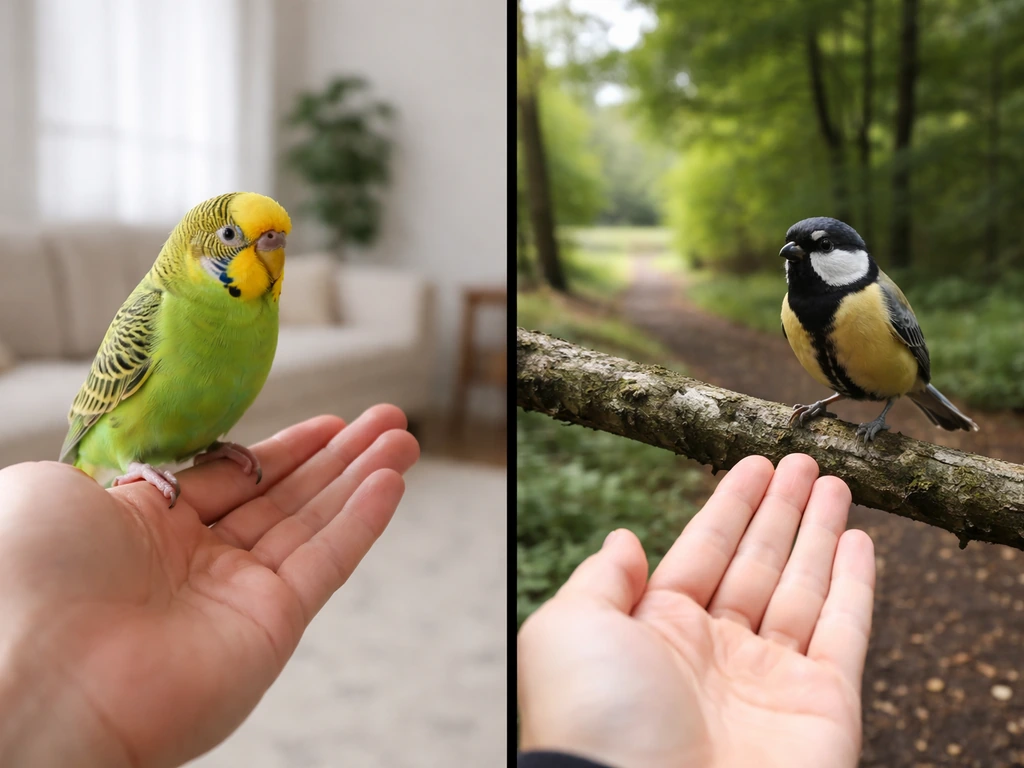
The risk profile is very different depending on what you are touching. A healthy, hand-tame pet parrot that you handle daily poses minimal bare-hand risk, though psittacosis is still worth knowing about: the CDC notes that bacteria like Chlamydia psittaci can be shed in droppings and respiratory secretions even by birds that look perfectly healthy, so basic hygiene still applies. With poultry or backyard chickens, Salmonella is the headline concern, and the CDC is unambiguous: wash your hands immediately after touching backyard birds or anything in their environment.
Wild birds are a different category. They can carry Salmonella, Newcastle disease, avian influenza, and various parasites. CDC guidance on bird flu makes clear that touching surfaces contaminated with infected birds or their waste is a genuine exposure pathway, and that applies to your hands during handling. None of this means a quick touch of a songbird will hospitalize you, but the risk is real enough to warrant using a barrier when you can.
The risk to the bird itself
Stress is the underappreciated hazard here. The FAO has documented that some birds respond to capture and handling with a physiological shock reaction, entering obvious distress. Birds also have body temperatures of roughly 104 to 108 degrees Fahrenheit, and after capture they become vulnerable to hypothermia in cold conditions or heat stress in hot ones. Prolonged or clumsy handling makes both outcomes more likely. This is why wildlife rehabilitation professionals strongly prefer minimal, calm, and brief contact.
Bites, scratches, and open wounds
Even small bites matter. The CDC's Yellow Book states that bite and scratch wounds can cause serious illness and warrant clinical evaluation, and that germs spread from bird bites and scratches even when the wound looks minor. If you have open cuts or wounds on your hands, those are direct entry points for pathogens, which is another reason a towel or gloves are not just theater.
How to touch or handle a bird safely if you have to
If you genuinely need to move or handle a bird, here is the approach that wildlife rehabilitation organizations consistently recommend. Move slowly, stay calm, and keep it as short as possible.
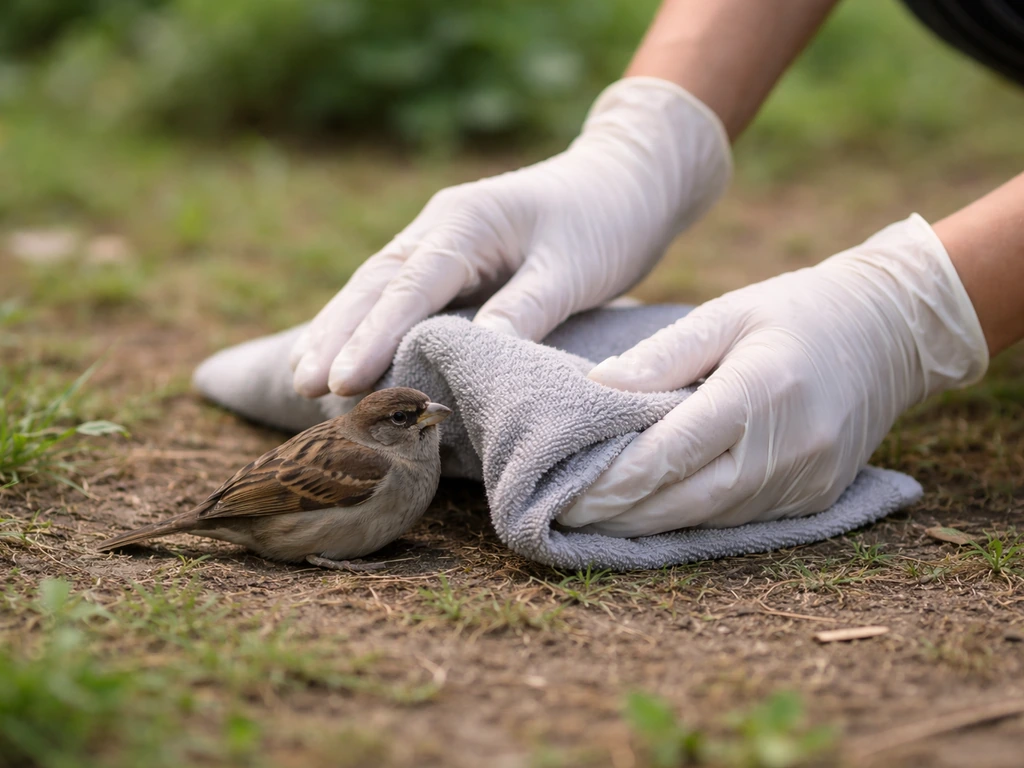
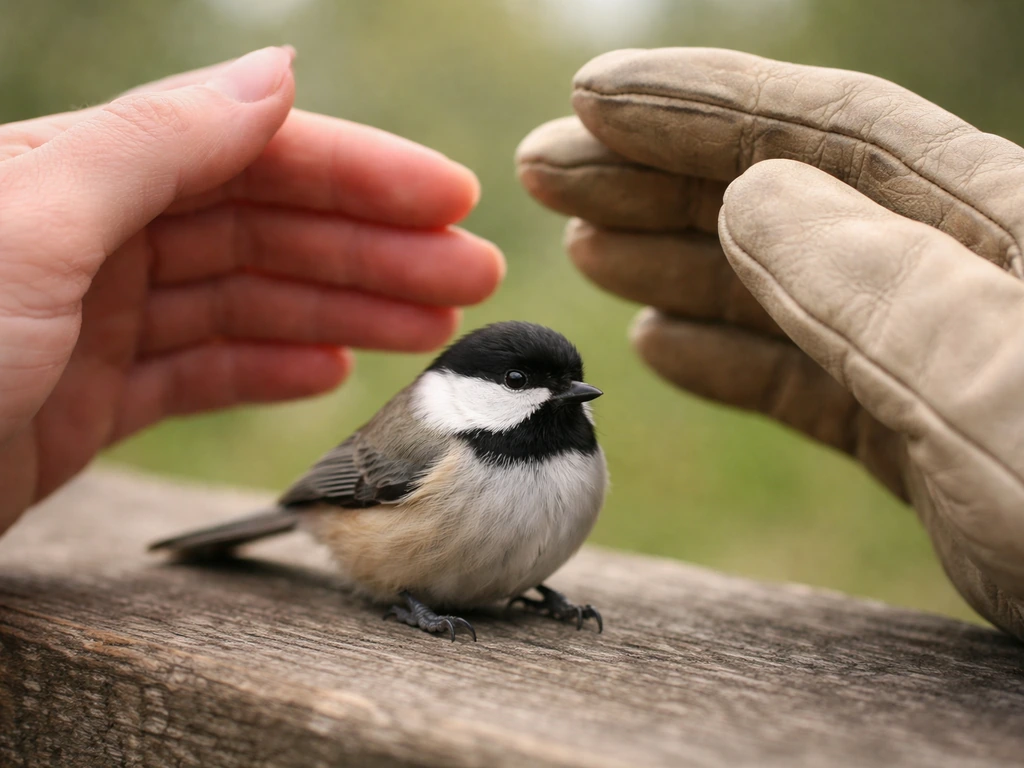
- Put on gloves if you have them. Thick gardening gloves are ideal for larger birds with strong beaks or talons. Latex or nitrile gloves work for smaller birds and still give you good disease protection. If you have nothing, wrap your hands in a shirt, jacket, or any cloth barrier.
- Approach slowly and from the front when possible. Sudden movements from behind trigger a stronger fear response. Keep your body low and move without rushing.
- Drape a towel or light cloth over the bird before you touch it. This reduces visual stimulation, calms many birds quickly, and gives you a grip surface. Wildlife rehab centers routinely use this technique.
- Cup the bird gently with both hands, with one hand supporting the body from below and your fingers loosely enclosing the wings against its body so it cannot flap and injure itself or you. Never squeeze.
- Keep the bird's head accessible for breathing and avoid covering its nostrils or beak.
- Transfer it to a secure, appropriately sized box as quickly as possible. Line the box with a soft cotton towel or paper to give grip and absorb moisture.
- Wash your hands immediately with soap and running water for at least 20 seconds, even if you wore gloves. Wash any clothing or towels that contacted the bird separately.
If you are dealing with a raptor (hawk, owl, eagle), the real danger is the talons, not the beak. Thick leather gloves are strongly preferred, and even then, a bird that is frightened and healthy can do real damage. For large or clearly dangerous birds, calling a wildlife rehabilitator before you attempt contact is the smarter call.
What to do if you find an injured or grounded bird
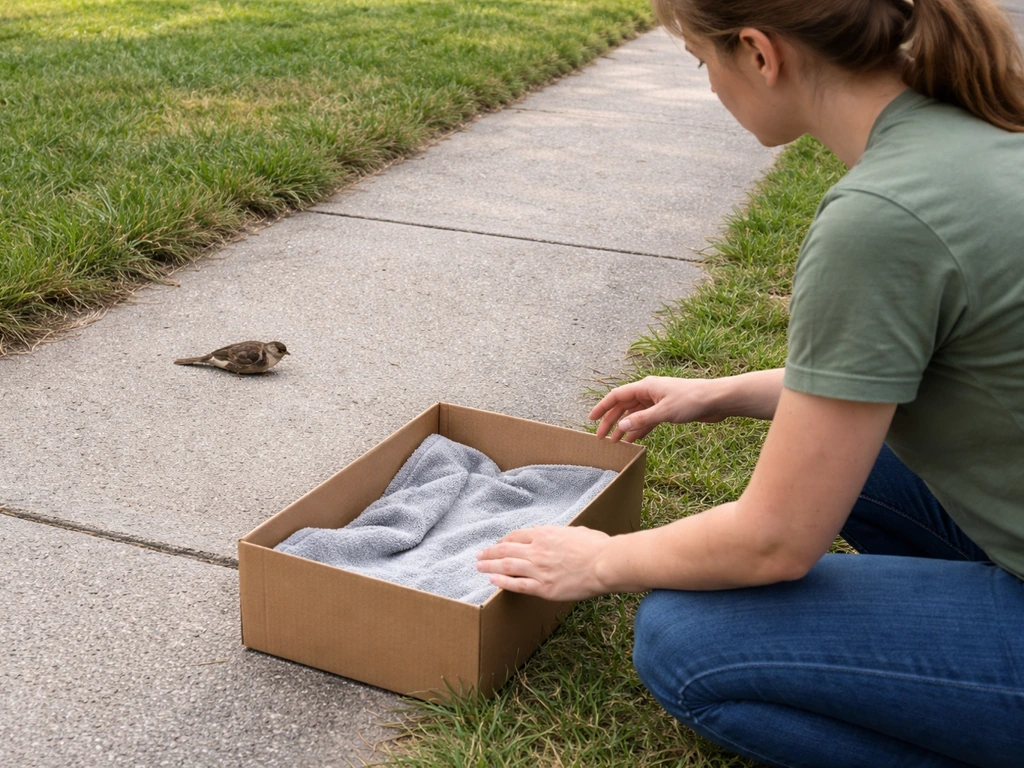
Finding a bird that cannot fly or seems seriously injured is stressful, and the instinct to immediately scoop it up and help is understandable. Here is a practical protocol that follows the guidance used by wildlife rehabilitation organizations. For injured or grounded wild birds, community advice on r/GardeningUK emphasizes contacting the appropriate wildlife rescue organization rather than attempting DIY handling.
- Before touching anything, call a wildlife rehabilitator or your local wildlife authority. Organizations like WIRES in Australia, the RSPCA in the UK, or your state or county wildlife agency in the US can give you real-time guidance specific to the species and situation. This one step can prevent a lot of well-intentioned harm.
- If the bird is in immediate danger (in traffic, in reach of a cat, on a hot surface), use the towel-and-glove method above to move it to a safer spot nearby. Do not take it further than necessary without professional guidance.
- Place the bird in a secure, ventilated box lined with a soft cotton towel. The box should be just large enough that the bird cannot flap around, but not so tight it is compressed.
- Keep it warm, dark, and quiet. Birds have high metabolic rates and can lose body heat fast. Placing the box in a warm room (not hot) and away from noise, pets, and children reduces stress significantly. Multiple rehabilitation organizations describe this as the single most important transport priority.
- Do not give the bird food or water unless a wildlife professional specifically tells you to. Improper feeding can cause aspiration, metabolic problems, or create a dependency that hurts rehabilitation outcomes.
- Transport it to a wildlife rehabilitation center as soon as possible, keeping the car quiet and warm. Place the box on a stable, level surface.
To find a licensed rehabilitator in the US, the National Wildlife Rehabilitators Association and the National Wildlife Federation both maintain searchable directories. In the UK, the RSPCA operates a 24-hour line. In Australia, WIRES covers much of the country. Your local animal control or Department of Fish and Wildlife can also point you in the right direction quickly.
Things not to do: myths and genuinely risky behavior
There is a lot of folklore around birds and human touch that leads people to make bad decisions in both directions, either panicking unnecessarily or taking risks they should not.
- Myth: Touching a baby bird means its mother will reject it. The reality is this is simply not true. Both Cornell Lab's All About Birds and Scientific American have addressed this directly: parent birds do not abandon chicks because of human scent. Their drive to care for their young is far stronger than any aversion to human smell. If you find a fledgling on the ground and can safely return it to the nest, you should, without hesitation.
- Myth: You only need to worry if the bird looks sick. Not true. Both psittacosis bacteria and avian influenza can be shed by birds that show no visible signs of illness, according to the CDC. Assume any wild bird contact carries some transmission risk and act accordingly.
- Don't handle dead wild birds with bare hands. Indiana DNR guidance is clear: use gloves or a plastic bag turned inside out over your hand. Dead birds can still carry live pathogens.
- Don't attempt to untangle a bird from netting, fishing line, or other entanglements on your own without professional guidance. WIRES specifically advises leaving untangling to professionals because amateur attempts frequently cause additional injuries.
- Don't attempt to give injured birds food or water without professional instruction. This is one of the most common and damaging things well-meaning people do.
- Don't keep a wild bird at home long-term without a permit and proper facilities. In most US states and many other countries, possessing wild birds without a license is illegal, not just inadvisable.
Hygiene and aftercare once the bird is gone
Handwashing is not optional here. The CDC recommends washing hands with soap and running water immediately after touching birds, their feeders, their baths, or anything in their environment. The recommended duration is at least 20 seconds. This applies even if you touched the bird only briefly, even if you wore gloves, and even if the bird looked healthy.
Wash any clothing, towels, or gloves that contacted the bird. The RSPCA specifically recommends laundering these separately. If you used a towel for transport and plan to reuse it, a hot wash cycle is appropriate.
If you were bitten or scratched, treat it seriously even if it looks minor. Clean the wound thoroughly with soap and water, then with an antiseptic. The CDC is explicit that infections from bird bites and scratches can cause serious illness even when the wound seems superficial. If the scratch broke skin, contact your doctor. This is especially important if you are not current on your tetanus vaccination. Mayo Clinic's guidance on animal bites notes that wounds contaminated with saliva or feces, which bird bites essentially are, may require a booster if your last tetanus shot was more than five years ago.
Keep an eye on yourself for a week or two after any significant wild bird contact. Respiratory symptoms, fever, or signs of infection at a wound site are all reasons to mention the bird contact to a doctor. Psittacosis, for example, typically presents with flu-like symptoms, and it is easily missed if your doctor does not know about the exposure.
Better ways to interact with birds without touching them
For most situations involving wild birds, the best approach is to observe from a distance. The U.S. Fish and Wildlife Service's general guidance on wildlife emphasizes this clearly. A good pair of binoculars and some patience gets you far more genuine bird behavior than any amount of handling ever would, and it carries zero risk to you or the bird.
If you want birds closer to you without touching them, managed feeding stations and birdbaths work well. Just remember that even indirect contact through feeders and baths carries some Salmonella and other pathogen risk, so washing your hands after refilling feeders or cleaning baths is still the right habit.
If a bird has taken up residence somewhere it is not welcome, humane deterrents like reflective tape, decoy predators, or professionally installed exclusion netting are almost always a better option than trying to catch and relocate it yourself. For persistent problems, especially with protected species, a licensed wildlife control professional or your local wildlife authority is the right call.
It is also worth knowing that touching bird feathers on the ground, handling nests, and picking up found feathers each carry their own nuances around disease and legal considerations, and those are topics worth exploring in their own right before you act. If you touch or disturb a bird nest, you can increase the stress on the parents and raise the risk of germs transferring to your hands and clothing touching a bird nest. The rules and risks around feathers, nests, and direct bird contact are related but distinct. Whether bird feathers are safe to handle depends on your hygiene, because feathers and the surfaces they touch can carry germs. Are bird feathers safe to touch? The same hygiene and disease-risk principles apply to handling feathers and the surfaces they may have contacted. In particular, the “mother rejection” myth shows up when people touch young or wild birds, but the practical risks are usually the real concern mother reject it. Touching bird feathers on the ground can carry pathogen risk, so use precautions and wash up afterward.
Wild vs. pet bird handling at a glance
| Factor | Pet Bird (healthy, hand-tame) | Wild Bird |
|---|---|---|
| Bare-hand contact | Generally acceptable with basic hygiene | Use a barrier (towel or gloves) when possible |
| Main disease risks | Psittacosis, Salmonella | Salmonella, avian influenza, Newcastle disease, psittacosis, parasites |
| Stress risk to bird | Low if habituated to handling | High, can trigger shock response |
| Bite/scratch risk | Low to moderate depending on species | Moderate to high, especially raptors |
| Handwashing required? | Yes, always | Yes, immediately and thoroughly |
| When to call a professional | If bird shows illness signs | Before handling when possible; always for injury/illness |
FAQ
If I wear gloves, can you touch a bird with bare hands risk-free? (Or is glove contact still a problem?)
Yes, but it still can increase disease exposure because pathogens can be present on skin, feathers, droppings, and contaminated surfaces. Use gloves if you expect any contact, avoid touching your face, and wash hands with soap and running water after removing gloves (20 seconds or more), since gloves can get contaminated on the outside during handling.
What should I do if I have to move a wild bird that is injured or trapped, but I am worried about contact risks?
If you find a bird that is stuck, tangled, or partially trapped, prioritize a barrier approach and minimize time. Use a clean towel as a “grab-and-contain” tool only if you must move it to safety, then place it in a ventilated container lined with a towel. Do not try to feed it or water it, and contact a licensed wildlife rehabilitator if it appears injured, a fledgling, or unable to fly.
How soon do I need to wash my hands after touching birds or their environment?
Wash according to the situation. For brief contact with a healthy pet bird, handwashing after handling is still recommended, especially before eating or touching your face. For backyard birds or anything with droppings, wash immediately afterward. If you also touched feeders, water bowls, baths, or the coop area, wash just as if you touched the bird directly.
Can you touch a bird with bare hands if you have a small cut on your fingers?
If you have an open cut or sore on your hands, treat it as a hard “no” for direct contact with wild birds. Cover the cut with a waterproof dressing before any cleanup, avoid handling contaminated items, and use a barrier like gloves or tools. If contact happens anyway, clean the area promptly and monitor for signs of infection.
If I get bitten or scratched by a bird, when is it more than just a minor wound?
If a bird bite or scratch breaks skin, you should clean it right away and seek medical advice promptly, particularly if your tetanus shot is not up to date (often beyond five years) or if the wound is on the hand, near a joint, or looks like it is getting worse. Even “small” wounds can require antibiotics depending on severity and location.
What if the bird looks sick or there are multiple dead birds nearby, can you touch a bird with bare hands then?
For respiratory exposures like bird flu concerns, the key is reducing contamination of your hands and clothing and avoiding aerosol-generating actions. If the bird is sick, dead, or you suspect high-risk disease, keep distance, ventilate the area if indoors, and avoid sweeping or dry cleaning contaminated material. Use gloves and eye protection if you must bag debris, then wash hands thoroughly afterward and contact local authorities or a wildlife professional.
Is the main risk that you touch the bird directly, or can handling the environment around it be risky too?
Yes, and it is a common mistake. “Bare-hand only” is not the rule, “time and contamination control” is. Even with a barrier, prolonged contact increases stress on the bird, and your hands can still pick up germs from the environment while you’re handling the bird or its container. Keep contact brief and calm, then wash.
For pet birds, how do I reduce risk beyond just washing my hands after touching them?
For pets you handle daily, you still should be careful about droppings and respiratory secretions. If you notice changes like coughing, nasal discharge, fluffed posture, or drooping, reduce handling, clean cage surfaces with a barrier (and ideally outdoors or in a well-ventilated area), and talk to an avian veterinarian. The hygiene routine matters even when the bird appears healthy.
What are safer alternatives if a bird keeps coming into my yard or building, instead of trying to catch or relocate it?
If a bird has taken over a nest spot or keeps returning, deterrence is usually safer than capture and relocation. Use non-contact solutions like reflective tape, motion-activated sprinklers where allowed, and professionally installed exclusion netting for larger problems. If the species is protected or the bird is actively nesting, contact wildlife control or your local wildlife authority before you try to remove anything.