
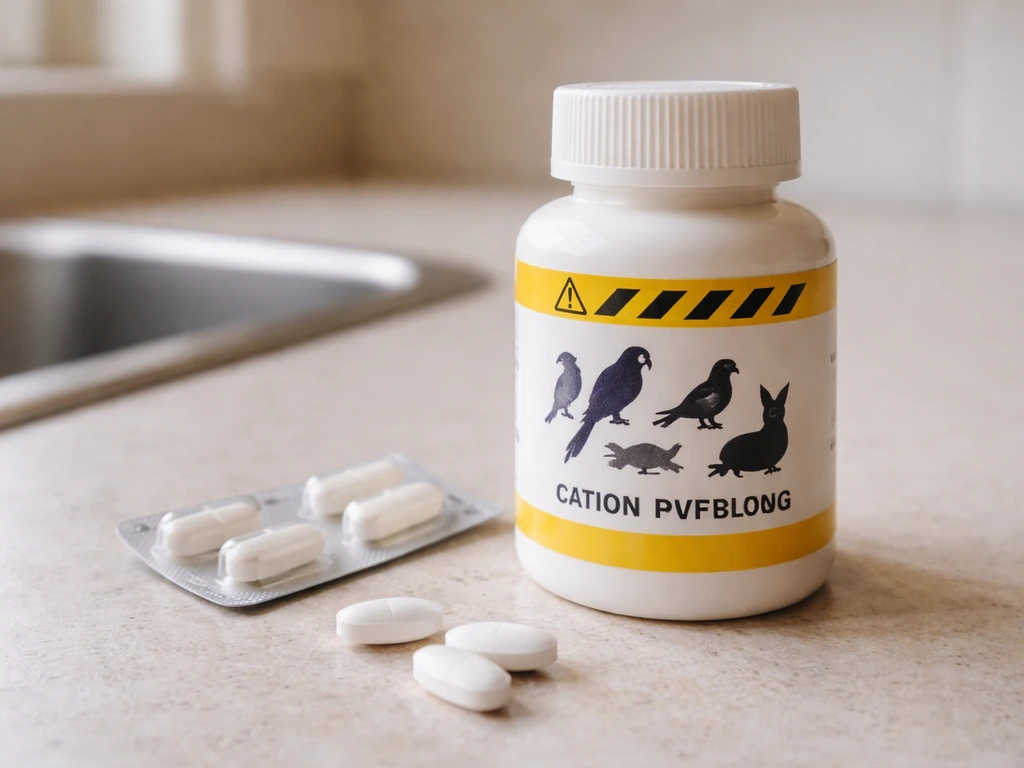
Bird Biotic is a veterinary antibiotic made by Thomas Labs containing doxycycline hyclate 100 mg as its only active ingredient. It comes as tablets, capsules, or powder packets meant to be dissolved in a bird's drinking water. The label says 'not for human use' clearly, and that label warning matters, but it does not mean a brief skin contact will send you to the hospital. The real answer to whether it is safe for humans depends heavily on the route and amount of exposure: casual handling while wearing basic precautions is low risk, but accidental ingestion, eye contact, or prolonged skin exposure with the powder form each carry specific hazards you need to know about.
Is Bird Biotic Safe for Humans to Handle Use?

Marcus Whitmore
3 Jul 2026
What Bird Biotic actually is
Bird Biotic is sold by Thomas Labs (Thomas Labs, LLC) as an over-the-counter animal drug. The FDA's DailyMed database lists it under NDC 86024-020 as an 'OTC animal drug' with a marketing category of 'unapproved drug other,' with a marketing start date of January 2017. That 'unapproved' label means it has not gone through the same formal veterinary drug approval process as prescription medications, not that the active ingredient is exotic or unknown.
The active ingredient, doxycycline hyclate, is one of the most thoroughly studied antibiotics in both human and veterinary medicine. In a human-approved form, doctors prescribe it for everything from Lyme disease to respiratory infections. The product directions for Bird Biotic tell you to dissolve one 100 mg tablet or packet into 8 oz of the bird's drinking water, prepare a fresh solution daily, and continue treatment for a minimum of 7 days but no more than 10. It is labeled for pigeons, pet birds, and exotic birds only.
You will find it in three physical forms depending on where you buy it: tablets (the form listed on DailyMed), powder packets (100 mg sachets, sold in 12-, 30-, or 60-count packs), and capsules (sometimes sold as Bird/Aqua Biotic). All three contain the same doxycycline hyclate at the same 100 mg dose. This matters practically because the powder form creates more inhalation and skin-contact opportunities than a solid tablet or capsule.
What 'safe for humans' actually means here

When people ask whether a product is safe for humans, that question bundles together several very different scenarios. A pet owner rinsing their hands after touching a tablet is not in the same risk category as someone who accidentally swallows a capsule or dumps a powder packet without any ventilation. Safety is always route-specific and dose-specific, so it helps to separate the question into its real components. Safety is always route-specific and dose-specific, and if you are wondering whether bat bird is harmful to humans, that depends on exposure route, amount, and how quickly you respond.
| Exposure Route | Hazard Level | Key Concern |
|---|---|---|
| Skin contact (brief, intact skin) | Low | Mild irritation (GHS H315); wash off promptly |
| Eye contact | Moderate | Serious eye irritation (GHS H319); flush immediately |
| Inhalation of powder/dust | Moderate | Respiratory tract irritation (GHS H335); use ventilation or mask |
| Accidental ingestion (small amount) | Low-moderate | Contact Poison Control; monitor for reaction |
| Intentional or large-dose ingestion | High | Not approved for humans; seek medical attention immediately |
| Repeated/chronic skin exposure | Moderate | Sensitization, photosensitivity, possible hypersensitivity reaction |
The phrase 'not for human use' on the label is a regulatory and liability statement, not a toxicity rating. It means the product has not been tested, dosed, or manufactured to human pharmaceutical standards. The active ingredient itself, doxycycline hyclate, is used in humans every day under prescription. If you are asking whether a specific human dose is safe, the answer is that it should not be taken and you should follow a clinician’s advice for doxycycline instead. The concern with using a veterinary product on or in yourself is quality control, dosing accuracy, and the absence of human-specific safety monitoring, not some exotic poison unique to the bird version.
One common misunderstanding worth addressing: the word 'biotic' (as in antibiotic) sometimes leads people to assume the product is biological, natural, or inherently gentle. It is not. Doxycycline hyclate is a synthetic tetracycline-class antibiotic with genuine chemical hazards at the occupational exposure level. Another mix-up I see frequently is confusing bird-related products with bird-disease risks. The hazards here come from the drug chemistry itself, not from any avian pathogen in the product. If you are worried about whether is bird saliva dangerous to humans, remember that Bird Biotic risks are mainly chemical irritation from the antibiotic itself rather than bird saliva.
How to check the safety evidence yourself today
You do not have to take anyone's word for it, including mine. The fastest way to check is to pull the Safety Data Sheet (SDS) for doxycycline hyclate directly from a chemical supplier's website (Sigma-Aldrich, Selleckchem, and EDQM all host current versions). Section 2 of the SDS gives you the GHS hazard classification, and Section 4 gives you first-aid measures. For Bird Biotic specifically, check the FDA's DailyMed database (search 'Bird Biotic') to read the actual product label, including the 'not for human use' language and overdose guidance.
What the SDS tells you about doxycycline hyclate is consistent across sources. PubChem and multiple commercial SDS documents classify it with three key GHS hazard statements: H315 (causes skin irritation), H319 (causes serious eye irritation), and H335 (may cause respiratory irritation). There are also aquatic toxicity hazard statements, which is relevant if you are disposing of unused solution near a water source. The oral rat LD50 is reported in the range of greater than 300 to 2000 mg/kg, placing it in a relatively low acute toxicity category by standard chemical ranking, but that animal figure does not translate directly to human safety.
Because Bird Biotic is categorized as an 'unapproved drug other' rather than a formally reviewed veterinary drug, there is no equivalent of an EPA registration number or full veterinary NDA to look up. What you can verify is the active ingredient's safety profile through the human doxycycline prescribing information on DailyMed, which will give you the full adverse reaction and overdose guidance that a licensed pharmacist would consult. DailyMed doxycycline labeling includes human adverse reaction categories, such as hypersensitivity reactions and anaphylaxis risk language, which can help frame potential consequences of accidental human exposure. That document covers hypersensitivity reactions, severe cutaneous adverse reactions (SCARs), and hepatic injury as the serious-end concerns.
First aid by exposure route

If an exposure happens, the action you take in the first few minutes matters more than the anxiety you feel afterward. Here is what the SDS and standard medical guidance say for each route.
Skin contact
Remove contaminated clothing. Wash the affected area thoroughly with soap and water for at least 15 minutes. Doxycycline hyclate is classified as a skin irritant (H315), so most brief exposures on intact skin will cause redness or mild irritation at worst. If irritation persists or a rash develops, consult a healthcare provider. People with known tetracycline hypersensitivity should be more cautious because sensitization reactions, including SCARs, are a documented risk.
Eye contact
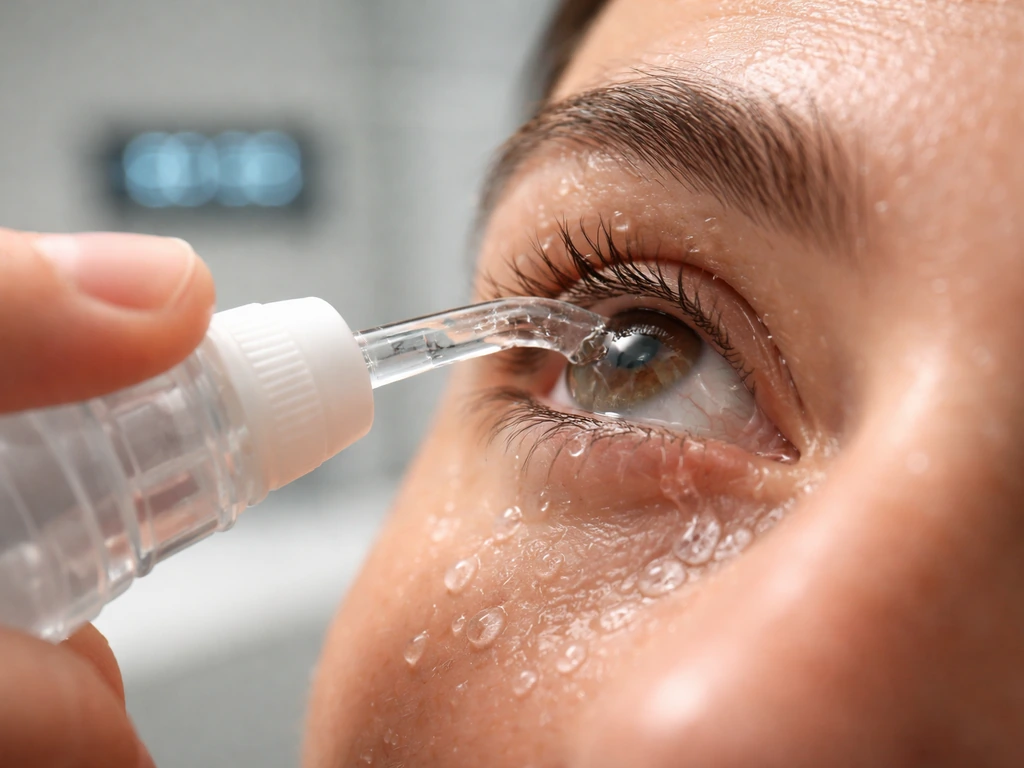
This is the route where immediate action is most critical. Remove contact lenses immediately. Flush eyes with large amounts of clean, cool water for at least 15 to 20 minutes, holding the eyelid open. The H319 classification (serious eye irritation) means this chemical can cause meaningful eye damage if not flushed promptly. If irritation, redness, or blurred vision continues after flushing, go to an urgent care clinic or emergency room.
Inhalation
Move to fresh air immediately. If you inhaled a significant amount of powder and are having difficulty breathing, have someone call emergency services while you rest in a position comfortable for breathing. Give supplemental oxygen if available and breathing is labored. Most minor inhalation exposures (e.g., briefly opening a powder packet without a mask) will cause throat or nasal irritation that clears on its own, but if symptoms such as coughing, chest tightness, or wheezing persist beyond 30 minutes in fresh air, seek medical evaluation.
Ingestion
Do not induce vomiting unless instructed by Poison Control or a medical professional. Rinse your mouth with water. For ingestion, doxycycline hyclate SDS Section 4 advises “Wash mouth with water” along with other first-aid steps. For accidental ingestion of a small amount (e.g., tasting a residue or accidentally swallowing a sip of prepared bird-water solution), call the Poison Control Center immediately: in the US, that number is 1-800-222-1222. Have the product label or the product name and active ingredient (doxycycline hyclate 100 mg) ready when you call. The Bird Biotic label itself states: 'In case of accidental overdose, contact a health professional immediately.' That guidance applies equally if a child finds the product.
Safe handling at home, around pets, and around children
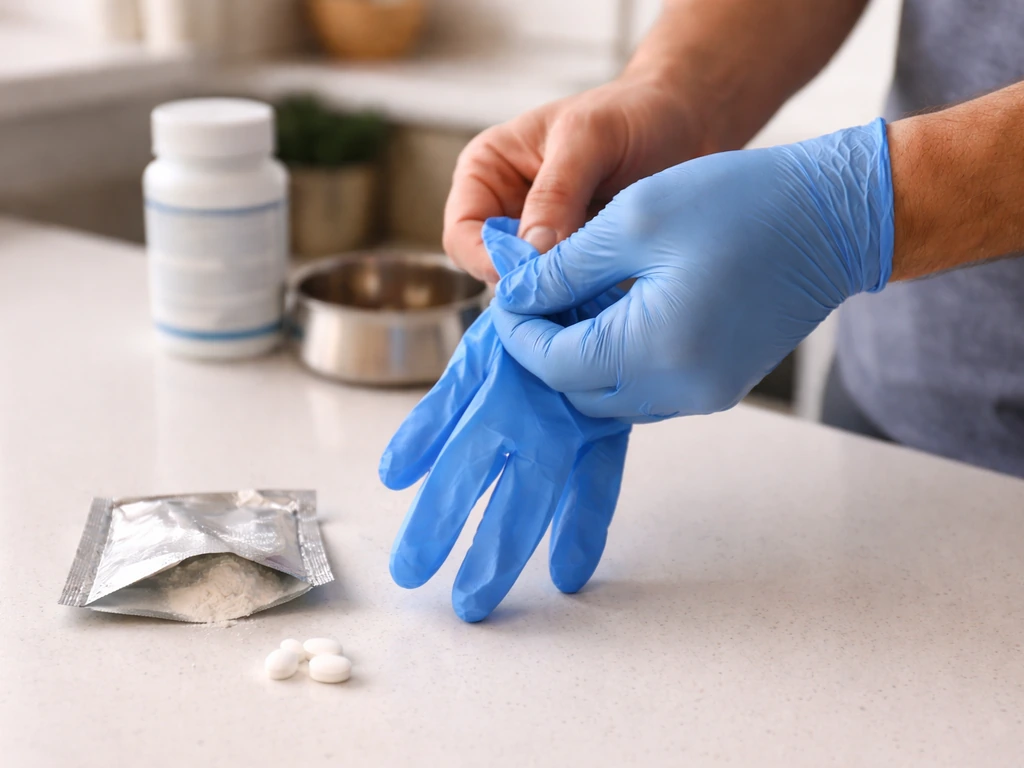
The powder packet form is the highest-risk format for casual users because fine powder disperses easily. When preparing a Bird Biotic solution, the following practices reduce your exposure meaningfully without requiring lab-grade equipment.
- Wear nitrile or latex gloves when handling powder packets or tablets. This takes care of both the skin irritation hazard and the sensitization risk.
- Open powder packets slowly and away from your face, or use a small cup as a funnel to reduce airborne dust.
- Work in a ventilated area or near an open window. This directly addresses the H335 respiratory irritation hazard.
- Avoid touching your eyes, nose, or mouth during preparation and before washing hands.
- Wash hands with soap and water immediately after handling, even if you used gloves.
- Store the product in its original container with the lid tightly closed, in a cool and dry place away from direct sunlight.
- Keep the product completely out of reach of children and household pets. The label states this explicitly, and it is worth taking seriously: a 100 mg dose is a meaningful antibiotic dose for a small child.
- Prepare fresh solution daily as directed and discard leftover solution carefully, keeping in mind the aquatic toxicity hazard if disposing near drains leading to waterways.
For aviation professionals or researchers handling Bird Biotic in an occupational or field context, the same principles apply with the addition of a simple N95 mask if you are working with powder in quantity or in enclosed spaces with poor airflow. No aircraft cabin air or air filtration restrictions specific to Bird Biotic have been identified in product documentation, but standard chemical handling protocols for irritant powders in enclosed environments are a reasonable precaution.
When you should not use it or should stay away entirely
There are situations where even careful handling is not enough and someone else should manage the product, or it should not be used in that environment at all.
- Known tetracycline or doxycycline allergy: if you have ever had a reaction to doxycycline, minocycline, or any tetracycline antibiotic, avoid handling Bird Biotic. Skin sensitization reactions and hypersensitivity responses are a documented risk with doxycycline exposure, and prior sensitization dramatically raises that risk.
- Pregnancy: tetracyclines including doxycycline are contraindicated in pregnancy because of developmental effects on fetal bone and tooth formation. Pregnant individuals should not handle this product.
- Young children in the home: even with careful storage, the powder form carries enough risk that households with toddlers or young children should store Bird Biotic in a locked cabinet, not just a high shelf.
- Immunocompromised individuals: while handling does not mean ingestion, people on immunosuppressive therapy or with compromised liver function (given doxycycline's known hepatic injury risk) should minimize exposure as a precaution.
- Environments without ventilation: preparing powder solutions in a small, enclosed bathroom or closet without airflow creates a meaningful inhalation risk. Always use ventilation.
- Treating birds without veterinary guidance: Bird Biotic is an unapproved drug, and misidentifying what is wrong with your bird can delay proper treatment or mask a different condition. This is a bird health concern, not a human safety one, but it is worth naming.
How to verify your specific product and get the right help
Products change formulations, and the form you have (tablet, capsule, or powder) can affect which SDS is most relevant. Here is a practical checklist for confirming what you have and who to call.
- Check the label for the active ingredient and NDC number. For Bird Biotic, the active ingredient should read 'doxycycline hyclate 100 mg.' The NDC 86024-020 corresponds to the tablet-for-solution form listed on DailyMed.
- Search DailyMed (dailymed.nlm.nih.gov) for 'Bird Biotic' to pull the current product label and confirm the exact formulation you have.
- Download the SDS for doxycycline hyclate from a reputable chemical supplier (Selleckchem, Sigma-Aldrich, or EDQM). Match the form (powder, tablet) to the closest SDS version available. Section 2 covers hazards and Section 4 covers first aid.
- Contact Thomas Labs directly if you have questions about formulation-specific safety. Their contact information is on their product pages and on the label.
- For any exposure event, US Poison Control is reachable at 1-800-222-1222, 24 hours a day. Have the product name, active ingredient, estimated amount involved, and the exposed person's age and weight ready.
- For medical evaluation after exposure, bring the product label or a photo of it to the clinic or emergency room. The treating provider needs to know it is doxycycline hyclate, not some unidentified 'bird chemical.'
A note on related questions that come up in this space: the human-safety questions around bird-related products vary widely depending on what you are actually dealing with. Concerns about bird dander, bird saliva, or even bird-related medications prescribed for avian zithromycin (azithromycin-type products) each carry their own distinct risk profiles and should not be conflated with Bird Biotic's doxycycline-based hazards. If you are researching multiple bird-related exposure risks, treat each product or biological source as its own separate investigation rather than lumping them together.
The bottom line is that Bird Biotic is a low-to-moderate handling risk for most healthy adults who use basic precautions. The active ingredient is well-understood, the hazards are chemical irritant-class rather than acutely toxic, and the first-aid steps are straightforward. What earns it the 'not for human use' label is the absence of human pharmaceutical oversight, not a unique toxicological threat. Handle it like the antibiotic powder it is: gloves, ventilation, keep it away from kids, and know your Poison Control number before you need it.
FAQ
If I accidentally touch Bird Biotic, do I need to go to urgent care or just wash it off?
For brief skin contact with a tablet or a small amount of dissolved product, washing with soap and water for at least 15 minutes is usually the appropriate first step. Seek medical advice if you develop a persistent rash, blistering, or eye symptoms (redness, pain, or blurred vision), because irritation classifications like skin and eye irritation can worsen without prompt flushing.
What’s the safest way to clean up if powder falls on the counter or floor?
Avoid dry sweeping or shaking powder, since that can re-aerosolize it. Ventilate the area, wipe with damp disposable towels, then wash the surface with detergent and water. Wear gloves during cleanup, and keep kids and pets out until the powder is fully removed.
Can I use Bird Biotic solution that I already mixed a day or two ago?
Use the dosing interval and freshness guidance from the product label. The article notes preparing fresh solution daily, so reusing older water can increase dosing variability and exposure risk. If you cannot confirm how it was stored (cool, covered, not contaminated), discard it and prepare a new batch according to label directions.
Is it safe to take doxycycline hyclate from Bird Biotic for humans if a clinician told me doxycycline is needed?
Even if the active ingredient is doxycycline hyclate, Bird Biotic is not manufactured or quality-controlled as a human medication, and dosing accuracy is not verified for human use. If you need doxycycline, use a human-labeled prescription, unless a clinician specifically directs otherwise with clear dosing instructions.
What should I do if it splashes into my eye, and how long should I flush?
Remove contact lenses immediately and flush with large amounts of cool running water for at least 15 to 20 minutes while keeping the eyelid open. If irritation or vision changes persist after flushing, urgent care or emergency evaluation is recommended, because delayed irrigation increases the risk of meaningful eye injury.
If a child drinks a small sip from a bird water container, do I just watch for symptoms?
Do not wait. Call Poison Control right away with the product name and active ingredient information. Even when the dose seems small, clinicians want the exact exposure details to decide whether observation or treatment is needed, and they can guide you on whether to rinse the mouth only or take additional steps.
Does Bird Biotic affect people with asthma or breathing sensitivity more than others?
Yes, people prone to reactive airway symptoms should be extra cautious, because powder can cause respiratory irritation and symptoms like coughing, chest tightness, or wheezing can appear after inhalation. If breathing symptoms persist beyond about 30 minutes in fresh air, get medical evaluation.
Are there specific people who should avoid handling Bird Biotic entirely?
People with known tetracycline allergy or prior severe reactions should avoid handling it, since sensitization and severe cutaneous adverse reactions can occur with tetracyclines. Also consider avoiding handling if you cannot reliably use ventilation and eye protection, because eye and inhalation exposures are the most time-sensitive hazards.
Is disposal near drains or outdoor water a concern?
It can be. The article notes aquatic toxicity hazard statements are relevant, so avoid dumping unused solution into sinks or outdoors where it can reach waterways. Use the disposal approach recommended on the label or local guidance for veterinary antibiotics, and consider contacting your pharmacist or local waste authority for the safest method.
How do I estimate whether my exposure was “more than brief” if I do not know the dose?
Use route and symptoms as your decision tool. Powder inhalation with ongoing coughing, eye splash with ongoing redness or pain, or powder on skin with rash or blistering are signals that the exposure was more than trivial. If you are unsure, Poison Control or a clinician can help you triage based on time, amount seen, and what symptoms occurred.