
Bird saliva is not something most people think about as a health hazard, and in the vast majority of everyday interactions, it isn't one. But it can carry pathogens, and under specific circumstances, those pathogens can infect humans. The realistic risk depends heavily on the bird species involved, the health status of the bird, how much contact occurred, and your own immune status. For a healthy adult who briefly handles a pet parrot or shoos a pigeon away, the risk is genuinely low. For a poultry worker, wildlife rehabilitator, or anyone handling visibly sick or dead birds without protection, the risk is meaningfully higher and deserves serious attention.
Is Bird Saliva Dangerous to Humans? Evidence and Advice

Marcus Whitmore
24 Jul 2026
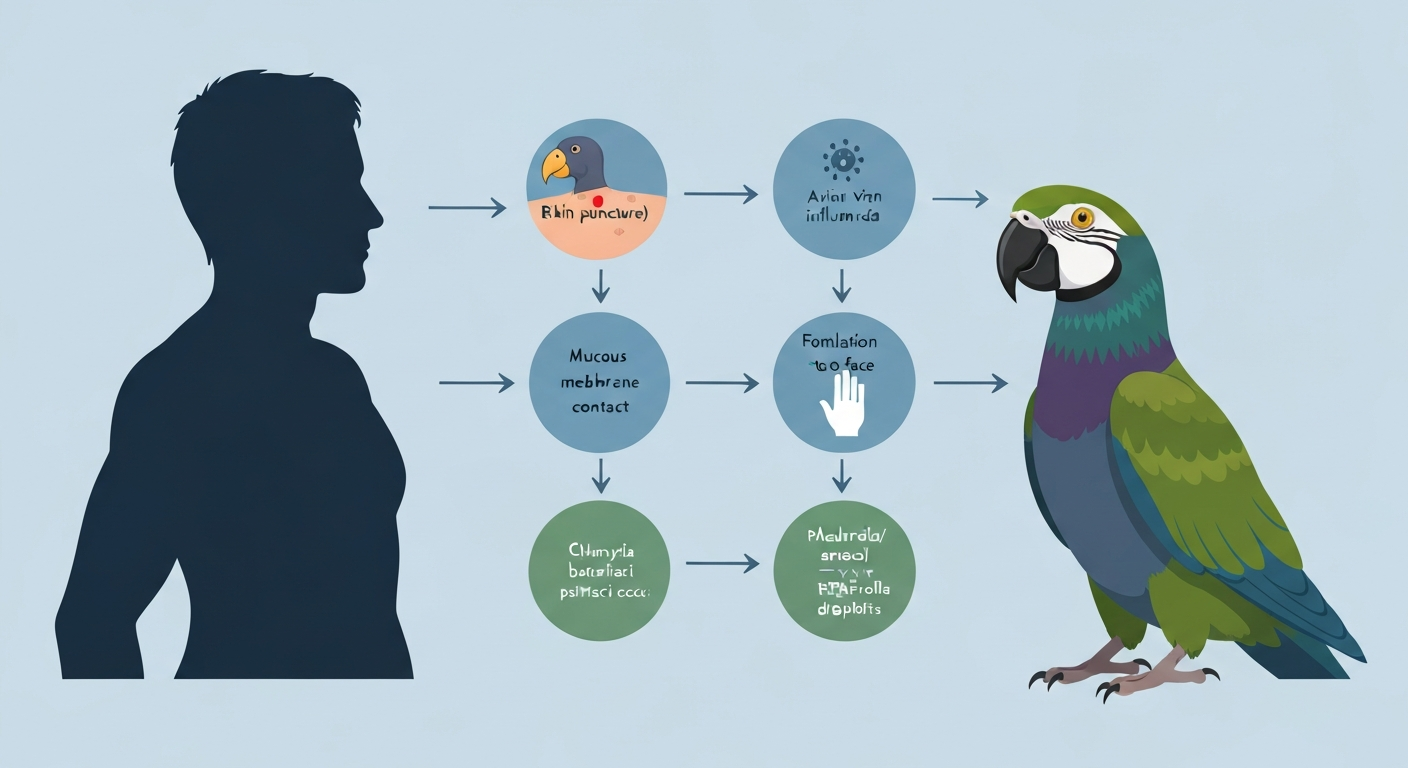
How bird saliva can carry and transmit pathogens
Birds do not produce saliva in quite the same volume or composition as mammals, but their oral and pharyngeal secretions still contain mucus, shed epithelial cells, and, when a bird is infected, replicating pathogens. The oropharyngeal cavity is essentially a crossroads: respiratory secretions from the trachea mix with material from the upper digestive tract, meaning a single oropharyngeal swab from an infected bird can yield both respiratory and enteric organisms. Surveillance studies in wild and domestic birds have confirmed that oropharyngeal swabs frequently contain detectable influenza virus RNA and, in actively infected birds, live infectious virus. In one documented H5N1 study in mute swans, infectious virus was recoverable from oropharyngeal swabs from day 3 through day 11 post-infection.
For a pathogen in bird oral secretions to infect a human, it needs a viable route of entry. The main mechanisms are: direct inoculation through a bite wound that breaks the skin; mucous membrane contact (rubbing your eye after handling a bird, or a bird making beak-to-mouth contact with a person); fomite transfer, where your contaminated hand touches your face; and inhalation of droplets or aerosols generated when a bird sneezes, exhales forcefully, or is handled in a way that agitates secretions. The inhalation and mucous-membrane routes tend to dominate in real-world infections, but bite-related inoculation is a recognized, if less frequent, pathway.
Diseases that bird oral secretions can plausibly transmit
Psittacosis (Chlamydia psittaci)
Psittacosis is probably the most recognized bird-to-human respiratory zoonosis. It is caused by Chlamydia psittaci, an obligate intracellular bacterium that infects a wide range of bird species, particularly parrots and other psittacines, but also pigeons, poultry, and many others. Humans typically acquire it by inhaling dried, aerosolized droppings or respiratory secretions, and the CDC explicitly lists bites and beak-to-mouth contact as recognized but less common transmission routes. In other words, oral secretions are a legitimate, documented exposure pathway, not a theoretical one. Symptoms in humans range from mild flu-like illness to severe atypical pneumonia. Untreated, it can be serious. The good news is it responds well to antibiotics: doxycycline is first-line for adults, and macrolides are preferred for children under eight years old.
Avian influenza
Avian influenza viruses primarily infect birds, but spillover to humans is well documented. The WHO identifies direct contact with infected live or dead animals, or with contaminated environments including bird secretions and excretions, as the primary human risk factor. Respiratory secretions from infected birds contain replicating virus, and the main human entry routes are inhalation of aerosols or droplets, mucous membrane exposure (particularly ocular), and hand-to-face fomite transfer. The CDC's public messaging is calibrated and worth repeating: general-public risk from current H5 strains is low, but people with direct occupational or recreational exposure to sick or dead birds are at meaningfully higher risk. Viral stability matters here too. Avian influenza A viruses are more stable at lower temperatures, in neutral or basic pH, and in mucus or water than on dry surfaces, which means fresh oral secretions in a cool environment represent a higher-risk matrix than dried material in warm sunlight. The Food Standards Agency exposure assessment notes that avian influenza environmental persistence is strongly temperature-, humidity-, UV- and matrix-dependent, with virus surviving hours–days on skin and many hours–weeks in feces, water, or on non‑porous surfaces under cool, moist, low‑UV conditions (Risk assessment of acquiring Avian Influenza from Poultry Products: Exposure assessment, Food Standards Agency) Risk assessment of acquiring Avian Influenza from Poultry Products: Exposure assessment — Food Standards Agency.
Salmonella and other bacterial infections
Salmonella species are common colonizers of the avian gut, and while fecal-oral transmission via droppings is the dominant route, oral secretions from birds with high gastrointestinal bacterial loads can carry Salmonella as well. Opportunistic bacteria such as Pasteurella multocida, Staphylococcus species, and various gram-negative organisms are also found in bird oral cavities and are particularly relevant in bite wounds, where inoculation directly into tissue bypasses normal skin-barrier defenses. Pasteurella multocida in particular causes rapid, painful wound infections after animal bites and should be considered whenever a bird bite breaks the skin, even a small parrot bite that seems trivial.
How common is transmission, and what raises your risk?
The honest answer is that human infections from bird oral secretions are uncommon in the general population, but they are not vanishingly rare in people with frequent, close exposure. Psittacosis cases are likely underreported because mild cases resolve without a diagnosis, but clusters in pet-bird owners, poultry workers, and bird fanciers are consistently documented. Human avian influenza infections remain relatively rare globally, but that rarity is partly a product of behavioral factors, not just viral biology. Risk is not evenly distributed.
Several factors push individual risk higher. Handling a visibly sick bird dramatically increases exposure to high viral or bacterial loads. Unhygienic practices, such as kissing birds, allowing beak-to-mouth contact, or eating without washing hands after handling birds, create direct inoculation opportunities. Absence of PPE in occupational settings, working in enclosed, poorly ventilated spaces with many birds, and performing high-agitation tasks like slaughtering, defeathering, or cleaning contaminated premises all elevate inhalation and mucous-membrane risks substantially. Immune status is a significant modifier: what is a subclinical exposure for a healthy adult can be a serious illness for someone who is immunocompromised.
How bird saliva risk stacks up against other bird-related hazards
It helps to put saliva risk in context alongside the other ways birds can harm human health. Droppings are, overall, the higher-volume hazard: they accumulate in the environment, dry into aerosolizable dust, and are the primary route for psittacosis, Cryptococcus neoformans (a fungal pathogen from pigeon droppings), and histoplasmosis (from soil enriched with bird or bat guano). Dander, which consists of shed skin cells, feather dust, and feather proteins, is mostly an allergic and respiratory-sensitization concern rather than an infectious one, though distinguishing allergy from infection matters clinically. Carcasses present concentrated hazards because dead birds may carry high loads of pathogens without the behavioral cues (active sneezing, visible illness) that alert people to be cautious with live birds. Compared to these routes, fresh oral secretions from a single live bird represent a moderate, exposure-dependent risk, lower than routine contact with accumulated droppings or carcasses, but higher than incidental proximity to a healthy bird in open air.
| Hazard | Primary pathogens | Main route to humans | Relative risk level |
|---|---|---|---|
| Bird droppings (fresh/dry) | C. psittaci, Salmonella, Cryptococcus, Histoplasma | Inhalation of aerosolized dust; fomite | High (especially accumulated/dried) |
| Bird oral secretions/saliva | C. psittaci, avian influenza, Pasteurella, Salmonella | Bite, mucous membrane, aerosol, fomite | Moderate (exposure-dependent) |
| Bird dander/feather dust | Allergens (Hypersensitivity Pneumonitis proteins) | Inhalation | Allergic/immunological, not primarily infectious |
| Bird carcasses | Avian influenza, C. psittaci, Salmonella, others | Direct contact, inhalation, fomite | High without PPE |
| Contaminated water/surfaces | Avian influenza (survives in cool water/surfaces) | Hand-to-face fomite; mucous membrane | Variable; moderate in contaminated environments |
Bird saliva versus bat saliva and other mammal saliva
This is a comparison worth making clearly, because the hazard profiles are quite different. Bat saliva is in a different risk category from bird saliva, primarily because bats are a major reservoir for rabies virus, and any bat bite or scratch, or even potential mucous-membrane exposure to bat saliva, is treated as a potential rabies exposure requiring immediate medical evaluation and post-exposure prophylaxis consideration. Birds do not carry rabies. That is not a minor distinction. Beyond rabies, bats are also associated with histoplasmosis (via guano, shared with birds in enclosed spaces) and are reservoirs for a range of other viruses. Dog and cat bites carry their own Pasteurella, Capnocytophaga, and (for cats specifically) Bartonella henselae risks. The key difference for bird saliva is the absence of rabies risk, which keeps the urgency level lower than for mammal bites, but the presence of legitimate bacterial and viral pathogens means bird bites and oral-secretion exposures still warrant proper wound care and monitoring.
Who is genuinely at higher risk?
Risk is not uniform, and it is worth being explicit about who should take bird-saliva exposure more seriously than the average person.
- Immunocompromised individuals (including those on immunosuppressive therapy, people living with HIV/AIDS, transplant recipients, and those undergoing chemotherapy) face disproportionate severity from infections that a healthy immune system would resolve easily.
- Poultry workers have sustained, high-volume exposure to bird secretions, excretions, and aerosols, often in enclosed high-bird-density environments. OSHA and CDC have dedicated interim guidance on PPE selection for this group specifically for avian influenza risk.
- Avian veterinarians and veterinary technicians routinely handle sick birds, perform oral examinations, and collect oropharyngeal swabs, all of which involve close contact with the highest-load secretions.
- Wildlife rehabilitators handle injured and sick wild birds of unknown disease status, often without the controlled conditions of a clinical setting. Many wild birds are asymptomatic carriers of pathogens.
- Airport ground crews and bird-strike response personnel may handle dead or injured birds with no advance warning and often without PPE readily available. Bird-strike carcasses should be handled with the same precautions as any unknown dead wild bird.
- People who practice beak-to-mouth contact with pet birds (a documented risk factor for psittacosis transmission) regardless of immune status.
What to do immediately after an exposure
First aid and wound care
If a bird bites you and breaks the skin, treat it as you would any animal bite wound. Wash the wound thoroughly with soap and water for at least several minutes. This is not optional: thorough mechanical cleaning is one of the most effective ways to reduce bacterial inoculation. Apply an antiseptic and cover the wound. If oral secretions contacted an eye or mucous membrane, flush with clean water or sterile saline for several minutes. Remove and bag contaminated clothing. Wash your hands thoroughly even if you wore gloves.
When to seek medical care and report the incident
Seek medical evaluation promptly if the bite is deep, if you are immunocompromised, if the bird was visibly sick or was a species known to carry significant zoonotic risk (especially wild waterfowl or poultry during an active avian influenza event), or if you develop any fever, respiratory symptoms, or signs of wound infection within the following two weeks. In occupational settings, bite and secretion exposures should be reported to occupational health services as a matter of protocol, regardless of apparent severity. During active avian influenza outbreaks or in areas with documented HPAI activity, public health authorities or state veterinary offices should be notified of significant exposures, because case detection depends on people reporting. CDC and WHO both emphasize that early reporting enables early antiviral treatment, which materially affects outcomes.
Testing and treatment: what to discuss with a clinician
Tell your doctor about the exposure context: what species of bird, whether it appeared sick, the type of exposure (bite, aerosol, mucous-membrane contact), your occupation, and the geographic location if it is relevant to active disease surveillance. For psittacosis, diagnosis is typically confirmed with serological testing (complement fixation or microimmunofluorescence) or PCR of respiratory specimens, and doxycycline remains first-line treatment for adults. For suspected novel avian influenza, the CDC recommends initiating oseltamivir (or another approved neuraminidase inhibitor) as early as possible in suspected or confirmed severe cases without waiting for laboratory confirmation. State health departments and the CDC have protocols for collecting and testing specimens from potential novel influenza cases, and clinicians should contact their state health department when novel avian influenza is suspected. Laboratory handling is important to note here: routine influenza diagnostic specimens can be processed at BSL-2, but propagation or culture of HPAI viruses requires BSL-3 enhanced facilities and, in the U.S., registration under Select Agent regulations.
Should you use veterinary bird products like 'bird zithro' or 'bird biotic' on yourself?
No. If you're wondering whether 'is bird zithro safe for humans', the clear answer is no, veterinary antibiotics like bird zithro are not appropriate for human use and you should consult a clinician for proper treatment. This needs to be said plainly, because the question comes up and the answer does not have meaningful nuance. Products marketed as 'bird zithro' or 'bird biotic' are veterinary formulations of azithromycin and doxycycline respectively, sold for use in birds. They are not manufactured to human pharmaceutical standards. Human dosing, weight-based calculations, formulation purity, inactive ingredients, and quality controls are all different from veterinary products. Taking a bird antibiotic after a bird bite to preemptively treat yourself is not a substitute for medical evaluation: it risks incorrect dosing (too little fails to treat infection and promotes resistance; too much causes toxicity), masks symptoms that should be assessed clinically, and bypasses proper wound evaluation and potentially necessary diagnostic testing. If you cannot access medical care immediately, that is a conversation to have with a telehealth provider or urgent care, not a reason to reach for a product intended for a parakeet. The same principle applies more broadly: human pharmaceutical equivalents of these drugs exist, are dosed correctly for humans, and require a prescription for good reasons. If you wonder whether "is bird biotic safe for humans", remember veterinary products are not intended for people and you should consult a clinician instead.
Is bird dander harmful? Allergy versus infection
Bird dander is a genuinely common cause of allergic sensitization and respiratory illness, but the mechanism is immunological, not infectious. Bird fancier's lung is a hypersensitivity pneumonitis caused by repeated inhalation of bird proteins found in dander, feather dust, and droppings, and it can cause serious, progressive lung damage in sensitized individuals even without any infectious pathogen being present. Symptoms like cough, breathlessness, and fever after bird exposure can mimic infectious illness, which is why distinguishing allergy from infection matters clinically. If you are around birds regularly and develop persistent respiratory symptoms, both possibilities need to be evaluated. Reducing exposure to dander through HEPA filtration, improved ventilation, and consistent hand washing helps manage allergic risk, but if sensitization has already occurred, the most effective intervention is reducing or eliminating exposure to the triggering bird proteins.
Safe handling of live birds
Whether you are a pet owner, researcher, or avian veterinarian, the same core principles apply. Handle birds in well-ventilated areas or use a mask when handling birds that are sneezing, showing respiratory signs, or are of unknown health status. Wear gloves when examining oral cavities, collecting swabs, or handling birds that are likely to bite. Never allow beak-to-mouth contact, regardless of how tame or apparently healthy the bird is. Wash hands thoroughly with soap and water after handling any bird, before touching your face, eating, or preparing food. Change and launder clothing worn during bird handling. In clinical or research settings, personal protective equipment should match the risk level: at minimum gloves and eye protection when handling sick birds or collecting oropharyngeal specimens, N95 respirators or higher when aerosol generation is likely.
Safe handling of dead birds and carcasses
Dead birds, whether found in the field, collected post-bird strike, or encountered during surveillance, should be treated as potential pathogen sources regardless of whether they appear healthy. Use disposable gloves, ideally two pairs. Avoid touching your face during handling. If you are collecting a carcass for testing during an active HPAI event, an N95 respirator and eye protection are appropriate given the aerosol and mucous-membrane exposure risks. Double-bag carcasses for disposal or transport. After handling, remove gloves without touching the outer surfaces, dispose of them appropriately, and wash hands thoroughly. Airport ground crews responding to bird strikes should have basic PPE kits accessible and should follow their organization's biosafety protocols for biological material. Any wild bird deaths in unusual numbers in one location should be reported to state wildlife agencies or USDA/APHIS.
Prevention tailored to your situation
Pet owners
- Source birds from reputable breeders or suppliers with documented health screening.
- Establish veterinary care with an avian-qualified vet and keep vaccination and health records up to date.
- Wash hands before and after handling birds, cleaning cages, or handling food and water dishes.
- Avoid beak-to-mouth contact and discourage birds from 'preening' your lips or eyes.
- Isolate any new bird for at least 30 days before introducing it to existing birds or allowing extensive human contact.
- Seek veterinary evaluation promptly if a bird appears unwell; notify your doctor if you develop respiratory illness or fever after handling a sick bird.
Researchers and avian veterinarians
- Implement a written biosafety plan for all bird-handling activities, tiered to the risk level of the species and procedures involved.
- Use fit-tested NIOSH-approved N95 respirators (or higher) when collecting oropharyngeal swabs, performing necropsies, or working with birds of unknown or high-risk status.
- Wear gloves, eye protection, and appropriate gowns or coveralls; change and decontaminate before leaving the work area.
- Consider pre-exposure seasonal influenza vaccination for all staff (which does not protect against avian strains but reduces risk of co-infection and reassortment).
- Follow CDC and institutional biosafety office guidance on specimen handling; HPAI virus culture requires BSL-3 enhanced facilities.
- Report potential exposures to occupational health immediately and follow post-exposure monitoring protocols.
Aviation professionals and airport ground crews
- Include disposable gloves and N95 masks in bird-strike response kits kept at readily accessible locations airside.
- Train ground crews on basic safe-handling procedures for dead birds before exposure incidents occur.
- Report bird strike carcasses through established wildlife hazard management channels; do not dispose of carcasses informally during active surveillance periods.
- Follow airport wildlife management authority protocols for carcass collection during HPAI events; these will typically align with USDA/APHIS guidance.
- Wash hands or use hand sanitizer after any contact with bird material, even gloved contact.
When to loop in occupational health, public health, or report an outbreak
Not every bird-related exposure warrants a public health report, but some clearly do. Report to public health authorities if you or a coworker develops respiratory illness following occupational exposure to birds during a known or suspected avian influenza event; if multiple people with shared bird exposure develop similar illness; if you find unusual numbers of dead wild birds in one location; or if you have a laboratory-confirmed or clinically suspected case of psittacosis or novel influenza. In occupational settings, these are also OSHA-relevant events: employers have obligations around recordkeeping and hazard communication, and occupational health services should be involved in post-exposure management and in reviewing whether workplace controls are adequate. For poultry industry outbreaks, USDA/APHIS is the primary reporting authority; state departments of agriculture are the first call for most situations.
Where to find authoritative guidance
For the most current, evidence-based information, go directly to the primary sources rather than secondary summaries (including this article). The following agencies maintain regularly updated guidance relevant to bird-related health risks.
| Organization | Relevant resource areas |
|---|---|
| CDC (Centers for Disease Control and Prevention) | Psittacosis clinical overview; avian influenza guidance for workers; PPE selection for avian influenza; biosafety in microbiological laboratories (BMBL) |
| WHO (World Health Organization) | Avian influenza Q&A; interim guidance for people exposed to avian influenza viruses; clinical management of severe respiratory illness |
| USDA/APHIS (Animal and Plant Health Inspection Service) | Avian influenza surveillance and outbreak response; wild bird mortality reporting; poultry biosecurity guidelines |
| OSHA (Occupational Safety and Health Administration) | Avian influenza worker protection standards; respiratory protection programs; biological hazard guidance for poultry and agricultural workers |
| AVMA (American Veterinary Medical Association) | Avian zoonoses guidance for veterinary professionals; avian influenza resources for practitioners |
| State and local health departments | Local outbreak status; exposure reporting protocols; jurisdictional quarantine and surveillance requirements |
FAQ
Is bird saliva dangerous to humans?
Short answer: Usually no for the general public, but it can be a source of infectious agents that occasionally infect people. Most healthy people exposed to casual contact (petting, brief contact) will not get sick. However, bird saliva and other oral/respiratory secretions can carry pathogens (notably avian influenza viruses and Chlamydia psittaci) that pose a real risk in higher‑exposure situations (handling sick or dead birds, occupational exposure, bites, or prolonged close contact with infected birds). Public health authorities (CDC, WHO) treat saliva/respiratory secretions as potential infectious material when birds are ill or during outbreaks.
Which specific diseases can be plausibly transmitted via bird saliva or oral secretions?
Key pathogens with plausible transmission from avian oral/respiratory secretions: - Psittacosis (Chlamydia psittaci): a bacterial respiratory illness in humans; infection commonly follows inhalation of dried respiratory secretions or droplet exposure and can also follow beak‑to‑mouth contact or bites. (CDC: https://www.cdc.gov/psittacosis/) - Avian influenza (zoonotic influenza A viruses, e.g., some H5/H7 strains): infectious virus can be present in oropharyngeal/tracheal secretions; human risk is mainly from direct contact with infected birds or contaminated environments. (WHO Q&A: https://www.who.int/news-room/questions-and-answers/item/influenza-avian) - Bacterial infections from opportunistic organisms (Pasteurella, gram‑negative rods, Staphylococcus spp., other oral flora): bite wounds, scratches or mucous‑membrane contamination can cause local or systemic infection. - Salmonella and other enteric bacteria: typically associated with droppings and fecal–oral exposure, but hands contaminated by oral secretions then touching mouth/food can transmit these. Note: documented human disease from bird saliva is uncommon relative to droppings/environmental exposures, but it is biologically plausible for the organisms above.
How does the risk from bird saliva compare to other bird-related hazards (dander, droppings, carcasses) and to bat saliva?
Relative risk ranking (general): - Highest risk: contact with sick/dead birds and droppings in outbreak settings (environmental aerosolization of dried droppings/feathers is a major route for C. psittaci and contributes to environmental spread of avian influenza). - Moderate risk: direct handling of sick birds, slaughtering/defeathering, or high‑exposure occupational tasks where respiratory/oral secretions and aerosols are generated. - Lower risk: casual contact with healthy pet birds (though allergic reactions to dander can be common). Dander is primarily an allergen (causing allergic rhinitis or asthma) rather than an infection risk. Carcasses of infected birds can carry high pathogen loads (both secretions and feces), making dead birds a significant hazard. Comparison to bat saliva: Bats can carry zoonotic viruses (e.g., rabies lyssaviruses) where bites/saliva are direct routes for human infection; bat saliva risks for specific viruses are different and in some cases more directly dangerous (e.g., rabies) than typical bird saliva exposures. Overall, bird‑saliva risks are pathogen‑specific and generally lower for casual contact than risks from contaminated droppings, carcasses, or certain high‑risk bat exposures.
Who is at higher risk of getting sick from bird saliva or related exposures?
Higher‑risk groups include: - Immunocompromised people (HIV, transplant recipients, chemotherapy patients, high‑dose corticosteroids) - Poultry workers, slaughterhouse and processing staff, farmworkers - Avian veterinarians, wildlife rehabilitators, zoo staff and bird breeders - Ornithology researchers handling wild or sick birds - Airport and wildlife‑strike/ground crews who handle sick/dead birds or clean contaminated areas - People bitten or scratched by birds or who have mucous‑membrane exposure to bird secretions These groups should use additional precautions and seek occupational health guidance when exposed.
What should I do immediately after exposure to bird saliva (bite, spatter to eyes/mouth, close contact with sick bird)?
Immediate steps: - Clean the area: for skin contact or minor bites/scratches, wash thoroughly with soap and water for several minutes. - For mucous‑membrane exposure (eyes, mouth): rinse repeatedly with water or saline for several minutes. - Remove contaminated clothing and wash hands/skin. - For deeper bites or puncture wounds: control bleeding, clean, and seek medical care promptly. - Report the exposure to your employer/occupational health if relevant and document the bird (owner, species, if possible health status). - If the bird is dead or appears sick, avoid further contact and follow public‑health reporting guidance for your area. If you develop fever, cough, difficulty breathing, or worsening wound signs (redness, swelling, pus), seek medical care and tell the clinician about the bird exposure.
When should I seek medical care and what testing or treatments might be needed?
Seek prompt medical care if: - You develop systemic symptoms after exposure (fever, cough, shortness of breath, severe headache, myalgia) - You have a deep bite, puncture wound, or rapidly worsening local infection - You are in a high‑risk group (immunocompromised, pregnant) even with minor symptoms Clinical actions clinicians may take: - History and exam focused on bird exposure and timing - Laboratory testing: respiratory swabs for influenza PCR if symptoms and epidemiologic risk; serology or PCR for C. psittaci in suspected cases; bacterial wound cultures for bites. Availability of specific tests varies. - Treatment: empiric antibiotics for suspected psittacosis (doxycycline is first‑line in adults per CDC) or macrolides for children if tetracyclines contraindicated. For suspected avian influenza with severe illness or novel strains, clinicians may start antiviral therapy (e.g., oseltamivir) early per CDC/WHO guidance. Wound care and appropriate antibiotics for bacterial bite infections (guided by culture and standard wound‑infection protocols). Inform public‑health authorities when required by local rules.