No, drowning a bird is not humane. The ASPCA explicitly states that "no forms of drowning are acceptable alternatives" to proper euthanasia, and a landmark 1999 paper by Ludders et al., published in Wildlife Society Bulletin, concluded that "drowning is not euthanasia" and that the process is painful and frightening for the animal. If you have a bird that is suffering, trapped, or injured right now, the answer is not water: it is warmth, darkness, quiet, and a call to a wildlife rehabilitator or avian vet as fast as you can make it. In some cases people wonder whether "bird stop liquid" can be used, but it is not a humane substitute for proper care or euthanasia by a qualified professional.
Is Drowning a Bird Humane? What to Do Instead Fast

Marcus Whitmore
31 May 2026
Why drowning doesn't meet any humane standard

The RSPCA defines humane killing as either killing instantly or rendering the animal completely insensible to pain before death occurs, with no suffering or distress in between. Drowning does neither of those things. The mechanism of death in drowning is hypoxia and anoxia caused by fluid entering the lungs, and research on avian cerebral energy metabolism confirms that birds undergo measurable physiological distress as oxygen levels drop. That process is not instant, and it is not painless.
Forensic veterinary pathology research is clear that non-anesthetized animals subjected to oxygen deprivation actively struggle and experience air hunger before losing consciousness. Birds are no different. In fact, stress physiology research shows that corticosterone, the primary avian stress hormone, begins rising within minutes of a distressing experience. Waiting even three minutes after capture can produce a significant corticosterone spike in wild birds. Drowning takes longer than that, meaning the animal is in measurable physiological distress for the duration.
The idea that drowning might be quick or painless is folklore, not biology. Washington State's Department of Fish and Wildlife explicitly lists drowning among unacceptable and inhumane methods when killing of nuisance wildlife is legally required. Also, drowning or leaving a bird in water is not an appropriate way to determine whether the bird is safe or whether something is poisonous drowning among unacceptable and inhumane methods. That position is consistent with veterinary consensus across major welfare organizations.
What to do right now if a bird is in trouble
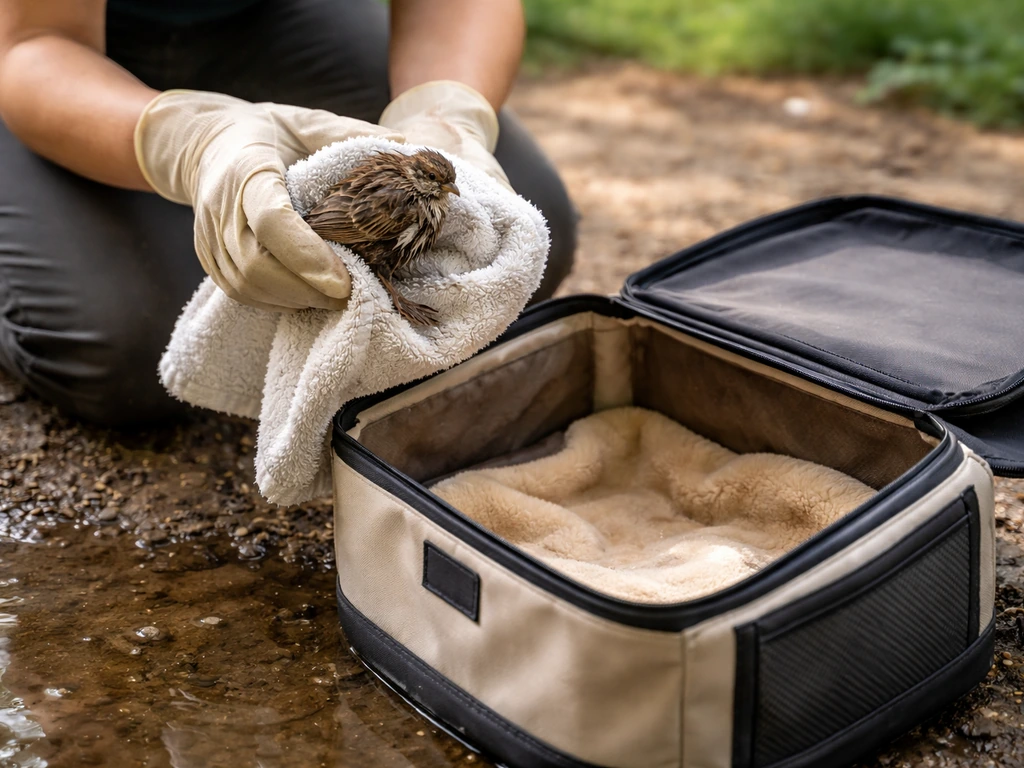
If you have a bird in front of you that is injured, ill, or has been found struggling in water, the immediate priority is stabilization, not treatment. Golden Gate Bird Alliance similarly instructs that when you find an injured bird, you should place it in a warm, dark, quiet place and avoid trying to provide food, water, or first aid place an injured bird in a warm, dark, quiet place and do not attempt to provide food, water, or first aid. You are not expected to heal the bird yourself. Your job for the next few minutes is to minimize additional stress while you get it to someone who can actually help.
Here is what the Tufts Wildlife Clinic, Audubon, and Golden Gate Bird Alliance all agree on, and it is consistent across the board:
- Gently place the bird in a cardboard box or small container lined with a soft cloth or paper towel. Make sure the box has small ventilation holes but is otherwise dark and enclosed.
- Keep the bird warm. A cool or wet bird can develop hypothermia quickly. If the bird was in water, gently pat it dry if it tolerates handling, and keep the environment around 85 to 90 degrees Fahrenheit if possible.
- Do not offer food or water. This is counterintuitive but important. Feeding an injured bird the wrong thing, or at the wrong time, can cause aspiration or nutritional harm. Audubon and WildNest Bird Rehab are emphatic on this point.
- Minimize handling. Every time you pick up or look at the bird, you are adding stress. Put it in the box, close the lid, and leave it in a quiet room while you make calls.
- Call for help immediately. Do not wait to see if the bird "recovers on its own" before reaching out.
If the bird was found floating or struggling in a bird bath or other water feature, the same rules apply. Get it dry, get it warm, get it dark and quiet, and call a rehabber. Whether birds can actually drown in a bird bath is a separate question worth understanding if you maintain one, but once a bird is already in distress, the handling steps above apply regardless of the cause.
When euthanasia is genuinely needed, and who can actually do it
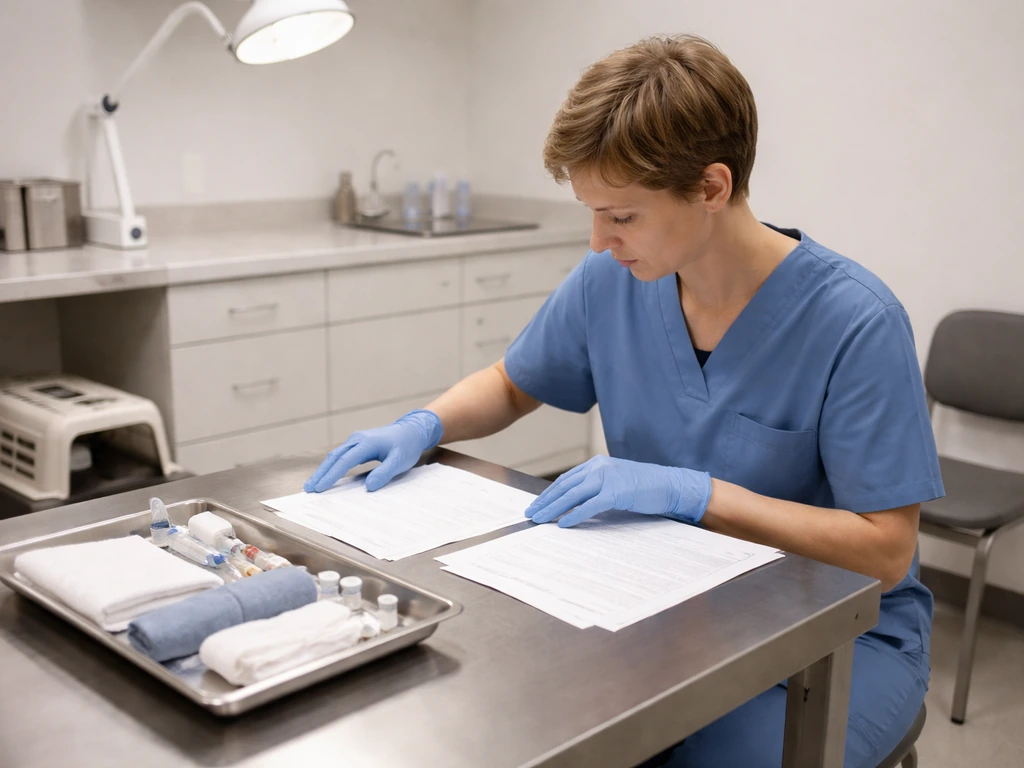
Sometimes a bird is so severely injured that survival is not possible, and euthanasia truly is the most compassionate option. That is a real situation, and it deserves a real answer. But the answer is not something you can or should do yourself with water, a bag, blunt force, or any improvised method. Humane euthanasia for birds means a trained professional administering an injectable agent, typically pentobarbital sodium, in a controlled setting.
The ASPCA says injection is "the most humane, safest, fastest, and least stressful" method of euthanasia. It also requires verification that death has actually occurred, something that is easy to get wrong without training. New Jersey's administrative code, for example, requires that euthanasia be performed by a licensed veterinarian or someone directly certified by one. Ohio's code requires that if death does not occur, an approved method must be immediately repeated or an alternative must be applied. The legal and welfare framework around euthanasia exists for a reason: improvised methods cause unnecessary suffering.
If you contact a wildlife rehabilitator and they assess the bird as non-viable, they will either euthanize it themselves (if licensed to do so) or direct you to a vet who can. You do not have to make that call alone, and you do not have to carry it out yourself.
How to find help today
Finding a wildlife rehabilitator is faster than most people expect. Here are the most reliable ways to locate one right now:
- Animal Help Now (ahnow.org or its app): A database of over 3,700 wildlife rehabilitators, rescues, hotlines, and wildlife-treating vets. It locates the nearest help by your current location. This is the fastest single tool available.
- National Wildlife Rehabilitators Association (nwra.org): Offers a searchable directory of licensed rehabilitators by region.
- Humane World for Animals (formerly HSUS): Maintains a directory at humaneworldforanimals.org and also points users to Animal Help Now.
- Audubon Society: Recommends calling local animal services if you cannot immediately reach a wildlife rehabilitator, especially outside of business hours.
- Your local animal control or animal services office: They often have after-hours contacts for wildlife emergencies and can direct you to licensed rehabilitators.
- An avian veterinarian: If you have a pet bird that is ill or injured, an avian vet is your first call, not a wildlife rehabber. Search "avian vet near me" or use the Association of Avian Veterinarians (aav.org) directory.
Note that in the US, most wild birds are protected under the Migratory Bird Treaty Act. Caring for them without the proper federal rehabilitation permit is technically illegal, which is another reason to hand off to a licensed professional rather than attempting home care beyond the immediate stabilization steps above.
If the real issue is birds causing problems: humane alternatives
Some people land on this question not because a bird is suffering, but because birds are causing a nuisance and someone is looking for the fastest way to deal with them. That context matters, and it deserves a direct answer too.
The RSPCA's position is that killing wildlife should not be the first response where proven non-harmful deterrence can be used. Washington State's wildlife authorities echo this: when lethal control is legally necessary (for licensed pest management situations), it must follow AVMA depopulation guidelines, which again exclude drowning. For most everyday situations, people do not have legal grounds for lethal control of wild birds at all.
The Houston Humane Society frames deterrence well: the goal is to make an area uncomfortable enough that birds move away on their own, and the first step is removing what attracted them in the first place. That means food sources, open water, or nesting opportunities. After that, physical deterrents like reflective tape, predator decoys, or motion-activated sprinklers are effective and legal.
If birds are getting trapped in netting around crops or structures, the RSPCA warns that bird netting can itself become a trap or kill birds if it is not properly installed and maintained. Regular inspection is required. If you find a bird tangled in netting, contact your local wildlife rehabilitator or animal control rather than trying to cut it free yourself without support, as improper handling can worsen injuries.
A quick decision guide for common situations
| Your situation | What to do right now |
|---|---|
| Bird is struggling in water or a bird bath | Remove it gently, dry it, place it in a warm dark box, call a wildlife rehabber immediately |
| Bird is injured on the ground (collision, cat attack, etc.) | Box it up, keep it warm and dark, do not feed or water it, call Animal Help Now or a local rehabber |
| Bird appears very ill and unlikely to survive | Call a wildlife rehabber or avian vet; they will assess and perform euthanasia if needed using approved methods |
| Pet bird is sick or injured | Call an avian veterinarian immediately; do not attempt home euthanasia |
| Birds are causing a nuisance around your property | Remove attractants first, then use legal non-lethal deterrents; contact wildlife authorities if the problem is severe |
| You found a bird tangled in netting | Call local animal control or a wildlife rehabber; do not force the bird free without guidance |
The bottom line is straightforward: drowning causes distress, meets no definition of humane euthanasia used by any major veterinary or welfare authority, and is not a legal method of wildlife control in most jurisdictions. Whether the bird in front of you needs rescue, rehabilitation, or end-of-life care, there is a better path than water, and help is usually available within a phone call or app search. If you are wondering whether bird bath water is toxic, that is a separate concern from the harm caused by drowning-like exposure, but it is worth checking before offering any water to birds.
FAQ
What should I do in the first 5 minutes if I find a bird that was in water and is still alive?
If you suspect drowning-like exposure right now, treat it like an emergency respiratory and stress situation. Get the bird warm, dry, and in a dark, quiet box, then call a wildlife rehabilitator or avian vet immediately, do not force water or “flush” the lungs, and do not try CPR unless a professional tells you to.
Can I put a bird back in water to see whether it is poisoned or if it “can breathe fine”?
No. “Testing” with water to see if a bird is poisoned or safe can add distress and delays real care. Instead, prevent further access to any suspected toxin, keep the bird warm and contained, and report the likely exposure so the rehabilitator can advise on cleaning and supportive treatment.
Should I offer water or food to an injured or chilled bird I found in a bird bath?
Give comfort and reduce stress, but do not give food or drink. A bird that is chilled, hypoxic, or injured can choke or worsen aspiration if you feed or offer water by hand. Keep handling minimal and let the rehabilitator determine hydration and nutrition needs.
Is it okay to wait and see if the bird recovers after it goes in water?
If the bird is still conscious and struggling, freezing the situation by waiting it out is not humane and can worsen physiology. Use warmth, darkness, and quiet as immediate stabilization, then call for guidance right away. Time matters most when there is visible breathing difficulty, weakness, or prolonged distress.
What if the bird looks too sick or unresponsive, can I euthanize it myself using water or immersion?
If the bird is unresponsive, you still should not attempt home euthanasia. Transport for professional assessment, and if you must move it to prevent further harm, use gloves and a secure container. Professionals will decide whether euthanasia is appropriate and what method is legal and humane.
How can I tell whether a bird went into water due to illness or due to something toxic?
Chilled water itself can be a major cause of collapse and impaired breathing, but poisoning and drowning-like exposure can look similar. For safety, avoid giving any additional water, note what you found (bird bath, puddle, chemicals nearby), and tell the rehabber so they can prioritize tox checks and supportive care.
Why is “it must be quick” not enough when someone suggests drowning as humane?
People often confuse the concept of “fast” with “humane,” but humane euthanasia requires rendering insensible to pain or killing instantly with proper technique and confirmation of death. Improvised methods can cause distress and incomplete death, so only a trained, authorized person should handle end-of-life care.
Do I risk legal trouble if I try to help a wild bird myself after it was in water?
Yes, and the exact legal rules vary by location and by whether the bird is considered protected. In many places, handling or providing rehabilitation for wild birds without authorization can create legal risk, so the best first step is stabilization and then handing off to a permitted rehabilitator or avian vet.
What if the bird is tangled or trapped in netting or a decorative feature and keeps ending up in water?
If a bird is trapped in a hazardous situation like netting, fencing, or a water feature, the goal is to stop the injury progression while minimizing panic. Keep it contained, reduce movement, avoid cutting netting with bare hands (which can worsen fractures or bleeding), and contact an appropriate wildlife service for safe release.
How can I set up a bird bath so it does not put birds at risk, especially for small or weak flyers?
If you have a bird bath, the safe setup prevents repeat distress. Use shallow, easily accessible water, include an escape ramp or textured edge, avoid deep basins, and clean regularly to reduce pathogens, algae, and chemical residue. If a bird is already distressed, stabilization steps come first, setup changes come second.
If the bird seems to perk up after drying off, should I still call a wildlife rehabilitator?
If the bird was found floating, struggling, or clearly impaired, you should assume it needs professional care even if it looks better later. Mild improvement can be misleading because breathing and neurological impairment may persist, so contact a rehabber the same day.