
Bird bath water is not inherently toxic to humans, but it is not risk-free either. Stagnant water mixed with bird droppings, algae, and organic debris can harbor real pathogens including Salmonella, Campylobacter, Giardia, Cryptosporidium, and cyanobacteria toxins. The actual risk to a healthy adult who briefly touches bird bath water is low. The risk climbs meaningfully if you accidentally ingest it, handle it without washing your hands, or if you are immunocompromised, very young, elderly, or pregnant. Toxicity is not the right word here; contamination is. The distinction matters because it changes how you respond.
Is Bird Bath Water Toxic to Humans? Risks and Safe Care

Marcus Whitmore
2 Jul 2026
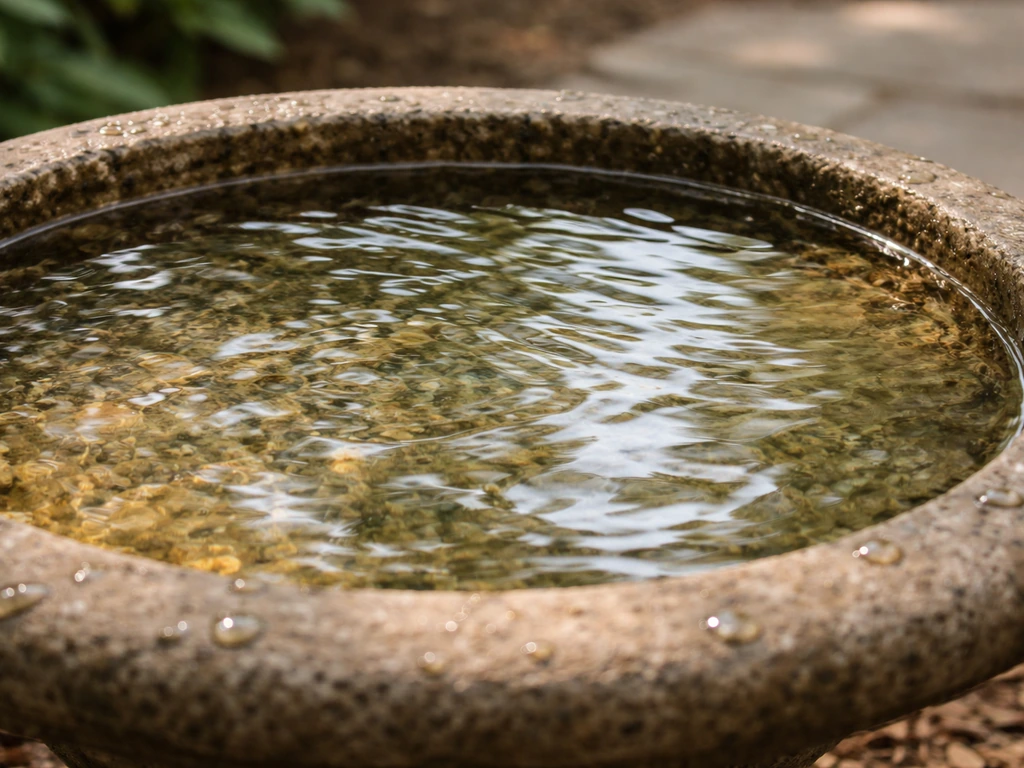
What's actually in bird bath water
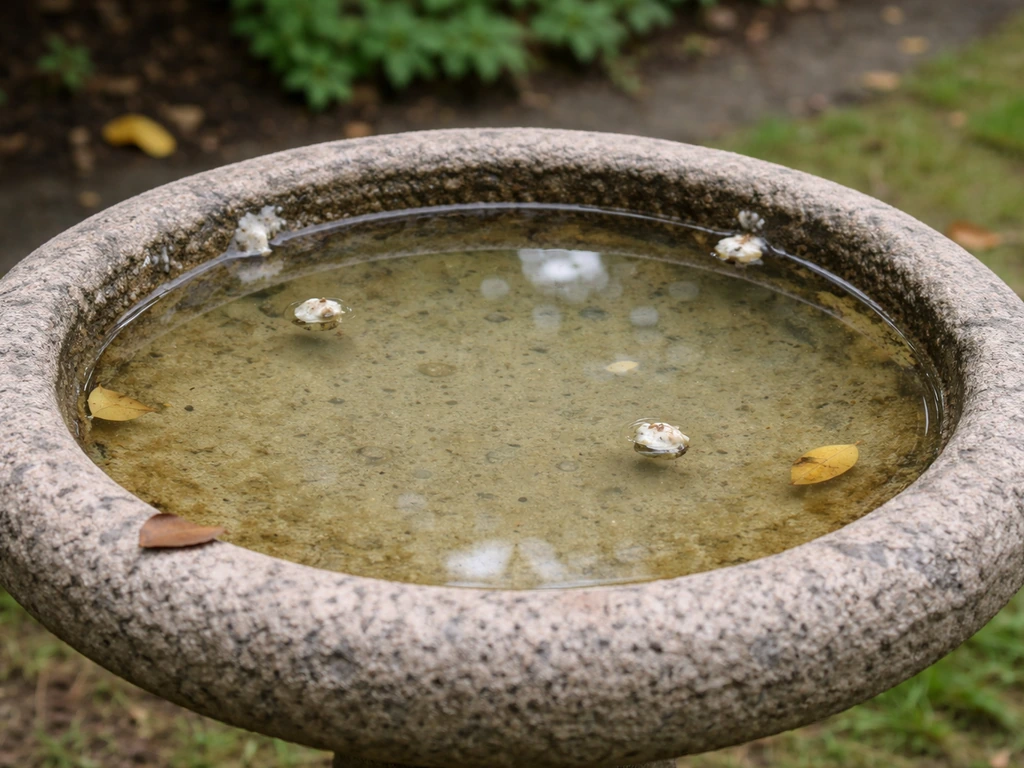
Birds defecate constantly, including while they bathe. That makes droppings the primary contamination source in any bird bath. But droppings are not the only issue. Here is what can build up in an uncleaned bird bath over days or weeks.
Bacteria from droppings
Salmonella and Campylobacter are the two most common enteric bacteria associated with wild bird droppings. The CDC estimates roughly 1.5 million Americans get sick from Campylobacter every year, and fecal contamination of water is one established route. Salmonella can also survive in stagnant water for extended periods, especially when organic matter like feathers and debris keep it sheltered. A bird bath that sits for a week without cleaning can accumulate a meaningful bacterial load, particularly in warm weather when bacterial growth accelerates.
Parasites: Crypto and Giardia
Cryptosporidium and Giardia are both fecal-oral parasites that spread through contaminated water. The CDC confirms that Cryptosporidium oocysts are infectious immediately upon excretion, meaning there is no safe window between a bird defecating in the bath and the water being potentially infectious. Importantly, the CDC notes it has no direct evidence that Crypto transmits from birds to humans via bird bath contact specifically, but it still recommends treating bird feces in water with the same decontamination protocol used for human fecal incidents in pools. That is a measured, precautionary stance that makes practical sense.
Psittacosis and respiratory risks
Psittacosis is caused by Chlamydia psittaci bacteria shed in bird droppings and respiratory secretions. The CDC is clear that most human infections happen by inhaling dried, aerosolized droppings, not through water contact. So while an active bird bath is not the prime vector for psittacosis, a dry, encrusted, forgotten bird bath that you scrub without protection could briefly aerosolize dried droppings. That is a scenario worth knowing about, especially if the bath has gone weeks without a clean.
Algae and cyanobacteria
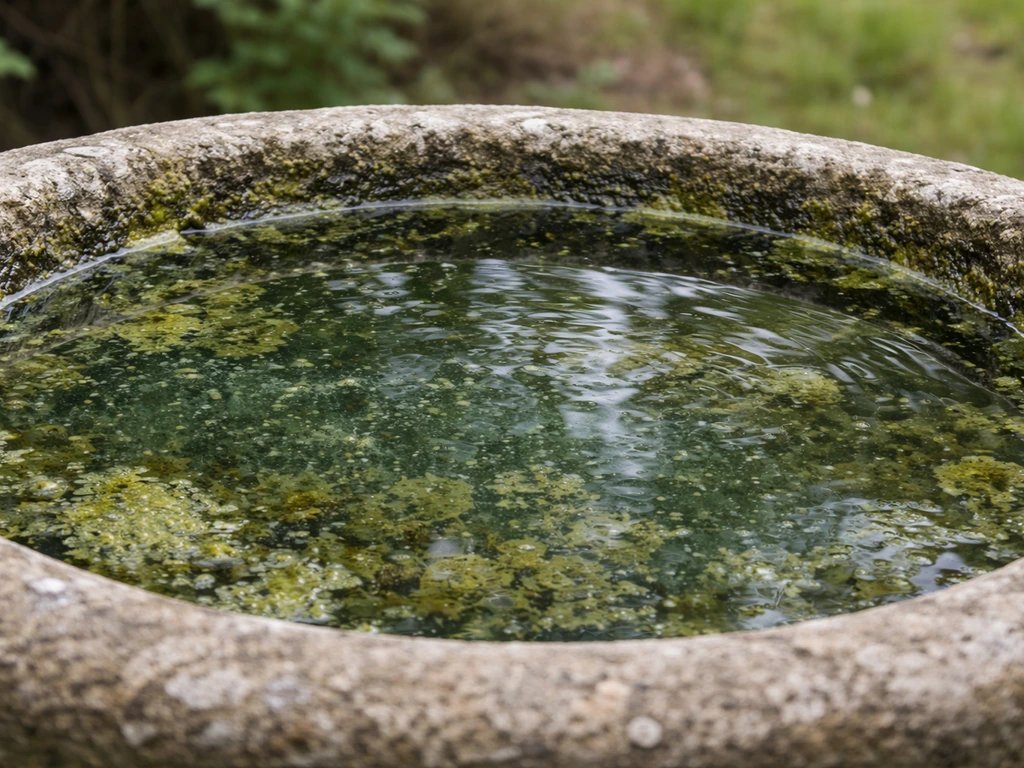
The green or blue-green slime that develops on bird bath surfaces within days of a fill is often a combination of algae and cyanobacteria (also called blue-green algae). The EPA classifies cyanobacteria blooms as harmful algal blooms and notes that health effects from cyanotoxins can range from minor irritation to life-threatening illness depending on exposure. The CDC lists potential symptoms including eye irritation, GI distress, and respiratory effects from skin contact, accidental ingestion, or inhalation of aerosolized water. A bird bath is a small body of water, so the absolute toxin load is lower than a lake bloom, but if a child or pet gets into that water, the exposure is not trivial.
Chemical contamination
If your yard gets treated with herbicides, pesticides, or fertilizers, some of that chemistry can wash or drift into an outdoor bird bath. Similarly, cleaning products you use on the bath itself (especially if not rinsed thoroughly) leave residues. Bleach used at the wrong concentration or not fully rinsed can irritate a bird's respiratory tract and mucous membranes, and those same residues landing on your hands during the next cleaning are a minor but real contact hazard. Chemical contamination from cleaning errors is often more immediately hazardous than pathogen contamination for the person doing the cleaning.
Real health risks for people
Who is most vulnerable
For a healthy adult, casual contact with bird bath water, like touching the rim or accidentally splashing it on your skin during a refill, carries very low risk as long as you wash your hands afterward. The risk profile shifts significantly for certain groups. The CDC notes that Cryptosporidiosis can be life-threatening in severely immunocompromised people, including those with HIV/AIDS, organ transplant recipients, or anyone on immunosuppressive therapy. Young children (especially those who might put their hands in the water and then in their mouths), older adults, and pregnant people are all higher-vulnerability populations who should take extra care around bird bath maintenance.
How exposure actually happens
- Ingestion: accidentally swallowing water during cleaning, or children playing near and touching the bath then touching their mouths
- Hand-to-mouth contact: handling the bath without gloves and not washing hands before eating or touching your face
- Skin contact: direct exposure to contaminated water, low risk for intact skin but higher if you have cuts or abrasions
- Inhalation: scrubbing a dried-out, heavily encrusted bath without a mask, which can aerosolize dried droppings
Symptoms worth watching for
If you have had significant exposure to heavily contaminated bird bath water (think: splashed in the face, ingested some while cleaning, or are in a high-risk group), here is the symptom timeline to keep in mind. Because the risk involves fecal-oral contamination, “how absurd to swallow a bird” is exactly the kind of behavior you should never do with bird bath water. Salmonella symptoms typically appear within 6 to 72 hours and include diarrhea (sometimes bloody), fever, and stomach cramps. Cryptosporidium has an average incubation of about 7 days (range 2 to 10 days) and causes watery diarrhea that can last weeks, especially in immunocompromised people. Giardia causes similar non-specific GI illness. Cyanotoxin exposure can cause more immediate reactions including eye irritation, skin rash, nausea, or respiratory irritation depending on the route of exposure.
How to keep a bird bath safe for everyone
The good news is that a bird bath does not have to be a pathogen factory. A consistent, simple cleaning routine keeps contamination to a manageable level. Here is what actually works. If you’re asking what a “bird stop liquid” product is, it’s typically marketed as a bird deterrent or repellent you apply to make a surface less appealing to birds.
Cleaning schedule
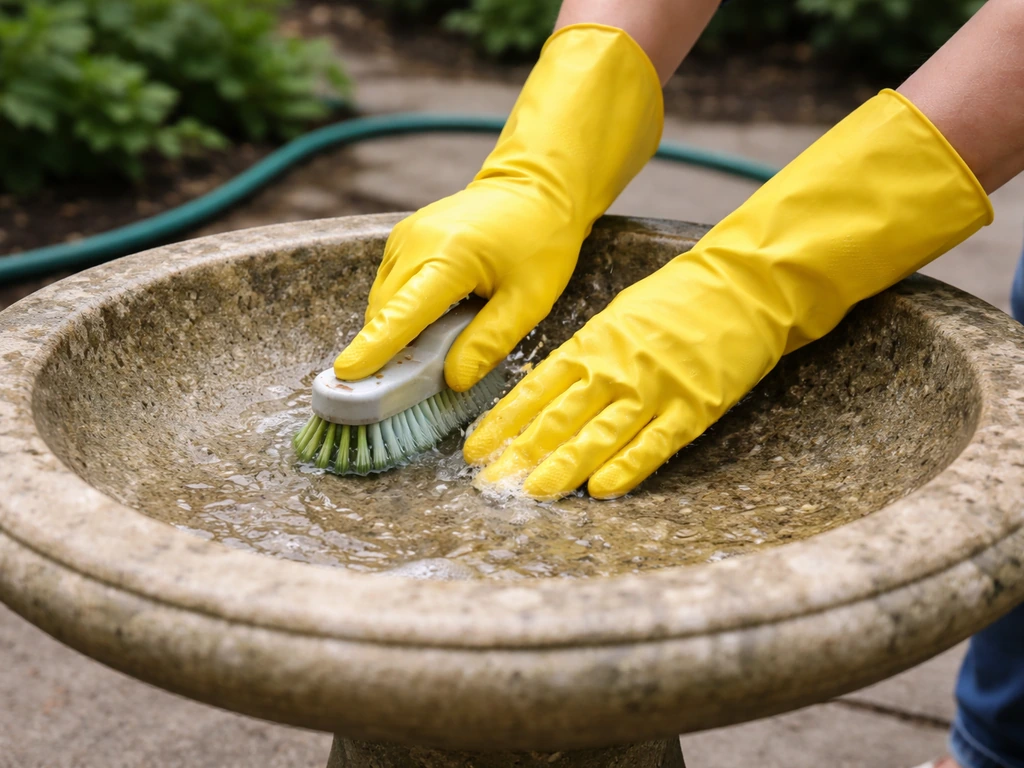
The Iowa DNR recommends fresh water and a good scrub at least once per week for bird baths. In hot weather (above 85 degrees Fahrenheit), every 2 to 3 days is better because heat accelerates both bacterial growth and algae formation. Change the water completely each time, do not just top it off. Topping off dilutes the contamination slightly but leaves the biofilm and accumulated droppings in place.
Step-by-step cleaning method
- Put on rubber gloves before touching the bath. This is non-negotiable if you are immunocompromised.
- Empty all standing water by tipping the basin, not by scooping with your hands.
- Scrub the basin with a stiff brush and a mild cleaning solution. Penn State Extension recommends mild soap and water; Audubon suggests a 9:1 water-to-vinegar solution as a gentler everyday option that discourages algae.
- For a deeper disinfecting clean (monthly or after a visibly heavy contamination event), use a 9:1 water-to-bleach solution as recommended by the National Wildlife Health Center. Scrub, then rinse extremely thoroughly with clean water, multiple times.
- Allow the basin to air dry or wipe dry before refilling. This interrupts the biofilm cycle.
- Wash your hands with soap and water immediately after, even if you wore gloves.
Water management tips
- Keep the water level shallow: 1 to 2 inches is enough for most songbirds and reduces the volume of stagnant water that can accumulate pathogens
- Position the bath in partial shade to slow algae growth without making it unappealing to birds
- Add a small solar-powered fountain or dripper: moving water discourages mosquito breeding and slows biofilm formation
- Keep the bath away from bird feeders to reduce the amount of seed debris falling into the water
- Place the bath where it is easy for you to access for weekly cleaning (if it is inconvenient, cleanings get skipped)
What not to do: myths, mistakes, and cleaning hazards
The reality is that most people either over-react (treating bird bath water as a biohazard that requires hazmat-level precautions) or under-react (never cleaning the bath and assuming rain keeps it fresh). Both extremes cause problems. Here is the specific guidance on what to avoid.
Do not mix cleaning chemicals
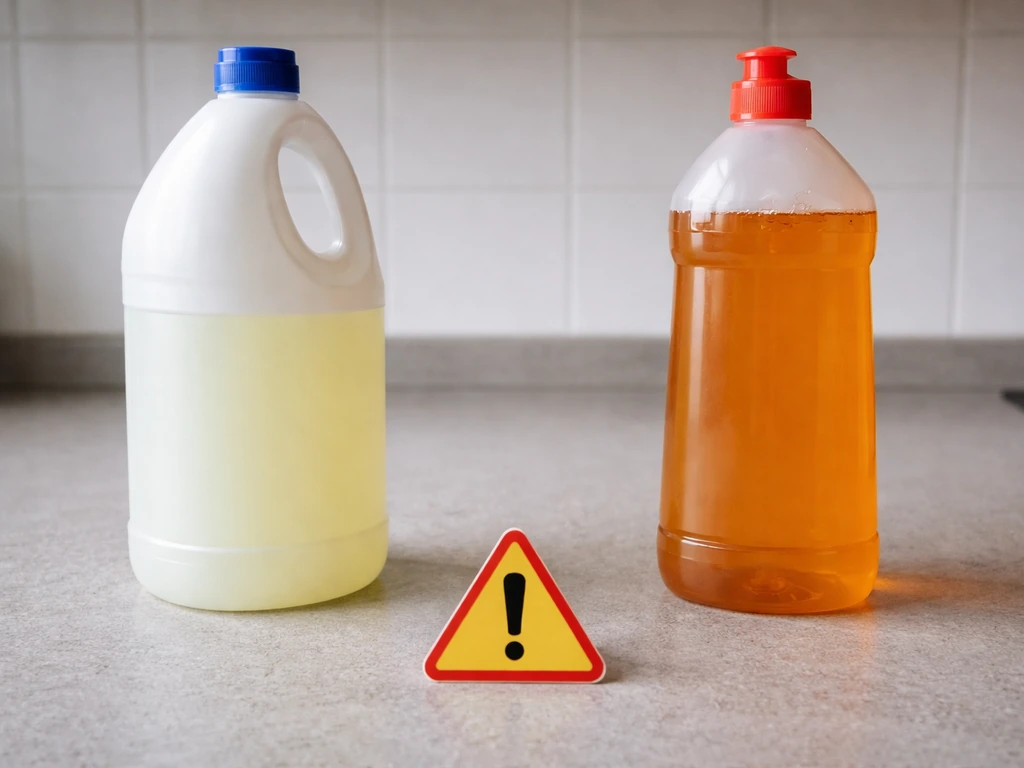
This is the single most dangerous mistake in DIY bird bath cleaning. The CDC and Washington State Department of Health both warn explicitly: never mix bleach with ammonia, acids, vinegar, or other cleaners. Mixing bleach with ammonia produces chloramine gases. Mixing bleach with acidic cleaners releases chlorine gas. Either reaction can cause serious respiratory injury. If you use a bleach solution one week and a vinegar solution the next, rinse the basin thoroughly in between. Never combine them in the same wash.
Do not use undiluted bleach
The ATSDR notes that sodium hypochlorite is corrosive and irritating to eyes, skin, and the respiratory tract at concentrated exposures. A 9:1 water-to-bleach ratio (roughly one part bleach to nine parts water) is the standard recommendation for bird bath disinfection. Using undiluted bleach does not clean the bath faster or better, it leaves residues that can harm birds and irritate your skin and eyes. Always dilute, always rinse multiple times, and work in a well-ventilated area.
Do not assume bird bath water is sterile or 'just water'
Some people assume that because their bird bath looks clear, or because it rained recently, the water is clean. It is also important to think about safety for the birds themselves, including whether they can drown in a bird bath and how to prevent it can birds drown in a bird bath. It is not. Pathogens like Cryptosporidium oocysts are invisible to the naked eye and are immediately infectious once present. Biofilm, the slippery coating on the basin walls, is a microbial community even when it looks like just a slightly slick surface. Clear water in a bird bath that has not been scrubbed this week is not safe to assume is clean.
Do not scrub a dry, encrusted bath without protection
If your bird bath has dried out and has a thick crust of droppings, wet it down first before scrubbing. Dry scrubbing can release aerosolized dried fecal particles. This is the scenario most relevant to psittacosis risk, which, as the CDC notes, spreads primarily through inhaling dried bird droppings, not through water contact. Wearing a simple dust mask or N95 for this kind of cleaning is a sensible precaution, particularly if you keep or are often around parrots or doves. However, drowning a bird is not humane and can cause unnecessary suffering is drowning a bird humane.
Myth: bird bath water causes illness just by being near it
Simply standing next to a bird bath, or even touching its rim, is not a realistic transmission route for any of the pathogens discussed here. Fecal-oral transmission requires a pathway from the contaminated water to your mouth, which means hand-to-mouth contact or accidental ingestion. Because bird pee is mixed into droppings and standing water, the bigger question is contamination risk and how much gets into your mouth, eyes, or hands bird bath water. Healthy adults with intact skin who wash their hands after handling the bath have very low risk. The contamination is real; the drama around it is not.
When to seek medical advice
Most people who accidentally splash bird bath water on themselves or briefly handle it without gloves will be completely fine. Seek medical attention in the following situations.
- You are immunocompromised and had significant exposure (ingestion, heavy skin contact, or splashed in the eyes) to visibly contaminated or heavily soiled bird bath water
- You develop diarrhea (especially watery or bloody), fever, or stomach cramps within 1 to 10 days of a significant exposure event
- Eye irritation, redness, or pain develops after water splashed into your eyes during cleaning
- A child ingested bird bath water or was playing in it for an extended period
- You develop respiratory symptoms (cough, shortness of breath, chest pain) after dry-scrubbing a heavily encrusted, long-neglected bird bath without protection
- Skin irritation or chemical burns develop after contact with undiluted bleach or other cleaning products used on the bath
When you contact a healthcare provider, mention the exposure source (bird bath water, possible bird droppings), the approximate timing, and any relevant health history. This helps them consider the right pathogens, including Salmonella, Campylobacter, Crypto, or Giardia, when deciding on testing or treatment. If you suspect a chemical exposure from cleaning products, contact Poison Control (1-800-222-1222 in the US) for immediate guidance.
Keeping the bath beneficial for birds and safe for your household
A well-maintained bird bath is a genuine benefit to local bird populations, especially during hot or dry periods when natural water sources are scarce. The goal is not to eliminate the bird bath out of fear, it is to manage it sensibly so it stays a resource rather than a hazard. The pathogens in bird bath water are the same category of risk you encounter when gardening in soil that has had wildlife contact, or when handling compost. The risk is real, manageable, and context-dependent.
If you have young children or immunocompromised family members, keep the bird bath in a part of the yard they do not frequent, and make it a household rule that the bath is not a play area. Teach kids that bird baths are for birds, and that touching the water means washing hands right after. That one habit, consistent hand washing, eliminates the primary transmission route for every pathogen discussed in this article.
For anyone concerned about broader bird-related health questions, it is worth knowing that bird droppings carry different risks depending on their form and your exposure route. Dried droppings (relevant to psittacosis), liquid waste, blood contact, and water contamination are all distinct scenarios with different risk profiles. Bird blood can pose infection risks in people who have cuts or broken skin, because pathogens may be present in animal waste. The consistent theme across all of them is that hygiene practices, not avoidance of birds entirely, are what actually protect you.
| Contamination Type | Main Health Risk | Transmission Route | Risk Level for Healthy Adults | Prevention |
|---|---|---|---|---|
| Bacterial droppings (Salmonella, Campylobacter) | GI illness: diarrhea, fever, cramps | Hand-to-mouth after contact | Low with hand washing | Weekly scrub, gloves, hand wash |
| Parasites (Crypto, Giardia) | Watery diarrhea, weeks-long in vulnerable groups | Accidental ingestion of water | Low for healthy adults, high for immunocompromised | Never ingest, thorough hand washing |
| Cyanobacteria / algae toxins | Eye/skin irritation, GI or respiratory effects | Skin contact, ingestion, inhalation of mist | Low to moderate if bloom is heavy | Change water every 2-3 days in heat, scrub basin |
| Dried droppings (Psittacosis) | Respiratory illness | Inhalation of aerosolized dust | Low, higher if frequently around birds | Wet bath before scrubbing, wear mask for heavy crust |
| Chemical cleaning residues | Skin/eye irritation, respiratory irritation | Direct contact during cleaning | Low with correct dilution and rinsing | Use correct dilution, rinse multiple times, ventilate |
FAQ
If I just touch the rim or get a small splash, is it still considered dangerous?
If water is splashed only on intact skin, the main safeguard is prompt hand washing with soap and water, since fecal-oral spread is driven by hand-to-mouth contact. Avoid touching your face while cleaning, and wear disposable gloves if you will be scrubbing biofilm or removing droppings.
Is bird bath water more dangerous for kids than for adults?
Children have higher risk mainly because they are more likely to put hands in their mouths, and because they may not wash promptly. A practical rule is to prohibit play in the bath and treat the area like a food prep surface during cleanups, wash hands immediately after, and supervise closely during refills.
What if the water looks green or has slime, does that change the risk?
Yes, but it is usually a different hazard than pathogens. If you see green or blue-green “slime,” avoid letting kids or pets drink from the basin, and do not aerosolize it by scrubbing dry. Replace the water after cleaning, and be extra cautious if your family has asthma or frequent respiratory irritations.
Does being pregnant make bird bath water more toxic or more risky?
If you are pregnant, the concern is still contamination, especially accidental ingestion and exposure while cleaning, not that the water is inherently poisonous. Use gloves, keep the area ventilated, wash hands after handling, and consider delegating cleaning to someone else if you are high-risk or queasy about splashes.
Can I use different cleaners on different weeks, like bleach one week and vinegar another, in the same bird bath?
Use bleach only with proper dilution and never combine it with any other cleaner, even “mild” products. If you switch from one disinfectant to another week to week, rinse the basin thoroughly and let it fully air out before refilling, so residues from the previous chemical are not lingering.
If it rained recently, can I skip cleaning because the water is fresh?
Rain helps dilute the water but does not remove the droppings or biofilm on the basin walls, and it does not reliably “sterilize” the water. Treat a recently rained-on bath as still needing the same weekly scrub schedule, especially in warm weather.
Is it okay to just top off the bird bath instead of dumping and refilling it?
Topping off is not recommended because it leaves the existing biofilm and droppings behind, which continue seeding contamination. The safer routine is to dump and refill, then scrub the basin and edges, especially where algae forms.
What should I do if the bird bath has dried out and the droppings are crusted on the surface?
If you notice thick crust after the bath has dried, wet it down first, then clean gently to minimize aerosol. Skipping the “wet first” step increases the chance of stirring up dried fecal particles, which is the scenario most relevant to respiratory exposure from dried droppings.
Can my dog or cat get sick from drinking or splashing in a bird bath?
Pet exposure can be meaningful because pets may lap water, and some pets sniff or chew wet surfaces. Keep pets from drinking from the bath, and wash hands after handling the bath, then monitor pets for vomiting, diarrhea, or eye irritation after any suspected exposure.
When should I contact a doctor after exposure to bird bath water?
In most cases of accidental contact, symptoms are not guaranteed, but you should seek medical guidance if there is facial or eye exposure with irritation, significant ingestion, bloody diarrhea, persistent watery diarrhea, high fever, or symptoms that do not improve. If the person is immunocompromised, call earlier rather than waiting.
What if I get bleach or other bird bath cleaner on my skin, eyes, or I feel irritation after cleaning?
If you get cleaning chemicals on your skin, rinse with running water right away and avoid scrubbing harder, which can drive residues into the skin. For eye exposure, irrigate promptly and seek urgent care, and for anything inhaled or you have breathing symptoms, contact poison control or emergency services immediately.
How can I keep a bird bath without being overly scared about germs?
A safe guideline is to keep the bath as a bird resource while using hygiene controls, not to treat it as a biohazard. Practical “risk-reduction” steps are weekly scrub, dump and refill (not top off), gloves for cleaning, hand washing after, and preventing kids and pets from playing or drinking from the basin.