
Bird Stop liquid is not a poison in the classical sense. The active ingredient, methyl anthranilate, works by irritating birds' sensory systems rather than delivering a lethal dose of anything. For mammals including humans, the concentrate carries a rat oral LD50 of greater than 5,000 mg/kg, which puts it in the lowest acute-toxicity category recognized by regulators. That said, the undiluted product is labeled WARNING, causes skin and eye irritation, and carries real risks for aquatic life if it reaches surface water. So the honest answer is: Bird Stop is a low-mammalian-toxicity irritant and sensory repellent, not a poison, but it still demands careful handling.
Is Bird Stop Poisonous? Safety, Toxicity & Usage Guide

Marcus Whitmore
4 Aug 2026
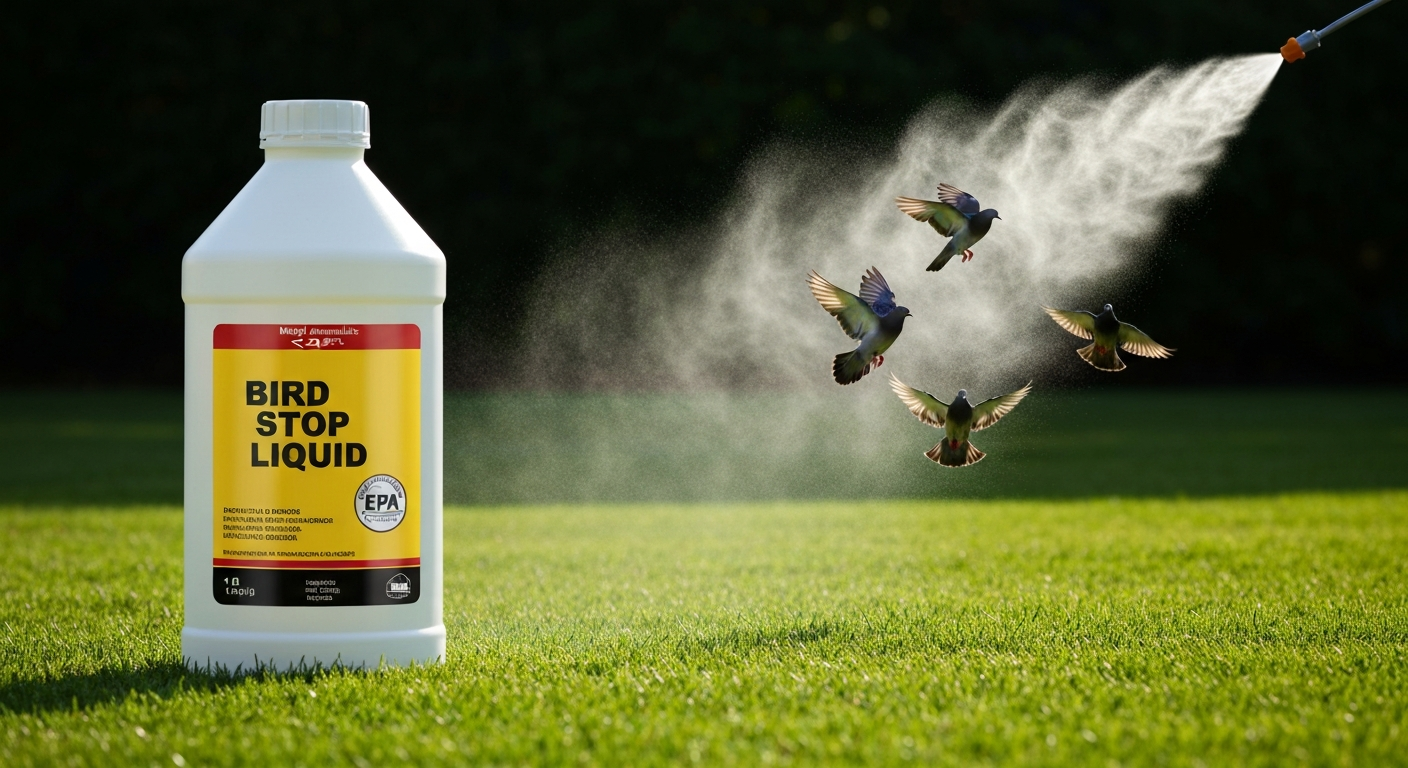
What is Bird Stop, exactly?
Bird Stop (also written Bird Stop® Liquid, SKU BS-GAL) is a registered pesticide manufactured and sold by Bird-X, Inc., headquartered in Elmhurst, Illinois. It is sold primarily as a concentrated liquid repellent, meaning you dilute it with water before spraying or fogging it over surfaces, crops, turf, or structures where nuisance birds are congregating. The product is registered with the U.S. Environmental Protection Agency under EPA Reg. No. 87304-1-8708, which means it has gone through a federal review process before reaching commercial shelves.
Marketed as a food-grade formulation, Bird Stop is positioned as a gentler alternative to lethal or mechanical exclusion methods. Property managers, golf-course operators, orchard growers, and airport wildlife officers are among the most common users. The phrase 'food grade' refers specifically to the active ingredient's history as an approved flavoring agent, not to the safety of swallowing the concentrate itself. For more on the distinction between food-grade flavoring and the risks of ingestion, see the related discussion "how absurd to swallow a bird". That distinction matters, and I will come back to it.
What is in Bird Stop? Ingredients from the label
The Safety Data Sheet (SDS) issued by Bird-X (originally June 2018, revised October 2023) lists the following composition for the concentrate. The percentages reflect weight-by-weight ranges documented in the SDS composition section.
| Ingredient | CAS Number | Role | Weight % |
|---|---|---|---|
| Methyl anthranilate | 134-20-3 | Active ingredient (repellent) | 25.6–27.2% |
| Castor oil ethoxylate | 61791-12-6 | Inert / emulsifier | 9.07–10.03% |
| Glycerol (1,2,3-propanetriol) | 56-81-5 | Inert / humectant | 4.51–4.79% |
| Water | 7732-18-5 | Carrier / diluent | 56.43–62.37% |
The dominant component by weight is water, followed by methyl anthranilate at roughly one quarter of the concentrate. Castor oil ethoxylate serves as a surfactant to help the formulation spread and adhere. Glycerol slows evaporation and helps the active ingredient persist on treated surfaces. None of the inert ingredients are acutely toxic at the concentrations present, though castor oil ethoxylate can cause skin and eye irritation, which partly explains the SDS hazard statements.
How Bird Stop actually works on birds
This is where the science gets interesting, and where the 'poisonous' framing really falls apart. Methyl anthranilate does not kill birds or cause systemic organ damage. Instead, it exploits a sensory difference between birds and most mammals. Birds have a well-developed trigeminal chemosensory system, a network of pain-sensing nerve endings in the beak, nasal passages, and upper airways. Methyl anthranilate stimulates these trigeminal neurons, triggering an aversive, irritant-like response that the bird experiences as discomfort. Research published in the Journal of Experimental Biology (Kirifides et al., 2004) blank" rel="noopener noreferrer">confirmed that methyl anthranilate causes calcium responses in chicken trigeminal ganglion neurons, consistent with a nociceptive (pain-sensing) activation pathway.
More recent work on avian TRPA1 channels (a family of ion channels involved in chemical sensing) supports the same mechanism: methyl anthranilate activates chemosensory receptors that birds use to detect irritants, prompting them to leave the treated area. The bird is not poisoned. It is annoyed and chooses to go elsewhere. USDA/APHIS risk assessments and EPA registration review documents describe this as a non-toxic aversive mechanism, clearly distinguishing it from rodenticides, avicides like DRC-1339, or organophosphate-based compounds. Pen and field trials have demonstrated repellency at methyl anthranilate concentrations as low as 0.1–0.5% in water, far below doses associated with systemic effects.
Poisonous vs. toxic: which word actually fits?
These two words get mixed up constantly online, and the confusion drives a lot of the search queries that bring people to questions like this one. 'Poisonous' traditionally describes a substance that causes harm when ingested or absorbed by a living organism, and in common usage it implies a meaningful risk of death or serious injury. 'Toxic' is the broader scientific term covering any substance capable of causing harm at some dose, acknowledging that almost everything is toxic at a high enough concentration (including water). When toxicologists assess a product, they focus on the dose required to cause harm and the likely exposure route. See Is Bird Stop toxic? for a focused evaluation of Bird Stop's toxicity.
Applying those definitions to Bird Stop: the product is technically toxic at some dose (as everything is), but it is not poisonous in the sense of presenting an acute lethal risk under normal conditions. The SDS rat oral LD50 exceeds 5,000 mg/kg, which is the threshold regulators use to classify a substance as 'practically non-toxic' by acute oral exposure for mammals. The product's own hazard classification uses the cautionary language 'may be harmful if swallowed' (H303), not 'causes serious harm' or 'fatal if swallowed.' That is a meaningful difference. The concentrate is an irritant, not a poison.
What the toxicity data actually shows: birds, people, pets, and wildlife
Birds
Avian-specific toxicity tests and USDA/APHIS risk assessments consistently show that methyl anthranilate has low acute systemic toxicity to birds. The dietary LD50 for mallard ducks, one of the standard avian test species, is reported at greater than 5,620 mg/kg-diet in agency documents. Bird Stop is designed to repel, not harm. The reality is that a bird exposed to a properly diluted spray application is experiencing temporary sensory discomfort, not poisoning. This is a point worth being clear about for anyone who has seen birds behave oddly near a treated area and assumed the product had hurt them.
Humans
The SDS reports the following acute mammalian endpoints for the concentrate: rat oral LD50 greater than 5,000 mg/kg, rat dermal LD50 greater than 5,000 mg/kg, and rat inhalation LC50 greater than 2.08 mg/L over four hours. Those are very high thresholds indicating low acute toxicity for mammals. The irritant hazards (H315 skin irritation, H320 eye irritation) are the more practical concern during normal handling. Methyl anthranilate itself has a long history as a grape-flavored food additive (FDA Substances Added to Food, FEMA No. 2682), but that GRAS status applies to trace quantities used in foods, not to drinking or inhaling the concentrated pesticide formulation. Do not let the 'food grade' marketing language lower your guard around the undiluted product.
Pets and domestic animals
Because birds have a far more sensitive trigeminal response to methyl anthranilate than cats or dogs, domestic pets are unlikely to be repelled by the product in the same way birds are. Pets walking across a treated surface or sniffing a freshly sprayed area may experience mild mucous membrane irritation. Ingestion of concentrated product by a small pet would warrant a call to a veterinary poison control line, but based on the LD50 data, a lethal outcome from typical exposure scenarios would be unlikely. The more realistic concern is eye irritation or gastric upset from a curious dog licking a treated surface. If that happens, contact a veterinarian.
Non-target wildlife and aquatic organisms
This is the area where Bird Stop's risk profile becomes genuinely important. Methyl anthranilate shows moderate acute toxicity to fish in laboratory conditions. Reported 96-hour LC50 values include approximately 9–20 mg/L for bluegill and roughly 32.3 mg/L (24-hour) for Atlantic salmon fry. These are not enormous safety margins. A simple calculation using the SDS density (approximately 1.038 g/mL) and the concentrate's methyl anthranilate content (~26.4% by weight) shows that even a relatively modest dilution, such as 1 fluid ounce of concentrate in 1 US gallon of water, produces a spray solution containing approximately 2,140 mg/L of methyl anthranilate. That is two orders of magnitude above fish LC50 thresholds, which is exactly why the label explicitly prohibits application directly to water or in areas where surface runoff can reach water bodies.
Exposure routes, symptoms, and thresholds
The SDS identifies three primary exposure routes for the concentrate: ingestion, skin and eye contact, and inhalation. Here is what the label and SDS say about each.
| Exposure Route | Hazard Statement | First Aid (per SDS) | Threshold / Notes |
|---|---|---|---|
| Ingestion | H303 — May be harmful if swallowed | Seek medical attention; do not induce vomiting | Oral LD50 >5,000 mg/kg (rat); low acute lethal risk |
| Skin contact | H313 / H315 — May be harmful; causes skin irritation | Rinse with water for 15–20 min; remove contaminated clothing | Dermal LD50 >5,000 mg/kg (rat); irritation is the main concern |
| Eye contact | H320 — Causes eye irritation | Rinse eyes for 15–20 min; seek medical attention if irritation persists | Moderate irritant; no evidence of permanent injury at typical exposures |
| Inhalation | H333 — May be harmful if inhaled | Move to fresh air immediately | LC50 >2.08 mg/L/4h (rat); low acute inhalation risk |
For emergency assistance, Bird-X lists INFOTRAC at 1-800-535-5053 (or 1-352-323-3500 outside the U.S.) as the 24-hour emergency telephone number on the SDS. The U.S. Poison Control Center (1-800-222-1222) is also an appropriate first call for human exposures. For suspected wildlife impact, contact a licensed wildlife rehabilitator or your state wildlife agency.
Environmental fate and persistence
The environmental picture for methyl anthranilate is mixed but manageable with proper use. On the positive side, the compound is biodegradable under aquatic conditions. PubChem, Methyl Anthranilate (biodegradation / ecotoxicity notes) reports near‑complete biodegradation at ~50 mg/L within ~20 days and notes aquatic LC50s in the single‑to‑low‑tens mg/L range PubChem — Methyl Anthranilate (biodegradation / ecotoxicity notes) reports near‑complete biodegradation at ~50 mg/L within ~20 days and notes aquatic LC50s in the single‑to‑low‑tens mg/L range.. Laboratory studies show near-complete biodegradation at approximately 50 mg/L within around 20 days, suggesting it does not persist indefinitely in the environment. On soil and treated surfaces it dissipates relatively quickly, which is one reason re-application is often needed for sustained repellency.
The concern is getting it into water in the first place. The gap between typical application concentrations and fish LC50 values is large enough that even diluted spray reaching a pond, stream, or drainage ditch could temporarily exceed safe thresholds for aquatic invertebrates and fish. Buffer zones around water bodies, careful application timing around rainfall, and avoiding spray in wind conditions that could cause off-target drift are all practical steps that follow logically from the ecotoxicity data.
Safe use: PPE, application, disposal, and emergency contacts
The SDS and label guidance translate into a straightforward set of precautions that are easy to follow. Most exposure-related incidents with products like Bird Stop happen during concentrate handling, not during the diluted spray application, so the concentrate-handling steps matter most.
- Wear chemical-resistant gloves when handling the concentrate or mixing dilutions
- Use chemical splash goggles or safety glasses with side shields
- Work in a well-ventilated area or outdoors when mixing or spraying
- Do not eat, drink, or touch your face during or immediately after handling
- Wash hands and any exposed skin thoroughly with soap and water after use
- Do not apply directly to water, drainage channels, or areas where runoff will reach surface water
- Keep children and pets away from treated areas until the product has dried
- Store in original container in a cool, dry location away from heat sources
- Dispose of unused product and empty containers according to local, state, and federal pesticide waste regulations — do not pour down drains or into waterways
If skin or eye exposure occurs, the SDS first-aid response is to rinse the affected area with water for 15 to 20 minutes and remove any contaminated clothing. For ingestion, seek medical attention and do not induce vomiting. For inhalation exposure, move the person to fresh air. Emergency contacts: INFOTRAC 1-800-535-5053 (24-hour chemical emergency line listed on the Bird Stop SDS), U.S. Poison Control 1-800-222-1222 for human exposures, and your state wildlife agency or a licensed wildlife rehabilitator for suspected bird or wildlife impacts.
How Bird Stop compares to alternatives
Anyone evaluating Bird Stop is usually weighing it against other bird management options, ranging from physical deterrents to other repellent chemicals to lethal control. Here is a practical comparison.
| Method | Mechanism | Toxicity Risk (Birds) | Toxicity Risk (Mammals) | Environmental Concern | Typical Use Case |
|---|---|---|---|---|---|
| Bird Stop (methyl anthranilate liquid) | Sensory irritant / aversive | Very low (non-lethal by design) | Low (LD50 >5,000 mg/kg) | Moderate (aquatic organisms) | Turf, crops, open surfaces |
| Physical exclusion (netting, spikes) | Mechanical barrier | None (non-chemical) | None | Minimal | Buildings, ledges, enclosed spaces |
| Visual deterrents (reflective tape, decoys) | Visual/auditory aversion | None | None | Minimal | Open areas, docks, gardens |
| DRC-1339 (avicide) | Systemic toxicant | High (lethal) | Low to moderate | Moderate to high (non-target birds) | Controlled depredation programs |
| Capsaicin-based repellents | Sensory irritant (TRPV1 pathway) | Low to moderate aversive | Low (irritant) | Generally low | Crop protection, feeders |
My recommendation for most property managers and researchers: Bird Stop sits in a reasonable middle ground. It is not the most persistent solution (expect to reapply), but it is significantly safer than lethal avicides and avoids the structural permanence and cost of full exclusion netting. For situations where water proximity is unavoidable, physical exclusion is the clearly safer environmental choice. For open turf, parking lots, rooftops, and agricultural fields away from water, Bird Stop's risk profile is manageable with label-compliant use.
Non-chemical methods worth knowing
Chemical repellents are one tool, not the only tool. Physical methods including bird netting, stainless-steel spike strips, tension wire systems, and bird slope panels exclude birds from specific structures without any chemical exposure at all. Acoustic deterrents (distress calls or predator calls broadcast by automated systems) can be effective for open areas but lose effectiveness over time as birds habituate. Habitat modification, removing food sources, standing water, and nesting substrate, addresses root causes rather than symptoms and is often the most durable long-term strategy. Questions about standing water and birds naturally connect to topics like whether bird bath water carries its own risks, which is a separate but related area worth understanding if you are managing bird presence around structures. For questions about lethal methods and animal welfare, see is drowning a bird humane for information on the ethics, legality, and humane alternatives. If you want to dig into whether bird bath water can be toxic and when to worry, see our guide on is bird bath water toxic. For related concerns about standing water, see the article 'Can birds drown in a bird bath'. Related: see our guide answering the common question 'is bird pee dangerous' to people and pets for practical risk and hygiene advice.
Myths this article is here to correct
Myth: Bird Stop is a poison that kills birds. The reality is that it is a sensory repellent. Its mode of action is trigeminal irritation, not systemic poisoning. Birds leave treated areas; they are not harmed by label-compliant applications.
Myth: Because methyl anthranilate is a food flavoring, the product is safe to handle without precautions. The reality is that GRAS status at food-flavoring concentrations has no bearing on handling the 25–27% concentrate. The SDS hazard statements exist for a reason, and irritation from skin or eye contact with the concentrate is a real and documented outcome.
Myth: Bird Stop is environmentally harmless because it biodegrades. The reality is that biodegradation rate matters less than the acute toxicity window for fish and aquatic invertebrates. The compound can degrade within weeks, but during those weeks an unintended water-body exposure can cause fish kills. The label warning against aquatic contact is based on real ecotoxicity data, not boilerplate legal hedging.
The bottom line on Bird Stop's risk profile
Bird Stop is a low-acute-toxicity sensory repellent for birds, with a well-characterized safety profile that places it firmly outside the 'poison' category for mammals. The active ingredient methyl anthranilate has been studied extensively, its mechanism of action is understood at the receptor level, and its mammalian toxicity numbers are about as low as you will find on a pesticide SDS. The legitimate hazards are irritation during concentrate handling, and the real environmental risk is aquatic contamination if the product reaches surface water. Used according to the label, with appropriate PPE and a sensible buffer from water bodies, Bird Stop represents a science-backed, non-lethal bird management option. If you are researching bird-related hazards more broadly, questions about whether other bird-associated substances, from blood to bath water to waste, pose risks follow similar logic: the dose, route, and species involved matter enormously, and most concerns resolve into sensible precautions rather than genuine dangers.
FAQ
What is "Bird‑Stop" (Bird Stop liquid)?
Bird‑Stop (Bird Stop® liquid) is a commercial bird‑repellent product manufactured by Bird‑X, Inc. It is sold as a concentrate (EPA Reg. No. 87304‑1‑8708) and formulated to repel birds by producing an aversive taste/irritation response rather than by poisoning. The marketed formulation is a water‑based liquid that is diluted for spray/fog or surface applications.
What are the active and inert ingredients in Bird‑Stop?
According to the product SDS, the active ingredient is methyl anthranilate (CAS 134‑20‑3) at about 25.6–27.2% by weight. Noted formulation components (inert or functional ingredients) include castor oil ethoxylate (~9–10%), glycerol (~4.5–4.8%), and the remainder water (~56–62%). The concentrate is intended to be diluted before application.
How does Bird‑Stop work to repel birds (mode of action)?
Bird‑Stop’s active compound methyl anthranilate acts via sensory (chemosensory) irritation and aversion. In birds it activates trigeminal and olfactory pathways causing taste/irritation sensations that birds avoid. This is an aversive, non‑systemic mechanism — the product is designed to make treated areas unpleasant to birds rather than to act as a systemic poison.
Is Bird‑Stop "poisonous" or "toxic"? What's the difference?
"Poisonous" commonly implies a substance that causes systemic harm or death when absorbed or ingested; "toxic" is a broader term meaning harmful at some dose. Bird‑Stop concentrate is labeled with warning statements (signal word: WARNING) for irritation and may be harmful if swallowed, inhaled, or in contact with skin. However, its bird‑repellent action is aversive rather than lethally toxic at intended use rates. Regulatory and lab data classify methyl anthranilate as low acute systemic toxicity in mammals and birds at typical exposure levels, but concentrated product can cause irritation and should be handled per label/SDS.
What acute toxicity data are available for Bird‑Stop (SDS summary)?
SDS toxicology highlights (concentrate): - Signal word: WARNING. - Acute mammalian endpoints (rat): oral LD50 > 5000 mg/kg; dermal LD50 > 5000 mg/kg; inhalation LC50 (4‑hr) > 2.08 mg/L. - Hazard statements: may be harmful if swallowed/in contact with skin/inhaled; causes skin and eye irritation. - First aid: move to fresh air if inhaled; flush eyes/skin 15–20 minutes; do not induce vomiting after ingestion — get medical attention. Refer to manufacturer SDS and emergency INFOTRAC (1‑800‑535‑5053) for details.
Is Bird‑Stop toxic to birds at application rates?
Regulatory and experimental data show methyl anthranilate has low acute systemic toxicity to birds; repellency is achieved through sensory irritation, not poisoning. Avian acute oral LD50/dietary data in agency summaries are high (no lethal effects at common test limits), and field/pen trials use low concentrations (typically far below systemic toxic thresholds) to produce avoidance. However, improper use (very high concentrations or repeated direct ingestion of concentrate) could pose greater risk; follow label directions.