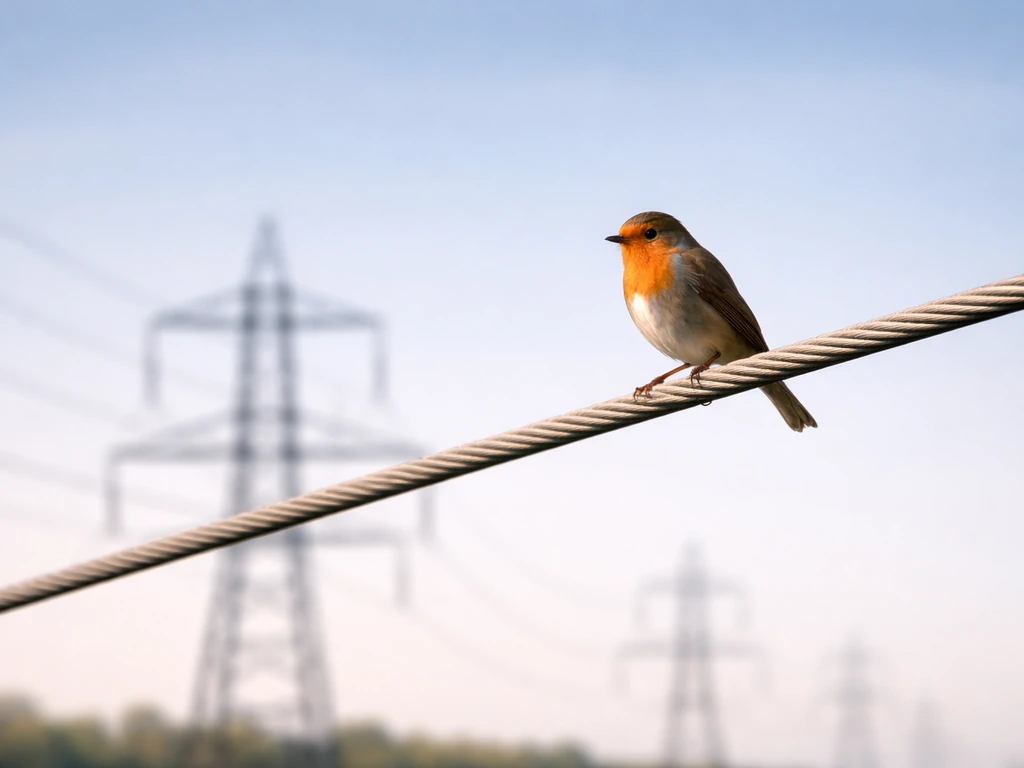
A bird sitting on a high-tension wire is safe because both of its feet are touching the same wire at essentially the same electrical potential, so there's no voltage difference across its body and no meaningful current flows through it. Electricity needs a complete path from a higher potential to a lower one to do any work, and a bird perched on a single conductor simply doesn't provide that path. The moment something changes, like the bird touching a second wire, a grounded metal pole, or a wet crossarm, the picture changes completely and electrocution becomes a real possibility.
Why a Bird Can Sit Harmlessly on High Tension Wires

Marcus Whitmore
16 Jun 2026
What actually has to happen for electrocution to occur
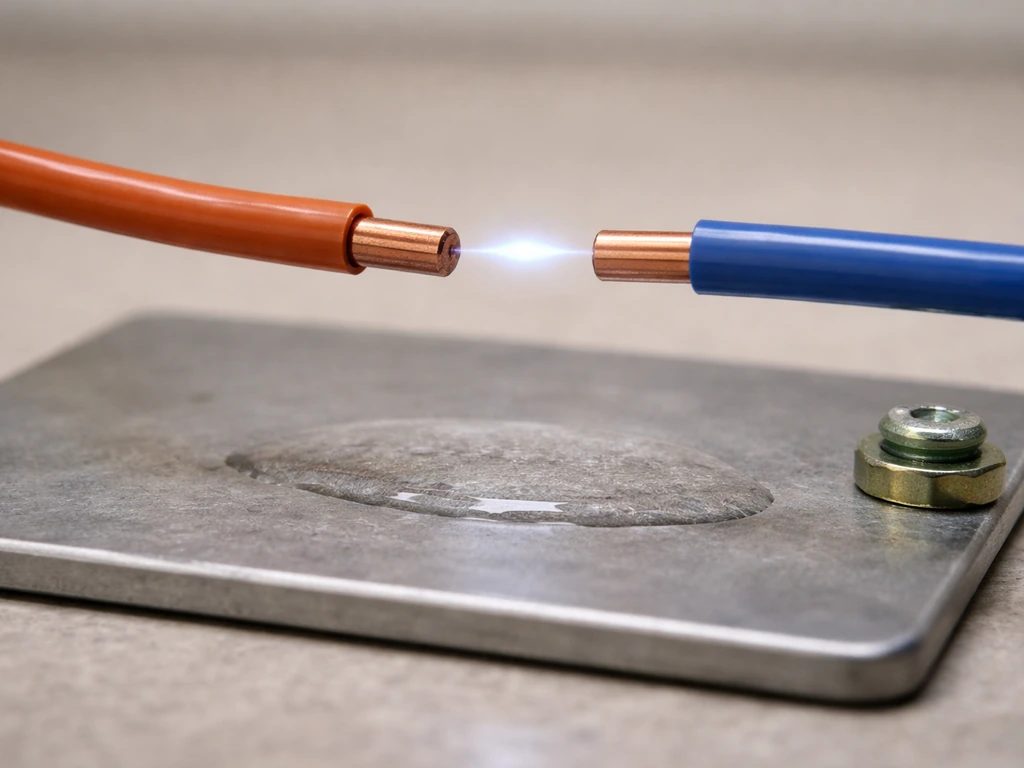
Electrocution isn't just about being near high voltage. It's about current flowing through living tissue, and current only flows when there's a complete circuit. The severity of an electrical injury depends on several factors researchers call the Kouwenhoven factors: the strength of the current, how long the exposure lasts, the pathway the current takes through the body, and the tissue resistance along that path. High-voltage exposure above roughly 1,000 volts tends to cause deep tissue burns, while lower voltages around 110 to 220 volts can cause muscle tetany where a person or animal can't let go of the conductor, which extends exposure and makes the injury worse. The key takeaway is that voltage alone doesn't kill. Current through the body does, and current only flows when there's a closed circuit from one potential to another.
How electricity actually behaves on power lines
High-tension transmission lines carry electricity at extremely high voltages, sometimes hundreds of thousands of volts, precisely because high voltage allows power to travel long distances with less energy lost as heat. But voltage by itself is a measure of potential difference, not of current flow. Think of it like water pressure in a pipe: the pressure only pushes water through if the pipe is connected to something. This is why people often wonder why birds do not get shock when they sit on power lines. A bird on a wire is sitting at whatever voltage that wire is carrying, but its feet are touching the same conductor at points only a few centimeters apart. The voltage difference between those two contact points is nearly zero. With no meaningful voltage difference across the bird's body, Ohm's law tells us the current through it is also nearly zero. Current equals voltage divided by resistance, so if voltage across the bird is effectively zero, current is effectively zero, no matter how high the absolute line voltage is.
Why a perched bird on a single wire usually doesn't complete the circuit
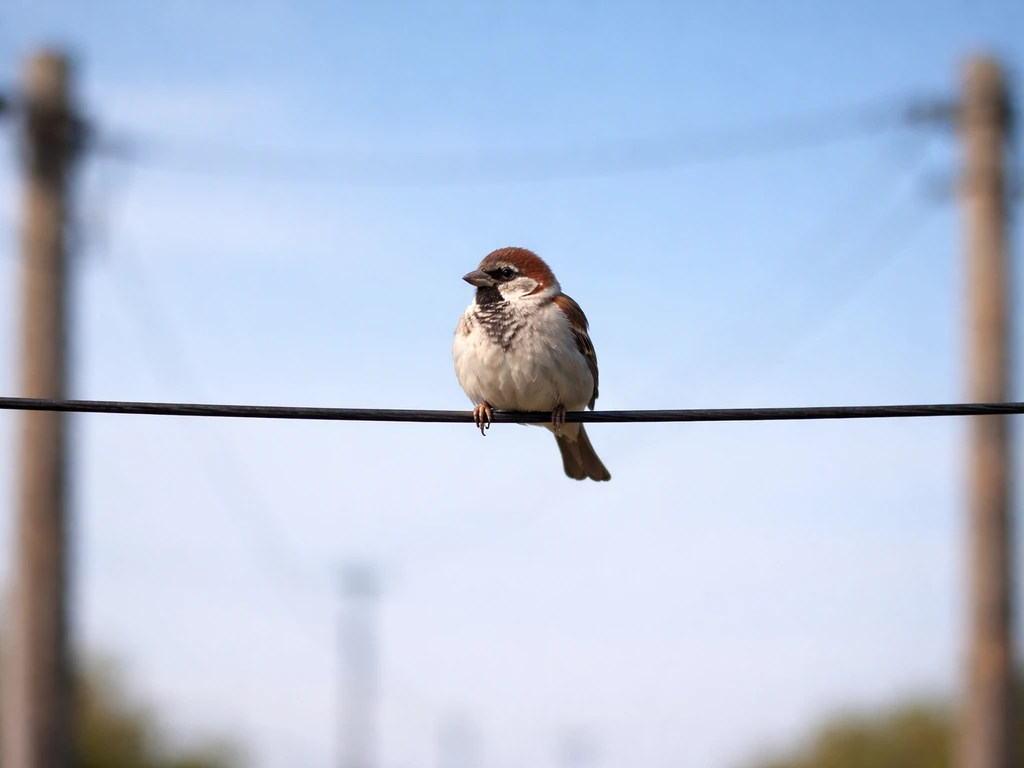
The bird isn't grounded. It's not touching the earth, a pole, a crossarm, or any other conductor at a different potential. Its feet are both on the same wire, raised high in the air, with nothing connecting it to the return path of the circuit. The wire it's sitting on is essentially acting as one giant equipotential surface at that point, and the bird is just floating along at the same potential as the wire. There's no path from the high-voltage wire through the bird's body to ground, so electricity has no reason to travel through it at all. That is why a perched bird usually does not get an electric shock: without a grounded path and a complete circuit, current cannot flow through its body why bird not get electric shock. This is the same principle that allows utility lineworkers, when properly equipped, to work on energized conductors by maintaining a single-potential contact and never providing a path to ground.
Bird body size also matters more than most people realize. The physical span of a small songbird's feet is so tiny that even if there were a small voltage gradient along the wire (which does exist but is extremely small), the current through the bird would be negligible. Larger birds like raptors, herons, and vultures have wider wingspans and longer legs, which means they are geometrically more likely to accidentally bridge two different conductors or touch a grounded component while perching. That's why electrocution incidents are far more common among large birds than small ones.
When the situation becomes dangerous
The safe scenario breaks down the moment a bird creates a conductive path between two points at different electrical potentials. There are several ways this happens in practice, and understanding them is important whether you're a researcher, a wildlife manager, or someone who just spotted a bird in trouble near your local utility pole.
Bridging two conductors or a conductor and ground
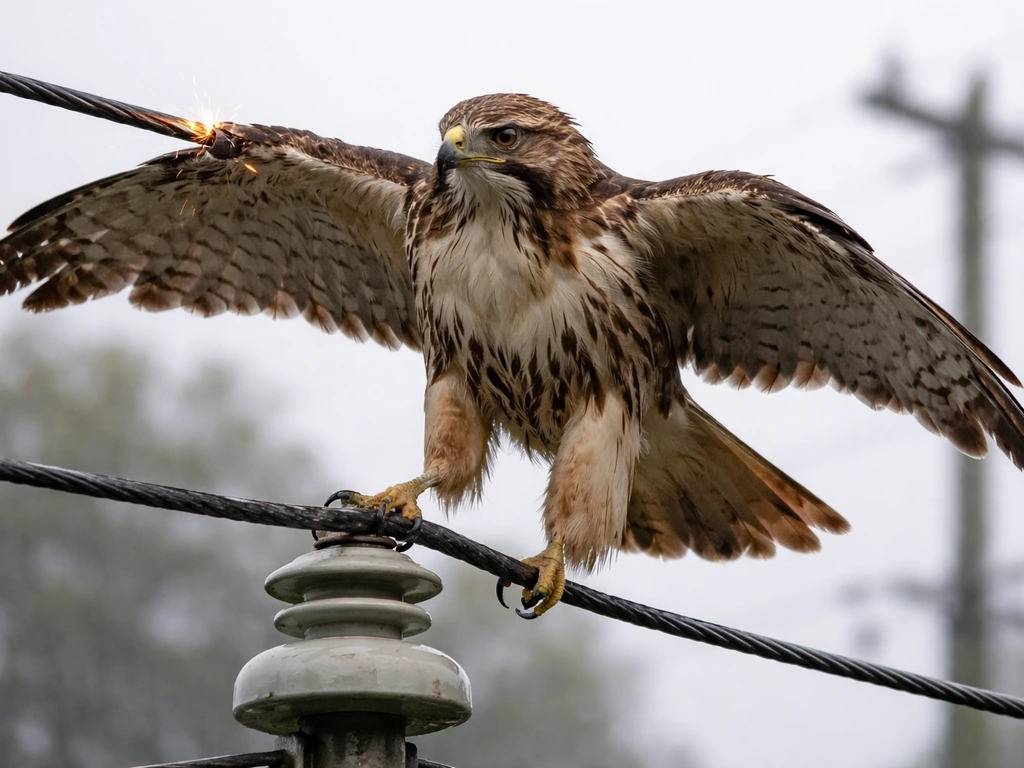
If a large bird spreads its wings or stretches while perching and touches a second wire at a different voltage, it completes a circuit and current flows through its body. Harvard Science Demonstrations notes that electrocution becomes a real concern when a bird contacts different electrical potentials, such as by touching a second conductor while perched touches a second wire at a different voltage. The same happens if it simultaneously touches an energized conductor and a grounded component like a metal crossarm, a pole cap, or a transformer housing. According to APLIC guidance used by utilities across North America, electrocution risk is concentrated specifically at locations where the separation between energized conductors is less than the bird's flesh-to-flesh span, meaning the distance from wingtip to wingtip or from beak to foot while perching. Distribution poles are especially dangerous because their conductors are spaced much closer together than transmission towers, and they're studded with grounded hardware like insulators, crossarms, and equipment housings.
Streamers, wet feathers, and unstable landings
Streamers are a less obvious hazard. When a bird or its droppings create a conductive stream of fluid or material that bridges the gap between an energized conductor and a grounded structure, current can arc or flow through that bridge even if the bird itself isn't directly touching both points. Wet conditions make this worse because water significantly lowers surface resistance. A bird with wet feathers perching near a grounded component has a much higher chance of providing a usable conductive path. Breeding season, when birds are more active and agitated at poles, also correlates with higher fault and electrocution rates, consistent with field data referenced in recent literature on distribution line incidents.
Downed or low-hanging lines
A bird on a wire that has fallen to the ground or is sagging close to vegetation is in a fundamentally different situation. The wire may now be in contact with the earth, with wet grass, or with conductive objects, effectively grounding it in ways that weren't present when it was elevated. In stormy weather, extra wetness and wind-driven contact can create the conductive conditions a nest or perching bird needs to be at risk, so shelter and distance are important can a bird nest survive a storm. Any bird, animal, or person touching or even standing near a downed energized line can be exposed to step potential, where voltage gradients in the ground itself drive current through the body. This is a genuine emergency scenario and not one where standing close to observe is safe.
What to do if you see a bird on or near live power lines today
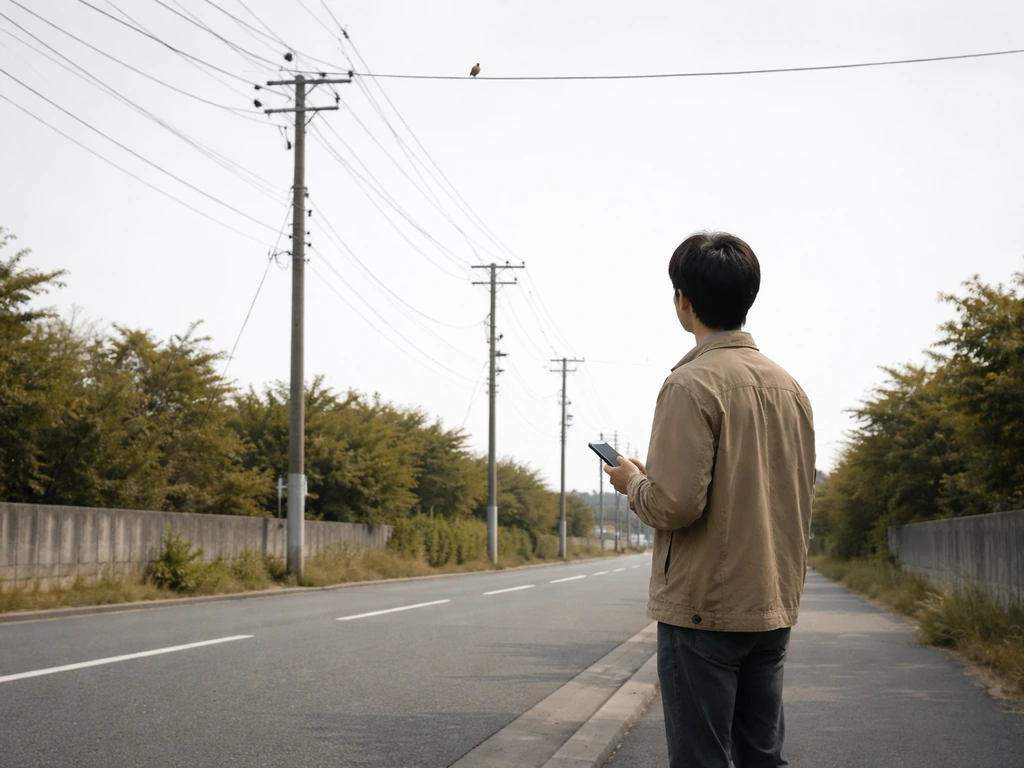
Most of the time, a bird perched quietly on a transmission or distribution wire is perfectly fine and needs no intervention. But there are specific situations where you do need to act, and how you act matters a lot for your own safety.
- If the bird appears to be in contact with a downed or fallen power line, do not approach. Call 911 immediately, then call your local electric utility's emergency line. Downed lines can energize the ground around them for a significant radius.
- Keep people and pets at least 10 feet back from any downed overhead line. OSHA's minimum approach distance for unqualified persons near energized lines starts at 10 feet for lines up to 50 kV and increases to 15 feet for lines up to 200 kV and 20 feet for lines up to 350 kV.
- Do not touch any object that is in contact with a downed power line. Anything resting on or near a live line, including tree branches, vehicles, wire fencing, or an injured bird, can be energized.
- If a bird appears injured near live lines but hasn't fallen, call a licensed wildlife rehabilitator. Do not attempt to retrieve the bird yourself. Contact your state wildlife agency to find a local rehabilitator.
- If you see a bird or its nest on utility hardware, contact your utility company's customer service line. Many utilities have wildlife protocols and will dispatch trained crews. Do not attempt to remove a nest from an energized pole or transformer yourself.
- If you're concerned about recurring bird activity near a transformer or distribution pole on your property, report it to your utility. They can assess whether the configuration poses electrocution risk and may be eligible for mitigation upgrades.
The single most important rule: electricity does not look dangerous. A live downed wire may not spark, hum, or glow. It may look completely inert. That does not mean it is safe. Always treat any downed line as energized until utility crews confirm otherwise.
Myths vs. facts about birds and power lines
There's a surprising amount of misinformation floating around about this topic, and some of it can actually lead people to make unsafe decisions. That same logic answers why birds don't get electrocuted on power lines when they are only touching one conductor. Here are the most common ones worth addressing directly.
| Myth | The Reality |
|---|---|
| Birds have some special biological protection from electricity. | They don't. Birds die from electrocution for the same physical reason any animal does: current through tissue. They just usually don't complete a circuit. There's no unique insulating property to feathers or bird skin that protects against high voltage. |
| High-voltage transmission lines are the biggest danger to birds. | The reality is the opposite. High-tension transmission lines are actually safer for birds in practice because their conductors are spaced far apart, often more than the wingspan of even large raptors. Lower-voltage distribution lines with closely spaced conductors and abundant grounded hardware kill far more birds annually. |
| Any bird near a power line is at risk. | Only birds that simultaneously touch two conductors at different potentials or a conductor and a grounded component are at risk. A bird simply perching on a single conductor is not in danger. |
| Utility companies can't do anything to prevent bird electrocutions. | Utilities have a well-developed toolkit of engineering solutions and many are actively required by federal wildlife laws to implement them. Doing nothing is increasingly not an option, especially near protected species habitat. |
| A dead bird under a power line was definitely electrocuted. | Dead birds near power lines are frequently the result of collisions, not electrocution. Electrocuted birds are often found at the base of poles, not under span wire, and may show burns at contact points. Distinguishing the cause matters for conservation and liability reasons. |
How utilities and infrastructure actually reduce bird electrocutions
This is an area where the science has moved significantly in the last two decades. The Avian Power Line Interaction Committee, known as APLIC, has published widely adopted guidance that utilities use to assess risk and select mitigation strategies. IEEE Standard 1651-2010 formalized engineering approaches to reducing bird-related outages. The U.S. Fish and Wildlife Service works with utilities on compliance under the Migratory Bird Treaty Act, which makes unintentional electrocution of protected birds a potential federal issue. The result is a real body of engineering practice, not just goodwill.
Engineering and design solutions
- Increasing the physical separation between energized conductors and grounded hardware so it exceeds the body span of the largest birds in the local area, particularly raptors.
- Installing insulated jumpers and covered conductors at distribution poles, which are the highest-risk configurations. The IFC and APLIC's 2026 guidance specifically calls out bare energized jumper wires as a leading hazard and insulation as the most reliable fix.
- Applying epoxy or polymer coatings to crossarms and grounded hardware, which field data suggests reduces fault rates, especially during breeding seasons when bird activity at poles peaks.
- Burying distribution lines underground in the highest-risk areas, which eliminates aerial electrocution risk entirely.
- Installing perch deterrents to redirect birds away from dangerous pole configurations toward safer perching locations nearby.
- Using spacer-cable and bundled covered conductor configurations on spans to reduce exposure of energized surfaces.
Which birds and lines get the most attention
Mitigation efforts are concentrated where the risk is highest: distribution poles in open agricultural or grassland landscapes where raptors like golden eagles, red-tailed hawks, and great horned owls hunt and perch. These birds have the body spans most likely to bridge the conductor-to-ground gaps on older pole configurations. Conservation agencies and utilities in raptor-heavy regions often work under negotiated agreements, called Avian Protection Plans, that require systematic pole surveys, retrofits of identified high-risk structures, and ongoing monitoring. The same framework applies to large wading birds like herons near wetland areas. The underlying logic is consistent with everything above: it's the geometry of the bird relative to the hardware that determines the risk, and changing the hardware is the reliable fix.
Understanding why birds can usually sit safely on high-tension lines also clarifies why related questions, like whether a bird can get struck by lightning on a wire or whether wet conditions change the math, aren't just idle curiosity. Each scenario changes at least one of the variables in the circuit: the resistance, the potential difference, or the available conductive path. When those variables shift, the outcome shifts too. The bird-on-wire case is a clean, well-understood demonstration of circuit physics, and it's exactly that clarity which makes the exceptions, when the circuit does complete, so important to recognize.
FAQ
If the bird has nearly zero voltage across its body, why do people sometimes see sparking on power lines near birds?
Sparking usually means a conductive path has formed beyond the simple “one-wire, same-potential” situation. Common triggers are a large bird bridging two conductors, a wing or beak touching grounded hardware (crossarm, insulator hardware, pole cap), or wet droppings forming a conductive bridge that lets current arc even if the bird only touches one spot.
Does bird size alone explain electrocution risk, or are there other factors?
Size matters because it increases the chance of bridging different electrical potentials, but geometry and hardware design are often equally important. Spacing between conductors, the type of pole and fittings, and the bird’s posture (perching vs. stretching, wing spread, beak reach) determine whether the bird can unintentionally connect two points at different potentials.
Are transmission towers safer than distribution poles for birds?
In general, yes. Distribution poles typically have conductors and grounded components spaced closer together and include more grounded hardware, which increases the chance a bird’s flesh-to-flesh span can bridge the gap and complete a circuit.
What should I do if I see a bird on a wire that looks distressed or is lying near the base of a pole?
Treat it as an emergency. Do not approach the bird, the pole base, or any nearby area that could be part of the “step potential” zone. Keep people and pets away and contact the utility company or emergency services so they can de-energize and assess safely.
Is it ever safe to try to help a bird sitting on a power line by using tools or moving it?
No. Tools, ropes, poles, and even long reach can accidentally provide a path to ground or bridge two conductors. The safest action is to observe from a distance and report the situation to the utility, especially if the wire is down, sagging, or the bird is on a lower distribution setup.
If a bird spreads its wings, does it become more dangerous immediately?
It can. Wing spread increases the distance between contact points and makes it more likely the bird will touch a second conductor or grounded component at a different potential, which is when current can start flowing through its body.
How do wet conditions change the risk for birds on wires?
Wetness lowers resistance for surface paths, including water on feathers, wet droppings, and damp crossarms or insulator surfaces. This makes it easier for a bridging path to form and for current to flow or arc, especially near grounded hardware and during storms.
Can a bird on an energized wire still be harmed if it is only near another grounded object, not touching it?
Yes, if the “near but not touching” situation still allows a conductive path to form, such as through a wing, tail, beak contact, or a conductive fluid or debris bridge. Pure proximity alone usually is not enough, but real-world contact can be subtle, especially with larger birds or when they shift posture.
What does “step potential” mean, and how far away should someone stay from a downed energized line?
Step potential is the voltage gradient in the ground around a downed energized conductor, which can drive current through your body even if you never touch the wire. Keep far away, and do not try to judge distance by eye; wait for utility confirmation and follow emergency instructions for perimeter size.
If birds usually do not get shocked while perched, why do utilities still spend money on bird mitigation?
Because the “usually” case depends on geometry and conditions. Utilities mitigate high-risk structures, such as specific distribution poles and hardware layouts, where conductor spacing and grounding hardware make bridging more likely. The goal is to reduce the relatively small number of high-risk events that cause outages and bird deaths.