A bird perched on a single power line is safe because it isn't completing an electrical circuit. Electricity needs a path between two different voltage points to flow, and a bird sitting on one wire touches only that one conductor. Its feet are at the same electrical potential, so no meaningful current passes through its body. The moment that changes, when the bird touches a second wire, a grounded metal pole, or even wet hardware, the situation becomes dangerous fast.
Why Is the Bird on the Wire Safe? Science Explained

Marcus Whitmore
17 Jun 2026
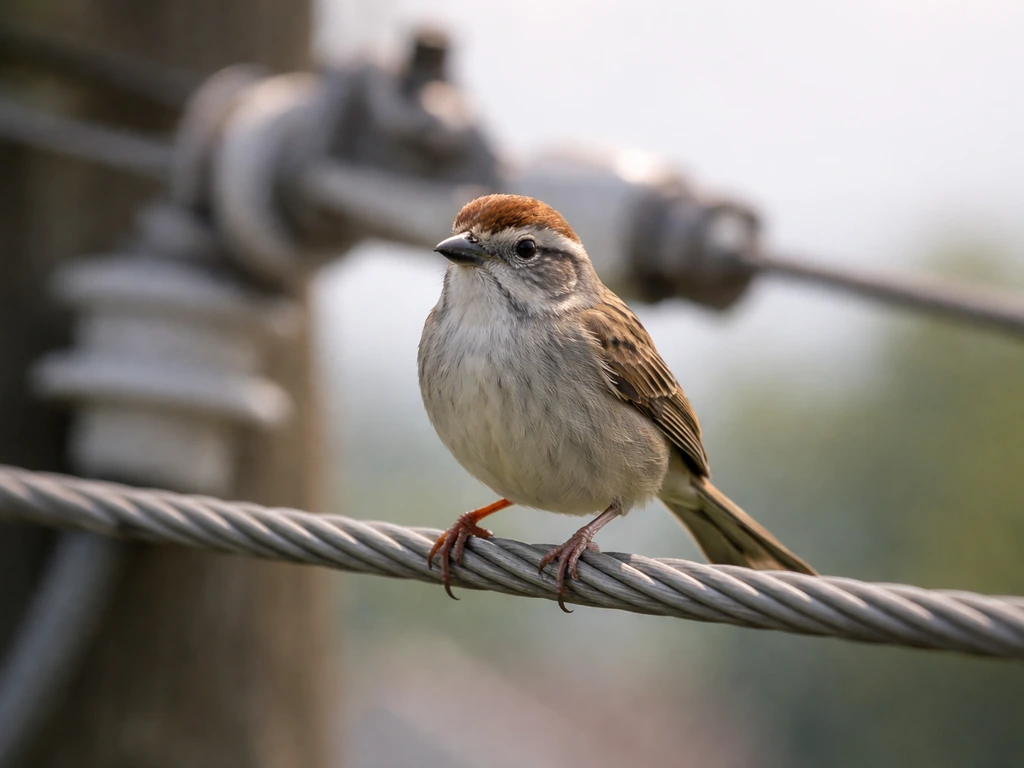
What 'bird on a wire' really means biologically
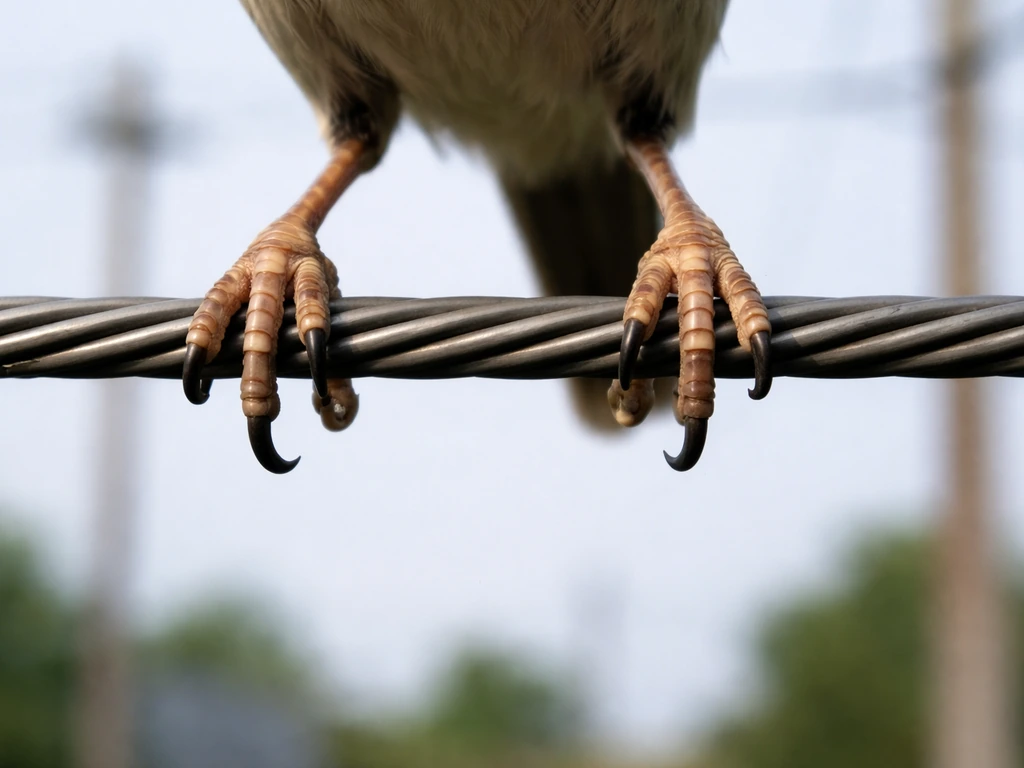
When a bird lands on a power line, it's doing something anatomically simple: gripping a conductor with its feet, usually both feet on the same wire, with its body hanging between them. The contact points are close together, both at the same voltage, and the bird has no other contact with the ground or any grounded structure. Biologically, a perching bird keeps its wings folded against its body, its beak pointed forward, and its feet locked onto the wire by a tendon mechanism that requires no muscular effort. None of those contact points bridge two different electrical potentials.
This matters because electrical hazard isn't about touching something energized in isolation. It's about the path current takes through a body. A bird's body is conductive enough that it could carry dangerous current if the conditions were right. The conditions just aren't right when both feet are on the same single conductor. The bird is, in effect, just another short section of the wire.
Body size plays into risk as well. Larger birds like raptors and herons have longer wingspans and longer legs, which makes it geometrically easier for them to accidentally bridge the gap between two conductors or between a conductor and a grounded pole component. Smaller songbirds are much less likely to span that gap simply because of their dimensions. This is one reason raptor electrocution on distribution lines gets disproportionate attention from wildlife biologists and utility companies.
Why wires don't electrocute birds (and when they can)
The core principle is voltage difference. A voltage difference between two points is what drives current through a conductor, including a living body. When a bird sits on a single conductor, both its feet are at the same voltage, so the voltage difference across the bird is effectively zero. No voltage difference means no meaningful current flow. This is the same reason a lineworker wearing properly rated rubber gloves can handle an energized wire without being shocked: the insulation removes the voltage difference between the worker's hands and the wire.
Birds become electrocuted when their body forms a bridge between two different electrical potentials. According to USGS documentation, this typically happens when a bird simultaneously contacts two energized conductors, or contacts one energized conductor and a grounded metal component like pole hardware or a transformer casing. When that happens, current flows through whatever path the bird's body provides, and the damage follows that path through tissue.
Wet plumage significantly increases the risk. Water increases the conductivity of feathers, which under dry conditions provide some incidental resistance. IUCN guidelines specifically flag wet weather as a risk factor because a damp bird touching energized equipment near grounded hardware is far more conductive than a dry one. Kagan (2016) lists wet weather as one of several predisposing conditions for raptor electrocution alongside power line configuration and body size.
How current flows: single-wire vs. two-wire contact
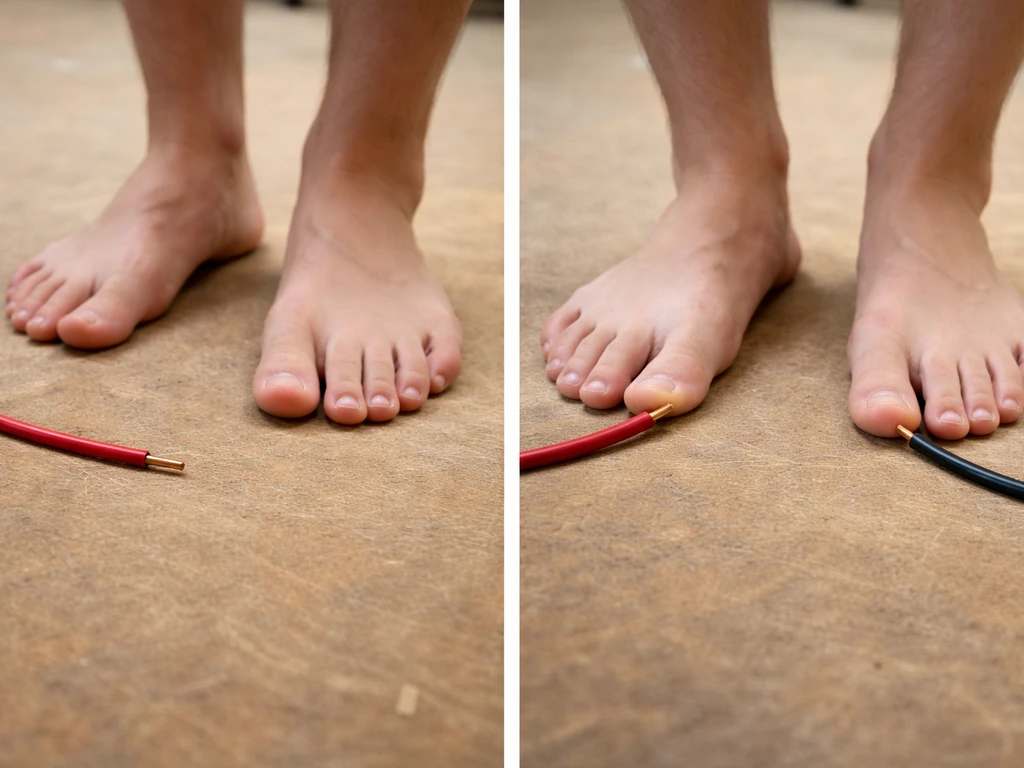
Think of the circuit like a loop. For current to flow, the loop has to be closed. A single wire in the air is one side of a potential loop, but without a return path, the loop stays open. A bird on one wire hasn't closed the loop. The moment the bird touches a second conductor carrying a different phase, or touches a grounded pole component, the loop closes through the bird's body. Reddit r/NoStupidQuestions users similarly point out that the hazard appears when a bird contacts a second conductor or a grounded part, completing a dangerous circuit path blank" rel="noopener noreferrer">bird touches a second conductor or grounded hardware.
| Contact Scenario | Circuit Closed? | Electrocution Risk | Notes |
|---|---|---|---|
| Both feet on single conductor | No | Negligible | Same voltage at both contact points; no current path |
| One foot on conductor, one on grounded pole hardware | Yes | High | Current flows conductor-to-ground through the bird |
| Wings or body touching two conductors simultaneously | Yes | High | Common in large raptors on distribution lines |
| Bird on wet conductor near wet grounded metal | Possibly | Elevated | Water reduces insulation, can create partial paths |
| Bird on conductor, touching insulated wire covering | No (if insulation intact) | Low | Only a risk if insulation is degraded or absent |
Distribution lines are more dangerous than high-voltage transmission lines for this reason. Transmission lines are strung far apart on tall towers, making it physically impossible for most birds to bridge them. Distribution lines, the ones running through neighborhoods on wooden poles, are spaced much closer together and mounted near grounded transformers and crossarm hardware. USGS specifically notes that birds are electrocuted more frequently on distribution lines than on transmission lines because those closer spacings make bridging easier. The IFC and American Eagle Foundation both flag distribution pole geometry as the primary design variable utilities need to address.
Common misconception check: lightning, 'grounding,' and power lines
One misconception that comes up constantly is the idea that birds are safe on power lines because they are 'not grounded. This bird-on-a-wire setup explains the common question of why a bird does not get an electric shock not grounded. ' That's partially right but easily misunderstood. The relevant issue isn't grounding in the electrical-safety-code sense; it's whether the bird provides a path between two different potentials.
A bird touching only one conductor and nothing else is safe not because it lacks a ground connection, but because both its contact points are at the same voltage. If someone means 'the bird isn't touching the ground,' that's true and relevant, but the deeper reason is about circuit completion, not ground contact per se.
Lightning is a completely separate hazard. USGS formally excludes lightning strikes from its avian electrocution case definition because the physics and the circumstances are different. Power-line electrocution requires the bird to bridge two points in an existing circuit. Lightning is an independent atmospheric discharge that doesn't care about the existing circuit at all.
A bird can potentially be struck by lightning whether it's on a wire or in a tree or flying through a storm. The NWS and FEMA both document that lightning injuries can also occur through ground current effects, where current from a nearby strike spreads through the ground and enters a body from the feet up. That mechanism has nothing to do with touching a power line.
Another piece of folklore worth correcting: the idea that high-voltage lines are inherently more lethal than lower-voltage lines for birds. In practice, it's more complicated. High-voltage transmission lines are actually less likely to kill birds through electrocution precisely because the conductors are spaced so far apart that birds can't bridge them. The voltage is higher, but the geometry protects the bird. Lower-voltage distribution lines kill more birds because the hardware geometry is more dangerous, not because the voltage is sufficient to arc across the bird at a distance.
When birds are actually at risk: power line hazards and injuries
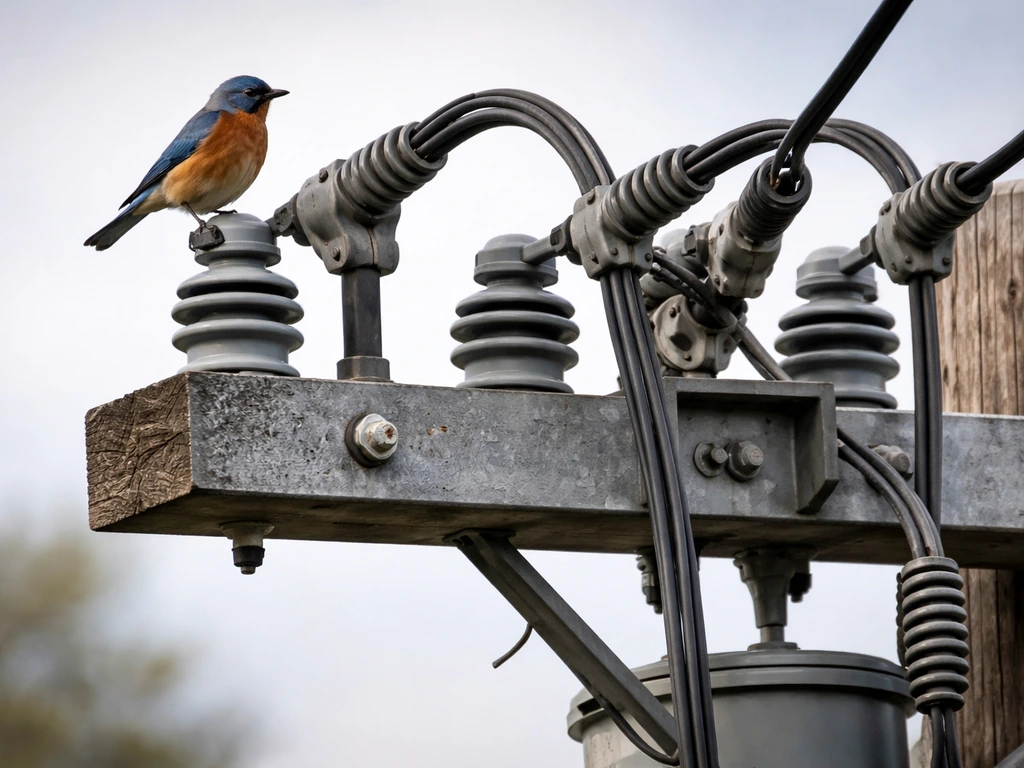
Electrocution risk concentrates at pole tops, especially around transformer mounts, crossarms, and the hardware connecting multiple conductors. These are the spots where an energized conductor is physically close to a grounded metal surface, and they're also the spots where large birds like owls, hawks, and eagles prefer to perch because they offer an elevated vantage point for hunting.
The American Eagle Foundation recommends that utilities ensure safe distances between energized wires and between energized and grounded parts, and describes retrofit approaches such as insulating hardware and covering energized or grounded equipment Avian. USGS notes that electrocuted birds are typically found dead at the base of a power pole or directly beneath a distribution line, which is the practical clue for identifying an electrocution death versus a collision.
Specific risk factors identified across USGS, IUCN, and Kagan (2016) include:
- Large body size and wingspan (raptors, herons, storks, vultures) that increases bridging probability
- Wet weather and wet plumage, which increases conductivity across feathers and skin
- Older, uninsulated distribution pole configurations with minimal clearance between conductors and grounded hardware
- Poles near open hunting habitat that attract large raptors as perch sites
- Landing or taking off from a pole top, where wing extension can bridge a conductor-to-hardware gap
Collision with power lines is a separate but related hazard worth mentioning. Birds in flight, especially during low-light conditions or poor weather, can collide with conductors and die from impact rather than electrocution. USGS documents this as a distinct mortality category. Some species also avoid habitat near power lines as a behavioral response, which has its own ecological consequences. And one counterintuitive USGS finding is worth flagging: in certain western U.S. studies, illegal shooting accounted for more raptor deaths near power lines than electrocution did, which challenges the assumption that electrocution is the dominant power-line threat everywhere.
What humans should do: safety steps, deterrence, and reporting
If you see a bird perched on a power line, you don't need to do anything. The bird is almost certainly fine. Watch it, enjoy it, and let it leave on its own. The risk to the bird only materializes if it spreads its wings and contacts hardware at the pole top, which is not something you can prevent from the ground.
If you see a bird that appears injured, dead, or collapsed beneath a power pole, the electrocution risk to you as a bystander is real. Do not approach a downed wire, and do not assume that a wire lying on or near a dead bird is de-energized. Ameren and other utilities explicitly warn against touching or approaching downed lines under any circumstances, and against trying to rescue a person or animal in contact with a downed line. Call 911 and your local utility's emergency line, in that order.
Blue Ridge Energy's safety materials include a specific warning that's easy to underestimate: anything you use to touch or reach near a power line, a ladder, a long pole, even a wet rope or string, can become a path to ground if it contacts or gets close to an energized conductor. The bird was safe because it provided no ground path. You standing on the ground holding a conductive object near the wire is a completely different situation.
For reporting and longer-term action:
- If you find a dead bird under a power pole, report it to your state wildlife agency. USGS and state agencies track electrocution deaths and use that data to identify high-risk pole configurations for retrofit.
- If you find an injured bird (and it's safe to approach without being near any wire or pole hardware), contact a licensed wildlife rehabilitator. Do not attempt to handle raptors without training; their talons cause serious injury.
- If you repeatedly observe large birds perching on a specific pole near transformer hardware, contact your utility's wildlife or environmental affairs department. Many utilities have avian protection programs and can retrofit problem poles with insulating covers or by adjusting hardware spacing.
- The American Eagle Foundation and IFC both document retrofitting approaches: insulating covers on energized conductors and grounded hardware, increased spacing on crossarms, and raptor-deterrent perch guards that redirect birds away from dangerous configurations.
- If you're an aviation professional or researcher and suspect a bird strike was preceded by electrocution (birds injured or disoriented near power lines), document the location and notify both the wildlife agency and the utility. The combination of data points helps identify chronic problem structures.
The bottom line is that the bird on the wire has physics on its side as long as it stays on that one wire. The real-world exceptions, large birds near crowded distribution pole hardware, wet conditions, takeoff and landing near transformer mounts, are worth knowing about because they explain why power lines still kill birds despite the general safety of the perch. A bird's nest also has to endure wind, rain, and temperature swings during storms, but sheltering in vegetation and choosing a stable site can improve survival power lines still kill birds. Understanding the mechanism helps you interpret what you're seeing, report it usefully, and stay safe yourself if the situation calls for any kind of response.
FAQ
If the bird looks calm on one wire, when is it actually in danger?
In almost every case, the danger scenario requires the bird to touch two different electrical potentials at the same time. That means not only two wires, but also a wire plus nearby grounded hardware (for example pole-top metal fittings, transformer cases, or crossarm components). A bird can look steady on the wire, then become hazardous during takeoff, when wings or feet may briefly contact a second conductor or hardware.
What should I do if I see a bird dead or collapsed at the base of a power pole?
You generally cannot tell from a distance whether a nearby downed line is energized. Treat any wire that is sagging low, arcing, smoking, or lying near a bird carcass as energized. If a bird is down at the base of a pole, the bird may have completed a circuit, and the area around the pole can still present shock risk due to the conductor and related grounding effects.
How can I tell whether a downed wire is safe if there are no sparks?
Do not assume “no visible sparks” means the line is safe. Many hazardous conditions are silent, especially if the circuit completion is intermittent or if the bird provides a brief path. The safer rule is distance plus non-contact: stay away from the pole and any wires, and contact 911 and the utility emergency line.
Can I help an injured bird on a line with a pole, ladder, or rope?
Yes, indirectly. You standing on the ground is not the same as the bird if you touch or hold something conductive that reaches near the line, like a wet rope, metal pole, ladder, or long tool. The risk is that your object can create a conductive path from your hands to earth near the energized conductor, especially if it contacts or comes close enough to conduct.
Should I try to scare the bird off the wire if it seems stuck?
Avoid moving or “shooing” the bird into a pole-top area. The only reliable prevention you can do from the ground is to keep your distance so you do not startle it, and to let it reposition naturally. If it is actively flapping near a transformer mount or crossarm, that is when wing span and extra contacts increase the chance of bridging.
Does nesting on power lines change the risk compared with a bird simply perching?
Nesting is a different context than a single perch. Birds bringing or building nests can bridge hardware over time by adding conductive material (sticks, wire, or wet nest material) between conductors or between a conductor and grounded components. That is why some utility maintenance targets recurring nest locations.
Is the bird safe because it is grounded, or for a different reason?
The “grounded” concept can be misleading in casual discussions. The bird does not need to be electrically grounded in the safety-code sense to be safe, it needs both contact points to be at essentially the same voltage. In practical terms, a bird perched on one conductor is safe because the bird is not completing a path between different voltage points.
How does wet weather increase the chance a bird gets electrocuted?
Feathers and moisture matter, but they are not the only factor. Wet plumage increases conductivity and reduces resistance at the contact points, which makes it easier for current to flow if the bird happens to bridge two potentials. Geometry, spacing, and the availability of grounded hardware still control whether bridging occurs.
How can I distinguish collision deaths from electrocution events without getting close?
Bird collisions are usually obvious from impact injuries, but they can be misread as electrocution at first glance. Electrocution often leaves the bird dead beneath or at the base of a pole or directly under a distribution line, while collision can happen anywhere along the flight path. If you see a bird lying near a pole, do not approach to confirm, treat it as a potential downed-energy hazard.
Can a bird get electrocuted only during takeoff or landing even if it stayed safe while perched?
Yes, and the most practical edge case is takeoff and landing. The bird may remain safe while sitting with feet on one conductor, but during wing spread, slipping, or landing on hardware, it can briefly touch a second conductor or grounded metal. This is why risk persists even though perching itself is often safe.
How is lightning risk different from electrocution from a power line?
Lightning is separate from power-line electrocution. A bird can be struck by lightning while on a wire, but that injury mechanism is not about bridging two energized points in the power circuit. Treat lightning as an independent hazard for both birds and people, and still do not approach downed electrical equipment after any storm-related event.