
Yes, bird's eye chillies are genuinely hot, so if you’re asking whether the fever dream bird real, start by knowing these peppers can be seriously spicy. Not "a little kick" hot, but "approaching habanero territory" hot. If you've picked some up and are wondering whether to be cautious, the short answer is: respect them. The longer answer involves some useful context about what these peppers actually are, how hot they measure on a real scale, and how to handle and cook them without regretting it.
Are Bird Eye Chillies Hot? Heat Level, Taste Tips

Marcus Whitmore
23 Mar 2026
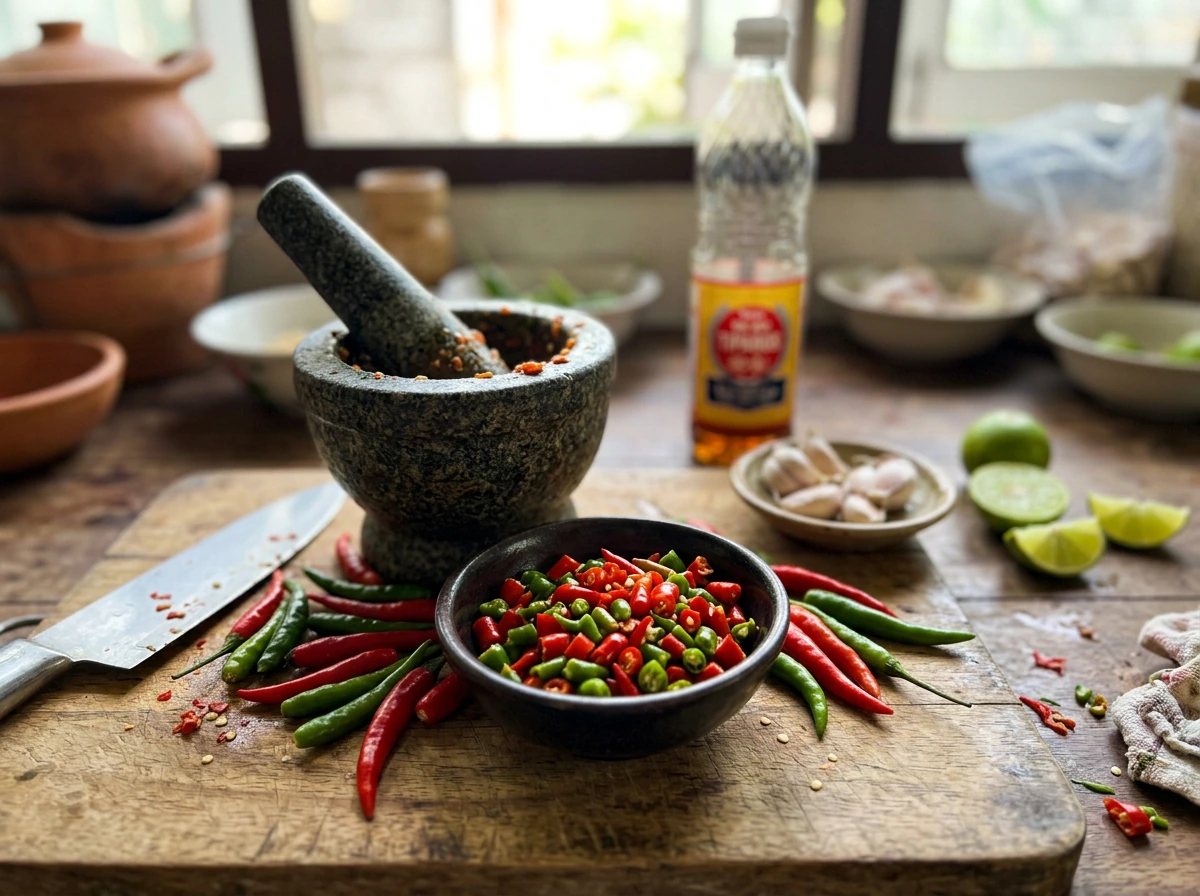
What bird's eye chillies actually are
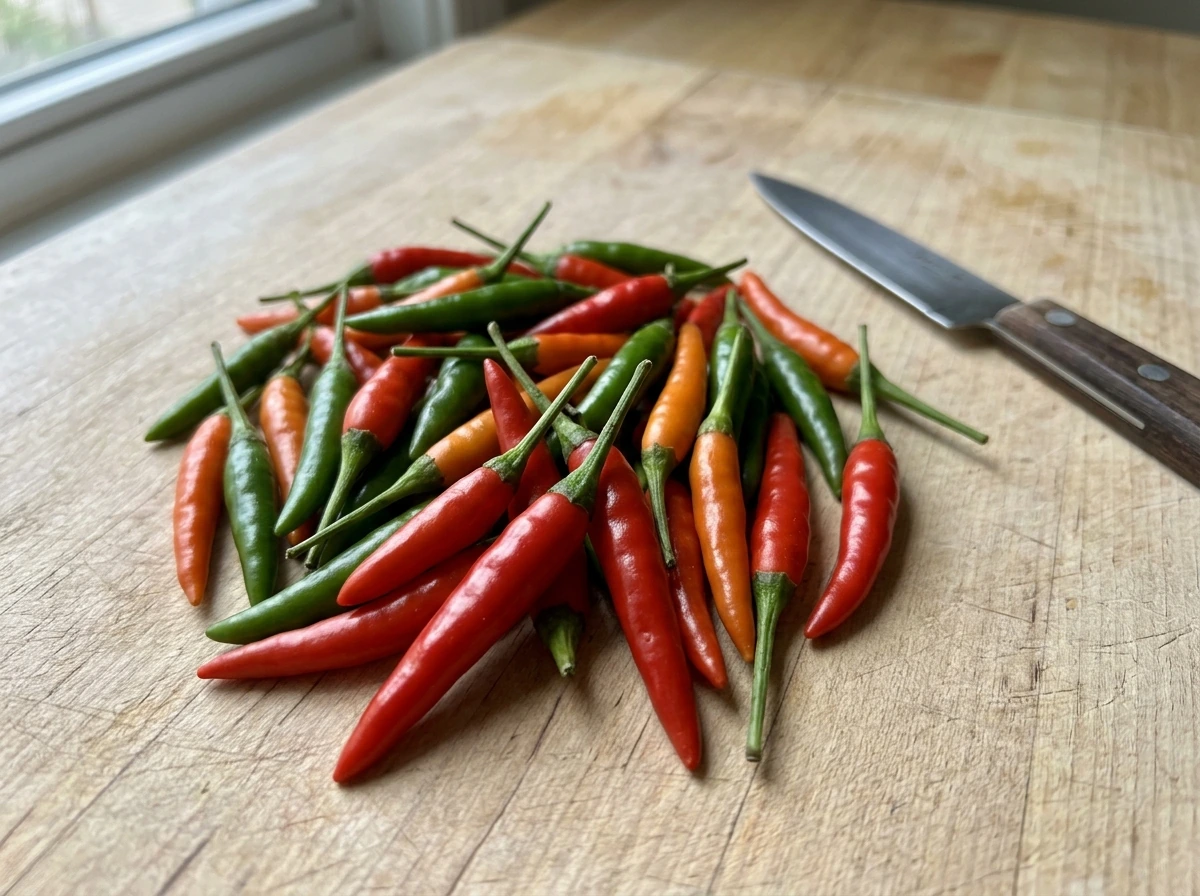
Bird's eye chillies are small, tapered chili peppers most commonly associated with Southeast Asian cooking, particularly Thai cuisine. The Thai name is prik kee noo (พริกขี้หนู), and they're the pepper you'll find scattered through pad kra pao, som tam, and countless other dishes. They're typically tiny, maybe 2–3 cm long, and they usually grow in clusters of two or three per node on the plant.
The name "bird's eye" doesn't refer to any danger to birds. It almost certainly comes from the small, round appearance of the pepper's tip or the way birds (which can't feel capsaicin heat the way mammals do) help disperse the seeds by eating the fruit. This has created some naming confusion worth flagging: "bird's eye chili" is used across Southeast Asia, parts of Africa, and even some Spanish-speaking regions (where it's called chile ojo de pájaro), and it can refer to slightly different cultivars. Some labeled "bird's eye" belong to Capsicum annuum, others to Capsicum frutescens, and the heat can vary noticeably depending on which one you actually have. That's important context we'll come back to.
Are bird's eye chillies hot? Here's the direct answer
Yes, they are very hot. This isn't marketing language or relative framing. Yes, they are very hot. This isn't marketing language or relative framing. Bird's eye chillies consistently fall into the "very hot" category in culinary and food-science classifications, and if you've only ever cooked with jalapeños or serranos, bird's eye chillies will feel like a significant step up., and if you've only ever cooked with jalapeños or serranos, bird's eye chillies will feel like a significant step up. Don't let the small size fool you into thinking they're mild. Size has essentially no relationship with capsaicin content in this case. This includes references to whether the “black bird of Chernobyl” is real is the black bird of chernobyl real. is the black bird of chernobyl real, so if the fever dream bird looks at you, treat that reaction like a sign to respect the heat and handle the pepper carefully. can you blind a bird with a laser
A common misconception is that "hot" chillies are an exaggeration or depend entirely on personal tolerance. People also ask whether bird blindness is real, but there is no credible evidence that eating or handling these peppers could cause that kind of injury to birds is bird blindness real. The reality is that heat in chili peppers is a measurable chemical property, driven by capsaicin and related compounds. Bird's eye chillies have a lot of those compounds. Whether you feel them intensely or mildly is partly personal, but the capsaicin is there regardless.
How hot are they on the Scoville scale
The Scoville Heat Unit (SHU) scale measures capsaicinoid concentration in a standardized way. Thai bird's eye chillies (prik kee noo) are most commonly reported in the range of 50,000 to 100,000 SHU. To put that in perspective, a jalapeño typically sits between 2,500 and 8,000 SHU. That means a bird's eye chili is roughly 10 to 15 times hotter than a jalapeño by measurement, and noticeably hotter than a serrano (which usually tops out around 23,000 SHU).
| Pepper | Typical SHU Range | Heat Category |
|---|---|---|
| Jalapeño | 2,500–8,000 | Mild-Medium |
| Serrano | 10,000–23,000 | Medium-Hot |
| Bird's Eye (Thai prik kee noo) | 50,000–100,000 | Very Hot |
| Habanero | 100,000–350,000 | Extremely Hot |
| Ghost Pepper | 800,000–1,000,000+ | Superhot |
It's worth noting that some reference charts list a broader bird's eye range, up to 225,000 or even 350,000 SHU. That wider band usually reflects labeling variability: products sold as "bird's eye" in different countries may belong to different cultivars or species. If you buy peppers locally labeled "bird's eye" and they feel dramatically different from another batch, that's almost certainly why. The 50,000–100,000 SHU figure is the most consistently cited range for the Thai variety specifically.
What to expect when you cook or eat them
Bird's eye chillies deliver a sharp, immediate burn. Capsaicin activates TRPV1 receptors in your mouth and throat, which your nervous system interprets as heat or burning, and that sensation lingers considerably longer than thermal heat from, say, a hot drink. If you bite into a whole bird's eye chili, expect the burn to hit fast and persist for several minutes, sometimes longer.
Cooking changes the delivery but not the total capsaicin content in a straightforward way. Roasting or cooking peppers can reduce perceived heat in some preparations because capsaicin redistributes or the pepper's structure breaks down differently. However, if you cook bird's eye chillies in a sauce or curry, the capsaicin leeches into the oil and liquid in that dish, spreading the heat throughout. The pepper itself may taste milder, but the whole dish carries the heat. This surprises a lot of people who assume cooked peppers are automatically gentler.
When adding bird's eye chillies whole to a dish (a common Thai technique), you get controlled heat release. Sliced or crushed, they distribute heat much more aggressively. Raw in a salad or dipping sauce, they're at their sharpest. Factor this into how you use them.
How to reduce the heat if you need to
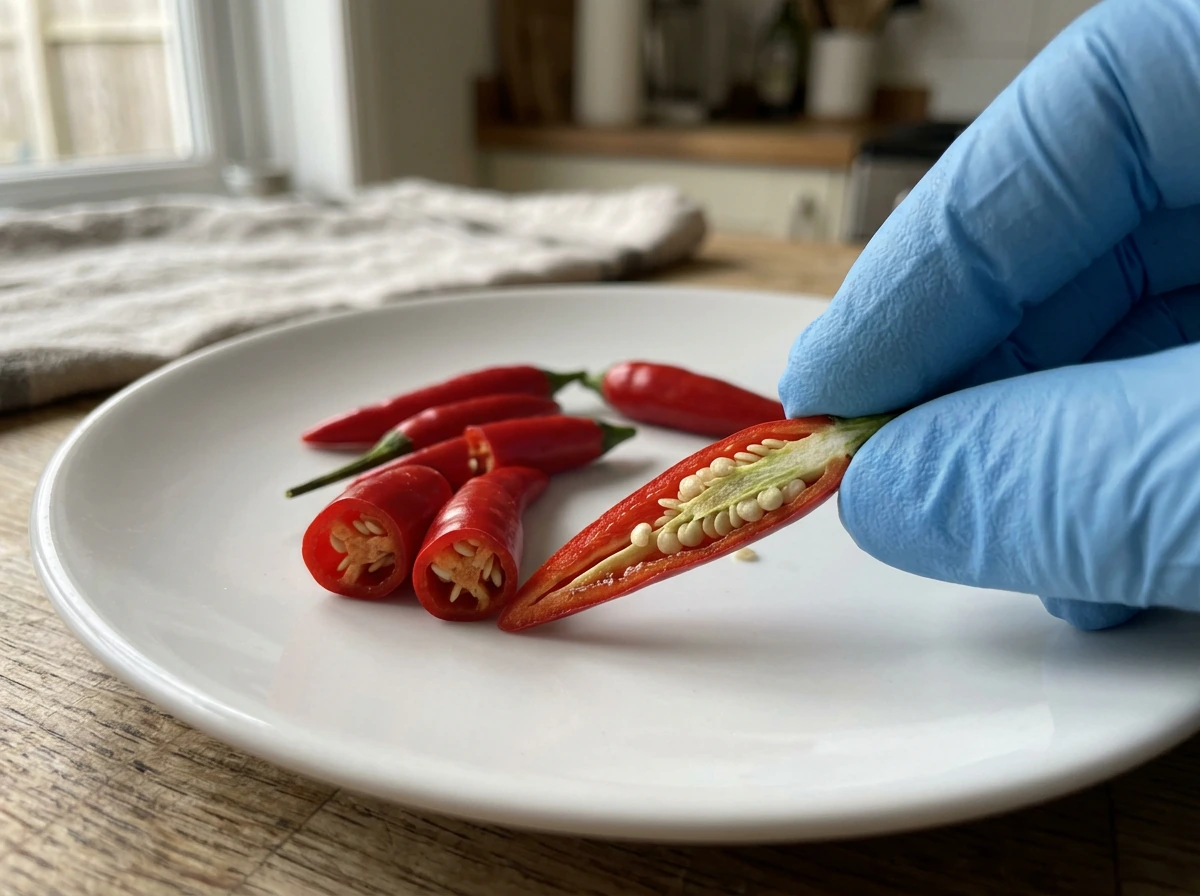
The most effective way to reduce heat is to remove the internal white membrane (the placenta/septa) and the seeds. A common myth is that the seeds themselves are the hottest part. The reality is that capsaicin is concentrated in the internal membranes, not the seeds. Seeds can carry some capsaicin from contact with those membranes, but the white tissue is the real source. Removing both the membrane and seeds will noticeably reduce the heat of the pepper, though it won't eliminate it entirely.
- Slice the chili lengthwise with a sharp knife.
- Use the tip of the knife or a small spoon to scrape out the white membrane and seeds together.
- Rinse the flesh briefly under cold water.
- Use the pepper flesh only, which retains flavor with significantly less heat.
If you've already eaten something too spicy and need relief, reach for dairy. Milk, yogurt, or cream contain casein, a protein that binds to capsaicin molecules and helps wash them away from your receptors, much like how dish soap cuts through grease. Water won't help, because capsaicin is oil-soluble, not water-soluble. Drinking water after a very spicy bite just spreads the capsaicin around your mouth. Full-fat dairy is your best immediate option.
Safe ways to handle and taste them today
Handling bird's eye chillies without gloves and then touching your eyes or face is a genuinely bad experience. Capsaicin can cause real irritation to skin and mucous membranes. Multiple food safety and poison control sources are clear on this: wear gloves when cutting hot peppers, and if you handle them bare-handed, wash thoroughly with soap and water before touching your face. If you get chili in your eyes, irrigate immediately with clean water and contact a poison control line if irritation persists.
- Wear disposable gloves when cutting or deseeding bird's eye chillies.
- Never touch your eyes, nose, or mouth after handling them without washing first.
- Wash hands with soap and water (not just water) after handling, even if you wore gloves.
- If you get juice or seeds in your eyes, rinse immediately with clean running water.
- Keep a glass of milk or yogurt nearby when tasting, not water.
If you're tasting bird's eye chillies for the first time to gauge heat, start with the absolute tip of a small piece, not a whole pepper. Give it 30 seconds before deciding to eat more. The heat builds and then lingers, and beginners consistently underestimate this. A tiny fragment is genuinely enough to get an accurate read on the pepper's intensity before committing to more.
One final thing worth saying: two peppers sold under the same "bird's eye" label can feel quite different depending on where they were grown, which cultivar they actually are, and how ripe they were when harvested. If a batch seems milder or hotter than expected, that's not your imagination. The name is applied loosely across regions and species, so treat each new batch as unknown until you've tasted a small amount. That habit alone will save you from the occasional unpleasant surprise.
FAQ
Are bird eye chillies hotter than Thai green or red curry paste?
Usually, yes. Curry paste often uses a blend plus added sugar, aromatics, and oil, which rounds off the perceived burn, but the peppers inside still drive the capsaicin level. If your paste tastes extremely spicy, it is likely because a large portion came from very hot bird eye or similar varieties, not because the paste itself creates heat.
If I remove the seeds, will the bird eye chilli stop being hot?
No. The white inner membrane (septa/placenta tissue) carries most of the capsaicin. Removing seeds alone often reduces heat a little, but removing both seeds and membrane is what typically gives a noticeable drop.
Does chopping or crushing bird eye chillies make them hotter in my dish, or just faster?
More like faster and more spread-out. The total capsaicin content in the pepper is roughly the same, but slicing or crushing exposes more surface area and releases capsaicin into the sauce or oil quickly, so the heat hits earlier and lasts longer through the dish.
Can I de-seed and use the remaining chilli later without gloves?
You should still use gloves or be very careful. Residual capsaicin from the membrane can smear onto your cutting board, knife, and fingers. Wash tools and hands immediately, then avoid touching your face until everything is cleaned.
Is bird eye chilli heat the same as “burning” from thermal heat like a hot drink?
They feel different. Capsaicin activates pain and heat receptors (especially TRPV1) and triggers burning that lingers even after the food cools. Thermal heat fades quickly once temperature drops, so a chilli bite can stay painful longer than you would expect.
Will roasting bird eye chillies always make them mild?
Not always. Roasting can lower perceived sharpness, but capsaicin still transfers into oil and liquid when you cook the peppers into sauces or curries. If you roast then blend into a paste, expect the overall dish to remain very hot.
What’s the best way to test heat if I’m cooking for others?
Do a small “pilot” batch. Cook your dish base first, then add one tiny piece of bird eye chilli (or a small amount of minced chilli) and simmer briefly before tasting. This controls release and avoids ruining the whole pot if the pepper is an unusually hot cultivar.
If my bird eye chilli batch feels much hotter or milder than expected, what should I do?
Assume it is cultivar or ripeness variability. Treat the next batch as unknown, start with less, and adjust gradually. If you keep tasting while adding, you can get consistent results even when the SHU swings beyond a single typical range.
How do I clean up after cutting bird eye chillies without making everything spicy?
Clean the board and knife first, then wash hands with soap and cool water before touching anything else (including phones, fridge handles, towels). Avoid wiping with a dry towel first, because capsaicin residue can spread. For extra caution, wash cutting surfaces twice.
What should I do if I get bird eye chilli in my eyes?
Irrigate immediately with clean running water or saline, then stop rubbing. If burning or redness persists after rinsing, contact poison control or urgent care guidance, especially if you wear contact lenses.